

About this collection
Plaster Cutter: Uses, Types, Safe Technique and Buying Guide for Healthcare Professionals
This guide explains what a plaster cutter is and how it works. It also covers the main types, safe cast removal, risks, and how to choose the right plaster cutter machine for a clinic or hospital.
Key Takeaways
- First, a plaster cutter is a tool that opens a plaster or fibreglass cast, and it can be manual or electric.
- In practice, an electric plaster cutter uses a blade that vibrates over a tiny arc, so it cuts hard cast material but not soft skin.
- However, friction can still cause heat, and one review recorded temperatures above 101 °C during fibreglass cast removal.
- For safety, staff should use a sharp blade, avoid bony areas and never drag the blade along the cast.
- Finally, choose a plaster cutter machine by power, blade quality, speed control, dust control and service support, and not by price alone.
Contents
- What is a plaster cutter?
- What is a plaster cutter used for?
- How does a plaster cutter work?
- What is an orthopaedic plaster cutter?
- Types of plaster cutters
- Best tool to cut plaster and best machine for removing plaster
- Does the cutter change for fibreglass casts?
- Plaster cutters available at Meddey
- Plaster cutter machine price
- Steps for safe cast removal
- Risks and safety
- Cleaning and care
- Buying checklist
- Frequently asked questions
A cast keeps a broken bone still while it heals, but sooner or later it has to come off. Therefore, every orthopaedic clinic, casualty and plaster room needs a reliable plaster cutter. However, many students and buyers are unsure how these tools differ, how they work and how to use them safely.
This guide is for doctors, nurses, orthopaedic technicians, medical students and buyers of hospital equipment. In addition, it answers the most common questions in simple words. To see products, you can visit the plaster cutter collection at Meddey.
Latest safety note: A 2016 review in the Journal of Pediatric Orthopaedics found that cast removal causes complications in fewer than 1% of patients. These include skin abrasions and burns from friction. Therefore, the review advises staff to perforate the cast with the saw and then open it with a cast spreader.
What Is a Plaster Cutter?
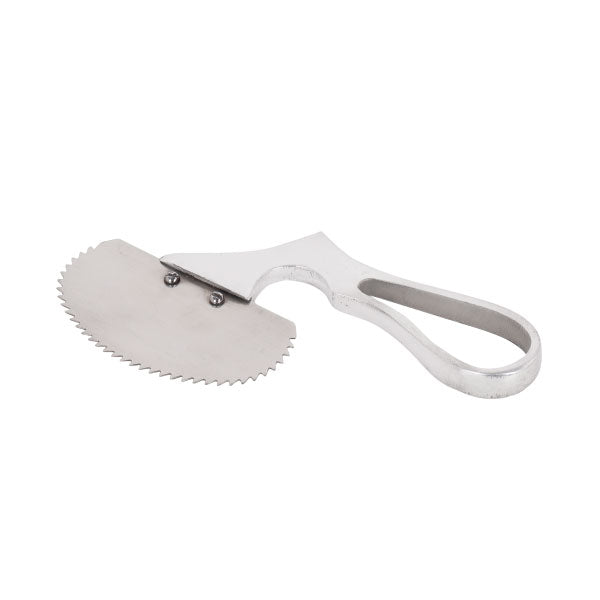
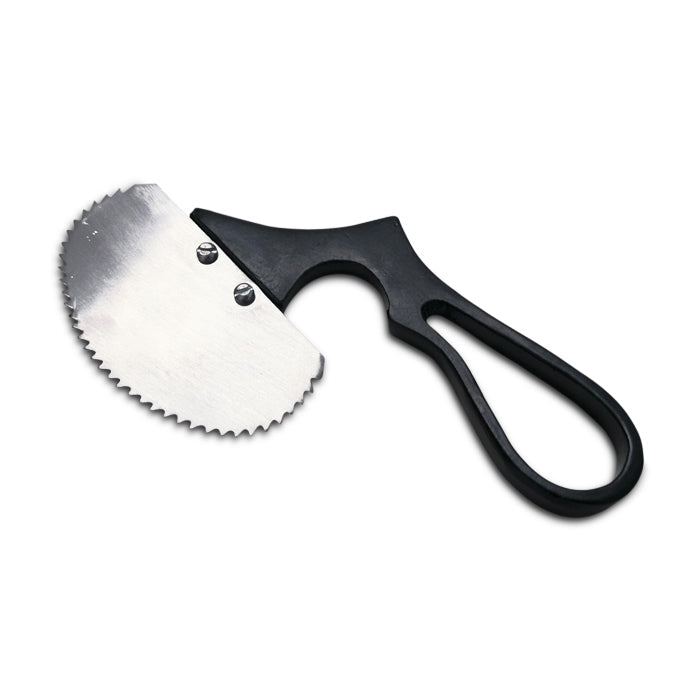
A plaster cutter is a tool that cuts and opens a plaster cast, also called a POP (plaster of Paris) cast. Many models also cut fibreglass and other synthetic casts. Some plaster cutters are simple hand tools with a serrated blade. Others are electric machines, often called a cast saw or a plaster cutter machine.
Meanwhile, a plaster cutter is usually used together with other tools. For example, a cast spreader opens the cut, and blunt-tip scissors or shears cut the padding. As a result, the cast can come off in a safe and controlled way.
For students, one line is enough. A plaster cutter removes a cast so that the doctor can check the limb, treat the injury or end the treatment.
What Is a Plaster Cutter Used For?
A plaster cutter has a few clear uses in orthopaedic care.
Cast removal after healing Staff open the cast when the fracture has healed or when the treatment plan ends.
Cast check or change Also, a doctor may open the cast to check the skin, change a cast or apply a new one.
Relief of tight casts In addition, staff may split a cast quickly when swelling makes it too tight, as ordered by the doctor.
Windowing and trimming Moreover, staff may cut a window to reach a wound or trim the cast edges.
Fibreglass and synthetic casts Since these casts are harder to cut, an electric cutter saves time and effort.
Teaching and training Finally, orthopaedic schools use plaster cutters to teach safe cast removal.
In short, the main use is to open a cast safely and quickly, without harming the skin under it.
How Does a Plaster Cutter Work?
The working idea depends on the type. A manual plaster cutter has a serrated blade that the user pushes through the cast. An electric plaster cutter works in a very different way.
How an electric plaster cutter works
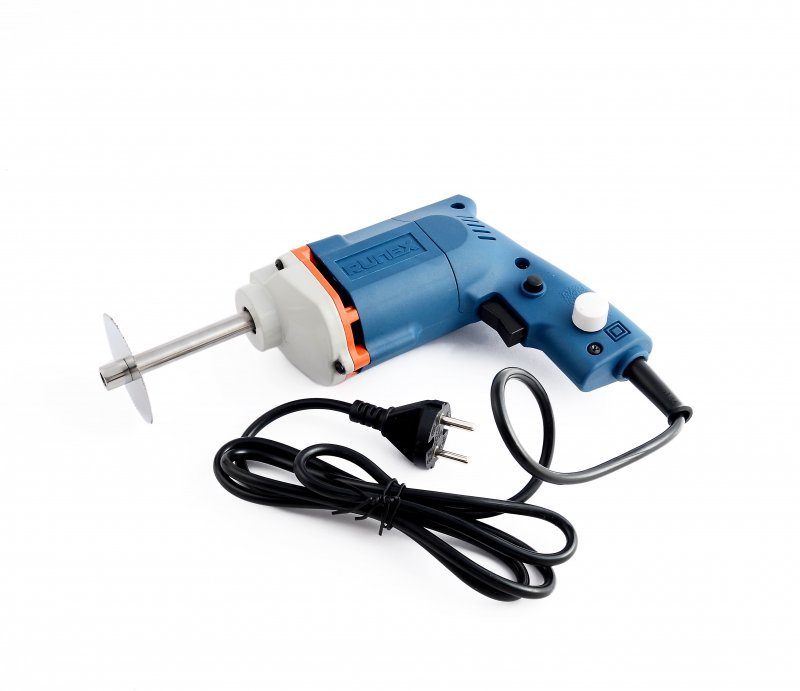
An electric plaster cutter does not spin like a circular saw. Instead, a small motor moves a sharp, small-toothed blade back and forth over a very small arc, many thousands of times each minute. Because of this, the blade breaks down hard material such as plaster or fibreglass.
However, soft tissue such as skin moves back and forth with the blade, so the forces stay low. As a result, the blade can touch the skin lightly without cutting it. This works only if the user applies light pressure and keeps the blade sharp.
Why heat matters
Friction between the blade and the cast creates heat. For example, one review recorded temperatures above 101 °C during fibreglass cast removal. Therefore, staff should use short plunge-and-lift cuts and should not hold the blade in one place.
Tip: Think of the saw as a tool that perforates the cast, not one that slices it in a long line. Then, a cast spreader opens the cast along the cut line.
What Is an Orthopaedic Plaster Cutter?
An orthopaedic plaster cutter is a plaster cutter made for use in orthopaedic care, in places such as hospitals, casualty rooms and plaster rooms. The term often means an electric orthopaedic plaster cutter machine, meaning a cast saw with an oscillating blade. However, it can also mean the manual instruments that go with it.
A complete orthopaedic set often includes these parts:
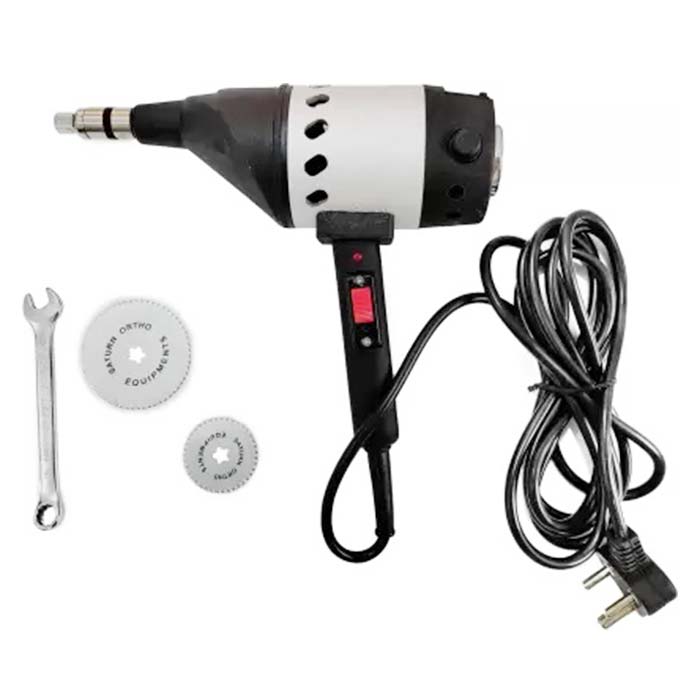
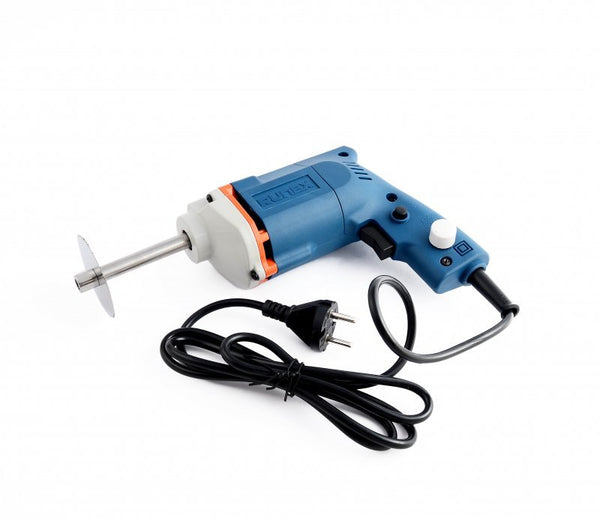
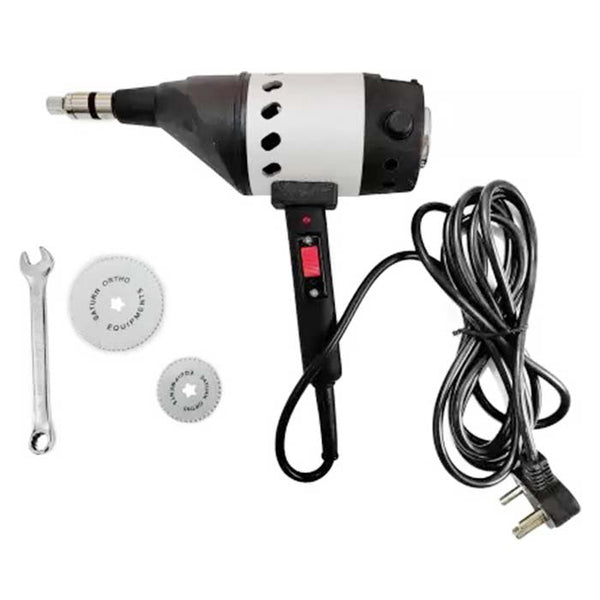
- Electric plaster cutter or cast saw: It cuts through the hard cast.
- Cast blades: These are small-toothed blades that fit the saw.
- Cast spreader: It opens the cast after the cut.
- Plaster shears or scissors: They cut the padding under the cast.
- Cast padding: It sits between the skin and the cast during casting.
Therefore, when a buyer asks for an orthopaedic plaster cutter machine, it helps to check if the blades and the spreader come with it.
Types of Plaster Cutters
There is no single official list, but most plaster cutters fall into a few clear groups.
1. Manual plaster cutter It has a serrated blade and a handle. Because it needs no power, it is cheap and works as a backup.
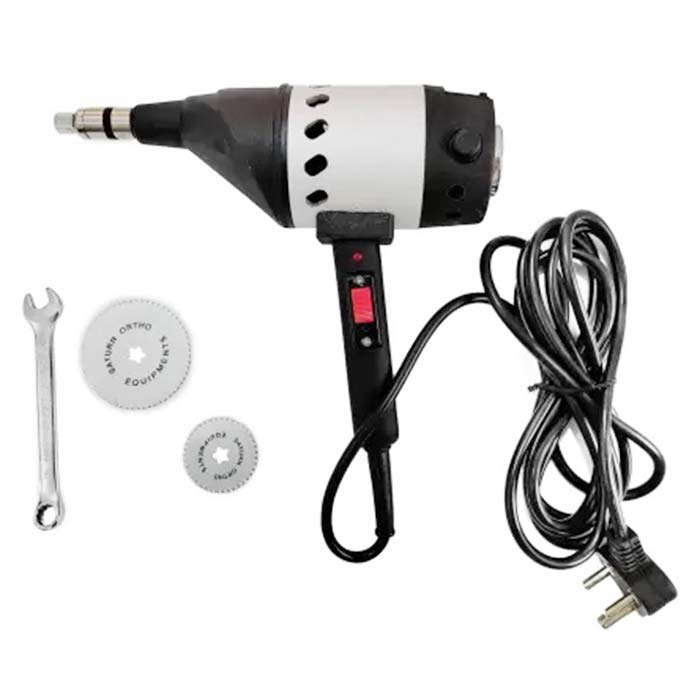
2. Electric plaster cutter (cast saw) It uses an oscillating blade. Therefore, it cuts fast and suits busy clinics and hospitals.
3. Cast saw with dust extraction It connects to a vacuum. As a result, it lowers dust in the room, which helps staff and patients.
4. Plaster shears They cut plaster and padding by hand. Also, some clinics use them for small or thin casts.
5. Cast spreader It is not a cutter. However, it opens the cast after the saw makes the cut, so it is part of every set.
6. Cordless or battery cutters These are less common. Still, they suit outreach or emergency settings where power is limited.
Note that a plaster cutter and a cast spreader do different jobs. Therefore, most clinics keep both.
What Is the Best Tool to Cut Plaster, and the Best Machine for Removing Plaster?
No single tool is best for every setting. Instead, the best choice depends on the volume of work, the cast type and the training of the staff. For a busy hospital, an electric plaster cutter is usually the best choice, because it is fast and works on both plaster and fibreglass. For a small clinic that removes few casts, a manual cutter and shears may be enough.
| Setting | Suitable tool | Key features to check |
|---|---|---|
| Busy hospital or plaster room | Electric plaster cutter with dust extraction | Steady power, speed control, spare blades |
| Casualty and orthopaedic OPD | Electric plaster cutter plus spreader | Light weight, easy blade change, safe grip |
| Small clinic | Electric or manual plaster cutter | Low cost, easy cleaning, simple use |
| Outreach or backup | Manual plaster cutter and shears | Sharp serrated blade, no power needed |
| Teaching institute | Electric cutter and manual tools | Safe for demonstration, spare blades |
Therefore, when someone asks "what is the best machine for removing plaster", the right answer is another question: how many casts do you remove, and who will use the machine?
Plaster of Paris and Fibreglass Casts: Does the Cutter Change?
Most plaster cutters can handle both common cast types, but the two materials behave differently. Plaster of Paris is softer and creates fine white dust. Therefore, it cuts easily, but it can make the room dusty. Fibreglass, on the other hand, is harder and springs back after a cut. As a result, it needs a sharp blade, and it creates more heat and sharper dust.
For this reason, staff should check the cast type before they start. In addition, they should keep a spare blade ready, since a blade wears out faster on fibreglass. Meanwhile, for a thin plaster splint, hand shears may be enough, and this saves the blade. In practice, a clinic that sees both cast types should choose an electric plaster cutter that works on both.
Plaster Cutters Available at Meddey
Meddey lists several plaster cutters and related tools in its plaster cutter collection. The table below shows the products and their prices as listed on Meddey on 29 September 2026. However, prices and stock can change, so please check the live product page before you order.
| Product | Type | Key detail | Meddey price |
|---|---|---|---|
| Plaster Cutter Manual Surgical Instrument | Manual | 15.5 cm, half-circle serrated blade, reusable | ₹276 |
| Plaster Cutter Spreader, Orthopedic | Manual spreader | Stainless steel, 15 cm, curved tip, reusable | ₹1,977 |
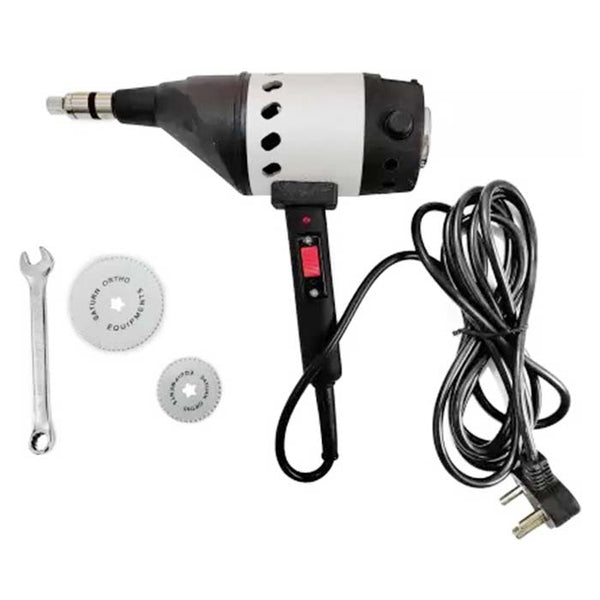
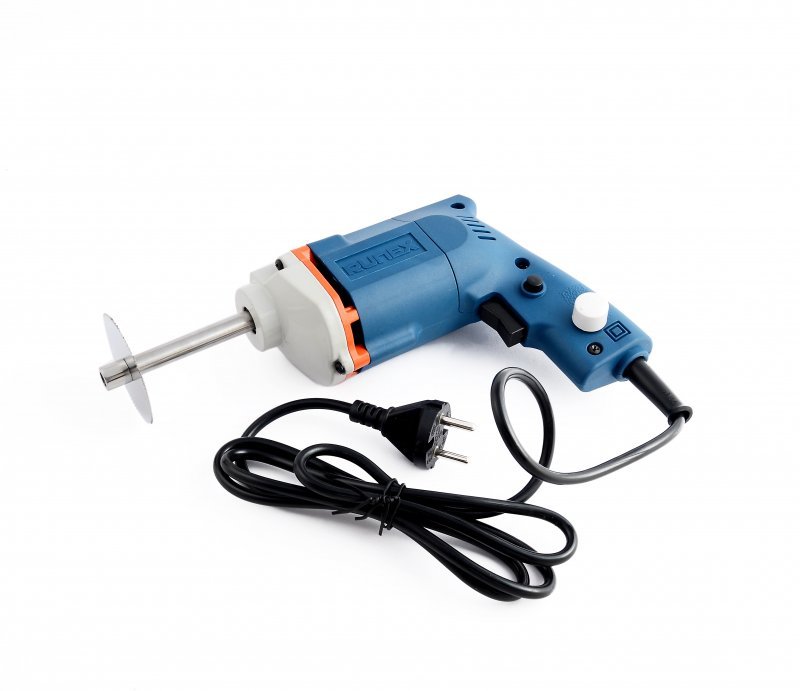
| Electric Plaster Cutter | Electric | Oscillating blade, two blade types, adjustable speed, works on POP and synthetic casts | ₹2,943 |
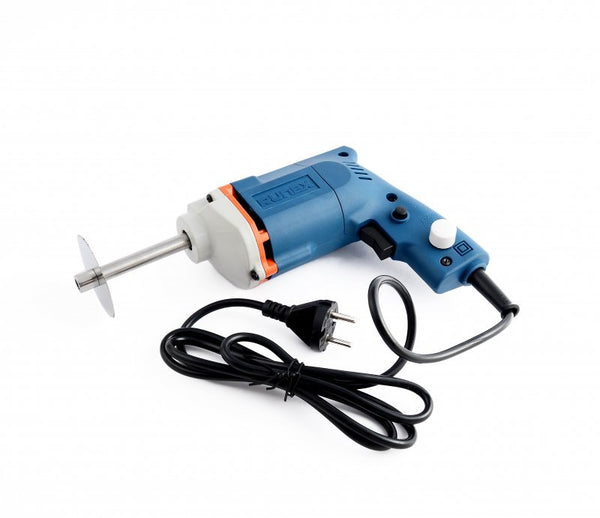
| Electrical Plaster Cutter Delux | Electric | Oscillating blade for quick cutting of plaster | ₹8,279 |
| Orthopedic Cast Padding, Pack of 10 | Cast padding | Non-woven cushion between skin and plaster | ₹735 |
For a small clinic, the electric plaster cutter with a manual spreader is a common starting set. On the other hand, a busy hospital may prefer the Delux model. Always read the product page for the full specification before you choose.
Plaster Cutter Machine Price: What Decides the Cost?
The plaster cutter machine price depends on the power, blade type, speed control, build quality, accessories and warranty. Therefore, two machines that look alike can have very different prices. At Meddey, an electric plaster cutter is listed at ₹2,943 and the Delux model at ₹8,279, as of 29 September 2026. A manual plaster cutter is listed at ₹276.
What pushes the price up?
- First, a stronger motor and better build quality raise the cost.
- Second, features such as speed control and extra blades add value.
- Third, a dust extraction option increases the price of the set.
- In addition, a longer warranty and good service support cost more.
- Finally, brand name and accessories such as a spreader also affect the final price.
Think about running costs
Besides the machine, you will need spare blades, a cast spreader, padding and cleaning supplies. For example, Meddey lists orthopedic cast padding in a pack of 10. Therefore, check the cost of blades and spares before you buy.
Price note: Prices and offers change often. Therefore, please check the live listing, or contact Meddey for help.
Steps for Safe Cast Removal
The steps below give a general idea for trained staff. However, always follow the device manual and your hospital protocol. Cast removal is not a task to try at home.
1. Prepare the patient
First, explain the steps to the patient and the family. Tell them that the saw is loud, that it vibrates and that it may feel warm. In addition, show the blade on your own hand or on the cast so that a child or a nervous patient can feel it is safe.
2. Check the equipment
Next, check that the blade is sharp and fixed well. A dull blade needs more pressure, and this can cause a burn or a cut. Also, have the spreader, shears and blunt-tip scissors within reach.
3. Position the limb
Then, support the limb on a stable surface in a comfortable position. Plan the cut line so that it avoids bony areas such as the front of the shin, the wrist bone and the elbow point.
4. Cut the cast
After that, hold the saw firmly and press the blade into the cast with a plunge motion. Then, lift the blade and move it to the next spot. Do not drag the blade along the cast, and do not cut over bony prominences.
5. Open the cast
Next, place the spreader in the cut and open the cast gently. Then, cut the padding with blunt-tip scissors, away from the skin.
6. Check and finish
Finally, remove the cast and check the skin for redness, marks or sores. Then, clean the equipment and record the procedure. Also, tell the patient how to care for the skin and limb.
Risks and Safety of Using a Plaster Cutter
A plaster cutter is safe in trained hands, but it is not risk-free. Because of this, staff should learn the risks and the ways to lower them.
Main risks
- Burns, because friction creates heat, especially with a dull blade or a long cut in one spot.
- Skin abrasions or cuts, mostly when staff apply heavy pressure or cut over bone.
- Fear and stress, since the noise can upset children.
- Dust from plaster or fibreglass, which can irritate the eyes, nose and lungs.
- Noise and hand vibration for the person who uses the saw often.
- Blade injury to staff during cleaning or blade change.
How to lower the risks
- First, use a sharp blade and light pressure.
- Second, use short plunge-and-lift cuts, and do not drag the blade.
- Third, avoid bony prominences and use a skin protection strip if your protocol allows it.
- In addition, use dust extraction, eye protection and a mask when needed.
- Finally, train staff and let new users practise under supervision.
Safety point: Stop the procedure if the patient says the blade feels hot or painful. Then, check the skin, let the blade cool and change the method if needed.
Cleaning and Care
- After each use: Wipe the machine with a damp cloth, and remove dust from the blade area.
- Blades: Check the teeth often, and replace a blade when it becomes dull or bent.
- Manual tools: Clean and sterilise reusable instruments as your protocol advises.
- Power cable: Inspect the cable and plug, and do not use a machine with damaged wiring.
- Storage: Keep the machine dry and in its box, with spare blades nearby.
- Servicing: Follow the maker's advice for checks, and stop using a machine that vibrates oddly or smells hot.
Buying Checklist for a Plaster Cutter Machine
Define the use First, decide if you need it for a busy plaster room, a small clinic or teaching.
Blade quality Next, check the blade types and the cost of spare blades.
Speed and control Also, look for speed control and a comfortable grip for long use.
Safety features In addition, ask about fuse protection, blade cover and overheating protection.
Dust and noise Since dust and noise affect staff, check if a vacuum can connect and how loud the machine is.
Warranty and service Finally, confirm warranty, spare parts and after-sales help.
As a simple rule, buy the electric cutter together with a spreader and spare blades. Then, keep a manual cutter as a backup.
Frequently Asked Questions About Plaster Cutters
What is the best tool to cut plaster?
For most hospitals, an electric plaster cutter with an oscillating blade is the best tool, because it is fast and works on plaster and fibreglass. However, a manual plaster cutter is a good low-cost backup.
What is the best machine for removing plaster?
An electric plaster cutter, also called a cast saw, is the usual choice. It is best when it has a sharp blade, speed control and safety features. Also, use a cast spreader to open the cast after cutting.
How does a plaster cutter work?
An electric plaster cutter moves a small-toothed blade back and forth over a tiny arc. As a result, it cuts hard plaster or fibreglass, while soft skin moves with the blade. Still, friction can cause heat, so staff must use short cuts.
What is an orthopaedic plaster cutter?
It is a plaster cutter made for orthopaedic use in hospitals and clinics. Usually, it means an electric cast saw, and the term can also cover manual cutters, spreaders and shears.
What is a plaster cutter used for?
It is used to open and remove plaster and synthetic casts. In addition, staff use it to check the skin, change a cast, relieve a tight cast or cut a window.
What is the price of a plaster cutter machine?
At Meddey, an electric plaster cutter is listed at ₹2,943 and the Delux model at ₹8,279, as of 29 September 2026. A manual plaster cutter is listed at ₹276. Please check the live listing for the latest price.
Can an electric plaster cutter cut fibreglass casts?
Yes, many electric plaster cutters can cut both plaster and fibreglass casts. However, fibreglass creates more heat and dust, so use a sharp blade and short cuts.
Is it safe to remove a cast at home?
No. Trained staff should remove a cast, because wrong use of a saw can cause burns or cuts. If a cast feels too tight or painful, contact a doctor at once.
Where to Buy a Plaster Cutter Machine Online in India?
Clinics and hospitals can buy plaster cutters from medical equipment stores. Before you buy, compare the blade types, speed control, safety features, warranty and service. Meddey lists manual, electric and spreader options, and its support team can help you choose.
View Plaster CuttersOrthopedic InstrumentsVisit MeddeyDisclaimer
This article is for general education. Therefore, it does not replace maker instructions, hospital protocols or clinical judgement. Only trained healthcare staff should remove casts, and they should follow the device manual. Also, prices and product details may change over time.
Explore Medical Collections
All Categories
Abdominal & Maternity Support

Accessories

Accu-Chek Instant Strips: Use, Compatibility, Price & Blood Sugar Testing Guide
Accu-Chek Instant Strips: Uses, Features & Complete Guide

Accupressure Products for Pressure Point Therapy, Pain Relief & Wellness

accupuncture

Acupuncture Needles & Supplies

Advanced Physiotherapy Machines & Lumbar Physiotherapy

Airways

Ambulance

Anatomy Models
Anesthesia Machine

Anesthesia Products
Ankle Support, Braces & Walker Boots for Recovery
Ankle Weights & Exercise Weights for Home & Rehab
You may also need
FOR YOURecommended for you
Save 60%
Save 50%
Save 60%
Save 14%
Save 14%