


Featured ChoiceSave 31%

Save 12%
Save 42%

Save 22%

Save 30%

Save 42%

Save 37%

What customers say
★★★★★ 5.0 · 5 reviews
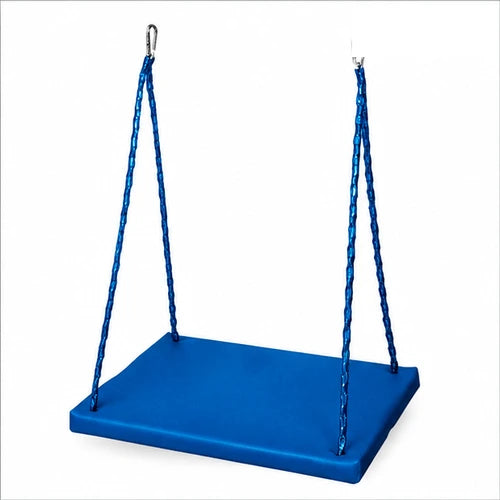
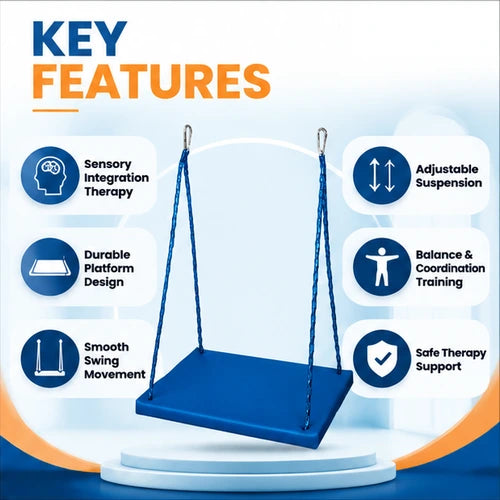
 Platform Swing 24 x 36 Inch for Sensory Integration Therapy
“It’s sturdy, durable, and provides a smooth, enjoyable swing experience. The size is perfect for both kids ...”
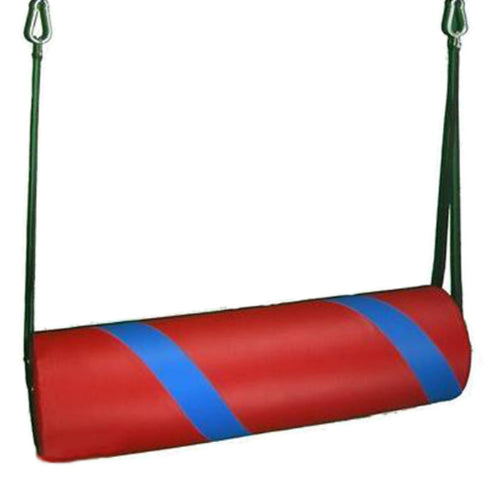
 Bolster Swing with Rope and Hooks Delulx Quality
“I’m really impressed with the Bolster Swing with Rope and Hooks Deluxe Quality! The swing is made of sturdy...”
 Disc Swing Deluxe Quality
“The Disc Swing Deluxe Quality is fantastic! It’s incredibly sturdy, well-made, and provides a smooth swingi...”
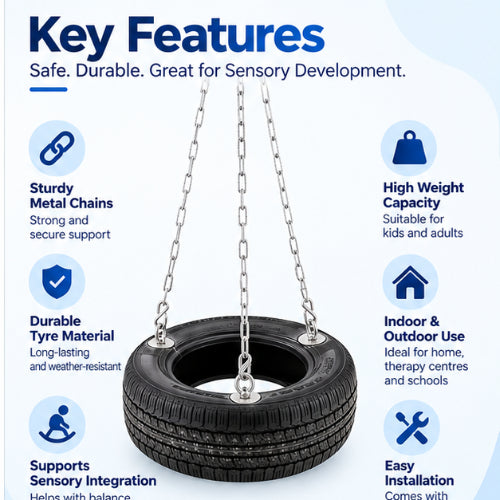
 Tyre Swing Deluxe for Sensory Integration Therapy
“I purchased the Tyre Swing Deluxe Quality, and it's fantastic! The build is solid, and the swing is very st...”
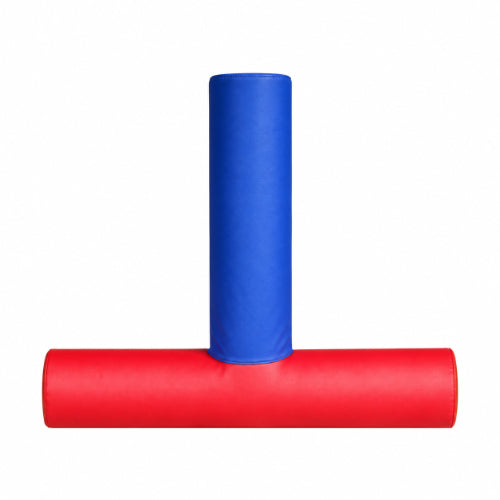
 T Swing Deluxe for Sensory Integration Therapy
“The T Swing Deluxe Quality is super sturdy and comfortable, making it perfect for outdoor fun and relaxation!”
Sensory Swings for Kids & Occupational Therapy
Sensory Swings for Kids: Uses, Activities, Risks and Buying Guide for Healthcare Professionals
This guide explains what sensory swings for kids do and what an occupational therapy swing equipment is. It also gives examples of swing equipment sensory activities and play ideas, and it lists the main risks, with the latest research.
Updated October 2026 · For doctors, students, clinics and hospitals
Key Takeaways
- First, sensory swings for kids give controlled sensory movement and body pressure, and therapists use them in planned Occupational sensory therapy sessions.
- A sensory swing is swing equipment, not a cure, so an adult must supervise every session and the swing setup must be hung from a strong support.
- According to a May 2025 review in the American Journal of Occupational Therapy, Ayres Sensory Integration helped autistic children reach individual goals (9 trials, 344 children).
- However, the American Academy of Pediatrics has noted that the evidence for sensory-based therapies is limited, so outcomes should be tracked.
- Finally, Meddey lists seven therapy swing equipment, from a simple tube swing device to a full vestibular swing equipment system.
Many children seek sensory movement, and many others find it hard to cope with it. Therefore, sensory swings for kids are now common in clinics, schools and homes. However, a sensory swing is not the same as a playground swing equipment, and it needs a plan, a safe setup and a trained adult.
This guide is for doctors, therapists, medical students and buyers of clinic and hospital supplies. In addition, it uses simple words and answers the most common questions. For more therapy products, you can visit the exercise equipment for occupational therapy collection at Meddey.
Latest evidence note: A systematic review in the American Journal of Occupational Therapy (May 2025) looked only at randomised trials of Ayres Sensory Integration. It found strong evidence from five trials that the approach helps autistic children meet individual goals. Meanwhile, a November 2025 review in Frontiers in Pediatrics found that more research is still needed on sensory-based interventions in general. Therefore, a therapy setup works best inside a goal-based therapy plan.
What Is an Occupational Therapy Swing for Kids?

An occupational therapy sensory movement equipment is a suspended suspended device that a therapist uses to give planned movement during a session. People also call it a therapy therapy equipment or a sensory swing. Unlike a playground kids suspended equipment, it can hold different body positions, such as sitting, lying on the tummy or holding on.
The therapist chooses the therapy setup, the position, the speed and the direction. In addition, the goal is not only fun. Instead, the sensory movement equipment supports a target such as balance, posture, attention or calm, and the therapist records the child's sensory response.
What Do Sensory Swings for Kids Do?
Sensory swings for kids give two main kinds of input. First, the body senses sensory movement, direction, speed and balance. This is vestibular input, and it comes from the inner ear. Second, the muscles and joints sense body position and pressure. This is proprioceptive input.
Vestibular input Suspended movement tells the brain how the body moves, so it supports balance and posture.
Proprioceptive input Holding on and pushing against the suspended device gives feedback from muscles and joints.
Calming or alerting Therapists often use slow, steady movement to calm, and faster movement to alert a child.
Motor planning Reaching, throwing and climbing on a therapy equipment asks the child to plan and time movements.
Core strength Staying upright or lying on the tummy works the trunk and neck muscles.
Engagement Finally, movement makes sessions fun, so children join in for longer.
As a result, therapists may use sensory swings for children with autism, ADHD, learning difficulties and coordination problems. However, the suspended equipment does not treat a condition by itself, and each child responds in a different way. Some enjoy gentle suspended sensory movement, while others prefer short and slow sessions.
What the Latest Research Says
Research on sensory integration is mixed, so doctors should read it with care. In particular, results depend on whether a study follows the Ayres Sensory Integration method closely or uses general sensory activities.
- May 2025, American Journal of Occupational Therapy: The review included nine randomised trials with 344 children aged up to 12 years. Six trials involved autistic children. It found strong evidence from five trials that Ayres Sensory Integration supports individual goals for function and participation.
- 2019, Autism Research: A review using Council for Exceptional Children standards judged Ayres Sensory Integration to be an evidence-based practice for autistic children aged 4 to 12 years.
- November 2025, Frontiers in Pediatrics: A systematic review of sensory-based interventions for people aged 0 to 21 years concluded that more research is needed to clarify how well they work.
- 2012, American Academy of Pediatrics: The policy statement said that evidence for sensory integration therapy is limited and mixed. It advised doctors not to use sensory processing disorder as a diagnosis, to inform families about the limits and to monitor outcomes.
What this means in practice. Use a therapy setup to work on clear, measurable goals, and review progress. Do not promise a cure, and always look for other causes of sensory or behaviour changes.
Types of Sensory Swings for Kids and Therapy
Each shape of sensory swings for kids gives a different body position and level of challenge. Therefore, the therapist should match the movement equipment to the child's age, size, strength and goals.
| Swing | Body position | Typical use |
|---|---|---|
| Platform swing | Sitting, kneeling, lying on the tummy | Wide base for many activities and reaching tasks |
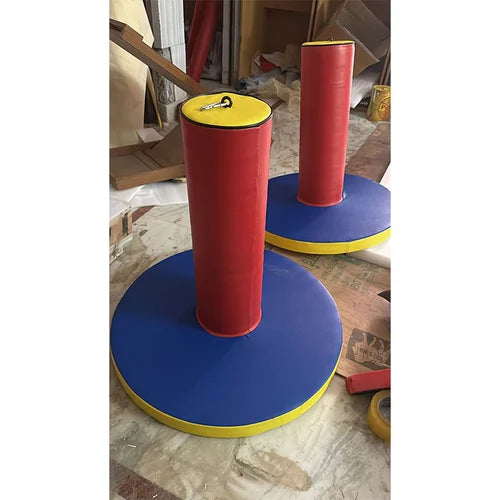
| Bolster swing | Straddling or lying along the bolster | Balance, posture and righting reactions |
| Disc swing | Sitting or lying on a round seat | Linear and rotational movement |
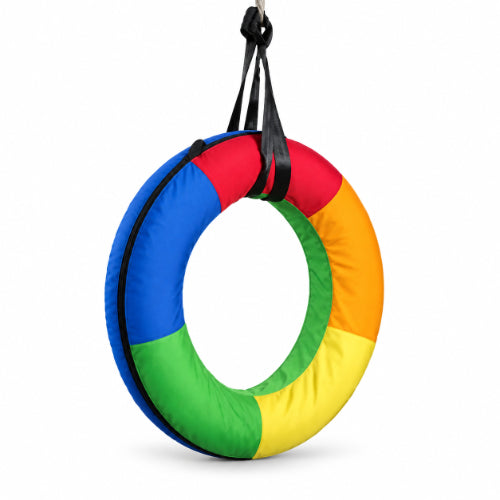
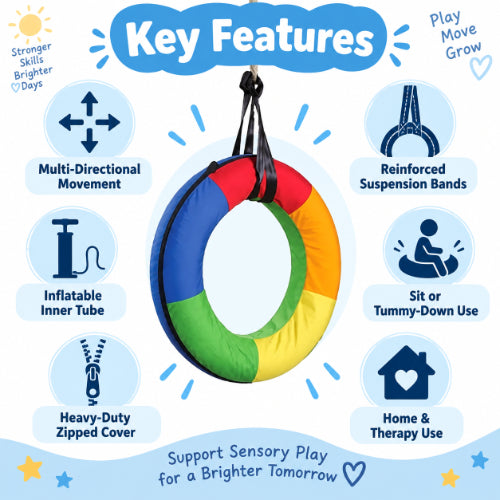
| Tube swing | Sitting in or lying across a ring | Multi-directional movement with gentle support |
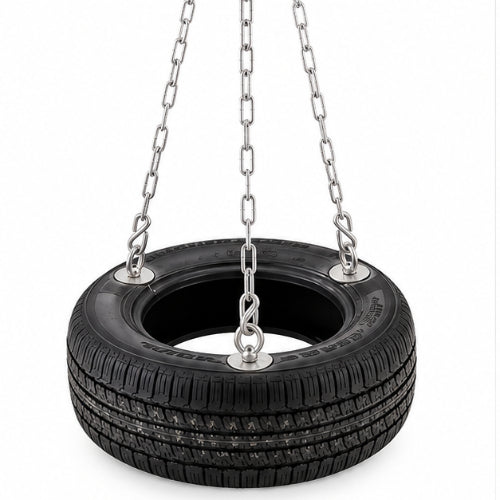
| Tyre swing | Sitting and holding on | Simple, familiar swinging movement |
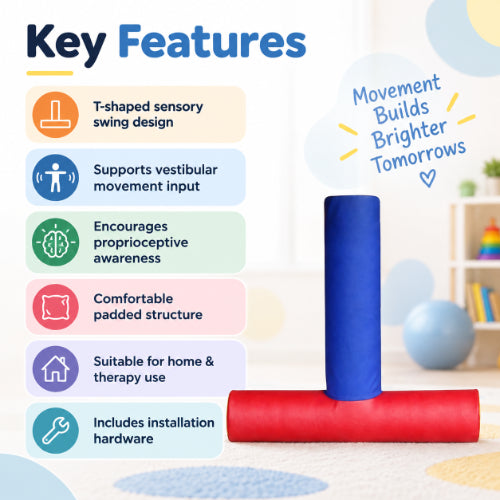
| T swing | Sitting or holding the T-shaped body | Holding and positioning during play |
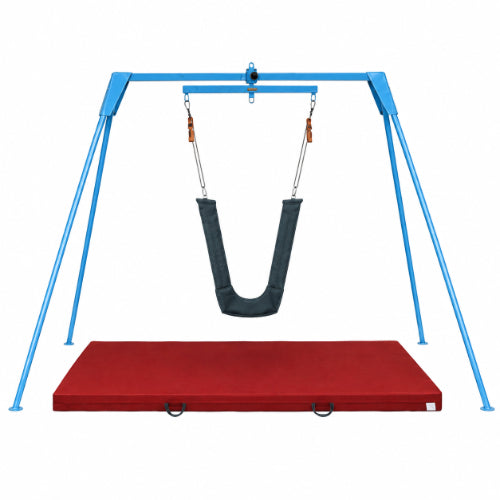
| Vestibular swing system | Chosen by the therapist | Clinic and sensory room programmes |
Swing Activities for Kids Used in Occupational Therapy

These examples show how therapists use a suspended device. However, the therapist must choose and grade each activity for the individual child, and must watch the sensory response all the time.
- Slow forward and back swinging: Steady, rhythmic movement is often used first to help a child settle before a task.
- Tummy-down reaching: The child lies on a platform or tube therapy equipment and reaches for toys. This builds neck, back and shoulder strength.
- Target throwing: While seated, the child tosses bean bags at a target. As a result, balance, aiming and timing work together.
- Retrieve and place: The child collects puzzle pieces or cards on each pass and places them on a board. This adds planning to movement.
- Bolster balance: The child sits on a bolster suspended equipment and holds the posture while the therapist adds small movements.
- Swing and speak: The child names pictures or letters at the high point of the therapy setup, which links movement with language.
- Heavy-work finish: After the movement equipment, the child pushes or carries a weighted bin to finish the session.
Avoid fast spinning unless the therapist has planned it. Quick, irregular or spinning movement can cause dizziness, nausea or distress. In addition, always stop if the child looks unwell.
How to Choose Sensory Swings for Kids
No single suspended device suits every child. Therefore, the therapist should look at the child's age, size, strength, sensory response and goals before choosing. In addition, the room, the ceiling and the budget shape the final choice.
- Posture work: A bolster therapy equipment or a platform suspended equipment can give a stable base and ask the child to hold the body upright.
- Gentle, steady movement: A tube therapy setup or a tyre movement equipment gives simple movement, and the adult can control the pace.
- Unsure about movement: Start with a low suspended device, short sessions and slow movement. As a result, the child learns that the movement is safe.
- Busy clinics: A vestibular therapy equipment system or a frame with several hanging points lets the team plan sessions for different goals.
Sensory swings for kids work best when the child can enter and leave the suspended equipment with ease. Therefore, let the child climb on and off, and do not force the child to stay on. Meanwhile, ask parents what movement the child enjoys or avoids at home, because this helps the therapist plan the first session.
Available at Meddey
Compare selected sensory swings for occupational therapy and supervised movement activities.
| Product Image | Product | Current Price | View |
|---|---|---|---|
 |
Tube Swing Deluxe for Sensory Integration Therapy | ₹5,200 | View product |
 |
Tyre Swing Deluxe for Sensory Integration Therapy | ₹5,249 | View product |
 |
Platform Swing 24 x 36 Inch for Sensory Integration Therapy | ₹5,499 | View product |
 |
Bolster Swing with Rope and Hooks Delulx Quality | ₹5,750 | View product |
 |
Disc Swing Deluxe Quality | ₹6,999 | View product |
 |
T Swing Deluxe for Sensory Integration Therapy | ₹7,525 | View product |
 |
Vestibular Swing System | Occupational Therapy Equipment | ₹39,200 | View product |
Prices shown are current listed prices at the time of preparation and may change on Meddey.
How Long and How Often Should a Child Use Sensory Swings for Kids?

There is no single rule for time or frequency of sensory swings for kids, because each child responds in a different way. Instead, the therapist sets the length of each session and reviews it after every visit. Many therapists begin with short periods of a few minutes and add time only if the child stays comfortable.
- First, watch the child's face, colour, breathing and mood during the therapy setup.
- Next, pause between periods of suspended movement so that the child can rest.
- Also, allow time after the movement equipment before the child starts a new task, because the body needs time to settle.
- In addition, note how the child sleeps, eats and behaves after a session.
Track outcomes: Choose one or two clear goals, such as sitting balance, attention during a table task or time spent in a group. Then, record the result after a set number of sessions. Goal-based tracking also meets the advice of the American Academy of Pediatrics to monitor outcomes.
The Role of Doctors in Choosing Sensory Swings for Kids
Doctors play a key role before a family buys a suspended device. First, a doctor can check for other causes of movement seeking, avoidance or poor balance, such as hearing, vision, sleep or neurological problems. Next, the doctor can refer the child to an occupational therapist for a full assessment.
The therapist then sets goals, picks suitable sensory activities and teaches the family how to use equipment at home. Therefore, a kids therapy equipment bought without advice may not suit the child. Finally, the doctor and the therapist should review progress together, and they should change the plan when the child's needs change.
Fun Sensory Play Activities to Pair with Sensory Swings for Kids
Suspended equipment time is only one part of a session. Therefore, therapists mix it with other sensory play so that children get touch, movement and visual input in one plan.
Obstacle course First, children crawl through tunnels and climb over foam blocks, which builds planning and strength.
Ball pool play Next, children search for hidden items in a ball pool, which gives deep touch input.
Texture bins Also, a bin of dry rice, beans or sand lets children explore touch. Adults must watch for small items.
Putty and dough In addition, squeezing and rolling putty builds hand strength and calm focus.
Balance board tasks Moreover, standing or kneeling on a balance board trains posture and body control.
Light and visual play Finally, a bubble tube gives gentle visual input in a quiet corner.
Sensory Equipment and Sensory Toys
Clinics often group items as sensory equipment and sensory toys. Sensory equipment means larger items such as therapy setup, ball pools, bubble tubes, balance boards and foam blocks. Meanwhile, sensory toys are small items such as textured balls, putty, fidgets and tactile bins.
Both groups help, but they do different jobs. Equipment gives large movement and sensory body input, and it needs space, setup and supervision. In contrast, toys give small, hand-based input and are easy to use at home or school.
Meddey lists sensory equipment such as a ball pool, a bubble tube column, foam blocks with a tunnel and an equilibrium board. However, it does not list a separate sensory toys range, so please contact Meddey to ask about toys.
What Are the Risks of Using Sensory Swings for Kids?
Sensory swings for kids are safe when the setup is correct and an adult supervises. However, it carries real risks if used without a plan.
| Risk | What can happen | How to lower it |
|---|---|---|
| Falls and head injury | A child slips, or lets go, and hits the floor | Use floor mats, low height and close supervision |
| Weak fixing | Hooks or ropes fail under load and the swing drops | Fix to a strong support, and inspect hardware often |
| Overstimulation | Distress, meltdowns or poor sleep after a session | Start slow, keep sessions short and watch the child |
| Dizziness and nausea | Movement upsets the balance system | Avoid fast spinning, and stop at the first signs |
| Ropes and straps | Tangling or pinching of fingers or limbs | Keep ropes short, tidy and out of reach |
| Medical conditions | Movement may be unsafe for some children | Ask a doctor before use |
| Over-reliance | The swing replaces a full assessment | Set goals, track outcomes and review |
Signs to stop at once
Stop the movement equipment if the child turns pale or flushed, sweats, feels sick, becomes upset, or tries to get off. In addition, give the child time to recover before the next activity.
Children who need a doctor's advice first
Ask a doctor before use if the child has epilepsy, a heart condition, a recent head injury, an ear or balance problem, or neck instability. Neck instability can occur in some children with Down syndrome, for example. Therefore, the care team should clear the activity before suspended movement starts.
Safe Setup and Supervision of Sensory Swings for Kids
- Strong support: First, hang the suspended device from a suitable structural support, and follow the maker's instructions. Do not hang it from plasterboard or a weak frame.
- Clear space: Next, keep the area around the therapy equipment free of furniture, and place thick mats below it.
- Right size: Also, check the age, size and weight limits before use. For example, Meddey lists its Disc Suspended equipment for children above 3 years and its Tyre Therapy setup for ages 4 to 12 years.
- Constant supervision: In addition, an adult or a trained professional should stay with the child at all times.
- Regular checks: Moreover, inspect ropes, hooks, straps and covers before each session, and replace worn parts.
- Clean between users: Finally, wipe the movement equipment in clinics, and keep a record of checks and sessions.
Buying Checklist for Sensory Swings for Kids
Therapy goal First, choose the shape by the goal, such as posture, balance or calm.
Age and size Next, check the listed age and size range for the child.
Material Also, look for strong fabric, sturdy straps and a cover that is easy to clean.
Hardware In addition, confirm that hooks or hanging hardware are included, and check the load rating.
Space Since suspended device need room, measure the ceiling and floor space first.
Supplier Finally, confirm the maker details, support and return policy.
Where to Buy Sensory Swings for Kids Online in India?
Parents, therapists, clinics and hospitals can buy a therapy therapy equipment from medical equipment stores. Before you buy, compare the suspended equipment type, size range, material, hardware and price. Meddey lists seven sensory swings and other sensory equipment, and its support team can help you choose. You can also browse the balance training equipment collection for balance boards.
Planning sensory swing sessions around clear goals

Sensory swings are most useful when each session has a clear purpose. A therapist may want to work on balance, posture, attention, body awareness, motor planning, or calm participation. The same sensory swing can feel very different depending on body position, direction, speed, duration, and the task added during movement. For that reason, the sensory plan should begin with one or two measurable goals rather than with movement for its own sake.
A short sensory swing activity may be enough before a table task, while another child may use the swing as part of a longer occupational therapy session. The therapist can observe whether the child becomes more settled, more alert, more organized, or uncomfortable. Those observations help shape the next sensory session and reduce the risk of repeating an activity that is not helping.
Sensory swings should also fit the child's tolerance on that particular day. Sleep, illness, hunger, anxiety, noise, and recent activity can change how a child responds to sensory movement. A plan that worked well last week may need to be shorter or slower today. Flexible sensory planning is often more practical than using the same routine every time.
Start with one sensory goal at a time
When several goals are mixed into one sensory swing activity, it can become difficult to know what actually helped. A therapist may therefore begin with one simple target, such as maintaining an upright position for a short period, reaching toward an object while moving, or staying calm enough to complete a follow-up task. Once the child is comfortable, the activity can become more complex.
This approach also makes progress easier to explain to families. Instead of saying that the child “liked the sensory swing,” the therapist can describe whether balance improved, whether attention lasted longer, or whether the child tolerated movement with less distress. Clear sensory goals make the session easier to review.
Matching sensory swings to body position and activity
Different sensory swings support different body positions. A platform design may allow sitting, kneeling, or lying on the stomach. A tube or tyre design may offer a more enclosed position. A bolster shape may encourage straddling, postural reactions, and trunk control. The therapist should match the swing shape to the activity rather than choosing only by appearance.
Body position changes the sensory demand. Sitting upright may require one kind of balance response, while tummy-down reaching adds shoulder, neck, and trunk work. Kneeling can increase postural challenge. For children who are unsure about movement, a lower and more supported position may feel safer at the start.
The therapist may also pair sensory swings with simple tasks. Reaching for a bean bag, naming a picture, matching cards, placing puzzle pieces, or pushing an object can turn passive movement into a structured sensory activity. The task should remain easy enough that the child can respond without becoming overwhelmed.
Why position matters for comfort
A sensory swing should support the body without creating unnecessary pressure or fear. If a child's feet, hips, shoulders, or hands feel insecure, the child may spend the session holding on tightly instead of working toward the sensory goal. The therapist can change the swing height, support, or activity to improve comfort.
Comfort does not mean removing every challenge. Occupational therapy often uses manageable challenge to support learning and participation. The important point is that the sensory swing should remain safe, supervised, and adjustable to the child's response.
Using sensory swings in clinics, schools, and homes
The same sensory swing can be used differently depending on the setting. In a clinic, a therapist may have more floor space, mats, multiple swing options, and a structured session plan. In a school, sensory movement may need to fit around classroom routines. At home, families usually need a simpler setup that can be supervised consistently.
Clinical spaces can support a wider range of sensory activities because the therapist can change equipment, body position, and task demands during the session. The therapist can also compare the child's response across different sensory swings and choose the most useful option for a particular goal.
At home, simplicity is important. Parents should understand the recommended sensory activity, the duration, the signs to stop, and the safe setup. Home use should not become unsupervised free play when the swing is being used as therapy equipment. The family should also know when to ask the occupational therapist for a review.
Keeping home sensory use practical
A home sensory swing should not block doors, walkways, fans, lights, shelves, or furniture. The area around the swing needs enough clear space for the expected movement. Floor mats should cover the likely landing area, and the fixing point should be appropriate for the load and installation method.
Families can also keep sensory use simple by following a repeatable routine. For example, the child may use the swing for a short supervised period, complete one heavy-work activity, and then move to a calm task. A consistent sensory routine can be easier to observe than a long session with many changing activities.
How to observe a child's response to sensory movement
A sensory response is not judged only by whether the child smiles or asks for more. Therapists and caregivers can watch breathing, skin colour, eye contact, posture, speech, mood, movement quality, and the ability to transition to the next task. A child may enjoy sensory movement but still become disorganized afterward.
Positive signs may include a relaxed posture, steady breathing, better attention, improved participation, and smoother transition into the next activity. Warning signs may include sudden quietness, pallor, sweating, nausea, distress, unusual behaviour, or repeated attempts to leave the swing.
The therapist should also consider delayed sensory responses. Some children appear comfortable during movement but become restless, tired, irritable, or unsettled later. Parents can share what happens after the session, including sleep, appetite, mood, and activity level. That information can help the therapist adjust future sensory swing sessions.
Use short notes instead of vague impressions
Sensory swing maintenance and equipment checks
Check the whole setup, not only the swing
Choosing sensory swings by clinic need and budget
Questions to ask before buying
- Which sensory goals will this swing support?
- What age, size, and weight range will use the equipment?
- Does the room have enough clear movement space?
- What fixing or frame system is required?
- Can the surface be cleaned easily between users?
- Are replacement parts and support available?
- Will staff be trained to supervise and grade sensory movement?
Sensory swings and activities before and after movement
Avoid turning every session into a long circuit
Frequently Asked Questions About Sensory Swings for Kids
What does a sensory swing do for kids?
It gives controlled movement and body pressure. These inputs support balance, posture, body awareness and calm, and they make therapy tasks more engaging. It does not cure a condition.
What is an occupational therapy swing for kids?
It is a suspended therapy setup that an occupational therapist uses in a planned session. The therapist selects the movement equipment type, position, speed and goal.
What are some examples of swing activities used in occupational therapy?
Examples include slow forward and back suspended movement, tummy-down reaching, bean bag throwing, retrieving puzzle pieces and balancing on a bolster suspended device.
What are some fun and sensory play activities for occupational therapy?
Examples include obstacle courses with tunnels and foam blocks, ball pool searches, texture bins, putty play and balance board tasks.
What are the risks of using a sensory swing?
The main risks are falls, weak fixing, overstimulation, dizziness, tangling in ropes and use by children with certain medical conditions. Supervision and correct setup lower these risks.
Can a sensory swing be used at home?
Yes, with a strong fixing point, clear space and adult supervision. Parents should follow the advice of the child's occupational therapist.
How much do sensory swings for kids cost at Meddey?
Prices differ by swing type and size, from simple tube and tyre swings to the professional Vestibular Swing System. Please check the live listing for the latest price.
Explore Medical Collections
All Categories
Abdominal & Maternity Support

Accessories

Accu-Chek Instant Strips: Use, Compatibility, Price & Blood Sugar Testing Guide
Accu-Chek Instant Strips: Uses, Features & Complete Guide

accupuncture

Acupuncture Needles & Supplies

Advanced Physiotherapy Machines & Lumbar Physiotherapy

Airways
Alcohol Swab: Uses, Safe Use and Disposal Guide
Ambu Bag Full Form: Is There an Official Meaning?
Ambu Bag: Parts, Uses and Safety Guide
Ambu Full Form: What the Name Means and BVM Basics

Ambulance

Anatomy Models
Anesthesia Machine
You may also need
FOR YOURecommended for you
Save 31%
Save 12%
Save 42%
Save 22%
Save 30%
Save 42%
Save 37%