


Featured ChoiceSave 25%
Save 41%
About this collection
Splints: Uses, Types, Wear Time, Cost and Buying Guide for Healthcare Professionals
This guide explains what splints are used for and how long people wear them. It also covers wrist braces, a finger splint, a foot drop splint, a carpal tunnel syndrome splint, a plantar fascia night splint, walking, pain and cost.

Key Takeaways
- First, a splint is a support that holds an injured or painful body part still, so that it can rest and heal.
- In practice, wear time depends on the problem: many people wear a carpal tunnel splint at night, a mallet finger splint continuously for 6 to 8 weeks, and a plantar fascia night splint for 1 to 3 months.
- According to a 2026 guideline review, a carpal tunnel syndrome splint should be a forearm-based wrist orthosis in a near-neutral position, worn at night for mild to moderate cases.
- However, a splint should not be very painful, and severe pain, numbness, colour change or swelling needs urgent medical advice.
- Finally, choose a splint by body part, fit, rigidity, comfort and medical advice, and not by price alone.
Contents
- What is a splint?
- What is a splint used for?
- Types of splints
- Wrist braces and carpal tunnel syndrome splint
- Finger splint
- Foot drop splint
- Plantar fascia night splint
- Is a splint painful?
- How long do you wear a splint?
- Can I walk on a splint?
- Can you wear a splint overnight?
- How to wear a splint correctly
- How much does a splint cost?
- Buying checklist
- Frequently asked questions
Every orthopaedic clinic, casualty and physiotherapy room uses splints every day. Therefore, doctors, nurses and students need to know which splint fits which problem. However, many patients ask the same questions: does it hurt, how long should I wear it, and can I walk?
This guide is for doctors, physiotherapists, nurses, medical students and buyers of clinic equipment. In addition, it uses simple words and answers the most common questions, from the carpal tunnel syndrome splint to the finger splint and the foot drop splint. To see products, you can visit the splints and supports collection at Meddey.
Latest evidence note: A 2026 review of clinical practice guidelines says clinicians should recommend a carpal tunnel syndrome splint, meaning a forearm-based wrist orthosis in a near-neutral position, worn at night, for mild to moderate cases. Meanwhile, the 2023 JOSPT heel pain guideline supports night splints for 1 to 3 months in people with first-step morning heel pain. Therefore, splints have a clear place in current care, but the plan must fit the problem.
What Is a Splint?
A splint is a rigid or semi-rigid support that holds a body part in a set position. It can be made of metal, plastic, foam, fabric or an inflatable material. As a result, it limits movement, protects the area and lowers pain.
People often mix up splints, braces and casts. A splint usually covers only part of the limb, so it is easy to remove and adjust. Meanwhile, a cast wraps all around the limb and is usually taken off by a professional. A brace is often a fitted support that allows some movement.
For students, one line is enough. A splint is a removable support that holds an injured or painful part still so that it can rest and heal.
What Is a Splint Used For?
Splints have many uses in orthopaedics and rehabilitation.
Fractures and dislocations First, a splint holds the limb still before a cast or surgery, and it also helps in transport.
Sprains and strains Also, it rests the joint and protects the ligaments while swelling settles.
Tendon and nerve problems In addition, a splint can hold a wrist, finger or foot in a helpful position, such as in carpal tunnel syndrome.
After surgery Moreover, surgeons use splints to protect repairs during early healing.
Arthritis and overuse Some people use wrist braces to rest painful joints during daily tasks.
Weakness and deformity Finally, a splint can support a weak limb, such as a foot drop splint, or prevent a joint from tightening.
Types of Splints
There is no single official list, but most splints fall into a few clear groups.
By body part
Wrist and hand splints These include wrist braces, thumb splints and carpal tunnel splints. Therefore, they suit sprains, tendon pain and nerve compression.
Finger splints These hold one finger straight or bent. For example, a mallet finger splint keeps the tip of the finger straight.
Ankle and foot splints These include ankle braces, foot drop splints and night splints. As a result, they help sprains, weakness and heel pain.
Knee and leg splints These include knee immobilisers, such as the Velpeau Genucast 0 degree knee immobiliser, and leg splints. Thus, they keep the knee straight after injury or surgery.
By design
Rigid splints They use metal or plastic and give firm support. Also, they suit fractures and severe sprains.
Semi-rigid and soft splints They mix fabric with stays. Therefore, they give support with more comfort for daily use.
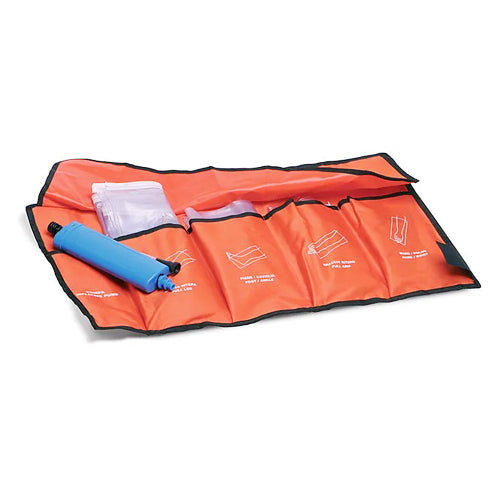
Air or inflatable splints They wrap around the limb and inflate, like the air splint set. Since they are quick to apply, they suit first aid and emergency care.
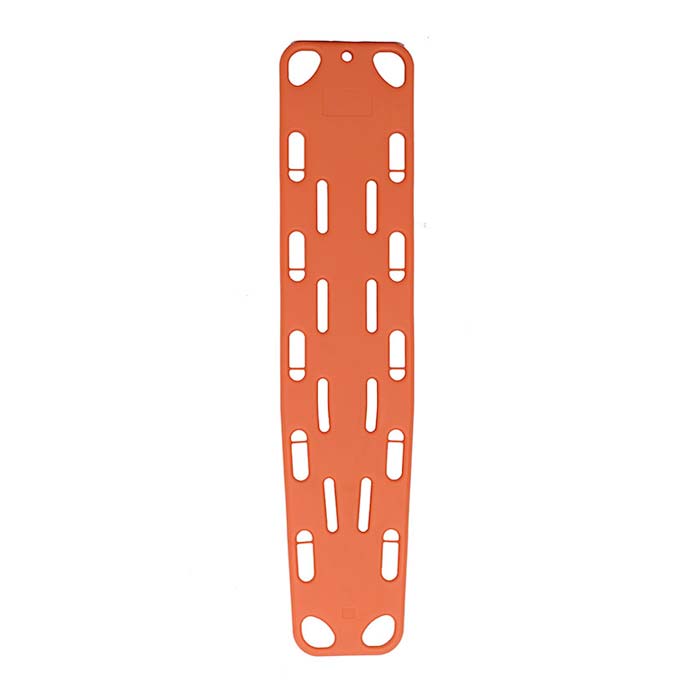
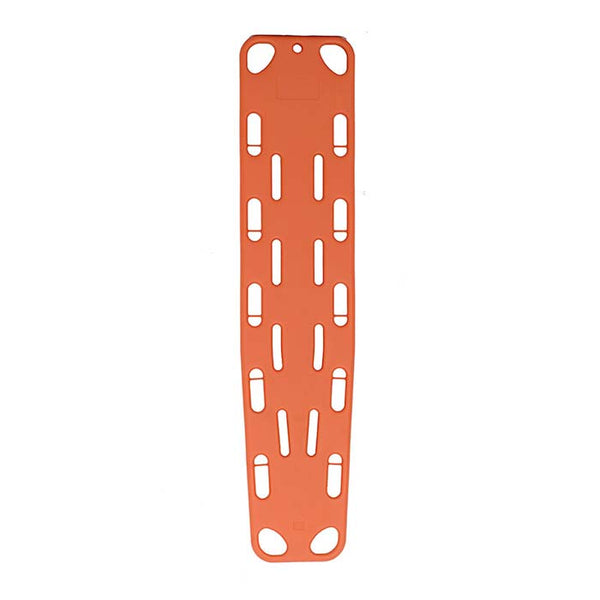
Traction splints They pull gently along a broken thigh bone, like the traction splint set. However, only trained staff should use them.
Note that a splint can be ready-made or custom-made. Ready-made splints suit most cases, while custom splints suit complex shapes or long-term use.
Wrist Braces and Carpal Tunnel Syndrome Splint
Wrist braces support the wrist and limit painful bending. A carpal tunnel syndrome splint is a wrist brace that keeps the wrist close to neutral. Because the median nerve passes through a narrow space at the wrist, a straight wrist may reduce pressure on the nerve.
Does a carpal tunnel syndrome splint work?
A Cochrane review of 29 studies with 1,937 participants found that splinting for less than three months may not improve symptoms compared with no treatment. However, people who used a night splint tended to report overall improvement. In addition, the review found that it is unclear whether full-time or night-only wear is best.
The 2026 guideline review gives a clearer message for practice. It recommends a forearm-based orthosis that keeps the wrist near neutral, worn at night, for mild to moderate cases. It also says that clinicians may add daytime wear if night use alone is not enough.
At Meddey, wrist braces include the Wrist Support Brace for Carpal Tunnel and Sprain, the Velpeau Manu Control Classic rigid brace, the Manu Comfort knitted support and the Manu Xpro wrist and thumb brace.
Note: Numbness, weakness, muscle wasting or severe symptoms need a doctor's assessment. A splint alone is not enough in those cases.
Finger Splint
A finger splint holds one finger in a set position. Doctors use it for mallet finger, jammed fingers, small fractures and tendon injuries. Therefore, the choice depends on the injury.
Mallet finger: a clear example
In mallet finger, the tip of the finger cannot straighten because the tendon is torn or pulled off. Splinting is the usual first treatment. For example, hospital guidance suggests a continuous splint for about 6 weeks for a bony mallet and 8 weeks for a soft tissue mallet, with the tip held straight all the time.
After that, many clinicians add 2 to 4 weeks of night splinting. However, a randomised trial found no significant difference in final extensor lag between patients who wore an extra month of night splint and those who did not. Therefore, the night phase is common practice, but the evidence for it is limited.
Safety point: If the tip of the finger bends even once during the continuous phase, healing may be lost. Therefore, patients should follow their clinician's advice on skin care and cleaning.
Foot Drop Splint
In foot drop, the muscles that lift the foot are weak, so the toes drag during walking. Common causes include stroke, nerve injury and spine problems. A foot drop splint, also called an ankle-foot orthosis (AFO), holds the foot at a right angle to the leg. As a result, the toes clear the ground and walking is safer.
What the research shows
A 2021 meta-analysis of 19 studies with 434 stroke patients found that an AFO improved walking speed, step length and mobility scores. In addition, a review of 11 randomised trials with 1,135 participants found that AFOs raised walking speed by about 0.24 m/s compared with no device. Meanwhile, the effect on balance was unclear.
However, foot drop is a sign and not a diagnosis. Therefore, a doctor should always look for the cause, such as a nerve injury or a spine problem, before or along with using a splint.
Plantar Fascia Night Splint
A plantar fascia night splint holds the foot gently in a stretched position during sleep. It keeps the plantar fascia and the calf from tightening overnight, so the first steps in the morning hurt less.
The 2023 JOSPT clinical practice guideline on heel pain supports night splints for 1 to 3 months in people who have pain with the first steps in the morning. Similarly, the earlier 2014 version recommended the same for people who had not responded to other treatments. Therefore, night splints work best as part of a plan with stretching, footwear advice and activity changes.
Tip: If a night splint keeps you awake, ask your clinician about a softer style, a different angle or a shorter wear time.
Is a Splint Painful?
A well-fitted splint should reduce pain and should not cause sharp pain. However, some discomfort is common at first, because the body needs time to get used to the support.
What is normal
- A feeling of firm pressure or tightness for the first hours.
- Mild soreness where the splint touches bony areas.
- Stiffness in the joints next to the splint.
What is not normal
- Severe or worsening pain, or pain that is not relieved by rest and elevation.
- Numbness, tingling, pale, blue or cold fingers or toes.
- Swelling that makes the splint feel too tight.
- Red, sore or broken skin, or a bad smell.
If any of these signs appear, loosen the splint if safe to do so, elevate the limb and contact a doctor at once.
How Long Do You Wear a Splint?
The time depends on the injury, the splint type and the doctor's plan. Therefore, the table below gives examples only, and each patient should follow their own clinician's advice.
| Condition | Typical wear pattern |
|---|---|
| Carpal tunnel syndrome splint (mild to moderate cases) | Often at night, and sometimes in the day if needed |
| Mallet finger | Continuous for 6 to 8 weeks, then often night use for 2 to 4 weeks |
| Plantar fasciitis with morning pain | Night splint for about 1 to 3 months |
| Wrist or ankle sprain | Days to a few weeks, as advised |
| Fracture | As advised, often until a cast or a follow-up review |
| Foot drop | Often long-term, depending on recovery |
Also, do not stop early without advice. In contrast, do not keep a splint on for much longer than advised, since long immobilisation can cause stiffness and weakness.
Can I Walk on a Splint?
It depends on where the splint is and why you use it. Arm, wrist and finger splints do not affect walking, so you can walk normally. However, for leg, ankle and foot injuries, the answer needs care.
- Fracture splint on the leg or foot: First, do not put weight on it unless your doctor says you can. Use crutches or a frame as advised.
- Walking boot or full shell walker: Then, many people can bear weight in a boot, such as the Genesis full shell walker, as their doctor allows, because the sole and shell protect the foot.
- Ankle brace for a sprain: Also, many people can walk in a brace like the Velpeau Freecast Adjust ankle brace once pain allows.
- Foot drop splint (AFO): In addition, it is made for walking, and it helps the toes clear the ground.
- Plantar fascia night splint: Finally, it is for sleep, and it is not for walking around.
Therefore, always ask your clinician about weight-bearing before you walk on any leg splint.
Can You Wear a Splint Overnight?
Yes, in many cases. Some splints are made for night use, such as a carpal tunnel syndrome splint or a plantar fascia night splint. Also, doctors often ask people with a fracture or a mallet finger to wear their splint day and night.
Tips for night wear
- First, make sure the splint is snug but not tight, since limbs can swell during the night.
- Second, keep the limb slightly raised on a pillow if you have a fresh injury.
- Third, check the fingers or toes for colour, warmth and feeling before sleep.
- In addition, use soft padding over bony points, and keep the skin clean and dry.
- Finally, remove or loosen the splint and call a doctor if you get severe pain, numbness or colour change.
How to Wear a Splint Correctly
The steps below give a general idea. However, always follow the maker's instructions and your clinician's advice.
1. Check the fit and size
First, choose the correct size and side. A splint that is too loose does not support, while one that is too tight cuts blood flow.
2. Prepare the skin
Next, check that the skin is clean, dry and free of cuts. Also, use a thin sleeve or padding if the maker advises it.
3. Position the limb
Then, place the limb in the position your clinician advises, such as a neutral wrist. Keep the joints next to the splint moving if allowed.
4. Secure the straps
After that, fasten the straps from the middle outwards. They should be firm but let you slide a finger under them.
5. Check circulation
Finally, check the colour, warmth, feeling and movement of the fingers or toes. Repeat this check several times a day, and after any swelling.
How Much Does a Splint Cost?
The cost of a splint depends on the body part, the material, the rigidity, the brand and the fit. Therefore, a simple wrist brace costs far less than a rigid or specialised splint, and a full shell walker costs more. At Meddey, a wrist brace for carpal tunnel and sprain is listed at ₹449 and an air splint set at ₹4,149, as of 29 September 2026.
Splints available at Meddey and their prices
| Product | Type | Key detail | Meddey price |
|---|---|---|---|
| Wrist Support Brace for Carpal Tunnel and Sprain | Wrist brace | Removable aluminium stay, three straps, left and right options | ₹449 |
| Velpeau Manu Control Classic Wrist Brace | Rigid wrist brace | Two lateral stays, removable palm stay, sizes T1 to T4 | ₹2,999 |
| Velpeau Manu Comfort Wrist Support | Knitted wrist support | Silicone insert, removable rigid stay, left and right versions | ₹3,299 |
| Velpeau Manu Xpro Wrist and Thumb Brace | Wrist and thumb | Immobilises wrist and thumb, breathable knit, left and right versions | ₹4,499 |
| Air Splint Set | Inflatable splints | Six-piece PVC kit for hand, arm and leg | ₹4,149 |
| Velpeau Freecast Adjust Ankle Brace | Ankle brace | Two rigid shells, adjustable straps, universal size | ₹2,989 |
| Velpeau Genucast 0 Degree Knee Immobiliser | Knee splint | Mouldable aluminium stays, sizes T1 to T4 | ₹3,989 |
| Genesis Full Shell Walker | Walking boot | Pneumatic air chambers, protective shell, sizes XS to XL | ₹10,900 |
| Traction Splint Set, Adult | Traction splint | Aluminium alloy, adjustable length, carry bag | ₹11,999 |
However, Meddey's current range does not list a dedicated finger splint, foot drop splint or plantar fascia night splint. Therefore, please contact Meddey to ask about availability.
For a carpal tunnel syndrome splint, the Wrist Support Brace for Carpal Tunnel and Sprain is the lowest-priced option in this list, while the rigid and knitted Velpeau braces cost more.
What pushes the price up?
- First, rigid stays and better materials raise the cost.
- Second, complex designs, such as a walking boot or a hinged brace, cost more.
- Third, custom-made splints cost more than ready-made ones.
- In addition, brand, size range and warranty also affect the price.
Price note: Prices and offers change often. Therefore, please check the live listing, or contact Meddey for help.
Buying Checklist for Splints
Match the problem First, choose a splint that fits the body part and the injury, as your clinician advises.
Check the size and side Next, use the size chart, and pick the right left or right version.
Rigidity Also, choose rigid support for fractures and severe sprains, and softer support for daily use.
Comfort and skin In addition, look for soft padding, breathable fabric and adjustable straps.
Ease of use Since patients will put it on alone, check that the straps are simple to fasten.
Supplier support Finally, confirm size exchange, warranty and after-sales help.
For a carpal tunnel syndrome splint, check that the wrist stays close to neutral and that the straps do not press on the palm. As a simple rule, involve a doctor or physiotherapist before you buy a splint for an injury. Then, review the fit after a few days.
Frequently Asked Questions About Splints
What is a splint used for?
A splint holds an injured or painful part still. It is used for fractures, sprains, tendon and nerve problems, arthritis, weakness and protection after surgery.
Is a splint painful?
A well-fitted splint should ease pain. Some pressure or soreness is normal at first. However, severe pain, numbness, colour change or swelling needs urgent medical advice.
How long do you wear a splint?
It depends on the problem. For example, a carpal tunnel splint is often worn at night, a mallet finger splint for 6 to 8 weeks, and a plantar fascia night splint for 1 to 3 months. Follow your clinician's plan.
How much does a splint cost?
The cost depends on the type and material. At Meddey, a wrist brace is listed at ₹449, an ankle brace at ₹2,989 and an air splint set at ₹4,149, as of 29 September 2026.
Can I walk on a splint?
Arm and finger splints do not stop walking. For leg and foot splints, follow your doctor's advice on weight-bearing, and use crutches if told to.
Can you wear a splint overnight?
Yes, in many cases. Night splints are made for it, and fracture splints may need day and night wear. Keep it snug, check circulation and seek help if pain or numbness appears.
What is a carpal tunnel syndrome splint?
It is a wrist splint that keeps the wrist close to neutral. Doctors often advise wearing it at night for mild to moderate carpal tunnel syndrome.
Can you wear a carpal tunnel syndrome splint all day?
Yes, if your clinician advises it. Night wear is the usual plan, but daytime wear can be added when night use alone does not control symptoms. Check the skin and comfort often.
What is a plantar fascia night splint?
It is a splint worn during sleep that holds the foot gently stretched. It is used for heel pain with first-step pain in the morning, often for 1 to 3 months.
Where to Buy Splints Online in India?
Clinics, hospitals and families can buy splints from medical equipment stores. Before you buy, compare the type, size, rigidity, comfort and price. Meddey lists wrist braces, ankle and knee supports, air splints and a walking boot, and its support team can help you choose.
View SplintsOrthopedic SupportsVisit MeddeyDisclaimer
This article is for general education. Therefore, it does not replace medical advice or clinical judgement. A trained healthcare professional should decide which splint suits an injury and how long to wear it. Also, prices and product details may change over time.
Explore Medical Collections
All Categories
Abdominal & Maternity Support

Accessories

Accu-Chek Instant Strips: Use, Compatibility, Price & Blood Sugar Testing Guide
Accu-Chek Instant Strips: Uses, Features & Complete Guide

Accupressure Products for Pressure Point Therapy, Pain Relief & Wellness

accupuncture

Acupuncture Needles & Supplies

Advanced Physiotherapy Machines & Lumbar Physiotherapy

Airways

Ambulance

Anatomy Models
Anesthesia Machine

Anesthesia Products
Ankle Support, Braces & Walker Boots for Recovery
Ankle Weights & Exercise Weights for Home & Rehab
You may also need
FOR YOURecommended for you
Save 25%
Save 41%