


Featured ChoiceSave 50%
Save 45%
Save 50%
Save 50%

Save 51%
Save 50%



About this collection
Surgical Caps: Types, Uses, How to Wear, Cost and Buying Guide for Healthcare Professionals
This guide explains what surgical caps are for and why healthcare staff wear them. It also covers the main types, how to wear a cap correctly, the latest guideline advice, and how to choose the best surgical caps for a clinic or hospital.
Key Takeaways
- First, surgical caps cover the hair and scalp so that hair, skin flakes and germs do not fall into the sterile field.
- According to AORN, the head cover must confine all hair and completely cover the ears, scalp skin, sideburns and nape of the neck.
- In practice, the latest AORN guidance makes no recommendation between bouffant and skull-style caps, so each facility decides with its infection team.
- For cost, Meddey lists disposable caps at about ₹2.72 to ₹3.49 per cap in the 200-piece packs, as of 29 September 2026.
- Finally, choose a cap by coverage, fit, fabric, comfort and pack size, and not by price alone.
Contents
- What are surgical caps?
- What are surgical caps for, and why do people wear them?
- Types of surgical caps
- What the guidelines and research say
- How to wear a surgical cap
- Fabric, weight and size
- What are the best surgical caps?
- Surgical caps available at Meddey
- How much does a surgical cap cost?
- Surgical scrub: suits and hand scrub
- Care, laundering and disposal
- Common mistakes
- Buying checklist
- Frequently asked questions
Every operating theatre starts with a simple rule: keep the sterile field clean. Therefore, surgical caps are one of the first items that staff put on before they enter the theatre. However, many students and buyers ask which style is best, how to wear it and what it should cost.
This guide is for doctors, nurses, OT technicians, medical students and buyers of hospital supplies. In addition, it answers the most common questions in simple words. To see products, you can visit the surgical caps and scrub caps collection at Meddey.
Latest guideline note: The AORN surgical attire guideline says that a clean head cover should confine all hair and completely cover the ears, scalp skin, sideburns and nape of the neck. In its updated guidance, AORN makes no recommendation on the type of head cover, so an interdisciplinary team in each facility can choose between bouffant and skull-style caps.
What Are Surgical Caps?
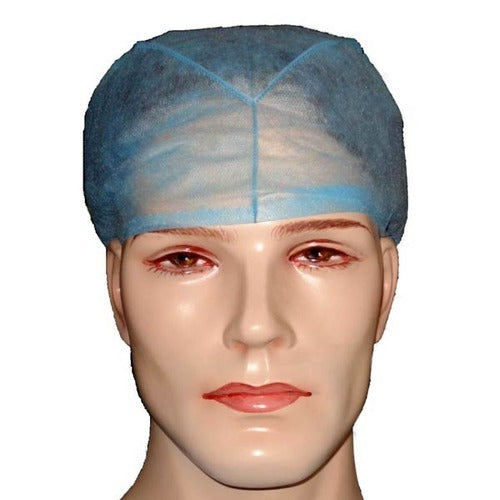
Surgical caps are head coverings worn by doctors, nurses, OT technicians and other staff in operating rooms and procedure areas. People also call them a surgical head cap, a surgeons cap or a scrub cap. Some are single-use and made of light non-woven fabric. Others are reusable cloth caps that staff wash after use.
Most disposable caps use a soft non-woven material, often about 25 GSM, and they have an elastic band or back ties. Meanwhile, cloth scrub caps are often made of cotton or a cotton blend, and many come in colours and prints. As a result, buyers can choose between low-cost single-use caps and reusable caps.
For students, one line is enough. A surgical cap covers the head and hair so that hair and skin do not contaminate the sterile field.
What Are Surgical Caps For, and Why Do People Wear Them?
People wear surgical caps for a few clear reasons. Below are the main ones.
Protect the patient Hair and skin carry bacteria. A cap holds them back, so fewer particles reach the wound or the sterile field.
Contain hair and dandruff Also, a cap stops loose hair and skin flakes from falling into instruments and the surgical site.
Protect the wearer In addition, a cap keeps blood and fluid splashes off the hair and scalp.
Meet infection control rules Moreover, hospital policies and accreditation checks expect staff to cover their hair in restricted areas.
Keep a professional look Also, a neat cap helps staff look uniform and makes it easy to spot who belongs in the OT.
Support cleanroom rules Finally, caps are used in labs, pharmacies and cleanrooms for the same reason.
In short, surgical caps are for hygiene. They lower the chance that the team's hair and scalp become a source of contamination.
Types of Surgical Caps
There is no single official list, but most surgical caps fall into a few clear groups.
1. Surgeons cap (skull cap) It fits close to the head and ties at the back. Because it is snug, many surgeons like it. However, it may leave hair at the neck or sides uncovered.
2. Bouffant cap It is a loose, gathered cap with an elastic edge. Therefore, it covers long hair and the nape of the neck more easily.
3. Hood or astronaut cap It covers the head and goes down to the neck. As a result, it suits staff with beards or facial hair, and it is used in some special procedures.
4. Reusable cloth scrub cap It is made of cotton or blends. Also, it needs careful laundering, and the facility should set the rules.
5. Disposable non-woven cap It is light and single-use. Since staff throw it away, it saves washing time.
6. Elastic-back vs tie-back caps Elastic caps are quick to put on, while tie-back caps let staff adjust the fit at the back.
Note that a cap can belong to more than one group. For example, a disposable bouffant cap is both single-use and gathered. Therefore, when you buy, check the style, the material and the fit together.
What the Guidelines and Research Say
Head covers in the OT have been common since the 1950s. However, the debate about the best style is still active, so it helps to know what the evidence shows.
The AORN guideline
AORN says that a clean head cover or hood should confine all hair and completely cover the ears, scalp skin, sideburns and nape of the neck. In the updated guideline, AORN gives no recommendation on the type of head cover, and it suggests that an interdisciplinary team decides. In addition, AORN says that facilities should set rules for reusable head covers, including the fabric, how often to launder and how to launder.
Bouffant vs skull cap
A 2017 study by Markel and colleagues tested disposable bouffant caps, disposable skull caps and newly laundered cloth skull caps in a mock procedure. It found no significant differences in particle or microbial contamination between the disposable bouffant and skull caps. However, the disposable bouffant caps showed higher microbial shed at the sterile field.
What is not proven
AORN has said that its recommendations do not rest on a proven direct link between headgear and surgical site infection. Instead, they rest on the idea that hair and skin carry bacteria that can spread into the environment. Therefore, full hair coverage is a sensible precaution, but the exact cap style is a facility choice.
How to Wear a Surgical Cap
The steps below give a general idea. However, always follow your hospital policy.
1. Prepare your hair
First, tie long hair back or into a bun so that it is neat and easy to cover. Also, check that no loose strands stay out.
2. Perform hand hygiene
Next, clean your hands before you touch the cap. This keeps the cap clean and helps you avoid touching your hair afterwards.
3. Put the cap on
Then, place the cap on your head. For a bouffant cap, pull it over the hair from front to back. For a skull-style cap, place it at the forehead and pull it back, then tie it at the back.
4. Cover all hair
After that, tuck in all hair, cover the ears if your policy needs it and cover the sideburns and the nape of the neck. Cover beards with a beard cover or a hood.
5. Check the fit
Then, check that the cap is snug but comfortable, and that it will not slip when you bend or move. Ask a colleague to check the back.
6. Wear the mask and remove the cap safely
Finally, put on your mask and other attire. When you finish, remove the cap by the band, throw a disposable one in the right bin, and clean your hands. Put a reusable cap in the laundry bag.
Fabric, Weight and Size: What to Check on the Label
Two caps can look alike but feel very different, so the label matters. First, check the fabric. Most disposable caps use non-woven polypropylene, which is light, breathable and low in lint. Next, check the weight, given in GSM. For example, a cap of about 25 GSM feels sturdier than one of 11 GSM, while a lighter cap can feel cooler during a long list.
Also, check the size and the band. A free-size cap with a stretchable band suits most heads, and a tie-back cap lets staff fine-tune the fit. In addition, look for sealed seams, since loose threads can shed. Finally, check if the cap is latex-free and gentle on the skin, because staff wear it for hours. As a result, you will pick a cap that stays in place and stays comfortable.
What Are the Best Surgical Caps?
No single surgical cap is best for everyone. Instead, the best cap is the one that covers all hair, fits well, feels comfortable and follows your hospital policy. For most busy hospitals, a disposable non-woven cap is the easiest choice, since it needs no washing. On the other hand, some teams prefer reusable scrub caps for comfort and cost over time.
| Setting | Suitable cap | Key features to check |
|---|---|---|
| Busy hospital OT | Disposable bouffant or surgeon cap | Full hair coverage, elastic or tie-back, low cost |
| Long hair or thick hair | Bouffant cap | Room for hair, soft elastic edge |
| Staff with beards | Hood or astronaut cap plus face cover | Covers the head, neck and beard area |
| Small clinic or procedure room | Disposable non-woven cap | Pack size, easy fit, breathable fabric |
| Teams who prefer reusable caps | Cloth scrub cap | Low-lint fabric, launder plan, snug fit |
Therefore, when someone asks "what are the best surgical caps", the right answer is another question: who will wear it, and what does your facility policy allow?
Surgical Caps Available at Meddey
Meddey lists several caps in its surgical caps collection. The table below shows the products and their prices as listed on Meddey on 29 September 2026. However, prices and stock can change, so please check the live product page before you order.
| Product | Type | Key detail | Meddey price |
|---|---|---|---|
| Disposable Surgeon Cap, Blue (2 x 100 pcs) | Surgeon cap | 25 GSM non-woven, universal size, elastic or lace-up back | ₹543 |
| Disposable Bouffant Cap, Stretchable (100 pieces) | Bouffant cap | 11 GSM non-woven, free size, hypoallergenic, sonic-sealed | ₹622 |
| Surgical Cap Blue, Disposable (Pack of 200) | Surgical cap | 25 GSM non-woven, elastic band, white, blue or green options | ₹698 |
| Disposable Astronaut Hood Cap (Pack of 20) | Hood cap | Covers up to the neck, 35 GSM laminated, elastic neckband | ₹1,288 |
For a busy OT, the 200-piece packs give the lowest cost per cap. On the other hand, a facility with long-hair staff or beard rules may prefer the bouffant or hood cap. Always read the product page for the full specification before you choose.
How Much Does a Surgical Cap Cost?
The cost of a surgical cap depends on the material, the weight of the fabric, the style and the pack size. Because disposable caps come in packs, the price per cap is usually small. At Meddey, the Surgical Cap Blue (pack of 200) is listed at ₹698, which is about ₹3.49 per cap. Similarly, the Disposable Surgeon Cap (2 x 100 pieces) is listed at ₹543, which is about ₹2.72 per cap, as of 29 September 2026.
What pushes the price up?
- First, a heavier fabric or a special laminated material raises the cost.
- Second, a full hood costs more than a simple cap, since it uses more fabric.
- Third, smaller packs cost more per cap than big packs.
- In addition, reusable cloth caps cost more at first, but staff can use them many times.
- Finally, printed or branded caps usually cost more than plain ones.
Think about the total cost
For reusable caps, also count the cost of laundering and replacing worn caps. For disposable caps, count the cost of packs across a year. Therefore, compare the total yearly cost, and not only the price of one cap.
Price note: Prices and offers change often. Therefore, please check the live listing, or contact Meddey for bulk orders and help.
Surgical Scrub: Scrub Suits and Hand Scrub
The phrase "surgical scrub" has two common meanings. First, many people mean the scrub suit, which is the top and trouser set that staff wear in the OT. Second, "surgical scrub" also means the hand scrub that the team performs before surgery. Because both are part of OT hygiene, it helps to know the difference.
Scrub suits
A scrub suit is a two-piece set of top and pants, made for comfort and easy cleaning. For example, Meddey lists a premium scrub suit for female doctors in green and in magenta, each at ₹999 per set as of 29 September 2026. The listing describes a 65% polyester and 35% cotton fabric of 180 GSM, a short-sleeve top with two patch pockets, and drawstring pants.
Surgical hand scrub
The hand scrub is a separate step. Staff clean their hands and forearms with an approved antiseptic before they put on the gown and gloves. Therefore, always follow your hospital protocol for the product and the time.
Care, Laundering and Disposal
- Disposable caps: Use them once, and then throw them away in the right waste bin. Do not reuse them after a break.
- Reusable caps: Follow a clear plan for the fabric, the wash frequency and the wash method, as set by your facility.
- Home laundering: AORN does not approve home laundering of surgical attire, since it is hard to monitor for quality and safety.
- Storage: Keep clean caps in a dry, closed box, away from dust and splashes.
- Replacement: Replace a cap that is torn, loose, stretched out or stained.
- Hand hygiene: Clean your hands after you remove any cap.
Common Mistakes to Avoid
- First, leaving hair at the neck, sides or ears uncovered.
- Second, wearing a cap that is too loose, which can slip during surgery.
- Third, touching the hair or cap after hand hygiene.
- In addition, wearing the same cap outside the OT and then back in.
- Also, using a torn or stretched cap.
- Finally, wearing a reusable cap that was not laundered under the facility plan.
Buying Checklist for Surgical Caps
Coverage First, make sure the cap covers all hair, the ears if needed and the nape of the neck.
Fit Next, choose a style that stays in place. Elastic and tie-back options suit different heads.
Fabric Also, look for soft, breathable and low-lint fabric that does not irritate the skin.
Pack size In addition, compare the price per cap across pack sizes.
Style mix Since staff differ, stock a few styles such as bouffant, surgeon and hood caps.
Supplier Finally, confirm delivery, bulk pricing and return terms.
As a simple rule, order enough caps for one to two weeks. Then, review usage and stock again each month.
Frequently Asked Questions About Surgical Caps
What are surgical caps for?
Surgical caps cover the hair and scalp so that hair, skin flakes and germs do not fall into the sterile field. They also protect the wearer's hair from splashes.
How much does a surgical cap cost?
The cost depends on the material and the pack size. At Meddey, a 200-piece pack costs ₹698, which is about ₹3.49 per cap, and another 200-piece pack costs ₹543, which is about ₹2.72 per cap, as of 29 September 2026.
How to wear a surgical cap?
Tie long hair back, clean your hands, place the cap on your head and tuck in all hair. Then, cover the ears, the sideburns and the nape of the neck as your policy needs, and check that the cap is snug.
What are the best surgical caps?
The best cap covers all hair, fits well and follows your hospital policy. For most busy theatres, a disposable non-woven bouffant or surgeon cap is a practical choice.
Why do people wear surgical caps?
People wear them to protect the patient, contain hair and dandruff, protect their own hair from splashes and meet infection control rules.
What is the difference between a surgeon's cap and a bouffant cap?
A surgeon's cap is snug and ties at the back, while a bouffant cap is loose and gathered with an elastic edge. However, the latest AORN guidance makes no recommendation between them, so facilities decide.
What is a surgical scrub?
It can mean the scrub suit that staff wear in the OT, or the hand scrub that the team does before surgery. Both are part of OT hygiene.
Are scrub caps reusable?
Cloth scrub caps are reusable, but they must be laundered under a clear facility plan. Disposable surgical head caps are for single use only.
Where to Buy Surgical Caps Online in India?
Clinics and hospitals can buy surgical caps from medical supply stores. Before you buy, compare the style, fabric, fit, pack size and price per cap. Meddey lists surgeon, bouffant and hood caps, and its support team can help you choose.
View Surgical CapsContact MeddeyVisit MeddeyDisclaimer
This article is for general education. Therefore, it does not replace hospital policy, infection control advice or clinical judgement. Each facility should decide which head covers and attire to use, based on its own rules and guidelines. Also, prices and product details may change over time.
Explore Medical Collections
All Categories
Abdominal & Maternity Support

Accessories

Accu-Chek Instant Strips: Use, Compatibility, Price & Blood Sugar Testing Guide
Accu-Chek Instant Strips: Uses, Features & Complete Guide

Accupressure Products for Pressure Point Therapy, Pain Relief & Wellness

accupuncture

Acupuncture Needles & Supplies

Advanced Physiotherapy Machines & Lumbar Physiotherapy

Airways

Ambulance

Anatomy Models
Anesthesia Machine

Anesthesia Products

Ankle Support, Braces & Walker Boots for Recovery

Ankle Weights & Exercise Weights for Home & Rehab
You may also need
FOR YOURecommended for you
Save 50%
Save 45%
Save 50%
Save 50%
Save 51%
Save 50%