


Featured ChoiceSave 18%
Sold out

About this collection
Vein Finder: Uses, Working Principle, Effectiveness, Price & Professional Buying Guide
Learn how a Vein Finder works, how near-infrared vein visualization helps clinicians locate superficial veins, what current evidence says about effectiveness, device costs and professional buying factors.
A Vein Finder is a medical device designed to help healthcare professionals see or locate superficial veins beneath the skin. Depending on the technology, the device may use near-infrared light, transillumination or another optical method to make a vein pattern easier to identify.
In hospitals and clinics, a Vein Finder may support peripheral venous-access assessment before procedures such as IV cannulation or blood collection. For example, it may help when veins are difficult to see with the naked eye. Meanwhile, paediatric, oncology and emergency-care teams may find vein visualization useful in selected patients.
However, better vein visibility does not guarantee successful cannulation. Current research shows mixed results. Some studies report fewer attempts or shorter procedure time, while others find little or no improvement in first-attempt success.
Therefore, an infrared vein finder should be viewed as an aid for trained healthcare professionals rather than a replacement for clinical skill.
In addition, devices vary greatly in technology and cost. Basic vein-location tools may cost only a few thousand rupees, while advanced projection-based systems can cost more than ₹1 lakh. As a result, hospitals should compare clinical need, image quality, portability and service before buying.
This guide explains how a Vein Finder works, whether vein finders actually work, common clinical uses, limitations, device cost and professional buying points.
You can also browse the Vein Finder collection available on Meddey.
What Is a Vein Finder?
A Vein Finder is a device that helps show superficial veins below the skin.
Modern hospital systems commonly use near-infrared, or NIR, light. This wavelength interacts differently with blood and surrounding tissue. Therefore, the device can create a visible contrast between veins and nearby skin.
Depending on the design, the system may:
- Display the vein pattern on a screen
- Project the pattern back onto the skin
- Illuminate veins through the tissue
- Provide a handheld viewing area
As a result, clinicians can use the image as an additional visual guide while assessing venous access.
How Does a Vein Finder Work?
Many advanced vein finders use near-infrared light because haemoglobin absorbs NIR light differently from surrounding tissue.
First, the device sends near-infrared light toward the skin. Next, a sensor or camera detects the pattern created by reflected and absorbed light.
Software then processes that information. Finally, the device displays or projects a map of superficial veins.
In simple terms:
1. NIR Light The device sends near-infrared light toward the skin.
2. Blood Absorption Haemoglobin absorbs more of the selected light than nearby tissue.
3. Image Processing The device detects and processes the contrast.
4. Vein Display A visible vein pattern appears on a screen or the skin.
Therefore, the device helps improve visualization rather than physically locating a vessel by touch.
What Is Near-Infrared Vein Visualization?
Near-infrared vein visualization uses light just beyond the visible red part of the spectrum.
Many vein visualization systems operate within a broad NIR range. Because blood and surrounding tissue interact with this light differently, superficial veins can appear with stronger contrast.
However, the displayed image mainly represents superficial vascular patterns. It does not automatically show whether a vein is suitable for cannulation.
Therefore, clinicians still need to assess:
- Vein size
- Depth
- Direction
- Palpability
- Clinical suitability
- Patient condition
In other words, visualization supports assessment but does not replace it.
Do Vein Finders Actually Work?
Yes, vein finders can make some superficial veins easier to see. However, the more important question is whether better visualization improves clinical outcomes.
Current research provides a mixed answer.
A 2024 meta-analysis of randomized studies in children and adolescents included 18 trials and 5,298 participants. It found that NIR devices reduced the number of attempts and showed a modest reduction in procedure time. However, the researchers did not find a significant improvement in first-attempt success or pain scores across the overall analysis.
Moreover, the authors rated the certainty of evidence as low or very low.
Earlier trials also found that NIR devices can improve vein visibility without necessarily improving first-attempt cannulation success.
Therefore, the most accurate conclusion is that vein finders can improve visualization and may help in selected difficult-access situations, but they do not guarantee successful venous access.
Evidence point: a Vein Finder may make veins easier to see. However, successful cannulation still depends on the patient, vein quality, clinician skill and clinical setting.
When Can a Vein Finder Be Helpful?
A Vein Finder may provide the greatest practical value when visual vein assessment is difficult.
For example, clinicians may consider the device in:
- Paediatric patients
- Patients with difficult venous access
- Oncology care
- Emergency departments
- Blood collection settings
- Dialysis-related assessment
- Patients with poorly visible superficial veins
In addition, staff training may affect how useful the device becomes.
Therefore, hospitals should consider both patient selection and user training rather than applying the device automatically for every IV procedure.
Vein Finder Use in Paediatric Care
Paediatric venous access can be challenging because veins may be small and difficult to see.
As a result, NIR vein visualization has been studied extensively in children.
Some research suggests benefit in difficult-access subgroups. For example, earlier reviews found that children with a higher risk of difficult IV access may gain more benefit than children with easily visible veins.
Meanwhile, the 2024 evidence review found fewer overall attempts but did not show a clear improvement in first-attempt success across all patients.
Therefore, paediatric teams should consider NIR as a selective assistance tool rather than expecting the same benefit in every child.
Vein Finder for Difficult IV Access
Patients with difficult IV access may require several assessment strategies.
A Vein Finder can add visual information about superficial veins. Meanwhile, experienced clinicians may also use palpation, patient history and other approved access tools.
In selected cases, ultrasound can provide information that NIR devices cannot because ultrasound can show deeper vessels and surrounding structures.
Therefore, hospitals should not treat an infrared vein viewer and an ultrasound system as identical technologies.
Vein Finder vs Ultrasound Guidance
| Feature | Near-Infrared Vein Finder | Ultrasound Guidance |
|---|---|---|
| Main purpose | Shows superficial vein patterns | Provides real-time ultrasound imaging |
| Vein depth | Mainly superficial visualization | Can assess deeper vessels |
| Surrounding anatomy | Limited | Can show nearby tissue and structures |
| Learning requirement | Usually simpler visualization | Requires specific ultrasound training |
| Common role | Visual aid for superficial veins | Guidance in difficult or deeper vascular access |
Therefore, the better technology depends on the clinical problem.
For superficial vein visualization, NIR may offer a fast visual aid. By contrast, ultrasound may be more suitable when clinicians need deeper anatomical information.
Vein Finder vs Transilluminator
Not every vein-location device uses the same technology.
A transilluminator usually places light close to or against tissue so vessels become easier to see through the illuminated area.
By contrast, a near-infrared vein viewer may use a camera and digital processing to display the vascular pattern.
Therefore, hospitals should check the exact technology rather than relying only on the product name “Vein Finder.”
What Can a Vein Finder Show?
A vein finder mainly helps users see a pattern of superficial veins.
Depending on the device, it may help indicate:
- Visible vein path
- Branching pattern
- Relative vessel position
- Selected superficial vessels
However, a visual projection has important limits.
For example, it does not automatically confirm vein depth, patency or suitability for a specific procedure.
Therefore, healthcare professionals still need normal clinical assessment.
What Are the Limitations of a Vein Finder?
No vein visualization system works perfectly in every patient.
Performance may change because of:
- Vein depth
- Skin and tissue thickness
- Movement
- Ambient lighting
- Device technology
- Clinician experience
- Patient anatomy
In addition, a vein may appear clearly but still be unsuitable for access.
Therefore, image visibility should never be the only factor used to select a vessel.
Clinical limitation: a vein image is an aid, not confirmation that the vessel is safe or suitable for cannulation.
What Are the Main Types of Vein Finder?
| Type | How It Works | Typical Advantage |
|---|---|---|
| Near-Infrared Vein Finder | Uses NIR light and digital imaging | Clear superficial vein visualization |
| Projection Vein Viewer | Projects processed vein image onto the skin | Hands-free visual reference |
| Transillumination Device | Uses bright light through tissue | Simple vein-location aid |
| Handheld Vein Detector | Portable optical device | Easy movement between patients |
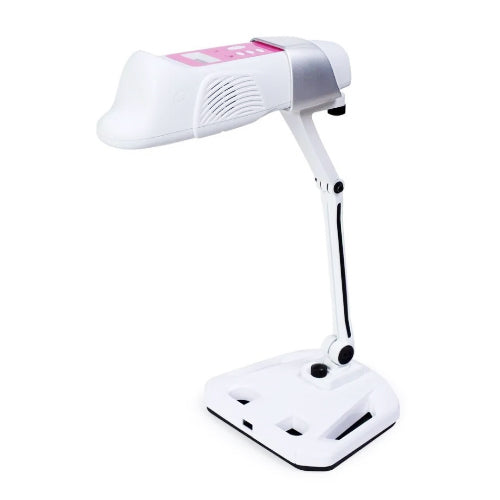
| Table / Stand-Mounted System | Uses a fixed or adjustable support | Stable use in treatment areas |
Portable vs Fixed Vein Finder
A portable Vein Finder can be useful when staff move frequently between wards, beds or treatment rooms.
Meanwhile, a stand-mounted model may provide more stable positioning during repeated use.
Portable Model Useful for mobile teams, wards and bedside use.
Stand-Mounted Model Can support steady positioning during repeated clinical work.
Handheld Model Compact and easy to carry between departments.
Projection Model May display the vein pattern directly over the skin.
Therefore, portability should match the hospital workflow.
Is a Vein Finder Safe?
Near-infrared vein visualization is non-invasive because the device uses light to display superficial vein patterns.
However, users should still follow the manufacturer's safety instructions.
In addition, hospitals should clean the device according to approved infection-control procedures, especially when equipment moves between patients.
Therefore, safe use includes both correct operation and proper equipment hygiene.
Safety point: the device supports vein visualization only. Venous access itself should be performed by appropriately trained healthcare personnel.
How Much Does a Vein Finder Device Cost?
The cost of a Vein Finder can vary dramatically according to technology.
Simple optical vein trackers are usually much cheaper than advanced digital NIR projection systems.
Current Meddey listings illustrate this difference.
Current Meddey Price Examples
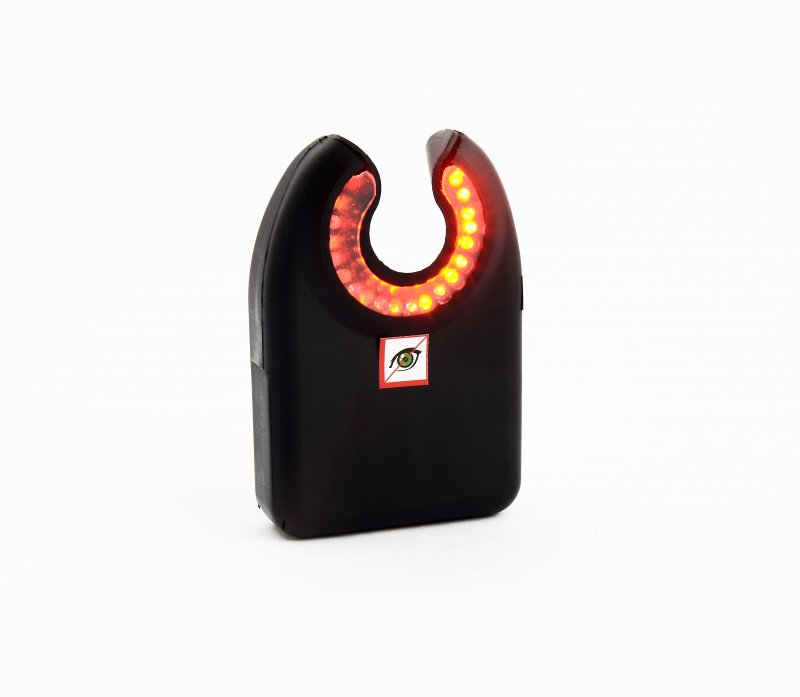
Medivision Vein Tracker: approximately ₹2,718
Infrared Vein Showing Device: approximately ₹112,515
Therefore, a vein finder device may cost anywhere from a few thousand rupees to more than ₹1 lakh depending on the technology and product class.
Prices may change because of stock, offers and product updates. As a result, buyers should verify the live product page before ordering.
What Affects Vein Finder Price?
The final price depends on more than the product name.
Important cost factors include:
- Near-infrared technology
- Projection capability
- Camera and sensor quality
- Image processing
- Display quality
- Portable or stand-mounted design
- Battery backup
- Working distance
- Brightness settings
- Warranty
- Training
- After-sales service
Therefore, hospitals should compare the clinical need with the device features before comparing price alone.
Medivision Vein Tracker on Meddey
Meddey currently lists the Medivision Vein Tracker at approximately ₹2,718.
This product sits in a lower price category than advanced NIR projection systems.
Therefore, it may suit buyers looking for a simpler vein-location aid rather than a premium digital vein viewer.
However, hospitals should compare the exact technology and intended use before deciding whether it fits their clinical requirement.
View Medivision Vein TrackerInfrared Vein Showing Device on Meddey
Meddey also lists an Infrared Vein Showing Device at approximately ₹112,515.
The current product listing describes it as a portable infrared device for peripheral-vein visualization.
In addition, the product is positioned for hospital use in areas such as paediatrics, gynecology and anaesthesia.
Therefore, it represents a more advanced price category than basic vein trackers.
View Infrared Vein FinderWhich Is the Best Vein Finder?
There is no single Vein Finder that is best for every hospital or clinic.
Instead, the right model depends on:
- Clinical department
- Patient population
- Expected use frequency
- Required image quality
- Portability
- Available budget
- Training needs
- Warranty
- Service support
For example, a paediatric unit may value easy portable use and clear visualization. Meanwhile, a high-volume blood collection centre may place more importance on fast setup and durability.
Therefore, the best device is the one that matches the clinical workflow rather than the model with the highest price.
How to Choose a Vein Finder
1. Define the Clinical Need
First, decide whether the device is for paediatrics, blood collection, IV access support or general hospital use.
2. Check the Technology
Next, determine whether the device uses NIR, projection or transillumination.
3. Review Image Quality
Then, assess whether the displayed vein pattern is clear enough for the intended setting.
4. Consider Portability
Afterwards, check weight, battery support and ease of movement.
5. Review Working Distance
In addition, confirm how the device should be positioned relative to the skin.
6. Check Controls
Brightness and display modes can improve use in different room conditions.
7. Review Cleaning
Meanwhile, confirm that the equipment fits the facility's infection-control workflow.
8. Check Warranty
Finally, compare service, training and technical support.
Vein Finder Buying Checklist for Hospitals
- Confirm intended clinical use
- Check NIR or optical technology
- Review vein-image quality
- Check projection accuracy
- Review device weight
- Check battery backup
- Assess portability
- Review working distance
- Check brightness controls
- Review cleaning requirements
- Confirm staff training needs
- Check warranty
- Review service support
- Compare Vein Finder price
Overall, hospitals should choose a device that supports clinical workflow and trained staff use rather than selecting equipment only by price.
Common Mistakes When Buying a Vein Finder
A high price does not automatically mean a device will improve every venous-access procedure.
Common buying mistakes include:
- Assuming visibility guarantees successful cannulation
- Ignoring clinical evidence
- Not testing portability
- Choosing a device only by price
- Ignoring battery life
- Not checking service support
- Expecting NIR to replace ultrasound
- Ignoring staff training
- Not planning device cleaning
Therefore, procurement teams should evaluate the whole clinical workflow before purchase.
Frequently Asked Questions About Vein Finder
Do vein finders actually work?
Yes, they can improve visualization of superficial veins. However, research does not show a consistent improvement in first-attempt cannulation success for every patient group.
What is a vein finder and how does it work?
A Vein Finder is an optical device that helps show superficial veins. Many systems use near-infrared light because blood absorbs the selected light differently from nearby tissue.
How much does a vein finder device cost?
Prices vary widely. Current Meddey examples range from about ₹2,718 for a Medivision Vein Tracker to around ₹112,515 for an Infrared Vein Showing Device.
Which is the best vein finder?
No single device is best for every setting. Instead, compare imaging technology, patient group, portability, battery, warranty and clinical workflow.
Does a vein finder make IV placement easier?
It can make superficial veins easier to see. However, successful IV access still depends on vein quality, patient factors and clinician skill.
Can a Vein Finder see deep veins?
NIR systems mainly help visualize superficial vein patterns. For deeper vessels, ultrasound may provide more useful anatomical information.
Is a Vein Finder useful for children?
It may be useful in selected paediatric patients, especially when veins are difficult to see. However, overall evidence for improving first-attempt success remains mixed.
Is a Vein Finder safe?
Near-infrared visualization is non-invasive. Nevertheless, users should follow the device instructions and facility cleaning policy.
Is a Vein Finder better than ultrasound?
They serve different purposes. A Vein Finder mainly improves superficial visualization, while ultrasound can provide information about deeper vessels and nearby anatomy.
Can a Vein Finder replace clinical skill?
No. It should support trained healthcare professionals rather than replace vessel assessment and venous-access skills.
Where are vein finders commonly used?
They may be used in hospitals, emergency departments, paediatric units, blood collection areas, oncology settings and other venous-access services.
Where to Buy a Vein Finder Online in India?
Hospitals, clinics, nursing departments and diagnostic facilities can buy vein visualization devices from specialist medical-equipment suppliers.
Before purchasing, compare:
- Device type
- Imaging technology
- Portability
- Battery
- Image quality
- Cleaning requirements
- Warranty
- Training
- Technical support
- Current price
Meddey currently offers both basic vein-location devices and advanced infrared vein visualization systems.
Browse Vein Finders View Medivision Vein Tracker View Infrared Vein Finder Visit MeddeyConclusion
A Vein Finder can help healthcare professionals visualize superficial veins that may be difficult to see with the naked eye.
Modern systems often use near-infrared light. Therefore, they can create a clearer visual map of some veins beneath the skin.
However, better visibility does not guarantee successful venous access. Current evidence suggests that NIR devices may reduce the number of attempts in some settings, while first-attempt success results remain inconsistent.
In addition, patient selection matters. Children and patients with difficult venous access may benefit more than patients whose veins are already easy to identify.
Hospitals should also understand that NIR and ultrasound are different technologies. Meanwhile, ultrasound may offer more information when clinicians need to assess deeper vessels.
The price of a vein finder device varies widely. For example, current Meddey listings range from about ₹2,718 for a basic vein tracker to approximately ₹112,515 for an infrared vein visualization system.
Therefore, the best Vein Finder is not automatically the most expensive model. Instead, buyers should compare clinical need, visualization quality, portability, user training, warranty and service support.
You can compare current Vein Finder devices available on Meddey.
Medical & Professional Disclaimer
This article provides professional education and general healthcare guidance only. A Vein Finder is a visualization aid and does not replace clinical assessment, training or approved vascular-access procedures. Venous access should be performed only by appropriately trained healthcare personnel according to institutional policy and applicable clinical standards.
Explore Medical Collections
All Categories
Abdominal & Maternity Support

Accessories

Accu-Chek Instant Strips: Use, Compatibility, Price & Blood Sugar Testing Guide
Accu-Chek Instant Strips: Uses, Features & Complete Guide

Accupressure Products for Pressure Point Therapy, Pain Relief & Wellness

accupuncture

Acupuncture Needles & Supplies

Advanced Physiotherapy Machines & Lumbar Physiotherapy

Airways

Ambulance

Anatomy Models
Anesthesia Machine

Anesthesia Products
Ankle Support, Braces & Walker Boots for Recovery
Ankle Weights & Exercise Weights for Home & Rehab
You may also need
FOR YOURecommended for you
Save 18%