


Featured ChoiceSave 19%
Save 17%
Save 25%

Save 25%

Sold out


What customers say
★★★★★ 4.9 · 9 reviews
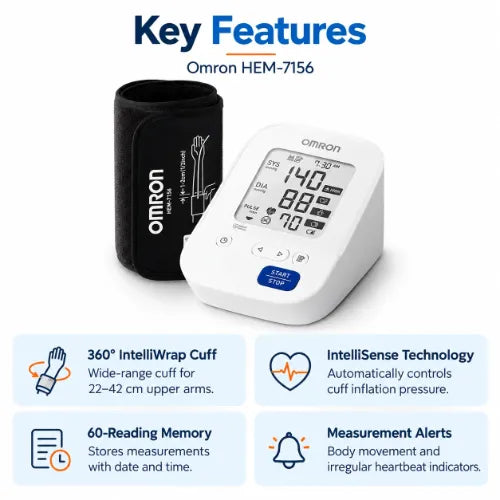
 Omron HEM-7156 Blood Pressure Monitor with 360° IntelliWrap Cuff
“it's super easy to use.”
“This is absolutely fantastic! The 360 Accuracy Intelli Wrap cuff makes taking readings so much easier, as i...”
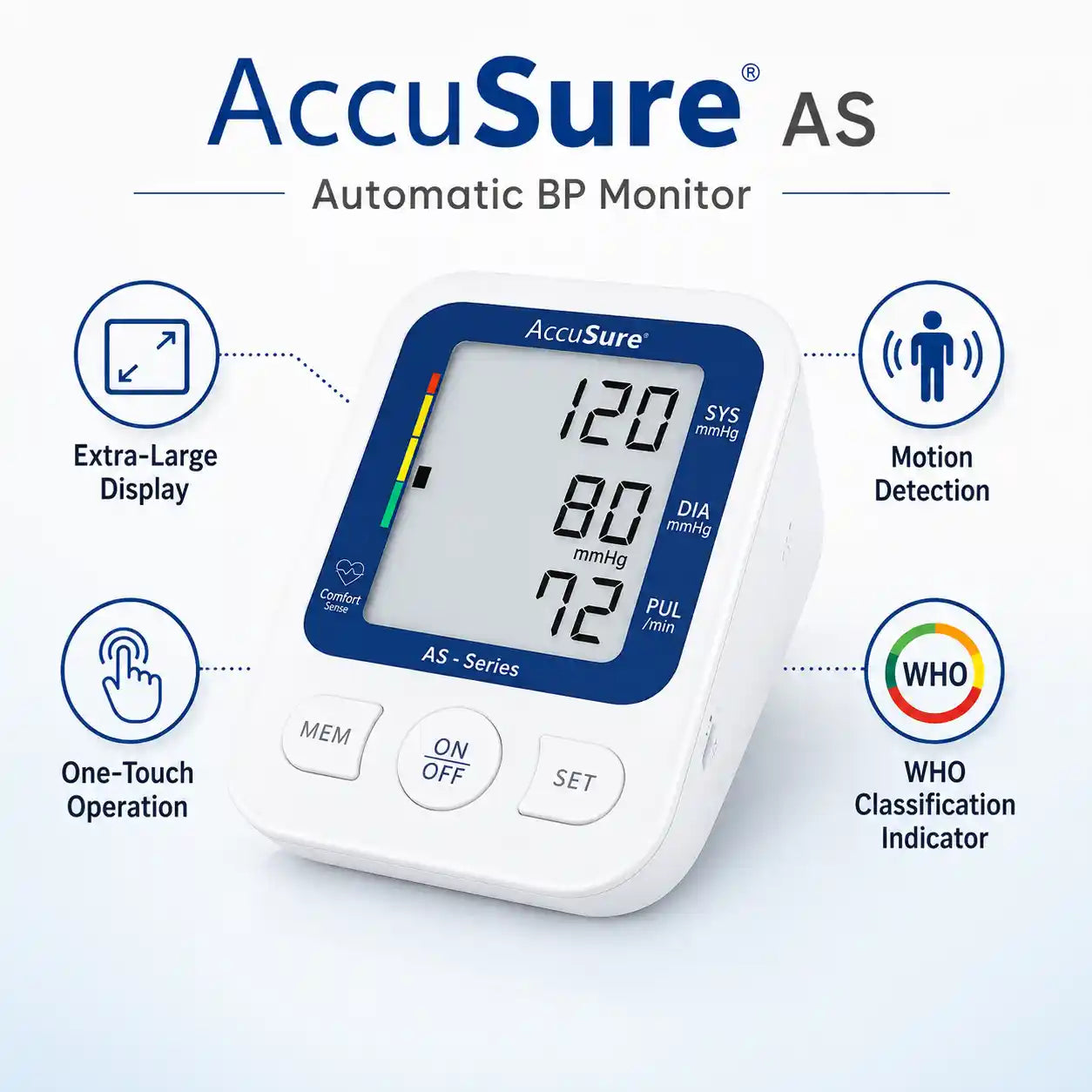
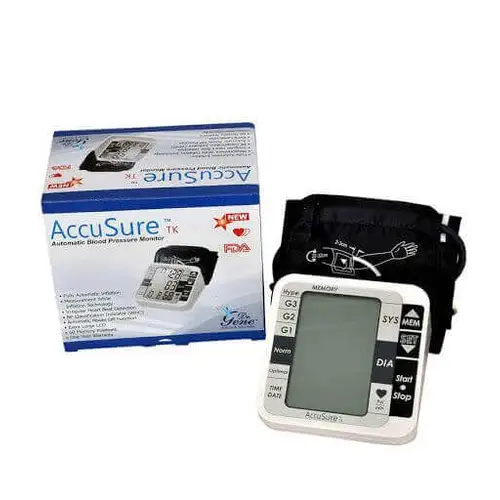
 AccuSure AS Automatic Blood Pressure Monitor
“Accurate and easy-to-use!”
“This is a fantastic product! The extra-large display makes it incredibly easy to read the results, even fro...”
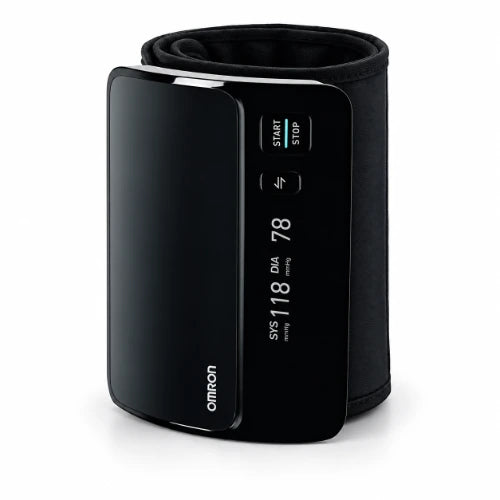
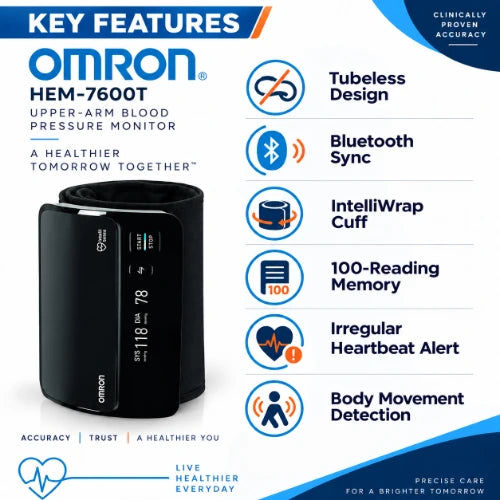
 Omron HEM-7600T Tubeless Bluetooth BP Monitor – Made in Japan
“This is amazing! Tubeless design and Bluetooth connectivity make it super convenient.”
 AccuSure TS Smart Inflation BP Machine
“This is very easy to use. A great choice for home health monitoring!”
“This is a brilliant device! The smart inflation feature makes taking BP measurements much more comfortable ...”
Automatic Blood Pressure Cuff & Monitor
Automatic Blood Pressure Cuff: How to Choose the Right BP Monitor for Home
Looking for an automatic blood pressure cuff for home use? An automatic blood pressure monitor can make regular BP checks simpler and more convenient. However, choosing the right device involves more than simply selecting the cheapest or most popular model.
The cuff size, monitor type, measurement features and your measurement technique can all affect the usefulness of your readings. Whether you need a blood pressure machine for occasional home monitoring or want to track your readings regularly, an appropriate automatic BP monitor can make the process easier.
In this guide, we explain how automatic blood pressure cuffs work, what to consider before buying one, why cuff size matters, how to use a BP monitor correctly and which features can help you choose a suitable automatic blood pressure machine for home use.

What Is an Automatic Blood Pressure Cuff?
An automatic blood pressure cuff is the inflatable cuff used with an automatic blood pressure monitoring device. Unlike a traditional manual blood pressure setup, an automatic monitor inflates the cuff and measures blood pressure electronically before displaying the result on a digital screen.
A typical automatic blood pressure monitor provides three main readings:
- Systolic blood pressure (SYS): the upper number in a blood pressure reading.
- Diastolic blood pressure (DIA): the lower number in a blood pressure reading.
- Pulse rate: the number of heartbeats per minute.
For routine home monitoring, automatic upper-arm monitors offer a practical option because they simplify the measurement process. In most cases, the user only needs to position the cuff correctly, press the start button and remain still while the monitor takes the reading.
Important: The monitor is only one part of obtaining a useful reading. Correct cuff size, proper cuff placement and appropriate measurement technique also matter.
How Does an Automatic Blood Pressure Cuff Work?
An automatic BP monitor uses an inflatable cuff and electronic sensors to measure changes associated with blood flow in the artery.
Cuff Placement → Automatic Inflation → Pressure
Measurement → Digital Result
Once you wrap the cuff around the upper arm, the monitor automatically inflates it. As cuff pressure changes, the device detects pressure fluctuations and calculates the systolic and diastolic blood pressure values.
Finally, the monitor displays the result digitally, usually together with the pulse rate. This automatic process makes digital BP machines convenient for many people who want to monitor their blood pressure at home.

Are Automatic Blood Pressure Cuffs Accurate?
Accuracy is one of the most important considerations when choosing an automatic blood pressure monitor. However, even a good device can produce an unreliable reading if you use it incorrectly.
Several factors can influence the quality and consistency of a blood pressure measurement:
1. Choose an Appropriate Device
First, look for a blood pressure monitor from an established manufacturer. Where possible, choose a device with appropriate validation for home blood pressure monitoring.
2. Use the Correct Cuff Size
Next, check that the cuff matches the circumference of your upper arm according to the manufacturer's specifications. An inappropriate cuff can affect the measurement.
3. Position the Cuff Correctly
In addition, place the cuff on the bare upper arm and follow the positioning instructions supplied with the monitor.
4. Keep Your Arm Supported
During the measurement, support your arm comfortably on a suitable surface. Avoid holding the arm unsupported.
5. Stay Still and Avoid Talking
Finally, remain still and avoid talking while the monitor measures your blood pressure. Movement and talking can interfere with obtaining a consistent reading.
How to Choose the Best Automatic Blood Pressure Cuff
Choosing the right automatic blood pressure cuff becomes easier when you know which features actually matter.
Check the Cuff Size
Cuff size is one of the most important things to check before buying a BP monitor. Make sure the cuff suits the user's upper-arm circumference according to the manufacturer's specified range.
Prefer an Upper-Arm Monitor for Routine Home Use
Automatic monitors are available in different designs, including upper-arm and wrist devices. For routine home monitoring, automatic upper-arm blood pressure monitors are generally preferred because wrist monitors can be more sensitive to positioning.
Look for Useful Features
- Large digital display
- Memory storage
- Irregular-heartbeat indication
- Multiple-user memory
- Bluetooth connectivity
- Smartphone or app integration
- Automatic inflation
Consider Ease of Use
If you plan to use the monitor for an older family member, a large display, simple controls and an easy-to-wrap cuff can make the device more convenient. Ultimately, the best BP machine is not necessarily the one with the longest feature list. Instead, choose a monitor that matches the user's requirements and feels easy to use correctly.
Best Automatic Blood Pressure Monitors for Home Use
Different users have different requirements when choosing an automatic BP machine. Therefore, instead of selecting one monitor as the best for everyone, consider which features match your needs.
Omron 7121J BP Monitor — Everyday Home Monitoring
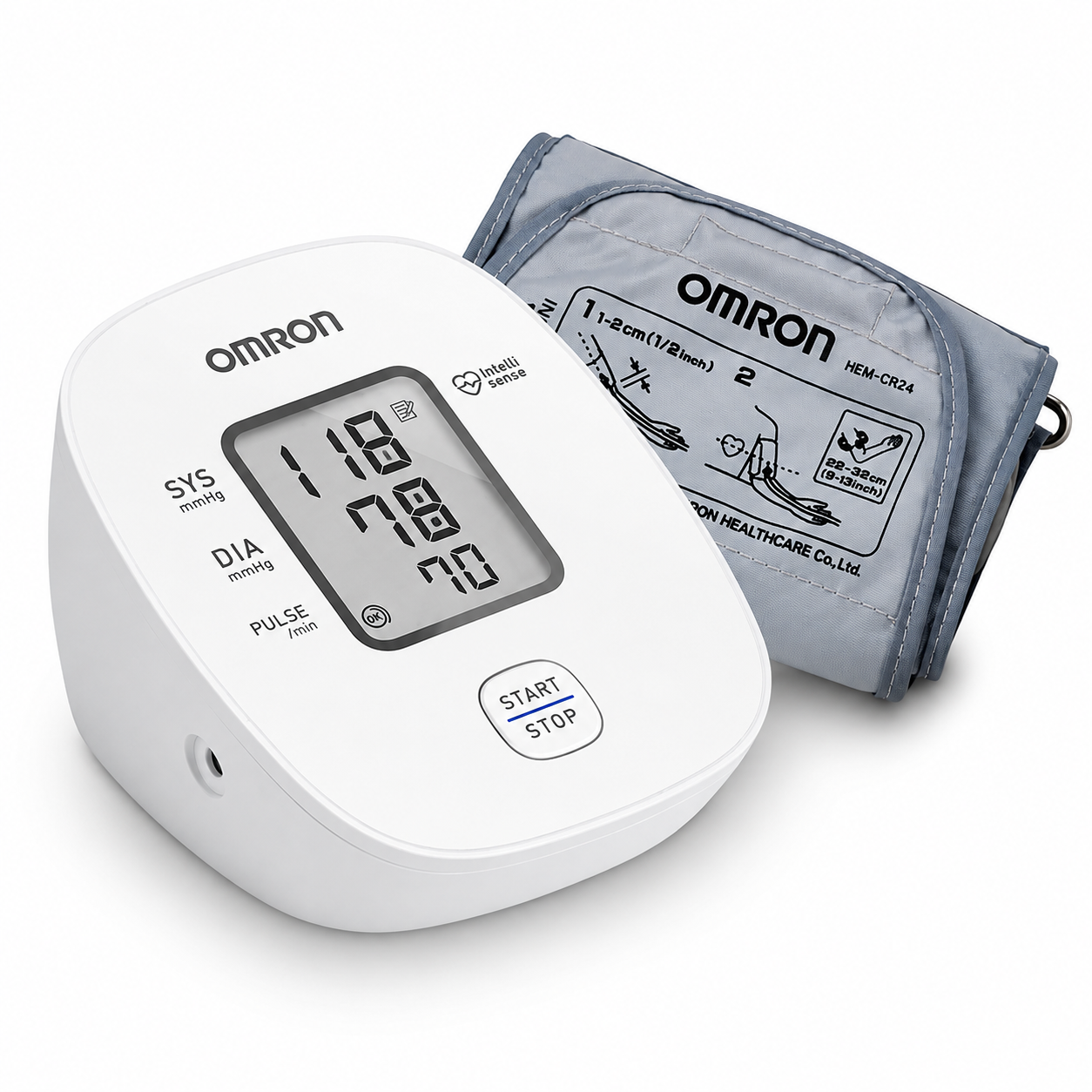
The Omron 7121J is an automatic BP monitor listed by Meddey for home blood pressure monitoring. It is a suitable option if you want a straightforward automatic monitor from an established brand.
Best suited for: Everyday home BP monitoring.
View Omron 7121J on Meddey
AccuSure TS — Simple Automatic Home Monitoring
The AccuSure TS is a fully automatic upper-arm BP monitor designed for home use. Its smart inflation feature and one-touch operation make it an option for users who want a straightforward monitoring experience.
Best suited for: Users looking for simple automatic BP monitoring.
View AccuSure TS on Meddey
Yuwell YE660F — Large Display and Memory
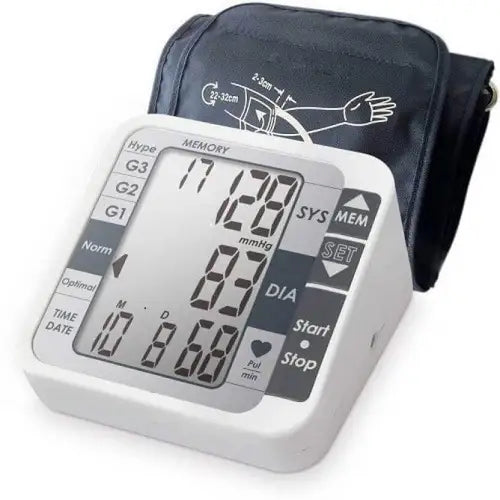
The Yuwell YE660F is a digital upper-arm BP monitor with a large backlit display and memory storage. It also includes irregular-heartbeat detection and cuff-wrapping detection.
Best suited for: Users who value readability and measurement history.
View Yuwell YE660F on Meddey
AccuSure AS — Large Display BP Machine
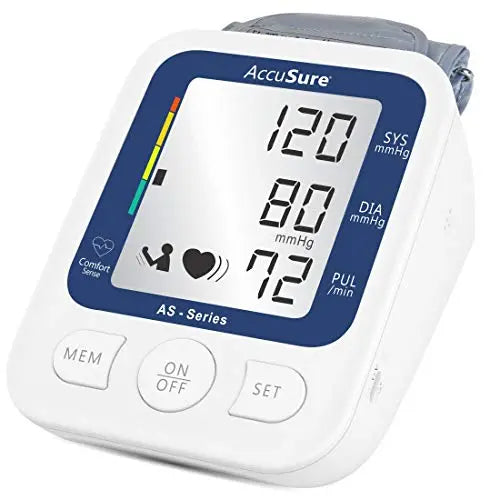
The AccuSure AS is an automatic BP monitoring system with an extra-large LCD display and one-touch operation. Its large display can help users who prioritize easy-to-read results.
Best suited for: Users who prefer a large and easy-to-read display.
View AccuSure AS on Meddey
Omron HEM-7600T — Smart and Connected Monitoring
The Omron HEM-7600T is a tubeless upper-arm blood pressure monitor with Bluetooth connectivity and Omron Connect app support. It suits users who want to track BP readings digitally.
Best suited for: Users looking for connected and smart BP monitoring.
View Omron HEM-7600T on Meddey

How to Use an Automatic Blood Pressure Cuff Correctly
Even a good automatic BP monitor can produce an unreliable reading if you use it incorrectly. Always follow the manufacturer's instructions for your specific device.
- Prepare before measuring: Sit quietly for several minutes before taking the measurement. Also, avoid measuring immediately after exercise, smoking or consuming caffeine.
- Sit correctly: Keep your back supported and place your feet flat on the floor. In addition, avoid crossing your legs.
- Place the cuff correctly: Put the cuff on the bare upper arm according to the manufacturer's instructions. It should fit snugly without feeling uncomfortably tight.
- Support your arm: Rest your arm on a flat surface so that the cuff sits around heart level.
- Stay still: Do not talk or move while the monitor measures your blood pressure.
- Repeat readings when appropriate: If you need multiple readings, follow the manufacturer's instructions or your healthcare professional's advice about the interval between measurements.
- Record your results: Keep a record of your readings to make it easier to identify trends and share useful information with your healthcare professional.

Can the Wrong Blood Pressure Cuff Size Affect Your Reading?
Yes. Cuff size is an important part of obtaining a useful blood pressure measurement.
Before purchasing an automatic blood pressure cuff, check the manufacturer's recommended arm-circumference range. Do not assume that every adult can use the same cuff size.
A properly fitting cuff should:
- Match the user's upper-arm circumference within the manufacturer's specified range.
- Sit in the correct position.
- Rest on bare skin where the manufacturer instructs.
- Fit snugly without feeling excessively tight.
- Follow the device instructions for proper use.

Upper-Arm vs Wrist Blood Pressure Monitor: Which Is Better?
Both upper-arm and wrist blood pressure monitors are available, but they are not equally suitable for every situation.
| Feature | Upper-Arm Monitor | Wrist Monitor |
|---|---|---|
| Routine home monitoring | Generally preferred | More position-sensitive |
| Portability | Moderate | High |
| Position sensitivity | Lower | Higher |
| Home-use convenience | High | Depends on positioning |
For routine home monitoring, an automatic upper-arm BP monitor is generally the preferred option. In comparison, wrist monitors can be more sensitive to positioning, so they require careful use according to the manufacturer's instructions.
Automatic vs Manual Blood Pressure Monitor
Automatic and manual blood pressure monitors use different measurement approaches. For home users, automatic monitors offer greater convenience because they inflate the cuff and display the result without requiring manual cuff inflation.
| Feature | Automatic BP Monitor | Manual BP Monitor |
|---|---|---|
| Cuff inflation | Automatic | Manual |
| Digital result | Yes | No |
| Stethoscope normally required | No | Yes |
| Ease of home use | High | Requires more technique |
Automatic monitors are popular for home use because they simplify the measurement process. However, convenience does not automatically mean greater accuracy than a manual monitor.
Instead, device quality, validation, cuff fit, cuff positioning and measurement technique can all influence the reliability of a reading.
What Is the Best Time to Check Blood Pressure?
There is no single time that works best for everyone. The appropriate schedule depends on why you are monitoring your blood pressure and what your healthcare professional recommends.
If you monitor your BP regularly, take readings under similar conditions and at consistent times. This approach can make it easier to compare measurements over time.
For example, some people may need to measure in the morning, evening or at other specific times. Follow the schedule recommended by your healthcare professional rather than changing your monitoring routine based only on general online advice.
When Should You Speak to a Healthcare Professional?
An automatic blood pressure monitor is a monitoring tool. It should not replace professional medical diagnosis or treatment.
If you repeatedly get elevated readings, discuss them with a healthcare professional. Very high readings require particular attention. If your monitor shows 180/120 mmHg or higher, repeat the measurement after a short interval and seek appropriate medical attention, particularly if the reading remains very high. If you experience symptoms such as chest pain, shortness of breath, weakness, vision changes or difficulty speaking along with a very high reading, seek emergency medical care.
Frequently Asked Questions About Automatic Blood Pressure Cuffs
What's the most accurate automatic blood pressure cuff?
There is no single automatic BP cuff that is universally the most accurate for every person. Instead, look for an appropriately validated monitor, use the correct cuff size and follow the manufacturer's measurement instructions.
How do automatic BP cuffs work?
An automatic BP monitor inflates the cuff around the upper arm and electronically measures pressure changes associated with blood flow. It then calculates the systolic and diastolic readings and displays them digitally.
Which automatic BP machine is best for home use?
The best BP machine depends on your requirements. Consider cuff size, device validation, ease of use, display, memory and any connectivity features you need. For routine home monitoring, an automatic upper-arm monitor is generally a practical choice.
Are automatic BP cuffs more accurate than manual?
Neither type should automatically be considered more accurate in every situation. Accuracy depends on the device, validation, cuff fit and measurement technique. However, automatic monitors generally offer greater convenience for home users.
Which blood pressure monitor do cardiologists recommend?
There is no single BP monitor that healthcare professionals recommend for every person. A suitable home monitor should fit correctly, match the user's needs and, where possible, have appropriate validation. Ask your healthcare professional if you need help selecting a device.
What is the best time of day to check BP?
The appropriate time depends on your monitoring plan. Consistency is important, so follow the schedule recommended by your healthcare professional and try to measure under similar conditions.
Can a tight blood pressure cuff give a high reading?
An incorrectly sized or improperly fitted cuff can affect a blood pressure measurement. Therefore, use a cuff that matches the manufacturer's recommended arm-circumference range and follow the instructions for placement.
Is it okay to check BP 3 times in a row?
Multiple readings can provide useful information when you take them correctly. Allow an appropriate interval between readings and follow the instructions provided by your healthcare professional or the monitor manufacturer.
What is the best type of BP cuff to buy?
For routine home monitoring, an automatic upper-arm cuff-style monitor is generally preferred. Most importantly, make sure the cuff size matches your upper-arm circumference.
Can a healthy person have high blood pressure?
A person can feel healthy while having elevated blood pressure because high blood pressure may not always cause noticeable symptoms. If you repeatedly obtain elevated readings, discuss them with a healthcare professional.
What brings down blood pressure quickly?
Do not rely on online quick-fix remedies to manage a very high blood pressure reading. Instead, if your readings remain high, speak with a healthcare professional for appropriate evaluation and advice.
Is blood pressure of 140/90 dangerously high?
A reading of 140/90 mmHg should not be interpreted in isolation as a diagnosis or emergency. Instead, assess blood pressure using repeated readings and in the context of your health. Discuss repeated elevated readings with a healthcare professional.
What BP level is considered a medical emergency?
A blood pressure reading of 180/120 mmHg or higher is considered very high and requires prompt attention, particularly if it persists or occurs with concerning symptoms. Seek appropriate medical care rather than relying on home remedies.
Final Takeaway
Choosing an automatic blood pressure cuff is not simply about selecting the device with the most features or the lowest price. Instead, focus on choosing an appropriate monitor, selecting the correct cuff size and using the device correctly.
For routine home monitoring, an automatic upper-arm BP monitor can provide a convenient way to keep track of your readings. Additionally, features such as memory, irregular-heartbeat indication, multiple-user support and Bluetooth connectivity can help you choose a device that matches your individual requirements.
Explore Meddey's range of automatic blood pressure monitors to find a device suited to your home monitoring needs.
Explore Medical Collections
All Categories
Abdominal & Maternity Support

Accessories

Accu-Chek Instant Strips: Use, Compatibility, Price & Blood Sugar Testing Guide
Accu-Chek Instant Strips: Uses, Features & Complete Guide

accupuncture

Acupuncture Needles & Supplies

Advanced Physiotherapy Machines & Lumbar Physiotherapy

Airways

Ambulance

Anatomy Models
Anesthesia Machine

Anesthesia Products
Ankle Support for Home Use: Braces, Sleeves & Walker Boots
Ankle Weights & Exercise Weights for Home & Rehab

Anti-Bedsore Air Mattresses
You may also need
FOR YOURecommended for you
Save 19%
Save 17%
Save 25%
Save 25%