


Featured Choice

Save 29%
Sold out

Sold out

About this collection
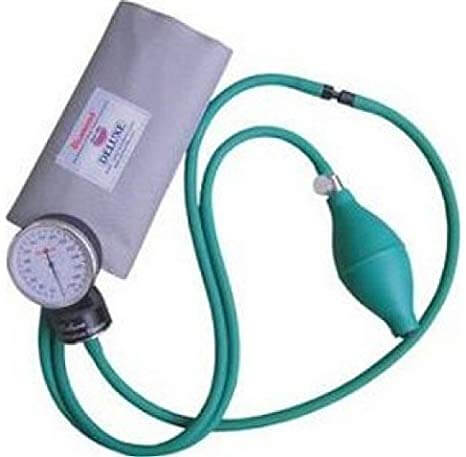
Sphygmomanometer for Accurate Blood Pressure Measurement
A sphygmomanometer is an essential medical instrument used to measure blood pressure in clinical, hospital, diagnostic, physiotherapy, and home-care settings. It helps healthcare professionals obtain systolic and diastolic blood pressure readings during routine assessments. In addition, regular blood pressure checks can support ongoing health monitoring and clinical evaluation.
This blood pressure measuring device uses an inflatable cuff, pressure measurement system, and suitable reading mechanism to provide a blood pressure value. Depending on the model, a sphygmomanometer may use a manual aneroid gauge, mercury-free design, or digital pressure display. Manual models often work with a stethoscope, whereas digital versions can automate much of the measurement process.
For consistent use, the device should offer clear readings, comfortable cuff placement, smooth inflation, controlled deflation, and dependable construction. Therefore, the right model can fit examination rooms, nursing stations, clinics, ambulances, rehabilitation centres, and personal monitoring routines.
```What Is a Sphygmomanometer?
```A sphygmomanometer is a medical device designed to measure arterial blood pressure. Typically, it includes a cuff that wraps around the upper arm, an inflation bulb or automated inflation system, tubing, and a pressure display. For manual measurement, healthcare professionals often use the device with a stethoscope.
Blood pressure readings include two main values. The systolic pressure represents pressure in the arteries when the heart contracts. Meanwhile, the diastolic pressure represents pressure when the heart relaxes between beats. Healthcare professionals interpret these values according to the person's overall health, medical history, age, and applicable clinical guidelines.
Because blood pressure can change throughout the day, healthcare providers may recommend repeated measurements. As a result, a properly selected sphygmomanometer can help create consistent records for clinical monitoring and follow-up.
```Key Features of a Sphygmomanometer
```A good sphygmomanometer should combine practical design, clear measurement, comfortable handling, and suitable construction. Additionally, the exact specifications can vary by model, so buyers should review the individual product details before purchase.
- Clear pressure display: A large dial or digital screen helps users read blood pressure values easily. Therefore, clear visibility becomes especially useful in busy clinical settings.
- Comfortable arm cuff: A suitable cuff should provide a secure fit without unnecessary discomfort. Moreover, the selected size should match the user's arm circumference.
- Controlled inflation: A practical inflation system supports smooth blood pressure measurement. In manual models, the user controls inflation through the bulb.
- Controlled deflation: Manual models usually include a valve that lets the user release pressure gradually. This process supports auscultatory measurement when performed correctly.
- Durable construction: Quality materials can support repeated use in clinics, hospitals, and healthcare facilities. Consequently, build quality remains an important buying factor.
- Portable design: Compact models can simplify movement between examination rooms, wards, and home visits. For example, mobile healthcare workers can carry portable equipment between appointments.
- Professional usability: Manual sphygmomanometers can suit trained healthcare professionals who prefer auscultatory blood pressure measurement.
- Flexible applications: Depending on the model, the device can support routine checks in hospitals, clinics, rehabilitation centres, and home-care environments.
- Easy maintenance: Simple construction can make routine cleaning and inspection easier. In addition, regular care can help preserve the equipment's condition.
- Multiple cuff options: Some models support different cuff sizes for various arm circumferences. Always confirm the supplied cuff and available size range before purchase.
Types of Sphygmomanometers
```Sphygmomanometers come in different designs, and each type offers a different measurement method. Therefore, the best option depends on the intended setting, user skill, portability requirements, and desired workflow.
1. Aneroid Sphygmomanometer
An aneroid sphygmomanometer uses a mechanical pressure gauge instead of a mercury column. It usually includes an arm cuff, inflation bulb, air tubing, control valve, and round dial. In clinical environments, trained professionals often use this type with a stethoscope for manual blood pressure measurement.
2. Digital Blood Pressure Monitor
Digital blood pressure monitors automate much of the measurement process. Generally, the user places the cuff on the arm and starts the device. The monitor then inflates the cuff and displays the result on a digital screen. Depending on the model, additional functions may include pulse measurement, memory storage, irregular heartbeat indicators, or multiple-user profiles.
3. Mercury-Free Sphygmomanometer
Mercury-free designs provide an alternative to traditional mercury-based equipment. They can use mechanical or electronic measurement systems while avoiding mercury as the pressure display medium. However, specifications differ between models, so users should review the manufacturer's stated measurement method.
4. Wall-Mounted Sphygmomanometer
Wall-mounted models can work well in examination rooms where staff take blood pressure readings frequently. Their fixed position keeps the instrument accessible and reduces the need to move it between patients. As a result, this format can suit busy healthcare environments.
```Benefits of Using a Sphygmomanometer
```Blood pressure measurement plays an important role in routine patient assessment. A dependable sphygmomanometer gives healthcare workers a practical way to record blood pressure during consultations and follow-up visits. Furthermore, regular measurements can help clinicians identify changes that may require further evaluation.
- Supports routine monitoring: Regular readings can help healthcare professionals track blood pressure changes over time.
- Useful during clinical assessment: Doctors, nurses, physiotherapists, and other trained professionals may use blood pressure readings as part of a wider patient assessment.
- Suitable for different settings: Depending on the design, the device can support hospitals, clinics, diagnostic centres, nursing facilities, and home-care environments.
- Supports patient records: Repeated readings can form part of a patient's health record when healthcare professionals document them appropriately.
- Portable options offer convenience: Compact designs can support mobile healthcare services and home visits. Therefore, they can be useful for professionals who work across multiple locations.
- Professional control: Manual models allow trained users to control cuff inflation and deflation during auscultatory measurement.
Applications of Sphygmomanometers
```A sphygmomanometer can support blood pressure assessment across many healthcare environments. However, the appropriate device type depends on the clinical workflow and the person performing the measurement.
Hospitals
Hospitals use blood pressure monitors during routine patient assessment, ward rounds, outpatient consultations, and other clinical procedures. Therefore, staff can select manual or digital equipment according to their workflow and training.
Clinics and Diagnostic Centres
Clinics often need quick and repeatable blood pressure measurement during consultations. A suitable sphygmomanometer can provide a convenient tool for routine screening and documentation. In addition, a clear display can help staff record readings efficiently.
Physiotherapy and Rehabilitation Centres
Physiotherapy clinics may check vital signs before or during selected treatment sessions. Blood pressure measurement can form part of a broader clinical assessment when the practitioner considers it appropriate. Consequently, a compact blood pressure device can be a useful addition to a rehabilitation setup.
Nursing and Care Facilities
Nursing homes and care facilities can use blood pressure equipment for scheduled monitoring. Easy-to-read displays and suitable cuff sizes can make routine measurements more practical for trained staff.
Home Healthcare
A suitable home blood pressure monitor can help individuals follow a healthcare professional's monitoring plan. For best results, users should follow professional instructions and the device manufacturer's guidance.
```How to Use a Sphygmomanometer
```Correct technique can improve measurement consistency. Manual sphygmomanometers require appropriate training, while digital devices still need correct cuff placement and patient positioning. Therefore, users should follow accepted measurement procedures and the manufacturer's instructions.
- Prepare the patient: Allow the person to sit quietly and relax before taking the reading when clinically appropriate.
- Choose the correct cuff: Select a cuff that matches the person's arm size and the manufacturer's specifications.
- Position the arm: Keep the arm supported and positioned appropriately according to accepted blood pressure measurement technique.
- Place the cuff: Wrap the cuff securely around the upper arm without making it excessively tight.
- Inflate the cuff: Manual users should inflate it according to proper clinical technique. Digital devices generally control inflation automatically.
- Measure the pressure: Manual users can listen through a stethoscope while releasing cuff pressure. Digital devices display the measurement automatically.
- Record the result: Note the systolic and diastolic values, along with other relevant details such as time and position when required.
- Repeat when appropriate: If a healthcare professional recommends repeat readings, allow suitable rest between measurements and follow the prescribed procedure.
Tips for Consistent Blood Pressure Measurement
```Several factors can affect a blood pressure reading. For this reason, good measurement habits can help reduce avoidable variation. In addition, consistent positioning can make repeated readings easier to compare.
- Let the patient rest quietly before measurement when possible.
- Use the correct cuff size for the arm circumference.
- Keep the arm supported at an appropriate level.
- Avoid placing the cuff over thick clothing.
- Keep the patient still and avoid talking during the measurement.
- Use the same arm when a healthcare professional recommends consistent monitoring.
- Follow the device instructions and accepted clinical measurement procedures.
- Arrange calibration or accuracy checks according to the manufacturer's instructions and applicable clinical requirements.
How to Choose the Right Sphygmomanometer
```Selecting a blood pressure monitor requires more than comparing prices. Instead, consider the measurement method, cuff size, intended environment, user skill, display type, durability, and maintenance requirements. As a result, you can choose a device that better matches your actual needs.
Measurement Method
Choose between manual and digital measurement based on the intended user and setting. For example, trained professionals may prefer aneroid models for manual auscultatory measurement, while digital monitors can simplify routine automated readings.
Cuff Size
Cuff fit plays an important role in blood pressure measurement. Therefore, check the manufacturer's recommended arm circumference range before purchase. A cuff that does not fit correctly may affect measurement results.
Display and Readability
A clear dial or digital screen helps users read results quickly. This feature becomes especially useful in busy clinical environments where staff perform repeated measurements. Moreover, easy visibility can make documentation more convenient.
Portability
If healthcare staff move between rooms or conduct home visits, a lightweight and compact design can provide greater convenience. Conversely, a wall-mounted option may work well in a fixed examination room.
Build Quality
Select a model that matches the expected frequency of use. Professional environments may require durable components that can handle regular handling, cleaning, and repeated measurements. Consequently, build quality should remain an important part of the buying decision.
```Typical Technical Specifications
```Specifications vary by sphygmomanometer model. Therefore, always confirm the exact product specifications before purchase or clinical use. The table below provides a general reference rather than model-specific technical data.
| Specification | Description |
|---|---|
| Product Type | Sphygmomanometer / Blood Pressure Measuring Device |
| Measurement Method | Manual aneroid, digital, or model-specific system |
| Cuff | Adult or model-specific cuff; verify size range before use |
| Display | Dial or digital display depending on model |
| Application | Clinical, hospital, diagnostic, physiotherapy, nursing, and home-care use |
| Portability | Model dependent; portable and fixed options are available |
Cleaning, Storage, and Maintenance
```Proper care can help maintain the condition of a sphygmomanometer and support dependable use. Follow the manufacturer's cleaning and maintenance instructions for the specific model. In addition, inspect the equipment regularly when it receives frequent use.
- Keep the device in a clean, dry location when not in use.
- Clean the cuff and external surfaces according to the manufacturer's instructions.
- Protect the gauge, display, tubing, and inflation components from unnecessary impact.
- Avoid excessive bending or pulling of air tubing.
- Check the cuff, tubing, valve, bulb, and connectors for visible wear.
- Keep manual gauges protected from drops that could affect mechanical components.
- Arrange periodic inspection or calibration when required by the manufacturer, facility policy, or applicable standards.
Sphygmomanometer for Healthcare Professionals
```Healthcare professionals need dependable tools for routine patient assessment. A sphygmomanometer can form part of a basic vital-sign measurement setup in hospitals, clinics, nursing facilities, physiotherapy centres, and diagnostic environments.
Manual aneroid models can provide direct control over the inflation and deflation process. In particular, they can suit trained professionals who use a stethoscope and follow established auscultatory blood pressure techniques. Digital models, on the other hand, can simplify measurement for settings that prefer automated operation.
When selecting equipment for professional use, consider durability, cuff availability, readability, cleaning requirements, calibration support, and compatibility with the facility's measurement procedures. Additionally, check the manufacturer's instructions before placing the device into routine clinical service.
```Sphygmomanometer for Home Blood Pressure Monitoring
```Home blood pressure monitoring can help patients follow a healthcare professional's recommended monitoring routine. A suitable blood pressure machine should offer a cuff that fits correctly and a display that the user can read easily.
Digital monitors often suit users who want a simpler measurement process. Manual sphygmomanometers require appropriate training and may work better for users who understand auscultatory measurement. Therefore, users should select the device according to their experience and healthcare provider's recommendations.
Home users should not change medication or treatment decisions based only on a single reading. Instead, follow the monitoring plan provided by a qualified healthcare professional and seek medical advice when readings cause concern.
```Safety and Usage Considerations
```A sphygmomanometer measures blood pressure; it does not diagnose a medical condition on its own. Healthcare professionals should interpret readings together with the patient's symptoms, history, examination findings, and other relevant information.
Use only the cuff size recommended for the device and the patient's arm. Otherwise, an unsuitable cuff can affect the reading. Manual equipment should also be used by people who understand the correct measurement technique.
If a person experiences severe or unusual symptoms, they should seek appropriate medical attention rather than relying only on a home blood pressure measurement.
```Why Choose a Quality Sphygmomanometer?
```A quality blood pressure monitor can make routine measurements easier and more consistent. Healthcare facilities often rely on repeated readings, so practical design and dependable construction matter. Moreover, suitable equipment can fit naturally into existing clinical workflows.
The right sphygmomanometer also supports efficient clinical workflows. A clear display, suitable cuff, smooth inflation system, and convenient handling can save time during routine patient assessment. As a result, healthcare workers can focus more easily on patient care.
For home users, a simple interface and suitable cuff can make regular monitoring more manageable. Before ordering, compare the actual product specifications, warranty information, included accessories, and intended use. This approach helps buyers select equipment that matches their requirements.
```Frequently Asked Questions About Sphygmomanometers
```What is a sphygmomanometer used for?
A sphygmomanometer measures blood pressure. It provides systolic and diastolic pressure readings that healthcare professionals can use as part of routine patient assessment. Therefore, it remains a common tool in many healthcare settings.
Is a sphygmomanometer the same as a blood pressure monitor?
The terms are often used interchangeably for blood pressure measurement devices. However, “sphygmomanometer” can specifically refer to a manual or mechanical blood pressure measuring instrument, while “blood pressure monitor” can also describe automated digital devices.
Which cuff size should I choose?
Choose a cuff based on the patient's arm circumference and the manufacturer's stated size range. A suitable fit supports more consistent blood pressure measurement. Therefore, check the cuff range before purchasing a replacement or additional cuff.
Can a sphygmomanometer be used at home?
Yes, suitable blood pressure monitors can support home monitoring. Users should follow the device instructions and any monitoring plan provided by their healthcare professional. Digital models may offer a simpler process for many home users.
Are manual sphygmomanometers accurate?
A properly maintained and appropriately used manual sphygmomanometer can provide useful blood pressure measurements. Nevertheless, technique, cuff size, device condition, and calibration can affect measurement quality.
How often should a sphygmomanometer be calibrated?
Calibration requirements depend on the model, manufacturer, frequency of use, and facility policy. Therefore, follow the manufacturer's recommendations and applicable clinical requirements.
Can physiotherapists use a sphygmomanometer?
Yes. Physiotherapists and rehabilitation professionals may use blood pressure measurement as part of patient assessment when appropriate to their clinical role and training. In addition, blood pressure monitoring can support selected pre-treatment and post-treatment assessments.
What should I check before buying a sphygmomanometer?
Check the measurement method, cuff size, display type, construction, portability, included accessories, maintenance requirements, warranty, and manufacturer specifications. By comparing these factors, buyers can select a device that matches their intended use.
```Sphygmomanometer for Reliable Blood Pressure Monitoring
```A sphygmomanometer remains an important tool for blood pressure assessment across hospitals, clinics, diagnostic centres, physiotherapy practices, nursing facilities, and home-care environments. Manual and digital designs offer different measurement approaches, so the ideal choice depends on the user's requirements and level of training.
For the best results, use the correct cuff size, follow proper measurement technique, maintain the equipment regularly, and review the product's exact specifications before use. Furthermore, a well-selected blood pressure monitor can support routine health monitoring and provide useful readings for professional assessment.
Important: Product specifications, cuff sizes, measurement ranges, accessories, accuracy claims, and certifications can differ between models. Always verify the exact specifications supplied with the selected product before purchase or clinical use.
```Explore Medical Collections
All Categories
Abdominal & Maternity Support

Accessories

Accu-Chek Instant Strips: Use, Compatibility, Price & Blood Sugar Testing Guide
Accu-Chek Instant Strips: Uses, Features & Complete Guide

Accupressure Products for Pressure Point Therapy, Pain Relief & Wellness

accupuncture

Acupuncture Needles & Supplies

Advanced Physiotherapy Machines & Lumbar Physiotherapy

Airways

Ambulance

Anatomy Models
Anesthesia Machine

Anesthesia Products
Ankle Support, Braces & Walker Boots for Recovery
Ankle Weights & Exercise Weights for Home & Rehab
You may also need
FOR YOURecommended for you
Save 29%