


Featured ChoiceSave 17%

Therapy Putty for Hand Exercise & Rehabilitation
Therapy Putty for Hand Exercise & Rehabilitation
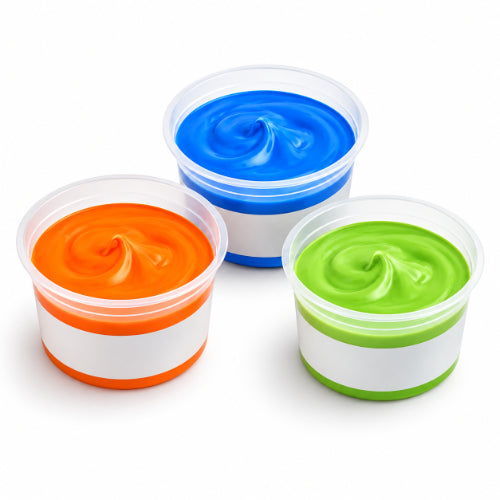
Therapy putty is a soft resistance material used for hand, finger and grip exercises. You can squeeze, pinch, roll, stretch and press it, which makes it useful for household hand exercise as well as professionally guided physiotherapy and occupational therapy programmes.
Meddey's range includes a progressive four-level Theraputty set. Therefore, buyers can start with a softer level and move to firmer resistance as hand control improves.

Quick Guide to Choosing Hand Putty
- New to hand exercise: Start with a softer resistance that you can control comfortably.
- Want to progress gradually: Choose a multi-level set with Soft, Medium, Firm and Extra Firm putty.
- Already need firmer resistance: A single firm-level tub may suit selected strengthening exercises.
- Recovering after injury or surgery: Follow the resistance and exercise advised by your therapist.
- Working on fine motor skills: Use controlled pinching, rolling and finger movements.
- Buying for a clinic: Progressive resistance levels give therapists more flexibility for different users.
What Is Therapy Putty?
Therapy putty is a reusable exercise material that provides resistance when you squeeze, stretch, pinch or pull it. Unlike a fixed hand gripper, putty changes shape, so users can perform many different hand and finger movements.
This flexibility makes it useful for grip exercises, finger control and selected fine-motor activities. Fine motor skills are the small, controlled hand and finger movements used for activities such as writing, buttoning clothes, handling coins and holding small objects.
The amount of resistance matters. Softer putty requires less force, while firmer putty makes the same movement more challenging. Therefore, users can select a level that matches their strength and exercise goal.
Therapy Putty for Home Hand Exercise
For household users, therapy putty is practical because it needs very little space. You can store it in its container and use it at a table, desk or other clean surface.
Simple movements can include squeezing the putty into the palm, pinching it between the thumb and fingers, rolling it into a shape or spreading the fingers against resistance.
However, more resistance is not automatically better. If you cannot control the movement or the hand becomes unusually painful or tired, the resistance may be too strong.
What Do the Resistance Levels Mean?
Many hand therapy putty products use several resistance levels. The exact colour system can vary between products, so always follow the resistance information supplied with the specific set rather than assuming every brand uses the same colours.
| Resistance Level | General Use | What to Consider |
|---|---|---|
| Soft | Gentle hand and finger exercise | May suit beginners or lighter therapist-guided work |
| Medium | Moderate hand resistance | Useful when softer putty no longer provides enough challenge |
| Firm | Stronger grip and hand exercise | Requires more controlled force |
| Extra Firm | Higher-resistance hand exercise | Best used only when appropriate for the user's strength |
These levels are a simple buying guide rather than a medical prescription. During rehabilitation, your physiotherapist or occupational therapist can help choose suitable resistance.
Theraputty Combo for Progressive Hand Exercise
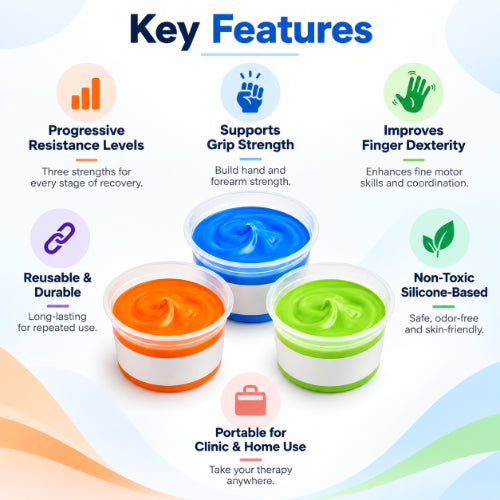
Meddey's Theraputty Combo for Hand Therapy & Grip Strength includes four resistance levels: Soft, Medium, Firm and Extra Firm.

Because the set contains several levels, it can support progression without requiring a new product each time resistance changes. It may also be practical for clinics where different users need different levels.
The Meddey product information describes the material as reusable, silicone-based and designed for movements such as squeezing, pinching, rolling, stretching, twisting and pressing.
Firm Resistance Hand Exercise Putty
A single firm-resistance putty tub provides one firmer level rather than a full progressive set. The Theraputty combo above includes a Firm level, so you can use it when your programme calls for firmer resistance.
Therefore, a single firm tub can make more sense for a user who already knows that Firm resistance suits their programme. Beginners or people recovering from a hand injury should not choose firmer resistance simply because it feels more challenging.
Common Therapy Putty Exercises
Different movements challenge the hand in different ways. Therefore, a therapist may choose more than one type of exercise during a structured programme.
Full-Hand Squeeze
Place the putty in your palm and close the fingers around it with controlled pressure. Then release slowly. This movement mainly challenges grip.
Finger Pinch
Pinch a small section between the thumb and one or more fingers. This movement can challenge fingertip and thumb control.
Rolling
Roll the material into a long shape using the hand and fingers. The activity adds movement and control without requiring a fixed grip position.
Finger Spread
Arrange the putty so the fingers work outward against its resistance. This creates a different challenge from squeezing inward.
Thumb Press
Press the thumb into the putty while keeping the rest of the hand controlled. A therapist may change the position according to the exercise goal.
Therapy Putty for Grip Strength
Therapy putty creates resistance when the hand squeezes or changes its shape. Therefore, it can be included in exercises that challenge grip and pinch strength.
Research has used therapeutic putty within hand-exercise programmes. However, results from one patient group should not be treated as a guarantee for every person or condition.
For general strengthening, users should increase resistance only when they can perform the current movement with good control.
Therapy Putty for Fine Motor Skills
Small pinching, pulling and shaping activities can challenge finger coordination as well as strength. For this reason, occupational therapists may use therapy putty alongside other fine-motor tools.
For additional hand-eye coordination and dexterity activities, browse Meddey's Peg Boards for Hand Therapy.
Meddey's broader Occupational Therapy Equipment collection also includes hand exercisers, peg boards and other fine-motor rehabilitation products.
Therapy Putty for Physiotherapy and Occupational Therapy
Physiotherapists and occupational therapists may include therapy putty when a programme involves grip, finger movement, hand coordination or progressive resistance.
However, the exercise needs to match the person's condition. A user recovering from surgery may need a very different level and movement from a healthy person performing general grip exercise.
For wider strengthening and mobility tools, visit Meddey's Physiotherapy & Rehabilitation Equipment collection.
Therapy Putty vs Hand Grip Exerciser
Both products can create hand resistance, but they feel very different.

A fixed hand grip exerciser usually provides one repeated closing motion. By comparison, hand exercise putty changes shape and supports squeezing, pinching, pressing, rolling and stretching.
Therefore, people who want several finger and hand movements may prefer putty, while a grip exerciser can be useful when the programme focuses more directly on repeated gripping. Browse the Hand Exercise Equipment collection for more grip and finger trainers.
Therapy Putty vs Stress Putty
Therapeutic exercise putty and ordinary stress or play putty should not automatically be treated as the same product.
Hand therapy products provide defined resistance for exercise. A general toy or stress putty may focus mainly on texture or play rather than controlled resistance.
For rehabilitation, use a product intended for hand exercise and follow the recommended resistance.
Can Therapy Putty Be Used After Hand Surgery?
It may form part of a rehabilitation programme after certain operations, but the timing matters. The hand may need time to heal before resisted exercise begins.
Therefore, do not start firm putty exercises simply because surgery is complete. Follow the surgeon's or hand therapist's guidance on when resistance exercise can begin.
Post-surgery note: If you have recently had surgery, a fracture, tendon repair or another significant hand injury, ask your clinician before beginning resisted hand exercises.
Can Older Adults Use Therapy Putty?
Older adults can use hand exercise putty when the resistance and exercise suit their ability. A softer level may be easier to control for people with reduced hand strength.
However, new weakness, significant swelling, numbness or unexplained hand pain should receive professional assessment rather than simply being treated with stronger exercise.
Can Children Use Hand Therapy Putty?
Occupational therapists may use putty during selected hand and fine-motor activities for children. However, adults should supervise use, especially with younger children.
Therapeutic putty is exercise material rather than food or chewing material. Store it safely when it is not being used.
How to Keep Your Putty Clean
- Wash and dry your hands before every session.
- Use the putty on a clean table or work surface.
- Keep hair, dust, fabric fibres and dirt away from the material.
- Return each resistance level to its own container after use.
- Do not mix resistance levels together.
- Store it away from strong heat and direct sunlight.
- Follow the care instructions supplied with the exact product.
How to Exercise Safely
Start with controlled movements and a resistance you can manage. A hand exercise should create effort without causing sharp pain.
In addition, avoid making a session much longer simply because the putty is convenient to use. Excessive gripping can fatigue the hand and forearm.
- Begin with a comfortable resistance level.
- Move slowly and keep the wrist in a comfortable position.
- Increase resistance gradually.
- Stop if you notice sharp pain or increasing swelling.
- Pause and seek advice if you develop new numbness or tingling.
- Follow professional guidance after surgery or significant injury.
Therapy Putty Price in India
The therapy putty price can depend on the quantity, resistance level, material and whether you buy a single tub or a progressive set.
A single Firm product can suit someone who already knows the required resistance. In contrast, a multi-level set may offer better flexibility for progression or use in a clinic.
Prices and offers can change, so check the linked Meddey product pages for current selling prices rather than relying on a fixed amount inside this guide.
Frequently Asked Questions
What is therapy putty used for?
It is used for controlled hand and finger exercises such as squeezing, pinching, rolling, stretching and pressing.
Is Theraputty the same as therapy putty?
The terms are commonly used for the same general type of hand-exercise resistance material. Product formulations and resistance systems can still differ.
Which resistance should a beginner choose?
A softer resistance is usually easier to control. However, people following rehabilitation should use the level recommended for their programme.
Can it help improve grip strength?
It can provide resistance for grip exercises. Improvement depends on the exercise programme, resistance, consistency and individual condition.
Can it be used for finger exercise?
Yes. Pinching, spreading, rolling and pressing movements can challenge different finger actions.
Can I use it every day?
The appropriate frequency depends on your exercise programme and how your hand responds. Avoid excessive exercise if the hand becomes painful or unusually fatigued.
Can therapy putty help after a stroke?
Hand exercise may form part of stroke rehabilitation for some people, but the exercises and resistance should follow the person's professional rehabilitation plan.
Can I use it after surgery?
Only begin resisted exercise when your surgeon, physiotherapist or hand therapist says it is appropriate.
How should I store it?
Keep it in its closed container in a clean, dry area away from strong heat and direct sunlight.
Should I buy one resistance or a set?
Choose one level if you already know the resistance you need. A set is more practical when you want several levels for gradual progression.
Choosing the Right Therapy Putty
The right therapy putty should match your current hand strength and exercise goal. A progressive set gives household users and clinics several resistance options, while a single Firm tub can suit a more specific exercise programme.
Most importantly, choose resistance that lets you move with control. During rehabilitation, professional advice is more useful than selecting the firmest option simply because it feels more challenging.
Need help choosing hand therapy equipment?
Contact Meddey Customer Care for current product details, availability or clinic requirements.
Call / WhatsApp: +91 85860 12345
Contact Meddey Customer Care for current product details, availability or clinic requirements.
Call / WhatsApp: +91 85860 12345
Exercise Disclaimer: This guide provides general product-selection and exercise information. It does not replace individual medical, physiotherapy or occupational-therapy advice.
Explore Medical Collections
All Categories
Abdominal & Maternity Support

Accessories

Accu-Chek Instant Strips: Use, Compatibility, Price & Blood Sugar Testing Guide
Accu-Chek Instant Strips: Uses, Features & Complete Guide

accupuncture

Acupuncture Needles & Supplies

Advanced Physiotherapy Machines & Lumbar Physiotherapy

Airways
Alcohol Swab: Uses, Safe Use and Disposal Guide

Ambu Bag Full Form: Is There an Official Meaning?
Ambu Bag: Parts, Uses and Safety Guide
Ambu Full Form: What the Name Means and BVM Basics

Ambulance

Anatomy Models
Anesthesia Machine
You may also need
FOR YOURecommended for you
Save 17%