
1
Theraputty Combo for Hand Therapy & Grip Strength


Double-tap to zoom · drag to pan · swipe to browse
Theraputty Combo for Hand Therapy & Grip Strength
In Stock
Check delivery
See if we deliver to you and when.
Delivering to
Delivery applicable
Free Shipping
on orders ₹999+
100% Genuine
Products
Dedicated
Support
Secure
Payments
Need help choosing or using this product?
Our team can help with product questions and orders.
Chat with support
Choose options
- Squeezing: Compress the putty using the fingers and palm.
- Pinching: Press the putty between the thumb and one or more fingers.
- Rolling: Roll the putty into a long shape on a clean, flat surface.
- Stretching: Pull the putty apart using controlled hand movements.
Check delivery
See if we deliver to you and when.
Delivering to
Delivery applicable
- Squeezing: Compress the putty using the fingers and palm.
- Pinching: Press the putty between the thumb and one or more fingers.
- Rolling: Roll the putty into a long shape on a clean, flat surface.
- Stretching: Pull the putty apart using controlled hand movements.
Check delivery
See if we deliver to you and when.
Delivering to
Delivery applicable
About this product
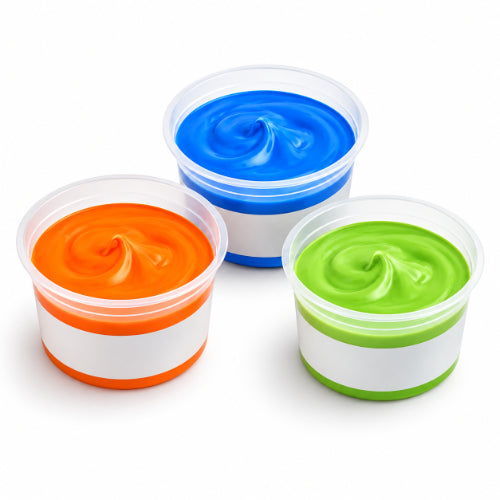
Theraputty for hand therapy and grip strength is a simple resistance exercise tool that you can squeeze, pinch, roll, stretch, twist and press with your hands and fingers.
This Theraputty Combo includes four resistance levels: Soft, Medium, Firm and Extra Firm. Therefore, a therapist can select a suitable resistance and change it as the user's exercise needs develop.
For household users, the compact design makes Theraputty convenient for therapist-guided exercises at home. Physiotherapists and occupational therapists can also use the different resistance levels during hand rehabilitation and strengthening programmes.
What Is Theraputty for Hand Therapy and Grip Strength?
Theraputty is a soft, mouldable exercise material that provides resistance when you move it. In simple words, your fingers and hands work against the putty while squeezing, pinching, stretching or pulling it.
This resistance makes therapy putty useful for different hand exercise patterns. For example, therapists may use putty exercises to work on grip, finger movement, thumb movement and fine motor control.
Fine motor control means the small, controlled movements we use for tasks such as buttoning clothes, writing, handling coins or picking up small objects.
Four Resistance Levels in the Theraputty Combo
Soft Provides the gentlest resistance in this four-level combo.
Medium Provides more resistance for users whose exercise plan requires progression.
Firm Offers stronger resistance for more demanding hand exercises.
Extra Firm Provides the highest resistance level included in this combo.
Do not choose resistance only by assuming that harder is better. Instead, select the level according to comfort, hand strength and professional advice, especially during recovery from an injury or surgery.
Hand Therapy Putty Exercise Options
The flexible shape of hand therapy putty allows several movement patterns instead of only one fixed gripping motion.
- Squeezing: Compress the putty using the fingers and palm.
- Pinching: Press the putty between the thumb and one or more fingers.
- Rolling: Roll the putty into a long shape on a clean, flat surface.
- Stretching: Pull the putty apart using controlled hand movements.
- Twisting: Use both hands to create a gentle twisting movement.
- Pressing: Push fingers or the thumb into the putty.
- Pulling: Hold and pull the putty against its resistance.
A therapist may select different movements depending on which fingers, grip patterns or hand functions need exercise.
Theraputty for Guided Home Hand Exercises
Many household buyers want a hand exercise tool that does not need electricity or a large setup. Theraputty is compact and easy to store, so it can fit naturally into a therapist-guided home programme.
However, people recovering from hand surgery or injury should not simply begin strengthening exercises on their own. The right exercise, resistance, repetitions and frequency can depend on the stage of recovery.
For this reason, follow the programme given by your physiotherapist, occupational therapist or hand therapist when you use Theraputty for rehabilitation.
Grip Strengthening Putty for Clinics & Therapy Centres
Grip strengthening putty can also support physiotherapy clinics, occupational therapy departments, rehabilitation centres and hand-therapy practices.
The four resistance levels give professionals several options within one combo. As the person's needs change, the therapist can choose an appropriate level rather than relying on one fixed resistance.
This makes the combo useful for structured exercises involving the hand, fingers and thumb. Still, treatment goals and exercise progression should remain individual to each person.
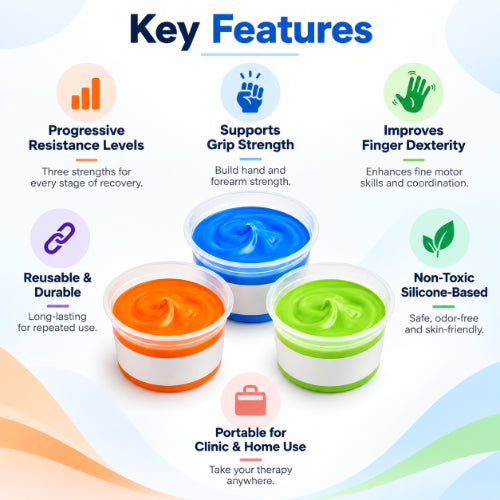
Theraputty Combo Key Features
- Four resistance levels: Soft, Medium, Firm and Extra Firm.
- Multiple hand movements: Supports squeezing, pinching, rolling, stretching, twisting, pressing and pulling.
- Silicone-based putty: The current product information describes the material as non-toxic and silicone based.
- Reusable: Store the putty correctly after use to help maintain its condition.
- Compact design: Convenient for home exercises, clinics and therapy sessions.
- No electricity required: Resistance comes directly from manipulating the putty.
- Home and professional use: Suitable for guided home exercise as well as physiotherapy and occupational therapy settings.
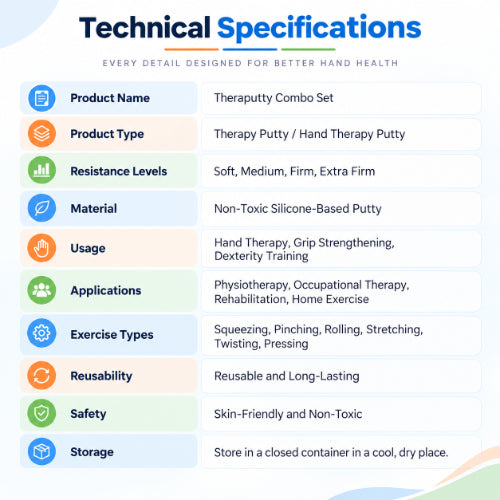
Theraputty Technical Specifications
| Product | Theraputty Combo for Hand Therapy & Grip Strength |
|---|---|
| Product Type | Therapy Putty / Hand Exercise Putty |
| Resistance Levels | Soft, Medium, Firm and Extra Firm |
| Number of Resistance Levels | 4 |
| Material | Silicone-based putty |
| Exercise Movements | Squeezing, pinching, rolling, stretching, twisting, pressing and pulling |
| Typical Settings | Home exercise, physiotherapy, occupational therapy and rehabilitation |
| Storage | Keep each putty in its container and store in a cool, dry place |
How to Use Therapy Putty Safely
- Wash and dry your hands before handling the putty.
- Use the resistance level recommended for your exercise programme.
- Place the putty on a clean surface when an exercise requires rolling or pressing.
- Perform only the movements included in your exercise plan.
- Use controlled movements rather than forcing the putty quickly.
- Follow the repetitions and frequency recommended by your therapist.
- Reduce the exercise intensity if you feel sharp pain.
- Stop and seek professional advice if pain continues or you develop concerning symptoms.
- Return the putty to its container after use.
Important Advice for Hand Rehabilitation
If you recently had a hand injury or surgery, ask your healthcare professional when strengthening exercises should begin. Starting resistance exercises too early may not suit your stage of recovery.
Also, do not assume that everyone should start with the same resistance or complete the same number of repetitions. A therapist can choose the level and exercise plan according to your hand condition, comfort and rehabilitation goals.
Who May Use Hand Therapy Putty?
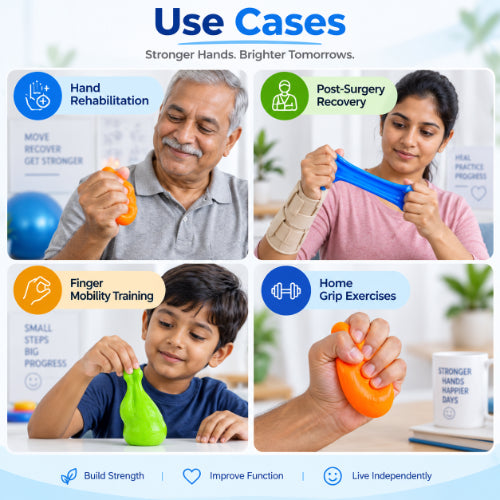
Theraputty can suit many people who need structured hand exercises, including adults, older adults, office workers, musicians and people following professional rehabilitation programmes.
Healthcare professionals may also use therapy putty as part of physiotherapy, occupational therapy or hand-therapy sessions.
However, a product page cannot determine whether hand strengthening is suitable for a particular injury or medical condition. People with recent surgery, significant swelling, severe pain or new numbness should seek professional guidance before starting resistance exercises.
How to Store Theraputty
Wash and dry your hands before each session to help keep the putty clean. After use, return each resistance level to its own container.
Keep the containers in a cool, dry place and away from excessive heat or direct sunlight. Also avoid using the putty on carpets, fabric, keyboards or dirty surfaces because the material may stick to them or collect debris.
Keep different resistance levels separate. Mixing them can change their feel and make it harder to follow a planned resistance level.
Theraputty for Hand Therapy and Grip Strength FAQs
Explore more: Therapy Putty | Occupational Therapy Exercise Equipment
Need Help Choosing Theraputty?
If you are unsure which resistance suits your exercise programme, ask your therapist or contact Meddey before ordering.
Call / WhatsApp: +91 8586-012345
You may also need
FOR YOURecommended for you
Save 55%

Save 39%

Save 8%



Save 37%

Save 38%


Save 22%

Save 18%

Save 22%