
1
Theraband FlexBar


Double-tap to zoom · drag to pan · swipe to browse
Theraband FlexBar
In Stock
Color:Red
Check delivery
See if we deliver to you and when.
Delivering to
Delivery applicable
Free Shipping
on orders ₹999+
100% Genuine
Products
Dedicated
Support
Secure
Payments
Need help choosing or using this product?
Our team can help with product questions and orders.
Chat with support
Choose options
A Twisting Bar That Trains the Forearm Where Pain Actually Starts Most forearm pain does not come from the wrist or the elbow joint itself — it comes from the muscle-tendon unit that crosses...
Color:Red
Check delivery
See if we deliver to you and when.
Delivering to
Delivery applicable
A Twisting Bar That Trains the Forearm Where Pain Actually Starts Most forearm pain does not come from the wrist or the elbow joint itself — it comes from the muscle-tendon unit that crosses...
Color:Red
Check delivery
See if we deliver to you and when.
Delivering to
Delivery applicable
About this product
A Twisting Bar That Trains the Forearm Where Pain Actually Starts
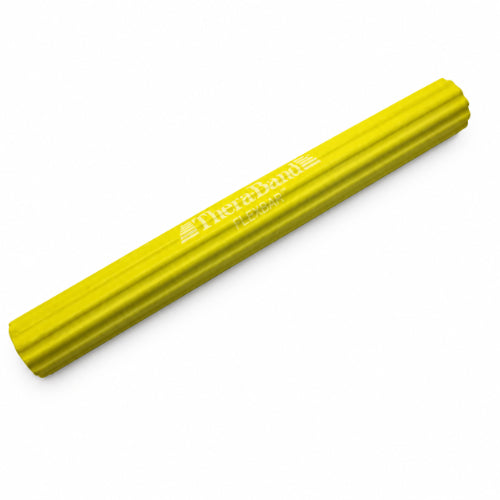
Most forearm pain does not come from the wrist or the elbow joint itself — it comes from the muscle-tendon unit that crosses both. The Theraband FlexBar was built around that idea. Instead of a straight bar you grip and curl, it is a bar you bend, twist and hold in torsion, which forces the wrist extensor and flexor groups to work eccentrically — lengthening under load rather than shortening. That single mechanical difference is why the FlexBar has become a standard fixture in forearm and elbow rehabilitation programs rather than just another grip trainer.
How the Twisting Motion Works
To use the FlexBar, you hold one end in each hand, bend the bar into a slight arch, and then rotate your wrists in opposite directions so the bar twists along its length. Releasing the twist slowly, rather than letting it snap back, is what creates the eccentric loading effect. This bend-twist-release pattern is the basis of the well-known "Tyler Twist" protocol, an exercise sequence built specifically around FlexBar-style tools for people managing tennis elbow (lateral epicondylalgia) and golfer's elbow (medial epicondylalgia). Because the bar is flexible rather than rigid, the resistance changes smoothly through the range of motion instead of jumping suddenly, which makes it easier to control the twisting speed than it would be with a dumbbell-based wrist exercise.
Why Color-Coded Resistance Matters
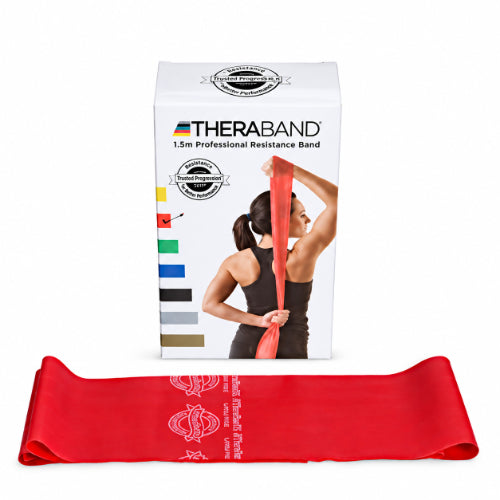
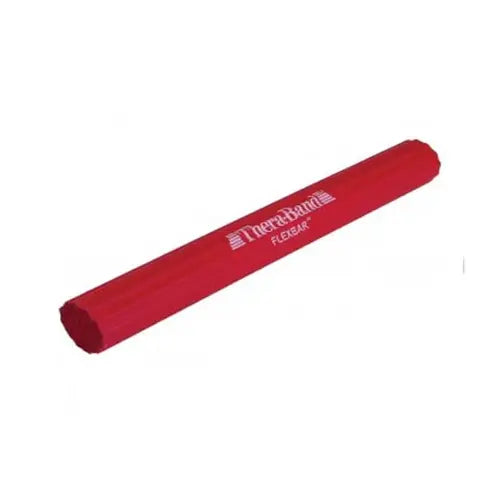
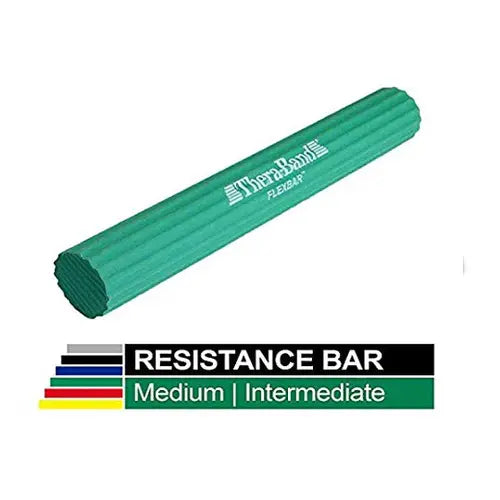
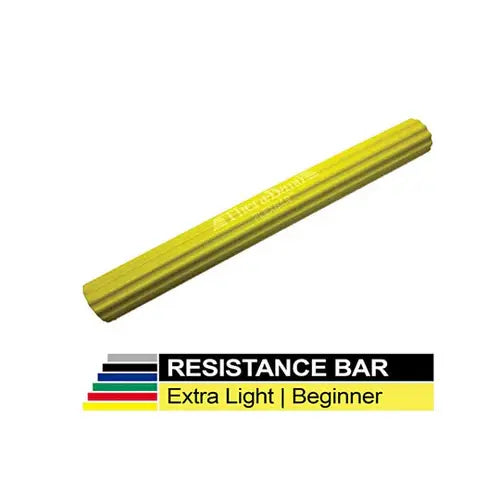
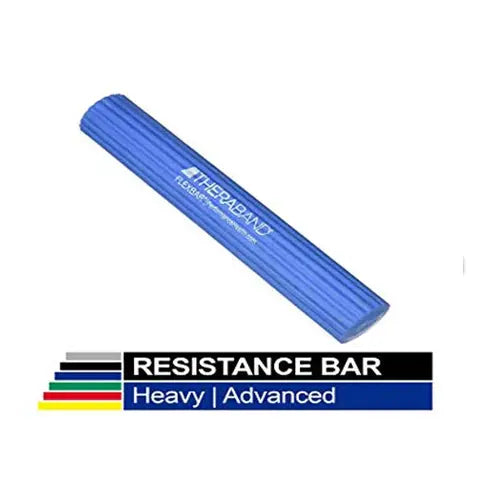
The FlexBar range is organized by color, and each color corresponds to a different amount of force needed to bend and twist it — yellow is the lightest, followed by red, then green, then blue as the firmest. This matters for two practical reasons. First, forearm tendons that are irritated or recovering respond better to a graded loading approach than to jumping straight into heavy resistance, so starting on a lighter color and working upward over weeks gives tissue time to adapt. Second, because the same exercise pattern is used across every color, a person can keep doing an identical movement as they progress — only the resistance changes, not the technique they have to relearn. This is the same principle strength coaches use with resistance bands generally: keep the movement pattern constant, vary the load.
Who Reaches for a FlexBar
Because forearm strain is so closely tied to repetitive gripping and swinging motions, the FlexBar shows up most often in three groups. Racquet sport players — tennis, badminton, squash — deal with lateral elbow strain from repeated backhand and serve mechanics. Golfers deal with the medial-side version from the repetitive impact of the swing. And a large number of people develop the same pain from non-sporting repetitive strain: typing, using tools, lifting with a pronated grip, or any activity that loads the wrist extensors over and over without adequate recovery. Physiotherapists also use flexbar-style tools more broadly for grip and forearm conditioning during general upper-limb rehab, since the twisting action recruits stabilizing muscles around the wrist that a simple squeeze grip trainer does not.
Building the Bar Into a Routine
A flexbar exercise session does not need to be long to be effective — this is a tool suited to short, consistent sets rather than long grinding workouts. A typical approach is to perform a small number of slow, controlled twist-and-release repetitions, focusing on the eccentric (releasing) phase rather than rushing back to the starting position. Because the exercise targets a fairly small and easily fatigued muscle group, technique matters more than speed: a slow release under control is doing more work than a fast one, even though it looks less impressive. People recovering from elbow pain are generally better served by frequent light sessions than infrequent heavy ones, which is part of why the graded color system exists in the first place.
Grip, Feel and Everyday Use
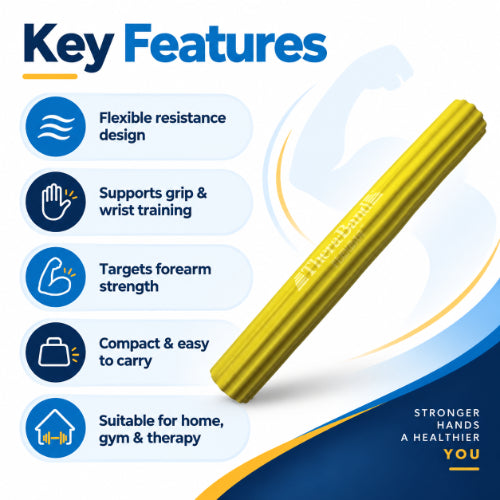
Beyond rehab-specific exercises, the textured rubber surface of the bar also makes it a convenient general grip-strengthening tool. Simply squeezing and bending the bar, without the full twist protocol, still challenges the hand and forearm muscles and can be used as a warm-up before racquet sports or manual work, or as a way to maintain forearm conditioning between formal therapy sessions. Its size makes it easy to keep at a desk, in a gym bag, or on a clinic shelf, so it tends to get used more consistently than bulkier forearm equipment simply because it is always within reach.
Frequently Asked Questions
Do I need a therapist to use a FlexBar, or can I use it on my own?
Many people use FlexBar-style exercises independently once they understand the bend-twist-release motion, and it is widely used as a home exercise between physiotherapy visits. That said, elbow and forearm pain can have several different underlying causes, so if pain is new, severe, or not improving, it is worth having a physiotherapist confirm the diagnosis and check your technique before you build a habit around the wrong exercise.
Which color should I start with?
As a general rule, start on the lightest resistance you can control through a full, slow twist without pain, and move up a color only once that level feels easy and pain-free. Jumping to a firmer bar too early is one of the most common ways people irritate the same tendon they are trying to rehabilitate.
Is this only for people with elbow pain, or is it useful for healthy athletes too?
Both. It is widely used as a rehabilitation tool for existing elbow and forearm pain, but racquet sport players and golfers without any current pain also use it preventively, since building forearm and grip endurance ahead of time reduces the repetitive strain that leads to these injuries in the first place.
How long before I notice a difference?
This varies by individual and by how the pain developed, and depends on consistency more than intensity. Tendon-related pain generally responds to weeks of steady, graded loading rather than a single session, so patience with the color progression tends to produce better results than trying to push through to a firmer bar quickly.
You may also need
FOR YOURecommended for you
Save 55%

Save 39%

Save 8%


Save 37%

Save 38%


Save 22%
Save 18%

Save 22%