
1

Tube Swing Deluxe for Sensory Integration Therapy


Double-tap to zoom · drag to pan · swipe to browse
Tube Swing Deluxe for Sensory Integration Therapy
In Stock
Check delivery
See if we deliver to you and when.
Delivering to
Delivery applicable
Free Shipping
on orders ₹999+
100% Genuine
Products
Dedicated
Support
Secure
Payments
Need help choosing or using this product?
Our team can help with product questions and orders.
Chat with support
Choose options
- First, inflate the inner tube to a suitable level.
- Next, make sure the zipped polyamide cover sits correctly around the tube.
- Check the reinforced suspension bands for visible damage.
- Then, attach the swing to a strong and suitable suspension system.
Check delivery
See if we deliver to you and when.
Delivering to
Delivery applicable
- First, inflate the inner tube to a suitable level.
- Next, make sure the zipped polyamide cover sits correctly around the tube.
- Check the reinforced suspension bands for visible damage.
- Then, attach the swing to a strong and suitable suspension system.
Check delivery
See if we deliver to you and when.
Delivering to
Delivery applicable
About this product
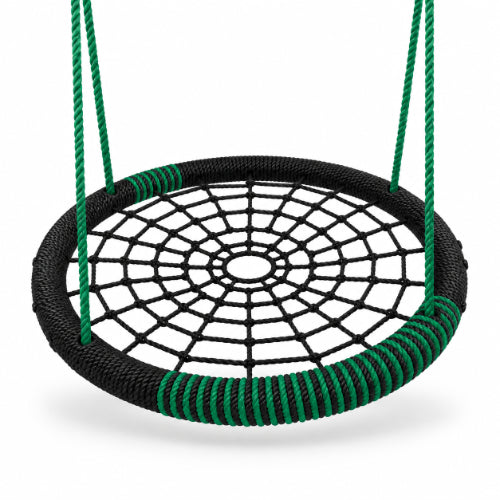
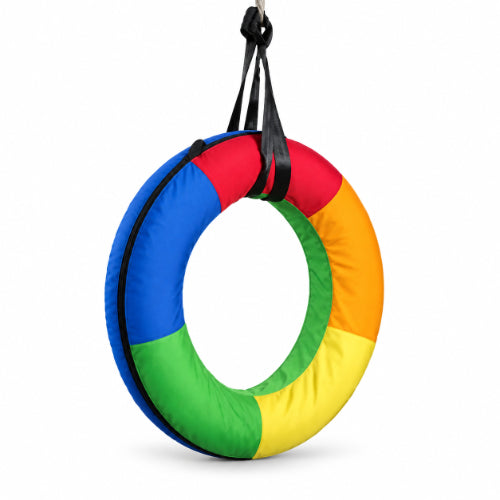
The tube swing for sensory integration therapy provides controlled multi-directional movement for supervised sensory and occupational therapy activities.
Children can sit on the circular tube or lie across it on their tummy during suitable activities. Therefore, the swing gives therapists and families different ways to introduce gentle movement.
In addition, the Deluxe model uses an inflatable inner tube, a zipped polyamide cover and reinforced suspension bands. However, this is therapy equipment rather than a normal playground toy, so an adult or trained professional should supervise every session.
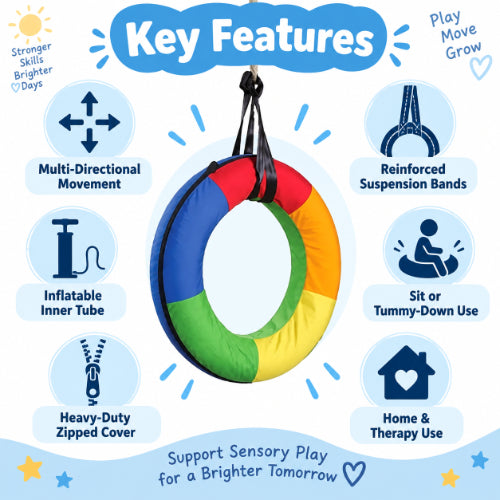
Tube Swing for Sensory Integration Therapy – Key Features
Multi-Directional Movement The suspended design allows controlled swinging in different directions.
Inflatable Inner Tube The inner tube requires inflation before use and forms the circular support area.
Zipped Polyamide Cover Polyamide is a strong synthetic fabric. The zipped cover surrounds the tube and protects the air valve.
Reinforced Suspension Bands Strong suspension bands support the swing when attached to a suitable hanging system.
Different Body Positions Children can sit on the tube or lie across it during suitable supervised activities.
Home & Therapy Use Families and therapists can use it in suitable sensory rooms, clinics or supervised home setups.
Sensory Tube Swing for Kids – How It Works
A sensory tube swing for kids is a suspended circular swing used during controlled movement activities.
As the swing moves, the body receives vestibular input. In simple words, vestibular input tells the brain about movement, direction, speed and balance.
In addition, holding and positioning the body around the tube can provide proprioceptive input. This means information from the muscles and joints about body position.
Therefore, therapists may include the swing within a wider sensory activity plan. However, the equipment itself does not diagnose or cure a sensory condition.
Occupational Therapy Tube Swing for Controlled Activities
An occupational therapy tube swing gives therapists several ways to introduce planned movement.
For example, a child may sit upright while swinging gently. Alternatively, the therapist may guide a tummy-down position when that activity suits the child's plan.
As a result, the swing can support different controlled movement experiences. However, the therapist should choose the position, speed and direction according to the child's individual needs.
Vestibular Sensory Swing for Movement and Balance Input
A vestibular sensory swing moves the child's body through space.
The vestibular system sits inside the inner ear and helps the brain understand movement and balance. Therefore, controlled swinging provides movement information to this system.
However, children can respond differently to swinging. Some may prefer slow movement, while others may become uncomfortable with fast or repeated motion.
Inflatable Tube Swing with Zipped Polyamide Cover
The inflatable tube swing uses an air-filled inner tube to create its round shape.
The heavy-duty zipped polyamide cover surrounds this inner tube. In addition, the cover hides the air valve and gives users a practical surface to hold.
Therefore, users need to inflate the inner tube before setting up the swing for activity.
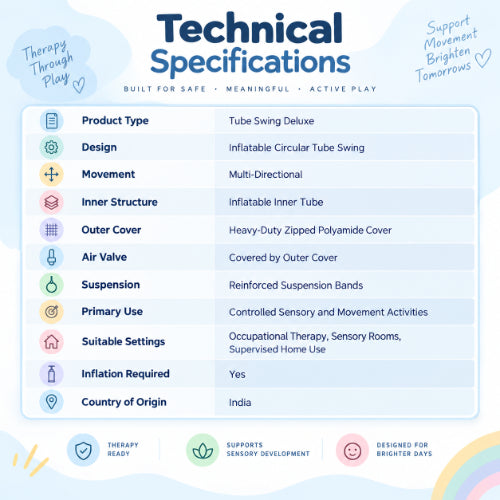
Tube Swing for Sensory Integration Therapy – Product Details
| Product Type | Tube Swing Deluxe |
|---|---|
| Design | Inflatable Circular Tube Swing |
| Movement | Multi-Directional |
| Inner Structure | Inflatable Inner Tube |
| Outer Cover | Heavy-Duty Zipped Polyamide Cover |
| Air Valve | Covered by the Outer Cover |
| Suspension | Reinforced Suspension Bands |
| Primary Use | Controlled Sensory and Movement Activities |
| Suitable Settings | Occupational Therapy, Sensory Rooms and Supervised Home Use |
| Inflation Required | Yes |
| Country of Origin | India |
Therapy Swing for Children at Home
A therapy swing for children may also fit into a suitable home sensory setup.
For household use, parents should first understand the child's therapy plan. Then, they can use the swing for activities recommended by the occupational therapist.
In addition, an adult should supervise the complete session. Therefore, the child should not use this therapy swing like an unsupervised playground toy.
Using the Tube Swing for Sensory Integration Therapy at Home
Parents may use the tube swing for sensory integration therapy at home when the installation point is secure and professional guidance is available.
First, ask the child's therapist which movements and positions are suitable. Then, begin with slow movement and watch how the child responds.
Most importantly, do not assume that faster or longer swinging gives better results. Instead, match the activity to the child's comfort and therapy plan.
Pediatric Therapy Swing for Clinics and Sensory Rooms
A pediatric therapy swing can fit into occupational therapy clinics, sensory rooms and child-development centres.
For example, a trained therapist may combine gentle swinging with reaching, holding or body-position activities.
Therefore, the tube swing can become one piece of equipment within a larger therapy session. However, progress depends on the child's overall therapy program rather than the swing alone.
How to Prepare the Inflatable Tube Swing
- First, inflate the inner tube to a suitable level.
- Next, make sure the zipped polyamide cover sits correctly around the tube.
- Check the reinforced suspension bands for visible damage.
- Then, attach the swing to a strong and suitable suspension system.
- Keep the area around and below the swing clear.
- Start with slow and controlled movement.
- Watch the child throughout the activity.
- Finally, stop if the child feels dizzy, anxious, sick or uncomfortable.
Tube Swing for Sensory Integration Therapy – Safety Guidance
- First, treat the product as therapy equipment rather than a normal toy.
- Always supervise children during use.
- In addition, install the swing only on a strong and suitable suspension point.
- Check the suspension bands and hanging system before every session.
- Keep furniture and hard objects away from the swing area.
- Moreover, begin with slow and gentle movement.
- Do not force a child to continue if the movement causes discomfort.
- Do not guess the maximum weight limit if it is not marked on the supplied product.
- Finally, seek trained guidance when using the swing for specific sensory therapy goals.
Occupational Therapy Tube Swing FAQs
What Is a Tube Swing for Sensory Integration Therapy Used For?
It provides controlled swinging and body-position activities during suitable sensory, occupational therapy or supervised home sessions.
Does the Inflatable Tube Swing Need Air?
Yes. The Deluxe model contains an inflatable inner tube that requires inflation before use.
What Is the Tube Swing Cover Made From?
The product uses a heavy-duty zipped polyamide cover. Polyamide is a strong synthetic fabric used for durable coverings.
What Is Vestibular Input?
Vestibular input is information about movement and balance that comes from the body's inner-ear balance system.
What Is Proprioceptive Input?
Proprioceptive input comes from muscles and joints and helps the brain understand body position and movement.
Can a Child Lie on the Sensory Tube Swing?
Yes. The product information describes both sitting and tummy-down positions. However, an adult or therapist should supervise the activity.
Can the Therapy Swing Be Used at Home?
Yes, in a suitable supervised home setup with secure installation and appropriate guidance.
Is the Tube Swing a Normal Toy?
No. The product information describes it as equipment for controlled movement rather than an unsupervised toy.
Does a Tube Swing Treat Sensory Processing Problems?
No. It can provide sensory and movement input, but it does not diagnose or cure a condition by itself.
Need Help Choosing a Tube Swing for Sensory Integration Therapy?
Contact Meddey for current specifications, installation information, availability and ordering support.
Meddey Technologies Pvt. Ltd.
C-75, First Floor, DDA Sheds
Industrial Area, Phase 1
Okhla, New Delhi – 110020
Call / WhatsApp: +91 8586-012345
You may also need
FOR YOURecommended for you
Save 55%

Save 39%

Save 8%

Save 37%

Save 31%

Save 12%
Save 42%

Save 22%