
1
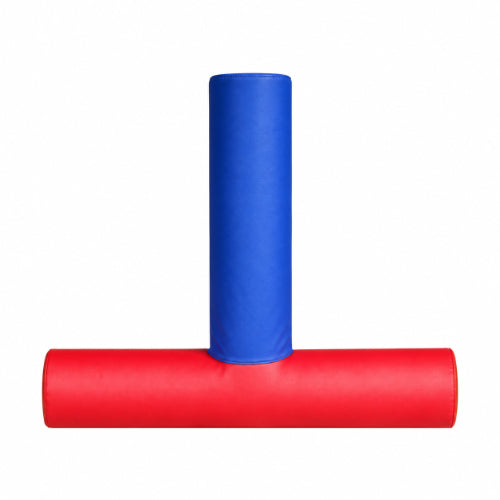
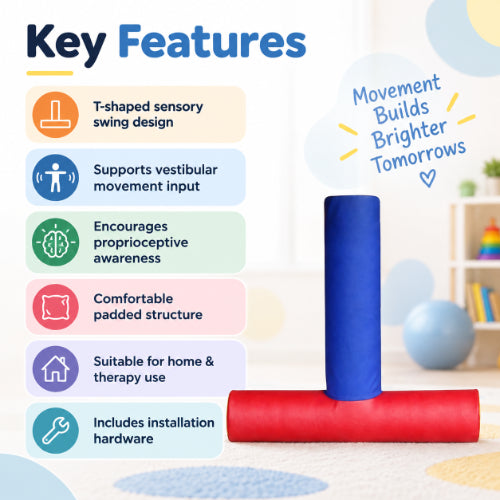
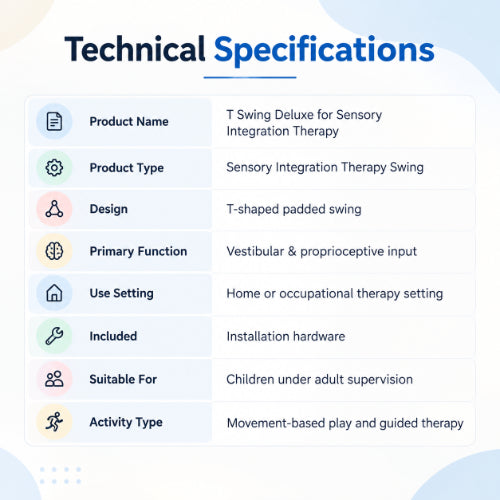
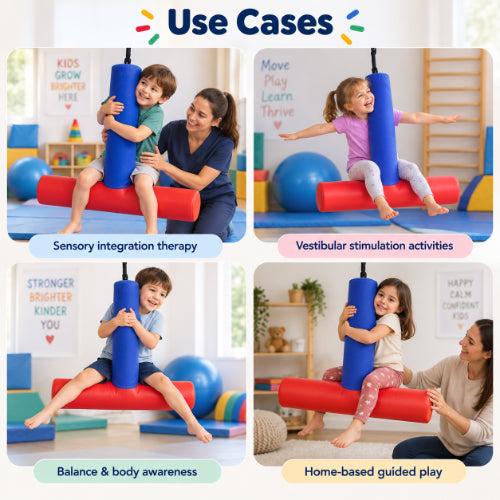
T Swing Deluxe for Sensory Integration Therapy


Double-tap to zoom · drag to pan · swipe to browse
T Swing Deluxe for Sensory Integration Therapy
In Stock
Check delivery
See if we deliver to you and when.
Delivering to
Delivery applicable
Free Shipping
on orders ₹999+
100% Genuine
Products
Dedicated
Support
Secure
Payments
Need help choosing or using this product?
Our team can help with product questions and orders.
Chat with support
Choose options
- First, make sure a suitable adult has checked the installation.
- Next, inspect the swing and hanging system before use.
- Then, help the child get into a stable and comfortable position.
- Start with gentle, controlled movement.
Check delivery
See if we deliver to you and when.
Delivering to
Delivery applicable
- First, make sure a suitable adult has checked the installation.
- Next, inspect the swing and hanging system before use.
- Then, help the child get into a stable and comfortable position.
- Start with gentle, controlled movement.
Check delivery
See if we deliver to you and when.
Delivering to
Delivery applicable
About this product
The T swing for sensory integration gives children a fun way to experience supervised swinging, movement and active play at home or in a therapy setting.
As the swing moves, it provides vestibular input. In simple words, this is movement information that helps the body sense direction, speed and balance.
In addition, holding and positioning the body on the swing can provide proprioceptive input. This simply means feedback from muscles and joints about where the body is and how it is moving.
Therefore, families and therapists can use the T Swing Deluxe for suitable movement activities. However, children should use it with adult supervision and according to their individual abilities.
T Swing for Sensory Integration – Key Features
T-Shaped Design The distinctive shape allows children to hold, sit or position themselves during suitable supervised activities.
Movement-Based Play Swinging provides controlled movement that can make therapy activities more engaging.
Padded Structure The Deluxe design uses a covered, supportive structure for more comfortable contact during use.
Home & Therapy Use Families can use it at home, while occupational therapists can include it in suitable therapy activities.
Installation Hardware The listed product comes with installation hardware for setting up the swing.
Made for Children The product is designed for children's movement, play and supervised therapy activities.
What Is a Sensory T Swing?
A sensory T swing is a suspended swing with a T-shaped body. Therapists may use this type of equipment during movement-based occupational therapy activities.
Unlike a normal playground swing, a therapy swing can support different body positions and planned movement activities. Therefore, the way a child uses the swing may change according to the activity.
For household use, parents should follow any instructions given by the child's occupational therapist. In addition, an adult should supervise every session.
Vestibular Therapy Swing – Simple Explanation
A vestibular therapy swing provides movement that activates the body's balance system.
The vestibular system sits inside the inner ear. In simple words, it helps the brain understand whether the body is moving, turning, slowing down or changing direction.
Therefore, swinging can provide useful movement experiences during suitable play or therapy activities. However, more movement is not always better. Some children may need slower or shorter sessions.
Occupational Therapy T Swing for Guided Activities
An occupational therapy T swing can give therapists different ways to include movement in a child's session.
For example, a therapist may use controlled swinging while working on body position, reaching, balance or movement planning. In addition, the therapist can change the direction and pace according to the child's response.
However, the T Swing itself does not treat or cure a developmental or sensory condition. Instead, it works as one piece of equipment within a broader activity or therapy plan.
T Swing Deluxe Product Details
| Product | T Swing Deluxe Quality |
|---|---|
| Design | T-Shaped Therapy Swing |
| Primary Users | Children |
| Main Use | Supervised Movement, Play and Sensory Activities |
| Suitable Settings | Home and Therapy Centres |
| Installation | Installation Hardware Included |
| Country of Origin | India |
Sensory Integration Swing for Home Use
A sensory integration swing can bring movement-based activities into a suitable home space.
For example, a child may use the swing for gentle supervised movement and active play. In addition, families who already have an occupational-therapy program may use the equipment for activities recommended by their therapist.
However, parents should not copy intense therapy activities from online videos without guidance. Each child can respond differently to spinning, swinging or fast movement.
How to Introduce the T Swing at Home
- First, make sure a suitable adult has checked the installation.
- Next, inspect the swing and hanging system before use.
- Then, help the child get into a stable and comfortable position.
- Start with gentle, controlled movement.
- Watch how the child responds during the activity.
- In addition, follow the therapist's instructions when using it for a therapy program.
- Finally, stop the activity if the child feels unwell, frightened or unusually uncomfortable.
Pediatric Therapy Swing for Movement Activities
A pediatric therapy swing can make movement activities more interactive for children.
For example, a therapist may combine swinging with reaching for an object or holding a body position. As a result, one activity can involve movement, attention and body control at the same time.
However, the exact activity should match the child's age, ability and therapy goals. Therefore, professional guidance becomes especially useful for children with specific developmental or sensory needs.
Therapy Swing for Children – Home or Clinic?
This therapy swing for children can suit both environments.
At home, families may use it for supervised play or therapist-recommended activities. Meanwhile, clinics and occupational-therapy centres may include it in structured movement sessions.
Therefore, the same swing can serve different purposes. The important difference is how the adult or therapist plans and supervises the activity.
Important T Swing Safety Guidance
- First, always supervise children during use.
- Install the swing only from a strong and suitable structural support.
- In addition, check all hanging points and hardware before use.
- Do not guess the maximum load capacity if it is not marked on the product.
- Avoid sudden or very fast movement unless a trained therapist recommends it.
- Moreover, keep the surrounding area clear of furniture and hard objects.
- Stop the activity if the child feels dizzy, sick, frightened or uncomfortable.
- Do not use damaged ropes, hooks, covers or suspension parts.
- Finally, seek professional guidance when using the swing for specific therapy goals.
T Swing for Sensory Integration FAQs
Explore more: Sensory Swings | Occupational Therapy Exercise Equipment
Need Help with the T Swing Deluxe?
Contact Meddey for installation information, current specifications, availability and ordering support.
Meddey Technologies Pvt. Ltd.
C-75, First Floor, DDA Sheds
Industrial Area, Phase 1
Okhla, New Delhi – 110020
Call / WhatsApp: +91 8586-012345
You may also need
FOR YOURecommended for you
Save 55%

Save 39%

Save 8%

Save 37%

Sold out

Save 18%

Save 20%
Save 33%