
Traction
Traction Equipment – Cervical & Lumbar Spinal Decompression Devices
Spinal traction is a therapeutic technique used to decompress intervertebral discs, relieve nerve root compression, reduce muscle spasm, and restore normal spinal mechanics. At Meddey, our traction collection includes cervical traction devices, lumbar traction units, motorised traction tables, and home traction devices for managing neck pain, lower back pain, disc herniation, and nerve compression syndromes. Used by physiotherapists, neurologists, and orthopaedic surgeons, traction therapy offers effective non-surgical management of spinal conditions that respond poorly to conventional treatment.
How Does Spinal Traction Work?
Traction applies a sustained or intermittent longitudinal force along the axis of the spine, creating distraction (separation) between adjacent vertebrae. This decompresses the intervertebral disc, reduces intradiscal pressure, widens the intervertebral foramen (relieving nerve root compression), stretches tight paraspinal muscles and ligaments, and promotes reabsorption of disc protrusions. The effect is both mechanical (immediate decompression) and neurophysiological (muscle relaxation through Golgi tendon organ stimulation).
Types of Traction Equipment at Meddey
Cervical Traction Devices: Over-door cervical traction kits for home use, providing gentle sustained traction for cervical disc herniation, cervical spondylosis, and nerve root compression causing arm pain (brachialgia). Simple to set up and use independently.
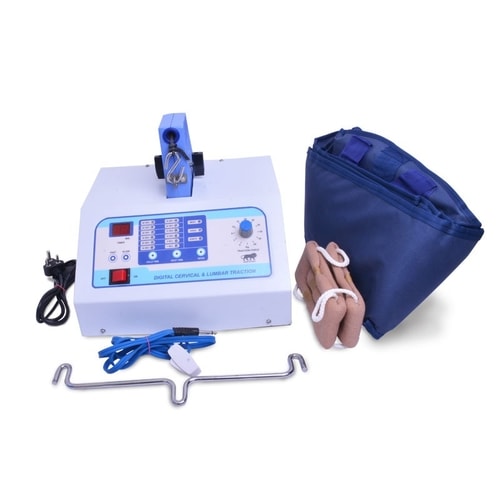
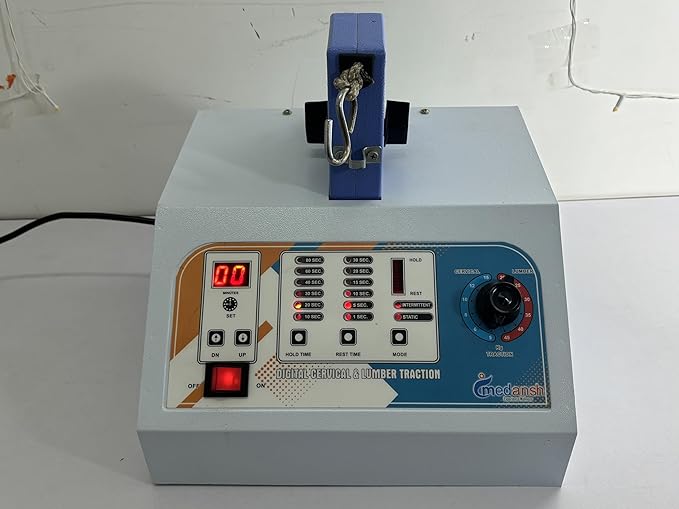
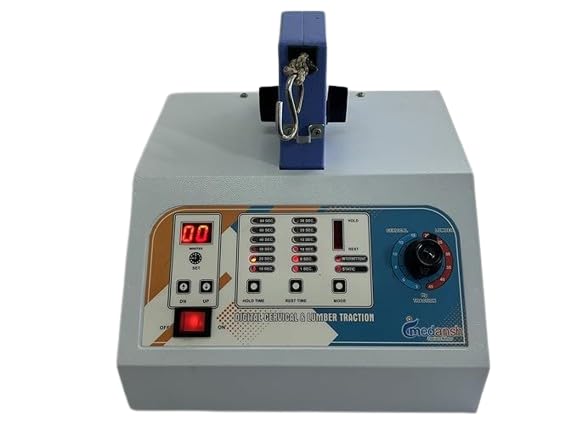
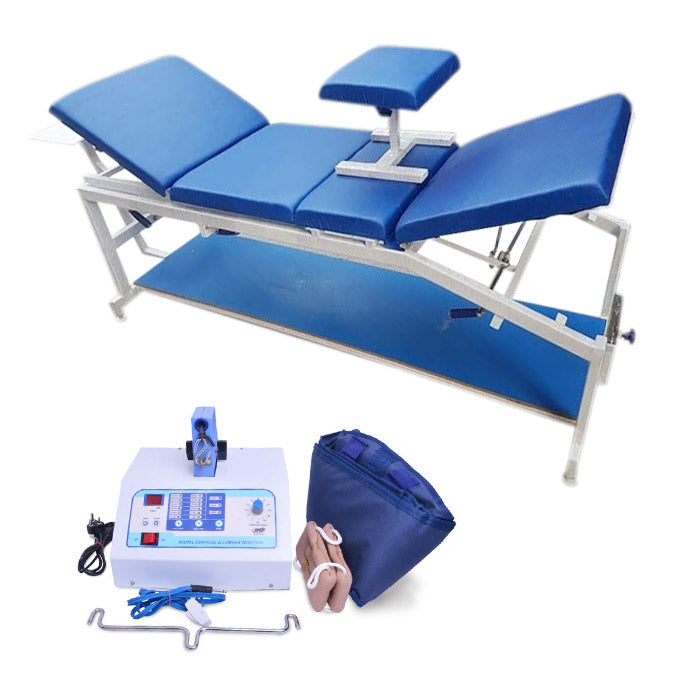
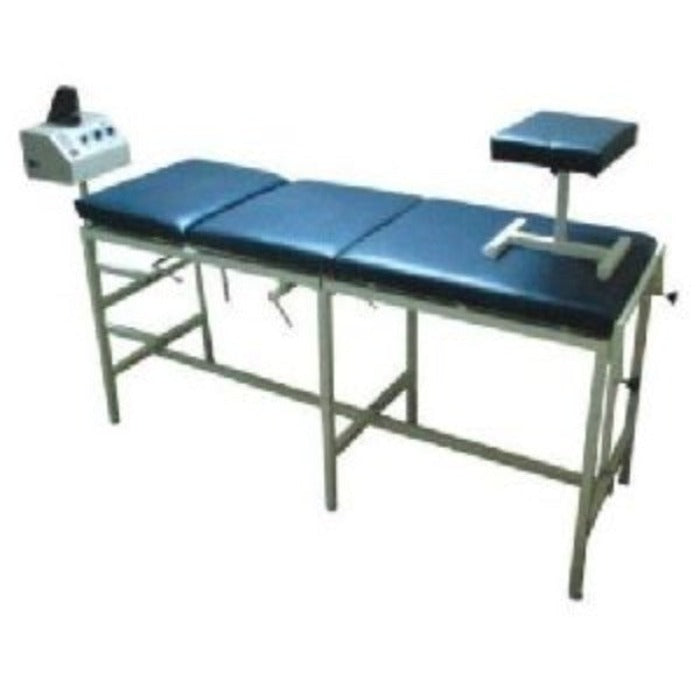
Motorised Cervical and Lumbar Traction Units: Clinical-grade motorised traction machines with programmable traction force, hold time, and rest time for precise clinical application.
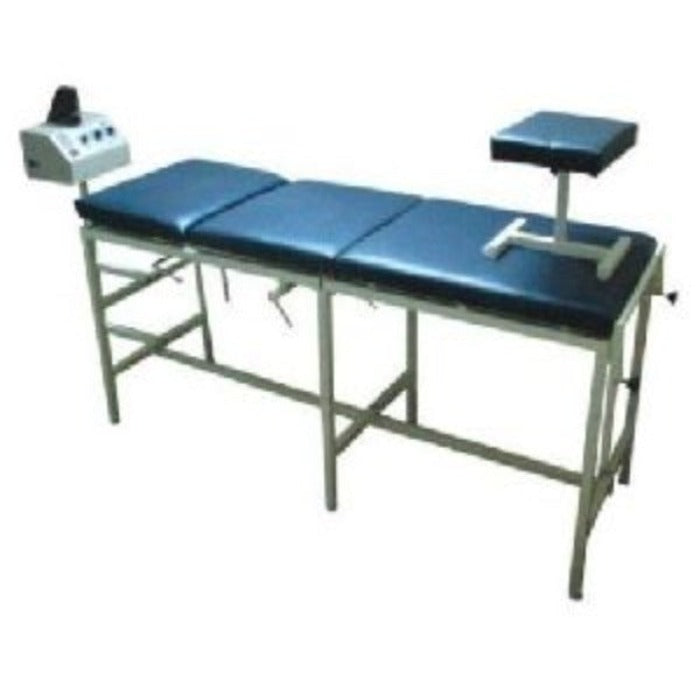
3D Traction Tables: Advanced traction treatment tables with multiple axis movement for combined traction and mobilisation in specialised spinal rehabilitation clinics.
Pelvic Traction Belts: Harness systems used with motorised traction units for lumbar traction, providing effective force transmission to the lower spine.
Conditions Treated with Traction
Spinal traction is indicated for cervical disc herniation with radiculopathy, lumbar disc herniation with sciatica, cervical and lumbar spondylosis, degenerative disc disease, facet joint dysfunction, muscle spasm of paraspinal muscles, and spinal stenosis with neurogenic claudication. Best results are obtained when traction is combined with manual therapy and specific stabilisation exercises.
Safety Considerations for Traction
Traction is contraindicated in acute disc prolapse with myelopathy (spinal cord compression), spinal instability (fracture, severe spondylolisthesis), osteoporosis with high fracture risk, pregnancy, malignancy involving the spine, and active inflammatory arthritis (rheumatoid arthritis, ankylosing spondylitis). A physiotherapist assessment should precede traction treatment.
Why Buy Traction Equipment from Meddey?
Meddey supplies traction equipment used by physiotherapy clinics and hospitals across India. Our cervical traction kits are popular with patients managing chronic neck pain at home, while our motorised units are specified by spinal physiotherapy specialists for clinical use.
Frequently Asked Questions
Can I use a cervical traction device at home without professional guidance? Over-door cervical traction kits are designed for safe home use. However, an initial physiotherapy assessment to confirm suitability (excluding contraindications) is strongly recommended before starting home traction.
How much traction force is needed for the cervical spine? Cervical traction typically requires 7–15 kg (70–150 N) of force for disc conditions, with lighter loads (3–5 kg) for muscle spasm and spondylosis. Starting low and gradually increasing is recommended.