
1


Agility Hurdles for Speed & Coordination Training


Double-tap to zoom · drag to pan · swipe to browse
Agility Hurdles for Speed & Coordination Training
In Stock
Check delivery
See if we deliver to you and when.
Delivering to
Delivery applicable
Free Shipping
on orders ₹999+
100% Genuine
Products
Dedicated
Support
Secure
Payments
Need help choosing or using this product?
Our team can help with product questions and orders.
Chat with support
Choose options
- Speed and agility training: improves quick footwork, movement rhythm, acceleration and directional control.
- Coordination development: supports hand-eye, foot-eye and full-body coordination during structured drills.
- Lower-body conditioning: useful for knee lift, hip control, ankle stability, leg strength and landing control.
- Portable: lightweight design is easy to carry, arrange and store after sessions.
Check delivery
See if we deliver to you and when.
Delivering to
Delivery applicable
- Speed and agility training: improves quick footwork, movement rhythm, acceleration and directional control.
- Coordination development: supports hand-eye, foot-eye and full-body coordination during structured drills.
- Lower-body conditioning: useful for knee lift, hip control, ankle stability, leg strength and landing control.
- Portable: lightweight design is easy to carry, arrange and store after sessions.
Check delivery
See if we deliver to you and when.
Delivering to
Delivery applicable
About this product
Agility Hurdles for Speed, Footwork, Coordination and Sports Training
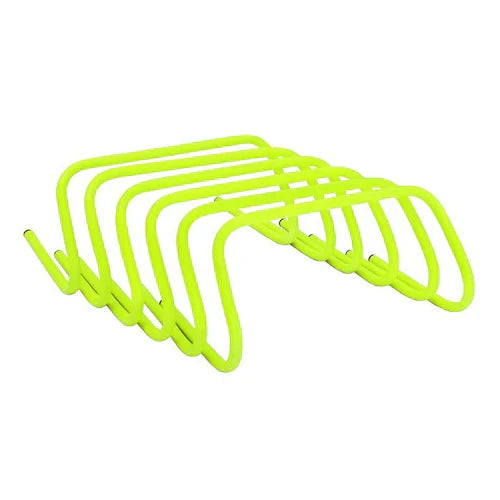
Agility hurdles are practical training tools designed to improve speed, coordination, quick foot movement, balance, reaction time and lower-body control. They are widely used in sports training, school fitness sessions, physiotherapy drills, rehabilitation routines and athletic conditioning programs.
Available at Meddey, these speed hurdles help users perform structured movement drills without heavy gym equipment. Coaches, trainers, therapists and fitness users can place them on the floor in different patterns to create step-over, jump-over, lateral movement, sprint and coordination exercises.
Unlike general cones or markers, agility hurdles create a visible height challenge. The user must lift the feet properly, control landing, maintain rhythm and coordinate movement with better focus — making them ideal for athletes who want to improve foot speed, explosive movement and body control. They are also suitable for basic rehabilitation and mobility training when used under professional guidance.
Buying for a team, gym, school or clinic? Chat with us on WhatsApp for bulk pricing, set quantities and fast delivery across India. 👉 WhatsApp +91 8586-012345
Training Value of Speed Hurdles
Speed hurdles support more than jumping practice. They help users train rhythm, acceleration, deceleration, knee lift, hip control and directional change, making them an important part of warm-ups, sports conditioning, agility circuits and rehabilitation progression. For athletes, hurdle drills improve game-readiness because many sports require quick feet, controlled steps and fast directional response. For general fitness users, they add variety while supporting cardio, coordination and lower-body activation.
Key Features
- Speed and agility training: improves quick footwork, movement rhythm, acceleration and directional control.
- Coordination development: supports hand-eye, foot-eye and full-body coordination during structured drills.
- Lower-body conditioning: useful for knee lift, hip control, ankle stability, leg strength and landing control.
- Portable: lightweight design is easy to carry, arrange and store after sessions.
- Multi-sport use: suitable for football, cricket, basketball, tennis, athletics, school sports and general fitness.
- Rehabilitation support: can support supervised balance, gait and step-clearance drills in physiotherapy settings.
- Flexible setup: place in straight lines, zig-zag layouts, circuits or spacing-based speed patterns.
- Indoor and outdoor use: suitable for gyms, training grounds, therapy rooms, school halls and home fitness areas.
Technical Specifications
| Product Name | Agility Hurdles / Speed Hurdles |
|---|---|
| Product Type | Sports training and fitness agility equipment |
| Primary Use | Speed training, footwork practice, coordination drills, agility conditioning |
| Material | Durable lightweight plastic / training-grade frame |
| Design | Low-profile hurdle structure for step-over and jump-over drills |
| Application Areas | Sports training, fitness, school sports, physiotherapy, rehabilitation, athletic conditioning |
| Suitable For | Coaches, athletes, fitness trainers, physiotherapists, schools, academies, home users |
| Use Environment | Indoor and outdoor training spaces |
| Storage | Lightweight, stackable and easy to store |
Applications and Use Cases
- Football footwork and speed drills
- Cricket fielding agility practice
- Basketball and tennis lateral movement training
- Athletics warm-up and sprint coordination drills
- School sports and physical education sessions
- Gym-based agility circuits and HIIT workouts
- Physiotherapy gait training under professional supervision
- Balance and step-clearance practice in rehabilitation
- Home fitness routines for coordination and lower-body activation
Benefits of Agility Hurdles
Agility hurdles build better movement awareness because every drill requires timing, control and accurate foot placement — useful for sports players who need quick response during real game situations. They also improve lower-body coordination: when users step or jump over hurdles, the hips, knees, ankles and core work together, training movement quality along with speed. In fitness routines they add intensity without machines or heavy weights, working well for warm-ups, cardio circuits and plyometric drills. In therapy settings, simple step-over drills may support confidence and control when planned by a qualified professional.
Why Choose Meddey?
Meddey offers practical fitness, physiotherapy, rehabilitation and sports-training products for clinics, schools, gyms, academies, trainers and home users. These agility hurdles are a compact, durable and versatile choice for speed and coordination training, with convenient online ordering and reliable sourcing across India.
Questions about set size or spacing for your sport? Our team can help you pick the right configuration. 👉 WhatsApp +91 8586-012345
Frequently Asked Questions
What are agility hurdles used for?
For speed training, footwork drills, coordination practice, balance improvement, sports conditioning, warm-ups and controlled movement training. They help users practice quick steps, knee lift, landing control and directional changes. Coaches use them for athletes, fitness trainers use them in agility circuits, and physiotherapists may use simple hurdle drills for supervised gait and step-clearance practice.
Are speed hurdles suitable for beginners?
Yes, if drills are simple and controlled. New users should start with walking step-over drills before faster movements or jumps, keep the hurdles properly spaced and train on a stable surface. Supervision is recommended if balance is poor.
Can agility hurdles be used for physiotherapy?
Yes, under professional supervision — for gait training, step clearance, balance confidence and controlled lower-limb movement. Patients recovering from surgery, injury, stroke, weakness or balance problems should not use them without guidance.
Which sports can use these hurdles?
Football, cricket, basketball, tennis, athletics, hockey, badminton, martial-arts conditioning and general sports fitness — supporting foot speed, reaction training, lateral movement and lower-body coordination.
Can I use them at home?
Yes, with enough open space and a safe floor. Walking drills, step-over routines, light cardio circuits and coordination exercises all work well. Avoid slippery surfaces, crowded rooms and advanced jumping drills without experience.
How should I place the hurdles?
In a straight line, zig-zag pattern, square circuit or sport-specific layout. Beginners should keep wider spacing and move slowly; advanced users can tighten spacing to train faster footwork, lateral movement and rhythm.
Quick Tips for Safe and Better Use
- Start with walking drills before fast footwork or jumping, to build control and confidence.
- Use a flat, dry, non-slip surface — avoid wet floors, uneven ground or loose mats.
- Warm up first with light jogging, ankle mobility, knee lifts and dynamic stretches.
- Keep proper spacing based on the user's height, goal and ability.
- Maintain upright posture — chest up, eyes forward, core engaged.
- Land softly with soft knees on jump-over drills; avoid stiff landings.
- Use supervision for rehab and follow a therapist's plan.
- Avoid overtraining — start with short sessions and build gradually.
- Train all directions — forward, backward, side-step and diagonal.
- Keep the area clear and wear shoes with good grip; never train barefoot on hard or slippery floors.
- Inspect hurdles before use and stop immediately if you feel sharp pain, dizziness or instability.
You may also need
FOR YOURecommended for you
Save 55%

Save 39%

Save 8%

Save 37%

Save 57%
Save 59%
Sold out

Save 54%