1
Cervical Traction Device for Guided Neck Therapy


Double-tap to zoom · drag to pan · swipe to browse
Cervical Traction Device for Guided Neck Therapy
In Stock
Title:Standard
Check delivery
See if we deliver to you and when.
Delivering to
Delivery applicable
Free Shipping
on orders ₹999+
100% Genuine
Products
Dedicated
Support
Secure
Payments
Need help choosing or using this product?
Our team can help with product questions and orders.
Chat with support
Choose options
- Patients following a prescribed neck rehabilitation programme
- Physiotherapy clinic patients
- People with selected neck and arm symptoms after clinical assessment
- Professionally supervised home-care users
Title:Standard
Check delivery
See if we deliver to you and when.
Delivering to
Delivery applicable
- Patients following a prescribed neck rehabilitation programme
- Physiotherapy clinic patients
- People with selected neck and arm symptoms after clinical assessment
- Professionally supervised home-care users
Title:Standard
Check delivery
See if we deliver to you and when.
Delivering to
Delivery applicable
About this product
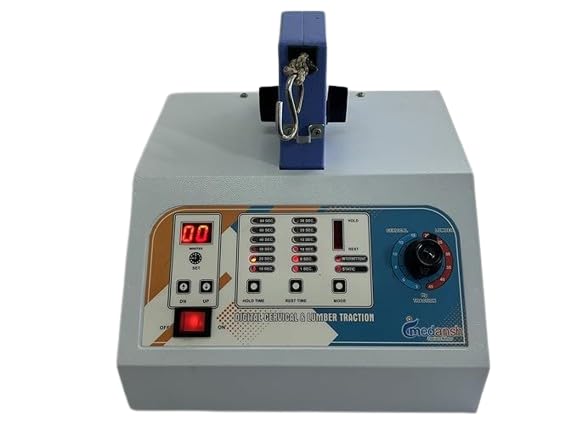
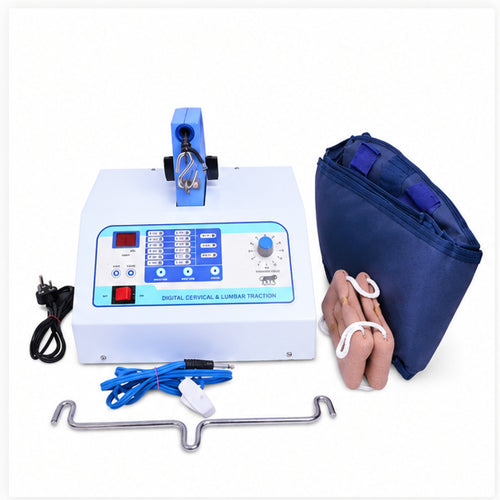
Cervical traction device for neck pain is designed for controlled neck traction as part of a professionally planned physiotherapy or rehabilitation programme.
Cervical traction means applying a gentle pulling force to the head and neck. Therefore, a healthcare professional may use it for selected neck conditions after checking whether traction is suitable.
For household buyers, this product should only form part of a professionally advised home program. In other words, users should not select traction force, angle or treatment time through guesswork.
What Is a Cervical Traction Device for Neck Pain?
A cervical traction device applies a controlled pulling force along the neck. This pulling action creates temporary separation and unloading around the cervical spine.
Cervical spine simply means the neck section of the spine. Therefore, cervical traction focuses specifically on the neck rather than the lower back.
In physiotherapy, professionals may include traction within a wider treatment plan. For example, that plan may also include exercises, movement training, posture education and activity changes.
However, cervical traction does not cure cervical spondylosis, permanently correct a disc problem or guarantee pain relief.
Key Features of This Neck Traction Device
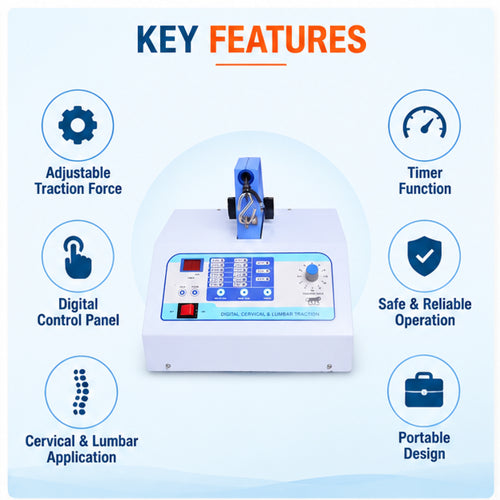
Guided Cervical Traction The device supports cervical traction as part of a planned rehabilitation programme. Therefore, users should follow professional instructions.
Neck-Specific Application This product focuses on cervical traction. In contrast, the current listing does not verify lumbar traction use.
Clinic or Guided Home Use Healthcare professionals may use traction in clinical care. In addition, suitable patients may follow a prescribed home programme when advised.
Cervical Traction Device for Guided Home Use
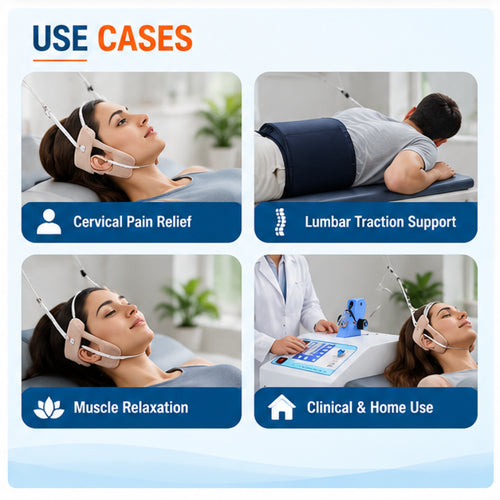
Household customers may look for a neck traction device after a doctor or physiotherapist recommends cervical traction.
Before using the device, a professional should explain the correct setup. Also, the user should understand the recommended position, duration and level of traction for their individual case.
Because neck conditions can differ greatly, there is no single traction setting that suits everyone. Therefore, users should not copy settings from another person or from a general online routine.
If symptoms become worse during traction, stop using the device and seek professional advice.
Cervical Traction for Physiotherapy & Rehabilitation
Cervical traction for physiotherapy may be considered for selected patients as one part of a broader rehabilitation plan.
For example, clinicians sometimes consider traction when neck symptoms also travel into the arm. However, the clinician should first assess the patient and check whether traction is appropriate.
In addition, a physiotherapist may combine traction with strengthening, mobility work or posture education. Therefore, traction should not automatically replace exercise or other recommended treatment.
How a Cervical Traction Device Works
The device applies a pulling force while the head and neck remain supported.
As a result, cervical traction may temporarily reduce mechanical pressure around selected neck structures. However, individual results can vary.
The goal is not to force the spine into a new permanent position. Instead, professionals may use traction to support short-term symptom management within a wider treatment plan.
Who May Use Cervical Traction Equipment?
A healthcare professional may consider cervical traction equipment for selected rehabilitation programmes after assessment.
Depending on the individual case, suitable users may include:
- Patients following a prescribed neck rehabilitation programme
- Physiotherapy clinic patients
- People with selected neck and arm symptoms after clinical assessment
- Professionally supervised home-care users
- Rehabilitation centres
- Physiotherapy clinics and hospitals
However, being on this list does not mean cervical traction is automatically suitable for every person.
Cervical Traction Device Specifications
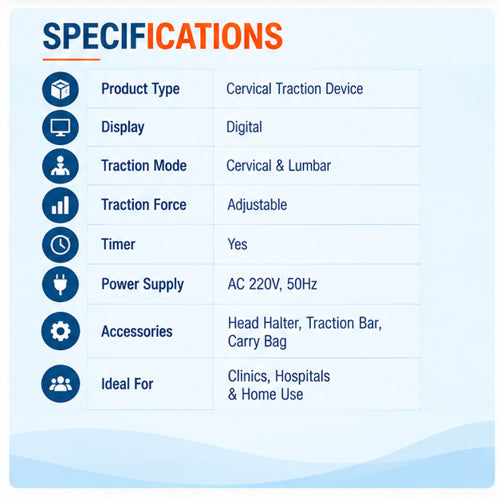
| Product Type | Cervical Traction Device |
|---|---|
| Brand | Meddey |
| Primary Application | Professionally guided cervical traction |
| Body Area | Cervical spine / neck |
| Recommended Use | Clinical use or professionally guided home programme, when appropriate |
| Exact Traction Method | Not currently verified in the available product information |
| Traction Force Range | Not currently verified |
| Traction Modes | Not currently verified |
| Treatment Timer | Not currently verified |
| Manufacturer / Marketed By | Meddey Technologies Pvt. Ltd. |
What to Check Before Buying a Cervical Traction Device
Before ordering this cervical traction device for neck pain, confirm the exact product mechanism and supplied support system with Meddey.
In addition, ask about the traction range, adjustment method and instructions if these details affect your prescribed programme.
Because the exact current information does not confirm digital controls, pneumatic operation, timer settings or traction force, these features should not be assumed.
Cervical Traction Device Safety Guidance
People should use cervical traction only after a suitable health assessment. Therefore, consult a doctor or physiotherapist before beginning a home traction programme.
Also, certain neck or general health conditions may make traction unsuitable. A qualified professional should check these risks before use.
- Do not use the device as a self-diagnosis tool.
- Do not guess the traction force or treatment time.
- Do not continue if symptoms become worse.
- Stop if new weakness or numbness appears.
- Stop if you develop dizziness, severe headache or visual changes.
- Seek medical advice after a recent neck injury.
- Discuss osteoporosis, spinal instability or other major spinal conditions with a healthcare professional.
- Follow the instructions provided for the exact device model.
Why Professional Guidance Matters for Cervical Traction
Neck pain can have several causes. Therefore, the same traction programme will not suit every person.
A physiotherapist or doctor can assess symptoms before recommending traction. In addition, they can help choose an appropriate position and treatment plan.
For household customers, this guidance can make home use more structured and safer. Meanwhile, clinics can use professional assessment to decide whether traction belongs in the patient's wider rehabilitation programme.
Cervical Traction Device FAQs
Need Help Choosing Cervical Traction Equipment?
Before purchasing, confirm the exact device mechanism, support system and suitability for your prescribed cervical traction programme.
Manufacturer / Marketed By:
Meddey Technologies Pvt. Ltd.
C-75, First Floor, DDA Sheds
Industrial Area, Phase 1
Okhla, New Delhi - 110020
India
Call / WhatsApp: +91 8586-012345
You may also need
FOR YOURecommended for you
Save 55%

Save 39%

Save 8%

Save 37%

Save 32%

Save 31%
Save 29%

Save 27%