
Contec CMS50D OLED Fingertip Pulse Oximeter for Home Use


Double-tap to zoom · drag to pan · swipe to browse
Contec CMS50D OLED Fingertip Pulse Oximeter for Home Use
Choose options
- Make sure your hand is warm and relaxed.
- Remove nail polish from the finger where practical.
- Place your finger fully inside the oximeter clip.
- Press the power button.
- Make sure your hand is warm and relaxed.
- Remove nail polish from the finger where practical.
- Place your finger fully inside the oximeter clip.
- Press the power button.
About this product
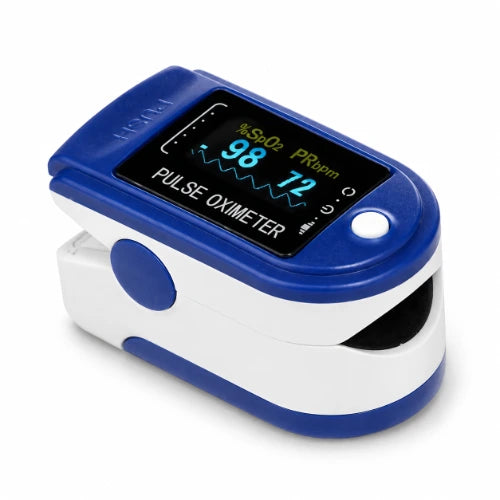
If you want a simple device for checking blood oxygen and pulse at home, the Contec CMS50D fingertip pulse oximeter gives you both readings from a small device that clips onto your finger.
SpO2 means estimated blood oxygen saturation. In simple words, it shows the estimated percentage of oxygen being carried in your blood.
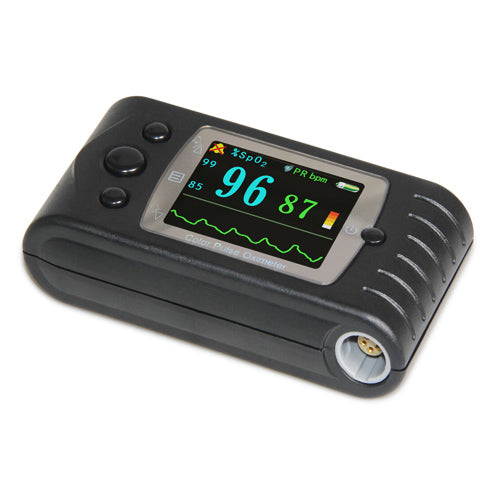
The device also shows pulse rate, which means the number of heartbeats detected in one minute. In addition, the OLED screen can show a pulse waveform for extra visual information.
The CMS50D works best for quick spot checks. A spot check means taking a reading when needed rather than monitoring continuously throughout the day or night.
Contec CMS50D Fingertip Pulse Oximeter for Home Use
If you are buying an oximeter for yourself, a parent or another family member, you probably want something that feels simple from the first use.
For example, the CMS50D does not require a complicated setup. Insert your finger, press the button, keep your hand still and wait for the readings to settle.
Because the device weighs about 50 g including batteries, it is also convenient to keep at home or carry while travelling.

Fingertip Pulse Oximeter Terms Explained Simply
How Does the Contec CMS50D Fingertip Pulse Oximeter Work?
The device passes red and infrared light through the fingertip. It uses the detected light signal to estimate oxygen saturation and pulse rate.
As a result, you do not need a blood sample for a normal spot check. Simply place your finger inside the clip and wait for the displayed values to settle.
In addition to the main numbers, the CMS50D shows pulse information such as a waveform and bar-style indicator.
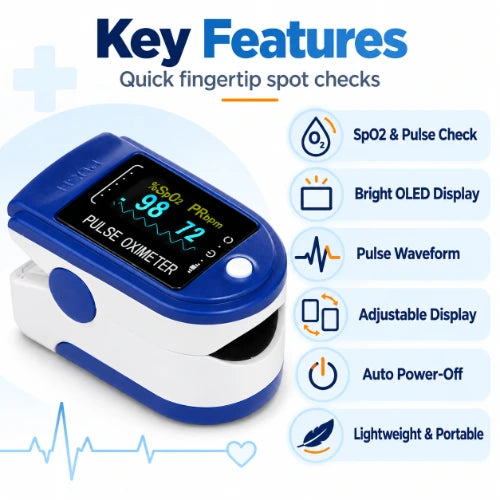
Key Features of the Contec CMS50D Fingertip Pulse Oximeter
OLED Display
The OLED screen clearly shows SpO2, pulse rate and pulse information in a compact display.
SpO2 and Pulse Checks
The device provides quick fingertip spot checks of estimated blood oxygen saturation and pulse rate.
Pulse Waveform Display
The screen shows a waveform linked to the detected pulse. Therefore, you get more visual information than only two numbers.
Adjustable OLED Screen
You can adjust the display direction and brightness to make the readings easier to view.
Automatic Power-Off
When the oximeter no longer detects a finger signal, it switches off after approximately five seconds to help conserve battery power.
Low-Battery Indication
The screen gives a low-power indication when the batteries need attention.
Two AAA Batteries
The CMS50D runs on two AAA batteries and provides approximately 20 hours of operating time under the stated conditions.
Compact and Lightweight
At about 50 g including batteries, the oximeter is easy to store or carry when needed.
How to Use the Fingertip Pulse Oximeter at Home
Taking a reading is straightforward. However, finger placement and keeping still can affect how useful the result is.
- Make sure your hand is warm and relaxed.
- Remove nail polish from the finger where practical.
- Place your finger fully inside the oximeter clip.
- Press the power button.
- Keep your hand and finger still.
- Wait until the readings become steady.
- Read the SpO2 and pulse-rate values.
- Record them if your healthcare professional has asked you to keep a log.
After you remove the finger, the CMS50D automatically switches off after approximately five seconds without a signal.
What Can Affect Fingertip Pulse Oximeter Readings?
Pulse oximeters can be useful for quick checks. However, no fingertip reading should be treated as perfect in every situation.
For example, the following factors may affect a reading:
- Moving your hand or finger during measurement
- Cold fingers or low skin temperature
- Poor circulation
- Incorrect finger placement
- Fingernail polish
- Skin pigmentation and other individual factors
Therefore, if the number looks unexpected, first check that your finger sits correctly inside the device. Also make sure your hand is warm and still.
If the reading remains concerning, or the person has serious or worsening symptoms, contact a qualified healthcare professional.
For additional information, you can read the FDA guidance on pulse oximeters .
Contec CMS50D Fingertip Pulse Oximeter Specifications
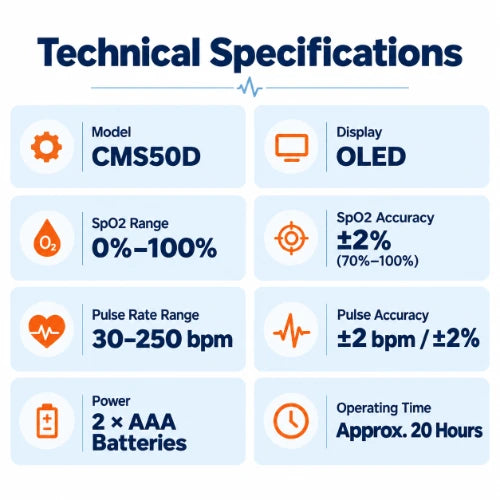
Rather than relying on broad statements such as “perfectly accurate,” it is better to compare the manufacturer's stated measurement figures.
| Specification | Details |
|---|---|
| Brand | CONTEC |
| Model | CMS50D |
| Product Type | OLED Fingertip Pulse Oximeter |
| Display | OLED display |
| SpO2 Range | 0%–100% |
| SpO2 Resolution | 1% |
| SpO2 Accuracy | ±2% from 70%–100%; below 70% unspecified |
| Pulse Rate Range | 30–250 bpm |
| Pulse Rate Accuracy | ±2 bpm from 30–99 bpm; ±2% from 100–250 bpm |
| Pulse Display | Pulse waveform and bar graph |
| Power | 2 × AAA batteries |
| Operating Time | Approximately 20 hours |
| Automatic Power-Off | Approximately 5 seconds without a finger signal |
| Weight | Approximately 50 g including batteries |
| Warranty | 1 year, as listed by Meddey |

Is the Contec CMS50D Suitable for Children?
The CMS50D documentation supports use for adults and suitable children when the finger fits correctly inside the device.
However, this standard fingertip model should not automatically be treated as a neonatal or infant monitor.
Therefore, if you need oxygen monitoring for a baby or very young child, ask a healthcare professional which monitor and sensor are appropriate.
Contec CMS50D Fingertip Pulse Oximeter for Spot Checks
The difference between spot checking and continuous monitoring matters when choosing an oximeter.
The CMS50D is designed for quick spot checks. For example, you place it on the finger, take the reading and then remove the device.
In contrast, continuous patient monitors are designed to stay connected for longer periods and may include alarms, stored trends and other monitoring functions.
Therefore, if a doctor has asked for continuous overnight or long-term oxygen monitoring, confirm the required type of monitor before ordering.
Fingertip Pulse Oximeter Use in Clinics and Healthcare Settings
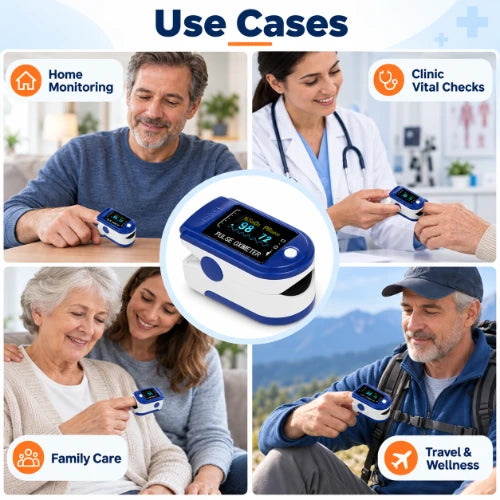
This page mainly explains the CMS50D for household buyers. However, healthcare professionals can also use it for appropriate quick SpO2 and pulse spot checks.
Its compact design, OLED display and pulse waveform can make quick measurements convenient in suitable healthcare environments.
Clinics that need continuous monitoring, alarms or stored patient trends should instead choose equipment designed for those requirements.
Frequently Asked Questions About the Contec CMS50D Fingertip Pulse Oximeter
What does the Contec CMS50D measure?
It estimates blood oxygen saturation, shown as SpO2, and measures pulse rate through the fingertip.
What does SpO2 mean?
SpO2 means estimated blood oxygen saturation. The screen shows it as a percentage.
Can I use the CMS50D at home?
Yes. You can use it for fingertip spot checks at home when you follow the supplied instructions and any healthcare guidance you have received.
Is this fingertip pulse oximeter for continuous monitoring?
No. The CMS50D is primarily intended for spot checks rather than continuous patient monitoring.
How accurate is the Contec CMS50D?
The stated SpO2 accuracy is ±2% from 70%–100%. Below 70%, the manufacturer does not specify accuracy.
What pulse rate can it measure?
Its pulse-rate measurement range is 30–250 beats per minute.
Does the CMS50D show a pulse waveform?
Yes. The OLED screen can show the pulse waveform together with SpO2 and pulse-rate information.
Can I use the CMS50D for a newborn?
Do not assume that this standard fingertip model is suitable for newborn monitoring. Ask a healthcare professional for a device designed for that patient group.
How long do the batteries last?
The listed operating time is approximately 20 hours using two AAA batteries.
Does it switch off automatically?
Yes. When the CMS50D no longer detects a finger signal, it switches off after approximately five seconds.
Can this pulse oximeter diagnose an illness?
No. It estimates oxygen saturation and provides pulse information. A qualified healthcare professional should diagnose medical conditions and interpret concerning results.
Contec CMS50D Fingertip Pulse Oximeter with OLED Display
If you or a family member wants a compact device for quick oxygen and pulse spot checks, the CMS50D combines fingertip operation, an OLED display, pulse waveform and approximately 20 hours of battery operation in a lightweight design.
Most importantly, follow the supplied instructions and consider readings together with symptoms and professional medical advice.
You may also need
FOR YOURecommended for you