
1
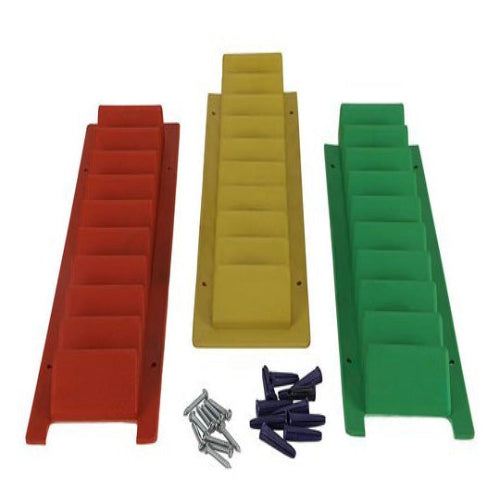
Shoulder Finger Ladder

Double-tap to zoom · drag to pan · swipe to browse
Shoulder Finger Ladder
In Stock
Check delivery
See if we deliver to you and when.
Delivering to
Delivery applicable
Free Shipping
on orders ₹999+
100% Genuine
Products
Dedicated
Support
Secure
Payments
Need help choosing or using this product?
Our team can help with product questions and orders.
Chat with support
Choose options
What Is a Shoulder Finger Ladder? A shoulder finger ladder, sometimes simply called a wall ladder, is one of the most familiar sights in any physiotherapy clinic. It is a flat board fitted with...
Check delivery
See if we deliver to you and when.
Delivering to
Delivery applicable
What Is a Shoulder Finger Ladder? A shoulder finger ladder, sometimes simply called a wall ladder, is one of the most familiar sights in any physiotherapy clinic. It is a flat board fitted with...
Check delivery
See if we deliver to you and when.
Delivering to
Delivery applicable
About this product
What Is a Shoulder Finger Ladder?
A shoulder finger ladder, sometimes simply called a wall ladder, is one of the most familiar sights in any physiotherapy clinic. It is a flat board fitted with evenly spaced rungs, mounted on a wall at a height that lets a patient stand facing it and "climb" the rungs with their fingers. As the fingers walk upward, rung by rung, the arm is guided through a slow, controlled overhead movement. It looks almost too simple to be effective, but this simplicity is exactly why the device has remained a mainstay of shoulder rehabilitation for decades: it needs no electricity, no calibration, and almost no instruction to use correctly.
Why Finger-Ladder Exercises Are Recommended for the Shoulder
The shoulder is the most mobile joint in the human body, which also makes it one of the most prone to stiffness when it is not used through its full range for even a short period. Conditions such as frozen shoulder (adhesive capsulitis) can leave a person unable to lift their arm above chest height without sharp pain. Recovery from this kind of stiffness is rarely about strength — it is about patiently coaxing the joint capsule and surrounding soft tissue back toward their normal length. A finger ladder is built for exactly this kind of patient-led, self-paced work. Because the patient controls the exact height reached simply by choosing which rung to stop at, the exercise can be as gentle or as demanding as the day allows, which is an important feature during the early, painful phase of a shoulder condition.
How the Exercise Is Typically Performed
The usual approach is straightforward. The patient stands close to the ladder, facing it, with the affected arm reaching forward. Using the fingers rather than the whole hand, they "walk" up the rungs, allowing the arm to rise gradually until they feel a comfortable stretch — not sharp pain — at the shoulder. The arm is then walked back down in the same controlled manner. Over repeated sessions, most people notice they can reach a rung slightly higher than they could the week before, which gives a clear, visible sense of progress that other exercises often lack. Some clinics also encourage a sideways-facing version of the same movement, which targets the shoulder from a different angle and works well as a variation once forward reaching starts to feel easier.
Who Uses a Shoulder Ladder
Physiotherapists commonly prescribe wall ladder exercises for people managing frozen shoulder, general shoulder stiffness following an injury, or reduced range of motion after a period of immobilisation such as wearing a sling. It is also used more broadly as a maintenance exercise for anyone who wants to keep their shoulder joints mobile, including older adults for whom gentle, low-load range-of-motion work is often safer than resistance-based training. Because the device asks for a simple repetitive motion rather than coordination or balance, it tends to be an easy exercise to teach to new patients, including those who are anxious about moving a painful joint.
Setting One Up at Home or in a Clinic
One of the practical advantages of a finger ladder is that it does not need a dedicated exercise room. Being wall-mounted, it can be fixed at a height suited to the individual user, whether that is in a compact home therapy corner or as one station among several in a busy outpatient physiotherapy department. Because the mounting height directly affects how much reach the exercise demands, it is worth positioning the board with the lowest rung roughly at hip level for most adult patients, adjusting to suit height and current shoulder range. A multicolour rung design, as used on this model, also makes it easy for a therapist to give a patient a simple, memorable target ("reach the third yellow rung today") rather than relying on measurements, which can be useful for home exercise programmes where the patient is tracking their own progress between clinic visits.
Getting the Most From Regular Use
Like most range-of-motion tools, a finger ladder rewards consistency far more than intensity. Short sessions performed several times a day tend to produce steadier gains than a single long session, since overstretching a painful shoulder can trigger a flare-up that sets progress back. Patients are generally advised to work to the point of a mild stretch and stop there, resisting the temptation to push through pain in the hope of faster results. Keeping a simple note of the highest rung reached each session — or simply remembering the colour — gives both the patient and their physiotherapist an easy way to track whether the exercise plan is working.
Frequently Asked Questions
Is a shoulder ladder only useful for frozen shoulder?
No. While it is very commonly recommended for frozen shoulder and post-immobilisation stiffness, the same wall-mounted climbing motion is used more generally wherever a gentle, self-directed increase in shoulder range of motion is the goal, including as a preventive exercise for people who sit for long hours or who are recovering general mobility after a shoulder injury.
How is it different from a shoulder wheel or shoulder pulley?
All three are wall- or door-based range-of-motion tools, but the movement pattern differs. A finger ladder guides the arm through a straight climbing motion, a shoulder wheel takes the arm through a circular path, and a shoulder pulley uses the unaffected arm to assist the affected one via a rope-and-pulley system. Many physiotherapy programmes rotate between two or more of these tools to work the shoulder through different planes of movement.
Does this device need to be professionally installed?
Being a simple wall-mounted board, it is generally straightforward to fix to a wall at the appropriate height for the user. As with any wall-mounted equipment, mounting it securely into a wall stud or using appropriate wall fixings is recommended so that it stays firmly in place during use.
You may also need
FOR YOURecommended for you
Save 55%

Save 39%

Save 8%


Save 37%

Save 38%


Save 22%
Save 22%