


Featured ChoiceSave 55%

Save 20%
Save 57%
Save 59%
Save 18%

Save 36%

Save 25%


Save 47%

Save 22%

Save 50%

Save 33%

Save 27%

Save 33%


Save 50%

Save 35%

Save 39%
Save 46%

Save 27%


Save 33%


Save 49%

Save 50%


Save 27%


Save 50%


Save 33%
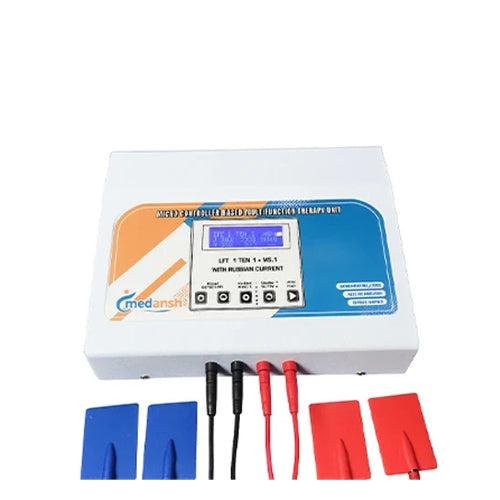
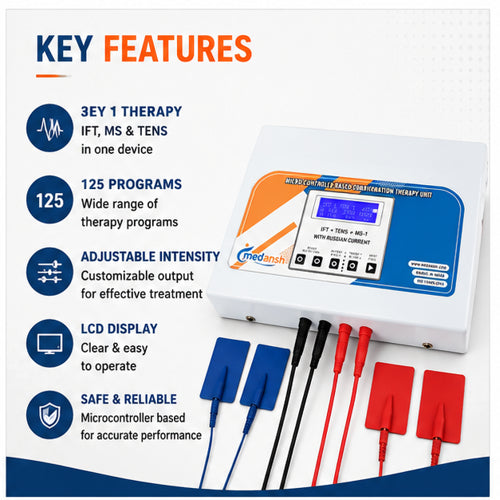

Save 38%
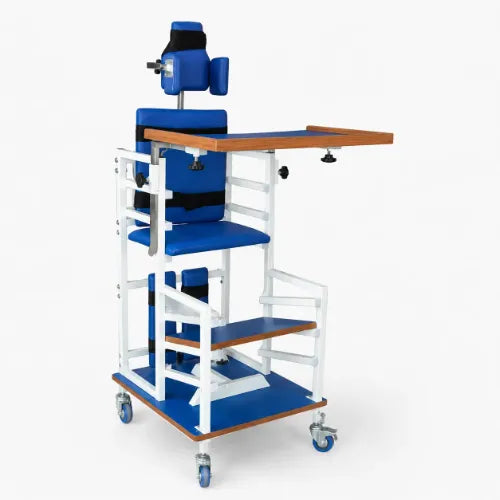
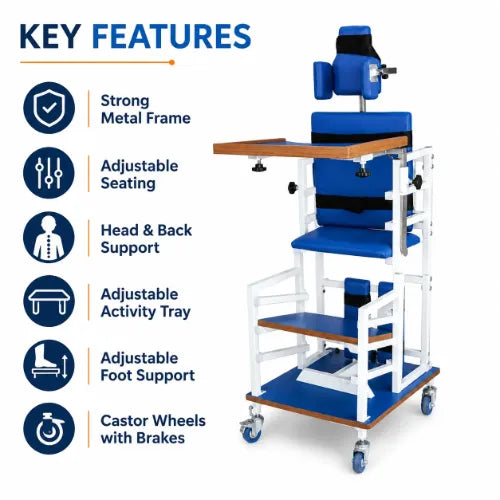

Save 50%
Save 50%
Save 29%


Save 16%



Sold out

Sold out


Sold out

About this collection
Rehabilitation Equipment: Exercise Tools, Physio Rehab Equipment & Professional Buying Guide
A professional guide to rehabilitation equipment, post-stroke tools, exercise devices, physio rehab equipment, clinic setup and home recovery products.
Rehabilitation equipment includes tools, devices and exercise products used to support recovery after injury, surgery, illness or reduced mobility. In practice, these products help people improve strength, movement, balance, coordination and daily function.
However, rehabilitation does not depend on equipment alone. Exercise, education, movement practice and professional guidance are also important. Therefore, equipment should support a structured rehabilitation programme rather than replace it.
For example, a person recovering after knee surgery may use resistance bands, a pedal exerciser or a CPM machine. Meanwhile, a person recovering after stroke may need gait-training tools, balance equipment and hand exercise products.
In addition, a physiotherapy clinic may need a wider range of physio rehab equipment, including parallel bars, exercise balls, balance boards, hand trainers and mobility aids.
This guide explains what rehabilitation equipment is, the main types of rehab equipment, common tools used in physiotherapy, post-stroke equipment, basic physio tools and practical buying factors.
Doctors, physiotherapists, hospitals and rehabilitation centres can also browse exercise and rehabilitation equipment available on Meddey.
What Is Rehabilitation Equipment?
Rehabilitation equipment refers to tools and devices used to help a person regain or improve physical function after illness, injury, surgery or a neurological condition.
In general, rehabilitation may focus on:
- Strength
- Range of motion
- Balance
- Walking
- Hand function
- Coordination
- Posture
- Daily activity
Therefore, rehab equipment can include both simple exercise tools and larger clinical devices.
Exercise Tools Resistance bands, balls, foam rollers and weights.
Mobility Tools Walkers, parallel bars and gait trainers.
Balance Tools Balance boards, wobble boards and foam pads.
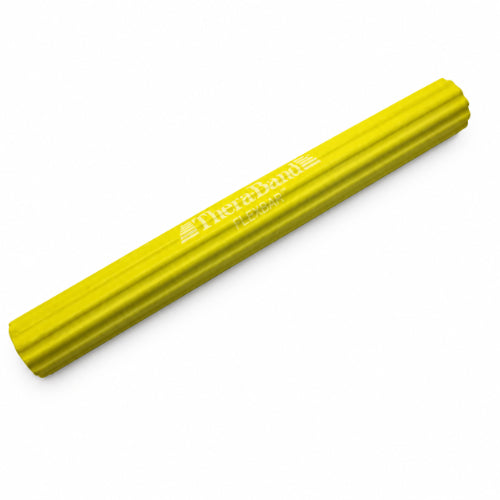
Hand Therapy Tools Grip trainers, finger exercisers and therapy putty.
As a result, the correct equipment depends on the person's recovery goal rather than the diagnosis alone.
What Are Some Common Tools Used in Rehabilitation?
Many rehabilitation tools are simple and active. In fact, exercise-based equipment often plays a major role because it encourages repeated movement and gradual progress.
| Category | Examples | Main Role |
|---|---|---|
| Strength Training | Resistance bands, dumbbells, exercise tubes | Progressive muscle strengthening |
| Balance Training | Balance board, wobble board, foam pad | Balance and coordination |
| Mobility Training | Parallel bars, walkers, gait trainers | Standing and walking practice |
| Hand Rehabilitation | Grip exercisers, putty, finger trainers | Hand strength and finger movement |
| Range of Motion | Shoulder pulley, pedal exerciser, CPM machine | Joint movement and mobility |
| Core & Posture | Exercise ball, foam roller, posture tools | Core stability and posture work |
Moreover, equipment can be progressed over time. For example, resistance may increase as strength improves.

What Equipment Is Used in Physiotherapy?
Physiotherapists use different types of equipment according to the patient's needs. Therefore, a sports clinic may look different from a neurological rehabilitation centre.
Common physiotherapy exercise equipment includes:
- Resistance bands
- Exercise balls
- Foam rollers
- Ankle weights
- Pedal exercisers
- Balance boards
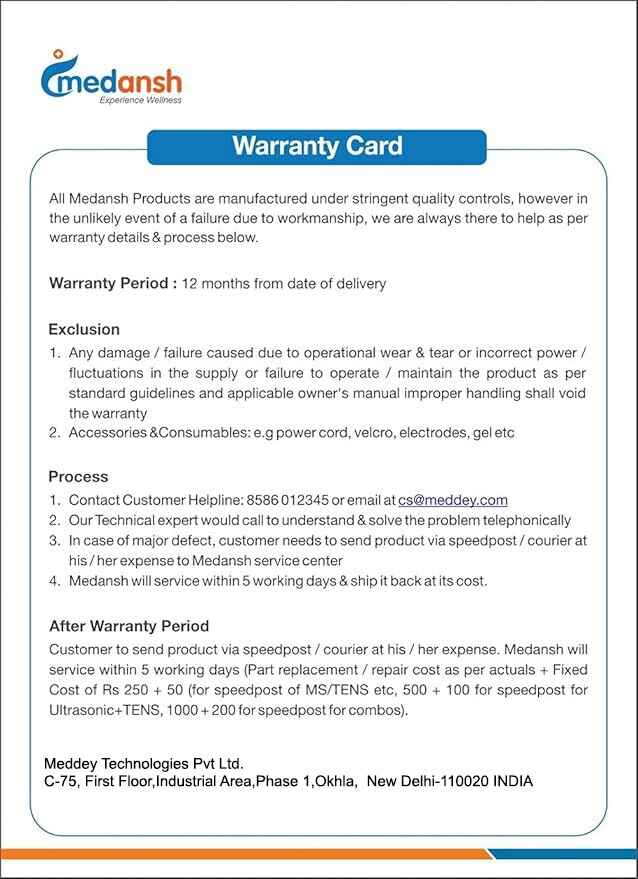
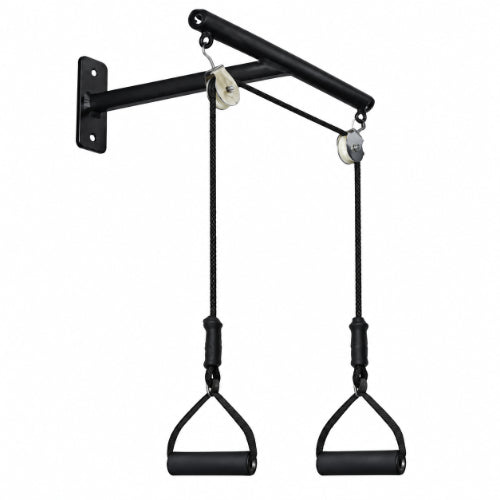
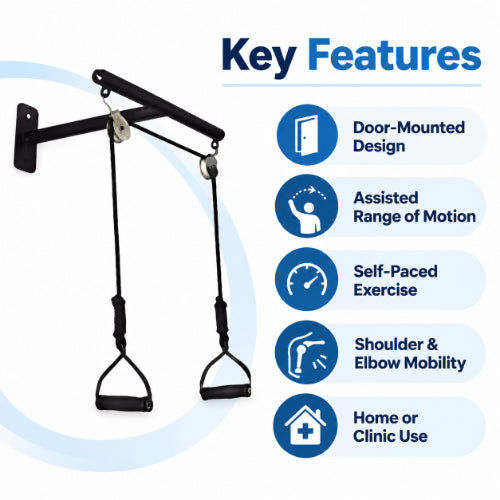
- Shoulder pulleys
- Hand exercisers
- Parallel bars
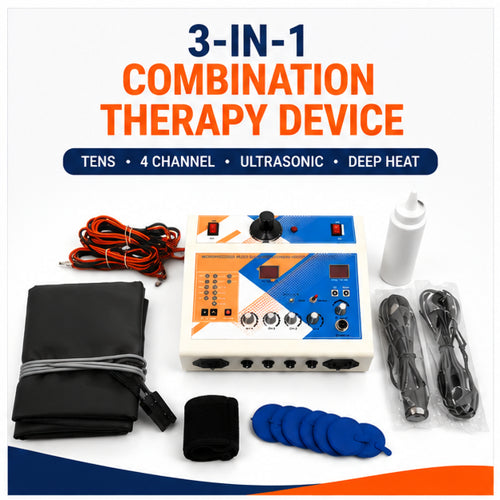
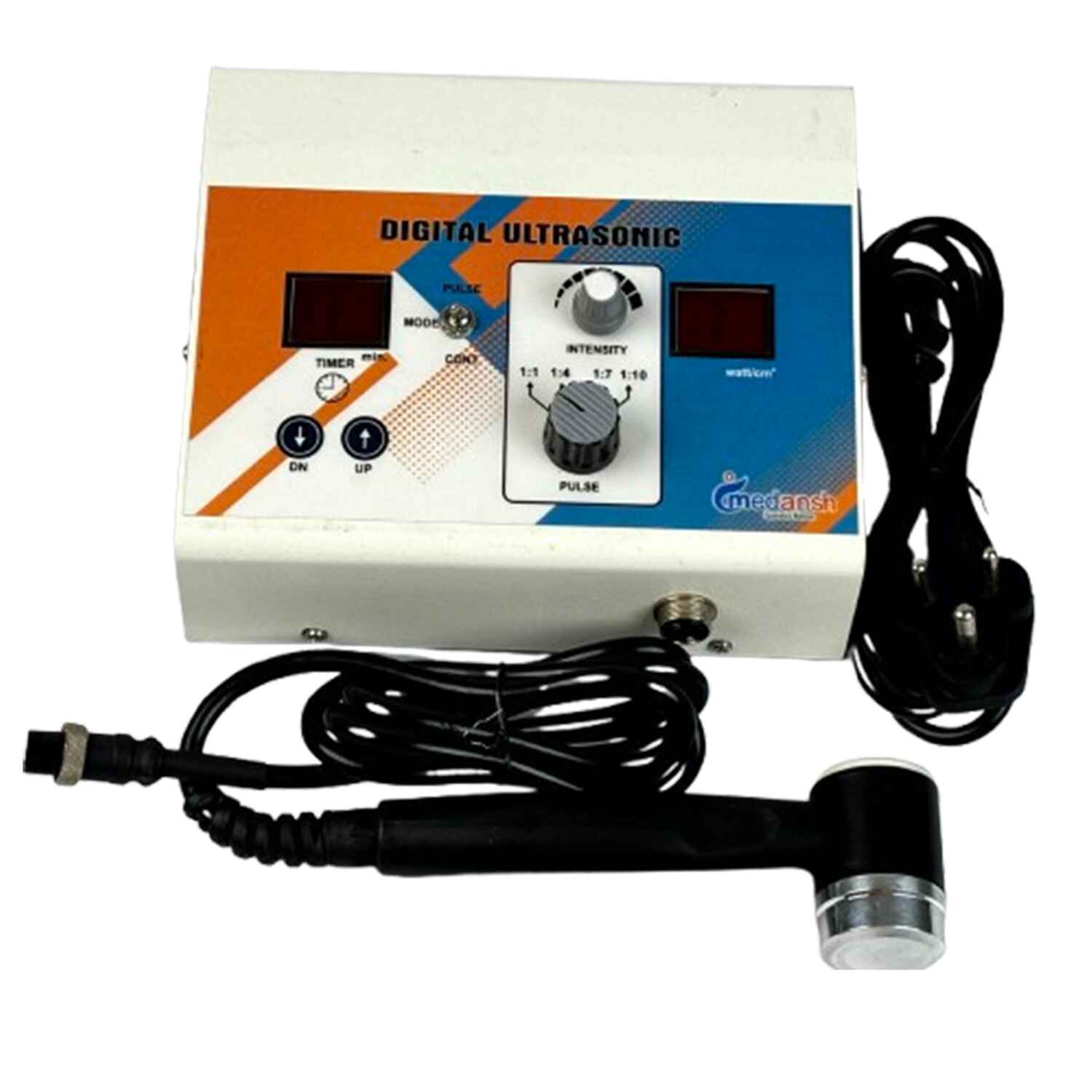
In addition, physiotherapy clinics may also use electrotherapy and treatment machines. However, active exercise tools remain important because rehabilitation usually involves movement and participation.
Consequently, a complete physiotherapy setup often combines machines with active rehabilitation exercise equipment.
What Is Physio Rehab Equipment?
Physio rehab equipment is a broad term for tools used by physiotherapists during recovery and exercise programmes.
For instance, a clinic may use:
- Exercise bands
- Gym balls
- Balance boards
- Pedal exercisers
- Parallel bars
- Hand therapy tools
- Walking frames
Meanwhile, larger rehabilitation centres may also use tilt tables, standing frames and other advanced mobility equipment.
Therefore, the exact setup depends on the type of patients treated.
What Is Rehabilitation Exercise Equipment?
Rehabilitation exercise equipment refers to tools used during active recovery exercises.
Examples include:
Resistance Bands Useful for graded strength training.
Exercise Balls Support balance, posture and core exercises.
Pedal Exercisers Support repeated arm or leg movement.
Balance Boards Support balance and ankle rehabilitation.
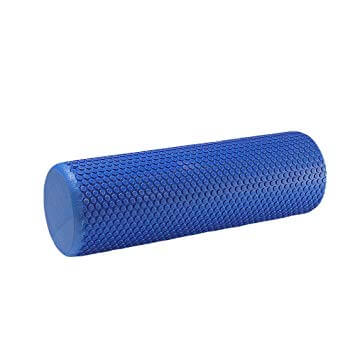
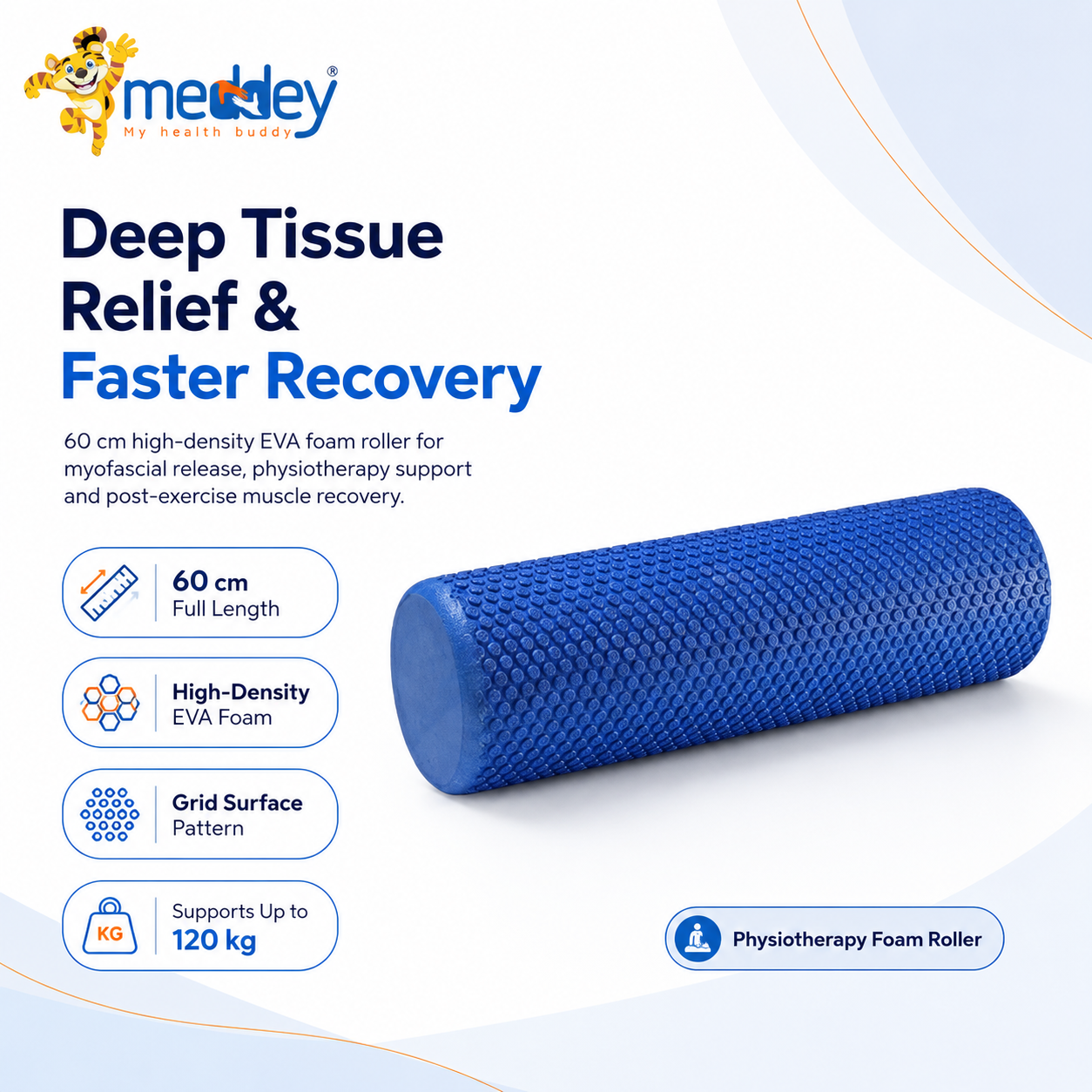
Foam Rollers Used for self-massage, mobility and recovery.
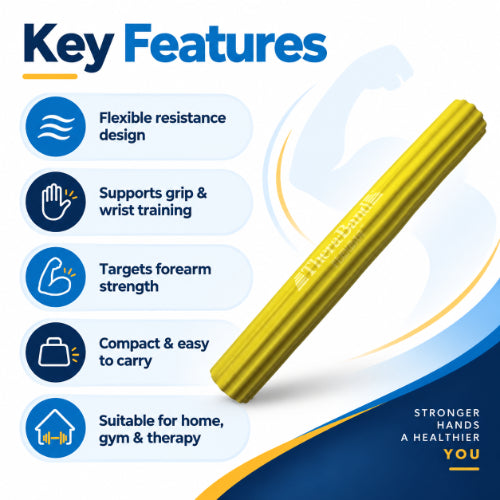
Hand Exercisers Support grip, finger and hand-strength exercises.
Because these tools allow graded exercise, they can be useful at different stages of recovery.
What Is Rehabilitation Gym Equipment?
Rehabilitation gym equipment refers to exercise tools used in a therapy gym or rehab area.
Unlike a standard fitness gym, a rehabilitation gym focuses on controlled recovery and functional training.
Common rehabilitation gym equipment includes:
- Exercise balls
- Resistance bands
- Step platforms
- Pedal cycles
- Balance boards
- Parallel bars
- Shoulder wheels
- Hand exercise tools
- Quadriceps chairs
For example, Meddey’s current rehabilitation range includes a quadriceps chair, shoulder wheel and mobility tools. :contentReference[oaicite:1]{index=1}
Therefore, rehab gym equipment should be selected according to the clinic’s patient group and treatment goals.
What Is the Best Equipment for Physical Therapy?
There is no single best piece of equipment for every physical therapy programme.
Instead, the best tool depends on the goal.
| Goal | Equipment to Consider |
|---|---|
| Strength | Resistance bands or weights |
| Balance | Balance board or foam pad |
| Walking | Parallel bars or walking aid |
| Hand Strength | Grip exerciser or therapy putty |
| Joint Motion | Shoulder pulley or pedal exerciser |
| Core Training | Exercise ball |
For example, a resistance band may be more useful than a large machine when the main goal is graded strengthening.
Therefore, equipment should follow the therapy objective.
What Is the Best Equipment for Post-Stroke Rehabilitation?
Post-stroke rehabilitation usually involves several goals rather than one single exercise. For example, a patient may need help with walking, balance, hand function and strength.
As a result, useful post-stroke rehab equipment may include:
- Parallel bars
- Walking frames
- Standing frames
- Balance boards
- Pedal exercisers
- Hand grip exercisers
- Finger exercisers
- Shoulder pulleys
- Exercise balls
However, the right equipment depends on the person's weakness, balance and movement ability.
Important: post-stroke rehabilitation should be based on an individual assessment. Equipment should be chosen according to the person’s actual mobility and functional needs.
Parallel Bars for Rehabilitation
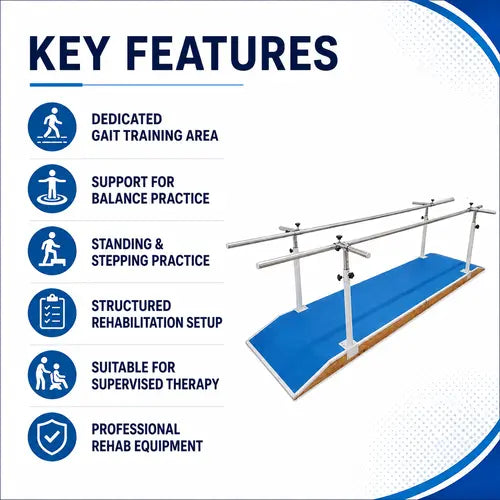
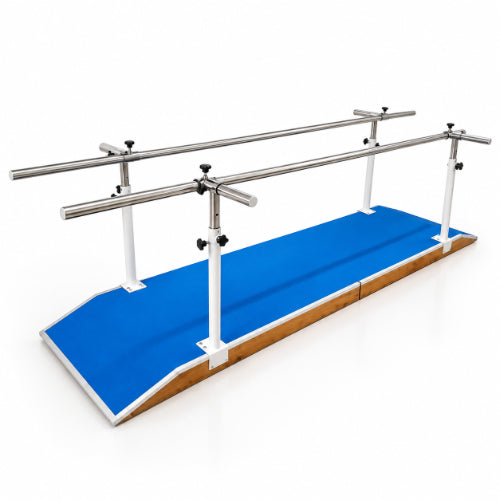
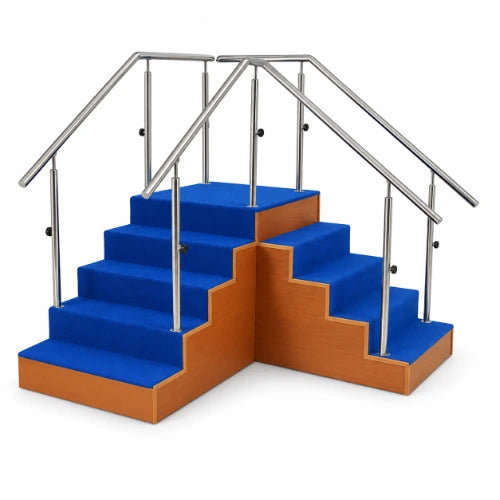
Parallel bars are commonly used during gait and standing training.
For example, they may help a patient practise:
- Standing
- Weight shifting
- Stepping
- Walking
- Balance
Moreover, the handrails provide support while the therapist controls the level of assistance.
Therefore, parallel bars can be useful in stroke, orthopaedic and neurological rehabilitation programmes.
Pedal Exercisers in Rehabilitation
A pedal exerciser allows repeated cycling movement while the user remains seated.
Depending on the model, it may be used for arm or leg exercise.
In addition, pedal exercisers are often compact. Therefore, they may be practical for both clinic and home use.
Possible uses include:
- Gentle mobility work
- Repeated lower-limb movement
- Arm exercise
- Activity after reduced mobility
Resistance Bands for Rehabilitation
Resistance bands are among the most versatile rehabilitation tools.
Because they come in different resistance levels, therapists can gradually increase difficulty as the patient improves.
Resistance bands may be used for:
- Shoulder exercises
- Hip strengthening
- Knee rehabilitation
- Arm strengthening
- Posture exercises
Moreover, they are lightweight and easy to store.
Meddey’s exercise and rehabilitation range currently includes resistance bands and exercise tubes for graded strengthening. :contentReference[oaicite:2]{index=2}
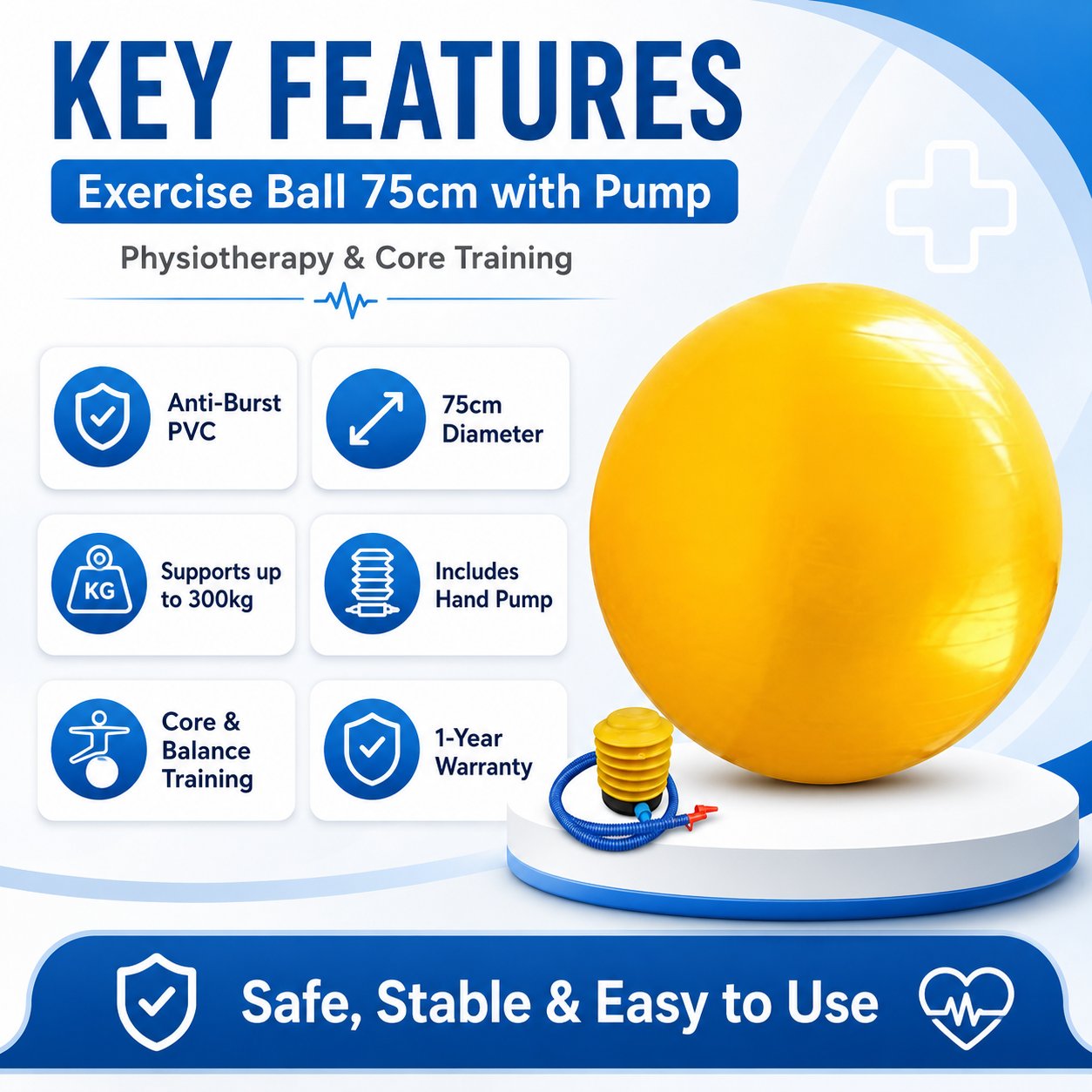
Exercise Balls for Rehabilitation
Exercise balls may support balance, core control and posture exercises.
For example, a therapist may use a ball during:
- Core stability work
- Balance training
- Posture exercises
- Gentle mobility tasks

However, ball size and exercise difficulty should suit the patient.
Therefore, supervision may be helpful for people with poor balance.
Balance Boards and Wobble Boards
Balance boards create an unstable surface that challenges balance and control.
They are commonly used during ankle, knee and lower-limb rehabilitation.
For example, balance work may help:
- Ankle control
- Proprioception
- Lower-limb stability
- Sports rehabilitation
However, the difficulty should be increased gradually.
Consequently, balance boards are usually introduced when the person can perform the exercise safely.
Hand Rehabilitation Equipment
Hand recovery may require different tools from walking or lower-limb rehabilitation.
Common hand rehabilitation equipment includes:
Hand Grip Trainer Supports grip-strength exercises.
Finger Exerciser Supports finger resistance and movement.
Therapy Putty Allows squeezing, pinching and rolling exercises.
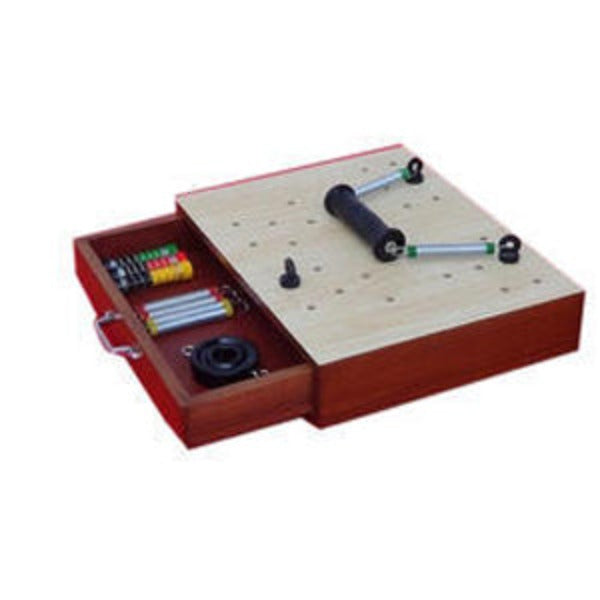
Hand Gym Board Supports several hand tasks in one setup.
In addition, fine-motor tools may support dexterity and coordination.
Therefore, the therapist should select the tool according to the target hand function.
What Are the Basic Physio Tools?
Basic physiotherapy tools do not need to be expensive or electronic.
Common basic tools include:
- Resistance band
- Exercise mat
- Exercise ball
- Foam roller
- Hand grip exerciser
- Balance board
- Pedal exerciser
- Shoulder pulley
- Ankle weights
- Walking aids
For most clinics, these tools form a useful starting set.
Moreover, many of them can also be used at home under professional guidance.
Home Rehabilitation Equipment
Home rehabilitation usually works best when the equipment is simple, safe and easy to use.
Common home products include:
- Resistance bands
- Exercise balls
- Foam rollers
- Pedal exercisers
- Hand trainers
- Balance tools when appropriate
In addition, a targeted trainer may be added for a specific joint.
For example, Meddey’s home physiotherapy guide recommends a small set of versatile products such as resistance bands, foam rollers and targeted exercise tools as part of guided home recovery. :contentReference[oaicite:3]{index=3}
However, home users should follow their physiotherapist’s programme rather than creating an advanced plan independently.
Rehabilitation Equipment for Clinics
A clinic usually needs more variety than a home setup.
For example, a clinic may require:
- Parallel bars
- Exercise mats
- Resistance bands
- Exercise balls
- Balance boards
- Hand rehab tools
- Pedal exercisers
- Shoulder wheels
- Walking aids
In addition, electrotherapy machines and treatment furniture may form part of a larger physiotherapy setup.
Consequently, clinic purchases should be based on patient volume, services offered and available space.
How to Choose Rehabilitation Equipment
1. Identify the Recovery Goal
First, decide whether the goal is strength, balance, walking, hand function or joint movement.
2. Check the Patient’s Ability
Next, consider strength, balance and safety. For example, a balance board may not be appropriate during very early recovery.
3. Choose Graded Equipment
Then, select equipment that can become harder as the patient improves.
4. Review Home or Clinic Use
In addition, confirm whether the product is intended for individual home use or repeated clinic use.
5. Check Space
Large products such as parallel bars or standing frames require enough room.
6. Review Build Quality
Furthermore, clinic equipment should be suitable for repeated daily use.
7. Compare Price
Finally, compare price with actual rehabilitation need rather than choosing only the cheapest product.
Rehabilitation Equipment Price in India
The price of rehabilitation equipment varies greatly because simple resistance bands and large rehabilitation machines belong to different categories.
Current Meddey listings provide useful examples. At the time of review, an exercise ball was around ₹1,059, a balance board around ₹1,299, a foam roller around ₹1,199 and a quadriceps chair around ₹10,028. Prices can change. :contentReference[oaicite:4]{index=4}
Typical Price Factors
Price depends on:
- Product type
- Size
- Resistance level
- Frame material
- Motorised or manual design
- Brand
- Warranty
- Clinic or home use
Therefore, buyers should check live prices before ordering.
Check Current Rehabilitation EquipmentRehabilitation Equipment vs Gym Equipment
Rehabilitation and gym equipment can sometimes look similar. However, the purpose is different.
| Feature | Rehabilitation Equipment | General Gym Equipment |
|---|---|---|
| Main Goal | Recovery and function | Fitness and performance |
| Exercise Level | Often graded and controlled | Often higher intensity |
| Typical User | Patient or rehab client | General fitness user |
| Professional Input | Often guided by physiotherapist | May be self-directed |
Therefore, rehabilitation gym equipment should be selected for controlled progress and safe exercise.
Where to Buy Rehabilitation Equipment?
Rehabilitation equipment can be purchased from specialist medical-equipment suppliers and rehabilitation stores.
However, buyers should check:
- Product specifications
- Size
- Weight capacity
- Warranty
- Replacement parts
- Service support
- Current price
Meddey currently offers rehabilitation and exercise products for clinics, hospitals and home programmes. :contentReference[oaicite:5]{index=5}
Browse Exercise & Rehab Equipment View Rehabilitation Collection Explore Physio Studio Visit MeddeyCommon Mistakes When Buying Rehabilitation Equipment
- Buying equipment without a clear goal
- Choosing too much resistance too early
- Ignoring balance and safety
- Buying equipment that does not fit the patient
- Ignoring room space
- Selecting clinic equipment only by price
- Using advanced equipment without guidance
- Expecting equipment to replace active rehabilitation
Therefore, equipment should be chosen according to the person’s stage of recovery and functional needs.
Frequently Asked Questions About Rehabilitation Equipment
1. What is rehabilitation equipment?
Rehabilitation equipment includes tools and devices used to support recovery, strength, mobility, balance and daily function after injury, surgery or illness.
2. What are some common tools used in rehabilitation?
Common tools include resistance bands, exercise balls, foam rollers, balance boards, pedal exercisers, hand trainers and walking aids.
3. What equipment is used in physiotherapy?
Physiotherapists use exercise tools, balance equipment, gait devices, hand therapy tools and, where needed, treatment machines.
4. What is the best equipment for physical therapy?
The best equipment depends on the goal. Resistance bands may suit strengthening, while parallel bars may suit gait training.
5. What is the best equipment for post-stroke rehabilitation?
Post-stroke rehabilitation may use parallel bars, walking aids, balance tools, hand exercisers, pedal exercisers and standing equipment depending on the person's needs.
6. What are the basic physio tools?
Basic tools include resistance bands, exercise balls, foam rollers, hand grip devices, balance boards, pedal exercisers and exercise mats.
7. Can rehabilitation equipment be used at home?
Yes. Many resistance, mobility and hand exercise tools are suitable for home use when they are part of a guided rehabilitation programme.
8. Are resistance bands good for rehabilitation?
Yes. Resistance bands provide graded resistance and are widely used for controlled strengthening.
9. Are balance boards suitable for everyone?
No. Balance boards should be used only when the person can perform the exercise safely and at the correct stage of rehabilitation.
10. What rehabilitation equipment is useful for hand recovery?
Grip trainers, therapy putty, finger exercisers and hand gym tools may support selected hand exercises.
Professional Buying Checklist
- Identify the rehabilitation goal.
- Assess the patient’s current ability.
- Choose suitable resistance or support.
- Confirm home or clinic use.
- Check product dimensions.
- Review weight capacity.
- Consider progression options.
- Check build quality.
- Review warranty.
- Confirm service support.
- Compare current price.
- Check room space.
In short, good rehabilitation equipment should be safe, useful and suited to the individual recovery plan.
Conclusion
Rehabilitation equipment includes a wide range of tools used to support recovery after injury, surgery, illness or reduced mobility.
For example, resistance bands and weights may support strengthening. Meanwhile, balance boards may help with coordination and lower-limb control.
In addition, gait tools such as parallel bars and walkers may support standing and walking practice. Similarly, hand exercisers may help with grip and finger movement.
For post-stroke rehabilitation, several tools may be required because recovery can involve walking, balance, upper-limb function and daily activity.
Therefore, there is no single best piece of rehab equipment for everyone.
The best approach is to identify the recovery goal first. Afterwards, choose physio rehab equipment that matches the patient’s ability and can progress over time.
Furthermore, rehabilitation exercise equipment does not need to be complex. Simple products such as resistance bands, exercise balls, hand trainers and pedal exercisers may provide strong practical value.
Ultimately, good rehabilitation equipment should support safe, active and goal-based recovery.
Doctors, physiotherapists, hospitals and rehabilitation centres can compare current rehabilitation equipment on Meddey.
Medical Disclaimer
This article is intended for professional education and general information only. It does not replace an individual medical or rehabilitation assessment. Rehabilitation equipment should be selected according to the person's condition, strength, balance and recovery goals. Therefore, post-stroke patients, people recovering from surgery and users with significant mobility problems should follow appropriate professional guidance.
Explore Medical Collections
All Categories
Abdominal & Maternity Support

Accessories

Accu-Chek Instant Strips: Use, Compatibility, Price & Blood Sugar Testing Guide
Accu-Chek Instant Strips: Uses, Features & Complete Guide

Accupressure Products for Pressure Point Therapy, Pain Relief & Wellness

accupuncture

Acupuncture Needles & Supplies

Advanced Physiotherapy Machines & Lumbar Physiotherapy

Airways

Ambulance

Anatomy Models
Anesthesia Machine

Anesthesia Products
Ankle Support, Braces & Walker Boots for Recovery
Ankle Weights & Exercise Weights for Home & Rehab
You may also need
FOR YOURecommended for you
Save 55%
Save 20%
Save 57%
Save 59%
Save 18%
Save 36%
Save 25%
Save 47%
Save 22%
Save 50%
Save 33%
Save 33%
Save 27%
Save 50%
Save 35%
Save 39%
Save 33%
Save 46%
Save 27%