
1
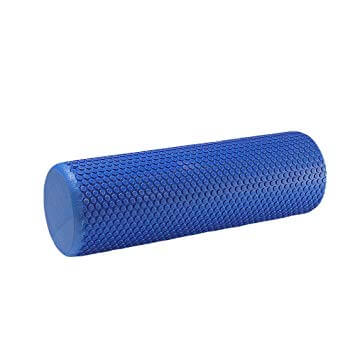
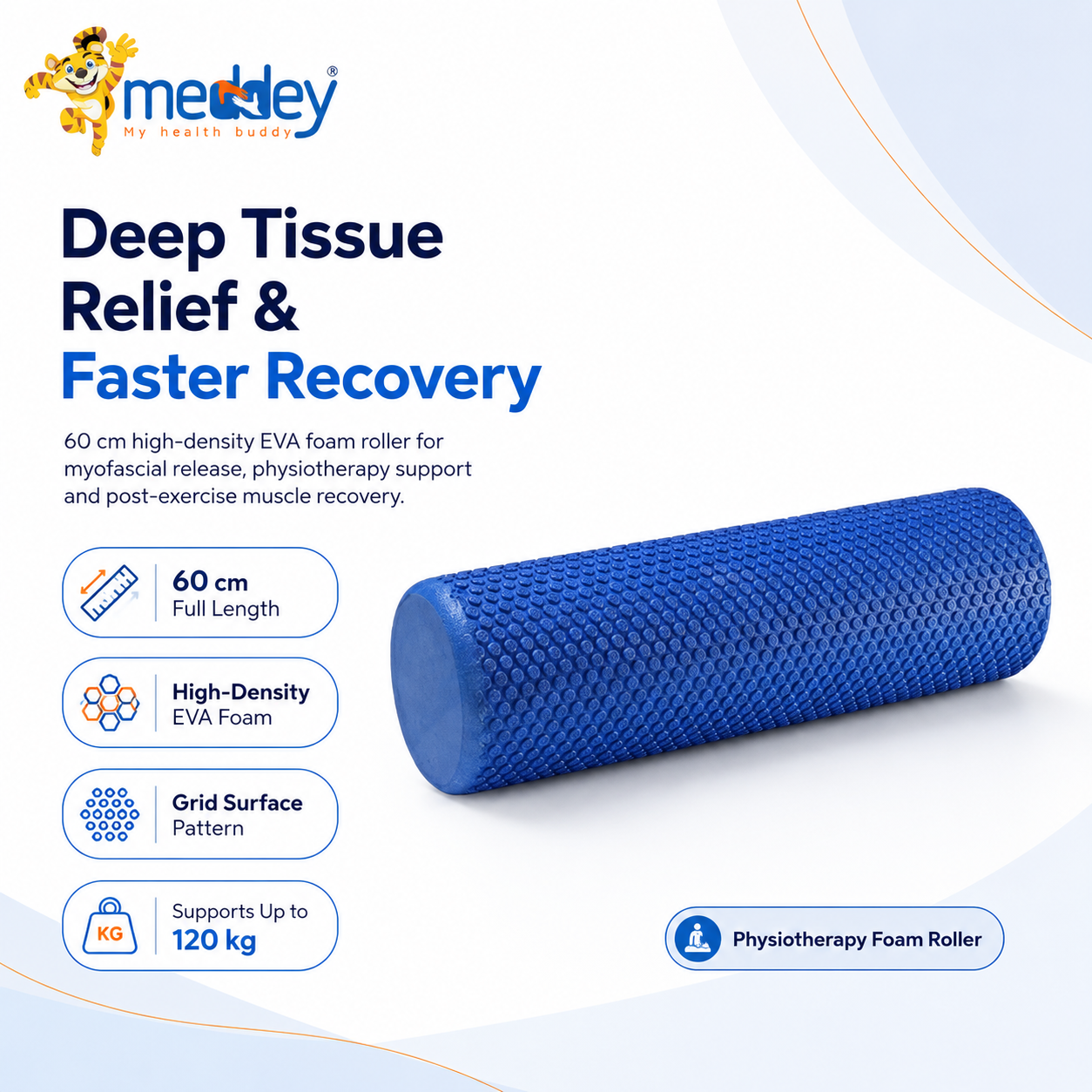
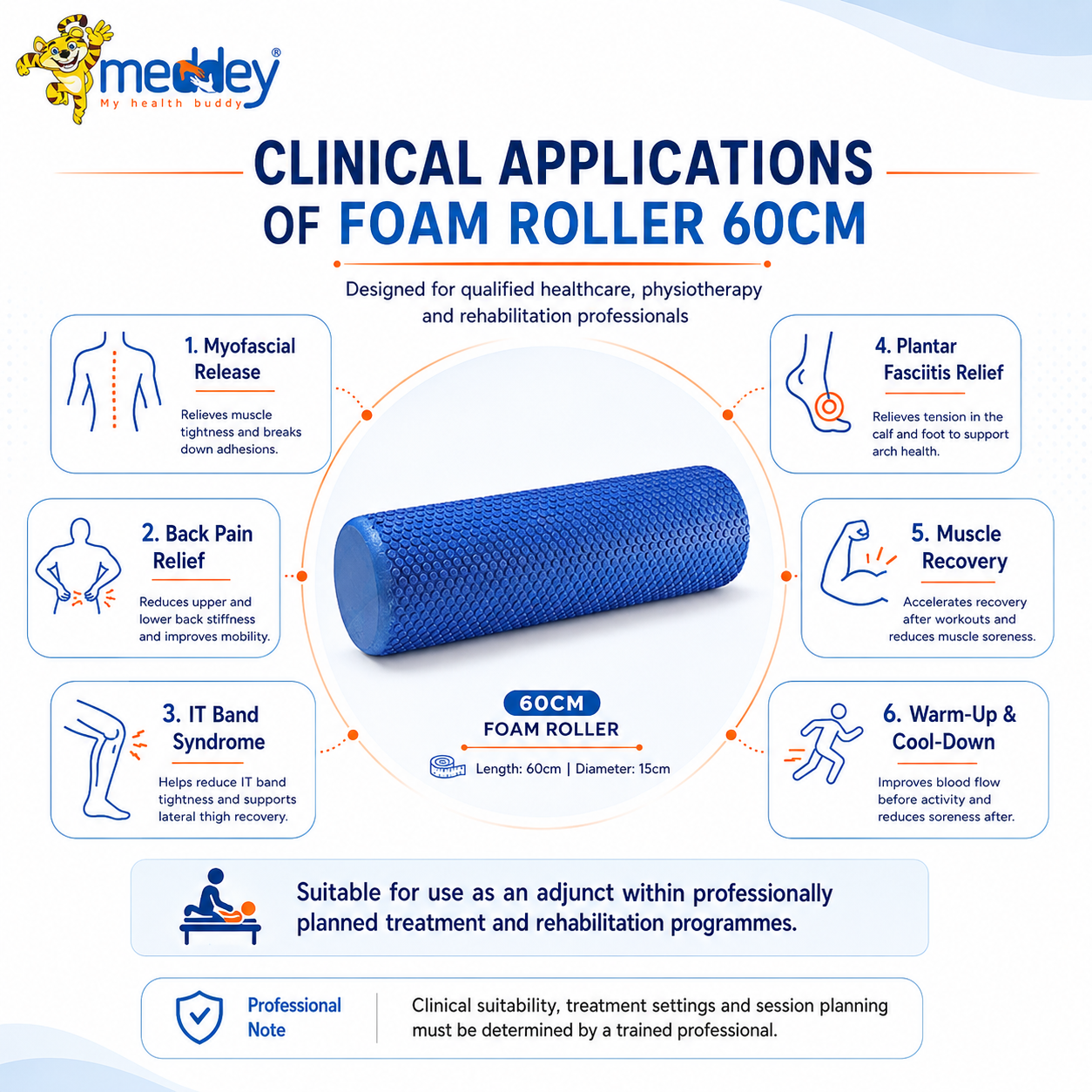
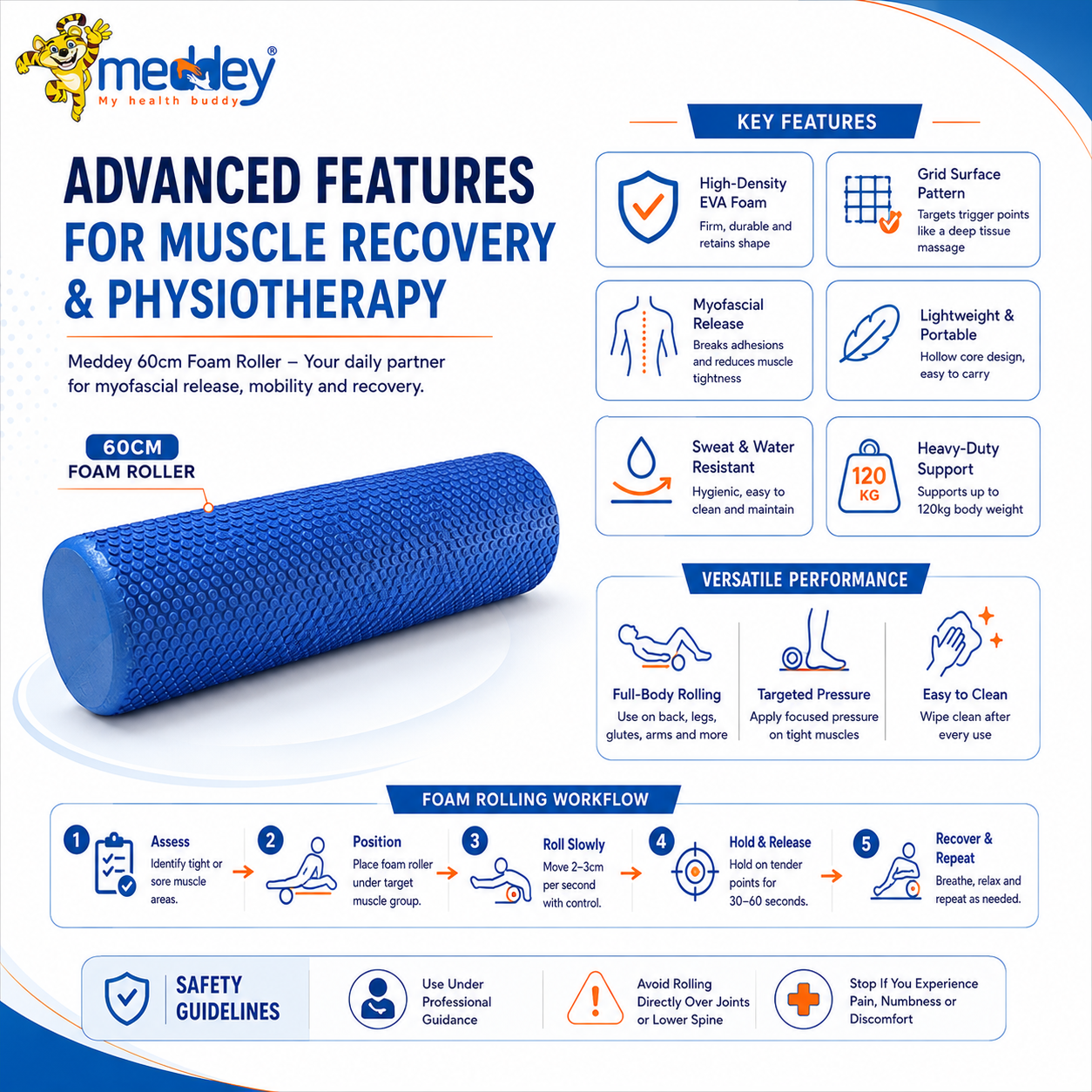
Foam Roller 60cm for Physiotherapy & Muscle Recovery


Double-tap to zoom · drag to pan · swipe to browse
Foam Roller 60cm for Physiotherapy & Muscle Recovery
In Stock
Title:60cm Grid Roller
Check delivery
See if we deliver to you and when.
Delivering to
Delivery applicable
Free Shipping
on orders ₹999+
100% Genuine
Products
Dedicated
Support
Secure
Payments
Need help choosing or using this product?
Our team can help with product questions and orders.
Chat with support
Choose options
- 60cm Full-Length Format: Provides an extended working surface for back, leg, balance and mobility exercises.
- Textured Grid Surface: Raised sections create varied contact pressure compared with a completely smooth roller.
- High-Density Construction: Designed to offer firm support during controlled self-massage and exercise routines.
- Hollow-Core Design: Intended to combine structural support with easier handling and transport.
Title:60cm Grid Roller
Check delivery
See if we deliver to you and when.
Delivering to
Delivery applicable
- 60cm Full-Length Format: Provides an extended working surface for back, leg, balance and mobility exercises.
- Textured Grid Surface: Raised sections create varied contact pressure compared with a completely smooth roller.
- High-Density Construction: Designed to offer firm support during controlled self-massage and exercise routines.
- Hollow-Core Design: Intended to combine structural support with easier handling and transport.
Title:60cm Grid Roller
Check delivery
See if we deliver to you and when.
Delivering to
Delivery applicable
About this product
High-Density Foam Roller 60cm for Physiotherapy & Muscle Recovery
The Meddey Foam Roller 60cm is a long, textured self-massage and mobility tool designed for physiotherapy clinics, gyms, sports-recovery programmes and home exercise routines. Its full-length format provides a broad rolling surface for selected muscle areas, including the quadriceps, hamstrings, calves, glutes and upper-back muscles.
This 60cm foam roller for physiotherapy and muscle recovery may be incorporated into warm-up, mobility, exercise and post-activity routines. Foam rolling applies user-controlled pressure to suitable muscle and soft-tissue areas. It should not be presented as a cure for injuries, spinal conditions or chronic pain.
A 60cm foam roller is a long cylindrical exercise and self-massage tool used for controlled pressure, mobility work and post-exercise routines. The extended surface supports back, leg and balance exercises. Research suggests foam rolling may temporarily improve range of motion and reduce perceived muscle soreness, although individual results and optimal routines vary.

Product Overview
Foam rolling is a form of self-directed massage in which the user controls pressure through body positioning. The roller moves beneath a selected muscle group, creating broad compression and rolling contact. The effect depends on body weight, roller firmness, surface texture, movement speed and individual tolerance.
The 60cm length offers more contact area than a compact travel roller. This can make it useful for bilateral exercises, upper-back positioning, balance work and clinic-based demonstrations.
Key Features of the 60cm Grid Foam Roller
- 60cm Full-Length Format: Provides an extended working surface for back, leg, balance and mobility exercises.
- Textured Grid Surface: Raised sections create varied contact pressure compared with a completely smooth roller.
- High-Density Construction: Designed to offer firm support during controlled self-massage and exercise routines.
- Hollow-Core Design: Intended to combine structural support with easier handling and transport.
- User-Controlled Pressure: Pressure can be modified through hand support, leg position and body-weight distribution.
- Manual Operation: Requires no electricity, charging, batteries or assembly.
- Multiple Use Settings: Suitable for physiotherapy clinics, gyms, fitness studios and home exercise areas.
- Easy Surface Care: The exterior can be cleaned according to the confirmed material-care instructions.
Foam-Rolling Applications and Body Areas
The physiotherapy foam roller may be incorporated into professionally planned routines involving suitable muscle areas such as:
- Quadriceps and front-thigh muscles
- Hamstrings and posterior-thigh muscles
- Calf muscles
- Gluteal muscles
- Inner- and outer-thigh muscle groups
- Upper-back muscles beside the thoracic spine
- Pre-exercise mobility routines
- Post-exercise self-massage routines
- Balance and rehabilitation exercises prescribed by a professional
Avoid presenting the roller as a treatment for a torn muscle, fracture, disc problem, sciatica, plantar fasciitis or another diagnosed condition. Clinical suitability depends on assessment.
How Foam Rolling Works
Foam rolling applies external pressure and movement to selected soft-tissue areas. Users may experience temporary changes in stretch tolerance, movement comfort and the perception of muscle tightness.
Research suggests foam rolling may provide short-term range-of-motion benefits and may modestly reduce post-exercise soreness. It has not been proven to mechanically break down all fascial adhesions, permanently remove trigger points or guarantee faster recovery.
Benefits for Clinic, Gym and Home Routines
- Long Working Surface: Suitable for a wider variety of positioning and exercise routines.
- Adjustable Intensity: Beginners can reduce pressure by supporting more body weight through the hands or opposite leg.
- Warm-Up Support: May be incorporated before activity as part of a mobility routine.
- Post-Activity Use: May support temporary comfort after demanding exercise.
- Compact Equipment Choice: Offers several mobility and self-massage applications without powered equipment.
How to Use a Foam Roller Safely
- Place the roller on a stable, non-slip exercise surface.
- Select a suitable muscle area and begin with partial body-weight pressure.
- Move slowly and maintain normal breathing.
- Use the hands or opposite leg to reduce pressure when needed.
- Begin with approximately 30–60 seconds over a small area.
- Avoid direct pressure over joints, bones, the lumbar spine and the front or side of the neck.
- Stop if rolling causes sharp pain, numbness, tingling, dizziness, bruising or worsening symptoms.
Technical Specifications
| Product Type | Textured Foam Roller |
| Brand | Meddey |
| Variant | 60cm Grid Roller |
| Length | 60cm |
| Diameter | Approximately 15cm |
| Material | High-Density EVA Exterior, Subject to Verification |
| Surface | Textured Grid Pattern |
| Core Type | Hollow Core, Subject to Verification |
| Stated Weight | Approximately 500g |
| Stated Maximum Load | Up to 120kg, Subject to Manufacturer Confirmation |
| Recommended Settings | Physiotherapy Clinic, Gym, Fitness Studio and Home Exercise |

Who Should Consider This Foam Roller?
- Physiotherapy and rehabilitation clinics
- Sports trainers and fitness professionals
- Runners, cyclists and gym users
- Yoga, Pilates and mobility studios
- Home users following appropriate exercise guidance
- Physiotherapy colleges and training centres
Why Buy the 60cm Foam Roller from Meddey?
Meddey supplies physiotherapy, rehabilitation, fitness and personal-care products for professional and home-use requirements. Buyers can review current pricing and availability online and contact Meddey for product-dimension, material and firmness clarification before purchasing this foam roller 60cm.
Foam Roller 60cm Frequently Asked Questions
What is a 60cm foam roller used for?
It is used for controlled self-massage, mobility exercises and rolling suitable muscle areas such as the thighs, calves, glutes and upper-back muscles.
Why choose a 60cm roller?
Its longer surface provides more positioning space than a compact roller and may be useful for back, bilateral-leg and balance exercises.
Does foam rolling break up fascia?
That mechanism is not conclusively established. Foam rolling may temporarily affect stretch tolerance, movement comfort and the perception of tightness.
Can foam rolling improve flexibility?
It may produce short-term improvements in range of motion for some users, but outcomes depend on the body area, technique and individual response.
Can it reduce post-workout soreness?
Foam rolling may modestly reduce the perception of muscle soreness after exercise, but it does not eliminate muscle damage or guarantee faster recovery.
How long should I foam roll?
Begin with approximately 30–60 seconds over a suitable muscle area and reassess comfort. There is no universal programme suitable for every user.
Should foam rolling be painful?
Firm pressure may feel uncomfortable, but it should not cause sharp, burning, electrical or increasing pain. Reduce the pressure or stop when needed.
Can I foam roll my lower back?
Avoid placing full body weight directly over the lumbar spine. Seek professional guidance for back symptoms or a diagnosed spinal condition.
What is the difference between a grid and smooth roller?
A grid surface creates varied local contact, while a smooth roller distributes pressure more evenly. The appropriate choice depends on comfort and experience.
How should the foam roller be cleaned?
Follow the supplied care instructions. If EVA construction is confirmed, wipe it with mild soap and a damp cloth and allow it to dry fully away from direct heat.
Seller and Purchase Assistance
Meddey Technologies Pvt. Ltd.
C-75, First Floor, DDA Sheds, Industrial Area, Phase 1,
Okhla, New Delhi – 110020, India
Phone / WhatsApp: +91 8586-012345
Email: cs@meddey.com
You may also need
FOR YOURecommended for you
Save 55%

Save 39%

Save 8%

Save 37%

Save 57%

Save 16%

Save 29%

Save 29%