


About this collection
Nurse Uniform: Types, Colors, Medical Scrubs & Professional Buying Guide
Learn what a Nurse Uniform includes, how medical scrubs differ from traditional nursing uniforms, what BSc nursing students may wear and what hospitals should check before buying workwear.
A Nurse Uniform is professional workwear used by nursing staff in hospitals, clinics, nursing colleges and other healthcare settings. Depending on the institution, it may include medical scrubs, a tunic with trousers, a formal nursing dress or another approved style.
However, there is no single uniform used by every nurse. Instead, hospitals and nursing colleges usually create their own dress codes. Therefore, the color, cut and accessories may change from one organisation to another.
For example, some hospitals use navy blue to identify nursing teams. Meanwhile, others may choose white, light blue, pink, green or another color. In addition, student nurses may wear a different uniform from registered staff.
Modern medical scrubs are common because they allow easy movement and simple washing. Moreover, different colors can help identify departments or staff roles.
Still, appearance is only one part of the decision. Comfort, size, fabric, sleeve design and pockets also matter. As a result, hospitals should choose uniforms that support day-to-day clinical work.
This guide explains Nurse Uniform types, colors, BSc nursing dress codes, medical scrubs, hygiene points and professional buying factors.
You can also view the Nurse Staff Uniform available on Meddey.
What Is a Nurse Uniform?
A Nurse Uniform is work clothing designed for nursing duties. It also helps patients and staff recognise members of the nursing team.
Depending on local rules, a uniform may include:
- Scrub top
- Scrub trousers
- Tunic
- Nursing dress
- Salwar-kameez style clothing
- Apron or coat
- Approved footwear
- Name badge or ID card
In addition, some healthcare facilities use color coding to identify departments or job roles.
Therefore, a Nurse Uniform supports both practical work and professional identification.

What Is the Standard Uniform for Nurses?
There is no single standard design used worldwide.
Instead, each hospital or healthcare organisation usually sets its own rules. For instance, one institution may use navy blue scrubs, while another may choose a light-colored tunic.
In addition, senior nursing staff may wear a different color from junior staff. Students may also have their own prescribed design.
Therefore, the standard Nurse Uniform is the one approved by the employer or nursing college.
What Uniform Does a Nurse Wear?
A nurse may wear several types of approved workwear.
As a result, the type of uniform depends mainly on the work setting and local policy.
What Are Medical Scrubs?
Medical scrubs are simple healthcare work clothes. They usually include a top and matching trousers.
Most scrub tops have short sleeves and several pockets. Meanwhile, scrub trousers may use an elastic or drawstring waist.
Common advantages include:
- Easy movement
- Simple design
- Useful pockets
- Easy washing
- Multiple color options
- Unisex choices
- Easy replacement
For these reasons, medical scrubs are widely used by nurses, doctors and other healthcare staff.
Meddey currently lists a Premium Unisex Navy Blue Scrub Suit.
Nurse Uniform vs Medical Scrubs
| Feature | Traditional Nurse Uniform | Medical Scrubs |
|---|---|---|
| Design | May follow a formal institutional style | Usually a simple top-and-trouser set |
| Movement | Depends on cut and fabric | Usually allows easy movement |
| Colors | Often fixed by the institution | Available in many colors |
| Pockets | Depends on the design | Usually includes useful pockets |
| Common use | Hospitals, nursing schools and formal roles | Hospitals, clinics, OT and wards |
Neither option is automatically better. Instead, facilities should choose workwear that matches clinical duties and dress-code rules.
What Is the Uniform of BSc Nursing?
A BSc nursing uniform can vary from one college to another.
For example, some nursing colleges prescribe navy blue scrub suits. By contrast, others may use white, light blue or another approved design.
In addition, footwear, hair rules and ID requirements may also differ.
Therefore, students should follow their own college handbook rather than copying another institution's uniform.
What Color Is a Nurse Uniform?
There is no universal color for nursing uniforms.
Common options include:
- White
- Navy blue
- Light blue
- Royal blue
- Pink
- Green
- Grey
- Teal
- Maroon
Some hospitals use one color for all nurses. Meanwhile, others use separate colors for different grades or departments.
Therefore, color is usually an organisational choice rather than a universal nursing standard.
Why Do Hospitals Use Color-Coded Uniforms?
Color coding can make staff roles easier to recognise.
For example, patients may find it easier to identify nursing staff when they wear one consistent color. In addition, separate shades may help staff distinguish different departments.
However, too many colors can cause confusion. Therefore, healthcare facilities should keep the system simple.
Moreover, hospitals should explain the color code clearly to patients and employees.
What Is the Best Uniform for a Nurse?
The best Nurse Uniform should match the facility dress code and support safe movement.
Important features include:
- Comfortable fit
- Easy movement
- Breathable fabric
- Strong stitching
- Useful pockets
- Easy washing
- Suitable sleeve length
- Professional appearance
- Correct size
In addition, the material should tolerate repeated washing.
Therefore, practical design is usually more useful than decorative styling.
Why Fit Matters in Nurses Clothes Uniforms
Nurses clothes uniforms should allow staff to bend, reach, walk and assist patients comfortably.
A uniform that is too tight may limit movement. On the other hand, very loose clothing may catch on nearby equipment.
In addition, correct sizing can improve comfort during long shifts.
Therefore, hospitals should use size charts and provide several size options.
What Fabric Is Best for a Nurse Uniform?
Healthcare uniforms commonly use cotton, polyester or a blend of both.
| Fabric | Main Advantage | Consideration |
|---|---|---|
| Cotton | Soft and breathable | May wrinkle more easily |
| Polyester | Durable and quick drying | Comfort depends on fabric quality |
| Poly-Cotton Blend | Balances comfort and durability | Blend ratio affects the feel |
| Stretch Blend | Supports movement | May cost more |
For example, Meddey's navy scrub suit uses a polyester-cotton blend.
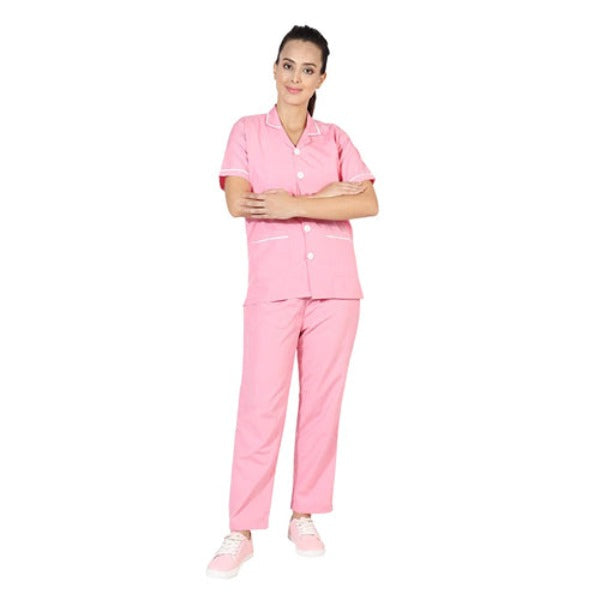
Meanwhile, its pink Nurse Staff Uniform also uses a blended fabric.
Therefore, buyers should compare comfort, durability and wash care together.
Short Sleeves and Hand Hygiene
Sleeve design matters during direct patient care.
For example, short sleeves can make hand and wrist hygiene easier. In addition, they reduce the chance that cuffs touch patients or nearby surfaces.
Meanwhile, staff wearing longer sleeves may need to keep them above the elbow during certain tasks, depending on local policy.
Therefore, the uniform design should support proper hand hygiene.
Nurse Uniform and Infection Control
A clean Nurse Uniform supports professional hygiene. However, routine workwear is not the same as PPE.
For example, a nurse may need gloves, a gown, mask or eye protection when a task involves exposure to blood or body fluids.
In addition, staff should change visibly soiled clothing according to facility policy.
Therefore, hospitals should keep clear rules for uniform care, laundering and contaminated clothing.
Should Nurses Change a Soiled Uniform?
Yes. Staff should replace visibly contaminated workwear as soon as practical.
For example, blood or body-fluid contamination needs proper handling rather than continued use throughout the shift.
Meanwhile, departments can keep spare uniforms available for unexpected contamination.
Therefore, hospitals should include replacement clothing in their staff planning.
Are Scrubs the Same as PPE?
No. Medical scrubs are routine workwear.
By contrast, PPE protects staff against specific exposure risks.
Examples include:
- Gloves
- Protective gowns
- Masks
- Respirators
- Face shields
- Protective eyewear
Therefore, nurses may wear scrubs underneath the PPE required for a particular task.
What Are the Types of Nursing Uniforms?
Disposable vs Reusable Scrub Suits
| Feature | Reusable Scrub Suit | Disposable Scrub Suit |
|---|---|---|
| Use | Repeated use after proper washing | Usually designed for single or limited use |
| Material | Often woven fabric | Often non-woven material |
| Comfort | Suitable for routine shifts | Depends on product design |
| Waste | Creates less routine disposable waste | Creates more waste |
| Setting | General nursing and clinical work | Selected controlled or procedure areas |
Therefore, hospitals should choose disposable garments only when they fit the clinical need and local infection-control policy.
Nurse Uniform Available on Meddey
Meddey currently lists a Nurse Staff Uniform Set with Open Collar Top in Pink.
Current Nurse Uniform Example
Product: Nurse Staff Uniform Set Open Collar Top Pink
Current price: approximately ₹999
Fabric: Polyester-mix cotton
Sleeves: Half sleeves
Pockets: Two front utility pockets
Sizes: XS to XXL
Prices and sizes may change. Therefore, buyers should check the live product page before ordering.
View Nurse UniformMedical Scrubs Available on Meddey
Meddey also offers a Premium Unisex Navy Blue Scrub Suit.
Current listed features include:
- Polyester-cotton blend
- Short sleeves
- Two lower patch pockets
- Drawstring trousers
- Multiple trouser pockets
- Unisex design
- Sizes S to XXL
In addition, the current selling price is approximately ₹999.
Therefore, this style can suit clinics and hospitals that prefer simple matching medical scrubs.
View Medical ScrubsHow to Choose a Nurse Uniform
1. Check Hospital Policy
First, confirm the approved color and design.
2. Select the Right Fabric
Next, choose a fabric that balances comfort and durability.
3. Review Sleeve Length
Then, make sure the design supports hand hygiene.
4. Check the Fit
Afterwards, confirm that staff can move easily.
5. Review Pockets
In addition, useful pockets can support daily clinical work.
6. Check Wash Care
Healthcare uniforms often need frequent washing, so easy care is useful.
7. Review Footwear Rules
Meanwhile, staff should follow the hospital policy for shoes and grip.
8. Confirm Size Range
Finally, ensure enough sizes are available for the whole team.
Nurse Uniform Buying Checklist
- Confirm the dress code
- Select the approved color
- Check fabric composition
- Review comfort
- Check sleeve design
- Review pocket needs
- Check the size range
- Review ease of movement
- Check washing instructions
- Review stitching quality
- Plan spare uniforms
- Keep PPE requirements separate
- Check current price
Overall, healthcare workwear should support hygiene, comfort and a clear professional appearance.
Common Nurse Uniform Mistakes
A uniform can look professional and still be unsuitable for clinical work.
Common mistakes include:
- Choosing fashion over movement
- Using the wrong hospital color
- Buying very tight sizes
- Using loose sleeves during direct care
- Not keeping spare uniforms
- Using damaged clothing
- Confusing scrubs with PPE
- Ignoring footwear rules
Therefore, practical needs should guide the final choice.
How Should Nurses Care for Their Uniform?
Uniform care should follow the healthcare facility's policy.
In general, staff should begin work in clean clothing. If the uniform becomes visibly soiled, they should change it as soon as practical.
In addition, washing should follow the garment label and local hygiene guidance.
Therefore, hospitals should provide clear laundering and replacement instructions.
Frequently Asked Questions About Nurse Uniform
What is the standard uniform for nurses?
There is no single worldwide standard. Instead, hospitals and nursing institutions choose their own approved design and color.
What is the uniform of BSc Nursing?
The uniform varies by college. Therefore, students should follow the exact dress code issued by their own nursing institution.
What uniform does a nurse wear?
A nurse may wear scrubs, a tunic with trousers, a traditional nursing uniform or another approved design.
What color is a nurse uniform?
There is no universal color. For example, hospitals may use white, navy blue, light blue, pink, green or another chosen shade.
What is the best uniform for a nurse?
The best option is comfortable, easy to clean and suitable for movement. In addition, it should match the facility dress code.
What are the types of nursing uniforms?
Common types include scrub suits, tunic-and-trouser sets, traditional nursing uniforms and disposable scrub suits.
Are medical scrubs suitable for nurses?
Yes. Many healthcare facilities use medical scrubs because they are practical and easy to wash.
Are scrubs PPE?
No. Scrubs are routine workwear. By contrast, PPE protects against specific clinical risks.
Should nurses wear short sleeves?
Many facilities prefer short sleeves during direct care because they support hand hygiene. However, local policy should guide the final choice.
How often should a Nurse Uniform be washed?
Staff should use clean workwear according to local policy and replace visibly soiled clothing promptly.
Can nursing students wear any color scrubs?
No. Instead, students should wear the color and design approved by their college and clinical placement site.
Where to Buy Nurse Uniforms Online in India?
Hospitals, clinics, students and healthcare professionals can purchase workwear from medical and healthcare suppliers.
Before buying, compare:
- Approved color
- Fabric
- Size
- Fit
- Sleeves
- Pockets
- Wash care
- Durability
- Current price
Meddey currently offers nurse uniforms, reusable medical scrubs and disposable scrub options.
View Nurse Uniform View Medical Scrubs Visit MeddeyConclusion
A Nurse Uniform supports professional identity, comfort and day-to-day clinical work.
However, there is no single design used everywhere. Instead, hospitals and nursing colleges set their own color and style rules.
Modern medical scrubs are popular because they are practical and easy to maintain. Meanwhile, traditional nursing uniforms remain in use at some institutions.
For BSc Nursing students, the correct design depends on the college. Therefore, students should follow the official dress code before buying uniforms.
In addition, hospitals should choose clothing that supports movement and hand hygiene.
Uniforms should also remain separate from PPE. When a task creates an exposure risk, staff should use the correct protective equipment.
Ultimately, the best Nurse Uniform is comfortable, durable, easy to clean and approved for the healthcare setting.
You can compare current Nurse Uniform options on Meddey.
Professional Disclaimer
Explore Medical Collections
All Categories
Abdominal & Maternity Support

Accessories

Accu-Chek Instant Strips: Use, Compatibility, Price & Blood Sugar Testing Guide
Accu-Chek Instant Strips: Uses, Features & Complete Guide

Accupressure

accupuncture

Acupuncture Needles & Supplies

Advanced Physiotherapy Machines

Airways

Ambulance

Anatomy Models
Anesthesia Machine

Anesthesia Products

Ankle & Foot Supports

Anti-Bedsore Air Mattresses
You may also need
FOR YOURecommended for you