
1

Parallel Bar System – Hospital & Institutional Rehabilitation Equipment


Double-tap to zoom · drag to pan · swipe to browse
Parallel Bar System – Hospital & Institutional Rehabilitation Equipment
In Stock
Size:6 Ft
Check delivery
See if we deliver to you and when.
Delivering to
Delivery applicable
Free Shipping
on orders ₹999+
100% Genuine
Products
Dedicated
Support
Secure
Payments
Need help choosing or using this product?
Our team can help with product questions and orders.
Chat with support
Choose options
- Two Parallel Handrails: Gives users hand support during walking and standing exercises.
- Mobility Training Design: Helps therapists guide users through controlled movement exercises.
- Stable Support Area: Provides a firm structure for supervised therapy sessions.
- Gait Training Support: Helps users practise walking and step patterns in a controlled area.
Size:6 Ft
Check delivery
See if we deliver to you and when.
Delivering to
Delivery applicable
- Two Parallel Handrails: Gives users hand support during walking and standing exercises.
- Mobility Training Design: Helps therapists guide users through controlled movement exercises.
- Stable Support Area: Provides a firm structure for supervised therapy sessions.
- Gait Training Support: Helps users practise walking and step patterns in a controlled area.
Size:6 Ft
Check delivery
See if we deliver to you and when.
Delivering to
Delivery applicable
About this product
Parallel Bar System – Hospital & Institutional Rehabilitation Equipment
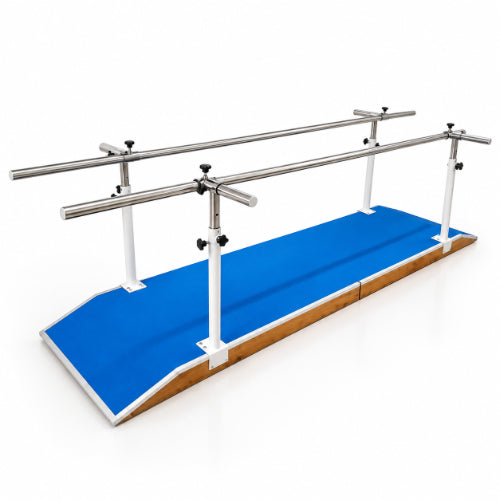
The Parallel Bar System is a useful piece of rehabilitation equipment for walking, standing, balance and movement training. It has two parallel handrails that give users a steady place to hold while they practise basic movements. Therefore, therapists can create a more controlled space for mobility exercises in hospitals, physiotherapy clinics and rehabilitation centres.
The system supports people who need extra help while they practise walking or standing. In addition, the open space between the bars gives therapists enough room to guide users during each exercise. This simple design makes the Parallel Bar System a useful part of a professional therapy room.
Whether a facility needs equipment for gait training, balance work or basic mobility practice, this rehab equipment can support many therapy routines. A trained physiotherapist or healthcare professional can select suitable exercises based on the user's needs and ability.
Key Features of the Parallel Bar System
- Two Parallel Handrails: Gives users hand support during walking and standing exercises.
- Mobility Training Design: Helps therapists guide users through controlled movement exercises.
- Stable Support Area: Provides a firm structure for supervised therapy sessions.
- Gait Training Support: Helps users practise walking and step patterns in a controlled area.
- Balance Practice: Supports selected balance and weight-shift exercises.
- Standing Exercises: Gives users a place to hold while practising supported standing.
- Professional Use: Suitable for hospitals, clinics and rehabilitation centres.
- Physio Rehab Equipment: Fits well into a professional physiotherapy and rehabilitation setup.
Reliable Rehabilitation Equipment for Mobility Training
The Parallel Bar System gives therapists a clear area for walking and movement practice. Users can hold the bars while they work on simple movements. As a result, they can focus on their steps while the therapist watches and gives guidance.
Good rehabilitation equipment should support safe and well-planned therapy work. This system gives therapists a simple way to guide users through walking, standing and balance exercises. It can also help create a clear routine during each therapy session.
Furthermore, the system can support different levels of mobility training. The therapist can choose exercises that match the user's current ability. For this reason, the Parallel Bar System works well as part of a wider rehabilitation programme.
Parallel Bars for Gait and Walking Practice
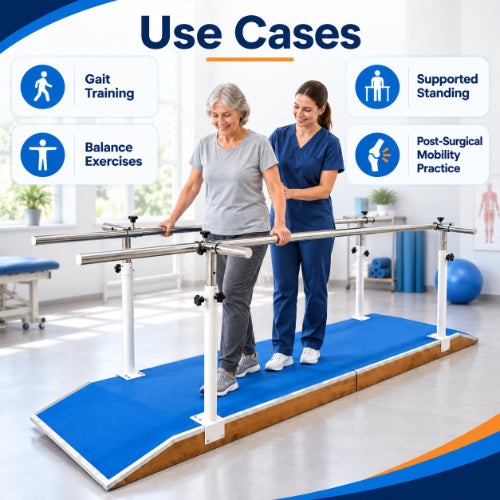
Walking practice can require extra support, especially during early stages of mobility training. The Parallel Bar System gives users two handrails to hold while they practise taking controlled steps. Therefore, therapists can guide the user through a clear walking path.
The system also gives therapists a good view of the user's movement. They can watch step patterns, posture and weight shifting during the exercise. In addition, they can provide simple instructions to help the user follow the planned movement.
This physio rehab equipment can support walking exercises as part of a professional therapy plan. However, a qualified physiotherapist should decide which exercises suit each user. The therapist should also decide how much support the user needs during the session.
Support for Standing and Balance Exercises
The Parallel Bar System can also help with supported standing and balance exercises. Users can hold the bars while they practise standing in a controlled position. Furthermore, therapists can guide users through simple weight-shift exercises when suitable.
Balance needs can differ from one person to another. Therefore, therapists should select exercises based on the user's strength, movement and comfort. Some users may need both hands on the rails, while others may need less support as their skills improve.
The clear layout also gives therapists enough space to stand near the user and provide instructions. As a result, this rehab equipment can support a wide range of basic balance and standing activities in a therapy setting.
Professional Applications of Parallel Bar Rehabilitation Equipment
Therapists can use the Parallel Bar System for several types of movement training. For example, the system can support walking practice, standing work and balance exercises. It can also help users practise simple steps and changes in direction.
- Walking and gait practice
- Supported standing exercises
- Balance training
- Weight-shifting exercises
- Step practice
- Basic movement training
- Posture and walking observation
- Hospital rehabilitation programmes
- Physiotherapy clinic use
- Institutional rehabilitation programmes
Suitable for Hospitals and Institutional Rehabilitation Settings
Hospitals and rehabilitation centres need practical equipment for regular therapy sessions. The Parallel Bar System provides a dedicated space for walking and movement practice. Therefore, it can become an important part of a physiotherapy or rehabilitation room.
The system works well in areas where therapists need to supervise users during mobility exercises. In addition, the open design makes it easier for staff to guide users and observe their movements from different positions.
Facilities can also combine this rehabilitation equipment with other therapy products. For example, a rehabilitation room may include exercise units, therapy tables, balance tools and other rehab equipment. This approach can help create a complete therapy space for different types of training.
Benefits of Using a Parallel Bar System
- Walking Support: Gives users a place to hold while they practise walking.
- Controlled Practice: Creates a clear area for planned movement exercises.
- Easy Therapist Access: Gives therapists room to guide and observe users.
- Balance Support: Helps users practise selected balance exercises with hand support.
- Standing Practice: Supports controlled standing activities.
- Movement Training: Helps users practise basic steps and movement patterns.
- Professional Use: Fits hospitals, clinics and rehabilitation centres.
- Flexible Therapy Tool: Works as part of a wider physio rehab equipment setup.
Who Can Use the Parallel Bar System?
The Parallel Bar System is mainly intended for professional rehabilitation and physiotherapy settings. Qualified physiotherapists, therapists and trained healthcare staff can use the system during suitable therapy sessions.
The equipment may help users who need support while they practise walking, standing or basic movement. However, each person has different needs. Therefore, a qualified professional should decide which exercises are suitable.
Users should also follow the therapist's instructions during each session. People with major mobility or balance problems may need close support while using the equipment. The therapist should always choose the right level of help for the user.
Product Specifications
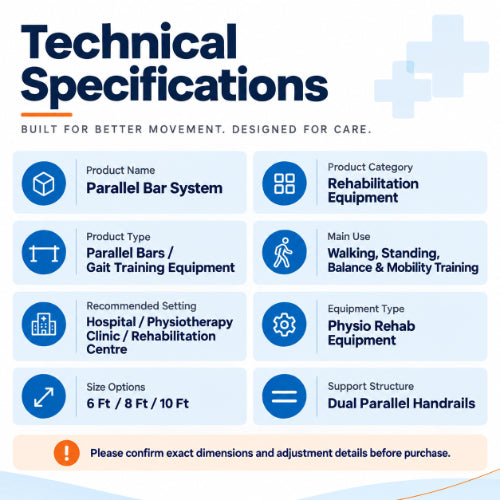
| Product Name | Parallel Bar System |
| Product Category | Rehabilitation Equipment |
| Product Type | Parallel Bars / Gait Training Equipment |
| Main Use | Walking, Standing, Balance and Mobility Training |
| Recommended Setting | Hospital / Physiotherapy Clinic / Rehabilitation Centre |
| Equipment Type | Rehab Equipment / Physio Rehab Equipment |
Please confirm the exact product dimensions, bar height, bar width, material, adjustment options, weight capacity and installation details with the supplier before purchase.
How to Use the Parallel Bar System
- Check that the Parallel Bar System stands firmly before each session.
- Keep the area around the bars clear of bags, tools and other objects.
- Help the user move into the starting position as advised by the therapist.
- Ask the user to hold the handrails in the way the therapist recommends.
- Start the planned walking, standing or balance exercise.
- Watch the user's movement, posture and balance during the exercise.
- Give simple instructions and adjust the exercise when needed.
- After use, clean the equipment and keep the area ready for the next session.
Always follow the manufacturer's instructions. In addition, use the equipment under suitable professional guidance when the user needs support with walking, balance or movement.
Care and Maintenance
Regular care helps keep the Parallel Bar System ready for daily therapy use. Check the handrails, support parts, fittings and base before use. Also look for loose parts or visible damage.
Keep the equipment clean and dry. Wipe the handrails and other surfaces with a suitable cleaning product according to the manufacturer's instructions. This step can help maintain a clean therapy area.
If the system has adjustable parts, check them regularly. Make sure each adjustment works correctly before a therapy session. Never use the equipment if it feels loose or unstable.
Follow the manufacturer's service instructions for repairs and part replacement. Qualified staff should handle technical repairs when needed.
Why Choose a Parallel Bar System for Rehabilitation?
A good therapy room needs simple and useful tools for movement training. The Parallel Bar System gives therapists a dedicated area for walking, standing and balance exercises. Therefore, it can support many basic mobility activities.
In addition, the system gives users hand support while they practise controlled movements. This makes it easier for therapists to guide the session and watch the user's movement. The simple design also fits well into many professional rehabilitation spaces.
Hospitals and clinics can add this rehabilitation equipment to a larger therapy setup. It can work alongside other rehab equipment used for exercise, movement and recovery programmes.
For facilities that need reliable physio rehab equipment for supervised mobility practice, the Parallel Bar System offers a practical choice. It supports a clear and organised area for professional therapy sessions.
Frequently Asked Questions
What is a Parallel Bar System?
A Parallel Bar System is rehabilitation equipment with two parallel handrails. Therapists can use it for walking, standing, balance and mobility exercises.
Where can I use this rehab equipment?
You can use the system in hospitals, physiotherapy clinics, rehabilitation centres and other professional therapy settings.
Can parallel bars help with walking practice?
Yes. Therapists can use parallel bars to guide users through controlled walking and step exercises as part of a suitable therapy plan.
Can this physio rehab equipment support balance exercises?
Yes. The handrails can give users support during selected balance and standing exercises. A qualified professional should choose the right exercise for each user.
Should a therapist supervise the user?
The level of supervision depends on the user's mobility and balance needs. Users who need support should follow the guidance of a qualified therapist or healthcare professional.
What should I check before buying?
Check the exact dimensions, bar height, width, material, adjustment features, weight capacity, installation needs and included accessories before purchase.
Choose the Parallel Bar System for Professional Rehabilitation
Build a practical therapy space with the Parallel Bar System. It gives users a clear area for supported walking, standing and movement practice. At the same time, it gives therapists room to guide and observe each exercise.
As useful rehabilitation equipment, the system can support hospitals, physiotherapy clinics and rehabilitation centres. It also works well with other rehab equipment used in professional therapy rooms.
If you are looking for dependable physio rehab equipment for mobility and gait practice, the Parallel Bar System can be a practical addition to your rehabilitation setup.
Important Product Information
This description explains the general features and intended use of the Parallel Bar System. Exact dimensions, bar height, bar width, material, weight capacity, adjustment options and installation requirements may vary by model or supplier. Therefore, please confirm the exact product specifications before purchase. Always install, maintain and use the equipment according to the manufacturer's instructions and suitable professional guidance.
You may also need
FOR YOURecommended for you
Save 55%

Save 39%

Save 8%



Save 37%

Sold out


Save 18%

Save 20%
Save 33%