
1
5 Para Patient Monitor – SpO2, HR, NIBP, ECG, RESP, Temp | Warranty


Double-tap to zoom · drag to pan · swipe to browse
5 Para Patient Monitor – SpO2, HR, NIBP, ECG, RESP, Temp | Warranty
In Stock
Accessories:Adult
Check delivery
See if we deliver to you and when.
Delivering to
Delivery applicable
Free Shipping
on orders ₹999+
Warranty
2 Months Warranty
100% Genuine
Products
Dedicated
Support
Secure
Payments
Need help choosing or using this product?
Our team can help with product questions and orders.
Chat with support
Choose options
- Hospital patient monitoring
- Clinical observation and assessment
- Patient recovery monitoring
- Nursing and supervised care
Accessories:Adult
Check delivery
See if we deliver to you and when.
Delivering to
Delivery applicable
- Hospital patient monitoring
- Clinical observation and assessment
- Patient recovery monitoring
- Nursing and supervised care
Accessories:Adult
Check delivery
See if we deliver to you and when.
Delivering to
Delivery applicable
About this product
5 Para Patient Monitor – SpO2, HR, NIBP, ECG, RESP, Temp
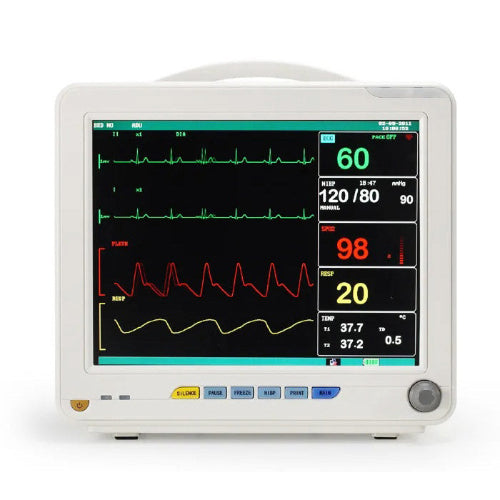
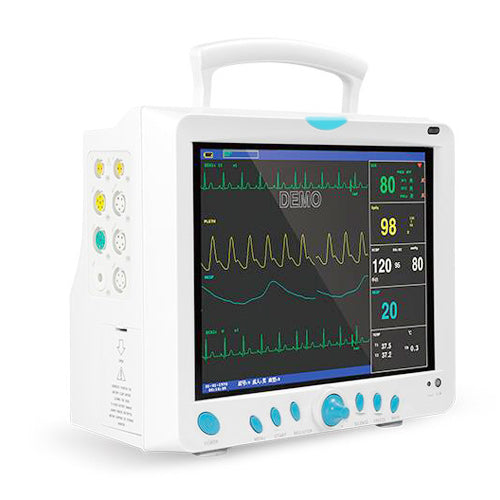
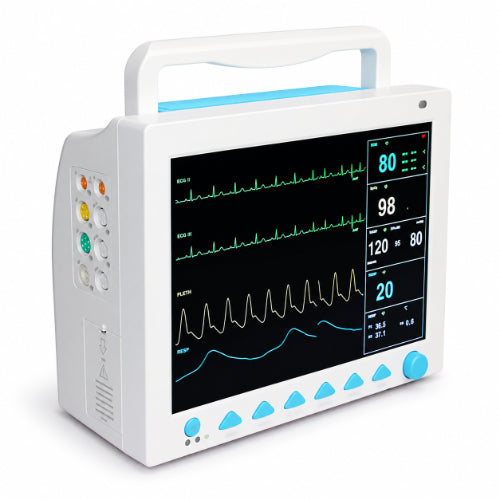
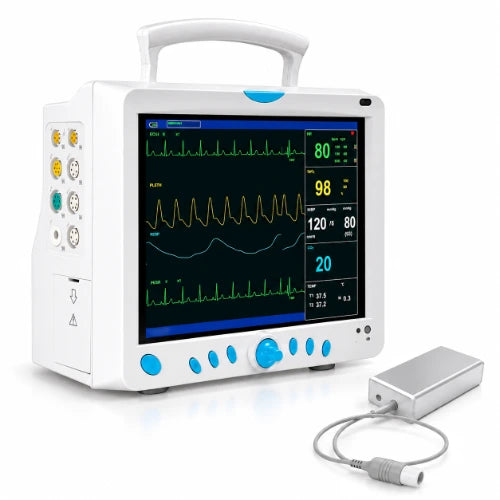
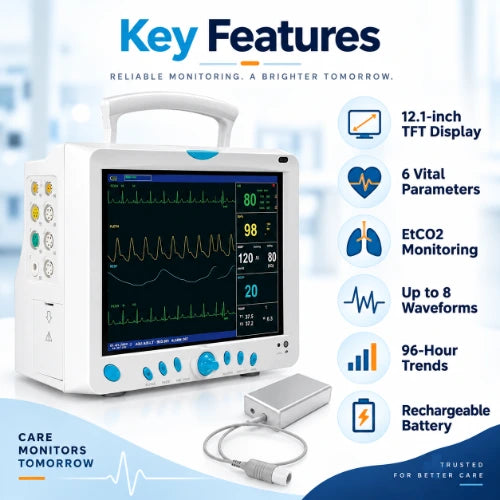
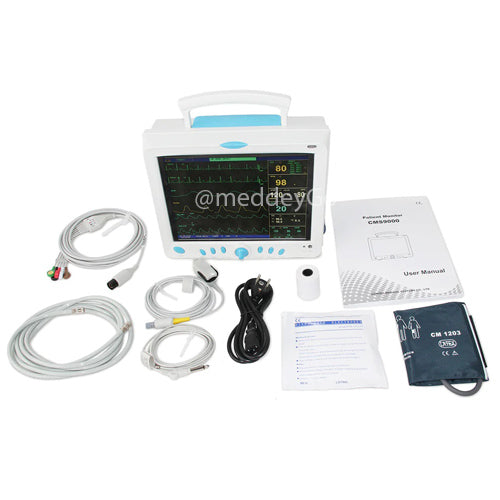
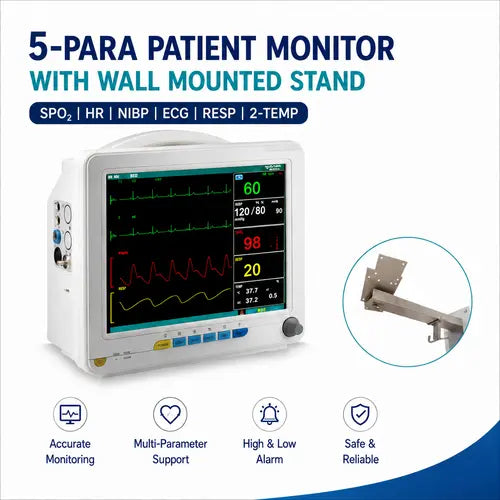
The 5 Para Patient Monitor provides a practical solution for observing important physiological parameters in hospitals, clinics, nursing areas, recovery rooms, and other healthcare environments. The monitor brings several essential measurements into one convenient system, so healthcare professionals can review patient information without relying on separate devices for every basic parameter.
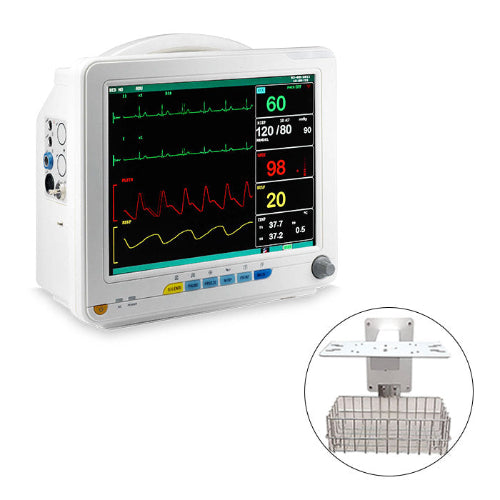
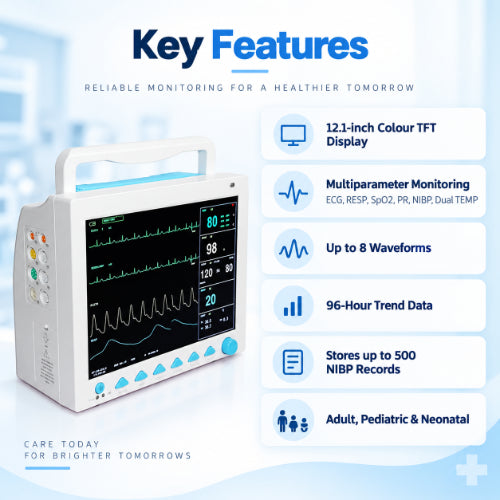
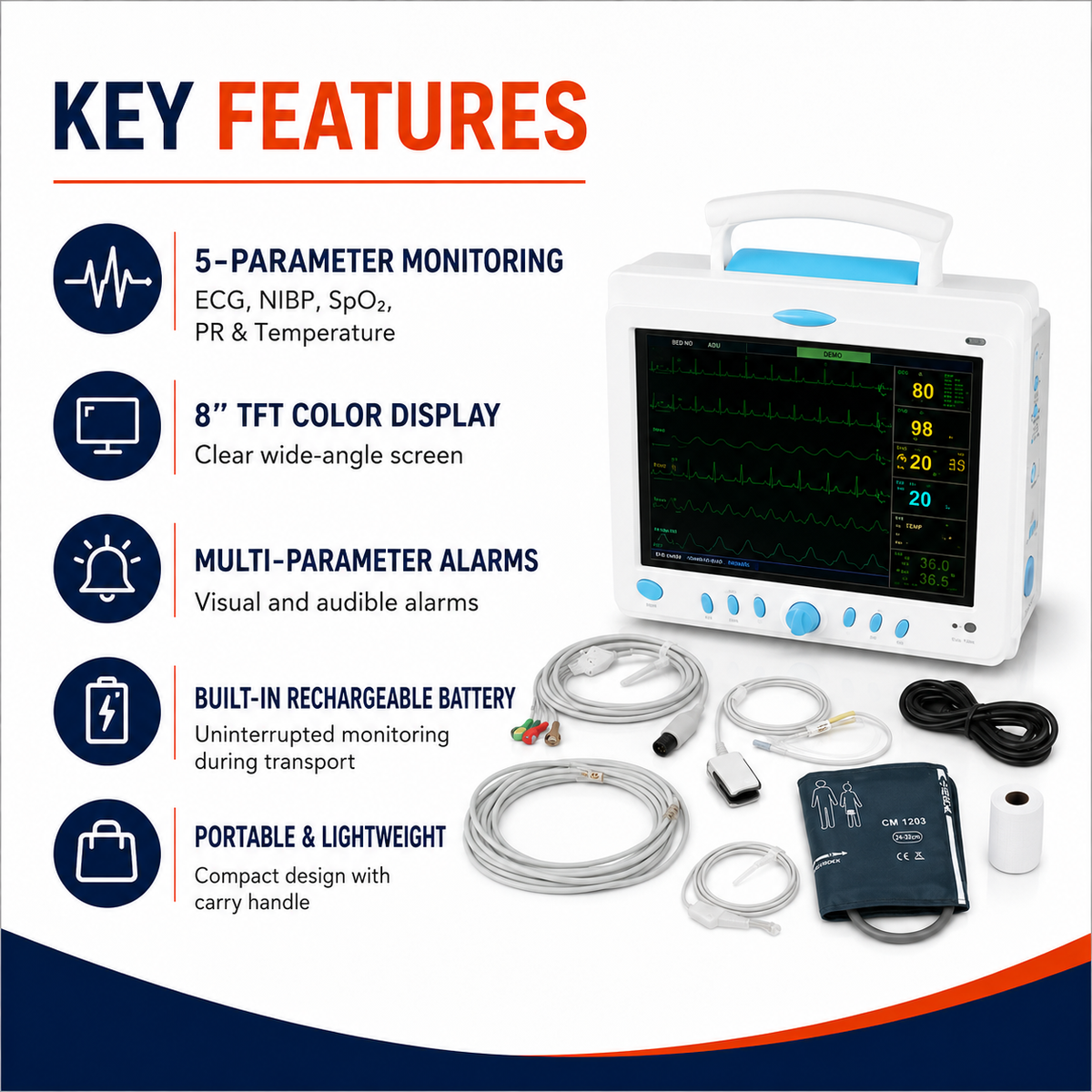
Furthermore, this patient monitor supports SpO2, Heart Rate (HR), Non-Invasive Blood Pressure (NIBP), ECG, Respiration (RESP), and Temperature (Temp). Therefore, healthcare professionals can review multiple readings from one screen during routine observation, clinical assessment, recovery monitoring, and supervised patient care.
Key Features of the 5 Para Patient Monitor
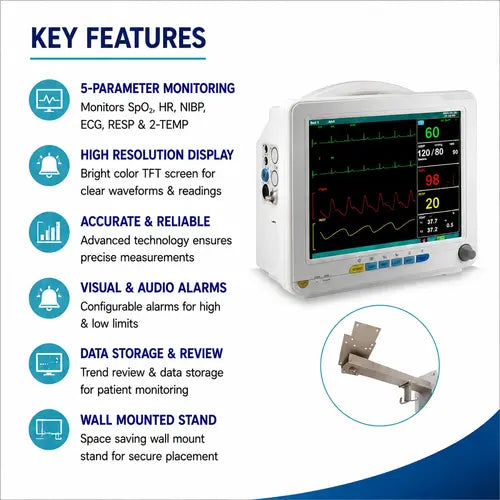
SpO2 Monitoring
The monitor measures peripheral oxygen saturation through the SpO2 function and also provides pulse-related information. Therefore, healthcare professionals can observe oxygen saturation during routine and supervised patient care.
The monitor measures peripheral oxygen saturation through the SpO2 function and also provides pulse-related information. Therefore, healthcare professionals can observe oxygen saturation during routine and supervised patient care.
Heart Rate Monitoring
The Heart Rate (HR) function provides information about the patient's heart rate during monitoring. In addition, healthcare professionals can review the HR value alongside SpO2, ECG, RESP, NIBP, and temperature readings for a broader patient assessment.
The Heart Rate (HR) function provides information about the patient's heart rate during monitoring. In addition, healthcare professionals can review the HR value alongside SpO2, ECG, RESP, NIBP, and temperature readings for a broader patient assessment.
Non-Invasive Blood Pressure
The NIBP function measures blood pressure with an appropriate cuff and provides a non-invasive method for routine blood pressure observation. Consequently, healthcare professionals can check blood pressure without using an invasive measurement procedure.
The NIBP function measures blood pressure with an appropriate cuff and provides a non-invasive method for routine blood pressure observation. Consequently, healthcare professionals can check blood pressure without using an invasive measurement procedure.
ECG Monitoring
The ECG function helps healthcare professionals observe electrical cardiac activity through compatible ECG leads and accessories. Thus, the monitor can support cardiac observation during supervised clinical monitoring.
The ECG function helps healthcare professionals observe electrical cardiac activity through compatible ECG leads and accessories. Thus, the monitor can support cardiac observation during supervised clinical monitoring.
Respiration Monitoring
The RESP function helps healthcare professionals observe the patient's respiration rate. Moreover, users can review respiration information together with SpO2, HR, ECG, NIBP, and temperature values.
The RESP function helps healthcare professionals observe the patient's respiration rate. Moreover, users can review respiration information together with SpO2, HR, ECG, NIBP, and temperature values.
Temperature Monitoring
The temperature function allows healthcare professionals to monitor body temperature when they use a compatible temperature probe. As a result, users can consider temperature readings alongside other monitored parameters during patient observation.
The temperature function allows healthcare professionals to monitor body temperature when they use a compatible temperature probe. As a result, users can consider temperature readings alongside other monitored parameters during patient observation.
Convenient Multi-Parameter Patient Observation
A multi-parameter patient monitor gives healthcare professionals a convenient way to observe several physiological measurements through one system. Instead of switching between different devices, users can review multiple parameters during the same monitoring session.
Moreover, this arrangement can help organize routine monitoring. For example, healthcare professionals can review SpO2 and HR together while they check NIBP, ECG, RESP, and temperature as required. Therefore, the monitor can support healthcare environments where staff need regular access to several patient measurements.
However, qualified healthcare professionals should interpret every reading according to the patient's condition, clinical history, and applicable medical protocols. The monitor supports patient observation, but it does not replace professional diagnosis or treatment.
Applications of the 5 Para Patient Monitor
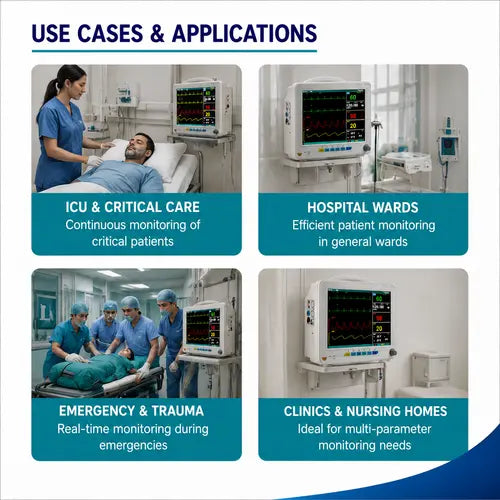
Healthcare professionals can use the 5 Para Patient Monitor in different environments that require regular observation of multiple physiological parameters. In particular, the monitor can support patient monitoring in hospitals, clinics, nursing areas, recovery rooms, and other supervised healthcare settings.
- Hospital patient monitoring
- Clinical observation and assessment
- Patient recovery monitoring
- Nursing and supervised care
- Routine vital parameter observation
- ECG and cardiac observation
- Respiratory monitoring support
- Temperature and blood pressure observation
Furthermore, the multi-parameter design allows healthcare professionals to review several patient measurements during one monitoring session. This approach can make routine observation more convenient and organized.
Benefits of Using a Multi-Parameter Patient Monitor
The main benefit of a multi-parameter monitor comes from its convenient design. The device combines several monitoring functions in one system, so healthcare professionals can observe different physiological parameters without repeatedly changing equipment.
In addition, a single monitoring platform can support a more organized clinical workflow. For instance, healthcare professionals can review SpO2, HR, ECG, and RESP information while they also monitor NIBP and temperature according to patient requirements.
Therefore, the 5 Para Patient Monitor can provide a practical option for healthcare facilities that require regular and supervised patient observation. Its multi-parameter approach also helps users keep important readings together during monitoring sessions.
5 Para Patient Monitor Technical Specifications
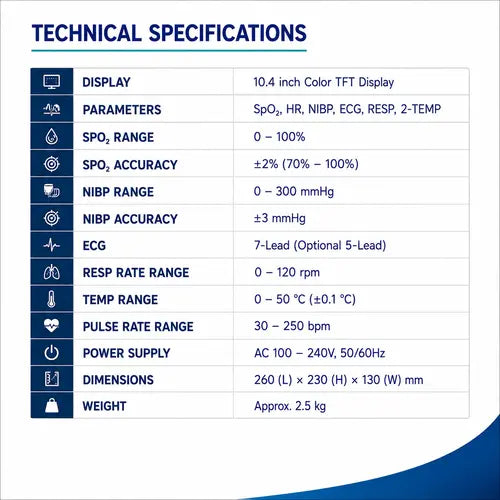
| Specification | Details |
|---|---|
| Product Name | 5 Para Patient Monitor |
| Product Type | Multi-Parameter Patient Monitor |
| SpO2 | Oxygen Saturation Monitoring |
| Heart Rate (HR) | Heart Rate Monitoring |
| NIBP | Non-Invasive Blood Pressure Monitoring |
| ECG | Electrocardiogram Monitoring |
| RESP | Respiration Monitoring |
| Temperature | Temperature Monitoring |
| Intended Application | Clinical and Healthcare Patient Monitoring |
| Warranty | Warranty Available – As Per Product Terms |
Note: Please confirm exact technical specifications, accessories, measurement ranges, display details, power requirements, and warranty duration for the specific product model before purchase.
How to Use the 5 Para Patient Monitor
- Place the monitor on a stable and suitable surface near the patient.
- Connect the required ECG leads, NIBP cuff, SpO2 sensor, temperature probe, and other applicable accessories.
- Position each sensor correctly according to the manufacturer's instructions.
- Switch on the monitor and allow the system to complete its start-up process.
- Check the displayed parameters and confirm that the connected accessories work correctly.
- Keep the patient and connected sensors in the recommended position during monitoring.
- Review the displayed readings according to the healthcare professional's clinical requirements.
Moreover, users should follow the instructions supplied with the specific monitor model. Correct sensor placement and proper operating procedures can help support reliable monitoring.
Tips for Effective Patient Monitoring
Proper preparation plays an important role in patient monitoring. Therefore, healthcare professionals should position the patient appropriately and connect all required accessories securely before starting the monitoring session.
In addition, users should position each sensor according to the manufacturer's recommendations. Patient movement can affect certain measurements; consequently, healthcare professionals should minimize unnecessary movement whenever clinically appropriate.
Furthermore, healthcare professionals should review displayed values in context rather than relying on one parameter alone. For example, SpO2, HR, RESP, ECG, NIBP, and temperature can provide different types of information about the patient's condition.
Finally, a qualified healthcare professional should assess any unusual reading, alarm, or unexpected change. The monitor supports observation, while trained medical personnel should make clinical decisions according to professional judgment and applicable protocols.
Care and Maintenance
Regular care can help maintain the monitor in suitable working condition. After each use, clean the device and reusable accessories according to the manufacturer's cleaning instructions.
Additionally, keep the monitor away from unnecessary moisture, excessive heat, dust, and unsuitable environmental conditions. Users should also inspect ECG cables, SpO2 sensors, NIBP cuffs, temperature probes, and other accessories for visible damage.
Moreover, trained personnel should handle the monitor, particularly in clinical environments. If an accessory shows damage or produces inconsistent readings, stop using the affected component and follow the manufacturer's service or replacement recommendations.
Frequently Asked Questions
What parameters does this patient monitor support?
The 5 Para Patient Monitor supports SpO2, HR, NIBP, ECG, RESP, and Temperature. Therefore, healthcare professionals can review several commonly monitored physiological parameters through one system.
What does SpO2 monitoring measure?
SpO2 monitoring measures peripheral oxygen saturation and provides pulse-related information. Healthcare professionals can review these readings alongside other patient parameters during supervised care.
What does NIBP mean?
NIBP stands for Non-Invasive Blood Pressure. The function uses an appropriate blood pressure cuff to measure blood pressure without an invasive measurement procedure.
Can this monitor support ECG monitoring?
Yes. The listed configuration includes ECG monitoring. However, users should select compatible ECG leads and follow the manufacturer's setup instructions and professional clinical practices.
Does the monitor support temperature monitoring?
Yes. The monitor includes temperature monitoring. However, users should confirm the compatible temperature probe and exact measurement range for the specific product model.
Does the product come with a warranty?
Yes, the product listing includes a warranty. However, the exact warranty duration and coverage depend on the applicable product terms. Please confirm the warranty details before purchase.
Shop 5 Para Patient Monitor
The 5 Para Patient Monitor offers a practical multi-parameter monitoring solution for healthcare environments that require SpO2, HR, NIBP, ECG, RESP, and temperature monitoring. Because the device combines these functions in one system, healthcare professionals can review several important patient readings during the same monitoring session.
Therefore, hospitals, clinics, nursing areas, recovery rooms, and other supervised healthcare facilities can consider this monitor for routine patient observation. In addition, the available warranty can provide support according to the applicable warranty terms. Choose the appropriate model and accessories based on your clinical monitoring requirements.
Important Medical Note
The 5 Para Patient Monitor supports patient monitoring but does not replace professional medical assessment, diagnosis, or treatment. Consequently, qualified healthcare professionals should interpret all readings according to the patient's condition and applicable clinical protocols. Always follow the manufacturer's operating instructions, recommended accessories, safety precautions, and maintenance guidelines.
You may also need
FOR YOURecommended for you
Save 55%

Save 39%

Save 8%


Save 37%



Save 30%


Save 28%
Save 50%
Save 23%