
1
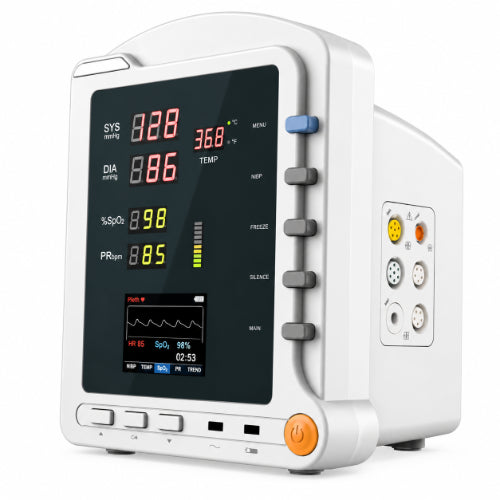

3 Para Bedside Patient Monitor with NIBP, SpO2 & Pulse Rate


Double-tap to zoom · drag to pan · swipe to browse
3 Para Bedside Patient Monitor with NIBP, SpO2 & Pulse Rate
In Stock
Accessories:Adult
Check delivery
See if we deliver to you and when.
Delivering to
Delivery applicable
Free Shipping
on orders ₹999+
100% Genuine
Products
Dedicated
Support
Secure
Payments
Need help choosing or using this product?
Our team can help with product questions and orders.
Chat with support
Choose options
- First, choose the correct cuff and sensors for the patient.
- Next, place each accessory according to the supplied instructions.
- Then, check that the monitor shows a stable reading.
- Use alarm limits recommended for the patient's monitoring plan.
Accessories:Adult
Check delivery
See if we deliver to you and when.
Delivering to
Delivery applicable
- First, choose the correct cuff and sensors for the patient.
- Next, place each accessory according to the supplied instructions.
- Then, check that the monitor shows a stable reading.
- Use alarm limits recommended for the patient's monitoring plan.
Accessories:Adult
Check delivery
See if we deliver to you and when.
Delivering to
Delivery applicable
About this product
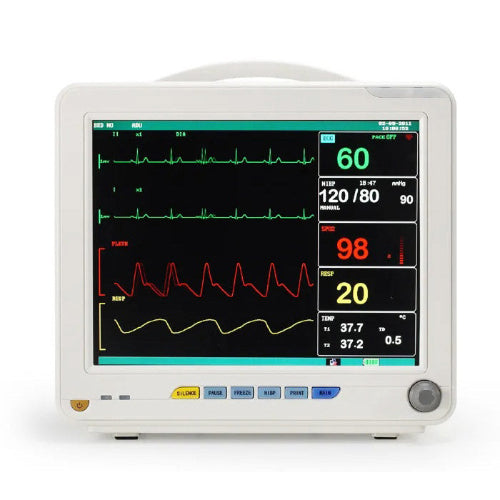
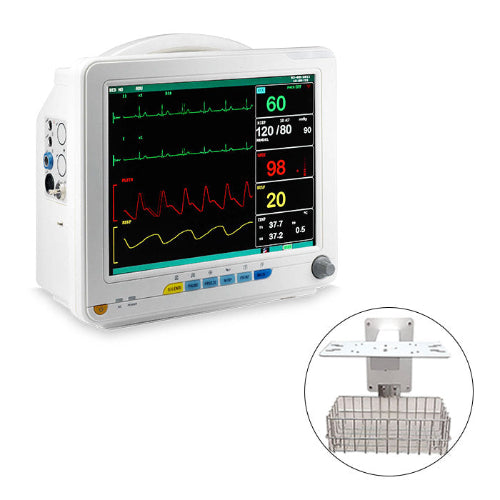
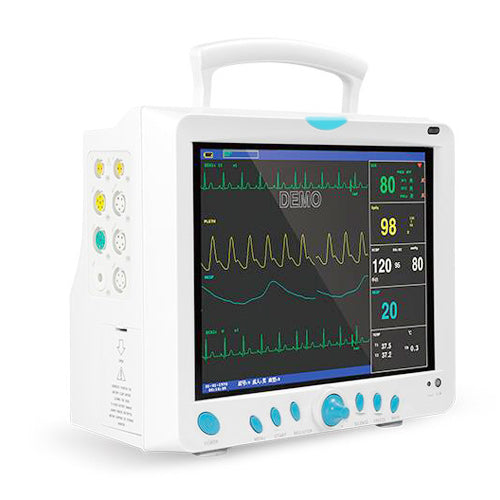
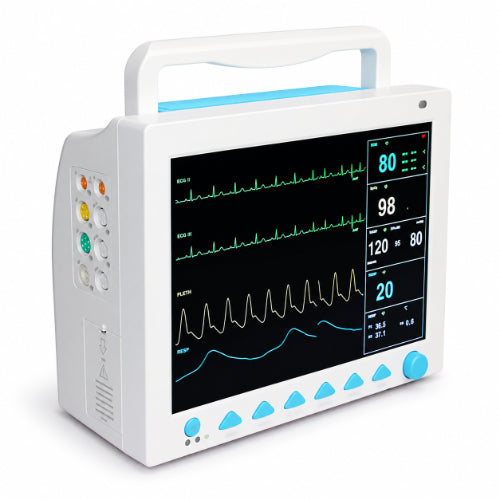
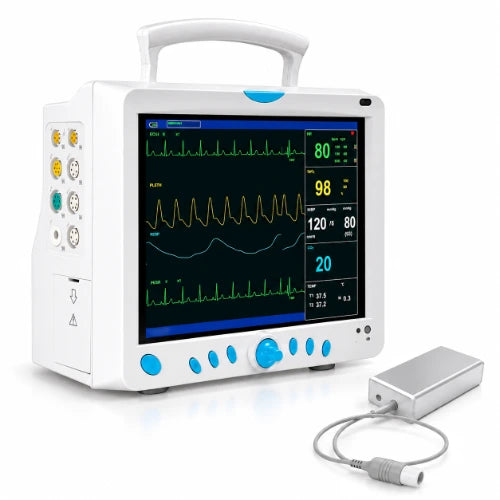
If a family member needs regular vital-sign monitoring at home, seeing important readings together can make day-to-day observation easier. This 3 para bedside patient monitor brings blood pressure, blood oxygen level and pulse rate into one compact device.
The product also lists temperature measurement. In addition, it includes a colour display, adjustable alarms, stored readings and a rechargeable battery.
For home care, the monitor can help a trained caregiver keep track of readings recommended by a healthcare professional. However, medical readings and alarms should not be interpreted without suitable guidance when the patient has a serious health condition.
Meanwhile, hospitals, clinics, nursing facilities and ambulances can use the same monitoring features for suitable patient-care needs.
Need help choosing the correct accessories?
Prepaid and partial COD options are available. Call or WhatsApp Meddey: +91 8586-012345
Prepaid and partial COD options are available. Call or WhatsApp Meddey: +91 8586-012345
3 Para Bedside Patient Monitor for Home Patient Care
If someone at home needs regular checks of blood pressure, oxygen level or pulse, using several separate devices can feel inconvenient.
This bedside vital signs monitor brings these key readings together. As a result, a caregiver can view important measurements from one monitoring device.
However, the monitor does not diagnose why a reading is high, low or unusual. Therefore, families should follow the alarm limits and monitoring plan recommended by the patient's doctor or nurse.
Simple buying advice: this is a medical patient monitor, not an ordinary home health gadget. It may suit professionally guided home care where regular vital-sign checks are required. Before ordering, choose the correct adult or neonatal accessories for the intended patient.
3 Para Patient Monitor Terms Explained Simply
3 Para “Para” means parameter. In this type of monitor, the main monitored groups include blood pressure, oxygen saturation and pulse rate.
NIBP NIBP means non-invasive blood pressure. In simple words, the monitor checks blood pressure using a cuff without putting anything inside the body.
SpO2 SpO2 is the estimated percentage of oxygen carried in the blood.
Pulse Rate Pulse rate, or PR, means the number of heartbeats per minute.
SYS SYS means systolic pressure. It is the upper blood-pressure number, measured when the heart pumps.
DIA DIA means diastolic pressure. It is the lower blood-pressure number, measured between heartbeats.
MAP MAP means mean arterial pressure. It is an average pressure value that healthcare professionals may use during patient monitoring.
Oscillometry This is the automatic method the monitor uses to calculate blood pressure from pressure changes inside the cuff.
TFT LCD This simply refers to the colour screen that displays readings, indicators and monitoring information.
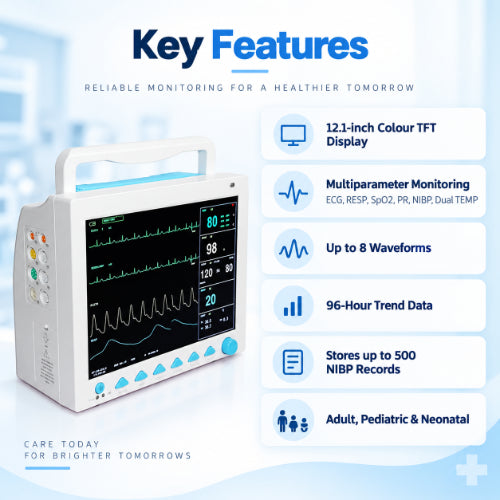
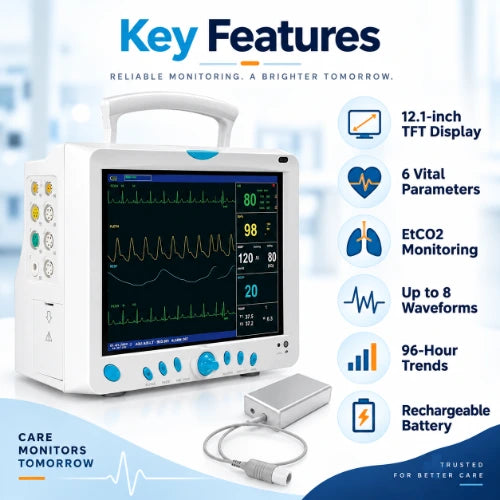
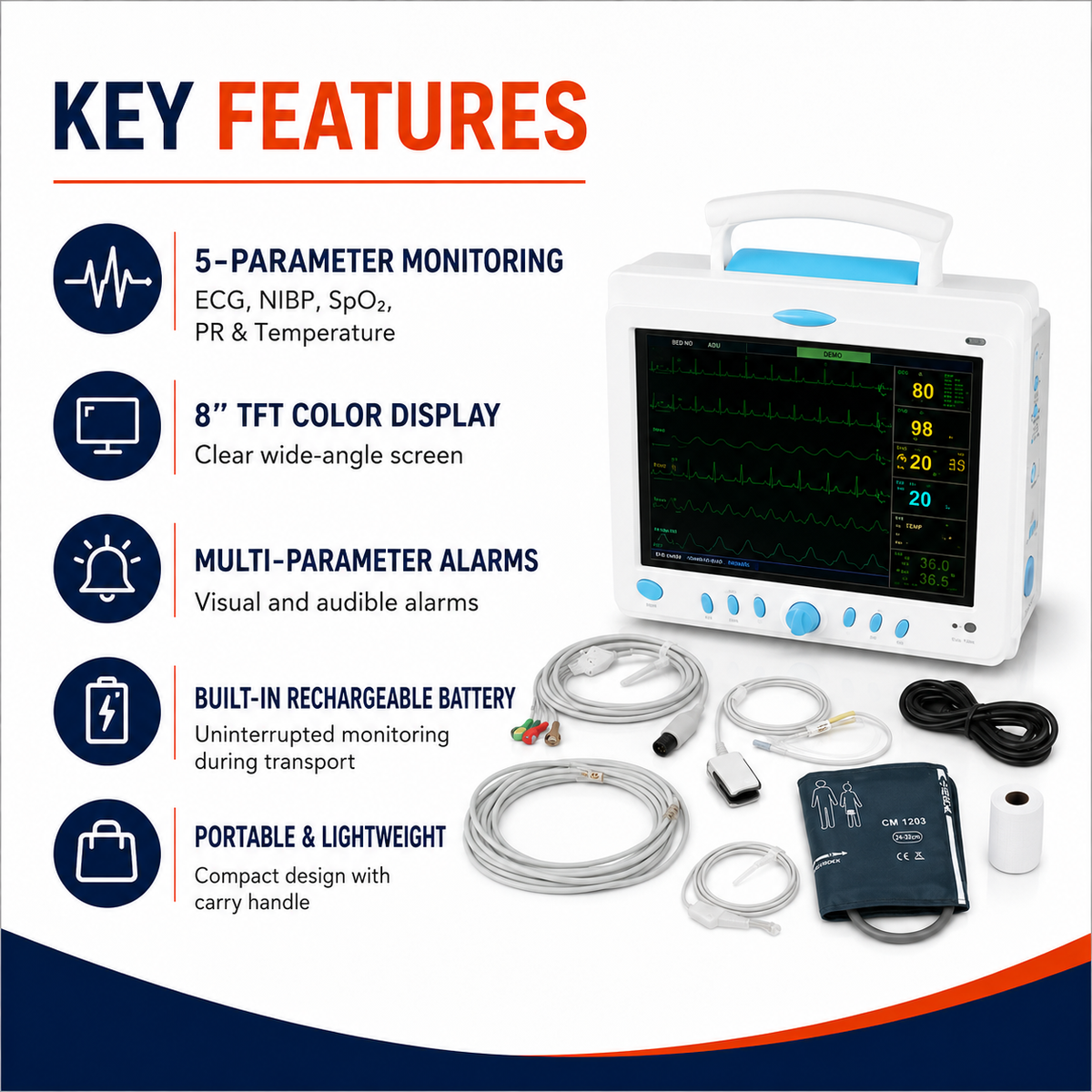
Key Features of the 3 Para Bedside Patient Monitor
NIBP Blood Pressure Monitoring
The monitor measures systolic, diastolic and mean blood pressure using an automatic cuff-based method.
SpO2 and Pulse Monitoring
A compatible sensor measures estimated blood oxygen saturation. At the same time, the monitor displays pulse rate.
Temperature Measurement
The current product specification also lists body-temperature measurement for suitable adult and neonatal use.
2.8-Inch Colour Display
The monitor uses a 2.8-inch TFT LCD colour screen. Therefore, readings and indicators appear together on one display.
Visual and Audible Alarms
The device can provide screen or light alerts and sound alarms when monitored values cross selected limits.
Rechargeable Bedside Monitor
A built-in rechargeable battery supports operation when the monitor needs to move or mains power is temporarily unavailable.
How This Bedside Vital Signs Monitor Works
The monitor collects information from different sensors and displays the readings together.
For blood pressure, it uses oscillometry. In simple words, the monitor detects small pressure changes in the cuff while automatically measuring blood pressure.
For SpO2, the monitor uses light-based sensing through a compatible probe. As a result, it estimates blood oxygen saturation and also displays pulse rate.
Meanwhile, a compatible temperature probe supports temperature measurement when included with the selected configuration.
3 Para Bedside Patient Monitor Alarms Explained
The monitor allows alarm limits for values such as SYS, DIA, MAP, SpO2 and pulse rate.
For example, if a monitored reading moves beyond a selected limit, the device can provide a visual or audible alert.
However, an alarm does not explain why the reading changed. Therefore, caregivers should follow the patient's monitoring plan and seek appropriate medical advice when required.
Important for home users:
Do not choose alarm limits only by guessing or copying another patient's settings. A doctor, nurse or other qualified healthcare professional should guide suitable limits when the patient's condition requires medical monitoring.
Do not choose alarm limits only by guessing or copying another patient's settings. A doctor, nurse or other qualified healthcare professional should guide suitable limits when the patient's condition requires medical monitoring.
Data Storage on the 3 Para Patient Monitor
The monitor includes built-in flash memory. Flash memory means stored digital memory that keeps recorded information available for later review.
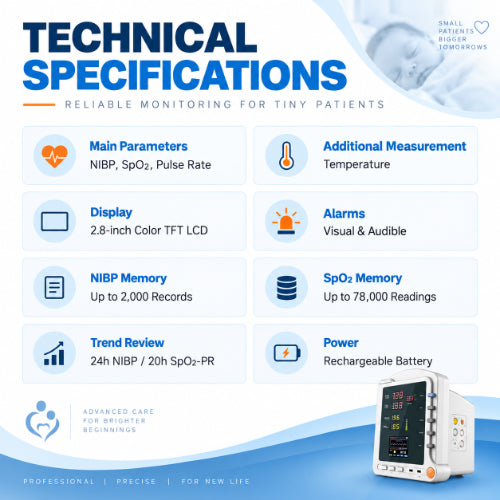
The current product information lists storage for up to 2,000 NIBP records and up to 78,000 SpO2 readings.
In addition, the monitor supports trend review. A trend shows how readings changed over time rather than showing only one measurement.
The listed trend review supports up to 24 hours for NIBP and approximately 20 hours for SpO2 and pulse rate.
3 Para Bedside Patient Monitor Specifications
| Specification | Current Product Information |
|---|---|
| Product Type | 3 Para Bedside Patient Monitor |
| Main Parameters | NIBP, SpO2 and Pulse Rate |
| Additional Listed Measurement | Temperature |
| NIBP Method | Oscillometry |
| Blood Pressure Values | SYS, DIA and MAP |
| Display | 2.8-inch colour TFT LCD |
| Alerts | Visual and audible alarms with selectable limits |
| NIBP Storage | Up to 2,000 records |
| SpO2 Storage | Up to 78,000 readings |
| NIBP Trend Review | Up to 24 hours |
| SpO2 / Pulse Trend Review | Up to approximately 20 hours |
| Power | Built-in rechargeable battery with power connector |
| Patient Options | Adult and neonatal accessories depending on selected variant |
| Country of Origin | India, as currently listed |
Using a 3 Para Bedside Patient Monitor at Home
For some families, a doctor may recommend regular observation of blood pressure, oxygen saturation or pulse at home.
In that situation, a bedside monitor can bring several readings together in one place. However, using the device correctly matters just as much as owning it.
- First, choose the correct cuff and sensors for the patient.
- Next, place each accessory according to the supplied instructions.
- Then, check that the monitor shows a stable reading.
- Use alarm limits recommended for the patient's monitoring plan.
- Record or review readings when healthcare staff have asked you to do so.
- Finally, seek medical advice if readings or symptoms cause concern.
Most importantly, never use the monitor reading alone to decide that a patient is safe or unwell. Symptoms and clinical advice remain important.
Adult and Neonatal 3 Para Patient Monitor Accessories
The current product listing offers different accessory selections. Therefore, buyers should check the chosen variant before ordering.
Neonatal means related to newborn babies. A neonatal cuff or probe differs in size and design from an adult accessory.
Because of this, do not use an adult cuff or sensor simply because it physically fits. Use accessories intended for the patient's age and size according to the product instructions.
Accessory note: the current product page states that neonatal accessories depend on the selected option. Therefore, check whether you are ordering the Adult, Neonatal or combined configuration before payment.
3 Para Bedside Patient Monitor for Hospitals and Clinics
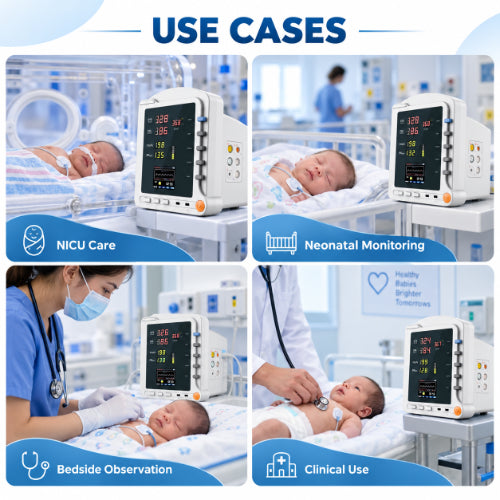
This page first explains the monitor for families arranging professionally guided home care. However, the device also supports professional monitoring environments.
Hospitals, clinics, nursing facilities, emergency areas and ambulances may use compact bedside monitors where NIBP, SpO2, pulse and temperature observation is appropriate.
In addition, stored readings and trend review can help trained professionals look back at monitored values over time.
Healthcare buyers should confirm the selected patient accessories and any required technical specifications before procurement.
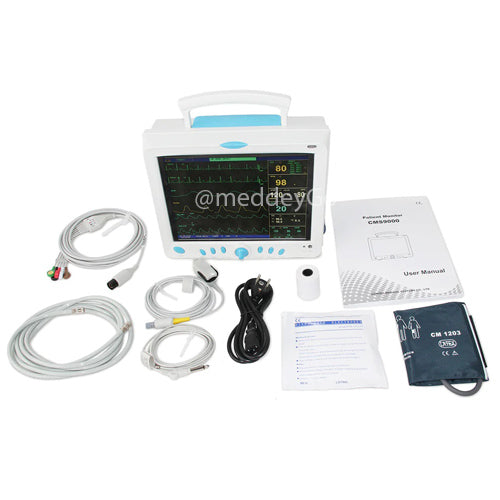
What Comes with the 3 Para Bedside Patient Monitor?
- 1 × Patient monitor
- 1 × Power connector
- Neonatal accessories depending on the selected variant
- 1 × User manual
Because accessories can vary by selection, confirm the exact package before placing the order.
Frequently Asked Questions About the 3 Para Bedside Patient Monitor
What does a 3 para bedside patient monitor measure?
The main listed parameters are NIBP, SpO2 and pulse rate. The current product also lists temperature measurement.
What is NIBP on a patient monitor?
NIBP means non-invasive blood pressure. It measures blood pressure automatically using a cuff.
What is SpO2?
SpO2 is an estimate of the percentage of oxygen carried in the blood.
Can this bedside patient monitor be used at home?
It may suit professionally guided home monitoring when regular vital-sign checks are required. However, a trained caregiver should understand the readings and alarm settings.
Does the 3 para patient monitor have alarms?
Yes. The current product information lists visual and audible alarms with adjustable limits for several monitored values.
Does the monitor store previous readings?
Yes. The listed memory stores up to 2,000 NIBP records and up to 78,000 SpO2 readings.
Can I review previous trends?
Yes. The product lists NIBP trend review for up to 24 hours and SpO2/pulse trends for approximately 20 hours.
Is this monitor suitable for newborn babies?
The product offers neonatal accessory options. However, make sure you select the correct neonatal configuration and follow professional guidance for newborn monitoring.
Does an alarm mean there is a medical emergency?
Not necessarily. An alarm means a reading has crossed a selected limit or requires attention. The patient's symptoms and medical guidance should determine the next step.
3 Para Bedside Patient Monitor for Convenient Vital Sign Monitoring
If a family member needs regular professionally guided monitoring, this compact device brings NIBP, SpO2, pulse rate and temperature information together with alarms, stored readings and trend review.
Before ordering, choose the correct adult or neonatal accessories and confirm that the monitor matches the patient's monitoring plan.
Explore more: Bedside Monitors | Home Patient Care Equipment
Need product or accessory guidance?
Prepaid and partial COD options are available.
Call or WhatsApp Meddey: +91 8586-012345
Prepaid and partial COD options are available.
Call or WhatsApp Meddey: +91 8586-012345
Manufacturer / Importer / Marketed By:
Meddey Technologies Pvt. Ltd.
C-75, First Floor, DDA Sheds,
Industrial Area, Phase 1, Okhla,
New Delhi – 110020
Phone / WhatsApp: +91 8586-012345
Important: This patient monitor provides readings to support observation. It does not diagnose medical conditions or replace examination by a qualified healthcare professional.
Meddey Technologies Pvt. Ltd.
C-75, First Floor, DDA Sheds,
Industrial Area, Phase 1, Okhla,
New Delhi – 110020
Phone / WhatsApp: +91 8586-012345
Important: This patient monitor provides readings to support observation. It does not diagnose medical conditions or replace examination by a qualified healthcare professional.
You may also need
FOR YOURecommended for you
Save 55%

Save 39%

Save 8%

Save 37%

Save 48%
Save 28%
Save 50%
Save 23%