


Featured ChoiceSave 30%


Save 26%

Save 23%


Save 10%

Wheelchair: Types, Folding & Automatic Wheelchair Price, Uses & Buying Guide
Wheelchair: Types, Folding & Automatic Wheelchair Price, Uses & Buying Guide
A professional guide to manual, folding and automatic wheelchairs, wheelchair selection, pricing, seating, safety, mobility needs and home or hospital use.
A wheelchair is an assistive mobility device designed for people who have difficulty walking, cannot walk safely or need seated mobility for particular environments and activities. Wheelchairs are widely used in hospitals, rehabilitation centres, clinics, nursing facilities, educational settings, workplaces and homes.
However, selecting a wheelchair involves much more than choosing a chair with wheels. Seat dimensions, posture, upper-limb strength, transfers, body weight, terrain, transport needs and expected sitting duration can all affect whether a model is appropriate.
For example, a lightweight folding wheelchair may be practical for hospital visits and occasional travel. In contrast, someone who relies on wheelchair mobility throughout much of the day may require better postural support, a suitable cushion, adjustable footrests and more careful fitting.
Meanwhile, an automatic wheelchair, commonly described as an electric or powered wheelchair, may support independent mobility when manual propulsion is difficult. Therefore, the best wheelchair is not automatically the most expensive model. Instead, the chair should suit the individual user, environment and functional goals.
Doctors, physiotherapists, occupational therapists, hospitals and home-care buyers can also browse rehabilitation and mobility equipment available on Meddey.
What Is a Medical Wheelchair?
A medical wheelchair is an assistive chair designed to provide seated mobility when walking is difficult, unsafe or insufficient for the user's daily needs.
Depending on the design, the chair may be moved in different ways.
User Propulsion Large rear wheels and hand rims allow many people to propel a manual wheelchair independently.
Caregiver Propulsion Push handles allow a caregiver or hospital attendant to move the chair when assistance is required.
Electric Propulsion Powered wheelchairs use motors, rechargeable batteries and electronic controls.
Assisted Mobility Some mobility systems combine user control with caregiver or powered assistance.
In addition, medical wheelchairs may include brakes, removable footrests, armrests, cushions, anti-tip supports and postural accessories.
Consequently, professional wheelchair provision should focus on the complete seating and mobility system rather than simply choosing a basic frame.
Who May Benefit from a Wheelchair?
A wheelchair is not only for people who have completely lost the ability to walk. In fact, some people retain useful walking ability but still require a wheelchair for safety, distance, fatigue management or community participation.
Wheelchair use may be considered in people affected by:
- Spinal cord injury
- Stroke
- Cerebral palsy
- Neurological disorders
- Lower-limb injuries
- Post-operative mobility restrictions
- Severe arthritis
- Reduced balance
- Muscle weakness
- Chronic mobility limitations
- Age-related mobility changes
However, a diagnosis alone does not determine which wheelchair is suitable. For instance, two users with the same diagnosis may have very different posture, transfer and mobility requirements.
Professional principle: the WHO wheelchair provision guidelines emphasize individual assessment, fitting, training and follow-up as key parts of appropriate wheelchair provision.
Can I Use a Wheelchair If I Can Walk?
Yes. A person can use a wheelchair while retaining some ability to walk.
For example, someone may walk inside the home but become exhausted or unsafe when travelling longer distances. Similarly, another person may use a walker for short transfers while choosing a wheelchair for hospital appointments, shopping or community mobility.
Therefore, walking and wheelchair use are not always opposite choices. Instead, they may form different parts of one mobility strategy.
A wheelchair may help a person:
- Conserve energy
- Reduce fall risk
- Travel longer distances
- Participate in community activities
- Manage periods of reduced mobility
- Support recovery after surgery or injury
Nevertheless, progressive weakness, repeated falls or significant changes in walking ability should be assessed by an appropriate healthcare professional.
What Is It Called When Someone Needs a Wheelchair but Can Walk?
There is no single medical term that applies to every person who can walk but also uses a wheelchair.
In everyday discussion, some people describe this as ambulatory wheelchair use or describe themselves as an ambulatory wheelchair user. This means that the person has some walking ability but also uses a wheelchair when needed.
However, mobility ability exists on a spectrum. A person may walk only inside the home, may need support from another person or may walk on some days but not others.
For this reason, wheelchair use should be based on functional need rather than assumptions about whether someone “looks able to walk.”
Main Types of Wheelchairs
| Wheelchair Type | Main Feature | Typical Use |
|---|---|---|
| Standard Manual Wheelchair | Large rear wheels and hand rims | General hospital, home and community use |
| Folding Wheelchair | Collapsible frame | Frequent storage and vehicle transport |
| Transport Wheelchair | Smaller wheels and caregiver propulsion | Short-distance assisted transport |
| Lightweight Wheelchair | Lower frame weight | Easier handling and transportation |
| Reclining Wheelchair | Adjustable backrest angle | Selected positioning and care requirements |
| Automatic / Electric Wheelchair | Motor and battery propulsion | Users who cannot efficiently propel manually |
| Postural Support Wheelchair | Additional seating supports | Complex sitting and posture needs |
What Is a Folding Wheelchair?
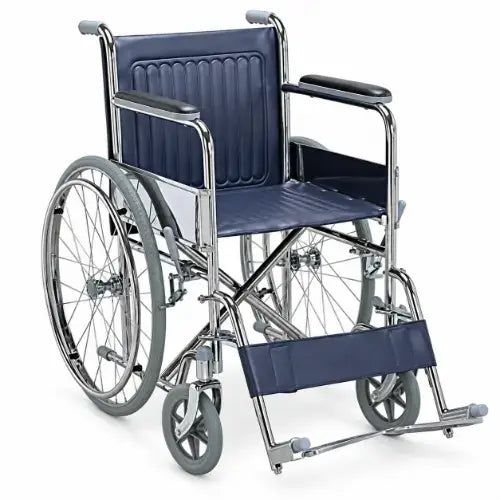
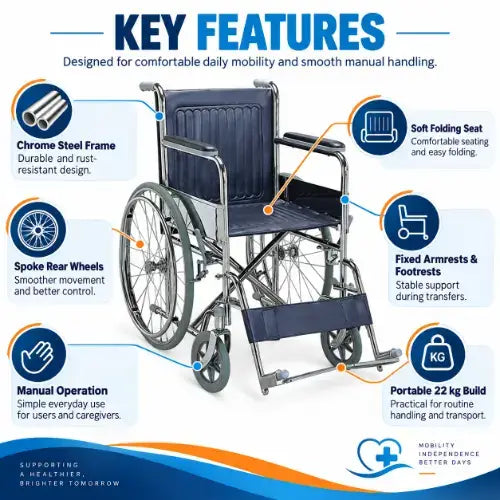
A folding wheelchair has a frame that collapses inward for easier storage and transport. Consequently, it is commonly selected by people who frequently travel in a car or have limited storage space.
Advantages of a Folding Wheelchair
- Easier vehicle transport
- Reduced storage space
- Convenient for appointments
- Available in steel and lightweight frame designs
- Suitable for many home and community settings
However, foldability should not be the only buying factor. Buyers should also consider chair weight, seat width, footrest design, brakes and user weight capacity.
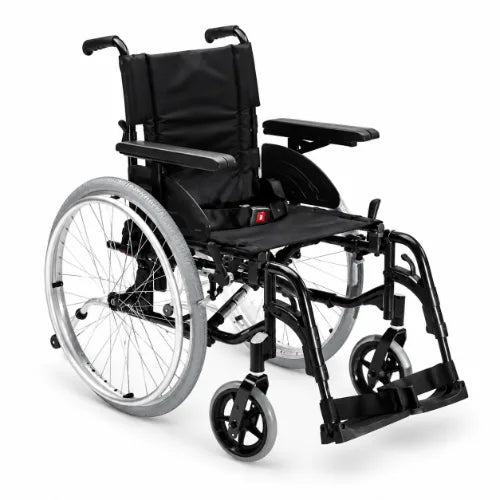
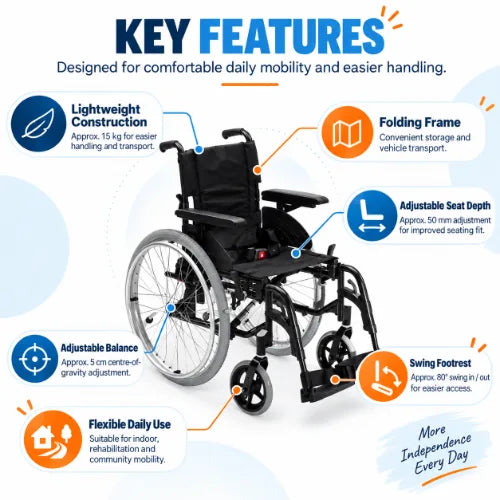
For example, the Invacare Action 2NG Wheelchair currently listed on Meddey uses a stable folding frame and weighs about 15 kg according to the product listing.
What Is an Automatic Wheelchair?
The phrase automatic wheelchair is commonly used by shoppers to describe a powered or electric wheelchair.
Instead of relying completely on arm strength or caregiver pushing, a powered wheelchair normally includes:
- Electric motors
- Rechargeable batteries
- Electronic controller
- Joystick or alternative input control
- Powered drive wheels
Therefore, powered mobility may provide greater independent movement for selected users who struggle with manual propulsion.
When May an Automatic Wheelchair Be Useful?
A powered wheelchair may be considered when:
- Upper-limb strength is limited
- Manual propulsion causes excessive fatigue
- Independent mobility is an important goal
- The user can safely operate the control system
- The home and community environment can accommodate the chair
However, motor power alone should not determine the choice. Battery capacity, seat size, turning radius, overall dimensions, controls and transport requirements are also important.
Manual Wheelchair vs Automatic Wheelchair
| Feature | Manual Wheelchair | Automatic / Electric Wheelchair |
|---|---|---|
| Propulsion | User or caregiver | Electric motors |
| Battery | Not needed | Required |
| Overall weight | Usually lighter | Usually heavier |
| Transport | Often easier | Depends on design and weight |
| Physical effort | Manual effort may be needed | Lower propulsion effort |
| Maintenance | Mainly mechanical | Mechanical plus electrical components |
| Typical price | Generally lower | Generally higher |
Therefore, neither option is universally better. Instead, the decision should reflect mobility ability, independence goals, environment and transport requirements.
Which Is Better: A Walker or a Wheelchair?
A walker and wheelchair support different levels of mobility. Therefore, neither device is automatically better than the other.
Walker A walker may suit someone who can stand and walk but needs additional balance, stability or weight-bearing support.
Wheelchair A wheelchair may suit someone who cannot safely or efficiently walk the required distance.
For example, a walker encourages continued standing and walking when this is safe. In contrast, a wheelchair reduces the physical demand of travelling longer distances.
Moreover, some people use both devices. They may use a walker for short household distances and a wheelchair outdoors.
Consequently, clinicians should consider balance, endurance, strength, falls history and everyday activity requirements.
How to Pick a Good Wheelchair
A good wheelchair should fit the user properly, support safe mobility and work well in the intended environment.
Therefore, buyers should assess several factors before purchase.
Seat Width The seat should provide enough room without being excessively wide.
Seat Depth Proper depth helps support the thighs while avoiding pressure behind the knees.
Weight Capacity The user's body weight should remain within the manufacturer's specified limit.
Wheelchair Weight A lighter chair may be easier for caregivers to lift into a vehicle.
Footrests Footrests should support the feet and move away when necessary for transfers.
Brakes Wheel locks should hold the wheelchair securely during transfers.
Frame Type Choose between fixed, folding, lightweight or powered construction according to use.
Seating Support Long-term users may need a suitable cushion and additional postural support.
Additionally, wheelchair users with complex posture or long daily sitting times may benefit from professional assessment by a rehabilitation clinician.
Which Wheelchair Is Good?
The right wheelchair is the chair that fits the user's body, supports the required posture and meets the person's mobility needs.
Important features to consider include:
- Appropriate seat width
- Correct seat depth
- Suitable back support
- Stable foot support
- Comfortable armrest height
- User weight capacity
- Ease of propulsion
- Reliable brakes
- Wheel and tyre design
- Frame strength
- Transport requirements
- Cushion needs
In addition, someone who uses a wheelchair for eight hours per day may have very different seating requirements from a person who uses one only during hospital visits.
Why Wheelchair Size Matters
Wheelchair dimensions can affect posture, comfort and propulsion. Therefore, one standard wheelchair should not be assumed to fit every person.
Seat Width
A seat that is too narrow can increase unwanted pressure. On the other hand, excessive width may reduce lateral support and make self-propulsion harder.
Seat Depth
Proper seat depth supports the thighs while leaving suitable space behind the knees.
Backrest Height
Backrest height should match the person's trunk-support requirements. Consequently, users with reduced trunk control may require additional support.
Footrest Height
Foot supports should be adjusted so the feet remain stable without forcing an unsuitable sitting position.
Armrest Position
Appropriate armrest height helps support the shoulders and upper limbs.
Important: long-term wheelchair users, people with spinal cord injury, cerebral palsy, major asymmetry or complex postural needs should ideally receive an individualized wheelchair and seating assessment.
Why Is a Wheelchair Cushion Important?
A wheelchair cushion can support comfort, sitting stability and pressure distribution. Therefore, it should not always be treated as an optional accessory.
Common cushion categories include:
- Foam cushions
- Gel cushions
- Air cushions
- Combination cushions
- Specialized pressure-management cushions
For example, Meddey currently lists a corrugated gel wheelchair cushion priced around ₹3,299 at the time of review.
However, a user with an existing pressure injury or high pressure-injury risk may need professional cushion selection rather than relying only on a retail product description.
Wheelchair Price in India
The wheelchair price in India varies significantly because basic transit chairs, lightweight folding models and powered wheelchairs belong to very different product categories.
Price may depend on:
- Manual or electric operation
- Steel or aluminium construction
- Overall chair weight
- Folding design
- Rear wheel configuration
- Removable footrests
- Adjustable seating
- Reclining features
- Postural supports
- Motors and batteries
- Brand
- Warranty and service
Current Meddey Price Example
The Invacare Action 2NG was listed at approximately ₹21,499 when this guide was checked. The product listing describes a 15 kg lightweight folding frame and adjustable features. Prices and availability can change.
Therefore, a higher wheelchair price should not automatically be interpreted as a better fit for the user.
View Invacare Action 2NGAutomatic Wheelchair Price
The automatic wheelchair price is generally higher than that of a basic manual model because a powered wheelchair includes motors, batteries, controls and electrical components.
However, powered-wheelchair prices can vary greatly according to:
- Motor type
- Motor output
- Battery technology
- Battery capacity
- Travel range
- User weight capacity
- Folding mechanism
- Overall chair weight
- Controller design
- Tyres and suspension
- Warranty
Consequently, someone searching for an automatic wheelchair price should first identify the required seating and mobility specifications.
Moreover, online prices and stock can change frequently. For this reason, buyers should use the current product listing as the final source for price rather than relying on an older article.
What Is the Average Cost of a Good Wheelchair?
There is no single average price that represents every good wheelchair. Instead, the appropriate budget depends on the category of wheelchair required.
For example, a basic chair for occasional caregiver-assisted transport may cost substantially less than a lightweight active chair or electric wheelchair.
Meanwhile, people who rely on a wheelchair every day may benefit from additional investment in seating fit, adjustability, cushioning and durability.
Therefore, the best value should be defined as a wheelchair that safely meets the user's mobility needs without paying for unnecessary features.
What Is the Most Difficult Thing for Wheelchair Users?
There is no single challenge that applies to every wheelchair user. Experiences differ according to the person, wheelchair, environment and available support.
However, accessibility barriers can make independent mobility much harder. For example:
- Steps without ramps or lifts
- Narrow doorways
- Inaccessible washrooms
- Uneven roads and pathways
- High kerbs
- Inaccessible public transport
- Limited transfer space
- Heavy doors
- Unsuitable seating surfaces
- Lack of accessible parking
In addition, a poorly fitted wheelchair may create avoidable difficulties with propulsion, posture, transfers and comfort.
Thus, appropriate wheelchair provision and accessible environments are both important.
Wheelchair Safety Features to Check
Wheel Brakes Brakes should engage securely, especially during transfers.
Footrests Footrests should support the feet and move safely when required.
Frame Stability The wheelchair should remain stable during normal propulsion and turning.
Weight Capacity The user must remain within the manufacturer's stated load limit.
Tyres & Castors Wheels should move smoothly without excessive wear or looseness.
Anti-Tip Support Where required, anti-tip devices can help reduce rearward tipping risk.
Furthermore, users and caregivers should understand the brakes, folding system, transfers and propulsion technique before routine use.
How to Choose a Wheelchair for Home Use
1. Measure Doorways
First, check bedroom, bathroom and entrance widths. A suitable chair should be able to move through the areas where it will actually be used.
2. Review Flooring
Next, consider tiles, carpets, thresholds and outdoor surfaces. Different wheel designs may perform differently across these environments.
3. Consider Transfers
Removable armrests or swing-away footrests may simplify some transfers. Therefore, transfer technique should form part of the buying decision.
4. Check Storage Space
If storage is limited, a folding wheelchair may be easier to keep inside the home or vehicle.
5. Think About Car Transport
Lightweight folding chairs are generally easier to lift into a car. In contrast, some electric wheelchairs may require a ramp, lift or larger vehicle.
6. Review Daily Sitting Time
People who remain seated for long periods usually require more attention to cushioning and posture.
7. Consider Caregiver Needs
Finally, the push handles, brakes, chair weight and folding mechanism should also be practical for the caregiver.
How to Choose Wheelchairs for Hospitals and Clinics
Hospital wheelchair requirements may differ from long-term personal wheelchair use. For example, hospitals frequently need chairs for short-distance transport between departments.
Therefore, institutional buyers should review:
- Frame durability
- Ease of cleaning
- Push-handle strength
- Reliable wheel brakes
- Removable or swing-away footrests
- Wheel durability
- User weight capacity
- Foldability
- Replacement parts
- Service support
Moreover, hospitals may need several sizes or specialist chairs instead of assuming that one standard wheelchair will suit every patient.
When Is an Automatic Wheelchair Worth Considering?
A powered wheelchair may be worth considering when manual propulsion limits independence or causes excessive effort.
For instance, powered mobility may be useful when the user:
- Has limited upper-limb strength
- Cannot propel efficiently
- Needs to travel longer distances
- Can operate the controller safely
- Has an environment suitable for powered mobility
However, an electric chair also requires charging, storage and maintenance.
In addition, turning radius and overall dimensions matter indoors. Therefore, the home should be assessed before choosing a large powered model.
Common Mistakes When Buying a Wheelchair
- Choosing only according to price
- Ignoring seat width
- Buying a chair that is too heavy for caregivers
- Ignoring doorway dimensions
- Not checking user weight capacity
- Choosing unsuitable footrests
- Ignoring wheelchair cushion needs
- Buying a powered chair without checking battery support
- Not checking brakes
- Ignoring service and replacement parts
- Using one standard chair for every clinical situation
Therefore, even a short wheelchair assessment before purchase can prevent many common problems.
Frequently Asked Questions About Wheelchairs
1. What is a medical wheelchair?
A medical wheelchair is an assistive mobility chair used when walking is difficult, unsafe or insufficient for a person's daily mobility needs.
2. Can I use a wheelchair if I can walk?
Yes. Some people walk short distances but use a wheelchair for longer travel, fatigue management, safety or community participation.
3. Which is better, a walker or a wheelchair?
A walker is usually more suitable when a person can walk but needs additional support. In contrast, a wheelchair provides seated mobility when walking is unsafe or too physically demanding.
4. What is the average cost of a good wheelchair?
There is no single average that applies to all wheelchairs. Manual, folding, lightweight and electric models occupy different price ranges.
5. What is the most difficult thing for wheelchair users?
Challenges vary by individual. However, inaccessible buildings, narrow doors, stairs, uneven surfaces and transport barriers can make mobility more difficult.
6. Which wheelchair is good?
A good wheelchair fits the user, supports posture, provides safe mobility and works in the environments where it will be used.
7. How do I pick a good wheelchair?
Check seat width, seat depth, weight capacity, wheelchair weight, footrests, brakes, cushion needs, folding design and the intended environment.
8. What is it called when someone needs a wheelchair but can walk?
The phrase ambulatory wheelchair user is sometimes used informally for someone who has some walking ability but also uses a wheelchair when needed.
9. What is a folding wheelchair?
A folding wheelchair has a collapsible frame that makes transport and storage easier.
10. What is an automatic wheelchair?
An automatic wheelchair usually means an electric or powered wheelchair that uses batteries and motors for propulsion.
11. Is an automatic wheelchair better than a manual wheelchair?
Not necessarily. Electric wheelchairs reduce propulsion effort, while manual chairs are generally lighter and easier to transport.
12. Can a wheelchair be used at home?
Yes. However, doorway width, floor surfaces, room layout, bathroom access and transfer space should be checked first.
Professional Wheelchair Buying Checklist
- Identify how often the wheelchair will be used.
- Assess walking ability and endurance.
- Measure seat width and depth needs.
- Check user weight capacity.
- Review posture requirements.
- Assess backrest support.
- Review footrest design.
- Check armrest requirements.
- Consider folding and storage needs.
- Check overall wheelchair weight.
- Inspect wheel brakes.
- Review wheel and tyre type.
- Consider cushion needs.
- Measure home doorways.
- Review outdoor terrain.
- Check warranty and spare parts.
- Review battery specifications for powered models.
- Arrange professional fitting where needed.
Where to Buy a Wheelchair Online in India?
When buying a wheelchair online, compare more than the headline wheelchair price. Instead, review the full specification and determine whether the chair matches the intended user's mobility needs.
Important details include frame type, seat dimensions, weight capacity, wheelchair weight, brakes, footrests, cushion compatibility and warranty.
Meddey provides mobility and rehabilitation equipment for hospitals, clinics and home-care requirements.
View Folding Wheelchair Browse Rehabilitation Equipment View Wheelchair Cushion Visit MeddeyConclusion
A wheelchair is more than a transport chair. When correctly selected, it can support mobility, everyday activity and participation for people with temporary or long-term mobility limitations.
For occasional travel, a lightweight folding wheelchair may be practical. Meanwhile, people who spend much of the day in a wheelchair may need greater attention to seating, posture and pressure management.
Similarly, an automatic wheelchair may support independent mobility when manual propulsion is difficult. However, battery range, controls, chair dimensions and the home environment must all be considered.
The wheelchair price also varies substantially by construction and features. Likewise, the automatic wheelchair price depends on motors, batteries, controls, seating and warranty.
Therefore, price should be considered only after mobility and seating needs have been identified.
For people who retain some walking ability, using a wheelchair does not necessarily mean giving up walking. Instead, it may form one part of a broader mobility strategy that also includes walking or a walker where appropriate.
Ultimately, the right wheelchair should fit the user, provide safe movement and function effectively in the environments where the person lives, works and travels.
Doctors, physiotherapists, occupational therapists, hospitals and home-care buyers can compare available mobility and rehabilitation products at Meddey.
Medical Disclaimer
Professional Reference
World Health Organization – Wheelchair Provision Guidelines
WHO recommends person-centred wheelchair provision and emphasizes assessment, fitting, training and follow-up to improve wheelchair outcomes.
View WHO Wheelchair GuidelinesExplore Medical Collections
All Categories
Abdominal & Maternity Support

Accessories

Accu-Chek Instant Strips: Use, Compatibility, Price & Blood Sugar Testing Guide
Accu-Chek Instant Strips: Uses, Features & Complete Guide

accupuncture

Acupuncture Needles & Supplies

Advanced Physiotherapy Machines & Lumbar Physiotherapy

Airways

Ambulance

Anatomy Models
Anesthesia Machine

Anesthesia Products

Ankle Support for Home Use: Braces, Sleeves & Walker Boots

Ankle Weights & Exercise Weights for Home & Rehab

Anti-Bedsore Air Mattresses
You may also need
FOR YOURecommended for you
Save 30%
Save 26%
Save 23%
Save 10%