
1
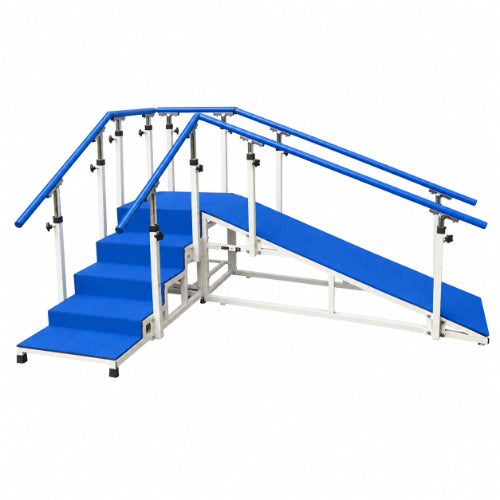
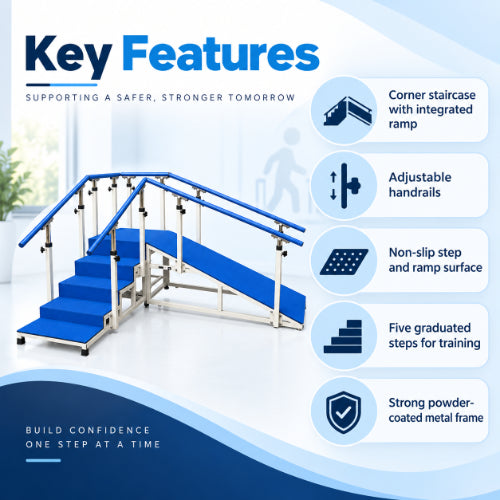
Metallic Corner Stair Case with Ramp Exercise Therapy


Double-tap to zoom · drag to pan · swipe to browse
Metallic Corner Stair Case with Ramp Exercise Therapy
In Stock
Check delivery
See if we deliver to you and when.
Delivering to
Delivery applicable
Free Shipping
on orders ₹999+
100% Genuine
Products
Dedicated
Support
Secure
Payments
Need help choosing or using this product?
Our team can help with product questions and orders.
Chat with support
Choose options
- Occupational therapy clinics
- Physiotherapy and rehabilitation centres
- Hospital therapy departments
- Rehabilitation training rooms
Check delivery
See if we deliver to you and when.
Delivering to
Delivery applicable
- Occupational therapy clinics
- Physiotherapy and rehabilitation centres
- Hospital therapy departments
- Rehabilitation training rooms
Check delivery
See if we deliver to you and when.
Delivering to
Delivery applicable
About this product
Metallic Corner Stair Case with Ramp Exercise Therapy
The Metallic Corner Stair Case with Ramp Exercise Therapy provides a practical platform for rehabilitation, mobility training and functional exercise. It combines stair-training sections with a ramp so therapists can create different movement activities within one therapy setup. Therefore, this equipment can support progressive exercises that focus on stepping, balance, coordination and controlled movement.
This occupational therapy equipment can help therapists introduce structured movement activities according to the needs and abilities of the user. The stair section gives users an opportunity to practise stepping patterns, while the ramp creates an alternative pathway for controlled movement. As a result, therapists can use the equipment for different levels of functional training.
The metallic construction provides a structured therapy station for professional environments. The corner configuration also helps organise the available therapy area efficiently. Consequently, this OT equipment can suit rehabilitation centres, occupational therapy clinics, physiotherapy departments, special education environments and other suitable therapy settings.
Key Features of Metallic Corner Stair Case with Ramp
Stair Training Section
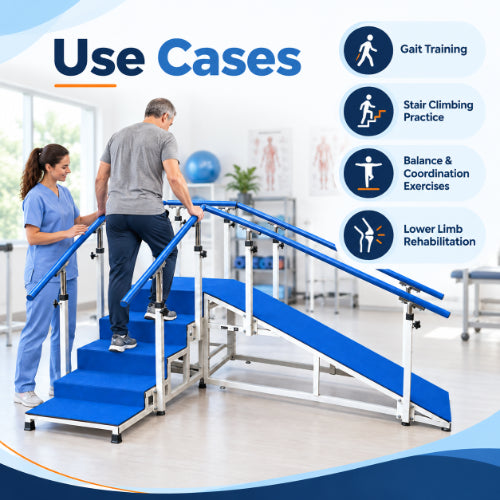
The stair section provides a dedicated area for practising step-up and step-down movements. Therapists can use the stairs for structured functional exercises based on the user's ability and therapy plan.
The stair section provides a dedicated area for practising step-up and step-down movements. Therapists can use the stairs for structured functional exercises based on the user's ability and therapy plan.
Integrated Ramp
The ramp gives users an alternative movement pathway. Therapists can use it for controlled walking and incline activities while gradually developing confidence and functional mobility.
The ramp gives users an alternative movement pathway. Therapists can use it for controlled walking and incline activities while gradually developing confidence and functional mobility.
Corner Configuration
The corner-style layout combines different exercise areas into one therapy station. This arrangement can help therapists make efficient use of available rehabilitation space.
The corner-style layout combines different exercise areas into one therapy station. This arrangement can help therapists make efficient use of available rehabilitation space.
Metallic Construction
The metallic frame creates a structured and durable base for regular therapy activities. It suits professional environments where therapists need dedicated equipment for repeated exercise sessions.
The metallic frame creates a structured and durable base for regular therapy activities. It suits professional environments where therapists need dedicated equipment for repeated exercise sessions.
Multi-Purpose Therapy Design
The stair and ramp combination allows therapists to plan different functional exercises using one piece of equipment. This feature makes it a practical addition to rehabilitation and occupational therapy areas.
The stair and ramp combination allows therapists to plan different functional exercises using one piece of equipment. This feature makes it a practical addition to rehabilitation and occupational therapy areas.
Occupational Therapy Equipment for Functional Training
Functional movement plays an important role in many occupational therapy programmes. The Metallic Corner Stair Case with Ramp Exercise Therapy gives therapists a structured environment for practising movement tasks that resemble everyday activities. Step training and ramp activities can help therapists observe how a user manages changes in level, direction and movement speed.
Furthermore, therapists can modify the activity according to the user's current abilities. They can begin with simple movement tasks and then introduce more challenging exercises as appropriate. This approach allows the therapist to maintain control over the activity while monitoring posture, balance and coordination.
The equipment can therefore become part of a broader occupational therapy equipment setup. Therapists can combine stair and ramp exercises with other activities that target functional mobility, coordination, balance and daily movement skills.
Ramp Exercise for Controlled Mobility Training
The integrated ramp provides a useful surface for controlled incline movement. A therapist can guide the user while they walk up or down the ramp. This activity can help the therapist assess movement control, confidence and coordination during changes in surface level.
In addition, the ramp can add variety to a rehabilitation programme. Instead of repeating only flat-surface walking, the therapist can introduce an incline activity when it suits the user's treatment plan. Therefore, the ramp can support progressive functional training under professional supervision.
Therapists should always select suitable exercises according to the user's condition, mobility level and professional care plan. Users should not operate the ramp independently unless a qualified professional has confirmed that independent use is appropriate.
Stair Training for Rehabilitation and Exercise Therapy
The stair section gives users an opportunity to practise stepping movements in a controlled therapy environment. Therapists can observe how the user approaches each step, transfers weight and maintains balance during the activity.
Step exercises can also add a functional element to rehabilitation sessions. For example, therapists may use suitable stair activities to practise controlled stepping, foot placement and movement sequencing. However, every exercise should match the user's ability and treatment objectives.
Because the product combines stairs with a ramp, therapists can choose between different movement patterns during a session. This makes the OT equipment useful when a therapy programme requires varied functional exercises.
Benefits of Metallic Corner Stair Case with Ramp
Supports Functional Movement
The stair and ramp sections provide structured areas for movement-based exercises. Therapists can use these areas to practise suitable functional activities.
The stair and ramp sections provide structured areas for movement-based exercises. Therapists can use these areas to practise suitable functional activities.
Encourages Balance Practice
Controlled stair and ramp activities can give therapists opportunities to work on balance and movement control according to the user's therapy programme.
Controlled stair and ramp activities can give therapists opportunities to work on balance and movement control according to the user's therapy programme.
Improves Exercise Variety
The combination of stairs and a ramp allows therapists to introduce different movement tasks instead of relying on one type of exercise.
The combination of stairs and a ramp allows therapists to introduce different movement tasks instead of relying on one type of exercise.
Efficient Corner Design
The corner configuration helps combine multiple therapy activities in one dedicated area. This can help organise rehabilitation spaces more effectively.
The corner configuration helps combine multiple therapy activities in one dedicated area. This can help organise rehabilitation spaces more effectively.
Suitable for Professional Therapy Areas
The structured metallic design makes the equipment suitable for rehabilitation centres, therapy clinics and other professional environments.
The structured metallic design makes the equipment suitable for rehabilitation centres, therapy clinics and other professional environments.
Role in Sensory and Motor Activity
Movement activities can form part of a broader therapy programme that addresses motor planning, body awareness and controlled physical activity. Therefore, this equipment can complement selected sensory therapy equipment in suitable therapy environments.
The stairs and ramp create different movement experiences. A therapist can guide the user through suitable activities while observing balance, foot placement, coordination and response to changes in movement direction or level.
However, the equipment should not replace a complete sensory therapy programme. Instead, therapists can use it alongside other suitable sensory therapy equipment and activities according to the user's individual needs.
Where Can You Use This OT Equipment?
The Metallic Corner Stair Case with Ramp Exercise Therapy can support suitable movement and rehabilitation activities in professional therapy environments. Its combination of stair and ramp sections gives therapists several options for structured exercise.
- Occupational therapy clinics
- Physiotherapy and rehabilitation centres
- Hospital therapy departments
- Rehabilitation training rooms
- Special education therapy environments
- Paediatric therapy settings where appropriate
- Mobility and functional training areas
- Occupational therapy departments
- Sensory and motor activity rooms
- Other suitable professional therapy environments
Metallic Corner Stair Case with Ramp Product Specifications
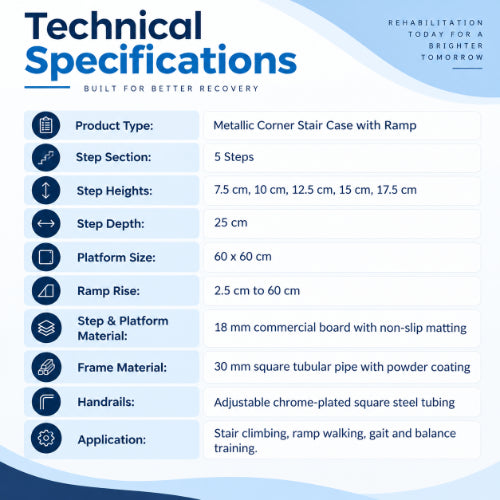
| Specification | Details |
|---|---|
| Product Name | Metallic Corner Stair Case with Ramp Exercise Therapy |
| Product Type | Stair and Ramp Exercise Therapy Equipment |
| Construction | Metallic Construction |
| Configuration | Corner Configuration |
| Exercise Areas | Stair Case and Ramp |
| Primary Application | Exercise Therapy and Functional Mobility Training |
| Therapy Category | Occupational Therapy Equipment |
| Suitable Use | Professional Rehabilitation and Therapy Environments |
| Movement Activities | Stepping, Ramp Walking, Balance and Functional Exercise |
Please confirm exact dimensions, step count, ramp dimensions, height, product weight, maximum working load, surface details, handrail configuration and included accessories with the supplier before purchase.
How to Use the Metallic Corner Stair Case with Ramp
- Place the equipment on a suitable, stable and level therapy surface.
- Inspect the stair case, ramp and supporting structure before starting the session.
- Explain the selected exercise to the user before beginning the activity.
- Start with a suitable movement activity according to the user's therapy plan.
- Guide the user while they practise controlled stepping on the stair section.
- Use the ramp for suitable controlled incline movement when appropriate.
- Observe posture, balance, foot placement and movement control during the activity.
- Provide professional assistance whenever the user's condition requires support.
- Stop the exercise if the user experiences discomfort, instability or any unexpected problem.
Always follow the manufacturer's instructions and use this OT equipment under suitable professional supervision.
Supporting Progressive Exercise Therapy
Every rehabilitation programme should match the user's current ability. The therapist can therefore select an appropriate activity and gradually increase the challenge when the user demonstrates suitable control. The stair and ramp sections provide two different movement pathways for this type of structured exercise.
For example, a therapist may begin with simple stepping activities before introducing more demanding movement patterns. Similarly, the ramp can support controlled incline walking when the therapist considers it appropriate. This gradual approach can help keep therapy sessions organised and focused.
The equipment also allows therapists to observe functional movement in a dedicated environment. They can monitor the user's posture, coordination, balance and confidence while completing the selected activity. Therefore, the product can form a useful part of a broader rehabilitation programme.
Care & Maintenance
Clean the accessible surfaces regularly to maintain a hygienic therapy environment. Use cleaning products that suit the surface materials and follow the manufacturer's maintenance recommendations.
Inspect the metallic frame before therapy sessions. Check the stair section, ramp, joints, supports and other visible components for signs of damage or looseness. Regular inspection helps therapists identify problems before they affect normal use.
Keep the equipment in a clean and dry therapy area. Avoid unnecessary exposure to moisture and corrosive substances. Also, keep the surrounding floor clear so users can approach and leave the equipment safely.
If you notice damaged structural components, stop using the equipment until a qualified person checks it. Always follow the manufacturer's cleaning, inspection and maintenance instructions.
Safety Considerations for Therapy Use
A qualified therapist should assess the user's ability before selecting stair or ramp exercises. The therapist should also choose activities that match the user's balance, strength, coordination and mobility level.
Always keep the therapy area clear of unnecessary objects. In addition, check the equipment before every session and provide assistance when required. Do not allow a user to attempt challenging stair or ramp activities without suitable supervision.
The equipment supports therapy activities, but it does not replace professional assessment or clinical judgement. Therefore, therapists should use the product as part of an appropriate individualised treatment programme.
Frequently Asked Questions
What is a Metallic Corner Stair Case with Ramp?
It is exercise therapy equipment that combines a stair-training section and a ramp within a corner-style metallic structure. Therapists can use it for suitable functional mobility and rehabilitation activities.
Is this an occupational therapy equipment?
Yes. The product can serve as occupational therapy equipment for suitable functional movement, stepping, balance and mobility exercises under professional supervision.
What exercises can therapists perform with this OT equipment?
Therapists can use the equipment for suitable stepping, stair practice, ramp walking, balance activities and functional mobility exercises. The exact activity should depend on the user's condition and therapy plan.
Can it be used as sensory therapy equipment?
The equipment can complement selected sensory therapy equipment and movement-based activities. However, therapists should use it according to the user's individual needs and professional therapy programme.
Who can use this equipment?
Occupational therapists, physiotherapists and other qualified rehabilitation professionals can use the equipment for appropriate therapy activities. The user should receive suitable supervision based on their abilities.
Is the exact product size available?
The supplied reference information does not provide verified dimensions, step measurements, ramp measurements or maximum load details for this specific product. Therefore, confirm those specifications with the supplier before ordering.
Buy Metallic Corner Stair Case with Ramp Exercise Therapy
Choose the Metallic Corner Stair Case with Ramp Exercise Therapy when you need dedicated equipment for structured stair, ramp and functional mobility exercises. The combination of stair and ramp sections gives therapists greater flexibility when planning suitable rehabilitation activities.
This occupational therapy equipment can become a valuable part of professional rehabilitation, OT and movement-training areas. It can also complement other OT equipment and selected sensory therapy equipment to create a more complete therapy environment.
Important Product Information
The description uses the product name and general product characteristics supported by the supplied reference context. Exact dimensions, number of steps, ramp size, height, weight, maximum working load, handrail details, surface material and included accessories were not provided in the reference file. Please confirm all technical specifications with the supplier before purchase.
You may also need
FOR YOURecommended for you
Save 55%

Save 39%

Save 8%

Save 37%

Save 32%
Sold out
Save 35%

Save 50%