


Featured ChoiceSave 19%
Save 41%

Save 17%
Save 20%

Save 17%

Save 25%

Save 19%

Save 25%

Save 25%
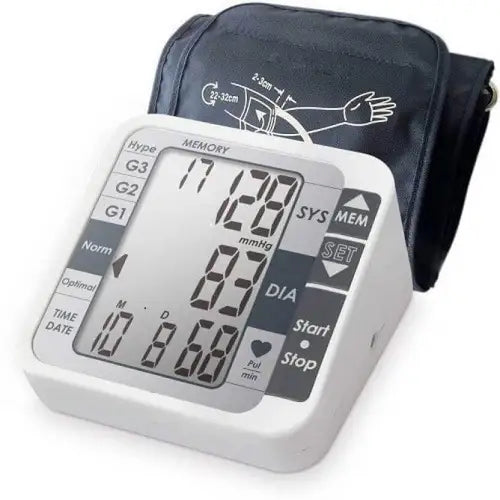
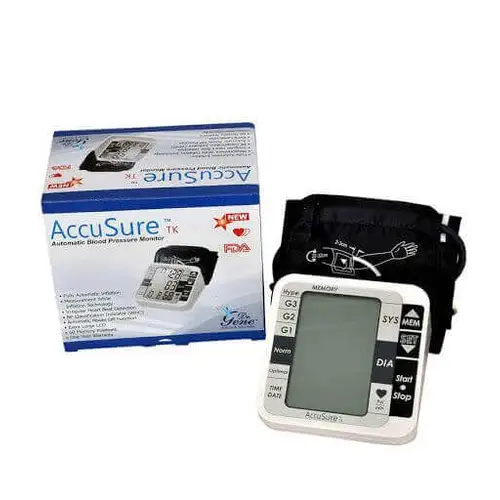

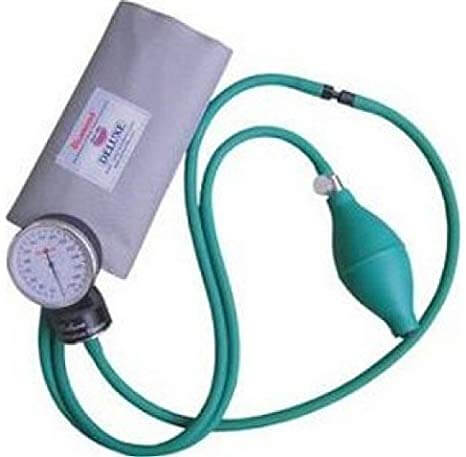

Save 26%
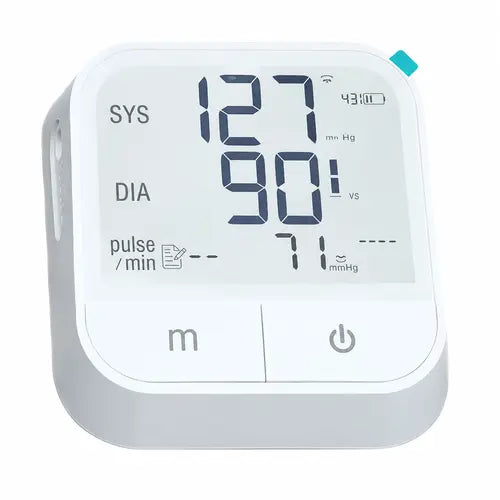

Save 21%

Save 16%

Save 20%

Sold out


Sold out
Sold out

Sold out

Sold out

Sold out
Sold out

What customers say
★★★★★ 4.9 · 48 reviews
 Omron HEM-7156 Blood Pressure Monitor with 360° IntelliWrap Cuff
“it's super easy to use.”
“This is absolutely fantastic! The 360 Accuracy Intelli Wrap cuff makes taking readings so much easier, as i...”
 Omron HEM-8712 AP Blood Pressure Monitor with Memory
“This is easy to use, and the 3-year warranty adds great value.”
“This is a fantastic device! It’s simple to use, with a clear display that shows readings quickly and accura...”
 Omron HBP-1320 Professional Blood Pressure Monitor
“This is perfect for home use”
“This is a great device for anyone needing a reliable and simple way to track their blood pressure. The whit...”
 Omron HEM-7530T Blood Pressure Monitor with ECG, AFib & Bluetooth
“This is fantastic! It accurately measures BP, ECG, and detects AFib. It's easy”
“This is an excellent all-in-one health device! It measures BP, ECG, and even detects AFib, which gives me a...”
 Omron HEM-7121J Blood Pressure Monitor with IntelliSense
“It's simple, accurate, and the hypertension indicator is really helpful.”
“This is a great addition to my health routine! It’s easy to use and provides accurate readings every time. ...”
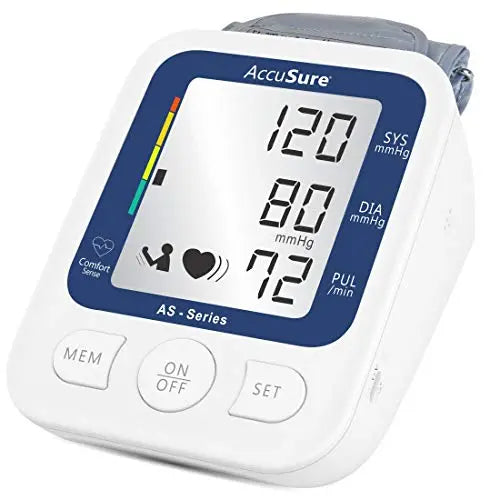
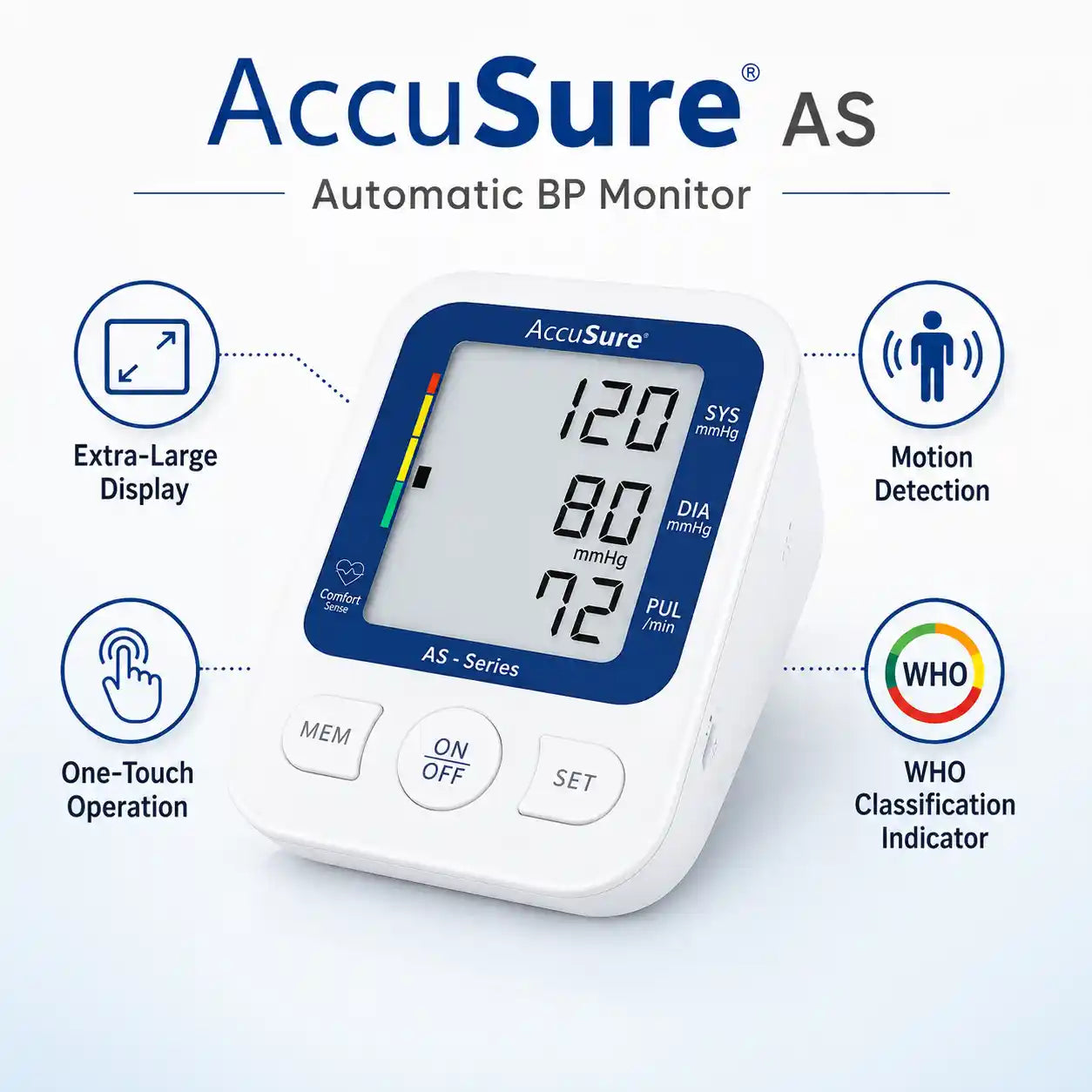
 AccuSure AS Automatic Blood Pressure Monitor
“Accurate and easy-to-use!”
“This is a fantastic product! The extra-large display makes it incredibly easy to read the results, even fro...”
 Omron HEM-7600T Tubeless Bluetooth BP Monitor – Made in Japan
“This is amazing! Tubeless design and Bluetooth connectivity make it super convenient.”
 Omron Smart Elite+ HEM-7600T Tubeless Bluetooth BP Monitor
“This is amazing! Bluetooth connectivity makes tracking effortless,”
“This is an excellent blood pressure monitor! The Bluetooth feature is incredibly convenient, as it syncs ef...”
 AccuSure TS Smart Inflation BP Machine
“This is very easy to use. A great choice for home health monitoring!”
“This is a brilliant device! The smart inflation feature makes taking BP measurements much more comfortable ...”
 ABPM50 Ambulatory Blood Pressure Monitor with SpO2 | 24-Hour Monitoring
“This is fantastic! It provides accurate BP readings along with SpO2 measurement,”
“This is an excellent device for anyone looking to monitor their health on-the-go. It not only provides accu...”
Blood Pressure Monitors: Types, Accuracy, Home Use, BP Machine Price & Buying Guide
Blood Pressure Monitors: Types, Accuracy, Home Use, BP Machine Price & Buying Guide
Learn how Blood Pressure Monitors work, which type is best for home use, when to measure BP, arm vs wrist accuracy, normal adult readings and how to choose the right monitor.
Blood Pressure Monitors are medical devices used to measure the pressure of circulating blood against the walls of the arteries. They are widely used in hospitals, clinics and homes because regular blood pressure measurement can help healthcare professionals identify patterns and monitor hypertension over time.
For home users, a digital BP monitor can make repeated measurements more convenient. However, the quality of the reading depends on more than the brand or screen size. Correct cuff size, body position, device validation and measurement technique are all important.
For example, an automatic upper-arm blood pressure monitor is generally preferred for routine home monitoring. Meanwhile, wrist devices may be considered in selected situations, although they are more sensitive to positioning. In contrast, professional clinic systems may provide stronger durability, multiple cuff sizes and more advanced controls.
Therefore, choosing a blood pressure monitoring machine should begin with the user’s needs rather than the lowest bp machine price. Moreover, buyers should check the exact device model instead of assuming that every monitor from one brand has the same validation status.
This guide explains the main types of Blood Pressure Monitors, proper home measurement, normal adult blood pressure, wrist vs arm monitors, Omron vs Dr. Morepen and important buying factors.
Doctors, clinics, hospitals and home users can also browse blood pressure monitors and BP machines available on Meddey.
What Is a Blood Pressure Monitor?
A blood pressure monitor is a device that measures systolic and diastolic arterial pressure. Most digital devices also show pulse rate.
Two values form the main blood pressure reading:
Systolic Blood Pressure The upper number shows the pressure in the arteries when the heart contracts.
Diastolic Blood Pressure The lower number shows the arterial pressure while the heart relaxes between beats.
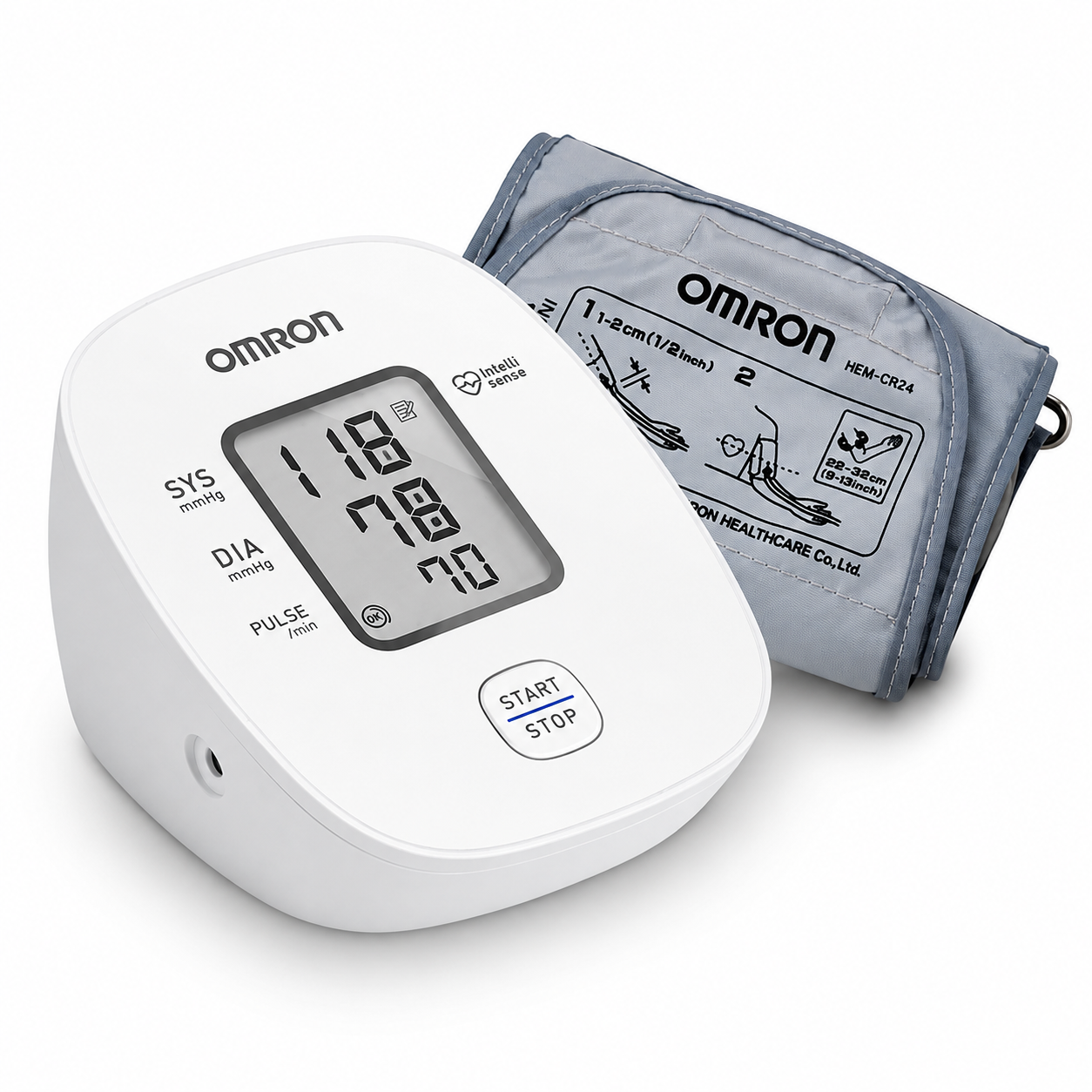
For example, a reading may be displayed as 118/76 mmHg. In this case, 118 is systolic pressure and 76 is diastolic pressure.
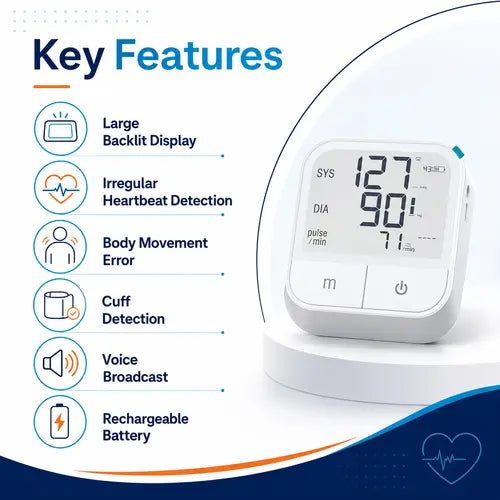
In addition, some digital monitors display an irregular heartbeat symbol, hypertension indicator or stored measurement history.
What Is a BP Check Machine?
A bp check machine is simply another common name for a blood pressure measuring device. In clinical terminology, a traditional blood pressure instrument is called a sphygmomanometer.
Today, several names are commonly used:
| Common Term | Meaning |
|---|---|
| BP Monitor | General term for a blood pressure measuring device |
| Blood Pressure Monitor | Common term for home or professional monitoring equipment |
| BP Check Machine | Consumer term for an automatic BP measuring device |
| Blood Pressure Reading Machine | Another common term for a digital monitor |
| Sphygmomanometer | Traditional medical name for a blood pressure measuring instrument |
| NIBP Monitor | Non-invasive blood pressure monitor used in clinical settings |
How Do Digital Blood Pressure Monitors Work?
Most automatic digital Blood Pressure Monitors use an oscillometric method. The cuff first inflates around the upper arm. Afterwards, the device measures pressure changes produced by arterial pulsations.
An internal algorithm then estimates systolic and diastolic pressure. Finally, the result appears on the digital screen.
This process reduces the need for manual stethoscope use. Nevertheless, correct patient position and cuff fit remain essential.
For example, talking during measurement or keeping the arm unsupported can affect the result. Therefore, automation does not eliminate the need for proper technique.
Main Types of Blood Pressure Monitors
| Monitor Type | Measurement Site | Typical Use |
|---|---|---|
| Automatic Upper-Arm Monitor | Upper arm | Preferred option for most home users |
| Wrist BP Monitor | Wrist | Alternative for selected users when upper-arm measurement is difficult |
| Manual Sphygmomanometer | Upper arm | Used by trained healthcare professionals |
| Professional Automatic Monitor | Upper arm | Clinic, hospital and higher-volume use |
| Ambulatory BP Monitor | Upper arm | Programmed measurements over an extended period |
Which BP Monitor Is Best for Home Use?
For most adults, the preferred home choice is a validated automatic upper-arm blood pressure monitor with a cuff that fits correctly.
This type is generally easier to standardize than a wrist monitor. Moreover, automatic operation makes repeated measurement practical without requiring auscultation skills.
Important home-use features include:
- Validated exact model
- Correct cuff-size range
- Easy one-button operation
- Clear display
- Measurement memory
- Average-reading function
- Multiple-user profiles where needed
- Useful warranty and service support
Recommended approach: choose a validated automatic upper-arm cuff monitor and make sure the cuff fits the user’s measured upper-arm circumference.
In addition, users may take the monitor to a healthcare appointment so their technique and device can be reviewed.
Which BP Monitor Is Better: Wrist or Arm?
For routine home use, upper-arm Blood Pressure Monitors are generally preferred over wrist devices.
The main reason is positioning. An upper-arm cuff can usually be kept near heart level more consistently. In contrast, wrist readings can change significantly when the wrist sits too high or too low.
| Feature | Upper-Arm Monitor | Wrist Monitor |
|---|---|---|
| Routine home monitoring | Generally preferred | Alternative in selected cases |
| Position sensitivity | Easier to standardize | Very sensitive to wrist position |
| Portability | Moderate | High |
| Cuff fit | Correct upper-arm circumference required | Correct wrist fit required |
| Professional preference | Preferred for most routine home users | Used when appropriate for the individual |
However, some people cannot comfortably use an upper-arm cuff. In those situations, a validated wrist device may be considered with professional guidance.
Why Clinical Validation Matters
A BP monitor should not be considered reliable simply because it is digital or comes from a recognised brand.
Instead, the exact model should ideally have independent validation under an accepted protocol.
STRIDE BP lists validated blood pressure devices after reviewing available validation evidence. Moreover, its preferred home monitors use an upper-arm cuff and meet recent validation requirements.
Therefore, buyers should check the model number rather than assuming that every device from the same manufacturer performs identically.
Important: validation applies to specific device models, not automatically to an entire brand.
What Is the Best Time of Day to Check BP?
Consistency matters more than finding one universal “perfect” time.
For routine home monitoring, blood pressure should usually be measured at approximately the same time each day according to the healthcare professional’s monitoring plan.
Morning and evening measurements are often used in structured home BP schedules. However, the exact schedule depends on the clinical reason for monitoring.
When measuring:
- Rest quietly before the reading.
- Use the same arm unless advised otherwise.
- Measure under similar conditions.
- Take two readings about one minute apart when following a home-monitoring protocol.
- Record the readings accurately.
For example, a doctor may request measurements before medication, after treatment changes or at another consistent time.
Therefore, users should follow the prescribed monitoring plan rather than checking repeatedly throughout the day without a clear purpose.
How to Measure Blood Pressure Correctly at Home
1. Prepare Before Measurement
First, avoid taking a reading immediately after strenuous physical activity. Also, consider recent caffeine or nicotine because these can influence blood pressure.
2. Sit Correctly
Next, sit in a chair with the back supported. Keep both feet supported on the floor and avoid crossing the legs.
3. Position the Arm
Then, support the arm on a flat surface so the cuff is approximately at heart level.
4. Place the Cuff Correctly
Apply the cuff directly around the bare upper arm according to the monitor instructions.
5. Stay Still
During measurement, remain quiet and avoid using the phone.
6. Repeat the Reading
When following a standard home protocol, take another measurement about one minute later.
7. Record the Result
Finally, save the reading using the monitor memory, an app or a written log.
Why Cuff Size Matters
The cuff is one of the most important parts of any blood pressure monitoring machine.
A cuff that does not fit the user’s arm properly may produce misleading readings. Therefore, arm circumference should be measured before purchasing a monitor.
Users should check:
- Minimum cuff circumference
- Maximum cuff circumference
- Whether larger cuffs are available
- Whether the cuff is intended for the exact monitor model
In addition, clinics should keep several cuff sizes when caring for patients with different arm circumferences.
What Is Normal Blood Pressure by Age?
A common misconception is that normal blood pressure automatically becomes much higher as an adult gets older.
Current AHA/ACC adult blood pressure categories do not define a separate higher “normal” blood pressure simply based on age.
| Adult BP Category | Systolic | Diastolic |
|---|---|---|
| Normal | Below 120 mmHg | Below 80 mmHg |
| Elevated | 120–129 mmHg | Below 80 mmHg |
| Stage 1 Hypertension | 130–139 mmHg | 80–89 mmHg |
| Stage 2 Hypertension | 140 mmHg or higher | 90 mmHg or higher |
These categories apply to adults generally. However, individual treatment targets may differ depending on health conditions, cardiovascular risk, frailty, medications and clinician judgement.
Children require age-, sex- and height-based interpretation rather than this adult chart. Likewise, pregnancy has special measurement and management considerations.
What Does a Blood Pressure Reading Mean?
A blood pressure reading machine shows systolic pressure over diastolic pressure.
For example:
118 / 76 mmHg
118 = systolic pressure
76 = diastolic pressure
118 = systolic pressure
76 = diastolic pressure
One isolated reading should not usually determine a diagnosis by itself. Instead, blood pressure patterns are assessed using repeated standardized measurements.
Moreover, home monitoring may help a healthcare professional compare home and clinic readings.
Is One Blood Pressure Reading Enough?
Usually, one reading does not give the complete picture.
Blood pressure changes throughout the day because of activity, stress, sleep, food, medication and other factors.
Therefore, standardized repeated readings are more useful than measuring once under random conditions.
For home measurement, two readings taken about one minute apart can provide a more useful record.
In addition, trends over several days may be more informative than one isolated value.
Which Is Better: Omron or Dr. Morepen?
Omron and Dr. Morepen both sell Blood Pressure Monitors in India. However, comparing entire brands does not provide the most accurate answer.
A better comparison looks at the exact models.
| Factor | What to Compare |
|---|---|
| Validation | Independent validation evidence for the exact model |
| Cuff | Supported arm circumference and design |
| Memory | Stored readings and user profiles |
| Display | Ease of reading and operation |
| Connectivity | Bluetooth or app functions where required |
| Warranty | Duration and service conditions |
| Price | Current cost relative to required features |
Omron has multiple specific models represented on recognised validated-device lists. However, that does not mean every Omron model is automatically the best option for every person.
Likewise, Dr. Morepen offers several affordable digital BP devices with different memory and user features.
Therefore, compare model validation, cuff range, warranty and required features before choosing between the brands.
Blood Pressure Monitors Available on Meddey
Meddey currently lists several home and professional Blood Pressure Monitors.
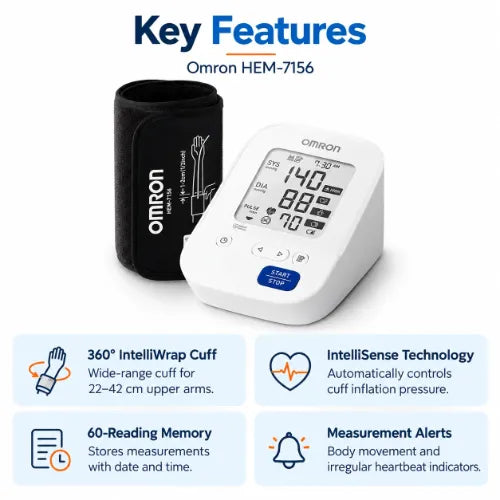
Omron HEM-7156
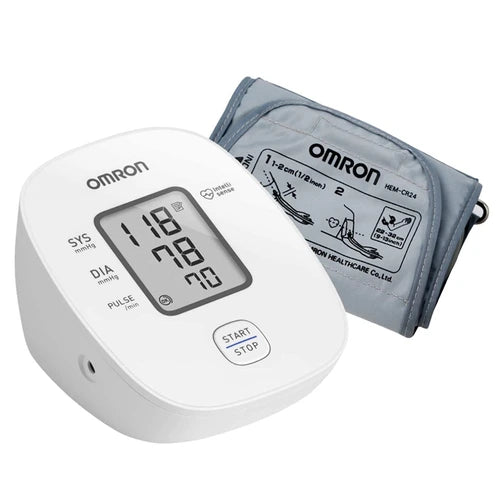
The Omron HEM-7156 is listed with an IntelliWrap cuff and automatic upper-arm measurement. At the time of review, it was priced at approximately ₹2,749.
Omron HEM-8712 AP
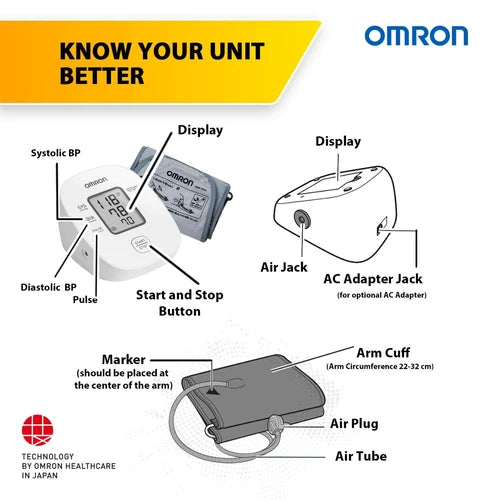
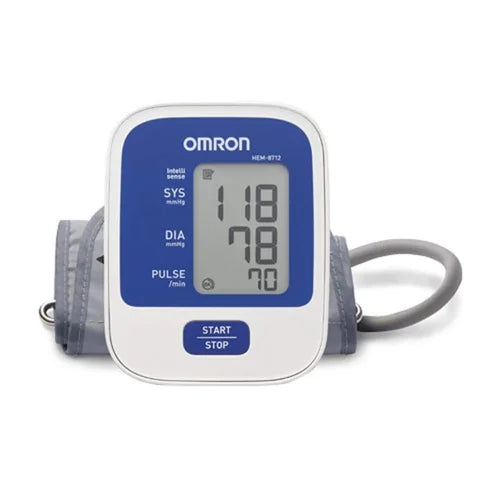
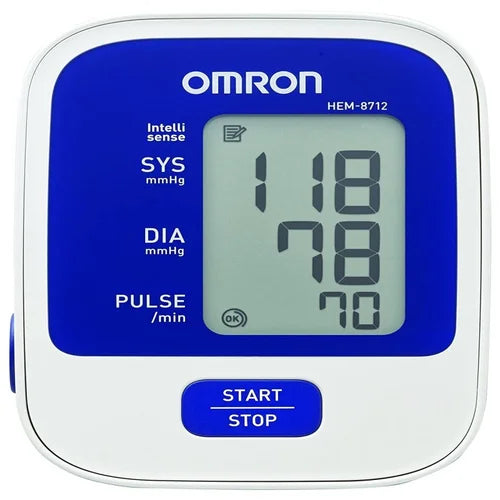
This model is a simpler automatic upper-arm monitor with memory. Its current Meddey listing shows a price around ₹1,931.
Omron HBP-1320 Professional Monitor
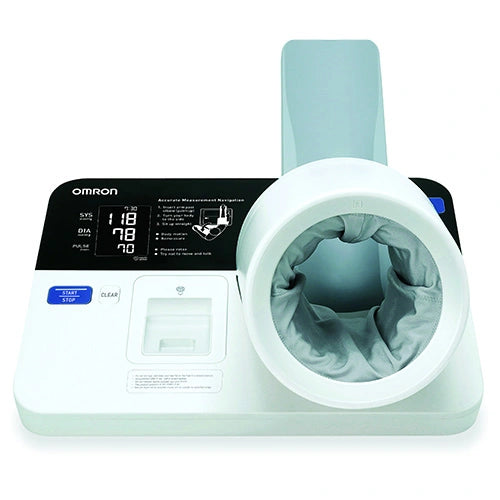
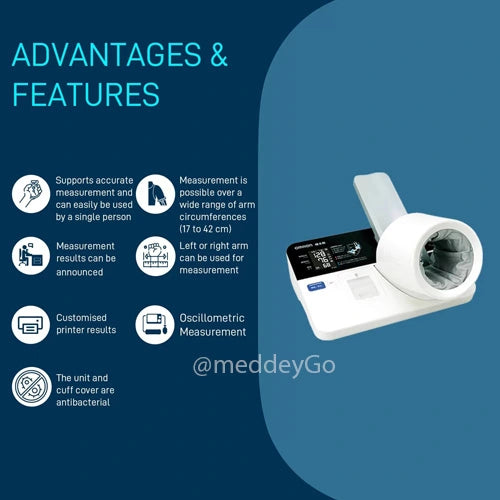
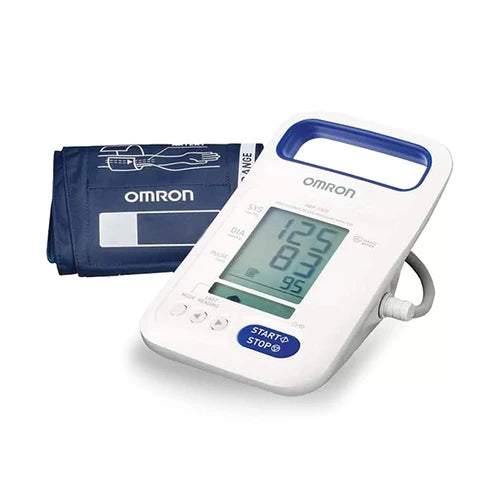
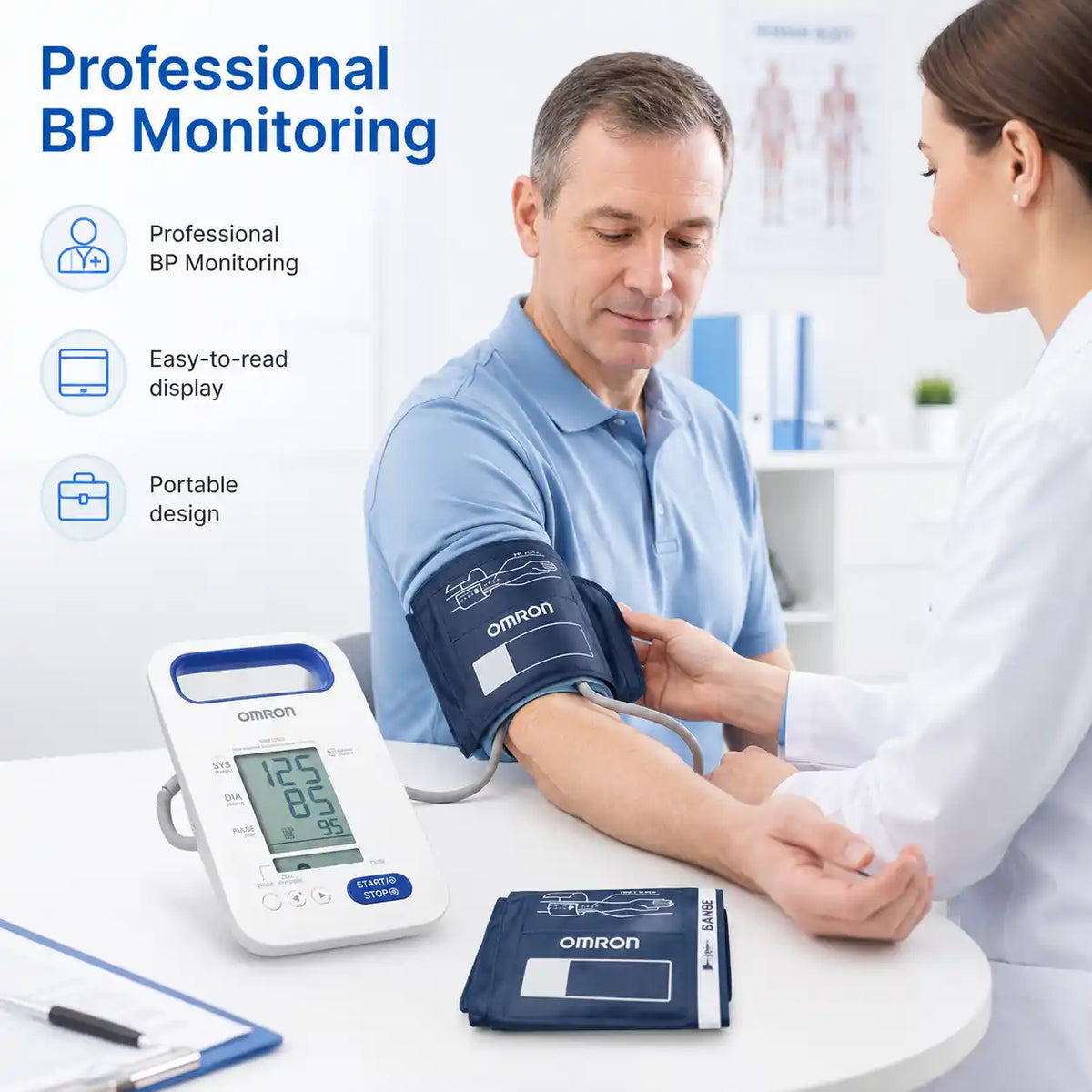
The HBP-1320 is intended for professional blood pressure measurement and is listed around ₹8,400.
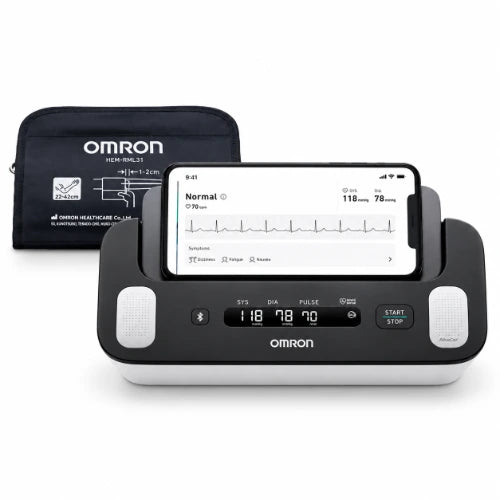
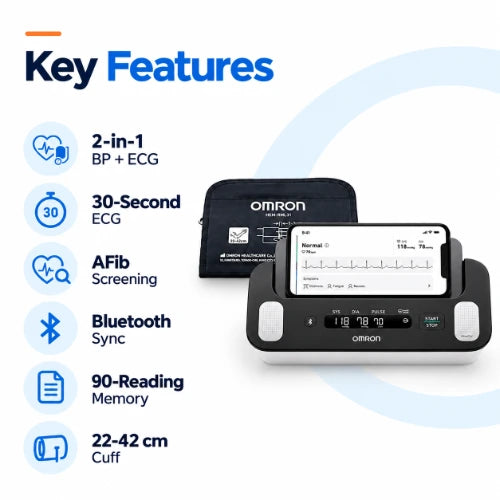
Omron HEM-7530T
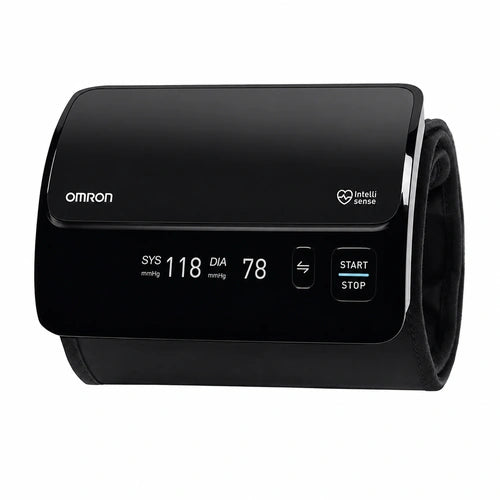
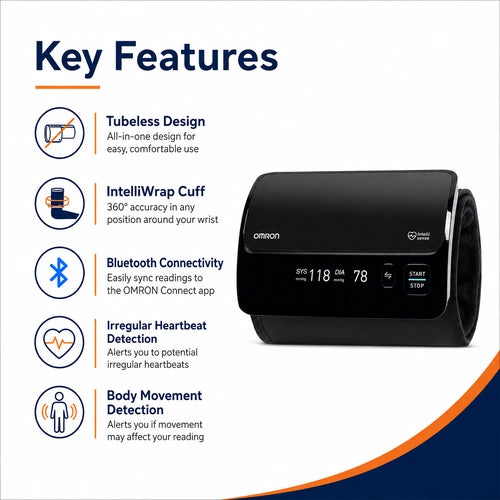
This advanced model combines blood pressure measurement with ECG, AFib-related features and Bluetooth. The current listing shows approximately ₹14,490.
Current Price Reminder
Online bp machine price and availability can change. Therefore, always check the live product page before purchase.
BP Machine Price in India
The bp machine price depends on the device category and included features.
Basic home monitors generally cost less than:
- Bluetooth-enabled devices
- ECG-integrated monitors
- Professional clinic monitors
- Ambulatory BP systems
However, higher cost does not automatically guarantee better BP accuracy.
Instead, buyers should compare:
- Model validation
- Cuff-size range
- Memory
- Multiple-user support
- Connectivity
- Warranty
- Replacement cuff availability
- Service support
Consequently, a simple validated monitor may provide better value than a feature-heavy machine that does not match the user’s needs.
Does Bluetooth Make a BP Monitor Better?
Bluetooth does not directly improve blood pressure measurement accuracy.
Instead, it mainly supports data management.
Connected Blood Pressure Monitors may allow users to:
- Store readings automatically
- Review long-term trends
- Reduce manual record entry
- Export results
- Share measurement history with a healthcare professional
Therefore, Bluetooth can be useful for monitoring convenience. However, validation and cuff fit remain more important for measurement quality.
What Is an Irregular Heartbeat Indicator?
Some Blood Pressure Monitors display an irregular-heartbeat symbol when irregular pulse intervals are detected during the measurement.
This feature can be useful as an alert. However, it is not equivalent to an ECG or a confirmed arrhythmia diagnosis.
Therefore, repeated irregular-heartbeat indicators should be discussed with an appropriate healthcare professional.
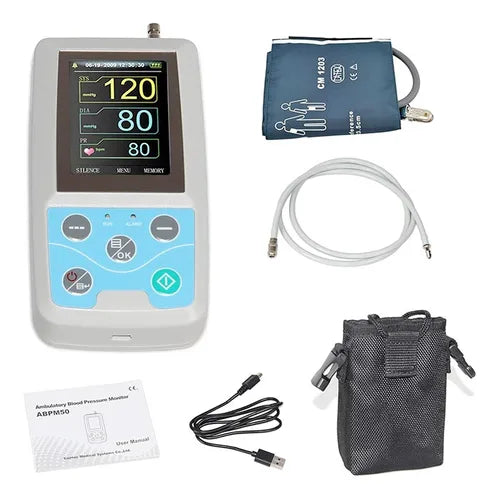
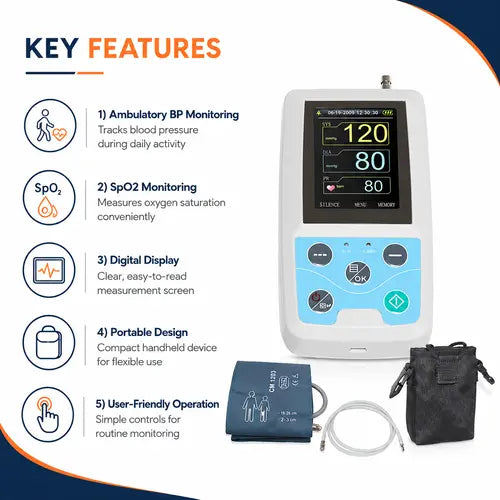
What Is an Ambulatory Blood Pressure Monitor?
An ambulatory blood pressure monitor records BP automatically at programmed intervals during normal daily activity and sleep.
This type of device is commonly called ABPM.
ABPM can help evaluate:
- Daytime BP patterns
- Night-time BP
- Possible white-coat hypertension
- Possible masked hypertension
- Variation over an extended period
However, ABPM serves a different purpose from a normal home bp check machine.
Common Reasons for Incorrect BP Readings
Even a good monitor can produce misleading readings when measurement technique is poor.
Common problems include:
- Incorrect cuff size
- Cuff over clothing
- Unsupported arm
- Arm below heart level
- Talking during measurement
- Crossed legs
- Unsupported back
- Recent strenuous activity
- Patient movement
- Incorrect wrist position
Therefore, technique should be reviewed before assuming that an unexpected value represents a true change in blood pressure.
How to Choose a Blood Pressure Monitor
1. Prefer an Upper-Arm Monitor
First, consider an automatic upper-arm model for routine home monitoring.
2. Check Validation
Next, look for independent validation of the exact monitor model.
3. Measure Arm Circumference
Then, confirm that the supplied cuff fits the intended user.
4. Review Display Size
Afterwards, check whether the numbers are clear and easy to read.
5. Check Memory
In addition, stored readings can simplify long-term monitoring.
6. Consider Multiple Users
If several household members share the device, separate user profiles may be useful.
7. Review Connectivity
Bluetooth may help with record keeping when it is genuinely required.
8. Check Warranty and Service
Finally, compare warranty coverage and replacement cuff availability.
Blood Pressure Monitors for Clinics and Hospitals
Professional healthcare facilities may require different equipment from home users.
A clinic should consider:
- Professional intended use
- Clinical validation
- Multiple cuff sizes
- Daily workload
- Cleaning requirements
- Durability
- Performance checks
- Service support
Moreover, a home monitor should not automatically be assumed to be suitable for repeated high-volume hospital use.
Therefore, healthcare procurement should account for both measurement performance and long-term durability.
Frequently Asked Questions About Blood Pressure Monitors
Which BP monitor is best for home use?
For most adults, a validated automatic upper-arm BP monitor with a correctly fitting cuff is generally the preferred option.
What is the best time of day to check BP?
Measure at a consistent time according to the monitoring plan recommended by your healthcare professional. Morning and evening readings are commonly used in structured home monitoring.
Which BP monitor is best, wrist or arm?
An upper-arm monitor is generally preferred for routine home use because wrist devices are more sensitive to positioning.
What is normal blood pressure by age?
Current adult guidelines define normal BP as below 120/80 mmHg rather than using progressively higher normal ranges for older adults. Individual treatment targets can still differ according to health status.
Which is better, Omron or Dr. Morepen?
Neither brand is automatically better for every user. Compare the exact model for validation, cuff range, memory, warranty, features and price.
Is a digital blood pressure monitor accurate?
A validated digital monitor can provide clinically useful measurements when the cuff fits properly and correct technique is used.
How many readings should I take?
For routine home monitoring, two readings about one minute apart are commonly recommended when following a standardized protocol.
Can a BP machine diagnose hypertension?
A BP machine provides measurements, but diagnosis depends on repeated standardized readings and professional clinical interpretation.
Does a high BP reading always mean hypertension?
No. A single high reading can be affected by stress, activity or measurement technique. Repeated measurements are more useful.
Should I use the same arm each time?
Once the appropriate measurement arm has been identified, using the same arm consistently can improve comparability unless a healthcare professional advises otherwise.
Are wrist BP monitors inaccurate?
Some wrist monitors can measure BP adequately when used correctly, but they are more position-sensitive and are generally not preferred over validated upper-arm monitors for routine home use.
Does a more expensive BP monitor give better readings?
Not necessarily. Extra cost may reflect memory, Bluetooth, ECG functions or professional construction rather than greater measurement accuracy.
Professional Buying Checklist
- Choose an automatic upper-arm device where appropriate.
- Check independent validation of the exact model.
- Measure the user’s upper-arm circumference.
- Confirm the correct cuff range.
- Review display readability.
- Check measurement memory.
- Consider multiple-user profiles.
- Review averaging functions.
- Determine whether Bluetooth is necessary.
- Check replacement cuff availability.
- Compare warranty coverage.
- Confirm after-sales support.
- Compare live BP machine price.
In short, the right monitor should be validated, correctly sized, easy to use and suitable for the intended environment.
Where to Buy Blood Pressure Monitors Online in India?
Blood Pressure Monitors are available through medical-equipment suppliers, pharmacies and healthcare eCommerce stores.
Before purchase, buyers should review:
- Exact model number
- Validation status
- Cuff range
- Memory
- Warranty
- Included accessories
- Current price
Meddey offers home and professional Blood Pressure Monitors for individuals, clinics and hospitals.
Browse BP Monitors View Omron HEM-7156 Visit MeddeyConclusion
Blood Pressure Monitors provide a convenient way to track systolic and diastolic blood pressure at home or in healthcare environments.
For most home users, a validated automatic upper-arm BP monitor with the correct cuff size is generally the preferred option.
Moreover, correct technique remains essential. Users should sit quietly, support the back and arm, keep the cuff near heart level and avoid talking during measurement.
When comparing wrist and arm devices, upper-arm monitors are usually easier to standardize. Likewise, when comparing Omron with Dr. Morepen, the exact model matters more than the brand name alone.
Current adult guidance defines normal blood pressure as below 120/80 mmHg. Therefore, adults should not assume that substantially higher blood pressure automatically becomes normal with age.
The bp machine price also varies according to memory, connectivity, professional construction and extra functions. Consequently, price alone should not determine the purchase.
Ultimately, a good blood pressure monitoring machine should be validated, comfortable to use, correctly sized and supported by clear instructions and service.
Doctors, clinics, hospitals and home users can compare current Blood Pressure Monitors on Meddey.
Medical Disclaimer
This article is intended for professional education and general information only. It does not replace diagnosis, medical advice or an individual treatment plan. Blood pressure should be interpreted using repeated standardized readings, relevant medical history and current clinical guidance. Do not stop or change prescribed blood pressure medicines solely because of a home reading without consulting an appropriate healthcare professional.
Explore Medical Collections
All Categories
Abdominal & Maternity Support

Accessories

Accu-Chek Instant Strips: Use, Compatibility, Price & Blood Sugar Testing Guide
Accu-Chek Instant Strips: Uses, Features & Complete Guide

accupuncture

Acupuncture Needles & Supplies

Advanced Physiotherapy Machines & Lumbar Physiotherapy

Airways

Alcohol Swab: Uses, Safe Use and Disposal Guide

Ambu Bag Full Form: Is There an Official Meaning?

Ambu Bag: Parts, Uses and Safety Guide

Ambu Full Form: What the Name Means and BVM Basics

Ambulance

Anatomy Models
Anesthesia Machine
You may also need
FOR YOURecommended for you
Save 19%
Save 41%
Save 19%
Save 17%
Save 20%
Save 17%
Save 25%
Save 25%
Save 25%
Save 26%
Save 21%
Save 16%
Save 20%