


Featured ChoiceSave 50%

Save 40%

Phototherapy newborn guide: uses, safety and care
Phototherapy newborn is a doctor-supervised jaundice treatment that uses special light to help the baby’s body process excess bilirubin more safely. If a doctor advises phototherapy, the family’s role is to understand why phototherapy is needed, how the newborn will be monitored, and what careful support looks like during treatment.
For Indian families, phototherapy can feel stressful because the newborn may look small under bright light and may need eye protection, feeding support, and repeated checks. This guide explains phototherapy in simple, phone-friendly sections so parents can ask clearer questions, avoid unsafe shortcuts, and follow the pediatrician’s plan with more confidence.
Phototherapy newborn: why is it advised by a doctor?
Phototherapy newborn treatment is advised when a doctor decides that jaundice needs medical light treatment rather than observation alone. Jaundice happens when bilirubin builds up and makes the skin or eyes look yellow; phototherapy helps change bilirubin so the baby’s body can remove it more easily. Medical guidelines describe phototherapy as a treatment used for neonatal hyperbilirubinemia, and the decision depends on the baby’s clinical situation, examination, and tests, not on skin colour alone.

A doctor may consider many details before advising phototherapy for a baby with hyperbilirubinemia, including birth history, feeding, weight changes, signs of illness, and blood reports. This is why families should not start phototherapy on their own, delay review, or rely only on photos of yellow skin taken on a phone. A phone can help you store reports and questions, but it cannot replace a pediatrician or neonatologist.
Phototherapy newborn signs families may notice before review
Parents often first notice jaundice as yellow colour on the baby’s face, eyes, chest, or body. The colour may be easier to see in natural room light, but judging severity by appearance can be unreliable, especially with different skin tones. Medical sources advise families to contact a healthcare provider if jaundice appears concerning or if the newborn is not feeding well, seems unusually sleepy, or has fever-like illness signs.
In India, families may hear many opinions from relatives, neighbours, or online groups. Some advice may sound familiar but still be unsafe for a newborn. If the newborn looks more yellow, feeds poorly, passes fewer wet nappies than expected, becomes difficult to wake, or simply does not seem right to the parents, the safer step is to contact the doctor or return to the hospital as advised.
Phototherapy care begins with proper assessment
Before phototherapy starts, the doctor usually confirms whether the baby needs treatment through clinical review and bilirubin testing. The healthcare team may also look at blood group issues, early birth, bruising, infection concerns, family history, or feeding difficulties. Current medical guidance emphasizes risk assessment and follow-up planning because not every newborn with mild yellow colour needs the same care.
This assessment matters because phototherapy is not a casual light exposure. It is a medical treatment with supervision, positioning, eye protection, temperature checks, feeding attention, and review of the newborn response. Families should ask the doctor why phototherapy has been advised, what monitoring will happen, and what changes should be reported immediately.

Part of doctor-led care |
What it means for the family |
Why it matters during phototherapy newborn care |
|---|---|---|
Clinical examination |
The doctor checks the newborn’s overall condition, not just yellow colour |
Jaundice treatment decisions depend on the full newborn picture |
Bilirubin testing |
A report helps guide the treatment plan |
Visual checks alone may miss important changes |
Feeding review |
The team asks about breastfeeding, expressed milk, or advised feeding method |
Good intake supports hydration and stooling |
Eye protection |
The newborn’s eyes are protected during light exposure |
Eye care is part of safe phototherapy practice |
Ongoing monitoring |
Nurses and doctors watch the newborn during treatment |
Monitoring helps the team adjust care if needed |
Follow-up plan |
The care team explains when and where review is needed |
Jaundice can need continued attention after discharge |
Phototherapy equipment parents may hear about
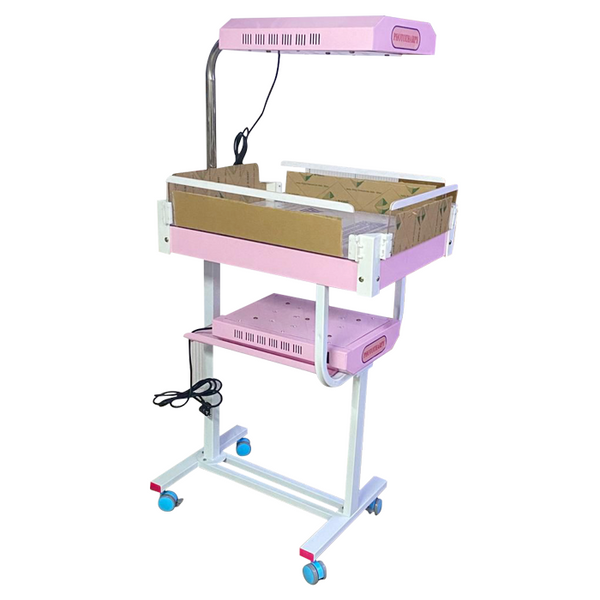
In a hospital setting, families may hear the term newborn phototherapy machine. A phototherapy machine is used by trained staff to provide special medical light over the baby’s skin while the care team monitors feeding, comfort, temperature, eye protection, and bilirubin-related reports. The effectiveness of phototherapy depends on factors such as light intensity and exposed skin area, which are clinical matters for trained staff to manage.

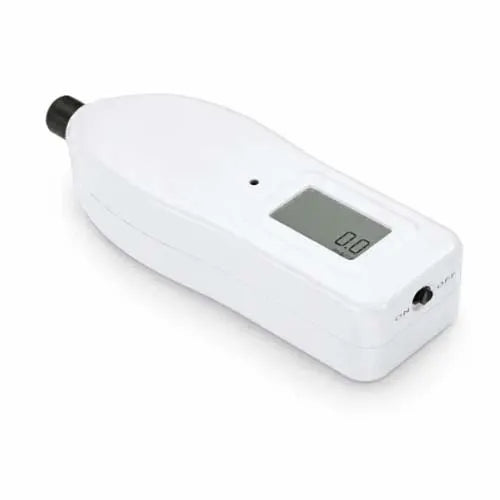
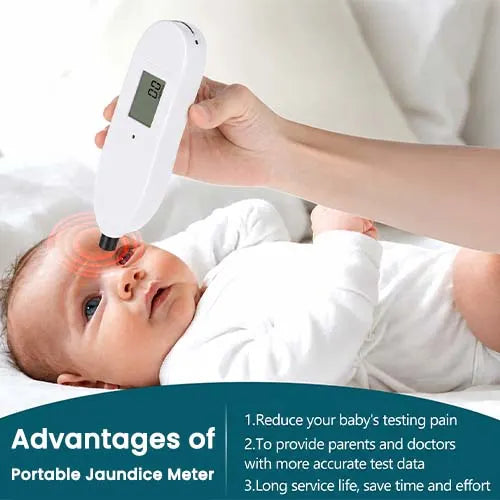
Families may also hear the term portable jaundice meter. A portable jaundice meter may be used by healthcare workers as part of jaundice screening or assessment, but it does not replace a doctor’s judgement or all laboratory testing. If a portable jaundice meter reading worries the healthcare team, they may advise further testing or hospital review.


The important point is simple: phototherapy newborn care is not about buying or arranging something independently. It is about following a doctor’s advice, using hospital-supervised care when advised, and understanding what the medical team is checking. Families should avoid comparing machines, brands, or online claims because the treating team’s protocol and the baby’s safety matter more than product opinions.
Phototherapy newborn safety: what happens during treatment
During phototherapy newborn treatment, the baby is usually positioned so medical light reaches enough skin while the eyes are protected. Guidance from established medical sources notes the use of eye protection during phototherapy and routine attention to feeding and hydration. Some babies may pass looser stools or develop mild skin changes, so the care team watches the baby and advises parents about what is expected and what needs review.
Parents may feel anxious when the newborn is under light, especially if eye protection makes the baby look uncomfortable. It is okay to ask the nurse how the eye protection is checked, how feeding will be managed, and when parents can hold the newborn if the doctor allows. A calm question to the care team is always better than adjusting anything yourself.
Safe phototherapy practice also means avoiding extra creams, oils, or unapproved substances on the newborn skin unless the doctor specifically says otherwise. Families in India often use traditional massage or skin applications for babies, but during phototherapy, the medical team’s instructions should come first. If you have already applied anything to the newborn skin, tell the nurse or doctor honestly so they can guide you.
Phototherapy feeding support matters
Feeding is a major part of jaundice treatment support because intake helps the baby stay hydrated and pass stool. Medical guidance commonly encourages maintaining feeding during phototherapy when possible, while also recognizing that some newborn babies need individualized support. The doctor or nurse may assess latch, sleepiness, urine, stool, weight pattern, and whether additional feeding guidance is needed.
For breastfeeding families, the goal is not to panic or assume breastfeeding has failed. Ask for help with positioning, latch, and waking the infant for feeds if the baby is sleepy. If the doctor advises expressed milk or another feeding plan, follow that advice and ask how to continue breastfeeding support alongside the medical plan.
For families using formula on medical advice, keep the doctor informed about intake and tolerance. Do not change feeding methods because of a relative’s suggestion, an online video, or fear created by one report. Phototherapy newborn care works within a broader doctor-led plan, and feeding decisions should fit the newborn’s health needs.
Phototherapy monitoring families can support
Families are not expected to manage phototherapy settings, but they can support monitoring by sharing accurate observations. Tell the nurse if the newborn is not feeding as usual, seems unusually sleepy, vomits repeatedly, has fewer wet nappies, feels too warm or too cold, or if eye protection appears displaced. These observations help the care team respond quickly and keep phototherapy care organized.
Keep reports, discharge papers, prescriptions, and medical instructions together. Many Indian parents find it helpful to take clear phone photos of reports, but the original paper should also be kept safely. If multiple family members are helping, choose one person to speak with the medical team so instructions are not misunderstood.
A simple parent note on the phone can include:
Feeding pattern as advised by the doctor
Wet and stool nappy observations
Questions for the next ward round
Any medicines or supplements already prescribed
Follow-up location and contact instructions
Warning signs explained by the hospital team
This kind of note does not replace medical monitoring. It simply helps tired parents remember details during a stressful hospital stay.
Phototherapy newborn decisions are not based on colour alone
A newborn may look yellow, but colour alone cannot tell parents whether phototherapy is needed, whether observation is enough, or whether urgent care is required. Doctors use a combination of examination, risk factors, and bilirubin-related reports to make jaundice treatment decisions. The American Academy of Pediatrics notes that decisions around hyperbilirubinemia involve structured assessment and follow-up rather than appearance alone.
This matters for Indian families because phone cameras can change skin colour depending on lighting, filters, and screen settings. A photo may be useful to show a doctor if the newborn is at home after discharge, but it should not be used to decide treatment independently. If the doctor asks you to come for review, go for review rather than waiting for the yellow colour to become more obvious.
Phototherapy and sunlight: what should families avoid?
Families should not use sunlight as a substitute for phototherapy treatment. HealthyChildren, an American Academy of Pediatrics parent resource, clearly states that putting a baby in sunlight is not a safe way to treat jaundice. If a doctor has advised phototherapy, follow the medical plan rather than trying sun exposure, online hacks, or home arrangements without doctor supervision.
This point is especially important in Indian homes where elders may suggest morning sunlight. Sunlight cannot be controlled like supervised medical phototherapy, and a newborn can become too hot, too cold, dehydrated, or exposed in an unsafe way. Respect family concern, but let the doctor’s advice lead the decision.

If relatives insist on traditional steps, explain calmly: “The doctor has advised medical phototherapy, and we are following that plan.” You do not need to argue about intentions. The priority is the baby’s safety.
Phototherapy newborn questions to ask the doctor
Parents often feel more confident when they know what to ask. You do not need medical vocabulary; simple questions are enough. Save your questions on your phone before the ward round so you do not forget them.
Useful questions include:
Why has phototherapy newborn treatment been advised for my baby?
What warning signs should we report immediately?
How will feeding be supported during phototherapy?
Can we hold or feed the newborn during breaks if the doctor allows?
What reports should we keep for follow-up?
Who should we contact if jaundice appears to increase after discharge?
Is any extra review needed because of birth history or feeding concerns?
What should we avoid doing at home after discharge?
These questions keep the conversation focused on care, safety, and follow-up. They also help the family avoid guessing from internet searches.
Phototherapy newborn care in Indian hospital routines
Hospital routines can vary across India, but the principles of phototherapy newborn care remain doctor-led: assessment, supervised treatment, feeding support, monitoring, and follow-up. In busy maternity hospitals, nurses may manage several tasks at once, so parents should listen carefully and ask for instructions to be repeated if needed. It is reasonable to ask whether eye protection is properly placed, when feeding is planned, and what signs need urgent attention.
If the newborn is admitted away from the mother’s bedside, the family may feel emotional or worried. Ask how feeding will be coordinated and how parents can participate safely. Some hospitals encourage mother-baby contact when clinically suitable, while still protecting the treatment plan.
Indian families may also have many relatives calling for updates. To reduce confusion, share one clear message: the newborn is receiving doctor-advised phototherapy for jaundice treatment and is being monitored. Avoid sending report values into family groups for interpretation by non-doctors.
Phototherapy newborn emotional support for parents
Seeing a baby under phototherapy can be upsetting, even when the treatment is commonly used. Parents may worry about eye protection, crying, feeding, separation, or repeated testing. These feelings are normal, and asking questions does not mean you are interfering.
Try to keep one calm caregiver available for the mother and newborn. The mother may be recovering physically, learning to feed, and processing worry at the same time. Support can be practical: arranging meals, helping with hospital paperwork, keeping reports ready, and limiting unnecessary advice.
If you feel overwhelmed, tell the nurse or doctor. A short explanation of what is happening can reduce fear. Phototherapy care is easier to face when parents understand what the team is doing and why.
Phototherapy newborn discharge guidance and follow-up
Discharge after phototherapy newborn care should come with clear instructions from the doctor. Families should understand where to go for follow-up, which warning signs require urgent review, and whether any feeding plan needs to continue. Medical sources emphasize follow-up and family education for newborn jaundice because monitoring may still matter after hospital care.
Before leaving, ask the doctor or nurse to explain the plan in simple language. If you are tired or anxious, record the instructions only if the hospital permits it, or write them in your phone notes. Confirm the spelling of medicines if any are prescribed, and do not add anything that has not been advised.
After discharge, do not ignore poor feeding, unusual sleepiness, fever-like illness, fewer wet nappies, or yellow colour that appears to worsen. Contact the doctor or hospital as instructed. A quick review is safer than waiting because someone said jaundice is always harmless.

Phototherapy newborn table for parent understanding
Family concern |
Clear explanation |
What parents should do |
|---|---|---|
“My baby looks yellow. Is phototherapy always needed?” |
Not always. The doctor decides after assessment and reports. |
Arrange review and follow the doctor’s advice. |
“Can we use sunlight instead?” |
Sunlight is not a safe substitute for medical phototherapy. |
Do not use sunlight for jaundice treatment. Ask the doctor before trying any other step. |
“Can feeding continue?” |
Feeding support is usually important during jaundice care. |
Ask the nurse or doctor how feeding should be managed. |
“Can eye protection be removed?” |
Eye protection is part of safe phototherapy practice. |
Do not adjust it yourself; call the nurse if it shifts. |
“Can we compare equipment online?” |
Product comparison is not the family’s main role. |
Focus on doctor-led care, monitoring, and follow-up. |
“What if relatives give different advice?” |
Family advice may be well-meaning but not medically suitable. |
Share the doctor’s instructions and avoid unsafe shortcuts. |
Phototherapy newborn myths Indian families should question
Some myths around newborn jaundice are common because many babies develop yellowing and many families have seen it before. Still, every baby is different. A story from another family cannot decide what your baby needs.
Common myths to question:
“All newborn jaundice is normal.” Some jaundice is mild, but a doctor should assess concerning signs.
“If the newborn feeds once, everything is fine.” Feeding pattern, alertness, urine, stool, and reports may all matter.
“Sunlight is the same as phototherapy.” Medical phototherapy is supervised; sunlight is not a safe substitute.
“A phone photo is enough for diagnosis.” Photos can help communication but cannot replace examination and testing.
“If the infant is quiet, the baby is comfortable.” Unusual sleepiness or poor feeding should be reported.
“Parents should adjust the setup if the baby cries.” Call the nurse instead of changing anything.
Myths often grow from love and worry, not bad intentions. The safest response is to thank the person, then follow the pediatrician or neonatologist.
Phototherapy newborn FAQ for quick parent answers
Is phototherapy newborn treatment painful? Phototherapy itself is light-based treatment, so parents usually worry more about separation, eye protection, or feeding than pain from the light. If the newborn seems uncomfortable, crying, too sleepy, or difficult to feed, tell the nurse or doctor.
Who decides whether my newborn needs phototherapy? A doctor decides after checking the baby and reviewing the relevant reports. Families should not start, stop, or arrange phototherapy treatment without medical advice.
Can I breastfeed during phototherapy newborn care? Breastfeeding often continues with guidance, but the plan depends on the baby’s condition and the doctor’s advice. Ask for feeding help if the baby is sleepy or not latching well.
Can I use sunlight for jaundice treatment at home? Do not use sunlight as a substitute for doctor-advised phototherapy. If you are worried after discharge, contact the doctor or hospital rather than trying sunlight treatment.
What should I do if eye protection moves? Call the nurse or healthcare worker immediately. Do not adjust phototherapy equipment or eye protection yourself unless the care team has directly instructed you.
Is a portable jaundice meter enough to decide treatment? A portable jaundice meter can support screening by trained healthcare workers, but it does not replace the doctor’s full assessment. The doctor may still advise further testing or observation.
Should I compare a newborn phototherapy machine online? Families do not need to rank or compare equipment online while the newborn is under hospital care. Ask the doctor whether the treatment is being supervised and what monitoring is planned.
When should we seek urgent help after discharge? Seek medical help as instructed if the newborn feeds poorly, becomes unusually sleepy, seems ill, or jaundice appears to worsen. Follow the discharge plan instead of waiting for advice from non-medical sources.
Phototherapy newborn parent checklist before, during, and after care
Confirm that phototherapy newborn treatment has been advised by a doctor.
Ask why phototherapy is needed for your baby’s jaundice treatment.
Keep blood reports, discharge notes, and prescriptions together.
Save important instructions on your phone for easy checking.
Ask how feeding will be supported during phototherapy.
Tell the nurse if the newborn is not feeding well or seems unusually sleepy.
Do not adjust eye protection or equipment yourself.
Do not use sunlight as a substitute for medical phototherapy.
Do not start any home arrangement unless the doctor specifically advises and supervises it.
Avoid oils, creams, or traditional applications unless the doctor permits them.
Ask what warning signs require immediate medical review.
Clarify where and how follow-up will happen after discharge.
Choose one family member to communicate with the doctor to avoid confusion.
Share the care team’s instructions with relatives instead of debating online advice.
Contact the hospital if you are unsure rather than guessing.
Phototherapy newborn care is a medical decision, not a home experiment or a family debate. When a doctor advises phototherapy, parents can help by supporting feeding, observing the baby, protecting follow-up instructions, and avoiding unsafe shortcuts. Clear communication with the healthcare team keeps jaundice treatment focused on the baby’s needs and gives families a calmer way to move through a worrying time.
Sources:
American Academy of Pediatrics (AAP)
HealthyChildren, the AAP parent resource
MedlinePlus patient information
Explore more light therapy equipment
Phototherapy
Explore Medical Collections
All Categories
Abdominal & Maternity Support

Accessories

Accu-Chek Instant Strips: Use, Compatibility, Price & Blood Sugar Testing Guide
Accu-Chek Instant Strips: Uses, Features & Complete Guide

accupuncture

Acupuncture Needles & Supplies

Advanced Physiotherapy Machines & Lumbar Physiotherapy

Airways
Alcohol Swab: Uses, Safe Use and Disposal Guide

Ambu Bag Full Form: Is There an Official Meaning?

Ambu Bag: Parts, Uses and Safety Guide

Ambu Full Form: What the Name Means and BVM Basics

Ambulance

Anatomy Models
Anesthesia Machine
You may also need
FOR YOURecommended for you
Save 50%
Save 40%