


Featured ChoiceSave 38%
Save 46%

Save 45%


Surgical Gloves: Types, Uses & Benefits Explained
Surgical Gloves: Types, Uses, and Benefits
Surgical gloves are sterile, close-fitting medical gloves designed for procedures where precision, barrier protection, and infection control matter. They help protect patients and healthcare professionals by reducing contact with blood, bodily fluids, microorganisms, and other potential contaminants. This guide explains the main types, common uses, practical benefits, and key buying considerations so readers can better understand how surgical medical gloves differ from everyday disposable gloves.
What are surgical gloves used for?
Healthcare professionals use surgical gloves to create a sterile barrier between their hands and the patient, especially during surgery or other invasive procedures. They support infection prevention, protect against exposure to fluids, and allow clinicians to handle instruments, tissue, dressings, and sterile supplies with a reduced risk of contamination.
Although the name points to operating rooms, clinicians can use surgical gloves in many settings where sterility and tactile control are important. Doctors, surgeons, nurses, dental professionals, and other trained healthcare workers may use them during wound care, minor procedures, catheter placement, biopsy assistance, obstetric care, and sterile examinations. In these situations, the main purpose is not just to keep hands clean; it is to maintain a controlled barrier that protects both sides of the interaction.

Common uses include:
- Major and minor surgery: Surgeons wear surgery gloves during procedures that involve incisions, internal tissue, suturing, or sterile instruments.
- Sterile wound care: Clinicians may use surgical hand gloves when cleaning, dressing, or treating wounds that require a sterile field.
- Invasive procedures: Catheters, drains, and certain injections may require sterile technique depending on the procedure.
- Dental and oral surgery: Surgical medical gloves can help provide barrier protection during procedures involving blood or open tissue.
- Labor and delivery care: Teams may use sterile gloves during delivery-related procedures and examinations.
- Handling sterile instruments: Hand gloves for surgery help prevent direct hand contact with sterile tools and materials.
The practical value is simple: surgical gloves reduce the chance that microorganisms from the hands enter the patient’s body, and they also reduce the wearer’s exposure to potentially infectious materials.
Surgical gloves in healthcare: how they differ from everyday gloves

Surgical gloves are different from general disposable gloves because manufacturers make them for sterile environments and high-precision tasks. They are usually individually packaged in sterile pairs, shaped for left and right hands, and manufactured to fit more closely than many standard examination gloves. This fit matters because surgeons and other clinicians need fine motor control when holding needles, scalpels, forceps, clamps, or delicate tissue.
The phrase “gloves surgical gloves” may appear in product searches because people are trying to distinguish ordinary gloves from surgical-grade options. That difference is important. A box of general-purpose disposable gloves might be suitable for cleaning, food service, or non-sterile examinations, but it does not automatically meet the needs of an operating room or sterile procedure.
Surgical gloves are also part of a larger infection-control system. They do not replace hand hygiene, sterile technique, gowns, masks, or proper instrument handling. Instead, they work alongside those practices. A glove can become contaminated after touching a non-sterile surface, and a damaged glove can compromise protection. For that reason, healthcare teams follow clear procedures for opening, donning, using, and changing gloves.
What are two common types of surgical gloves?
Two common types of surgical gloves are latex gloves and nitrile gloves. Latex gloves offer elasticity, comfort, and tactile sensitivity, while nitrile gloves are a synthetic option that many buyers choose when latex allergy is a concern or when strong puncture resistance matters.
Latex gloves
Manufacturers make latex surgical gloves from natural rubber latex. For many years, latex was widely used in operating rooms because it offers excellent stretch, a snug fit, and strong touch sensitivity. That combination can be valuable during surgery, where small hand movements and tactile feedback matter.
The main concern with latex gloves is allergy risk. Some healthcare workers and patients can react to natural rubber latex proteins. Reactions may range from skin irritation to more serious allergic responses. Because of that, many facilities now use latex-free options in some or all clinical areas, especially when patient allergy status is unknown.
Some users still prefer latex gloves in certain settings where the user is not allergic and values the comfort and feel of latex. However, any facility using latex surgical gloves should have clear policies for allergy identification, labeling, and alternatives.
Nitrile gloves
Manufacturers make nitrile gloves from synthetic rubber. Many users choose them as a latex-free alternative and value their durability, puncture resistance, and broad chemical resistance compared with many basic glove materials. In surgical settings, teams can select sterile nitrile gloves when a procedure requires barrier protection without latex exposure.
Nitrile gloves have improved significantly over time in comfort and flexibility. Older nitrile products were sometimes considered stiffer than latex, but manufacturers design many modern nitrile surgical gloves to provide better fit and touch sensitivity. They may be slightly less elastic than latex, depending on the product, but they are a strong choice for many medical environments.
Nitrile is also popular outside the operating room, including examination, laboratory, and emergency care settings. However, not every nitrile glove is a surgical glove. To be appropriate for surgery, it must be sterile and intended for surgical use.
Other glove materials
While latex and nitrile are the two most common answers to “What are two common types of surgical gloves?”, other materials exist. Manufacturers also make some surgical gloves with neoprene, polyisoprene, or other synthetic materials. Buyers may choose these options for comfort, latex-free use, or specific performance preferences.
Polyisoprene, for example, mimics some of the stretch and feel of latex without natural rubber latex proteins. Neoprene can also provide a latex-free option with good flexibility. The right choice depends on the procedure, user preference, allergy needs, and the product specifications required by the healthcare facility.
The main benefits of surgical gloves

Surgical gloves provide benefits that go beyond basic hand coverage. Their value comes from sterility, fit, material performance, and their role in maintaining a controlled clinical environment. When selected and used correctly, they help healthcare teams work more safely and confidently.
Key benefits include:
- Barrier protection: Surgical gloves help block contact with blood, bodily fluids, and microorganisms.
- Sterile technique support: Sterile packaging and proper donning help preserve the sterile field during procedures.
- Improved precision: A close anatomical fit supports grip, touch sensitivity, and fine hand movements.
- Patient protection: Gloves reduce the transfer of organisms from the wearer’s hands to the patient.
- Healthcare worker protection: Gloves reduce direct exposure to contaminants, sharps-related fluids, and biological material.
- Professional workflow: Properly selected surgical gloves help clinicians focus on the procedure rather than glove discomfort, slipping, or poor fit.
The phrase “What is the main purpose of surgical gloves?” has a clear answer: the main purpose is to provide a protective sterile barrier. Comfort and dexterity are important, but the central reason for using surgical gloves is to reduce contamination and infection risk during medical procedures.
What is the difference between surgical gloves and normal gloves?
The difference between surgical gloves and normal gloves is that surgical gloves are sterile, procedure-specific, and designed for precise medical work, while normal gloves may be non-sterile and intended for general protection, cleaning, food handling, or basic examination tasks. Surgical gloves usually have stricter fit expectations, left-right hand shaping, and packaging that supports sterile use.
This distinction matters because gloves are not interchangeable in every situation. A normal disposable glove might be perfectly acceptable for routine cleaning or non-sterile tasks, but it is not the right choice for surgery. Likewise, using sterile surgical medical gloves for casual tasks may be unnecessary and costly.
Surgical gloves vs. normal disposable gloves
| Feature | Surgical gloves | Normal disposable gloves |
|---|---|---|
| Sterility | Usually sterile and individually packed in pairs | Often non-sterile, packed in boxes |
| Fit | Anatomically shaped for left and right hands | Often ambidextrous |
| Primary use | Surgery and sterile procedures | Cleaning, basic exams, food handling, general protection |
| Precision | Designed for fine motor control | Varies widely by glove type |
| Packaging | Supports sterile donning | Designed for quick general access |
| Selection criteria | Material, sterility, size, sensitivity, barrier performance | Material, size, durability, task suitability |
The difference is not only about quality. It is about intended use. The best glove is the one that matches the task, the risk level, and the required level of sterility.
Which gloves are best for surgery?
The best gloves for surgery are sterile surgical gloves that match the procedure, fit the wearer correctly, provide reliable barrier protection, and meet the facility’s requirements for material, sensitivity, and allergy safety. In many cases, latex, nitrile, polyisoprene, or neoprene surgical gloves may be appropriate, but the final choice depends on clinical policy and user needs.
A surgeon may prefer one material because of tactile feel, while a hospital may standardize another because of latex allergy concerns. Some procedures may call for thicker gloves or double-gloving, while others may prioritize maximum fingertip sensitivity. There is no single glove that is best for every surgery.
When choosing hand gloves for surgery, consider these factors:
- Sterility: The gloves must be sterile if the procedure requires sterile technique.
- Material: Latex gloves offer excellent elasticity; nitrile gloves and other synthetic options help avoid latex exposure.
- Fit and sizing: Gloves that are too tight can cause hand fatigue, while loose gloves can reduce control.
- Tactile sensitivity: Delicate procedures require gloves that allow the wearer to feel instruments and tissue accurately.
- Barrier performance: The glove should maintain integrity throughout the procedure.
- Allergy profile: Latex-free options may be needed for staff or patient safety.
- Grip: Textured fingertips or palms can help with instrument handling, especially in wet conditions.
- Procedure length: Longer procedures may require comfort features that reduce strain and sweating.
For high-risk or longer procedures, some surgical teams use double-gloving. This means wearing two pairs of surgical gloves to add another barrier layer. Double-gloving may reduce exposure if a puncture damages the outer glove, though it can affect feel depending on the glove combination. The decision should follow clinical policy and procedure risk.
Which gloves do doctors use?
Doctors use different gloves depending on the task. For surgery or sterile procedures, they use sterile surgical gloves. Routine examinations more commonly call for non-sterile examination gloves. For cleaning, handling chemicals, or non-clinical tasks, other protective gloves may be more appropriate.
This is why the question “Which gloves do doctors use?” does not have one universal answer. A surgeon in an operating room needs surgery gloves with sterile packaging and precise fit. In a basic checkup, a physician may use examination gloves. A doctor helping with a sterile wound procedure may choose surgical hand gloves even outside a formal operating room.
Common glove choices in medical settings
- Surgical gloves: Used during operations and sterile procedures.
- Examination gloves: Used for routine patient contact, basic exams, and non-sterile care.
- Nitrile gloves: Common in medical settings where latex-free protection matters.
- Latex gloves: Used where appropriate, though allergy concerns may limit use.
- Utility gloves: Used for cleaning instruments or environmental surfaces, not for direct sterile patient care.
The key is task matching. Doctors and medical teams choose gloves based on risk, sterility requirements, patient contact, material sensitivity, and institutional protocols.
What color gloves do surgeons use?
Surgeons can use surgical gloves in several colors, including white, cream, beige, brown, blue, green, or other shades depending on the manufacturer and facility preference. There is no single universal color that all surgeons use.
Color can serve practical purposes. In double-gloving systems, the inner glove may be a contrasting color so a puncture or tear in the outer glove is easier to notice. Some facilities may choose colors that reduce glare, match product lines, or support quick identification of glove type or size. Facilities may also choose skin-tone or neutral-colored gloves depending on availability.
If you are buying surgical gloves, color should usually be secondary to sterility, material, fit, barrier performance, and clinical suitability. A glove can be the right color and still be the wrong product for surgery if it is not sterile or not intended for surgical use.
How surgical glove sizing and fit affect performance
Fit is one of the most important practical details when choosing surgical gloves. A glove that is too small can restrict movement, increase fatigue, and make hands feel strained during long procedures. A glove that is too large can bunch at the fingertips, reduce grip, and make precise instrument handling more difficult.
Surgical gloves typically come in numbered sizes rather than the simple small, medium, and large labels used for many disposable gloves. Numbered sizing allows a more exact fit, which is especially useful for surgeons and clinicians who work with fine tools. Even a small difference in size can affect comfort and control.
A good fit should feel secure without cutting off movement. Fingertips should reach the glove ends without excessive stretching or empty space. The cuff should stay in place over the gown sleeve when used in a sterile procedure. If a wearer frequently feels numbness, slipping, hand fatigue, or fingertip bunching, the wearer may need to try a different size or glove style.
Fit checklist for surgical gloves
Use this quick checklist when evaluating surgical gloves:
- The glove fits snugly but does not pinch.
- Fingertips align closely with the wearer’s fingers.
- The palm does not sag, wrinkle, or pull tightly.
- During normal hand movement, the cuff stays secure.
- The material allows natural flexing.
- Grip remains stable when handling instruments.
- The wearer can feel fine details through the glove.
- No irritation appears during or after normal use.
Fit is not just a comfort issue. It can influence safety, precision, and procedure efficiency.
Sterile technique and proper glove use
Surgical gloves only work as intended when users handle them correctly. A sterile glove can become contaminated if it touches a non-sterile object, an unprepared surface, or the outside of non-sterile packaging. Proper opening, donning, and handling are essential parts of sterile practice.
Training teaches healthcare professionals to put on surgical gloves without contaminating the outer surface. In operating rooms, this often happens after surgical hand antisepsis and gowning. The goal is to keep the outside of the gloves sterile before the procedure begins.
Practical glove-use principles include:
- Perform hand hygiene first: Gloves are not a substitute for clean hands.
- Inspect the package: Do not use surgical gloves from torn, wet, opened, or questionable packaging.
- Confirm the size and material: The wrong size or material can create discomfort or risk.
- Avoid touching non-sterile surfaces: Once gloved, keep hands within the sterile field.
- Change gloves when needed: Replace gloves if torn, punctured, contaminated, or compromised.
- Remove gloves safely: Avoid skin contact with the contaminated outer surface.
- Dispose of gloves properly: Discard used surgical gloves according to the setting’s waste procedures.
Good glove technique is often quiet and routine, but it has real impact. Even a high-quality glove cannot compensate for poor handling or contamination during use.
Powdered vs. powder-free surgical gloves
Manufacturers describe surgical gloves as powdered or powder-free, though many healthcare environments commonly prefer powder-free options. Powder was historically used to make gloves easier to put on, especially latex gloves. However, glove powder can create concerns related to irritation, contamination, and airborne particles.
Manufacturers design powder-free surgical gloves to reduce those issues while still allowing donning. Manufacturers may use surface treatments, coatings, or special processing to make powder-free gloves easier to wear. For many buyers, “powder-free” is now an important feature to look for when comparing surgical gloves price, comfort, and suitability.
When evaluating powdered versus powder-free options, the decision should follow current facility policy and applicable medical product requirements. For general educational purposes, many people view powder-free surgical gloves as the cleaner and more practical option for sterile environments.
Single-gloving and double-gloving
Single-gloving means wearing one pair of surgical gloves. Double-gloving means wearing two pairs, usually an inner glove and an outer glove. Both approaches can be appropriate depending on the procedure, risk of sharps exposure, surgeon preference, and facility protocol.
Teams often consider double-gloving when there is a higher chance of glove puncture, extended procedure time, heavy instrument use, or exposure to bone fragments or sharp materials. The added inner glove may provide another barrier if the outer glove fails. Some systems use a colored inner glove so a breach becomes easier to see.
The tradeoff is tactile feel. Some clinicians may need time to adjust to the sensation of wearing two layers. Selecting the right size combination and glove material can help maintain dexterity.
How to compare the cost of surgical gloves
The cost of surgical gloves depends on material, sterility, packaging, brand, size range, thickness, specialty features, and order quantity. A basic non-sterile disposable glove is usually not comparable to a sterile surgical glove because the manufacturing, packaging, and intended use are different.
When people search for “cost of surgical gloves” or “surgical gloves price,” they may be trying to compare products quickly. Price matters, but it should not be the only factor. A lower-cost glove that fits poorly, tears easily, lacks the required sterility, or causes allergy concerns can create bigger problems than it solves.
A practical price comparison should consider:
- Price per sterile pair: Clinicians commonly use surgical gloves as pairs, so compare pair to pair.
- Material type: Latex, nitrile, neoprene, and polyisoprene may vary in cost.
- Packaging: Individually wrapped sterile pairs cost more than bulk non-sterile gloves.
- Sizing availability: A full size range supports better fit for more users.
- Procedure suitability: Specialty gloves may cost more but serve a defined clinical need.
- Waste and replacement rate: Teams may replace gloves that tear or fit poorly more often.
- Allergy risk management: Latex-free options may be necessary even if another material appears cheaper.
The best value is not always the lowest surgical gloves price. It is the product that safely fits the intended procedure, performs consistently, and supports the wearer’s work.
How to buy surgical gloves: key considerations
Choosing surgical medical gloves is a clinical and operational decision. The product must meet the needs of the user, patient, procedure, and setting. A purchasing team may also need to consider storage conditions, supply reliability, packaging format, and compatibility with other sterile supplies.
Before buying, clarify the use case. Are the gloves for general surgery, dental surgery, outpatient procedures, emergency sterile care, or training? Are latex gloves acceptable, or is a latex-free option needed? Will teams use the gloves for short procedures or long operations? These questions help narrow the options before comparing brands or prices.
Practical buying checklist
Before selecting surgical gloves, review:
- Required sterility and packaging format
- Material preference or latex-free requirement
- Size range for all expected users
- Cuff length and gown compatibility
- Grip texture and instrument handling needs
- Powder-free status
- Thickness and tactile sensitivity balance
- Comfort during extended wear
- Facility policies and applicable standards
- Supplier consistency and availability
- Total cost per usable pair
For individual buyers, the most important point is to avoid assuming all medical-looking gloves are surgical gloves. Product descriptions should clearly state sterile surgical use if that is what the procedure requires.
Surgical and medical gloves available at Meddey
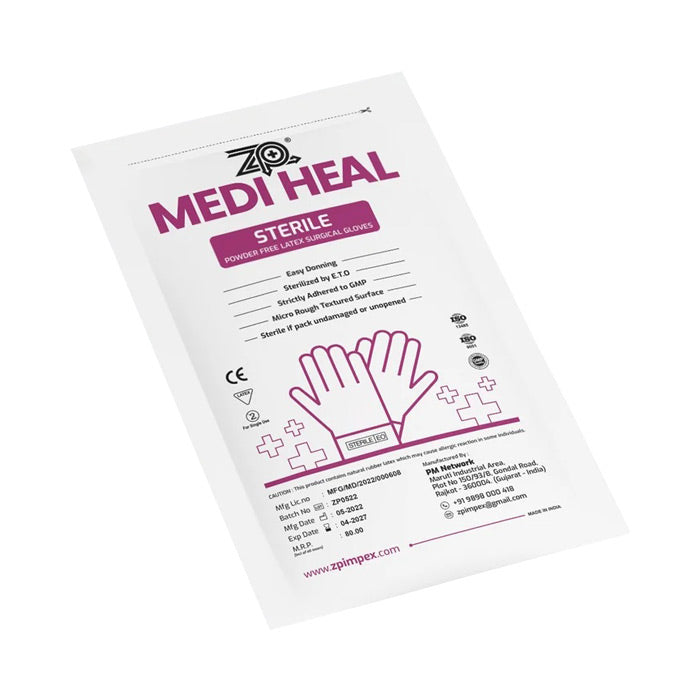
 Powder Free Surgical Gloves Sterile (Pack of 10)Rs. 349View product
 Powder Free Surgical Gloves Sterile (Pack of 25)Rs. 712View product
 Sterile Latex Surgical Gloves (Pack of 10)Rs. 435View product
 Nitrile Examination GlovesRs. 495View product
 Surgicare Disposable Gloves (Pack of 20)Rs. 699View product
For more options, view the Meddey gloves collection.
Common mistakes when choosing surgical gloves
One common mistake is choosing gloves based only on material. Material matters, but a nitrile glove is not automatically suitable for surgery just because nitrile is durable. It must also be sterile and intended for surgical use.
Another mistake is choosing size casually. Poor fit can affect grip, comfort, and control. In surgery, even small handling issues can become frustrating because clinicians work with delicate instruments and must maintain focus.
A third mistake is ignoring allergy risk. Latex gloves may provide excellent feel, but they are not ideal for every patient or wearer. If latex sensitivity is known or suspected, consider a latex-free surgical glove according to medical policy.
Other avoidable mistakes include:
- Using non-sterile gloves for sterile procedures
- Reusing disposable surgical gloves
- Wearing gloves after visible damage or contamination
- Touching non-sterile surfaces and continuing as if sterile
- Buying based only on surgical gloves price
- Assuming glove color indicates quality or sterility
- Storing gloves in unsuitable heat, moisture, or light conditions
Surgical gloves are simple in appearance, but their safe use depends on choosing the right product and following the right process.
How surgical gloves support patient trust

Patients may not think deeply about surgical gloves, but they notice visible hygiene practices. Seeing healthcare professionals use proper gloves, masks, gowns, and sterile supplies can help reinforce confidence in the care environment. Gloves are a small but visible sign that the team is taking infection prevention seriously.
For healthcare workers, the benefit is also psychological. A glove that fits well and performs reliably allows the wearer to concentrate on the patient and procedure. If gloves slip, tear, irritate the skin, or reduce tactile control, they become a distraction.
That is why teams should treat surgical gloves as an important clinical supply rather than a generic commodity. The right glove supports comfort, safety, precision, and professional confidence.
Surgical gloves and waste: using them responsibly
Disposable medical products create waste, and surgical gloves are no exception. Because teams use them in sterile, high-risk environments, reuse is generally not appropriate. Patient safety and infection control come first.
Still, healthcare organizations can think carefully about responsible glove use. That means using sterile surgical gloves when the procedure requires them, using examination gloves when sterility is not needed, and avoiding unnecessary glove changes when policy does not call for them. Better sizing and product selection can also reduce waste caused by torn gloves or discarded pairs that do not fit.
Some buyers also consider packaging efficiency and supplier practices. However, buyers should review sustainability claims carefully and not let them override clinical suitability. In surgery, the safest product for the procedure remains the priority.
Frequently Asked Questions
1. What is the main purpose of surgical gloves?
Their main purpose is to provide a sterile protective barrier that helps reduce contamination and exposure during medical procedures. They protect the patient from organisms on the wearer's hands and protect the wearer from blood and body fluids.
2. What are surgical gloves used for?
Clinicians use them for surgery, sterile wound care, invasive procedures, dental surgery, labor and delivery care, and other clinical tasks that require sterile technique.
3. What are two common types of surgical gloves?
Latex gloves and nitrile gloves are two common types. Manufacturers also make gloves from synthetic materials such as neoprene and polyisoprene, mainly as latex-free options.
4. Which gloves are best for surgery?
The best gloves are sterile surgical gloves that fit well, match the procedure, give reliable barrier protection, and account for latex allergy needs. The final choice depends on clinical policy and user preference.
5. Which gloves do doctors use?
Doctors use sterile surgical gloves for surgery and sterile procedures, and non-sterile examination gloves for many routine tasks such as basic checkups.
6. What color gloves do surgeons use?
Surgeons may use white, cream, brown, blue, green, or other colors depending on the product and facility. Color is less important than sterility, fit, and material, although a contrasting inner glove can make a puncture easier to see when double-gloving.
7. What is the difference between surgical gloves and normal gloves?
Surgical gloves are sterile, shaped for left and right hands, and made for precise medical work. Normal gloves are often non-sterile and suit general tasks such as cleaning, food handling, or basic examination.
8. Are powder-free surgical gloves better?
Many facilities prefer powder-free gloves because glove powder can cause irritation and contamination concerns. The final decision should follow your facility's policy and the product requirements.
9. Can you reuse surgical gloves?
No. Manufacturers make disposable surgical gloves for single use. Once a glove is torn, punctured, or contaminated, replace it and discard it according to waste procedures.
10. How should I compare surgical gloves price?
Compare the price per sterile pair rather than per box, and check the material, size range, powder-free status, and packaging. The lowest price is not always the best value if the glove fits poorly or tears easily.
Explore Medical Collections
All Categories
Abdominal & Maternity Support

Accessories

Accu-Chek Instant Strips: Use, Compatibility, Price & Blood Sugar Testing Guide
Accu-Chek Instant Strips: Uses, Features & Complete Guide

accupuncture

Acupuncture Needles & Supplies

Advanced Physiotherapy Machines & Lumbar Physiotherapy

Airways

Alcohol Swab: Uses, Safe Use and Disposal Guide

Ambu Bag Full Form: Is There an Official Meaning?

Ambu Bag: Parts, Uses and Safety Guide

Ambu Full Form: What the Name Means and BVM Basics

Ambulance

Anatomy Models
Anesthesia Machine
You may also need
FOR YOURecommended for you
Save 38%
Save 46%
Save 45%