


Sold out


Sold out

About this collection
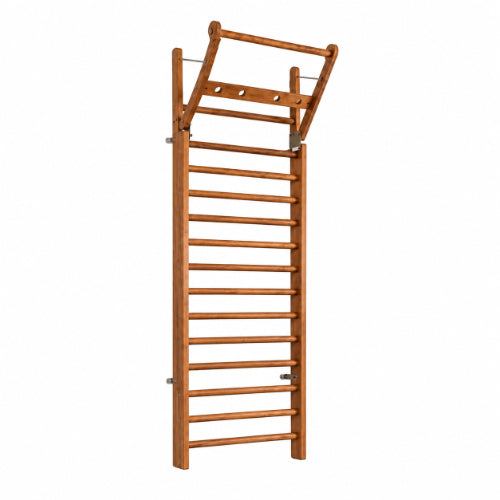
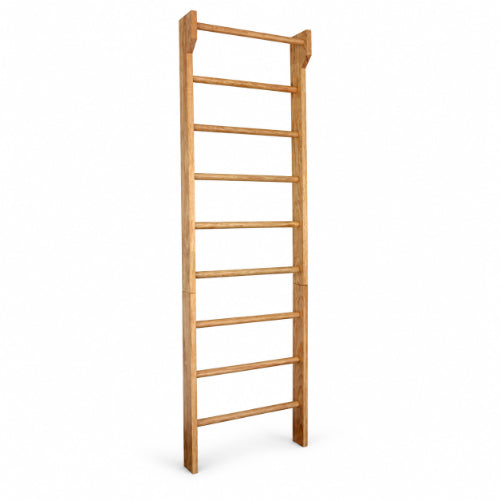
A Swedish ladder is a wall-mounted exercise frame with horizontal rungs that can support stretching, mobility work, bodyweight exercise and selected physiotherapy activities. It is also commonly called a wall bar, Swedish wall bar or stall bar.
For home users, a Swedish ladder can provide a permanent exercise station without taking up as much floor space as many large gym machines. Physiotherapy clinics and rehabilitation centres may also use wall bars as a fixed support point during professionally planned movement, flexibility and strengthening exercises.
Quick Guide to Choosing a Swedish Ladder
- For home exercise: Check wall strength, available height and clear floor space before buying.
- For physiotherapy: Choose a stable wall-mounted design and follow exercises recommended by a physiotherapist.
- For stretching: Multiple rung heights provide different hand and foot positions.
- For bodyweight exercise: Confirm installation quality and the recommended user-weight limit first.
- For clinics: Compare dimensions, construction, number of rungs and ease of cleaning.
- For children: Responsible adult supervision is important.
What Is a Swedish Ladder?
A Swedish ladder is a vertical frame fixed securely to a wall. Horizontal rungs run between the two side rails, creating several grip and support positions at different heights.
Because the rungs are spaced vertically, users can choose a suitable height for reaching, holding, stretching or selected bodyweight movements. In physiotherapy, a therapist may also use the wall bars as a stable support point during supervised exercises.
The term stall bars refers to the same general type of equipment. Therefore, shoppers may see Swedish ladder, wall bars, stall bars and gymnastic wall bars used for very similar products.

Swedish Ladder for Home Exercise
A Swedish ladder can suit households that want a fixed exercise station but do not want a large machine occupying the middle of a room. Since the frame attaches vertically to a wall, most of the floor remains available when the equipment is not being used.
However, the wall itself is part of the safety system. Before ordering, check the construction of the wall, available height and the amount of clear space in front of the ladder.
Home users can use suitable rungs during stretching, reaching and selected strengthening activities. Nevertheless, exercises involving hanging, significant bodyweight or difficult positions should match the user's ability and the installation.
Wall Bars for Physiotherapy
Physiotherapy wall bars can provide a stable handhold or reference point during selected rehabilitation exercises. For example, a therapist may use different rung heights during stretching, supported standing, reaching or controlled mobility work.
Mobility simply means the ability to move a joint or body part through a useful range. Therefore, mobility exercise is about controlled movement rather than simply forcing a deeper stretch.
The wall bars themselves do not cure an injury or automatically restore movement. Instead, they provide equipment that a physiotherapist can include within an appropriate rehabilitation plan.
For other therapy tools, browse Meddey's Exercise & Rehabilitation Equipment collection.
Swedish Ladder for Stretching and Flexibility
A Swedish ladder provides fixed rung positions at several heights. As a result, users can choose different hand or foot placements during suitable stretching exercises.
For example, the rungs may provide a support point during calf, hamstring or upper-body stretches. However, the correct position depends on flexibility, balance and the exercise being performed.
Stretching should create a controlled feeling of tension rather than sharp pain. Therefore, avoid forcing a joint beyond a comfortable range simply because a higher rung is available.
Swedish Ladder for Strength and Bodyweight Exercise
Wall bars may also support selected bodyweight exercises. Bodyweight exercise simply means using your own body as part of the resistance rather than relying only on dumbbells or machines.
Depending on the equipment and the user's ability, this may include supported holds, controlled leg movements, grip exercises or selected hanging activities.
However, bodyweight movements can place much more force on the frame than gentle stretching. Therefore, secure installation and adherence to the actual user-weight guidance are essential.
If you want additional strengthening equipment, Meddey's Weights collection includes weight cuffs, dumbbells and related exercise products.
What to Check Before Buying Wall Bars
| Buying Factor | Why It Matters | What to Check |
|---|---|---|
| Wall Type | The wall supports the installed frame | Confirm that the structure is suitable for secure mounting |
| Height & Width | The ladder needs enough installation space | Measure the wall before ordering |
| Clear Floor Space | Users need room to move safely | Keep furniture and obstacles away |
| Construction | Rungs and side rails may carry substantial load | Check material, joints and mounting hardware |
| User Weight Guidance | Structural ratings and user ratings may be different | Follow the specific product information |
| Exercise Goal | Not every user needs the same movements | Choose exercises according to fitness or rehabilitation needs |
Meddey Wall Bars for Physiotherapy and Gymnastics
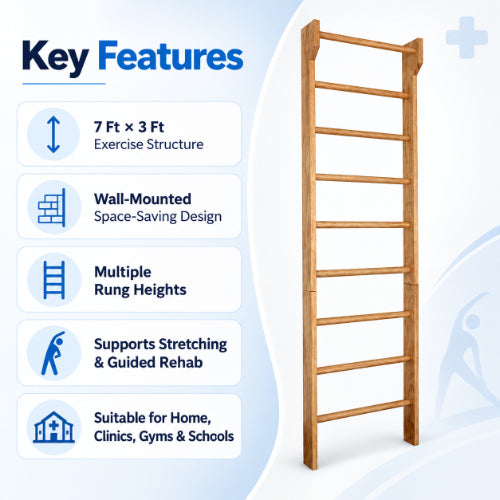
Meddey's current Wall Bars for Physiotherapy and Gymnastics provide a wooden wall-mounted exercise frame for households, gyms, clinics and schools.
The current product page lists dimensions of approximately 7 ft × 3 ft. Its wall-mounted design makes it suitable for buyers who want a permanent exercise station while keeping most floor space free.
Because this product may be used by people of different ages and exercise levels, the actual activity should match the user's strength, balance and experience.
View Wall Bars for Physiotherapy and GymnasticsWooden Swedish Ladder vs Metal Wall Bars
Swedish wall bars can be made from wood, metal or a combination of materials. Neither material is automatically better for every setting.
Wooden wall bars can provide a traditional appearance and comfortable grip. Meanwhile, metal designs may suit buyers who want a different construction style or specific accessories.
Instead of choosing only by appearance, compare the installation method, surface finish, dimensions, user guidance and intended environment.
Swedish Ladder vs Shoulder Exercise Ladder
A Swedish ladder is not the same as a shoulder exercise ladder. A Swedish wall bar is a large vertical frame that can support many different movement and exercise patterns.
A shoulder exercise ladder is a smaller rehabilitation tool mainly designed for upper-limb movement exercises. Therefore, it should not be added to this collection simply because both products contain the word "ladder."
Keeping these categories separate helps shoppers find the correct product and keeps the collection focused for search engines.
Swedish Ladder vs Rope Ladder
A Swedish wall ladder uses rigid horizontal rungs fixed within a solid frame. By contrast, a rope ladder moves while the user climbs or holds it.
Therefore, the two products create very different exercise conditions. Rope ladders belong more naturally with climbing, play or selected occupational-therapy equipment, while Swedish wall bars provide a fixed exercise station.
Wall Bars for Balance and Controlled Movement
The rungs can provide a stable hand-support point during selected standing and movement exercises. This may be useful when a therapist wants the user to practise controlled movement while holding a fixed structure.
Proprioception means your body's awareness of where its joints and body parts are positioned. Some rehabilitation exercises challenge balance and body awareness, although the wall bars themselves do not automatically improve these abilities.
For dedicated balance products, browse Meddey's Balance Training Equipment collection.
Swedish Ladder for Physiotherapy Clinics
Clinics may use a Swedish ladder as a permanent exercise point within a rehabilitation or exercise area. Since the equipment uses wall space, it can be useful where floor area needs to remain available for other activities.
Physiotherapists may adapt rung height and exercise difficulty according to the patient's treatment goals. However, the equipment should remain one part of a broader rehabilitation programme rather than being presented as a treatment by itself.
For a wider clinical range, visit Meddey's Rehabilitation Equipment collection.
Installation and Wall Safety
Installation deserves as much attention as the exercise itself. Since the Swedish ladder transfers force into the wall, poor mounting can create a serious safety problem.
- Measure the wall and surrounding exercise area before purchase.
- Confirm that the wall is structurally suitable for the selected model.
- Use the correct mounting hardware and installation method.
- Consider professional installation, especially for bodyweight use.
- Check mounting points regularly for looseness or damage.
- Inspect wooden rungs for cracks, movement or surface damage.
- Keep the area in front of the ladder clear.
- Follow the user-weight guidance for the exact product.
Can Children Use Swedish Wall Bars?
Some wall-bar products are marketed for both adults and children. However, this does not mean children should use a Swedish ladder without supervision.
A child may climb, jump or hang in ways that place unexpected force on the equipment. Therefore, responsible adult supervision and secure installation are particularly important.
Also, avoid assuming that a physiotherapy wall bar is automatically a children's playground. Use the product according to its intended design and guidance.
Swedish Ladder Price in India
The Swedish ladder price can vary according to size, material, number of rungs, installation system, brand and whether extra exercise attachments are included.
For a permanent wall-mounted product, buyers should also consider installation requirements rather than comparing only the selling price.
Prices, discounts and stock can change. Therefore, check the current Meddey product page for the latest price and availability instead of relying on a fixed figure inside this collection guide.
Safety Tips for Using a Swedish Ladder
Important: A wall-mounted exercise frame can carry significant force during bodyweight activity. Make sure the frame and wall are suitable before use. Stop exercise if you experience sharp pain, dizziness, weakness or unusual discomfort.
Beginners should start with simple, controlled movements rather than advanced hanging or climbing exercises. In addition, people recovering from an injury, operation or significant health condition should follow professional exercise guidance.
If balance is limited, use suitable supervision. Likewise, do not progress an exercise simply because a higher rung or more difficult position is available.
Frequently Asked Questions
What is a Swedish ladder?
A Swedish ladder is a wall-mounted frame with horizontal rungs. It is also commonly known as wall bars or stall bars and can support suitable stretching, bodyweight and rehabilitation exercises.
Can Swedish wall bars be used at home?
Yes. They can suit home exercise when there is enough wall space, suitable structural support and safe installation.
Are wall bars used in physiotherapy?
Yes. Physiotherapists may use wall bars as a stable support point during selected mobility, stretching, balance or strengthening exercises.
Can a Swedish ladder improve flexibility?
The equipment can support suitable stretching exercises, but flexibility changes depend on the exercise programme, consistency and the individual user.
Can it correct posture?
The wall bar may be included in professionally planned posture and movement exercises. However, the equipment itself should not be treated as a guaranteed posture correction.
Is a Swedish ladder suitable for bodyweight exercise?
It may support selected bodyweight movements when the product, installation and user are suitable. Always follow the stated user guidance.
Is a wall bar the same as a stall bar?
Yes. Wall bars, Swedish ladders and stall bars are commonly used as names for the same general style of wall-mounted exercise frame.
How much space does a Swedish ladder need?
The exact requirement depends on the product. Measure both the wall dimensions and the clear exercise area in front of it before ordering.
Can I install it on any wall?
No. The wall must be structurally suitable for the chosen mounting method and expected load. Follow the product's installation guidance.
Should I buy a Swedish ladder for rehabilitation without asking a physiotherapist?
You can buy exercise equipment for general use, but if you are recovering from surgery, injury or a medical condition, professional advice can help you choose suitable exercises and difficulty.
Choosing the Right Swedish Ladder
The right Swedish ladder should fit your wall, available exercise area and intended use. For household exercise, prioritise safe installation and practical dimensions. For physiotherapy clinics, also consider durability, easy access to different rung heights and how the equipment fits into the wider rehabilitation area.
Most importantly, choose the product for the exercises you actually plan to perform. A well-installed wall bar used with controlled movements is more useful than an advanced setup that does not match the user's needs.
Need help choosing Swedish wall bars?
Contact Meddey Customer Care for current specifications, stock, installation information or clinic requirements.
Call / WhatsApp: +91 85860 12345
Contact Meddey Customer Care for current specifications, stock, installation information or clinic requirements.
Call / WhatsApp: +91 85860 12345
Exercise Disclaimer: This guide provides general product-selection and exercise information. It does not replace individual medical, physiotherapy or installation advice.
Explore Medical Collections
All Categories
Abdominal & Maternity Support

Accessories

Accu-Chek Instant Strips: Use, Compatibility, Price & Blood Sugar Testing Guide
Accu-Chek Instant Strips: Uses, Features & Complete Guide

Accupressure Products for Pressure Point Therapy, Pain Relief & Wellness

accupuncture

Acupuncture Needles & Supplies

Advanced Physiotherapy Machines & Lumbar Physiotherapy

Airways

Ambulance

Anatomy Models
Anesthesia Machine

Anesthesia Products
Ankle Support, Braces & Walker Boots for Recovery
Ankle Weights & Exercise Weights for Home & Rehab