


Featured ChoiceSave 23%

Save 6%

Save 12%

Save 22%

What customers say
★★★★★ 5.0 · 6 reviews
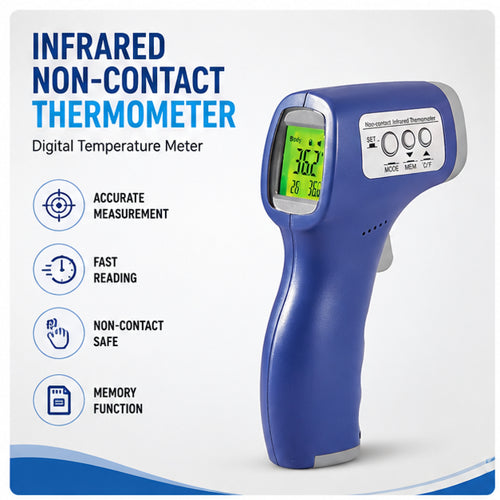
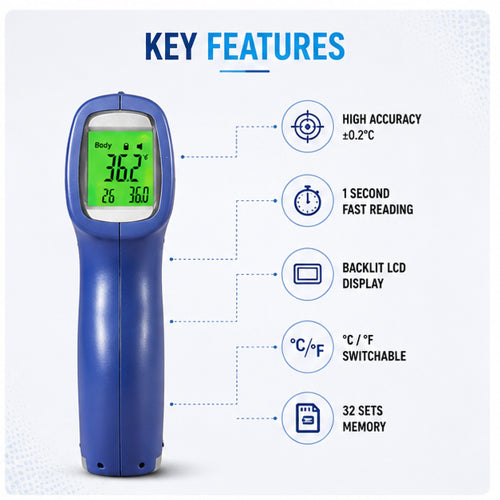
 Infrared Non-Contact Thermometer | Digital Temperature Meter
“It’s incredibly easy to use – just point and click for an instant, accurate reading. The non-contact featur...”
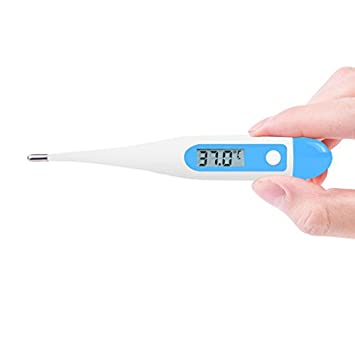
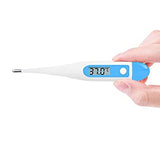 Digital Thermometer Fixed Tip
“The Digital Thermometer Fixed Tip is highly accurate and easy to use. A great tool for quick temperature re...”
“This Digital Thermometer with a fixed tip is a great buy! It’s compact, easy to use, and gives fast, accura...”
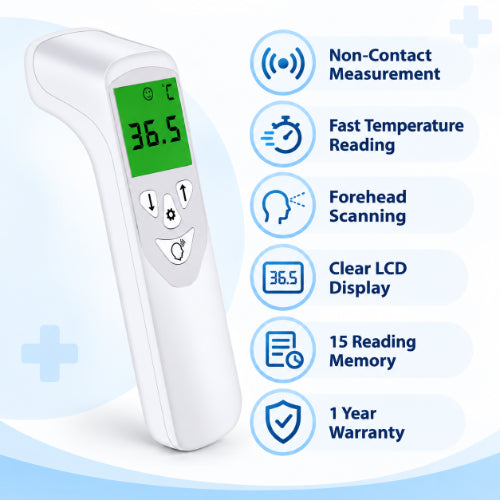
 Non Contact Infrared Thermometer With 1 Year Warranty - Naulakha
“The Naulakha Non-Contact Infrared Thermometer is easy to use, provides instant and accurate readings, and t...”
“I’m very satisfied with the Naulakha Non-Contact Infrared Thermometer! It provides fast and accurate readin...”
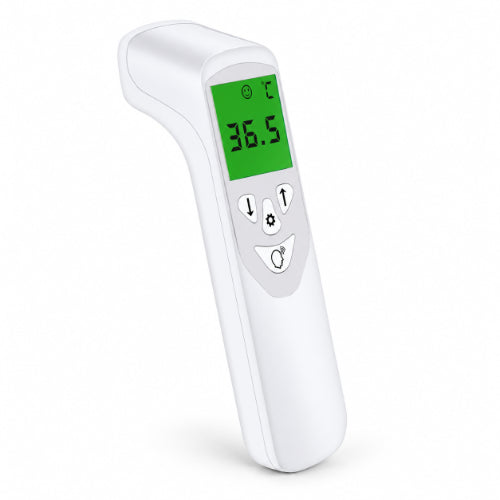
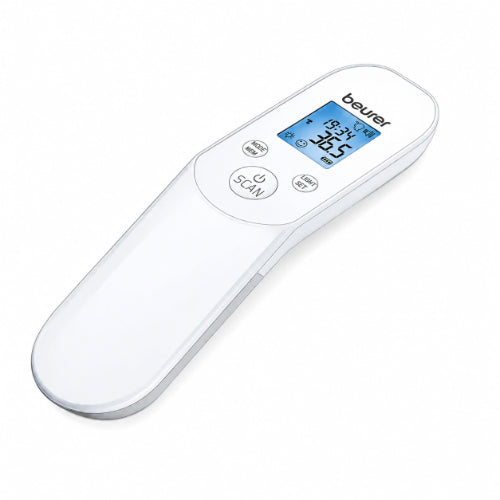
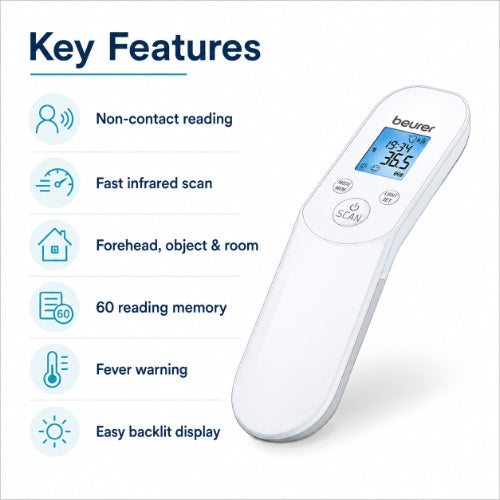
 Beurer FT 85 Clinical Non Contact Thermometer
“This is outstanding! It gives quick and highly accurate temperature readings without any contact, which is ...”
Temperature meter: body thermometer types and use
Temperature meter use helps a family check body heat when someone feels unwell. The meter measures body temperature and helps you decide when to watch, rest, or call a doctor. A doctor or trained professional should guide medical use, especially for babies, older adults, and people with ongoing illness.
This guide covers only body temperature devices, not industrial or room meters. It explains common body temperature meter types, safe sharing, cleaning, and simple steps for clearer readings at home.
Temperature meter basics for home health checks
A body temperature meter gives one useful health sign. It does not explain the full illness by itself. You should weigh the temperature with symptoms, age, and general condition.
Home users often check temperature when someone feels hot, shivery, weak, or unwell. The temperature helps you speak clearly with a doctor. It also helps you track changes over time.
Use the same body site when you compare temperatures. A forehead temperature and an underarm temperature may not match exactly. Tell your doctor which method you used when you discuss fever. MedlinePlus advises sharing the measurement type with the health care provider.
What does a body temperature meter measure?
A body temperature meter measures body temperature at a chosen body site. Some devices touch the body, while a forehead non-contact meter reads heat from the skin surface.
The reading can help detect fever or track illness. It cannot name the cause of fever. MedlinePlus notes that body temperature measurement can help detect illness and monitor treatment discussions.
A forehead non-contact meter reads heat from the forehead area. The FDA explains that non-contact forehead devices measure surface temperature and use device design to relate it to body temperature.
Temperature meter types for home users
Two body temperature types suit most homes: digital thermometer (fixed tip) and infrared non-contact thermometer. These options support common family needs without adding complex choices.


A digital thermometer (fixed tip) is a contact device. It touches the body at the chosen site and shows the temperature on a screen. Many families use this style for simple personal checks.
An infrared non-contact thermometer is a forehead device. Some people call it an ir thermometer. It checks from a short distance and reduces direct touch between users.

|
Body temperature meter type |
How it is used |
Main home benefit |
Key care point |
|---|---|---|---|
|
Digital thermometer (fixed tip) |
Touches the body at the chosen site |
Simple screen reading |
Clean before and after use |
|
Infrared non-contact thermometer |
Reads from the forehead area |
Less contact between users |
Keep the forehead clear and dry |
Temperature meter use starts with the instruction leaflet
Every body temperature meter has its own use method. Read the leaflet before the first use. Keep it where family members can find it.
Do not guess the distance, timing, or body site. Small changes can affect the reading. The FDA advises users to follow the manufacturer instructions for non-contact forehead devices.
Check the battery and display before use. A weak display can lead to wrong temperature notes. Replace batteries only as the product leaflet advises.
Store the thermometer in a clean, dry place. Keep it away from dust and moisture. Avoid leaving it in direct sunlight.
How do contact and non-contact meters differ?
Contact meters touch the body, while non-contact meters read from a short distance. A contact meter needs careful cleaning after each user, and a non-contact meter needs correct forehead position.
A contact body temperature meter may suit one user or a planned family routine. It needs clear hygiene habits. It also needs proper placement at the chosen body site.
A non-contact forehead meter may suit quick checks for more than one person. It may lower touch between users. Still, it needs a clear forehead, steady hand, and correct distance.

Neither style replaces medical advice. A trained professional should guide use when illness looks serious. Call a doctor when symptoms worry you.
Temperature meter reading quality depends on preparation
Good preparation makes a result more useful. Ask the person to sit still for a short time. Keep the checking area calm and comfortable.
Do not check the temperature immediately after heavy activity, bathing, or a hot drink. MedlinePlus advises waiting after heavy exercise, a hot bath, smoking, eating, or hot or cold drinks.
Use the same method each time when tracking fever. Changing the method can confuse the trend. Write down the body site with the temperature.
-
Read the leaflet before use.
-
Wash or sanitise hands before handling the thermometer.
-
Check that the display works clearly.
-
Use the same body site for repeat checks.
-
Keep the person still during the check.
-
Note the time, temperature, and symptoms.
-
Clean the thermometer as instructed.
-
Call a doctor if the person looks very unwell.
How should a forehead meter be positioned?
A forehead meter should face the forehead straight, at the distance given in the leaflet. The person should stay still until the measurement finishes.

Keep the sensing area clean and dry. Do not press it on the forehead unless the leaflet says so. The FDA advises holding the sensing area perpendicular to the forehead for non-contact forehead devices.
Clear hair, head covers, sweat, and cosmetic products from the test area. Use the same forehead area each time when you compare readings. Do not check the temperature in direct sun.

What conditions can distort a forehead reading?
Forehead readings can change when the forehead is sweaty, covered, recently cooled, or warmed. Direct sunlight, drafts, heat sources, and wrong distance can also affect the result.

The FDA lists environment, head coverings, forehead condition, and positioning as factors for non-contact forehead devices. It also advises use away from direct sun and radiant heat sources.
A person who just came from outside may need time to settle. A child wearing a cap may need the forehead uncovered. A user should avoid wiping with cosmetic products just before checking.
Temperature meter cleaning protects every user
Cleaning matters when a family shares one device. Germs can pass through hands, surfaces, and contact points. A clean routine keeps the thermometer ready for the next user.
Follow the cleaning section in the product leaflet. Some devices need a wipe, while some need only gentle surface cleaning. Never soak a body temperature meter unless the leaflet clearly permits it.
The FDA says most non-contact forehead devices should not be immersed in water or other liquids. MedlinePlus says users should clean the device before and after use.
How should a meter be cleaned between users?
Clean the meter between users exactly as the product leaflet says. Use the recommended method, let the device dry, and avoid liquid entering the sensor or display.
For a contact meter, clean the part that touches the body. For a non-contact forehead meter, keep the sensing area clean and dry. Wash or sanitise hands before storing it.

Do not share a device when you cannot clean it correctly. Keep a small cleaning routine near the device. This helps every family member follow the same habit.
Can one household meter be shared safely?
One household meter can be shared more safely when users clean it correctly and follow the leaflet. Families should avoid sharing without cleaning between users.
Assign one adult to manage cleaning during illness. Store the device in one known place. Keep children from playing with it.
If a user has a contagious illness, take extra care. Clean hands before and after use. Ask a doctor or trained professional for infection control advice when needed.
Temperature meter mistakes that cause confusing readings
Many wrong readings come from simple mistakes. The person may move, the device may sit at the wrong distance, or the forehead may stay covered. A rushed check can mislead the family.
A second mistake involves changing methods often. A forehead temperature, underarm temperature, and contact temperature may not match exactly. Compare like with like when watching a trend.
A third mistake involves poor notes. The temperature alone tells less than a full note. Add time, body site, device type, and symptoms.
What mistakes make temperature readings wrong?
Wrong results often come from poor positioning, unclean sensors, movement, and checking too soon after activity. A covered or sweaty forehead can also affect a forehead reading.
Users also make mistakes when they ignore the leaflet. Each product sets its own timing, distance, and cleaning steps. Repeat the reading only as the leaflet allows.
Do not keep checking again and again without purpose. It can create worry and confusion. Track changes sensibly and speak with a doctor when symptoms concern you.
Temperature meter notes make doctor calls clearer
A clear note helps a doctor understand the situation. Write the reading, time, device type, and body site. Add symptoms like cough, vomiting, rash, pain, or tiredness.

Also note medicines already taken. Do not change medicine based only on the temperature. A doctor or trained professional should guide medical use.
For children, describe behaviour in simple words. Say whether the child drinks, passes urine, responds, or looks dull. Doctors often ask these questions during fever advice.
When should a fever reading prompt a doctor visit?
A fever reading should prompt a doctor visit when the person looks very unwell, has worrying symptoms, or has high fever. A doctor advises on high fever and the next safe step.
Seek urgent help for breathing trouble, chest pain, confusion, stiff neck, seizure, severe weakness, dehydration signs, or fever in a very young baby. Mayo Clinic lists serious symptoms that need medical care during fever.
Do not wait only for a higher temperature when the person looks worse. Behaviour, breathing, alertness, and hydration matter. When in doubt, call a doctor.
Temperature meter use for babies, children, adults, and older adults
Families should take extra care with babies and older adults. They may become unwell faster. A doctor should guide fever checks and action for these groups.
For children, keep the process calm. Explain the step before you check. Ask the child to sit still for a few seconds.
For adults, record symptoms along with the reading. Include body pain, chills, cough, or stomach upset. This helps during a doctor call.
For older adults, watch overall condition closely. Confusion, weakness, or breathing changes need attention. Do not rely only on a temperature number.
Temperature meter comparison without overthinking the choice
A home user needs a device that the family can use correctly. The best choice depends on who uses it, how often, and how well users follow steps. Cleaning and placement matter as much as the device style.
|
Need at home |
Useful body temperature meter choice |
Why it may help |
What to remember |
|---|---|---|---|
|
One person checks at home |
Digital thermometer (fixed tip) |
Simple contact use |
Clean after every use |
|
Several family members need quick checks |
Infrared non-contact thermometer |
Less touch during checks |
Position it correctly |
|
Child moves often |
Forehead non-contact style |
Quick reading process |
Keep child still briefly |
|
Tracking illness over days |
Any chosen device used consistently |
Clearer trend notes |
Use the same method |
Do not choose only by habit. Choose the device that your family can use cleanly and correctly. If medical decisions depend on readings, ask a trained professional.
How do digital meters compare with mercury ones?
Digital meters show readings on a screen and avoid glass mercury handling. Mercury glass devices can break and expose users to mercury risk.
MedlinePlus says the American Academy of Pediatrics recommends not using glass thermometers with mercury. It also notes that glass can break and mercury is a poison.
For this guide, focus on body temperature meter options made for safe home handling. Do not use older glass mercury devices for family checks.
Temperature meter care during illness at home
During illness, keep the device easy to find. Keep tissues, water, medicine notes, and the cleaning item nearby. This avoids rushing around during fever checks.
Use one notebook or phone note for all readings. Record time and symptoms each time. This gives a clearer picture than memory.
Do not let many people handle the device. One adult can manage checking and cleaning. This lowers confusion and supports hygiene.
If a doctor gives specific instructions, follow those instructions. Share your notes during the call or visit. Ask what signs should prompt urgent care.
Temperature meter storage and battery habits
Store the body temperature meter in its case or a clean pouch. Keep it away from kitchen heat, bathroom moisture, and direct sunlight. A stable storage spot protects the sensor and display.
Check the device before the fever season or travel. Make sure the display, sound, and buttons work. Keep spare batteries if the leaflet allows user replacement.
Do not drop the device. A fall can affect the sensor or display. If readings look odd after damage, stop using it and ask the seller or manufacturer.
Temperature meter use while travelling in India
Travel can expose the device to heat, dust, and handling. Keep it in a clean pouch inside your bag. Avoid leaving it in a parked vehicle.
Let the device settle before checking after outdoor travel. A sudden change from heat to air conditioning can affect readings. The person being checked should also settle.
Keep cleaning items with the device. Clean hands before and after use. This matters in trains, buses, hotels, and shared homes.
Temperature meter reading and fever anxiety
Many families worry when they see a high temperature. A body temperature meter gives useful information, but it does not tell the whole story. Look at the person, not only the display.
Check breathing, alertness, drinking, urine, pain, and skin changes. These signs help decide urgency. Mayo Clinic advises medical care when fever comes with serious symptoms.
Avoid repeated temperature checks every few minutes. This can increase stress and create small differences. Follow a sensible schedule from your doctor if illness continues.
Temperature meter checklist before every reading
Use this plain checklist before a reading. It suits most home checks. Always follow the product leaflet when it gives different steps.
-
The device looks clean and dry.
-
The display turns on clearly.
-
The person sits still and calm.
-
The chosen body site matches earlier checks.
-
The forehead is clear and dry for forehead use.
-
The device sits at the correct distance for non-contact use.
-
The reading gets written with time and symptoms.
-
The device gets cleaned before storage.
Temperature meter safety habits for shared homes
Shared homes need a fixed routine. Keep the device in one place. Tell all users to clean it after every check.
Do not let anyone borrow it without the cleaning method. A quick wipe with the wrong liquid may damage the device. The leaflet should guide cleaning.
Label the case if needed. Keep it away from small children. Store cleaning items separately but nearby.
Temperature meter communication with doctors
When you call a doctor, give clear details. State the reading, time, body site, and device type. Say whether you used a contact or non-contact device.
Mention the person’s age and main symptoms. Tell the doctor about existing illness, pregnancy, or medicines. Do not hide changes in behaviour or breathing.
Ask the doctor what to do next. Ask when to check again. Ask which symptoms need urgent care.
Temperature meter buying thoughts without price talk
A body temperature meter should feel easy for the family to use. Choose a display that users can read clearly. Choose a style that fits your cleaning routine.
For a small family, a fixed-tip contact option may feel simple. For quick forehead checks, a non-contact option may feel easier. Both still need careful use.
Check whether the leaflet uses simple steps. Check cleaning instructions before regular use. A device that users understand often gives more consistent home notes.
Temperature meter takeaway for daily family care
A body temperature meter works best when users keep the process simple. Choose one body site, follow the leaflet, clean the device, and write clear notes. These habits make readings easier to discuss with a doctor.
Digital thermometer (fixed tip) and infrared non-contact thermometer types both serve body temperature checks. Use them as health-support tools, not as a substitute for medical advice. A doctor or trained professional should guide care when fever or symptoms worry you.
Sources:
-
U.S. Food and Drug Administration: Non-contact Infrared Thermometers.
-
MedlinePlus Medical Encyclopedia: Temperature measurement.
-
Mayo Clinic: Fever first aid and fever symptoms guidance.
Explore more home health devices
Thermometers
Explore Medical Collections
All Categories
Abdominal & Maternity Support

Accessories

Accu-Chek Instant Strips: Use, Compatibility, Price & Blood Sugar Testing Guide
Accu-Chek Instant Strips: Uses, Features & Complete Guide

accupuncture

Acupuncture Needles & Supplies

Advanced Physiotherapy Machines & Lumbar Physiotherapy

Airways
Alcohol Swab: Uses, Safe Use and Disposal Guide
Ambu Bag Full Form: Is There an Official Meaning?
Ambu Bag: Parts, Uses and Safety Guide
Ambu Full Form: What the Name Means and BVM Basics

Ambulance

Anatomy Models
Anesthesia Machine
You may also need
FOR YOURecommended for you
Save 23%
Save 6%
Save 12%
Save 22%