


Featured ChoiceSave 33%
Save 26%
Save 25%


What customers say
★★★★★ 5.0 · 2 reviews
weighing machine: types, uses, accuracy & buying guide
How to Choose the Right Weighing Machine
A good weighing machine should be easy to use, accurate enough for daily needs, and suitable for the person or purpose it is bought for. In Indian homes, most people want a simple device for body weight, but the right choice also depends on capacity, display, platform size, battery life, service support, and whether you want smart features. This guide explains the main types, what to check before buying, and how to use a weighing scale correctly so your weight measurement is more reliable.
Weighing machine buying insights
Weighing machine accuracy
A weighing machine should give stable readings on the same hard, level floor.
Weighing machine capacity
Choose a weighing machine with enough capacity for every expected user.
Weighing machine display
A clear weighing machine display makes regular home tracking easier.
Weighing machine features
Choose smart features only when the weighing machine app or tracking tools are useful.
What is weighing and measuring?
Weighing and measuring means finding the quantity, size, or amount of something using a standard unit. For body weight, the standard unit in India is usually kilograms, and a weighing machine is used to show how heavy a person or object is. Measuring can also include height, waist size, food portions, luggage, parcels, or ingredients, depending on the tool used. People often ask, “What is weighing used for?” In daily life, it is used for health tracking, fitness goals, cooking, shipping, shopping, agriculture, clinics, gyms, and small businesses.
At home, the most common use is checking body weight regularly so you can notice changes over time. A weighing machine is also commonly called a weighing scale, weighing machine, digital scale, body weighing machine, human body weighing machine, or digital body weighing machine. If someone asks, “What is the weighing machine called?”, the simple answer is that all these names are used, though “weighing scale” and “weighing machine” are the most standard terms.

Why the right weighing machine matters
A weighing machine looks simple, but a poor-quality one can create confusion. If the reading changes every time you step on it, you may think your body weight is going up or down when the device is actually the problem. This is why accuracy, stability, and build quality matter more than just looks. For many families in India, one device is shared by parents, children, grandparents, and sometimes guests. The device should therefore be easy to read, safe to stand on, and strong enough for different users. A small, slippery, or low-capacity scale may not be comfortable for everyone. The right device also saves frustration.
A good digital weighing machine gives quick readings, has a clear display, and works well on a flat floor. A smart scale can connect to an app and act as a weight tracker, which is useful if you want to follow progress over weeks or months.
Common types of weighing machines for home and personal use
Different users need different types of machines. Before looking at the weighing machine price, understand what each type can do and where it fits best.
Manual weighing scale
A manual weighing scale, also called an analogue scale, uses a dial and needle. You step on it, and the needle points to your weight. It does not need batteries, which is useful if you want a simple device without electronics. However, manual scales can be harder to read, especially if the dial is small. They may also need regular zero adjustment. If the needle is not exactly at zero before use, the reading can be wrong.
Digital weighing machine
A digital weighing machine shows the reading on an electronic display. It is one of the most popular choices for home use because it is quick, compact, and easy to read. Many models switch on automatically when you step on them. A digital scale is useful for people who want a clear number rather than reading a needle. It may show weight in kilograms and sometimes in pounds too. Since it runs on batteries, you should also check battery type and availability before buying.
Smart weighing machine
If you are wondering, “What is a smart weighing machine?”, it is a weighing machine that can connect to a mobile app through Bluetooth or Wi-Fi. A smart scale usually records your readings over time and may show extra body composition estimates, depending on the model. The biggest benefit is tracking. Instead of writing your weight in a diary, the app can become your weight tracker and show trends. This is helpful for people working on fitness, weight management, or habit building. At the same time, smart readings beyond body weight should be treated as estimates, not medical results. For general home use, the main value is convenience, history, and progress tracking.
Mechanical platform and utility scales
Some people search for “device weighing machine” when they actually mean a device for weighing objects, parcels, grains, or luggage. These are different from a weighing machine for body weight. Utility scales may have a larger platform, higher capacity, and different graduation levels. For home fitness, choose a body weighing machine. For shop, kitchen, luggage, or business use, choose a scale made for that purpose. Using the wrong type may give poor readings or damage the device.
Which type of weighing machine is best?
The best weighing machine is the one that matches your purpose, is easy to read, has suitable capacity, and gives consistent readings on a flat surface. For most Indian homes, a digital body weighing machine is the best balance of ease, accuracy, and price. If you want app-based tracking, a smart scale is better; if you want a no-battery option, a manual scale may be enough. There is no single best device for every person. A older adult may prefer a large display and broad platform. A fitness-focused user may want app connectivity. A family may need a strong platform, good warranty, and reliable service in India. Here is a simple way to decide:
- For basic home use: choose a digital weighing machine with a clear display and strong platform.
- For fitness tracking: choose a smart scale with a good app and weight history.
- For older adults: choose a wide, stable platform with large digits and anti-skid feet.
- For no-battery use: choose a manual weighing scale, but check zero adjustment.
- For shops or parcels: choose a platform scale or commercial weighing machine, not a bathroom scale.
When people ask, “Which device is best for weight?” they usually mean personal body weight. In that case, look for a dedicated weighing machine for body weight rather than a multipurpose utility scale.
Which weighing machine is better, a digital or a manual?

A digital weighing machine is better for most people because it is easier to read, gives quick results, and usually shows small changes more clearly than a manual scale. A manual weighing scale is better only if you want a simple, battery-free option and do not mind reading a dial. For everyday body weight tracking, digital is usually more convenient. Digital models are popular in Indian homes because they are compact, stylish, and simple to use. They often show readings in clear numbers, which helps avoid guessing. Many also switch off automatically to save battery. Manual models still have a place. They are sturdy, do not need charging, and can work for years if handled well. But the dial may be less precise for small changes, and readings can vary if the scale is not set to zero.
Digital vs manual at a glance
Digital weighing machine
Reading style: Number display
Ease of reading: Very easy
Battery needed: Yes
Small weight changes: Easier to notice
Maintenance: Battery replacement
Best for: Home fitness, families, tracking
Manual weighing scale
Reading style: Needle and dial
Ease of reading: Depends on dial size
Battery needed: No
Small weight changes: Harder to notice
Maintenance: Zero adjustment
Best for: Basic use, no-battery preference
If you are buying for a family, a digital weighing machine is usually the safer choice. If you are buying for a person who dislikes electronic devices, a manual scale can still work well.
Weighing machines at Meddey
Compare digital weighing machine options for home, fitness, clinic and body-composition tracking.
 SAMSO Supreme Automatic Digital Weighing Scale 180 kg₹1,349View product
 Beurer GS10 Bathroom Weight Machine₹1,491View product
 Omron HBF 222T Complete Digital Body Composition Monitor With Bluetooth₹4,250View product
 Ultrasonic Digital BMI Body Fat Scale | Smart Body Composition Scale₹24,000View product
Buyer’s guide for choosing a weighing machine in India
Buying a weighing machine is not only about price or design. In India, you also need to think about floor type, humidity, battery availability, service support, and whether the device will be used by one person or the whole family. Use this buyer’s guide before you compare body weighing machine price or online deals.
1. Accuracy and consistency
Accuracy means how close the reading is to the true weight. Consistency means whether the device gives the same reading when used correctly again and again. For home use, consistency is very important because you are mostly tracking changes over time. Before buying, read product details and user feedback carefully. A good weighing machine should not show a different number every time you step on it within a few seconds. Small changes can happen because of posture or floor surface, but large random changes are a warning sign. To improve accuracy at home, place the scale on a hard, level floor. Avoid carpets, uneven tiles, thick mats, or sloped bathroom areas. Weigh yourself at the same time of day, preferably under similar conditions.
2. Maximum capacity
Maximum capacity tells you the highest weight the device can safely measure. For a human body weighing machine, choose a capacity that comfortably covers the heaviest expected user. Do not buy a device that is very close to the user’s current weight because it may reduce reliability and safety. Many home machines are designed for regular adult use, but capacity can vary by model. Families should check this carefully before buying. If the device is for a gym, clinic, or shared setting, a higher-capacity model may be more suitable. Never exceed the rated capacity. Overloading can damage sensors, bend the platform, or make readings unreliable. If more than one person will use the scale, buy with the full household in mind.
3. Graduation or least count
Graduation, also called least count, means the smallest change the device can show. For example, some scales show weight changes in small steps, while others show larger steps. A smaller graduation is useful if you want to track small progress. For everyday home use, very fine readings are not always necessary. Body weight naturally changes during the day because of water, food, clothing, and activity. Still, a digital scale with clear graduation can help you notice trends better than a rough dial. Do not judge progress from one reading alone. Even with a good scale, compare weekly or monthly patterns. This is where a smart scale or app-based weight tracker can be useful.
4. Platform size and comfort
The platform is the area where you stand. If it is too small, your feet may not sit comfortably, and your balance may shift. This can affect both comfort and reading. For Indian homes, check whether the platform fits your bathroom, bedroom, or storage area. Compact machines look neat, but a slightly wider platform is often better for adults, older adults, and people with larger feet. Anti-skid feet or a stable base are also helpful on tile floors. Glass platforms look modern but should be thick and strong. Plastic platforms can be lighter, while metal or reinforced designs may feel more durable. Choose comfort and safety over style.
5. Build quality and material
Build quality affects how long the weighing machine lasts. A weak body may crack, wobble, or become inaccurate with regular use. Look for a device that feels stable when placed on the floor and does not flex too much under pressure. In many Indian cities, humidity and dust are common. If the scale will be kept in the bathroom, avoid placing it where water can splash directly. Even if the body looks sealed, moisture can affect electronic parts over time. Check the edges, feet, platform surface, and display area. A good device should not have sharp edges, loose parts, or a slippery standing area. For families with children, durability matters even more.
6. Display and readability
A clear display makes daily use easier. Large digits are helpful for older adults, people with low vision, and anyone checking weight early in the morning. A backlit display can be useful in low light. Check whether the display remains visible while standing naturally. On some small machines, your stomach or posture may block the view. A display near the front edge is often easier to read. Also check units. In India, kilograms are the most useful unit for body weight. If the device allows switching between kg, lb, and other units, make sure it does not accidentally change units too easily.
7. Connectivity and app features
Connectivity matters if you want a smart scale. A smart weighing machine may connect through Bluetooth or Wi-Fi and store readings in an app. This can be useful for people who want to track long-term progress without manual notes. When checking app features, look for simple syncing, multiple user profiles, easy graphs, and compatibility with your phone. Also consider privacy. Since health-related data may be stored in the app, choose a brand and app you are comfortable using. Do not buy a smart scale only because it has many numbers on the screen. Extra body composition estimates can be interesting, but body weight tracking and trend history are usually the main practical benefits.
8. Batteries and power
Most digital weighing machines use replaceable batteries. Before buying, check what battery type is required and whether it is easily available in India. Some models use common cells, while others use coin batteries. A low-battery indicator is useful because weak batteries can cause wrong or unstable readings. Auto-off is also helpful because it saves power. If the device is used by many people, battery life becomes more important. Keep spare batteries at home if you use the device often. Avoid leaving old batteries inside for too long, as leakage can damage the compartment.
9. Warranty and service in India
Warranty and service support are important, especially when buying online. Check the warranty period, what it covers, and how service is handled in India. A low price is less attractive if replacement or repair is difficult. Look for clear seller details, return policy, customer support options, and service availability. If you are buying from a marketplace, check whether the product is sold by a reliable seller. Keep the invoice safely because it is usually needed for warranty claims. For smart scales, also consider app support. If the app is poor or not updated, the smart features may become less useful even if the hardware works.
How to use a weighing machine correctly

Many people search for how to use weighing machine correctly because their readings keep changing. The device may not be faulty; the method may be inconsistent. A few simple habits can make your readings more useful. Use this routine for better results:
- Place it on a hard, flat floor. Avoid beds, carpets, mats, uneven tiles, and sloping bathroom floors.
- Check that the display shows zero. For manual scales, adjust the dial to zero before stepping on.
- Stand in the centre. Keep both feet flat and distribute weight evenly.
- Stay still for a few seconds. Movement can affect the reading.
- Weigh at the same time. Morning after using the washroom is common, but consistency matters more than timing.
- Wear similar clothing. Heavy clothes, shoes, or accessories can change the reading.
- Track the trend, not one number. Daily body weight can move up and down naturally.
If you use a smart scale, open the app if needed and make sure the reading syncs to the correct user profile. If multiple family members use the same device, profile mix-ups can create confusing records.
How to measure a weighing machine?
To measure or check a weighing machine, place it on a flat surface, set it to zero, and test it with a known weight or by repeating the same measurement several times. If the reading is stable and close to the expected value, the device is likely working well for home use. If the number changes widely without reason, the floor, battery, or sensor may be the problem. For a body weighing machine, one practical home test is repeatability. Step on, note the reading, step off, wait a few seconds, and step on again in the same position. The reading should be close each time.
If it changes too much, move the device to another flat floor and try again. You can also test with a fixed object of known weight, such as a sealed pack or dumbbell, if its weight is reliable. However, household objects are not always exact. For commercial use, proper calibration by an authorised service provider may be required. If you are asking “How to measure a weighing machine?” because you want its physical size, check the product dimensions: length, width, height, and platform area. For personal use, platform size is more important than the device’s storage thickness.
Height, weight, and body tracking basics
A weighing machine gives you body weight, but many people also want to understand height and weight together. This is common for fitness tracking, school health checks, clinics, and general wellness goals. The key is to measure both correctly and avoid over-reading one number.
What is used to measure height and weight?
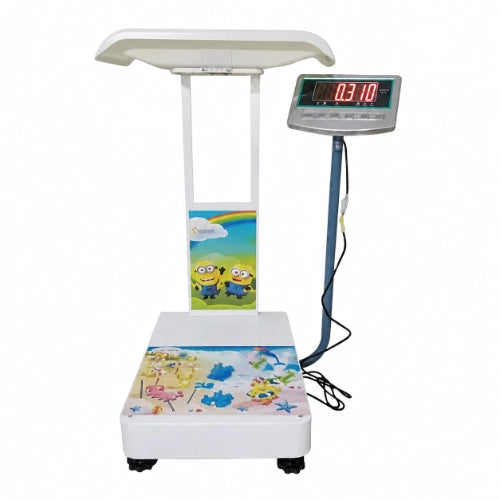
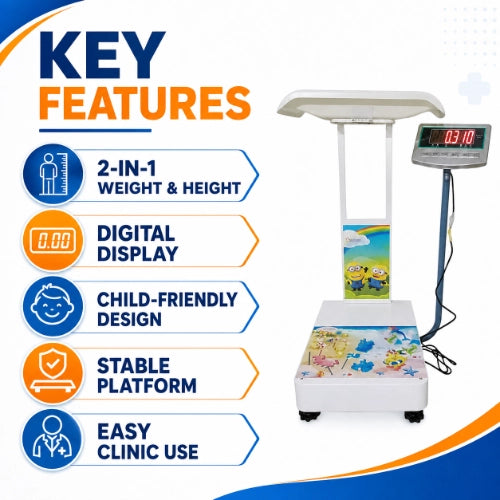
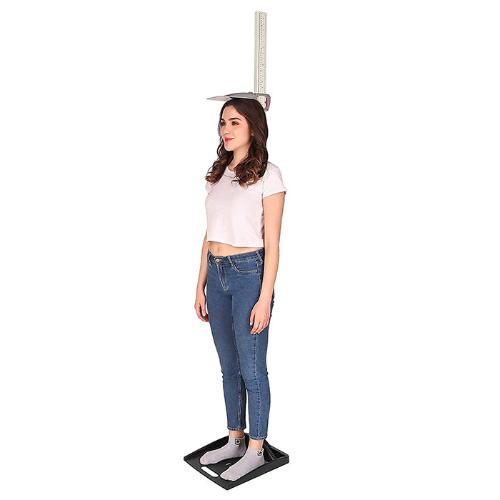
Height is usually measured with a stadiometer, wall-mounted height chart, measuring tape, or height rod. Weight is measured with a weighing machine, weighing scale, digital body weighing machine, or smart scale. In clinics, you may see a combined height and weighing machine, but at home, most people use separate tools. If you are measuring children, accuracy matters because they are still growing. Use the same wall and method each time. For adults, height does not change much, but posture can affect the reading.
How to measure height and weight?
For height, stand straight against a wall with heels together, back straight, and head level. Remove shoes, bulky hair accessories, and caps. Mark the top of the head carefully and measure from the floor to the mark. For weight, use the weighing machine on a hard, flat surface. Remove shoes and heavy items from pockets. Stand still and record the reading in kilograms. If you are tracking health or fitness, write both numbers with the date. This helps you compare progress without relying on memory. A simple notebook, spreadsheet, or app can work.
What type of measurement is height and weight?
Height and weight are physical body measurements. Height measures length, usually in centimetres or feet and inches, while weight measures body mass as shown by a weighing machine, usually in kilograms in India. Together, they can help describe body size, but they do not tell the full story of health. For example, two people can have the same body weight but different muscle, fat, bone structure, and fitness levels. So use height and weight as basic indicators, not as the only measure of wellbeing.
How to calculate weight by height?
You cannot calculate a person’s exact weight by height alone because people with the same height can have very different body types. However, height and weight are often used together to estimate body mass index, commonly called BMI. BMI is a general screening number, not a complete health diagnosis. If you are concerned about weight, fitness, pregnancy, child growth, health needs of older adults, or medical conditions, speak to a qualified healthcare professional. A weighing machine can help track body weight, but it cannot explain the reason behind weight gain or loss.
Understanding price without buying the cheapest option
weighing machine price varies because of brand, capacity, material, display quality, sensors, smart features, and warranty. A basic manual or digital model usually costs less than a smart scale with app connectivity. But the cheapest option is not always the best if it gives unstable readings or breaks quickly. When comparing body weighing machine price, check what you are actually getting. A slightly higher price may be worth it if the platform is stronger, the display is clearer, the warranty is better, or the seller has reliable service in India. On the other hand, you may not need an expensive smart scale if you only want to check weight once a week. Think of price in relation to use:
- Occasional use: a basic digital weighing machine may be enough.
- Daily tracking: choose better build quality and consistent sensors.
- Family use: prioritise capacity, platform size, and durability.
- Fitness use: consider a smart scale with app history.
- Older adults: pay attention to readability and stability.
Avoid buying only because a model looks stylish. A good weighing machine should first be safe, steady, and easy to read.
Mistakes to avoid when buying a weighing machine
Small buying mistakes can make daily use irritating. Before placing an order, slow down and check the practical details.
Choosing looks over stability
Slim glass machines can look attractive, but they must still feel strong and stable. If the platform is too small or slippery, the device may not be comfortable. Good design should support safe standing, not just good photos.
Ignoring the maximum capacity
Some buyers forget to check capacity and assume all scales are the same. This is risky if the device will be used by different family members. Always choose a capacity with enough margin.
Keeping the scale in the wrong place
A weighing scale kept on a wet bathroom floor, thick mat, or uneven tile may give poor readings. Storage matters too. Keep it dry, clean, and away from rough handling.
Expecting medical-level results from a home scale
A home digital scale is useful for tracking weight, but it is not a full medical device. Smart scale body composition numbers are estimates. Use them for trend awareness, not final medical decisions.
Not checking service and returns
For online purchases in India, return windows and warranty rules matter. Read them before buying. If the product arrives damaged or inaccurate, a clear return process saves trouble.
A practical checklist before you buy
Use this checklist to compare two or three models instead of getting lost in hundreds of options:
- Does the device match your main use: body weight, luggage, kitchen, shop, or clinic?
- Is the maximum capacity suitable for all expected users?
- Is the graduation good enough for the kind of tracking you want?
- Is the platform wide and stable enough?
- Are the display digits large and easy to read?
- Does it show weight in kilograms?
- Is the build quality suitable for Indian home conditions?
- Are batteries easy to find and replace?
- If it is a smart scale, is the app easy to use?
- Does it support multiple users if your family needs it?
- Is there a clear warranty and service process in India?
- Is the seller reliable, with a proper invoice and return policy?
- Does the price make sense for the features you will actually use?
This simple checklist can help answer questions like “What is the best weighing machine for home use?” and “Which device is best for weight?” without depending only on ads or star ratings.
When a smart scale is worth it
A smart scale is worth considering if you enjoy tracking progress and want your readings stored automatically. It can help you see whether your body weight is moving up, down, or staying stable over time. This is more useful than reacting to one day’s number. For example, if your weight increases after a salty meal or a late dinner, you may panic if you look at only one reading. A weight tracker shows a wider pattern, which is calmer and more useful. This can support fitness routines, diet planning, and regular check-ins. However, a smart weighing machine is not necessary for everyone. If you only want a quick reading once in a while, a normal digital weighing machine is enough. Buy smart features only if you will actually use the app.
Care and maintenance for longer life
A weighing machine lasts longer when treated gently. Do not drop it, jump on it, or drag it roughly across the floor. Sensors can be sensitive, especially in digital models. Keep the platform clean with a soft, dry or slightly damp cloth. Avoid pouring water on the scale or using harsh cleaners near the display. If it is stored under a bed or cabinet, make sure heavy items are not placed on top. Replace batteries when the low-battery symbol appears. If the readings suddenly become strange, try new batteries before assuming the device is damaged. Also check whether the unit has accidentally changed from kilograms to another setting. For manual scales, check the zero mark regularly. For digital scales, use the same flat location whenever possible. Consistent placement gives more reliable results.
Final takeaway
The right weighing machine should fit your purpose, your home, and your habits. For most Indian households, a reliable digital weighing machine with a clear display, suitable capacity, stable platform, easy battery replacement, and decent warranty is a sensible choice. If you want automatic tracking, a smart scale can add value, but only if the app is simple and useful. Do not choose only by weighing machine price or design. Check accuracy, graduation, platform size, build quality, display, connectivity, batteries, and service support in India. When you use the device correctly and track trends instead of single readings, it becomes a practical tool for understanding body weight with less confusion and more confidence.
Explore Medical Collections
All Categories
Abdominal & Maternity Support

Accessories

Accu-Chek Instant Strips: Use, Compatibility, Price & Blood Sugar Testing Guide
Accu-Chek Instant Strips: Uses, Features & Complete Guide

accupuncture

Acupuncture Needles & Supplies

Advanced Physiotherapy Machines & Lumbar Physiotherapy

Airways

Alcohol Swab: Uses, Safe Use and Disposal Guide

Ambu Bag Full Form: Is There an Official Meaning?

Ambu Bag: Parts, Uses and Safety Guide

Ambu Full Form: What the Name Means and BVM Basics

Ambulance

Anatomy Models
Anesthesia Machine
You may also need
FOR YOURecommended for you
Save 33%
Save 26%
Save 25%