1
Elbow CPM Machine – Continuous Passive Motion Therapy Equipment


Double-tap to zoom · drag to pan · swipe to browse
Elbow CPM Machine – Continuous Passive Motion Therapy Equipment
In Stock
Check delivery
See if we deliver to you and when.
Delivering to
Delivery applicable
Free Shipping
on orders ₹999+
100% Genuine
Products
Dedicated
Support
Secure
Payments
Need help choosing or using this product?
Our team can help with product questions and orders.
Chat with support
Choose options
- Controlled Elbow Movement: Supports guided passive movement of the elbow joint.
- Continuous Passive Motion: Allows repetitive movement without requiring continuous active effort from the patient.
- Rehabilitation Support: Helps therapists incorporate structured elbow mobility into supervised rehabilitation programs.
- Adjustable Therapy: The machine can be used according to the available movement and therapy requirements of the speci...
Check delivery
See if we deliver to you and when.
Delivering to
Delivery applicable
- Controlled Elbow Movement: Supports guided passive movement of the elbow joint.
- Continuous Passive Motion: Allows repetitive movement without requiring continuous active effort from the patient.
- Rehabilitation Support: Helps therapists incorporate structured elbow mobility into supervised rehabilitation programs.
- Adjustable Therapy: The machine can be used according to the available movement and therapy requirements of the speci...
Check delivery
See if we deliver to you and when.
Delivering to
Delivery applicable
About this product
Elbow CPM Machine – Continuous Passive Motion Therapy Equipment
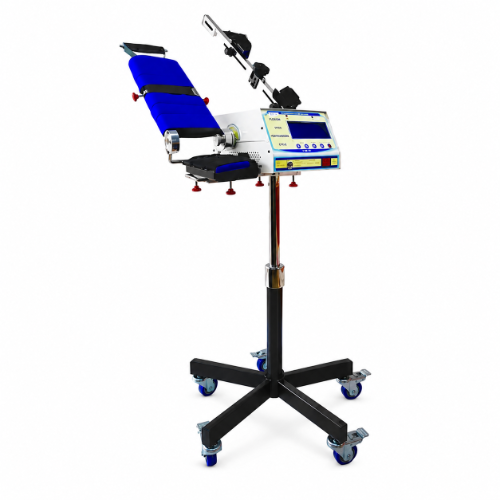
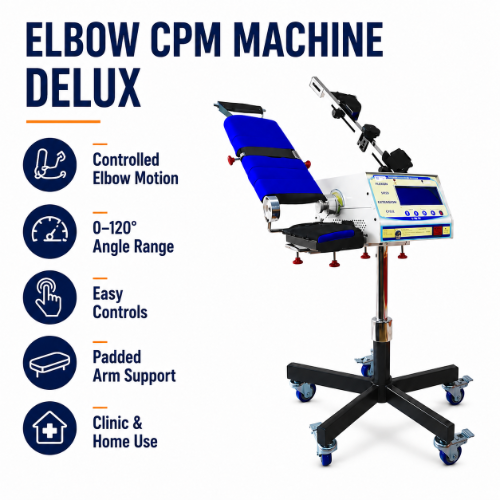
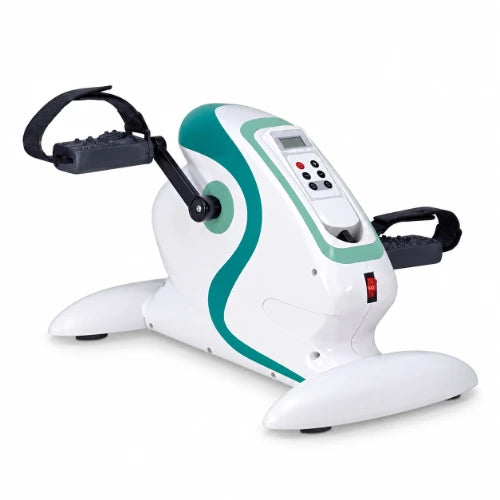
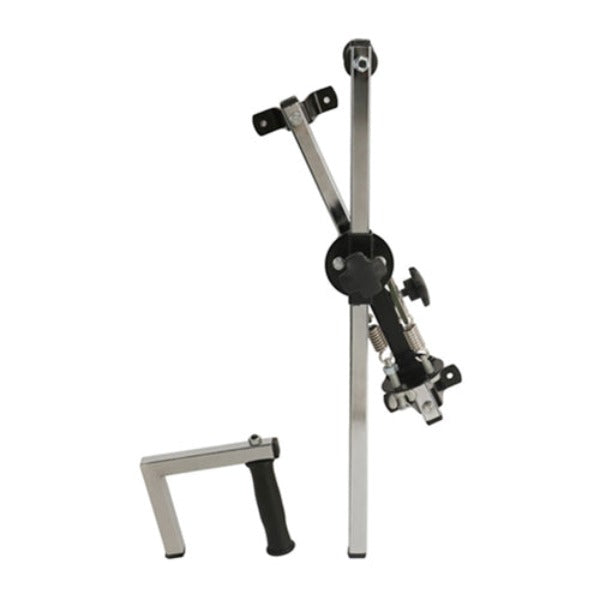
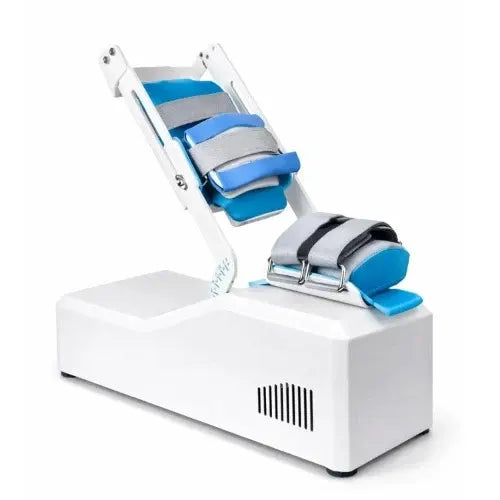
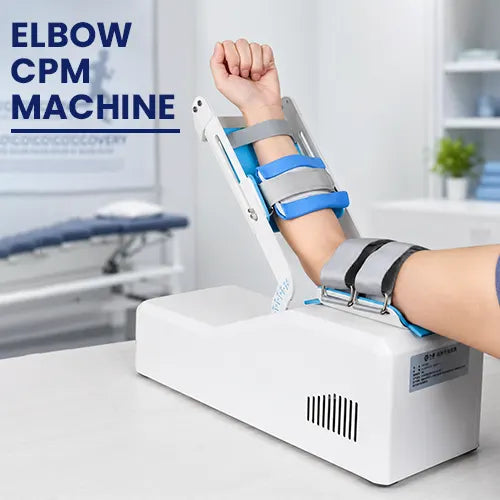
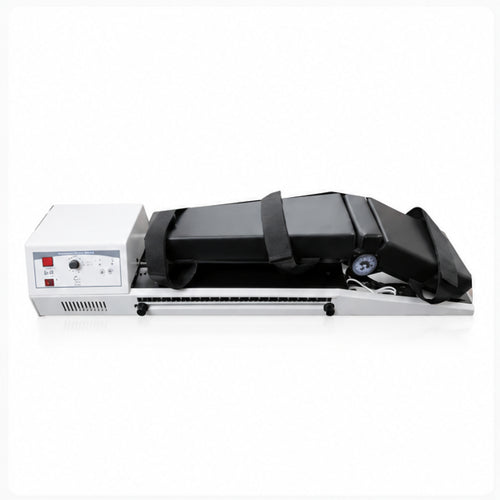
The Elbow CPM Machine is a rehabilitation and physiotherapy device designed to support controlled passive movement of the elbow joint. It helps healthcare professionals guide the elbow through a planned range of motion while the patient remains relaxed and does not actively move the joint.
In rehabilitation settings, controlled movement can support a structured therapy routine after appropriate clinical assessment. Therefore, an Elbow CPM Machine can provide a practical way to perform repeated and consistent elbow movement under professional supervision.
The machine is suitable for physiotherapy centres, rehabilitation facilities, hospitals, clinics, and other supervised healthcare environments where controlled elbow mobility forms part of a rehabilitation program.
Product Overview
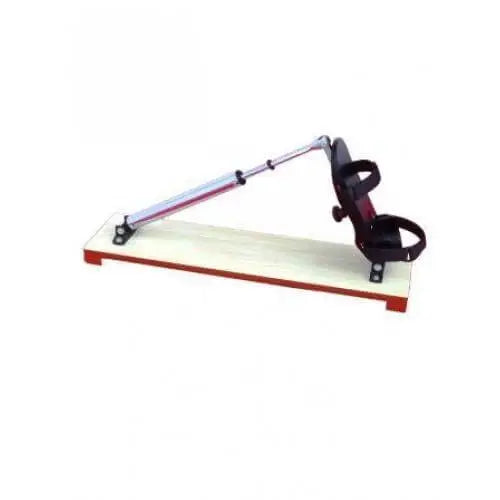
An Elbow Continuous Passive Motion (CPM) Machine provides controlled repetitive movement for the elbow joint. The device guides the limb through a selected movement pattern while the patient remains relaxed. As a result, therapists can incorporate consistent passive motion into a supervised rehabilitation routine.
Unlike exercises that require the patient to actively move the arm, CPM therapy focuses on guided movement. Moreover, the controlled motion allows healthcare professionals to follow a planned therapy approach based on the patient's condition, treatment stage, and clinical requirements.
The device should always be used according to professional instructions. The appropriate movement range, therapy duration, and operating settings can vary according to the patient's condition and rehabilitation plan.
Key Features & Benefits
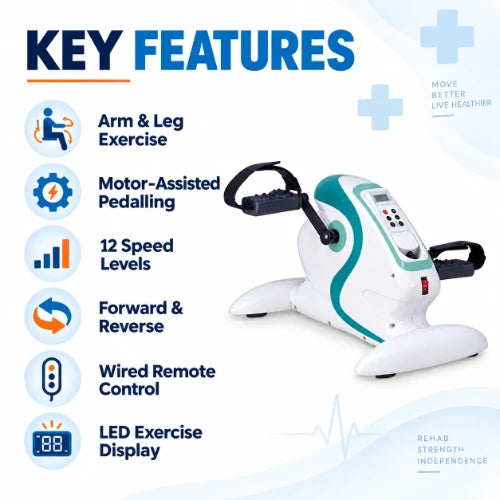
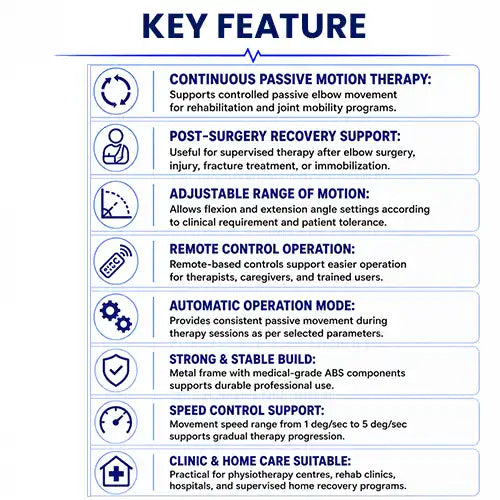
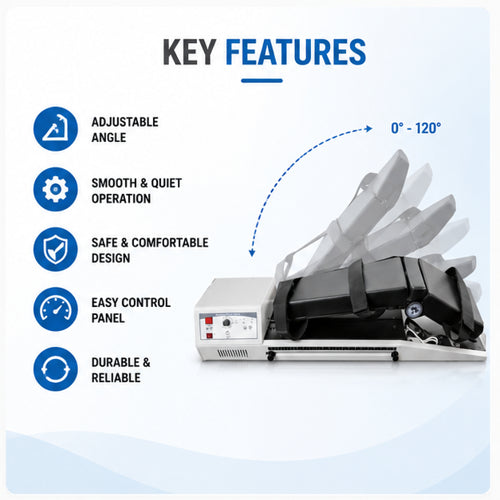
- Controlled Elbow Movement: Supports guided passive movement of the elbow joint.
- Continuous Passive Motion: Allows repetitive movement without requiring continuous active effort from the patient.
- Rehabilitation Support: Helps therapists incorporate structured elbow mobility into supervised rehabilitation programs.
- Adjustable Therapy: The machine can be used according to the available movement and therapy requirements of the specific model.
- Patient-Focused Design: Supports comfortable positioning while the arm follows the guided movement pattern.
- Professional Use: Suitable for physiotherapy, rehabilitation, and supervised clinical environments.
- Repeated Movement: Provides consistent repetitive motion during a planned therapy session.
In addition, controlled passive movement can make therapy sessions easier to structure. The therapist can monitor the patient's response and adjust the rehabilitation routine according to clinical requirements.
Elbow Rehabilitation & Passive Motion
Elbow rehabilitation often includes controlled movement as part of a broader physiotherapy program. The Elbow CPM Machine can assist with passive movement when a healthcare professional considers this type of therapy appropriate.
The machine guides the arm through a controlled movement instead of requiring the patient to repeatedly perform the movement independently. Consequently, it can provide a consistent movement pattern during supervised therapy.
Furthermore, therapists can combine CPM-based movement with other rehabilitation techniques when clinically appropriate. The exact treatment plan should always depend on professional assessment and the patient's individual requirements.
Controlled Range of Motion
One of the main purposes of an elbow CPM device is to support controlled joint movement. During therapy, the healthcare professional can determine the appropriate movement range based on the patient's rehabilitation requirements and the capabilities of the particular machine.
Controlled movement is especially important during rehabilitation because excessive or inappropriate movement may not suit every patient. Therefore, users should never select movement settings without considering the prescribed therapy plan.
The machine should provide movement within the limits recommended by the treating professional. If the patient experiences unusual pain, discomfort, swelling, or another concerning response, the session should be stopped and the healthcare professional should be consulted.
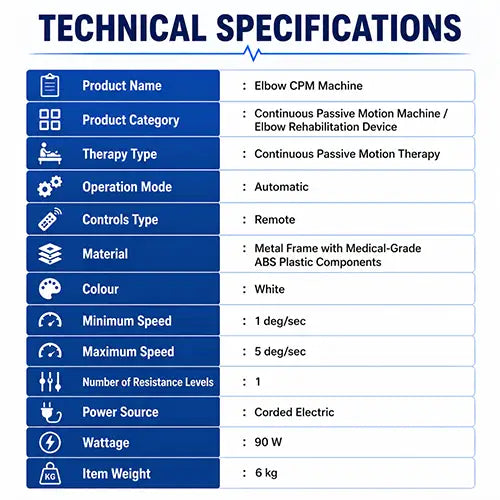
Technical Specifications
| Specification | Details |
|---|---|
| Product Name | Elbow CPM Machine |
| Product Type | Continuous Passive Motion Rehabilitation Equipment |
| Target Area | Elbow Joint |
| Movement | Controlled Passive Elbow Movement |
| Operation | Motor-Assisted Passive Motion |
| Application | Physiotherapy and Rehabilitation |
| Recommended Environment | Clinics, Hospitals, Physiotherapy & Rehabilitation Centres |
| Operation Guidance | Use according to professional instructions and product manual |
Note: Exact technical values such as dimensions, weight, power requirements, movement range, speed settings, and warranty should be added according to the specific product model and manufacturer specification sheet.
Suitable Therapy & Rehabilitation Applications
The Elbow CPM Machine can support supervised rehabilitation programs where controlled passive elbow movement forms part of the prescribed therapy. Depending on the patient's clinical needs, professionals may incorporate the device into different stages of rehabilitation.
- Physiotherapy and rehabilitation sessions
- Post-treatment elbow mobility programs
- Joint movement training under professional supervision
- Controlled passive motion exercises
- Rehabilitation centre therapy programs
- Hospital-based physiotherapy services
- Clinical and supervised mobility programs
However, suitability depends on the patient's condition and the advice of the treating professional. Therefore, the device should form part of an appropriate rehabilitation plan rather than replace clinical assessment.
How to Use the Elbow CPM Machine
- Prepare the Machine: Place the device on a stable and suitable surface before starting the session.
- Position the Patient: Position the patient's arm correctly according to the product instructions.
- Secure the Arm: Secure the arm and elbow using the provided support or positioning system.
- Set the Therapy Parameters: Select the appropriate settings according to the healthcare professional's instructions.
- Start the Motion: Begin the passive movement and observe the patient's response.
- Monitor the Session: Continue supervision throughout the therapy session.
- Stop When Required: Stop the machine if the patient experiences unusual discomfort or if the therapist determines that the session should end.
- Clean the Equipment: Clean the relevant patient-contact surfaces after use according to facility protocols.
Always follow the manufacturer's operating instructions before using the machine. In addition, trained healthcare professionals should determine the appropriate therapy settings.
Elbow CPM Therapy Support
Therapists can use the Elbow CPM Machine as one component of a structured rehabilitation session. For example, the device may support a planned passive-motion period before or alongside other clinically appropriate exercises.
Furthermore, professionals can monitor movement tolerance throughout the session. They can then modify the rehabilitation routine when necessary, based on the patient's response and clinical goals.
The device can also help create a consistent movement routine because the machine guides the joint through its programmed motion. Nevertheless, active strengthening, functional training, and other exercises should only be introduced when the treating professional considers them appropriate.
Benefits of Using an Elbow CPM Machine
- Supports controlled passive elbow movement.
- Provides repetitive and consistent guided motion.
- Can support structured physiotherapy sessions.
- Reduces the need for continuous active movement during passive-motion sessions.
- Helps therapists maintain a planned movement routine.
- Can be incorporated into supervised rehabilitation programs.
- Supports professional monitoring of elbow mobility during therapy.
These benefits describe the role of CPM equipment within rehabilitation. They do not guarantee a specific clinical outcome because results can vary according to the patient's condition, treatment plan, and response to therapy.
Who Can Use the Elbow CPM Machine?
The Elbow CPM Machine is intended primarily for use in supervised healthcare and rehabilitation environments. Physiotherapists, rehabilitation professionals, and other appropriately trained healthcare staff can operate the equipment according to the patient's therapy plan.
Patients should not independently select therapy settings unless their healthcare professional has specifically instructed them to do so. Moreover, the machine should not be used as a substitute for diagnosis, professional assessment, or prescribed treatment.
Suitable Applications
- Physiotherapy Clinics: For supervised elbow mobility programs.
- Rehabilitation Centres: For structured passive-motion therapy.
- Hospitals: For rehabilitation services and supervised patient care.
- Orthopaedic Rehabilitation: As part of an appropriate professional rehabilitation plan.
- Therapy Centres: For controlled elbow movement sessions.
- Clinical Settings: Wherever trained professionals require controlled passive elbow motion.
Care and Maintenance
Proper care helps maintain the equipment in suitable working condition. Therefore, users should follow the manufacturer's maintenance instructions and healthcare facility cleaning procedures.
- Keep the machine clean and dry after use.
- Clean patient-contact surfaces using an appropriate facility-approved method.
- Inspect supports, straps, joints, and moving components before use.
- Check the power connection and controls before starting a session.
- Do not use the machine if any component appears damaged or loose.
- Keep liquids away from electrical components.
- Arrange professional servicing when the machine shows unusual noise, movement, or operating problems.
- Follow the manufacturer's instructions for storage and servicing.
Limitations & Important Considerations
An Elbow CPM Machine is a rehabilitation support device. It does not diagnose medical conditions, replace professional treatment, or guarantee recovery. Instead, it provides controlled passive movement that a healthcare professional may include in an appropriate rehabilitation program.
Not every patient is suitable for passive-motion therapy. Consequently, a qualified healthcare professional should evaluate the patient's condition before therapy begins. The therapist should also determine whether the selected movement range and session duration are appropriate.
If pain, swelling, unusual discomfort, numbness, or another concerning symptom occurs during use, stop the session and seek professional guidance.
Safety Note
Use the Elbow CPM Machine under appropriate professional supervision. Before every session, check the equipment, patient positioning, supports, and operating controls.
Do not force the elbow beyond the movement range recommended by the treating professional. Additionally, do not operate damaged equipment or modify the machine without manufacturer approval.
Keep the patient's arm correctly positioned throughout the session and monitor their response to the movement. If the machine behaves unexpectedly, stop operation and arrange inspection by an appropriately qualified technician.
Frequently Asked Questions
1. What is an Elbow CPM Machine?
An Elbow CPM Machine is a rehabilitation device that guides the elbow through controlled passive movement. It allows the joint to move without requiring continuous active effort from the patient.
2. What does CPM stand for?
CPM stands for Continuous Passive Motion. The term describes guided joint movement performed by a machine while the patient remains relaxed.
3. Who should operate an Elbow CPM Machine?
Trained healthcare professionals, such as physiotherapists and rehabilitation professionals, should operate the machine according to the patient's treatment plan and the manufacturer's instructions.
4. Can patients use the machine without supervision?
Patients should use the machine only according to professional instructions. Supervision requirements depend on the patient, treatment plan, and specific product model.
5. Can the Elbow CPM Machine replace physiotherapy?
No. The machine serves as a rehabilitation aid and does not replace professional assessment, physiotherapy guidance, or a complete treatment plan.
6. What should I do if the patient feels discomfort?
Stop the session and inform the treating healthcare professional. Do not increase the movement range or continue therapy against professional advice.
7. Where can an Elbow CPM Machine be used?
It can be used in suitable hospitals, physiotherapy clinics, rehabilitation centres, and other supervised healthcare environments.
Conclusion
The Elbow CPM Machine provides controlled passive movement support for elbow rehabilitation. Its guided motion can help healthcare professionals structure repetitive elbow mobility sessions within an appropriate therapy program.
With professional supervision, correct positioning, and appropriate settings, the device can become a useful component of a structured rehabilitation environment. However, treatment decisions should always remain with qualified healthcare professionals who can assess the patient's individual needs.
Shop Elbow CPM Machine for Rehabilitation & Physiotherapy
Choose an Elbow CPM Machine for controlled passive elbow movement in physiotherapy and rehabilitation environments. It is designed to support structured therapy sessions and professional patient care.
Before purchasing, check the product's model-specific specifications, available movement settings, dimensions, power requirements, accessories, warranty, and operating instructions to ensure that the equipment matches your clinical requirements.
Important Product Information
This product description provides general information about the Elbow CPM Machine. Always refer to the specific manufacturer's product manual and specification sheet for exact technical details, operating instructions, contraindications, maintenance requirements, warranty information, and accessories supplied with the selected model.
Professional Use: This equipment should be used by appropriately trained healthcare or rehabilitation professionals according to the patient's clinical requirements and applicable safety protocols.
You may also need
FOR YOURecommended for you
Save 55%

Save 39%

Save 8%

Save 37%

Sold out

Sold out

Sold out

Save 27%