
1
Vacuum Therapy Machine


Double-tap to zoom · drag to pan · swipe to browse
Vacuum Therapy Machine
In Stock
Check delivery
See if we deliver to you and when.
Delivering to
Delivery applicable
Free Shipping
on orders ₹999+
100% Genuine
Products
Dedicated
Support
Secure
Payments
Need help choosing or using this product?
Our team can help with product questions and orders.
Chat with support
Choose options

Vacuum Therapy Machine — Cupping-Based Circulation & Pre-Treatment Support The Vacuum Therapy Machine from Medansh.com is a compact suction-based unit designed for use before electro-therapy stimulation and as a standalone circulation aid. It is...
Check delivery
See if we deliver to you and when.
Delivering to
Delivery applicable
Vacuum Therapy Machine — Cupping-Based Circulation & Pre-Treatment Support The Vacuum Therapy Machine from Medansh.com is a compact suction-based unit designed for use before electro-therapy stimulation and as a standalone circulation aid. It is...
Check delivery
See if we deliver to you and when.
Delivering to
Delivery applicable
About this product
Vacuum Therapy Machine — Cupping-Based Circulation & Pre-Treatment Support
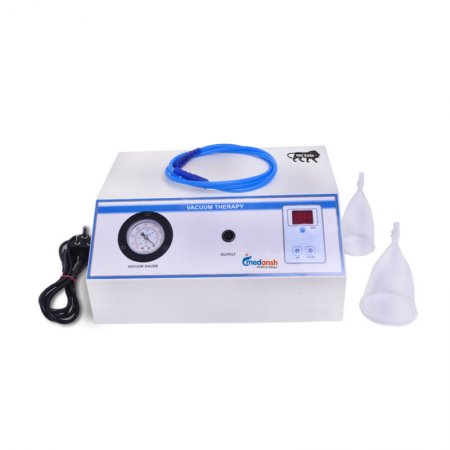
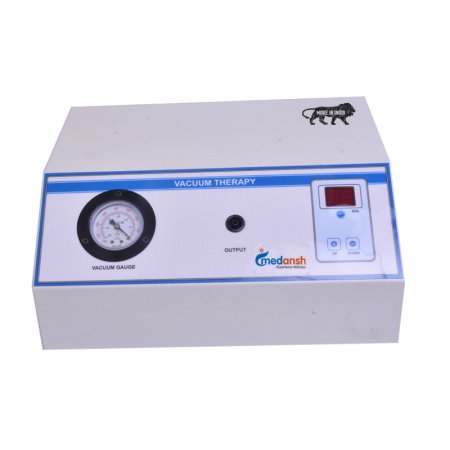
The Vacuum Therapy Machine from Medansh.com is a compact suction-based unit designed for use before electro-therapy stimulation and as a standalone circulation aid. It is built around a durable pump that creates a controlled vacuum inside two applicator cups, which are placed on the skin over target areas such as the abdomen, hips, and thighs. This makes it a practical addition to any clinic that combines manual and mechanical modalities in a single treatment plan, and it is compact enough to be used comfortably in a personal setting as well.
What Vacuum (Cupping) Therapy Does
Vacuum therapy, more widely known by the traditional term cupping, works on a simple mechanical principle: negative pressure is created inside a cup placed against the skin, which gently draws the underlying skin, superficial fascia, and soft tissue upward into the cup. Unlike a massage technique that compresses tissue, cupping lifts it — and this lifting action is the basis for most of its recognised uses in physical therapy and general wellness practice.
The suction encourages localized blood flow to the area under and around the cup. Increased local circulation is commonly associated with better delivery of oxygen and nutrients to soft tissue, and is one of the reasons cupping is frequently used as a preparatory step before other modalities — such as electrical stimulation — are applied to the same area. Practitioners also use vacuum therapy as a way to help ease tension in tight or overworked muscle groups, since the gentle traction on the skin and fascia can have a loosening effect distinct from what direct pressure massage achieves.
Two-Cup Design for Practical, Everyday Use
This unit comes with two applicator cups, so two areas can be addressed in the same session, or one therapist can alternate between locations without stopping to change equipment mid-treatment. Both cups connect to the same pump, keeping the setup simple and the machine itself compact enough to sit on a treatment trolley alongside other equipment.
The unit also includes a removable biomagnetic point, giving clinics the flexibility to use the cups with or without this addition depending on their preferred protocol. Because the cups are designed for direct application to the skin, the machine suits both clinical settings — where a therapist manages the session as part of a broader treatment plan — and personal use at home, where an individual applies the cups to their own abdomen, hip, or thigh area following guidance from their practitioner.
Where This Fits in a Treatment Plan
Vacuum therapy is most often positioned as a preparatory or adjunct step rather than a treatment on its own. In many clinics, it is used on the abdomen, hips, and thighs specifically to prepare the tissue before electro-therapy stimulation is applied to the same region — the improved local circulation and the loosening effect on superficial tissue are believed to help the area respond more readily to the stimulation that follows. Because the equipment is simple to operate and low-cost relative to many other physiotherapy modalities, it is also an accessible option for smaller clinics that want to offer a fuller treatment sequence without a large capital outlay.
Beyond its use as pre-treatment prep, vacuum therapy is commonly reached for on its own to support general circulation and to help manage everyday muscular tightness, making it a versatile piece of equipment across both rehabilitation-focused and general wellness-focused practices.
Preparing the Skin and What to Expect
As with any suction-based technique, preparation matters. The skin in the treatment area should be thoroughly cleaned and any body hair removed before the cups are applied, since hair and residue on the skin can affect how well the cup seals and how evenly suction is distributed. It's also worth setting expectations up front: it is normal to see various skin reactions, most commonly circular bruising or redness where the cup was placed. These marks are generally painless and fade on their own within a few days, and they are a well-documented and expected part of how cupping and vacuum therapy work rather than a sign of a problem.
Simple to Operate, Built to Last
The machine's pump is built to be durable enough for repeated daily use in a busy clinic, while remaining simple enough that a patient can apply the cups to themselves at home once shown the correct technique. This ease of use is part of why vacuum therapy has remained a low-cost, accessible modality — it does not require extensive training to apply correctly, yet the results are consistent with what the therapist intends when they select an area for treatment.
Frequently Asked Questions
Can this vacuum therapy machine be used at home, or is it only for clinics?
It is suitable for both. The design is safe and straightforward enough for personal use at home, while also being durable enough for daily clinical application across multiple patients.
Is it normal to see marks on the skin after using the cups?
Yes. Various skin reactions such as circular bruising or redness are common after cupping. These are typically painless and fade naturally within a few days.
How many cups come with the machine?
The machine includes two applicator cups, allowing two areas to be treated or alternated between during a single session.
What should I do before applying the cups?
Clean the skin thoroughly and remove any body hair from the treatment area first, so the cups can seal properly and distribute suction evenly.
Why is vacuum therapy often used before electro-therapy stimulation?
The suction promotes local blood circulation and can help loosen superficial tissue, which many practitioners use as a preparatory step to help the area respond well to stimulation applied afterward.
What areas is this machine typically used on?
It is commonly used on the abdomen, hips, and thighs, though placement ultimately depends on the treatment plan set by the practitioner.
You may also need
FOR YOURecommended for you
Save 55%

Save 39%

Save 8%

Save 37%

Sold out

Save 18%

Save 20%
Save 33%