



Featured ChoiceSave 33%

Save 46%


Save 35%


Save 25%

About this collection
How to Choose the Right BiPAP Device
Choosing a BiPAP device is not just about buying a machine; it is about matching the device, mask, settings, and support system to a person’s breathing problem and daily routine. In India, many families make this decision during hospital discharge, after a sleep study, or when searching for a bipap machine on rent near me for short-term home care. This guide explains what a BiPAP does, how it differs from CPAP, what to check before renting or buying, and why a pulmonologist, sleep physician, or critical-care team should always guide the final choice.
What exactly does a BiPAP do?
A BiPAP, also called bilevel positive airway pressure or BPAP, delivers pressurised air through a mask to support breathing. Unlike CPAP, which generally uses one continuous pressure, BiPAP uses two pressure levels: a higher pressure when you breathe in and a lower pressure when you breathe out. This difference can make breathing feel easier for people who need extra ventilatory support, have high pressure needs, or struggle to exhale against a single continuous pressure.
A bipap machine does not “cure” the underlying condition by itself. It supports breathing while the body rests, recovers, or receives treatment for sleep apnea, COPD, obesity hypoventilation, certain heart or lung conditions, or other problems your doctor identifies. In hospitals, doctors may use BiPAP as non-invasive ventilation. At home, they may prescribe it for night-time support or long-term respiratory care.

BiPAP vs CPAP: the difference that matters
The bipap vs cpap decision is one of the first things patients and caregivers ask about. CPAP stands for continuous positive airway pressure. It gives one pressure level to keep the airway open, especially during sleep apnea. BiPAP gives two pressure levels, commonly called IPAP and EPAP, so the machine can provide more help during inhalation and reduce pressure during exhalation.
For many people with uncomplicated obstructive sleep apnea, CPAP may be the first option. Doctors may consider BiPAP when a person needs higher pressure, has difficulty tolerating CPAP, has hypoventilation, has high carbon dioxide levels, or has another breathing condition that needs ventilatory assistance. The American Thoracic Society notes that doctors can use BPAP for people who do not breathe enough on their own, a situation often described as hypoventilation.
A simple way to think about it is this: CPAP mainly splints the airway open, while BiPAP can both keep the airway open and support the work of breathing. That does not mean BiPAP is “better” for everyone. The right choice depends on diagnosis, comfort, oxygen and carbon dioxide levels, sleep-study results, and the doctor’s treatment plan.
Quick comparison
| Feature | CPAP | BiPAP |
|---|---|---|
| Pressure pattern | One continuous pressure | Two pressures: inhale and exhale |
| Common use | Obstructive sleep apnea | Sleep apnea with pressure intolerance, hypoventilation, COPD-related support, selected respiratory conditions |
| Comfort | Works well for many users | May feel easier for people who struggle to exhale |
| Settings | Usually simpler | More adjustable and requires careful prescription |
| Selection | Based on sleep study and doctor advice | Based on sleep study, blood gases, symptoms, and clinical need |
Shop CPAP and BiPAP machines at Meddey
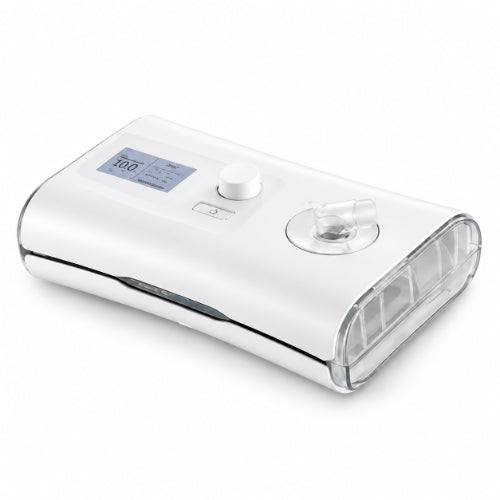
 Auto CPAP with humidifierYuwell YH-550 Auto CPAP Machine with HumidifierView product
 Bi-level PAP machineBreathCare II Bi-Level PAP with 2 Years WarrantyView product
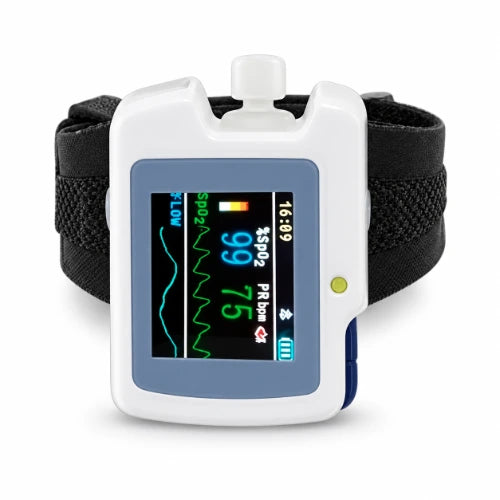
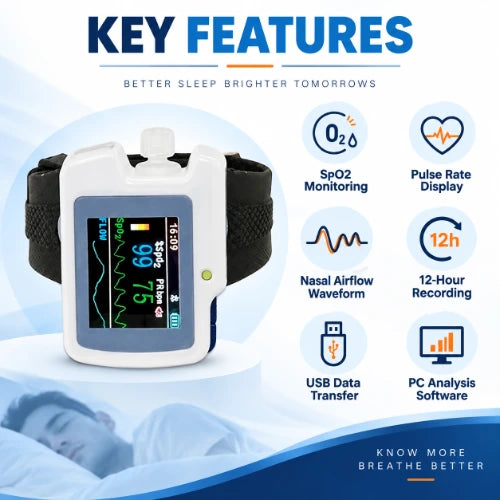
 Home sleep screeningHome Sleep Apnea Monitoring Device with SpO2 and Nasal AirflowView product
Your doctor’s prescription should decide the mode and pressure range. Browse the full range in the CPAP and bilevel PAP collection.
Why is BiPAP used at night?
Clinicians often recommend BiPAP at night because sleep can make breathing problems more obvious. During sleep, muscles relax, the upper airway can narrow, and breathing effort may reduce in some people. Positive airway pressure helps keep air moving through the airway and into the lungs, which can reduce breathing pauses and improve oxygen movement when a clinician prescribes it correctly and the patient uses it as advised.
For Indian households, night-time use also fits practical routines. A patient may be active during the day but become breathless when lying flat, especially in humid weather, after a respiratory infection, or during recovery from a hospital admission. Using BiPAP at night can allow the person to rest while the machine supports breathing, provided the mask fits well and the patient follows the prescribed bipap settings.
Night use requires discipline. Place the machine on a stable bedside table, away from dust, mosquito coils, incense smoke, and direct fan blast. If your area has power cuts, discuss backup power options with the equipment provider, especially if the doctor has advised regular overnight use.
Understanding BiPAP settings before choosing a device
Trained clinicians should prescribe and adjust BiPAP settings. The two core settings are usually IPAP, the inspiratory positive airway pressure, and EPAP, the expiratory positive airway pressure. IPAP helps with inhalation, while EPAP helps maintain airway openness during exhalation. Some devices also include a backup respiratory rate, ramp, rise time, leak compensation, humidification, and data tracking.
Do not copy another patient’s settings, even if the symptoms look similar. Two people may both have snoring and breathlessness, but one may have obstructive sleep apnea, another may have COPD, and another may have obesity hypoventilation or heart-related fluid overload. The same pressure may be too low for one person and unsafe or uncomfortable for another.
When comparing devices, ask whether the model supports the prescribed mode. Basic bilevel devices may be suitable for some home users, while patients needing a timed backup rate or advanced monitoring may need a more specific model. If you are renting, confirm that the provider has given the exact mode and accessories written on the prescription, not simply “a BiPAP.”
Settings and feature checklist
Before you accept a rented or purchased unit, review these points:
- Prescription match: The machine should support the doctor-prescribed mode, pressure range, backup rate if needed, and oxygen connection if prescribed.
- Humidifier support: A heated humidifier can reduce dryness, especially for people using the device all night.
- Mask compatibility: The machine should work with the recommended mask type and tubing.
- Leak display or alerts: Helpful for detecting poor mask fit.
- Data recording: Useful for follow-up visits, especially if the doctor wants usage, leak, and event reports.
- Power requirements: Ask about inverter compatibility, voltage protection, and battery backup options if electricity supply is unreliable.
- Service access: Choose a provider who can replace filters, tubing, masks, and humidifier chambers without long delays.
Choosing between renting and buying in India
Many families first look for a bipap machine on rent near me because the need may be temporary, uncertain, or urgent after hospital discharge. Renting can make sense when a patient is recovering from an acute illness, waiting for a sleep study, trying a device before purchase, or needing short-term support under medical supervision. Buying may be better when long-term use is confirmed and the patient has settled on the right mask and settings.
In India, access and service quality vary widely between metros, tier-2 cities, and smaller towns. A lower monthly rental may not be useful if the provider cannot visit quickly, replace a leaking mask, or guide the family on cleaning. Similarly, buying online without proper setup may create problems if no one checks the fit, settings, or comfort.
Ask your hospital discharge coordinator, pulmonologist, sleep lab, or home healthcare provider for guidance. If you compare local vendors, focus on machine condition, hygiene, support, documentation, and emergency response rather than price alone. For a device that may be in use every night, after-sales support is part of safety.
Rental questions to ask the provider
Use this checklist when calling or visiting a supplier:
- Does the provider disinfect and service the machine before delivery? Ask how the team handles masks, tubing, humidifier chambers, and filters.
- Will a trained technician set it up at home? This matters for older patients and caregivers using BiPAP for the first time.
- Can you provide the exact prescribed mode? Do not accept a substitute unless your doctor approves it.
- Are mask trials available? Mask comfort often decides whether the patient actually uses the device.
- What happens if the machine fails at night? Ask about replacement timelines and helpline availability.
- Does the rental include consumables, or do they cost extra? Filters, masks, headgear, tubing, and water chambers need replacement over time.
- Can you share usage data with the doctor? This helps during follow-up and pressure adjustment.
BiPAP mask types and comfort
Bipap mask types usually include nasal masks, nasal pillow masks, full-face masks, and sometimes total-face masks. A nasal mask covers the nose. Nasal pillows sit at the nostrils. A full-face mask covers the nose and mouth. Doctors use a total-face mask, which covers a larger area, in selected cases where standard masks do not seal well.
The right mask depends on breathing pattern, facial structure, pressure requirement, comfort, and whether the person breathes through the mouth during sleep. In India, factors such as facial hair, warm weather, skin sweating, and sleeping position can affect mask seal. A mask that feels fine for five minutes in a showroom may start leaking after two hours in bed.
A poor mask fit can cause air leaks, dry mouth, red marks on the nose bridge, eye irritation, or noisy airflow that disturbs the family. Do not overtighten the straps to stop every leak. A slightly different size, cushion, or mask style is often better than pulling the headgear too hard.

Mask selection tips
- Choose a nasal mask if the patient mainly breathes through the nose and wants a lighter fit.
- Consider nasal pillows if the patient feels claustrophobic, but check comfort at higher pressures.
- Choose a full-face mask if the patient breathes through the mouth or has frequent nasal blockage.
- Ask about skin-friendly cushions if the patient has sensitive skin or pressure marks.
- Recheck fit after lying down, because the face and jaw position change during sleep.
- Keep a spare mask cushion or headgear if the patient depends on nightly therapy.
BiPAP mask and accessories
 Low-profile nasal maskNasal CPAP Sleep MaskView product
 Mask with head gearNon Vented Mask with Head GearView product
 Replacement headgearCPAP Head StrapView product
 Smooth-bore tubingPremium CPAP BPAP TubingView product
Confirm the mask type, size, and machine compatibility with your doctor or technician before you order. See more in the CPAP and bilevel PAP collection.
BiPAP benefits and realistic expectations
The main bipap benefits come from supporting airflow, reducing breathing effort, and improving ventilation in people whom clinicians have selected correctly for therapy. PAP therapy can help keep the airway open, support oxygen movement into the lungs, and help remove carbon dioxide more effectively in some conditions. For sleep apnea, positive airway pressure can improve sleep quality and reduce health risks linked with untreated sleep-disordered breathing.
Benefits are not always immediate. Some people sleep better from the first week; others need mask changes, humidifier adjustments, gradual acclimatisation, and follow-up review. If the patient removes the mask after one hour every night, the machine cannot deliver the intended benefit. Consistent bipap usage matters as much as the model you choose.
A practical expectation is to treat BiPAP as a therapy routine, not a gadget. The patient may need to practise wearing the mask while watching TV, reading, or resting in the afternoon. MedlinePlus notes that people often get used to positive airway pressure more quickly when they use it for the entire night as advised.
When is BiPap not recommended?
When is BiPap not recommended? BiPAP may not be appropriate when a patient cannot protect their airway, is vomiting repeatedly, has severe facial trauma or recent facial surgery that prevents mask sealing, is unable to cooperate, has unstable vital signs, or needs urgent invasive ventilation. These situations require immediate medical judgement, often in an emergency department or ICU, not home experimentation.
This is especially important in India, where families may keep oxygen cylinders, nebulisers, and PAP machines at home after a previous illness. If the patient is drowsy, confused, turning blue, gasping, has chest pain, has very low oxygen despite prescribed support, or is worsening quickly, do not simply increase pressure or oxygen flow at home. Call emergency medical help or go to the nearest hospital.
BiPAP is also not a substitute for treating the underlying illness. Pneumonia, fluid overload, COPD exacerbation, asthma attack, neuromuscular weakness, and sleep apnea all require different medical plans. The machine can support breathing, but diagnosis and treatment decisions belong to the clinician.
Does BiPap increase oxygen?
Does BiPap increase oxygen? BiPAP helps move air into the lungs and can improve oxygen levels in some patients by keeping airways open and supporting ventilation. However, the machine itself mainly delivers pressurised air. It adds extra oxygen only if the doctor prescribes it through an oxygen port or compatible setup. PAP therapy can help get oxygen to the lungs, but oxygen flow and pressure settings are different things, so do not confuse them.
This distinction matters for home care. A patient may have a BiPAP machine, an oxygen concentrator, or both. The doctor may prescribe BiPAP alone, oxygen alone, or oxygen connected to BiPAP. Do not change the oxygen flow rate casually, especially in patients with COPD or high carbon dioxide risk.
If oxygen saturation remains low despite prescribed therapy, contact the doctor urgently. The problem may be mask leak, wrong setup, worsening disease, mucus plugging, infection, or a need for hospital-level care. More oxygen is not always the correct answer.
Track oxygen and sleep at home
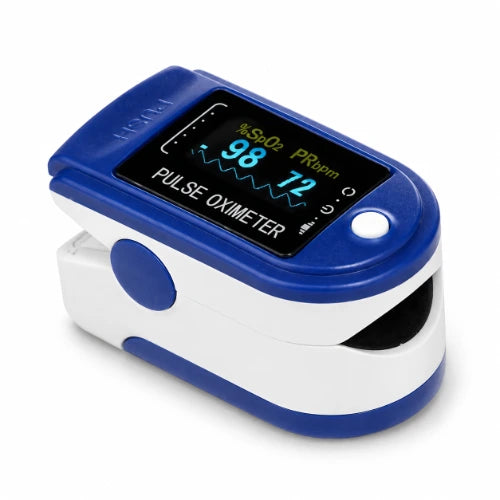
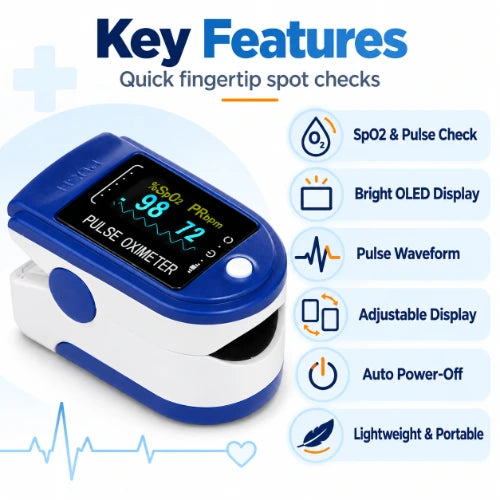
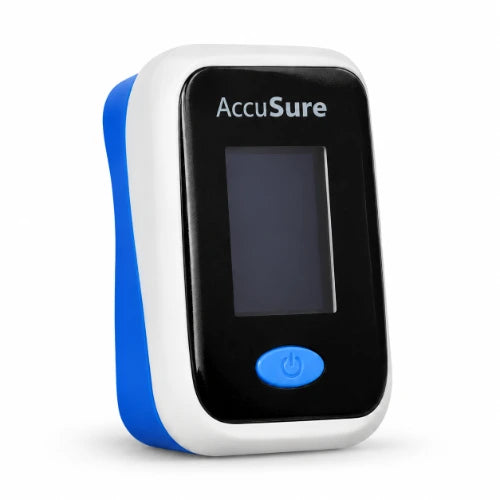
 Fingertip pulse oximeterAccuSure Fingertip Pulse Oximeter for Home UseView product
 OLED fingertip oximeterContec CMS50D OLED Fingertip Pulse OximeterView productHome sleep screeningHome Sleep Apnea Monitoring Device with SpO2 and Nasal AirflowView product
Pulse oximeters show readings only. They do not replace medical advice. Compare more models in the pulse oximeter collection.
Does a BiPAP count as a ventilator?
Does a BiPAP count as a ventilator? In many clinical contexts, doctors consider BiPAP a form of non-invasive ventilation because it can support breathing without a tube placed into the windpipe. However, it is not the same as an invasive ICU ventilator connected through an endotracheal tube or tracheostomy. Cleveland Clinic describes noninvasive ventilation as including home devices such as CPAP or BiPAP.
This difference is useful for families to understand during discharge counselling. A home BiPAP machine may support breathing at night or during certain hours, but it does not provide the same level of airway protection, monitoring, alarms, suction access, and intensive care support as invasive ventilation. If the patient is medically unstable, a home device cannot replace hospital care.
For long-term users, the word “ventilator” may feel frightening. It is better to ask the doctor what role the machine is playing: sleep apnea therapy, ventilatory support for hypoventilation, COPD-related support, or palliative comfort. The purpose determines how carefully the care team needs to monitor it.
How long can a person stay on a BiPAP?
How long can a person stay on a BiPAP? The answer depends on why the doctor prescribed BiPAP. Some people use it only for a few nights or weeks during recovery. Others use it every night for years as part of long-term management. In hospitals, use may be continuous or intermittent depending on breathing status, blood gas results, comfort, and clinical response.
At home, duration should follow the prescription. Many sleep-related users wear the device during sleep. Some respiratory patients may need it for longer periods, including daytime naps or specific hours. If the patient feels better and wants to stop, speak to the doctor first rather than discontinuing abruptly.
Skin checks are important with longer use. Look for redness on the nose bridge, cheek pressure marks, dry mouth, bloating, or eye irritation from leaks. These problems are often fixable through mask refitting, humidification, strap adjustment, or pressure review.
Can a patient recover from BiPAP?
Can a patient recover from BiPAP? A patient can recover from the illness that required temporary BiPAP, but BiPAP itself is a support therapy, not the disease. For example, someone recovering from an acute COPD flare, pneumonia-related breathing difficulty, or post-hospital weakness may gradually need less support if the underlying condition improves. Another person with chronic sleep apnea or long-term hypoventilation may need ongoing night-time therapy.
Doctors decide recovery by looking at symptoms, oxygen levels, carbon dioxide levels when relevant, sleep-study findings, lung function, and overall health. Feeling better for one or two nights is encouraging, but it is not enough proof that the machine is no longer needed. Stopping too early can allow symptoms to return.
If the hospital started BiPAP, schedule the recommended follow-up. Carry the discharge summary, prescription, usage data, and details of the rented or purchased device. This helps the doctor decide whether to continue, reduce hours, change settings, shift to CPAP, add oxygen, or stop therapy.
What is the next step after BiPAP?
What is the next step after BiPAP? The next step depends on response. If the patient improves, the doctor may reduce dependence, continue night-time use, adjust settings, or move to another therapy such as CPAP when appropriate. If the patient worsens or fails BiPAP, the next step may be hospital escalation, closer monitoring, high-flow oxygen, invasive ventilation, or treatment changes based on the underlying condition.
For sleep apnea, the next step is usually follow-up, comfort improvement, and long-term adherence. Acute respiratory illness may call for reassessment with blood gases, chest evaluation, medication changes, physiotherapy, or oxygen planning. In chronic respiratory failure, the next step may be a long-term home ventilation plan.
Families should avoid interpreting BiPAP as the final answer. It is one part of a care pathway. Medicines, weight management where advised, pulmonary rehabilitation, smoking cessation, vaccination, sleep positioning, and regular follow-up may all matter depending on the diagnosis.
Red flags that need urgent medical attention
A BiPAP machine should make breathing easier, not delay emergency care. Seek urgent help if the patient has:
- Severe breathlessness that is not improving with prescribed support.
- Bluish lips, face, or fingertips.
- Confusion, unusual sleepiness, fainting, or agitation.
- Chest pain, severe sweating, or signs of heart attack.
- Repeated vomiting while wearing the mask.
- Oxygen saturation below the limit advised by the doctor.
- Large mask leaks with worsening symptoms.
- Inability to tolerate the mask despite distress.
- New fever, thick sputum, or suspected infection.
If you live far from a major hospital, plan transport in advance. Keep emergency numbers, prescription copies, and device details accessible. In urgent situations, the priority is not adjusting the machine; it is getting clinical help.
Daily use, cleaning, and maintenance
Good bipap usage includes consistent timing, correct mask placement, clean accessories, and regular follow-up. Wash hands before handling the mask. Use clean water in the humidifier as the manufacturer or provider directs, and empty the chamber daily unless told otherwise. Keep the device away from dust, moisture, cooking smoke, and places where children may pull the tubing.
Cleaning routines should be simple enough for the household to follow. The mask cushion usually needs frequent wiping or washing because face oil and sweat reduce the seal. Clean tubing and humidifier chambers as the supplier instructs. Check filters regularly and replace them on time, because Indian homes often deal with dust, pollution, construction particles, and seasonal allergens.
Do not use strong perfumes, harsh disinfectants, or boiling water unless the manufacturer specifically allows it. Avoid jugaad repairs with tape, mismatched connectors, or non-compatible tubing. Small leaks and damaged parts can reduce therapy quality and create discomfort.
A practical home routine
- Morning: Switch off the machine, remove the mask gently, empty the humidifier chamber if advised, and check the skin for marks.
- Weekly: Wash reusable parts as instructed, inspect tubing for cracks, and check filter condition.
- Monthly: Review mask fit, headgear stretch, and any new noise from the device.
- Before doctor visits: Download or note usage hours, symptoms, oxygen readings if prescribed, and problems such as dryness or leaks.
How to make BiPAP easier to tolerate
Many patients struggle in the first few nights. The mask may feel strange, the airflow may feel strong, or the patient may feel anxious. This does not always mean BiPAP has failed. Small adjustments can make a major difference.
Start with short practice sessions while awake if the doctor allows it. Use the ramp feature if prescribed, as it starts at a lower pressure and gradually rises. Adjust humidification for dryness, but do not overfill the chamber. If the nose is blocked, ask the doctor about safe nasal treatment rather than switching settings yourself.
Family support matters. A calm caregiver can help an older parent wear the mask without panic, check for leaks, and reassure them during the first week. Avoid scolding the patient for removing the mask. Instead, identify the reason: dryness, claustrophobia, pressure discomfort, air swallowing, noise, or poor fit.
Final buying checklist
Before you choose a BiPAP device, make sure you can answer these questions clearly:
- What diagnosis is the machine being used for?
- Has a doctor prescribed BiPAP rather than CPAP or oxygen alone?
- What exact mode and pressure settings are required?
- Is a backup rate needed?
- Which mask type and size fit best?
- Is oxygen connection required, and who will set it up?
- Is humidification needed for comfort?
- Who will provide installation, training, and emergency support?
- How will the doctor review usage data?
- If renting, what does the rental package include and what costs extra?
- If buying, where will servicing and replacement parts come from?
This checklist is especially helpful when several family members take part in the decision. One person may focus on cost, another on brand, and another on availability. Bringing the discussion back to prescription, comfort, safety, and support keeps the choice practical.
The takeaway
The right BiPAP device is the one that matches the medical prescription, fits the patient comfortably, supports the required settings, and comes with reliable local service. A high-end machine with the wrong mask or poor setup can fail, while a properly selected device with good follow-up can become a dependable part of home care.
If you are comparing options in India, start with the doctor’s diagnosis and prescription, then evaluate rental or purchase support in your city. Ask questions, insist on proper setup, monitor comfort, and follow up regularly. BiPAP works best when you treat it not as a one-time purchase, but as an ongoing therapy plan built around the patient’s breathing, sleep, and safety.
Explore Medical Collections
All Categories
Abdominal & Maternity Support

Accessories

Accu-Chek Instant Strips: Use, Compatibility, Price & Blood Sugar Testing Guide
Accu-Chek Instant Strips: Uses, Features & Complete Guide

Accupressure Products for Pressure Point Therapy, Pain Relief & Wellness

accupuncture

Acupuncture Needles & Supplies

Advanced Physiotherapy Machines & Lumbar Physiotherapy

Airways

Ambulance

Anatomy Models
Anesthesia Machine

Anesthesia Products
Ankle Support, Braces & Walker Boots for Recovery
Ankle Weights & Exercise Weights for Home & Rehab
You may also need
FOR YOURecommended for you
Save 33%
Save 46%
Save 35%
Save 25%