


Featured ChoiceSave 50%
Save 22%

Save 17%

Save 24%

About this collection
Foam Roller: Benefits, Risks, Types and How to Choose for Healthcare Professionals
This guide explains what a foam roller is good for and what the research says. It also covers risks, the best roller for back pain and muscles, foam roller vs stick, and how to choose the right one.
Key Takeaways
- First, a foam roller is a self-massage tool that uses body weight to press on muscles, and it is a support tool and not a cure.
- According to a 2020 review of 49 studies, foam rolling may reduce muscle stiffness, raise range of motion and ease soreness after exercise.
- However, a 2024 review found mixed results for chronic pain, and a 2022 meta-analysis found only trivial performance benefits.
- For safety, an expert panel listed open wounds and fractures as contraindications, and inflammation, deep vein thrombosis and osteomyelitis as cautions.
- Finally, choose a foam roller by length, firmness, surface and the body area you plan to treat, and not by price alone.
Contents
- What is a foam roller?
- What is a foam roller good for?
- Will a foam roller help a pulled muscle?
- Disadvantages of using foam rollers
- Types of foam rollers
- Which roller is best for back pain?
- What type of roller is best for muscles?
- Foam roller or stick: which is better?
- How to choose a foam roller for exercise
- Foam rollers available at Meddey
- Foam roller price: what decides the cost?
- How to use a foam roller
- Safety and care
- Frequently asked questions
Foam rolling has moved from the physiotherapy clinic to almost every gym and home. Therefore, doctors and students now hear many questions about it from patients. However, online claims often go far beyond the evidence, so healthcare professionals need clear facts.
This guide is for doctors, physiotherapists, nurses, medical students and buyers of clinic and gym equipment. In addition, it uses simple words and answers the most common questions. Some people also call the tool a massage roller, an exercise roller, a workout roller or a gym roller, and the same points apply. To see products, you can visit the foam roller collection at Meddey.
Latest evidence note: A 2024 systematic review of 16 studies and 515 people found lower perceived soreness after exercise, especially at 24 hours. Meanwhile, a 2024 review of six trials on chronic pain found that only two showed a significant pain reduction. Therefore, foam rolling is a useful recovery tool, but it is not a proven treatment for long-term pain.
What Is a Foam Roller?
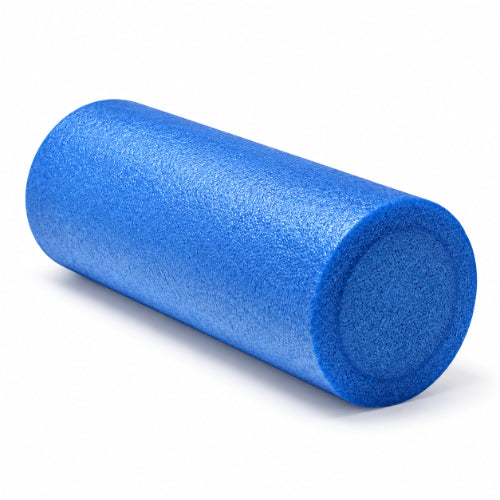
A foam roller is a firm cylinder of foam that a person rolls over a muscle, using body weight to apply pressure. This method is a form of self-myofascial release, or self-massage. As a result, the user controls how much pressure goes into the tissue.
Foam rollers come in different lengths, firmness levels and surfaces. For example, some are smooth, while others have raised ridges. Meanwhile, some are hollow, and some are made of dense EVA foam. Physiotherapists, trainers and athletes use them for warm-up, cool-down and mobility work.
For students, one line is enough. A foam roller is a self-massage cylinder that applies pressure to soft tissue, mostly to ease stiffness and soreness for a short time.

What Is a Foam Roller Good For?
Research supports a few clear uses. However, the effects are usually small and short-term.
Range of motion A 2020 meta-analysis in Sports Medicine found that foam rolling can raise joint range of motion right after use in healthy adults.
Post-exercise soreness Also, a 2020 review of 49 studies found lower delayed onset muscle soreness and a higher pressure pain threshold.
Warm-up and cool-down In addition, many coaches add rolling to a warm-up with dynamic movement, since it may reduce stiffness.
Recovery feeling Moreover, users often report that muscles feel looser and more relaxed after rolling.
Mobility and balance work A long roller also works as a prop for balance, core and posture drills in a clinic.
Vibration rollers Finally, a 2025 review of eight studies found possible benefits of vibration rollers for soreness, fatigue and range of motion, but the results were not consistent.
Note: A 2022 meta-analysis found that the overall evidence shows trivial gains in athletic performance. Therefore, use foam rolling for comfort and mobility, and not to boost strength or speed.
Will a Foam Roller Help a Pulled Muscle?
A pulled muscle, or muscle strain, is a tear in the muscle fibres. In the first days, the area is often swollen, tender and inflamed. Therefore, direct rolling over the injured spot is usually not a good idea at this stage.
In fact, an international expert panel listed local tissue inflammation as a caution for foam rolling. Pressure on a fresh tear may add pain and delay healing. However, once the acute phase has passed, a therapist may add gentle rolling of the surrounding muscles, as part of a wider rehab plan.
Simple guidance
- First, rest the area and get a medical check for a severe strain, especially with a pop, bruising or loss of strength.
- Second, avoid rolling directly on the sore spot in the early days.
- Then, if a clinician agrees, roll nearby muscles gently and slowly.
- Finally, add stretching and strengthening exercises as healing allows.
Overall, the evidence for rolling on an acute strain is limited, so a doctor or physiotherapist should guide the plan.
What Are the Disadvantages of Using Foam Rollers?
Foam rollers are simple and low-cost, but they have limits and risks.
Main disadvantages
- The benefits are usually small and short-term, and long-term effects are unproven.
- Rolling can be painful, and too much pressure may cause bruising or muscle guarding.
- Poor technique, such as rolling the lower back, may put stress on joints.
- Users may delay a proper diagnosis if they try to roll away a problem that needs medical care.
- Rollers do not replace strength training, stretching or rehab.
Who should be careful?
In a 2021 Delphi study in the Journal of Clinical Medicine, international experts agreed on two contraindications: open wounds and bone fractures. In addition, they agreed on several cautions: local tissue inflammation, deep vein thrombosis, osteomyelitis and myositis ossificans.
Also, people with osteoporosis, bleeding problems, blood-thinning medicines, varicose veins or nerve loss should ask a doctor first. Moreover, pregnant people should check with their doctor before rolling.
Safety point: Stop rolling and get medical advice if you feel sharp pain, numbness, tingling, swelling in one leg or new bruising that does not settle.
Types of Foam Rollers
Buyers use many names for the same idea, such as massage roller, exercise roller, workout roller and gym roller. However, the products differ in size, firmness and surface.
1. Smooth roller It has an even surface. Therefore, it gives broad pressure and suits beginners.
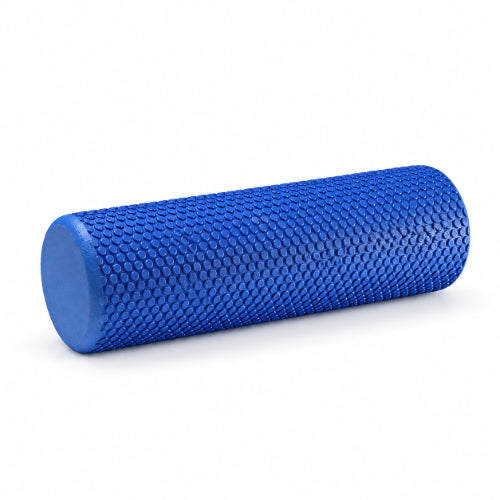
2. Grid or textured roller It has raised ridges. As a result, it gives more focused pressure, and some users find it more intense.
3. High-density roller It is firm and keeps its shape. Also, it suits experienced users and clinics.
4. Soft or standard-density roller It is gentler. Since it feels softer, it suits sensitive muscles and beginners.
5. Short roller (30 to 45 cm) It is light and easy to carry. Thus, it suits travel and small areas such as calves.
6. Long roller (60 to 90 cm) It gives more room for the whole back and both legs, and it also works for balance drills.
7. Vibrating roller It adds vibration to the pressure. Still, the evidence is early and mixed.
8. Massage stick or roller massager It is a handheld roller. Therefore, it lets the user control pressure with the hands.
Which Roller Is Best for Back Pain?
No single roller is best for back pain. Instead, the best approach depends on where the pain is and what causes it. For a stiff upper or mid back, a medium-firm roller of 45 to 90 cm can help. A long roller is easy to lie on, since it can support the spine and head.
Lower back caution
Many therapists advise against rolling the lower back directly, because the lumbar spine has no rib cage to protect it, and pressure can push it into extension. Instead, they suggest rolling the upper back, the hips and the thighs, since tight muscles there can affect the lower back.
What the evidence says
The 2024 review of six trials on chronic pain found a significant pain reduction in only two of them. Therefore, foam rolling should be an add-on to exercise, posture work and medical care. A back roller massager or a roller for workout routines can help with comfort, but it will not fix a disc, nerve or bone problem.
Tip: See a doctor first if back pain follows a fall, comes with fever, weakness, numbness or bladder changes, or does not improve.
What Type of Roller Is Best for Muscles?
For general muscle use, a medium-to-firm roller of about 45 to 60 cm suits most adults. A leg roller massager is usually a firm roller or a stick, since legs are large muscle groups that can take firm pressure. Beginners should start with a smoother or softer roller. On the other hand, experienced users may prefer a grid or high-density roller.
| Goal | Suitable roller | Why |
|---|---|---|
| Beginner or sensitive muscles | Smooth, standard-density roller | Gentler pressure and easier to tolerate |
| Leg muscles (quads, hamstrings, calves) | 45 to 60 cm firm or grid roller | Good contact and controlled pressure |
| Upper and mid back | 60 to 90 cm medium-firm roller | Supports the spine and head |
| Travel or small areas | Short roller or roller massager | Light and easy to carry |
| Clinic and group use | High-density, easy-to-clean roller | Keeps shape and lasts long |
Therefore, the best roller for muscles is the one you can use comfortably and regularly, at a pressure that feels firm but not sharp.
Which Is Better, Foam Roller or Stick?
Neither is clearly better for everyone. Studies suggest that both a foam roll and a hand-held roller massager can raise range of motion in the short term. However, they feel different, so the choice depends on the user and the body area.
| Feature | Foam roller | Roller stick |
|---|---|---|
| Pressure control | Body weight controls pressure | Hands control pressure, easier to adjust |
| Best for | Large muscles, back, balance work | Calves, thighs, travel, sensitive areas |
| Portability | Bulky, especially long rollers | Compact and light |
| Effort | Needs floor space and some strength | Easy to use sitting or standing |
| Use in clinics | Good for exercise and posture drills | Good for quick self-massage |
As a result, many people keep both: a roller for large areas and a stick for quick, targeted work. Also, a stick can suit people who cannot get down to the floor easily.
How to Choose a Foam Roller for Exercise
1. Decide the use
First, decide if you need it for warm-up, recovery, back work or clinic exercises. Then, pick a size and firmness that match.
2. Pick the length
Next, choose a short roller for travel and legs, and a long roller for the spine and balance work. In addition, check that it fits your storage space.
3. Check the firmness
Also, beginners should choose a softer or medium roller. A very firm roller can feel painful and may cause bruising.
4. Look at the surface
Then, choose smooth for gentle pressure and grid or textured for more focused pressure.
5. Check the build
Finally, look for a roller that keeps its shape, is easy to wipe clean and comes from a reliable seller.
Foam Rollers Available at Meddey
Meddey lists several rollers in its foam roller collection. The table below shows the products and their prices as listed on Meddey on 29 September 2026. However, prices and stock can change, so please check the live product page before you order.
| Product | Type | Key detail | Meddey price |
|---|---|---|---|
| Foam Roller 60cm for Physiotherapy | Grid roller | High-density foam, textured grid surface, 60 cm | ₹1,199 |
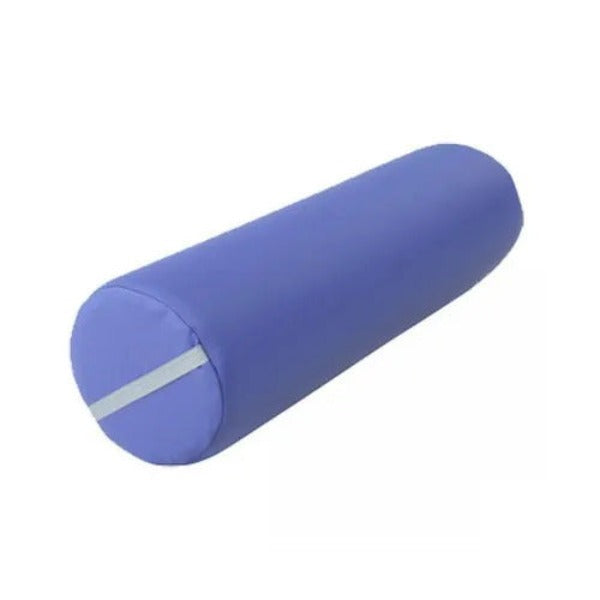
| Bolster Roller for Physiotherapy | Bolster roller | 6 x 12 inch, high-density foam, other sizes available | ₹1,839 |
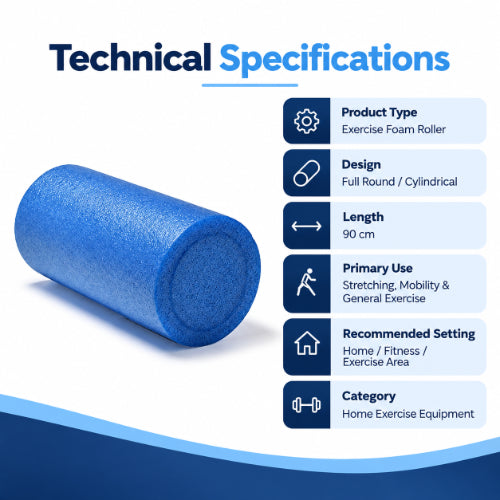
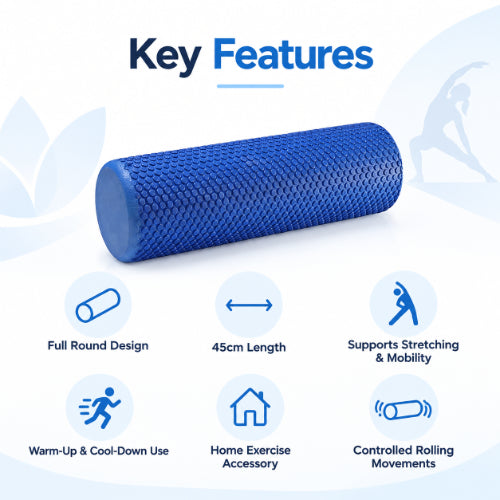
| Premium Exercise Foam Roller, Full Round 45cm | Exercise roller | Full round shape, for warm-up, stretching and mobility | ₹2,249 |
| Theraband Roller Massager | Roller stick | Extends from 12 to 19 inches, compact for travel | ₹2,999 |
| Premium Exercise Foam Roller, Full Round 90cm | Long exercise roller | Full round shape, 90 cm working area | ₹4,102 |
For legs and general use, the 60 cm grid roller is a common starting point. On the other hand, a 90 cm roller suits back and balance work. Always read the product page for the full specification before you choose.
Foam Roller Price: What Decides the Cost?
The price of a foam roller depends on the length, the foam density, the surface, the brand and any extra features. Therefore, a short roller usually costs less than a long roller or an extendable roller massager. At Meddey, foam rollers are listed from ₹1,199, and a 90 cm exercise roller is listed at ₹4,102, as of 29 September 2026.
What pushes the price up?
- First, a longer roller uses more material, so it costs more.
- Second, high-density foam and a textured surface add value.
- Third, an extendable or vibrating design raises the price.
- In addition, brand and build quality also affect the final cost.
Price note: Prices and offers change often. Therefore, please check the live listing, or contact Meddey for help.
How to Use a Foam Roller
The steps below give a general idea. However, always follow your clinician's advice.
1. Warm up
First, do a few minutes of light movement. Then, choose one muscle group to roll.
2. Position the roller
Next, place the roller under the muscle, and support your weight with your hands or your other leg. Also, keep your core braced.
3. Roll slowly
Then, roll slowly, about 2.5 to 5 cm per second, over the muscle. When you find a tender spot, pause for a few seconds and breathe.
4. Choose the dose
According to the 2020 review, about 90 to 120 seconds per muscle group seems to be a useful dose for flexibility and soreness. Therefore, you do not need long sessions.
5. Keep pressure tolerable
After that, adjust the pressure by shifting weight off the roller. The feeling should be firm but not sharp, and you should be able to breathe normally.
6. Follow with movement
Finally, follow rolling with dynamic movement or normal exercises, since the range-of-motion effect is short.
Safety and Care
- Avoid joints and bones: Roll muscles only, and do not roll directly over joints, bones or the front of the neck.
- Avoid the lower back: Do not roll the lumbar spine directly, unless a clinician advises it.
- Do not force it: Stop if pain is sharp, and never roll over a swollen or bruised area.
- Clean the roller: Wipe it with a mild cleaner after use, especially in shared clinic or gym settings.
- Check for wear: Replace a roller that has cracks, dents or lost its firmness.
- Start slowly: Begin with short sessions, and add time as the body adapts.
Frequently Asked Questions About Foam Rollers
What is a foam roller good for?
A foam roller may raise range of motion for a short time, ease post-exercise soreness and reduce feelings of stiffness. However, the effects are usually small and short-term.
What are the disadvantages of using foam rollers?
The benefits are modest, rolling can be painful, and poor technique can cause bruising or joint stress. In addition, people with fractures, open wounds, deep vein thrombosis or inflammation should avoid it.
Will a foam roller help a pulled muscle?
Not in the early days. Rolling directly on a fresh tear may add pain. Later, a therapist may add gentle rolling of the surrounding muscles, as part of a rehab plan.
Which roller is best for back pain?
There is no single best. A medium-firm roller of 45 to 90 cm suits the upper and mid back, while the lower back is best left alone unless a clinician advises otherwise.
What type of roller is best for muscles?
A medium-to-firm roller of about 45 to 60 cm suits most adults. Beginners should start with a smoother or softer roller, while experienced users may prefer grid or high-density types.
Which is better, foam roller or stick?
Neither is clearly better. A foam roller suits large muscles and the back, while a stick suits calves, thighs and travel. Many people use both.
How to choose a foam roller for exercise?
Decide the use, pick the length, check the firmness and surface, and look at the build and the seller. Beginners should choose a smoother, medium-firm roller.
What is the foam roller price in India?
At Meddey, foam rollers are listed from ₹1,199, and a 90 cm exercise roller is listed at ₹4,102, as of 29 September 2026. Please check the live listing for the latest price.
Where to Buy a Foam Roller Online in India?
Clinics, gyms and families can buy foam rollers from medical and fitness equipment stores. Before you buy, compare the length, firmness, surface, build quality and price. Meddey lists grid, exercise, bolster and stick-style rollers, and its support team can help you choose.
View Foam RollersContact MeddeyVisit MeddeyDisclaimer
This article is for general education. Therefore, it does not replace medical advice or clinical judgement. A trained healthcare professional should decide if foam rolling is suitable for a patient. Also, prices and product details may change over time.
Explore Medical Collections
All Categories
Abdominal & Maternity Support

Accessories

Accu-Chek Instant Strips: Use, Compatibility, Price & Blood Sugar Testing Guide
Accu-Chek Instant Strips: Uses, Features & Complete Guide

Accupressure Products for Pressure Point Therapy, Pain Relief & Wellness

accupuncture

Acupuncture Needles & Supplies

Advanced Physiotherapy Machines & Lumbar Physiotherapy

Airways

Ambulance

Anatomy Models
Anesthesia Machine

Anesthesia Products
Ankle Support, Braces & Walker Boots for Recovery
Ankle Weights & Exercise Weights for Home & Rehab
You may also need
FOR YOURecommended for you
Save 50%
Save 22%
Save 17%
Save 24%