


Featured ChoiceSave 28%
Save 35%
Save 20%
Save 15%
Save 20%
About this collection
Laryngoscope: Uses, Types, Blades, Price & Professional Buying Guide
Learn what a Laryngoscope is used for, how direct and video types differ, what Macintosh and Miller blades do, how safe laryngoscopy is and what hospitals should check before buying.
A Laryngoscope is a medical instrument used to view the voice box, vocal cords and opening of the windpipe. In airway care, doctors use it to see the glottis before placing an endotracheal tube. Meanwhile, ENT teams use other laryngoscopy methods to examine the throat and voice box.
Modern laryngoscopes include simple direct devices and camera-based video systems. Therefore, the right option depends on the patient, clinical setting and the skill of the user.
For example, a curved Macintosh blade is widely used in adult airway care. By contrast, a straight Miller blade is common in children and in selected adult airways.
Video laryngoscopes add a camera and screen. As a result, the clinician can see the airway without relying only on a straight direct view.
However, no device can guarantee easy intubation. Patient anatomy, blood, secretions, swelling and user experience can still make airway care difficult.
In addition, the laryngoscope price changes according to blade sizes, lighting, build quality and whether the device is direct or video based.
This guide explains the main Laryngoscope uses, types, blade designs, safety, risks, prices and buying points.
For current products, buyers can browse anaesthesia and airway products on Meddey.
What Is a Laryngoscope?
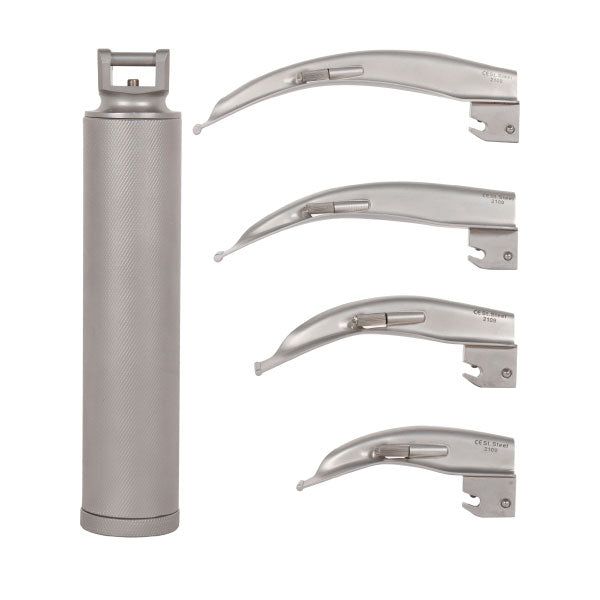
A Laryngoscope helps a trained clinician view the larynx and glottic opening.
A basic direct device usually has:
- A handle
- A power source
- A light
- A removable blade
The blade helps create a view of the airway while the light makes the area easier to see.
In addition, newer video systems place a camera near the blade tip.
Therefore, the term Laryngoscope now includes both direct and video devices.
What Is the Laryngoscope Used For?
The purpose depends on the clinical setting.
Airway Management Helps clinicians see the glottis during intubation.
Voice Box Examination Allows the larynx and vocal cords to be viewed.
General Anaesthesia Often used when an endotracheal tube is required.
Emergency Care Can support urgent airway management by trained staff.
ENT Assessment Helps investigate voice, swallowing and throat problems.
Teaching Video devices allow both trainee and supervisor to view the airway.
For example, anaesthesia teams may use a laryngoscope during surgery. Meanwhile, ENT specialists may use flexible or rigid scopes for diagnosis.
Therefore, the word Laryngoscope can refer to devices used for different but related purposes.
What Are the Two Main Types of Laryngoscopes?
For airway care, the two broad types are direct laryngoscopes and video laryngoscopes.
| Feature | Direct Laryngoscope | Video Laryngoscope |
|---|---|---|
| View | Direct view toward the glottis | Camera image shown on a screen |
| Equipment | Handle, light and blade | Camera blade and display |
| Line of sight | More direct alignment needed | Less direct alignment may be needed |
| Teaching | Mainly operator view | Shared screen view |
| Cost | Usually lower | Usually higher |
However, both types require training.
Therefore, hospitals should choose equipment according to clinical needs rather than assuming one technology is always better.
Direct Laryngoscope
A direct Laryngoscope uses a blade and light to let the clinician view the airway directly.
During intubation, the clinician positions the blade to create a view of the vocal-cord opening.
Direct laryngoscopy remains widely used because the equipment is simple and familiar in many hospitals.
However, limited mouth opening, swelling or difficult anatomy can make the view harder.
As a result, hospitals often keep backup airway tools available.
Video Laryngoscope
A video Laryngoscope uses a small camera near the blade tip.
The camera sends the airway image to a screen. Therefore, the user does not need the same direct line of sight required with a standard blade.
In many settings, video laryngoscopy can improve the view of the glottis. In addition, it may improve first-attempt success during intubation.
Video systems can also help teaching because the supervisor can see the same view as the trainee.
However, blood or secretions can block the camera. Therefore, video equipment does not remove the need for backup plans.
Macintosh vs Miller Laryngoscope Blades
Macintosh and Miller are two common blade designs.
| Feature | Macintosh | Miller |
|---|---|---|
| Shape | Curved | Straight |
| Common use | Widely used in adults | Often used in children and selected adults |
| Approach | Usually placed in the vallecular area | Can lift the epiglottis more directly |
| Sizes | Several adult and child sizes | Several neonatal, child and adult sizes |
Neither blade is always better.
Instead, the choice depends on patient age, airway shape and clinician experience.
Why Do Blade Sizes Matter?
Blade length matters because airway size changes with age and body size.
For example, adult sets often include Macintosh sizes 2, 3 and 4. Meanwhile, neonatal and child sets use smaller blades such as sizes 0 and 1.
Therefore, hospitals that treat both adults and children need a wider blade range.
In addition, having the right size available can reduce delays during airway care.
Flexible Laryngoscopy vs Direct Laryngoscopy
Diagnostic ENT laryngoscopy is different from airway intubation laryngoscopy.
A flexible scope is often passed through the nose while the patient is awake. Usually, a local numbing spray helps reduce discomfort.
By contrast, surgical direct laryngoscopy usually takes place in an operating room under general anaesthesia.
| Feature | Flexible Laryngoscopy | Surgical Direct Laryngoscopy |
|---|---|---|
| Setting | Often clinic | Operating room |
| Patient state | Usually awake | Usually asleep under anaesthesia |
| Access | Often through the nose | Usually through the mouth |
| Purpose | Examination | Detailed exam, biopsy or treatment |
Therefore, discomfort and risk vary depending on which procedure is being discussed.
Is Laryngoscopy Painful?
Flexible clinic laryngoscopy can feel uncomfortable, but it is usually brief.
For example, patients may notice pressure, a gagging feeling or the urge to sneeze.
Meanwhile, numbing medicine can reduce discomfort.
Surgical direct laryngoscopy normally happens under general anaesthesia. As a result, the patient does not feel pain during the procedure itself.
Afterwards, a temporary sore throat or hoarse voice can occur.
Therefore, laryngoscopy is not always painful, and the experience depends on the procedure type.
How Risky Is Laryngoscopy?
Laryngoscopy is generally safe when trained professionals perform it correctly.
However, possible risks include:
- Sore throat
- Temporary hoarseness
- Nosebleed with nasal scopes
- Lip or tongue injury
- Dental injury
- Bleeding
- Airway tissue injury
- Vocal-cord injury
- Airway spasm
- Anaesthesia-related problems
Serious problems are less common during routine diagnostic procedures.
However, emergency intubation can carry greater risk because the patient may already be very unwell.
Clinical point: risk depends on the patient, the procedure and the clinical setting.
What Can Make Laryngoscopy Difficult?
Several airway factors can make the view harder.
- Limited mouth opening
- Restricted neck movement
- Airway swelling
- Facial injury
- Large tongue
- Changed airway anatomy
- Blood or secretions
- Previous difficult intubation
Therefore, airway assessment is important before planned intubation.
In addition, difficult-airway equipment should be available when needed.
Why Is Video Laryngoscopy Useful?
Video laryngoscopy can improve the airway view in many difficult situations.
For example, the camera may provide a useful image even when direct alignment is difficult.
In addition, the shared screen can help teaching and team support.
However, direct laryngoscopy remains an important airway skill.
Therefore, training should include more than one airway approach.
Laryngoscope Lighting Systems
Good lighting is important because the airway must be clearly visible.
Older devices may use standard bulbs. Meanwhile, newer models often use LED or fibre-optic lighting.
Possible benefits include:
- Bright light
- Lower power use
- Longer lamp life
- Better durability
- Less frequent bulb replacement
Therefore, lighting quality should be checked before buying.
Reusable vs Disposable Blades
| Feature | Reusable Blade | Disposable Blade |
|---|---|---|
| Use | Used again after approved cleaning | Single use |
| Material | Often stainless steel | Depends on manufacturer |
| Cleaning | Required | Not reused |
| Waste | Lower single-use waste | Higher waste |
Therefore, the choice depends on infection-control policy, workload and available cleaning systems.
Cleaning and Reprocessing
Reusable airway equipment must be cleaned correctly between patients.
However, the exact method depends on the manufacturer instructions.
Facilities should check:
- Blade material
- Handle cleaning guidance
- Electrical parts
- Approved disinfectants
- Sterilization limits
- Storage method
Therefore, one cleaning method should not be used for every model without checking the device instructions.
How Much Does a Laryngoscope Cost?
The laryngoscope price depends on blade sizes, light type, build quality and whether the system is direct or video based.
Current Meddey Price Examples
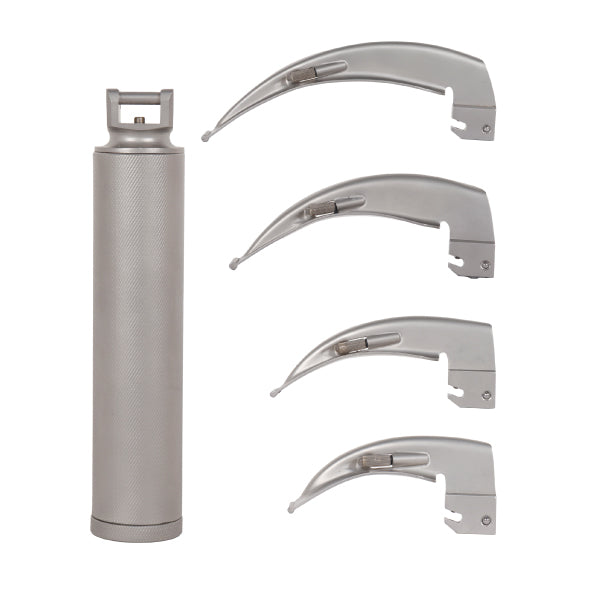
Economy set: blade sizes 1, 2, 3 and 4 are approximately ₹1,655.
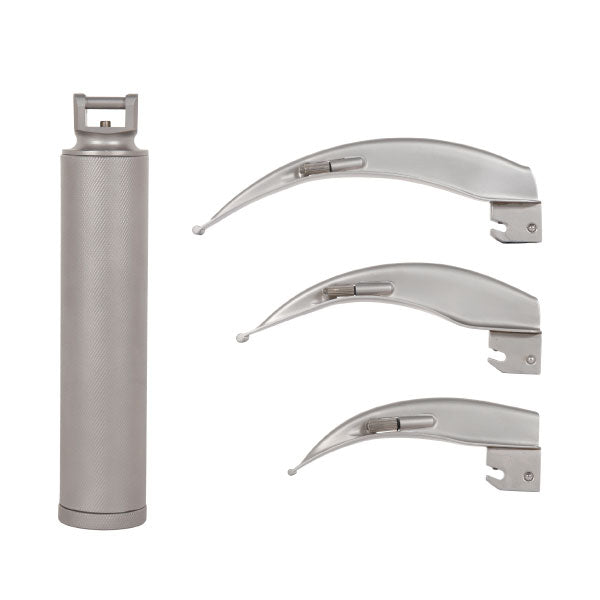
Adult Macintosh set: blade sizes 2, 3 and 4 are approximately ₹1,747.
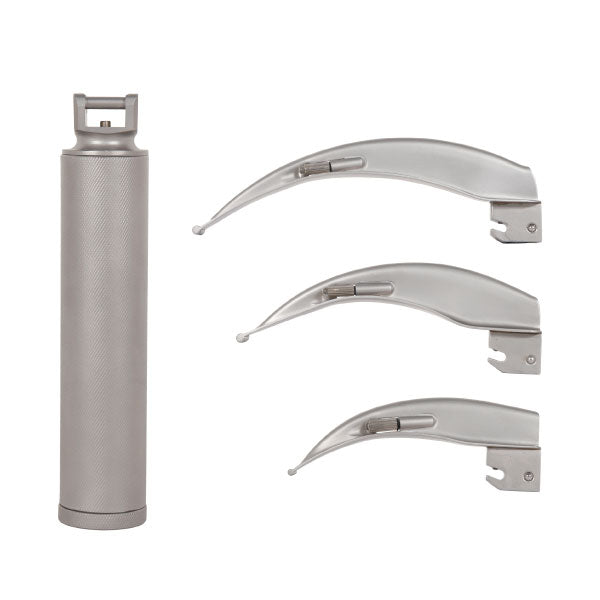
Premium set: blade sizes 1, 2, 3 and 4 are approximately ₹2,207.
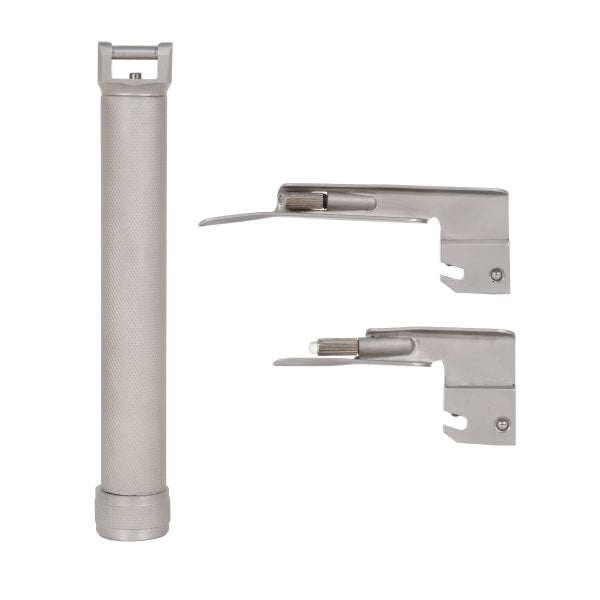
Paediatric premium set: selected blade sizes 0 and 1 are approximately ₹1,563.
However, prices can change with stock and offers. Therefore, buyers should check the live product page before ordering.
In addition, video systems usually cost more because they include cameras and displays.
Economy Laryngoscope Set on Meddey
Meddey currently lists the Laryngoscope Economy Blade Size 1, 2, 3 and 4.
The current price is approximately ₹1,655.
Because the set includes several blade sizes, it can support a wider airway equipment inventory.
View Economy LaryngoscopeAdult Macintosh Laryngoscope Set on Meddey
The Adult Macintosh Laryngoscope Set with sizes 2, 3 and 4 is currently listed around ₹1,747.
The listing describes stainless-steel blades with LED lighting.
Therefore, this set may suit operating rooms, emergency areas and teaching settings.
View Adult Macintosh SetPremium Laryngoscope Set on Meddey
Meddey also lists the Laryngoscope Premium with blade sizes 1, 2, 3 and 4.
At the time of review, the listed price is approximately ₹2,207.
Therefore, buyers can compare economy and premium sets before deciding.
View Premium LaryngoscopeWhat Affects Laryngoscope Price?
- Number of blades
- Blade sizes
- Macintosh or Miller design
- Steel quality
- LED or fibre-optic light
- Reusable or disposable design
- Handle quality
- Storage case
- Battery system
- Camera
- Display screen
- Warranty
Therefore, hospitals should compare the whole set rather than only the handle cost.
Which Laryngoscope Is Best?
There is no single Laryngoscope that is best for every setting.
For routine adult airway care, Macintosh blades are common. Meanwhile, child services may need smaller or straight blades.
Video systems can help when a difficult airway is expected or when teaching is important.
However, familiarity with the equipment is also important.
Therefore, the best device should match the patient group and the clinical team's skills.
Laryngoscope for Operation Theatre Use
Operating rooms need reliable airway equipment because intubation is common during general anaesthesia.
A practical set may include:
- Adult Macintosh blades
- Child blades where needed
- Compatible handles
- Spare batteries
- Backup lighting
- Video laryngoscope where available
- Other difficult-airway tools
In addition, staff should check the equipment before use.
Therefore, buyers should plan for backup equipment as well as the main device.
Laryngoscope for Emergency and ICU Use
Emergency and ICU intubation can be more difficult than planned airway care.
For example, patients may already have low oxygen levels or unstable blood pressure.
As a result, first-attempt success becomes especially important.
Video laryngoscopy may help in this setting. However, airway teams still need backup options.
Therefore, emergency and ICU airway trolleys should follow the facility's airway plan.
Laryngoscope for Medical Training
Medical students and trainees need supervised practice before clinical use.
Direct laryngoscopes help learners understand basic airway anatomy and blade handling.
Meanwhile, video systems can help because supervisors can see the same airway image.
Therefore, simulation labs may benefit from both direct and video equipment.
How to Choose a Laryngoscope
1. Define the Clinical Setting
First, decide whether the device is for OT, ICU, emergency, ENT or teaching use.
2. Choose Direct or Video
Next, decide whether a camera-based system is required.
3. Review Blade Types
Then, compare Macintosh and Miller options.
4. Check Blade Sizes
Afterwards, make sure the set covers the patient group.
5. Review Lighting
In addition, compare LED and fibre-optic systems.
6. Check Handle Compatibility
Meanwhile, confirm that blades and handles fit each other.
7. Review Cleaning Needs
Reusable devices should match the hospital's cleaning process.
8. Check Backup Equipment
Airway teams should always have another option if the first device fails.
9. Review Service Support
Finally, check warranty and replacement-part availability.
Laryngoscope Buying Checklist
- Confirm intended use
- Choose direct or video type
- Select Macintosh or Miller blades
- Check required blade sizes
- Review light quality
- Check handle fit
- Review battery type
- Check steel quality
- Review grip comfort
- Confirm cleaning needs
- Check storage case
- Review replacement blades
- Confirm warranty
- Check service support
- Compare current laryngoscope price
Overall, the right Laryngoscope should match both the patient group and the clinical team's training.
Frequently Asked Questions About Laryngoscope
What is the laryngoscope used for?
A Laryngoscope is used to view the larynx and vocal cords. In airway care, it helps clinicians see the glottis during intubation.
What are the two main types of laryngoscopes?
The main airway types are direct laryngoscopes and video laryngoscopes. ENT care may also use flexible scopes.
Is laryngoscopy painful?
Flexible office laryngoscopy may cause brief pressure or gagging. Surgical direct laryngoscopy is usually done under general anaesthesia.
How risky is laryngoscopy?
It is generally safe, but possible risks include sore throat, bleeding, dental injury, airway spasm and anaesthesia-related problems.
What is a Macintosh laryngoscope?
It uses a curved blade and is widely used for adult direct laryngoscopy.
What is a Miller laryngoscope?
It uses a straight blade and is common in paediatric airway care.
Is video laryngoscopy better?
It can improve airway view and first-attempt success in many settings. However, the best choice still depends on the patient and clinician.
How much does a laryngoscope cost?
Current Meddey conventional sets are roughly ₹1,563 to ₹2,207 depending on blade sizes and configuration.
Can medical students use a laryngoscope?
Students can learn under supervision and in simulation. Clinical airway procedures require proper training and supervision.
Are laryngoscope blades reusable?
Many stainless-steel blades are reusable when cleaned according to manufacturer instructions.
Where to Buy a Laryngoscope Online in India?
Hospitals, operation theatres, emergency units and training centres can buy airway equipment from medical suppliers.
Before ordering, compare blade type, sizes, lighting, handle fit, reusable or disposable design, warranty and price.
Meddey currently offers several conventional Laryngoscope sets for adult and paediatric airway needs.
Economy Laryngoscope Set Adult Macintosh Set Premium Laryngoscope Set Anaesthesia ProductsConclusion
A Laryngoscope is an important instrument for airway care and laryngeal examination.
Direct devices remain widely used. Meanwhile, video laryngoscopes can provide a camera-based view and may improve airway visualization.
Macintosh and Miller blades remain common choices. However, the correct blade depends on the patient and clinical situation.
In addition, flexible ENT laryngoscopy differs from airway intubation laryngoscopy. Therefore, comfort and risk depend on the exact procedure.
The laryngoscope price varies according to blade sizes, lighting, build quality and technology.
Ultimately, the best Laryngoscope should match the patient population, clinical setting and staff training.
For current products, buyers can explore laryngoscopes and airway equipment available on Meddey.
Medical & Professional Disclaimer
This article provides professional education and medical-equipment buying guidance only. It is not an airway-management training manual. Laryngoscopy and intubation should be performed only by trained healthcare professionals according to patient needs, local protocols and manufacturer instructions.
Explore Medical Collections
All Categories
Abdominal & Maternity Support

Accessories

Accu-Chek Instant Strips: Use, Compatibility, Price & Blood Sugar Testing Guide
Accu-Chek Instant Strips: Uses, Features & Complete Guide

Accupressure Products for Pressure Point Therapy, Pain Relief & Wellness

accupuncture

Acupuncture Needles & Supplies

Advanced Physiotherapy Machines & Lumbar Physiotherapy

Airways

Ambulance

Anatomy Models
Anesthesia Machine

Anesthesia Products
Ankle Support, Braces & Walker Boots for Recovery

Ankle Weights & Exercise Weights for Home & Rehab
You may also need
FOR YOURecommended for you
Save 28%
Save 20%
Save 35%
Save 20%
Save 15%