


Featured ChoiceSave 19%

Save 41%
About this collection
Stretchers: Uses, Types, Sizes and Price Guide
This guide explains what stretchers are used for and how they work. It also covers the main types, sizes and the factors that decide stretcher price.
Key Takeaways
- First, stretchers are platforms that move and support patients, and they range from a simple folding stretcher to a powered hospital stretcher.
- In most wards, the stretcher trolley is the main choice because it has wheels and side rails.
- As for size, a hospital stretcher is usually 1.9 to 2.15 m long and 55 to 70 cm wide.
- As for price, the cost depends on the type, frame material, load limit and extra features, so a simple folding stretcher costs far less than a powered hospital stretcher.
- Finally, choose a stretcher by its use, load limit, wheels, cleaning needs and standards, and not by price alone.
Contents
Every doctor and nurse has moved a patient on a stretcher, yet this device gets very little attention. However, patient handling causes many back injuries among staff and many falls among patients. Therefore, the right patient stretcher protects both the patient and the care team.
This guide is for doctors, nurses, medical students and buyers of clinic and hospital equipment. In addition, it answers the most common questions about stretchers and adds buying tips for the Indian market in 2026. For products, you can also visit Meddey, including its hospital beds and mobility equipment.
Latest market note: Indian public tenders still ask for stretcher trolleys that follow the IS 4035 standard. For example, 2026 GeM tenders from Indian Railways and ESIC hospitals use this standard. Moreover, local production is growing, since one Indian maker reported building 12,000 ambulance stretchers in 2025.
What Are Stretchers Used For?
A stretcher is a flat, strong platform that carries a patient who cannot walk safely. First, it keeps the patient in a stable position. Second, it protects the spine and limbs during movement. As a result, staff can move the patient with less effort and less risk.
Emergency and pre-hospital careFor example, teams use stretchers to carry injured patients from the scene to an ambulance, even through stairs and lifts.
Transfers inside the hospitalAlso, staff move patients between casualty, wards, radiology, ICU and theatres on a wheeled stretcher trolley.
Tests and proceduresSimilarly, patients rest on stretchers during X-rays, small procedures, dressings and recovery after anaesthesia.
Rescue and disastersIn fires, road crashes and mass-casualty events, teams use folding, scoop or basket stretchers to reach patients quickly.
In teaching hospitals, students also learn safe handling on stretchers. For instance, they practise the log-roll, the slide transfer, brake use and rail position. Moreover, they learn how to keep IV lines safe during movement.
How Does a Stretcher Work?
Most stretchers share four parts. First, a strong frame carries the load. Second, a surface such as a mattress, canvas or coated fabric supports the patient. Third, wheels, handles or runners allow movement. Finally, rails, straps and brakes keep the patient safe.
Wheeled hospital stretcher (trolley)
1. Positioning
First, staff bring the trolley next to the bed and lock the wheel brakes. As a result, it cannot move during the transfer.
2. Height matching
Next, a pedal, lever or button raises or lowers the deck on hydraulic or electric models. Therefore, the deck matches the bed height and the slide is easy.
3. Patient transfer
Then, staff move the patient across with a slide sheet, roller board or team lift. After that, they raise the side rails and fasten the straps if needed.
4. Head-up position
Meanwhile, the backrest lifts the head end to ease breathing and feeding. In addition, premium models tilt the whole deck (the Trendelenburg position).
5. Transport
Finally, staff release the brakes and push the trolley by the end handles. Also, an IV pole and an oxygen cylinder holder travel with the patient.
Folding stretcher
A folding stretcher has an aluminium frame with hinged cross-bars and a stretched fabric bed. When opened, locking hinges hold the frame firm. When closed, it folds into a small bundle. Usually, two to four people carry it by the handles. However, it is built for easy carrying and not for comfort.
Powered and ambulance stretchers
Ambulance stretchers use a scissor frame with a hydraulic or battery lift. Because the legs fold as the cot goes in, the crew lifts less weight. Also, a lock holds the cot to the vehicle floor. Therefore, powered versions reduce lifting injuries for paramedics.
How Many Types of Stretchers Are There?
There is no official count because makers group stretchers in different ways. However, in practice, about twelve types are widely known. Below, they are listed with a short note on each one.
Stretchers used inside the hospital
1. Stretcher trolleyIt has wheels, rails and a mattress. Besides, it comes with fixed height, hydraulic height or a backrest. Overall, it is the standard ward and casualty unit.
2. Hospital stretcherThis type has central brakes and adjustable height. Also, many models tilt and have an X-ray friendly deck, so they suit emergency rooms and recovery areas.
3. X-ray or C-arm stretcherIts deck lets X-rays pass through. As a result, staff can take images without moving the patient.
4. Paediatric stretcherIt is smaller and has taller rails. Consequently, it lowers the risk of falls in children.
5. Bariatric stretcherIt has a wider frame and a stronger base. Therefore, it carries a much higher load than a standard model.
6. Transfer stretcherIt has rollers or a slide surface. Thus, staff can move a patient sideways between bed and trolley.
Portable, ambulance and rescue stretchers
7. Folding stretcherIt has an aluminium frame with a PVC or canvas bed. Because it is light, it suits first aid rooms, factories and clinics.
8. Ambulance stretcherThis cot has folding legs, so it loads into a vehicle. In addition, manual, hydraulic and powered versions exist.
9. Scoop stretcherIt splits into two halves. Therefore, staff slide it under the patient without lifting, which helps in suspected spine and pelvic injury.
10. Basket stretcherIts rigid, high sides hold the patient firmly. Hence, teams use it in mountain, water and industrial rescue.
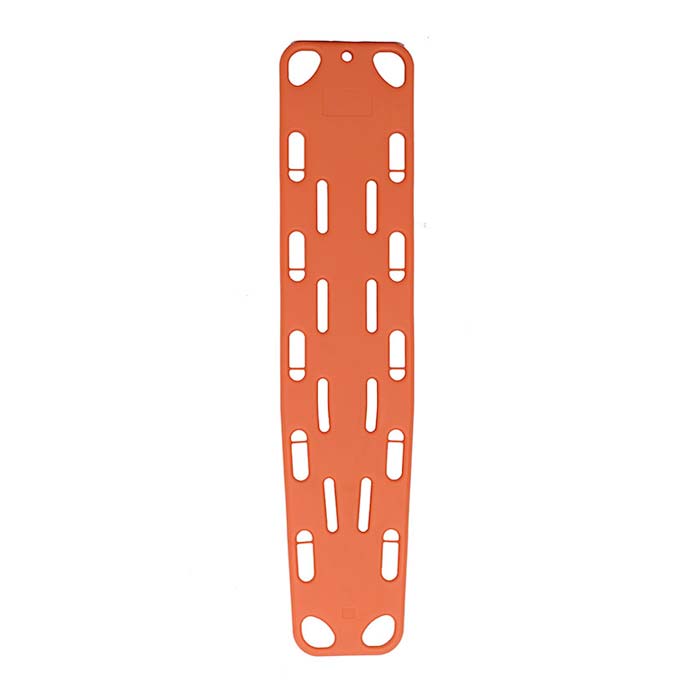
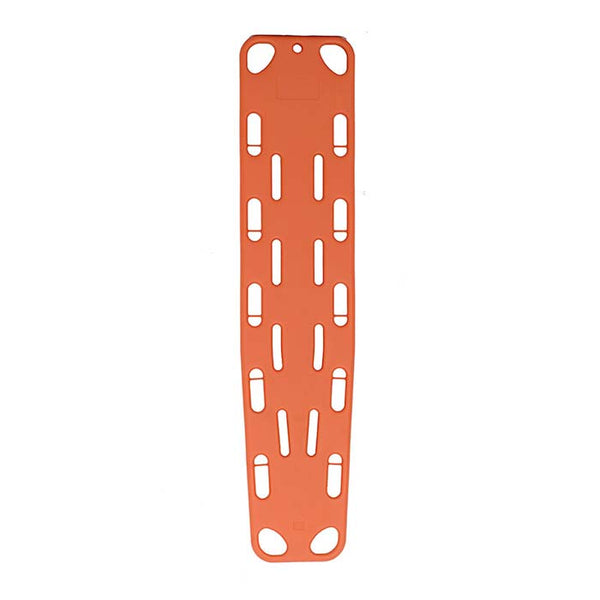
11. Spine boardIt is a flat board with straps. Usually, crews use it for short-term extrication before they move the patient to a better surface.
12. Canvas or pole stretcherIt is simply canvas on two poles. Although basic, it is cheap, light and a useful backup.
Student tip: Remember one simple split. First, in-hospital stretchers focus on comfort and adjustment. In contrast, pre-hospital stretchers focus on easy carrying and rugged loading. Moreover, most exam answers build on this idea.
Which Type of Stretcher Is Commonly Used?
In Indian hospitals and nursing homes, the wheeled stretcher trolley is the most common type. It has side rails, a padded mattress and a head-up backrest. Because it moves easily and staff can clean it fast, it works well day and night.
Outside the ward, the aluminium folding stretcher is the most popular choice in first aid rooms, schools, factories and housing societies. It stores flat and needs little care besides cleaning. In ambulances, however, the folding-leg ambulance stretcher is the norm.
Stretcher, trolley and hospital bed: what is the difference?
Many people use these three names for the same thing. However, each one has a slightly different job. A stretcher is the general name for any platform that carries a patient. Put on a wheeled base, it becomes a stretcher trolley, so it moves easily inside a building. A hospital bed, on the other hand, is meant for long stays, and it usually has more positions, stronger rails and a thicker mattress.
In practice, a patient often uses all three in one visit. For example, the ambulance stretcher brings the patient in, the stretcher trolley carries the patient to the ward, and the hospital bed then supports the stay. Therefore, a clinic that only does short visits may need just a trolley, while a ward that keeps patients overnight also needs beds.
What Types of Stretchers Are Used in Hospitals?
Each department needs different features. For example, casualty needs quick height change, while radiology needs a deck that X-rays can pass through. The table below matches common choices to each clinical setting.
| Department | Preferred stretcher | Key features |
|---|---|---|
| Casualty or ED | Hydraulic hospital stretcher, trauma stretcher | Height and tilt control, X-ray deck, IV pole, oxygen holder |
| Wards | Stretcher trolley with backrest | Side rails, large wheels, 2-inch mattress |
| Theatre and recovery | Transfer trolley, recovery stretcher | Central brake, easy-clean frame |
| Radiology | X-ray or C-arm stretcher | X-ray friendly top, cassette tray |
| Paediatrics | Paediatric stretcher | High rails, small platform, safety straps |
| Ambulance bay | Ambulance cot, folding stretcher | Folding legs, secure lock, strong handles |
| Disaster or triage area | Folding, scoop and canvas stretchers | Light weight, quick set-up, easy stacking |
For small clinics with little space, one compact stretcher trolley plus one or two folding stretchers usually cover most needs. Besides, this set-up costs far less than powered systems.
What Is the Size of a Stretcher?
Sizes differ by type and maker, but the ranges below are typical. Therefore, always check the exact size, height range and load limit on the datasheet. Also, make sure the stretcher fits through your lifts and doors.
| Type | Length | Width | Height or folded size | Typical load |
|---|---|---|---|---|
| Hospital stretcher trolley | 190–215 cm | 55–70 cm | About 50–90 cm, fixed or adjustable | Often 150–250 kg |
| Folding stretcher (aluminium) | 200–222 cm open | 52–56 cm | Folded: about 100–110 × 18 × 10–15 cm | Often 120–159 kg |
| Ambulance stretcher | About 190–210 cm | About 55–60 cm | Folding legs | About 160–250 kg or more |
| Paediatric stretcher | Shorter | Narrower | High side rails | Set by the maker |
| Bariatric stretcher | Similar | Wider | Stronger base | Well above standard |
For example, a typical stretcher on trolley measures about 570 mm wide, 2140 mm long and 820 mm high. Similarly, a common aluminium folding stretcher measures about 220 × 55 cm open and 110 × 18 × 13 cm folded, and it carries up to 150 kg.
Stretcher Price in 2026: What Decides the Cost?
Stretcher price depends on the type, frame material, mattress, adjustment options, brand and standards. Because these factors differ from one model to another, the same type of stretcher can have a wide price range. Therefore, it is better to compare the full specification than to compare one number.
| Product type | Cost level | Notes |
|---|---|---|
| Canvas stretcher | Lowest | Basic, light use, often a backup |
| Aluminium folding stretcher | Low | Portable, easy to store, suits first aid and clinics |
| Stretcher on trolley (basic) | Low to medium | Heavy wheels, fixed height |
| Hydraulic transport trolley | Medium to high | Steel frame, hydraulic height, foldable rails, padded mattress |
| Ambulance stretcher | High | Folding legs, ambulance grade |
| Electric hospital stretcher | Highest | Powered height, built-in rails, quoted by brand |
How much does a stretcher bed cost, and what about a foldable stretcher?
In practice, a stretcher bed (stretcher trolley) costs more than a foldable stretcher, because it has wheels, rails and a mattress. Moreover, a hydraulic or stainless-steel trolley costs more than a basic fixed-height one. A foldable stretcher, on the other hand, is one of the lower-cost options, since it is simple and light. For the exact price of a model, please check the current listing or ask for a written quote.
What pushes the price up?
- First, powered lift and automation add a lot to the cost in ambulance and emergency models.
- Second, a higher load limit and a bariatric build cost more.
- Third, stainless steel costs more than painted mild steel, and aluminium is light but not cheap.
- In addition, brand support such as warranty, spare parts and service adds value.
- Finally, extras such as an IV pole, oxygen cage, X-ray deck and thick mattress raise the price.
How to get the best value
Instead of choosing the lowest price, look at the total cost of use. For example, a stronger frame and better wheels last longer, so they may cost less over the years. Also, ask if the quote includes delivery, GST and warranty. Then, compare the same features across two or three models before you decide.
Price note: Prices change with GST, steel cost and supplier discounts. Therefore, please ask for a written quote. For current stretcher prices and stock, please contact Meddey.
Buying Checklist for Clinics and Hospitals
Define the useFirst, decide where you will use it. For example, ward transfer, casualty, ambulance and first aid need different types.
Check the load limitNext, pick a safe working load above your heaviest patient. Also, add a margin for the extra force while moving.
Look at wheels and brakesIn addition, choose larger wheels for uneven floors and lift gaps. Moreover, check that the brakes hold on slopes.
Plan for cleaningBecause infection control matters, choose a seamless PVC or PU mattress and a smooth frame.
Ask for standardsAlso, ask for proof of the right standard, such as IS 4035 for stretcher trolleys in Indian tenders. Similarly, ask for test reports and warranty terms.
Confirm after-sales helpFinally, confirm spare parts, service time and warranty length before you compare prices.
As a simple rule for small clinics, buy one good stretcher trolley for daily moves and one folding stretcher for emergencies. Then, keep both in a known place where nothing blocks them.
Common mistakes to avoid
- First, do not buy on price alone, because a cheap unit with weak wheels or brakes can cost more later.
- Second, do not ignore door and lift width, since a stretcher that does not fit is of no use.
- Third, avoid skipping the load limit, because an overloaded frame can bend or fail.
- In addition, do not forget cleaning needs, as torn mattresses and rusty joints hold germs.
- Finally, do not leave routine checks for later, since small faults grow quickly with daily use.
Safety, Cleaning and Care
- Brakes: Always lock the brakes before any transfer. Then, push gently to confirm they hold.
- Rails and straps: Raise the side rails when the patient is on the stretcher, unless the case says otherwise. Also, fasten straps for confused, sedated or young patients.
- Lifting: Use enough staff for each lift. In addition, use slide sheets or roller boards to reduce strain.
- Cleaning: Clean the stretcher between patients with the approved disinfectant. Pay special attention to rails, handles, mattress seams and joints.
- Checks: Inspect wheels, brakes, hinges, rail latches, welds and the mattress often. If a unit is damaged, remove it from use at once.
- Oiling: Oil moving parts as the maker advises, usually every few months.
- Load limit: Finally, respect the load limit. For example, never use a folding stretcher as a bed or a step.
Clinical reminder: When a spine injury is suspected, follow your local trauma protocol for spinal motion restriction. However, a standard folding stretcher alone does not hold the spine still.
Frequently Asked Questions
What are stretchers used for?
Stretchers move, transfer and support patients who cannot walk or should not walk. For example, they are used in emergencies, hospitals, ambulances, theatres and rescue work.
How does a stretcher work?
A strong frame carries a patient surface. Then, wheels or handles allow movement, while brakes and straps keep the patient safe. In addition, adjustable models use hydraulic, manual or electric parts to change height and position.
Which type of stretcher is commonly used?
The wheeled stretcher trolley is the most common in hospitals. Meanwhile, the aluminium folding stretcher is the most common for first aid and portable use.
What is the size of a stretcher?
A typical hospital stretcher is about 190 to 215 cm long and 55 to 70 cm wide. Similarly, folding stretchers open to about 200 to 222 cm by 52 to 56 cm. Once folded, they are about 100 to 110 cm long.
What types of stretchers are used in hospitals?
Hospitals use stretcher trolleys, hydraulic or electric stretchers, trauma and X-ray stretchers, and paediatric and bariatric models. In addition, they use transfer stretchers, ambulance cots and folding stretchers.
How much does a stretcher bed cost?
The cost depends on the type, frame, mattress and features. A basic stretcher trolley costs much less than a hydraulic or electric one. For the current price, please contact Meddey.
How many types of stretchers are there?
There is no fixed count. Still, about twelve types are widely known: stretcher trolley, hospital stretcher, folding, ambulance, scoop, basket, spine board, canvas, X-ray, paediatric, bariatric and transfer stretchers.
How much does a foldable stretcher cost?
A standard aluminium foldable stretcher is one of the lower-cost options. However, the exact price depends on load limit, fold design and brand, so please check the current listing.
Need the Right Stretcher for Your Clinic or Hospital?
Compare options, check stock and ask for a quote for your stretcher trolley, hospital stretcher or folding stretcher. Also, the Meddey support team can help you choose the right model.
Beds & Mobility →Explore Full Catalogue →Disclaimer
This article is for general education. Therefore, it does not replace maker instructions, hospital protocols or clinical judgement. Also, product details may change over time.
Explore Medical Collections
All Categories
Abdominal & Maternity Support

Accessories

Accu-Chek Instant Strips: Use, Compatibility, Price & Blood Sugar Testing Guide
Accu-Chek Instant Strips: Uses, Features & Complete Guide

Accupressure Products for Pressure Point Therapy, Pain Relief & Wellness

accupuncture

Acupuncture Needles & Supplies

Advanced Physiotherapy Machines & Lumbar Physiotherapy

Airways

Ambulance

Anatomy Models
Anesthesia Machine

Anesthesia Products
Ankle Support, Braces & Walker Boots for Recovery
Ankle Weights & Exercise Weights for Home & Rehab
You may also need
FOR YOURecommended for you
Save 19%
Save 41%