
1


Parallel Walking Bars – Professional Gait Rehabilitation System


Double-tap to zoom · drag to pan · swipe to browse
Parallel Walking Bars – Professional Gait Rehabilitation System
In Stock
Size:6 Feet
Check delivery
See if we deliver to you and when.
Delivering to
Delivery applicable
Free Shipping
on orders ₹999+
Replacement
knee replacement
100% Genuine
Products
Dedicated
Support
Secure
Payments
Need help choosing or using this product?
Our team can help with product questions and orders.
Chat with support
Choose options
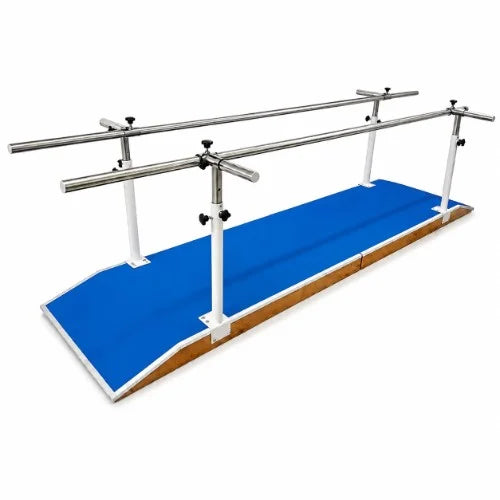
- Parallel hand support: Two side bars provide support during guided standing and walking practice.
- 6, 8 and 10 ft options: Buyers can select a length according to available space and intended use.
- Walking practice: Provides a dedicated area for guided step-by-step walking exercises.
- Balance practice: The side bars provide hand support during professionally recommended standing and balance exercises.
Size:6 Feet
Check delivery
See if we deliver to you and when.
Delivering to
Delivery applicable
- Parallel hand support: Two side bars provide support during guided standing and walking practice.
- 6, 8 and 10 ft options: Buyers can select a length according to available space and intended use.
- Walking practice: Provides a dedicated area for guided step-by-step walking exercises.
- Balance practice: The side bars provide hand support during professionally recommended standing and balance exercises.
Size:6 Feet
Check delivery
See if we deliver to you and when.
Delivering to
Delivery applicable
About this product
Parallel walking bars for gait rehabilitation provide steady hand support during guided walking and balance practice. They can be considered for a home rehabilitation setup when enough floor space is available and a physiotherapist or healthcare professional has explained how they should be used.
In simple words, gait rehabilitation means walking practice. The user holds the two side bars while practising standing, stepping and controlled walking movements.
The system is available in 6 ft, 8 ft and 10 ft sizes. This gives home users and professional buyers different options according to their available space and rehabilitation setup.
Why Use Parallel Bars for Walking Practice?
Walking practice may feel difficult when a person needs extra support. Parallel bars provide fixed hand support on both sides while the person practises movement between the bars.
A physiotherapist may include this type of equipment in a wider rehabilitation plan. The amount and type of walking practice should depend on the individual user's needs.
Two-Side Support The user can hold a bar on each side while practising standing and walking movements.
Different Length Options Choose from 6 ft, 8 ft or 10 ft according to the available room and planned walking practice.
Home & Physio Use Suitable for guided home rehabilitation setups as well as physiotherapy and rehabilitation facilities.
Key Features
- Parallel hand support: Two side bars provide support during guided standing and walking practice.
- 6, 8 and 10 ft options: Buyers can select a length according to available space and intended use.
- Walking practice: Provides a dedicated area for guided step-by-step walking exercises.
- Balance practice: The side bars provide hand support during professionally recommended standing and balance exercises.
- Home rehabilitation option: May suit a dedicated home therapy area when sufficient room and professional guidance are available.
- Professional use: Also useful for physiotherapy clinics, rehabilitation centres and other therapy setups.
Choosing the Right Size for Your Space
Size is especially important when buying parallel bars for home use. Measure your available floor area before placing an order.
| Length | Space Consideration | Buying Point |
|---|---|---|
| 6 ft | Requires less length than the larger options. | May be easier to accommodate where home or therapy-room space is limited. |
| 8 ft | Requires more walking space. | Consider when additional practice length is required and sufficient room is available. |
| 10 ft | Requires the largest clear floor area. | Better considered where there is enough dedicated rehabilitation space. |
Before ordering: Measure the full area where the parallel bars will be placed. Also leave enough clear space around the equipment for safe access.
Before Buying Parallel Bars for Home Use
Home buyers should first think about space, the user's support needs and who will guide the walking practice.
Check the following points before buying:
- Available room length and width
- Whether a permanent therapy area is available
- Which bar length fits comfortably in the room
- The type of walking practice recommended
- Whether assistance or supervision will be available
- Ease of entering and leaving the practice area
A shorter model can save space, but size should not be selected only because the product is being used at home. The rehabilitation plan and available room should also guide the choice.
How Are Parallel Bars Used?
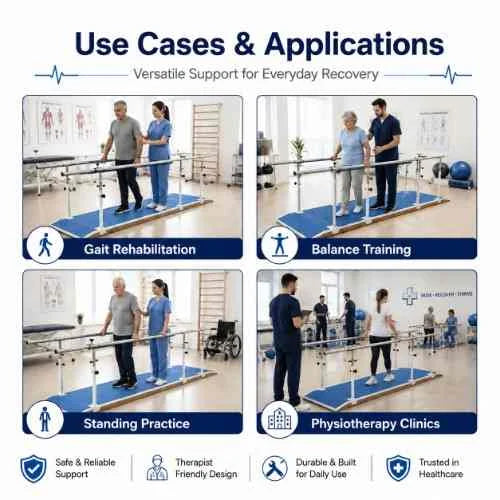
The user stands between the two bars and uses the handrails for support. Depending on professional advice, practice may begin with standing and simple controlled steps.
The user may then practise walking along the available length. The exact activity should match the person's ability and rehabilitation plan.
Parallel bars provide support during practice, but they do not guarantee faster recovery or better walking results.
Walking and Balance Practice at Home
A dedicated home rehabilitation area can make repeated guided practice more convenient for some families.
However, parallel bars are rehabilitation equipment rather than ordinary household exercise equipment. A physiotherapist or healthcare professional should explain suitable activities, especially when the user has difficulty standing or walking independently.
Home-use guidance: Keep the floor around the bars clear and dry. Follow the walking exercises recommended by the user's physiotherapist instead of creating a rehabilitation routine by guesswork.
Also Suitable for Professional Rehabilitation
These physiotherapy parallel bars can also be used in professional rehabilitation environments.
They may suit:
- Physiotherapy clinics
- Rehabilitation centres
- Physical therapy facilities
- Walking-practice areas
- Other professionally supervised rehabilitation setups
Clinics can choose the required length according to available space and the type of walking practice they provide.
Parallel Bars vs a Walker
Parallel bars and walkers both provide support, but they serve different purposes.
Parallel bars remain in one fixed practice area. The user walks between the two handrails. A walker, in comparison, moves with the person and can provide support during movement in other locations.
A physiotherapist can help decide which type of support is appropriate for a person's current needs.
What to Check Before Ordering
Before buying parallel walking bars for gait rehabilitation, check:
- Required length — 6 ft, 8 ft or 10 ft
- Available floor space
- Location where the equipment will stay
- User's walking-practice requirements
- Need for assistance or professional guidance
- Suitability for the planned home or professional setup
Frequently Asked Questions
What are parallel walking bars used for?
They provide hand support on both sides during guided standing, walking and balance practice.
What does gait rehabilitation mean?
Gait rehabilitation simply means guided walking practice. It may include standing, stepping and walking exercises according to a rehabilitation plan.
Can parallel walking bars be used at home?
They may suit a guided home rehabilitation setup when enough space is available. A physiotherapist or healthcare professional should explain the appropriate walking exercises.
Which size is better for a smaller home space?
The 6 ft option requires less length than the 8 ft and 10 ft versions. However, measure the complete available area before selecting a size.
Are 8 ft and 10 ft options also available?
Yes. The product is available in 6 ft, 8 ft and 10 ft options. Choose according to the available space and planned use.
Can parallel bars be used for balance practice?
They can provide hand support during professionally recommended standing and balance exercises.
Are parallel bars the same as a walker?
No. Parallel bars remain in a fixed practice area, while a walker moves with the user.
Do I need professional guidance for home use?
Professional guidance is recommended so the exercises and level of support match the user's needs.
Can physiotherapy clinics use these parallel bars?
Yes. They can also suit physiotherapy clinics, rehabilitation centres and other professional therapy setups.
Explore more: Physio Studio Equipment | Physiotherapy & Rehabilitation Equipment
Parallel Walking Bars for Home & Physiotherapy Use
Choose from 6 ft, 8 ft and 10 ft options according to your available space and rehabilitation needs. For home walking practice, select the size carefully and follow professional guidance.
You may also need
FOR YOURecommended for you
Save 55%

Save 39%

Save 8%


Save 37%

Save 36%

Save 39%


Save 31%

Save 46%