


Featured ChoiceSave 50%

Save 49%


Save 10%


Save 27%

Save 50%
Save 8%


Save 50%


Save 50%
Bed Rail for Adults: Is It Safe at Home and What Are Safer Options?
bed rail use at home needs careful thought: it may offer support, but it can also cause trapping or falls. This guide helps Indian families understand the risks, check bed and mattress compatibility, and discuss safer options. Choose support around the person’s needs—not their age alone—and seek a professional assessment before fitting equipment.
Are bed rails safe for older adults at home?
A bed rail is not automatically safe for an older person. Its suitability depends on their movement, awareness, body size, and the complete bed setup. Serious harm can occur even when equipment appears correctly fitted.
Start with a clear description of the problem. Is your parent rolling towards the edge while asleep? Are they struggling to sit up? Or are they trying to leave the sleeping surface without help?
These situations need different discussions. Avoid treating every concern as a reason to add a barrier.
For a family conversation, write down three things:
-
The task: What does the person need help doing in bed?
-
The concern: What have you actually seen, rather than feared?
-
The person’s view: Do they want support, and what feels difficult?
Bring these notes to a doctor, physiotherapist, or occupational therapist. Ask them to assess both the person and the home bed.
A label such as bed rail for older adults does not answer these questions. Look beyond the description and ask whether that particular equipment suits your relative’s needs. Individual assessment matters more than age-based wording.
Is a bed rail meant to stop someone leaving the bed?
Do bed rails stop an older adult from rolling out of bed? A suitable setup may reduce accidental rolling out for some people, but it cannot be relied on for everyone. Someone may roll over it, climb around it, or become trapped.
Explain what happened before asking for equipment. “She rolled while asleep” is more useful than “She needs protection.” Likewise, “He stood up to reach the bathroom” describes a different concern.
Use this simple distinction during the assessment:
|
What the family notices |
What to discuss |
|---|---|
|
Moving towards the bed edge during sleep |
Sleeping movement, mattress fit, and the surrounding space |
|
Difficulty turning in bed |
Movement support and an assessed technique |
|
Difficulty sitting at the edge |
Strength, balance, bed height, and suitable assistance |
|
Getting up without asking |
Reasons for leaving, awareness, and available help |
|
Trying to climb over equipment |
An urgent review of whether the setup is appropriate |
Keep observations separate from conclusions. You do not need to decide the rail yourself before seeking help.
Describe where the person was, what they tried to do, and whether anyone helped. This gives the assessor a clearer starting point than a general request for a bed guard rail.
What is entrapment risk with bed rails?
Entrapment means becoming caught in a position the person cannot escape. This may happen within the equipment, beneath it, or between it and the mattress. Trapping involving the head, neck, or chest can interfere with breathing and cause death.
A gap does not have to look dramatic to deserve attention. The assessment must consider the person’s body and the spaces around the rail, not appearance alone.
Ask the assessor to show your family the relevant areas on the actual bed. Request a clear explanation of what should trigger stopping use.
Your notes could include:
-
Where the mattress meets the bed side rail.
-
Openings within and underneath the rail.
-
Spaces near its ends, the headboard, and the bed frame.
-
Nearby furniture that affects the setup.
-
Changes that appear when the mattress moves or compresses.
These are assessment points, not a home certification test. A visual check cannot establish that every gap is acceptable. MHRA guidance warns against relying on basic measurements alone to judge suitability.
If you notice a concerning space, avoid experimenting with a person lying beside it. Pause use and ask for advice about the whole bed arrangement.
People who need particular caution with a bed rail
Who should avoid using bed rails? People who are confused, restless, heavily drowsy, or unable to control their movements need particular caution. Anyone who tries to climb over the rail needs prompt reassessment rather than a stronger barrier.
Dementia, stroke-related difficulties, balance problems, and medicine-related changes can affect suitability. These conditions do not support a simple family decision based on a diagnosis alone; the person’s abilities and behaviour matter.
Prepare a short description of what your relative can do without help. Include turning, following a request, recognising the bed edge, and calling for assistance.
Also describe variations. For example, tell the professional if your relative understands a task sometimes but becomes confused at other points.
Useful observations to share include:
-
Trying to squeeze through or move around equipment.
-
Pulling repeatedly at fittings or bedding.
-
Sliding into an awkward position.
-
Being unable to explain discomfort.
-
Needing another person to change position.
Do not deliberately recreate a worrying movement for a demonstration. Describe it, or use a sketch of the bed setup.
Ask for an alternative care plan while suitability is being reviewed. The family needs practical guidance, not simply a warning that the current arrangement is unsuitable.
Ask for advice before fitting a bed rail
Should we ask a doctor before fitting bed rails for a family member? Yes; ask for an individual assessment before use, especially where there is confusion, weakness, or a previous fall. A doctor can review health concerns, while a suitable therapist can assess movement and the home setup.
For an Indian household, explain the actual sleeping arrangement. Mention a shared bed, a wooden storage base, limited space, or a mattress that is moved regularly. Do not assume the assessor already knows these details.
Prepare a small information pack:
-
Photos of the empty bed from both sides and the foot end.
-
The bed frame and mattress details, where available.
-
A description of the movement causing concern.
-
Any existing equipment beside or attached to the bed.
-
The help available when the person wants to get up.
Ask for the assessment to address a specific task. For example: “Please assess how my father can sit up and leave this bed.”
Also ask who to contact if something changes. Keep that name with the equipment information, rather than relying on one family member’s memory.
A remote discussion may help explain the concern, but ask whether the setup needs an in-person assessment.
Collapsible bed rail and bed support rail: how they differ
This guide discusses only a collapsible bed rail and a bed support rail. Treat these names as starting points, not proof of suitability. Confirm the intended use of the actual model with its manufacturer.
For a collapsible bed rail, ask how it opens, closes, and locks. Request a demonstration that includes the space needed beside your home bed.
For a bed support rail, ask exactly which movements it is intended to support. Do not assume that equipment beside the mattress can take the force of someone pulling themselves upright. Not every bed rail is intended for that task.
|
Type being considered |
Questions for the assessment |
|---|---|
|
Collapsible bed rail |
Can the family operate the mechanism correctly? Does it lock as intended? Is there room to use it? |
|
Bed support rail |
Is the intended movement permitted? Does the attachment suit this bed? Can the person use it appropriately? |
Ask the professional to explain the decision in everyday language. “Suitable for support” is still too vague unless everyone knows what support means.
Write down the agreed task and limits. Avoid carrying assumptions from one model to another, even when they look similar.
Can a bed support rail help someone sit up and leave the bed?
Can a bed rail help with sitting up and getting out of bed? Some equipment is intended to assist movement, but not every bed rail can safely serve this purpose. The model, attachment, and person’s movement need assessment before it is used for support.
Ask a physiotherapist or occupational therapist to consider the complete movement. Sitting up, reaching the edge, placing feet, and standing are separate parts of leaving a bed.
Use the appointment to clarify practical details:
-
Where should the person begin the movement?
-
What should their hands hold, if anything?
-
What help should a family member provide?
-
When should they stop and ask for assistance?
-
What signs suggest that the plan needs review?
Request a demonstration suited to your relative, rather than copying a general video. Ask the professional to watch the family explain the agreed method back.
Do not make the first attempt an unsupported experiment. Arrange the level of assistance recommended during assessment.
Record any difficulty in plain language. “The mattress edge sinks before she can place her feet” gives more useful information than “The support does not work.”
Keep the focus on the whole movement, not only the handhold.
Does the bed rail fit your mattress and bed?
How do I check that a bed rail fits my mattress and bed? Confirm compatibility using the manufacturer’s fitting guide and ask for help if any detail is unclear. Check the exact bed base, mattress dimensions, attachment method, and intended user rather than assuming a universal fit.
Gather the details before fitting. A description such as “double bed” does not provide everything needed for a compatibility decision.
|
Detail to record |
What to clarify |
|---|---|
|
Bed base |
Whether that construction is permitted for the model |
|
Mattress length and width |
Whether both are within the stated limits |
|
Mattress depth |
Whether the complete sleeping surface is suitable |
|
Mattress material |
Whether softness or compression affects use |
|
Attachment points |
Where the supplied fittings must be secured |
|
Intended user |
Any stated body-size or weight restrictions |
Do not transfer equipment between beds without checking again. The new bed may look similar while having a different frame or mattress. Bed components are not automatically interchangeable.
If details are missing, ask the manufacturer rather than guessing. Keep the reply with the fitting guide so other caregivers can refer to it.
Where compatibility cannot be established, ask the professional to consider another approach. A close-looking fit is not enough to settle the question.
Check bed rail gaps when the mattress changes
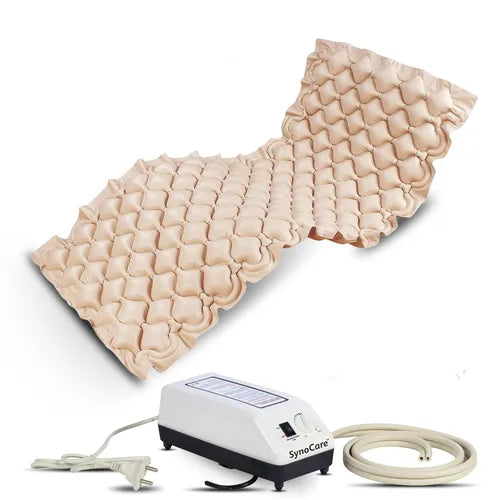
Can air mattresses create gaps next to bed rails? Yes; movement, compression, or changes in an air mattress can affect spaces beside the rail. An added mattress layer can also change the height of the sleeping surface relative to the bed rail.
Tell the assessor about every layer used on the sleeping surface. Include any overlay or additional mattress, rather than describing only the original mattress.
Ask what needs reassessment when the setup changes. For example, clarify what to do after replacing the mattress or adding a prescribed surface.
Keep these questions in your family notes:
-
Does the rail permit this mattress combination?
-
Does the mattress behave differently when occupied?
-
Who should assess the setup after a change?
-
Can the rail still be used while advice is pending?
-
What arrangement should the family use instead, if needed?
Avoid treating mattress care and bed rail care as separate subjects. Changes to one can affect the other.
If another professional recommends a different mattress, mention the existing equipment before making the change. Ask the people involved to agree on the complete bed arrangement.
Keep the final description specific enough that another family member can identify which mattress and layers were assessed.
Avoid improvised bed rail fixes
Do not fill concerning gaps with pillows, blankets, or folded bedding. These materials can compress and may increase trapping risk. Do not modify the equipment to make an unsuitable fit appear acceptable.
If a fitting seems wrong, pause and identify the missing information. Ask whether a part is absent, the assembly is incorrect, or the model does not suit the bed.
Useful questions for the manufacturer include:
-
Is this the correct attachment for this bed base?
-
Are all supplied parts present?
-
Is this movement expected during use?
-
Does the model permit the current mattress?
-
Does the rail need inspection or replacement?
Send clear photos of the empty setup if requested. Include the affected fitting and a wider view showing its position on the bed.
Do not ask a family member to lie against a suspect area for a photograph. Keep the person away from the rail while seeking advice.
A temporary household repair can also make later assessment harder. Explain any changes already made, even if they seemed minor.
The aim is to resolve the underlying fit or equipment problem. Hiding a space or quietening a loose part does not answer that question.
Check bed rail fittings and moving parts regularly
How often should bed rails be checked for loose parts? Check them regularly and follow the manufacturer’s stated checking and maintenance schedule. Recheck after disturbance or changes to the setup, because fittings can shift or loosen.
Ask for a checking routine that your family can actually follow. Avoid inventing one fixed interval for every model and situation.
Keep checks separate from repair. A caregiver may notice a fault without being the right person to adjust it.
Use a simple written record:
|
Item |
What the caregiver records |
|---|---|
|
Attachment |
Any visible movement, damage, or missing part |
|
Mattress position |
Any shift or newly noticed space |
|
Moving mechanism |
Whether it operates and locks as described |
|
Bed surroundings |
Any moved furniture or blocked access |
|
Follow-up |
Who was contacted and what was agreed |
Ask the manufacturer which findings require immediate stopping. Make that advice easy for everyone to find.
If equipment has been removed for cleaning, do not assume refitting is routine. Arrange the checks specified for returning it to use. MHRA guidance calls for review after changes to the rail combination.
A ticked box is useful only when the person checking understands what it means.
What are safe alternatives to bed rails?
Alternatives depend on the problem: discuss bed height, easier access to help, a clearer route, and assessed movement support. No option is automatically suitable, and replacing equipment should not introduce another hazard.
Instead of asking only what can replace a barrier, ask what makes the person approach the edge or leave the sleeping surface.
Use this discussion table as a starting point, not a treatment plan:
|
Main concern |
Approach to discuss |
Point needing attention |
|---|---|---|
|
Accidental movement towards the edge |
Bed height and sleeping setup assessment |
The person’s ability to leave the sleeping surface |
|
Difficulty sitting or standing |
Therapist-led movement assessment |
Strength, balance, and suitable help |
|
Getting up to call someone |
A reachable way to request assistance |
Whether somebody can respond |
|
Walking in darkness |
Reachable lighting and a clear route |
Access from the person’s position |
|
Repeated unplanned bed exits |
Review of needs and available support |
Why the person wants to get up |
Choose changes with the person wherever possible. Ask which part of the current arrangement they find difficult or upsetting.
Keep the plan focused. Several poorly coordinated changes can leave caregivers unsure what has been assessed.
After agreeing an alternative, record what will happen to the existing equipment. Do not leave an unsuitable setup available for casual use.
Does lowering the bed help prevent falls?
Does lowering the bed help prevent falls? A lower bed may reduce the distance of a fall, but it does not stop every fall. A bed that is too low can also make getting up harder, so the height needs individual assessment.
Avoid choosing bed height only by looking at the floor distance. Ask how the person will sit at the edge and stand with their usual level of help.
Discuss the full sequence with the therapist:
-
Approaching and sitting on the sleeping surface.
-
Moving into the sleeping position.
-
Returning to the edge.
-
Placing feet and preparing to stand.
-
Receiving help if independent movement is unsuitable.
Ask whether the same height suits both resting and leaving the sleeping surface. If adjustments are part of the plan, make sure everyone understands who makes them.
Do not improvise changes to the bed frame. Ask for an appropriate arrangement rather than removing or altering structural parts yourself.
For a small bedroom, explain how much space caregivers have beside the bedside. Include any difficulty reaching the person without leaning over furniture.
The useful question is not simply “How low can we make it?” It is “What bed arrangement suits this person’s sleeping and movement needs?”
Make the space beside the bed easier to use
Keep lighting and a way to call for help within reach. Remove loose rugs, trailing wires, and clutter from the route beside the bedside. A charged phone and a torch near the bedside are also sensible parts of home preparation.
For an Indian home, consider the actual route to the bathroom or family room. Describe any narrow doorway, furniture corner, or shared sleeping area during the assessment.
Make a short room plan with your relative:
-
Which side do they normally leave from?
-
Where do they reach for the light?
-
Where will their footwear be placed?
-
How will they call someone?
-
Where does the assisting person stand?
Do not move everything without discussion. Ask the person to explain where they expect familiar items to be.
If the bed is shared, include the other sleeper in planning. Make sure changes do not leave either person confused about access or assistance.
Keep water and other frequently used items where the person can reach them without stretching awkwardly. Ask the therapist to review reach if this is already difficult.
A tidy room is not a substitute for an equipment assessment. Treat room changes and the bed rail decision as connected parts of the same discussion.
Match help to why the person leaves the bed
A bed rail should not replace appropriate monitoring. This is especially important for someone at increased risk of trapping or falling.
Ask your relative what they need when they try to get up. Where communication is difficult, share your observations with their healthcare professional rather than guessing.
Prepare a short record for discussion:
|
Observation |
Question for the care discussion |
|---|---|
|
Reaching beyond the mattress |
Is something needed within reach? |
|
Calling while moving towards the edge |
Is the agreed way of asking for help usable? |
|
Trying to leave after waking |
What assistance is needed at that point? |
|
Pulling at equipment |
Is the setup uncomfortable, confusing, or unsuitable? |
|
Family unsure how to assist |
What practical teaching is needed? |
These questions are prompts, not explanations of behaviour. Avoid assuming that one observation reveals the cause.
Be honest about available help. If no family member can respond reliably, tell the professional before agreeing a plan based on assistance.
Do not describe the arrangement as supervised unless someone understands the role and can carry it out. Ask what level of observation is needed and whether your household can provide it.
If the proposed plan is not workable, request another discussion rather than quietly changing it yourself.
Never use a bed rail to restrain someone
Can bed rails be used to restrain a patient? Adult bed rails should not be used as restraints. Using one to stop someone intentionally leaving the sleeping surface can create additional danger, including climbing attempts.
Good intentions do not remove this concern. A family may feel reassured by a barrier while the person experiences it as an obstacle.
Ask your relative how the arrangement feels. Use simple words and offer time to explain discomfort or worry.
During the care discussion, avoid goals such as:
-
“Keep him in bed so he cannot get up.”
-
“Make the barrier harder to open.”
-
“Add more equipment because she climbs around it.”
-
“Leave it raised because nobody can help.”
Replace these with a description of the unmet need. For example: “He wants to get up, but we do not know how to assist.”
Ask the healthcare professional for a less restrictive plan. Explain any disagreement within the family so it can be addressed openly.
Where the person cannot clearly express a choice, request professional guidance. Do not interpret silence, drowsiness, or difficulty speaking as agreement.
The practical goal is appropriate support and care, not keeping someone behind equipment. Safety guidance describes these devices as assistive, rather than restraining.
Review the bed rail plan when health changes
A previous assessment does not settle suitability permanently. Changes in movement, awareness, body size, or equipment can require review. Tell the professional responsible when the person’s needs change.
Ask for a clear list of review triggers. Keep it beside the checking record so another caregiver can recognise when to seek help.
Your discussion list might include:
-
New confusion or unusual restlessness.
-
A different level of help with turning or standing.
-
Repeated movement towards or around the equipment.
-
A change to the mattress or bed base.
-
A moved or refitted attachment.
-
A fall, trapping concern, or near miss.
Also report new sleepiness or dizziness. Some medicines can contribute to falls, and medicine review belongs with a healthcare professional. Do not change prescribed medicines yourself.
Describe the change precisely. “He now needs help to sit upright” is more useful than “He seems weaker.”
If you are unsure whether a change matters, ask. You do not need to establish the cause before reporting it.
Request an interim plan when reassessment is needed. Clarify whether the rail should remain unused and what help the person needs instead.
Keep the updated plan in one place and remove superseded notes from the active handover.
Use one shared bed rail checklist
A shared checklist can help your family organise an agreed plan. It does not establish that equipment is suitable or replace the manufacturer’s guidance.
Use plain bullets that everyone can understand:
-
The person’s specific need has been assessed.
-
Their preferences have been discussed wherever possible.
-
The exact bed, mattress, and equipment combination is recorded.
-
Compatibility has been confirmed, not assumed.
-
The family understands the permitted use.
-
Supplied fittings are present and attached as specified.
-
Mattress spaces and nearby surroundings have been assessed.
-
Moving parts operate as described by the manufacturer.
-
No household materials have been used to fill gaps.
-
Everyone knows how the person should request help.
-
Caregivers know which concerns mean stopping use.
-
A named professional or manufacturer contact is available.
-
Changes, faults, and near misses are passed on.
Ask the assessor to adapt this list to the actual equipment. Delete items that create confusion and add model-specific checks they recommend.
For relatives using a phone, keep one clear copy that is easy to find. Avoid relying on a long message thread containing mixed or outdated advice.
Use the checklist to start a conversation when something is unclear. Do not tick an item simply because another caregiver previously did.
Agree on caregiver handover before bed rail use
When several relatives or a paid caregiver share support, decide who passes on changes. Equipment guidance is less useful if only one person understands it.
Ask each caregiver to explain the agreed plan in their own words. This can reveal misunderstandings before the person needs assistance.
A handover note can contain:
|
Topic |
What to write |
|---|---|
|
Purpose |
The exact task the rail was assessed for |
|
Assistance |
What help the person needs and who provides it |
|
Operation |
Where the manufacturer’s fitting and use guide is kept |
|
Current concern |
Any fault, movement, gap, or change already reported |
|
Next action |
Who is seeking advice and what remains unresolved |
Keep observations factual. Write “attachment moved away from the mattress” rather than “equipment seems bad.”
Do not ask an unfamiliar caregiver to learn by trial and error. Arrange a proper explanation before they take responsibility.
If someone cannot confidently operate a collapsible bed rail, report that difficulty. Ask for further teaching or a review of the arrangement.
Make sure the person receiving care knows about handover decisions wherever possible. A family plan should not become a conversation that excludes them.
Respond to a bed rail fault or near miss
Stop using equipment if it is damaged, unstable, or involved in a trapping concern, and arrange appropriate help. Ask the manufacturer and responsible healthcare professional what must happen before any return to use. Regular inspection and maintenance are important parts of safe management.
A near miss still deserves attention. Do not dismiss it because someone intervened before an injury occurred.
Once the person is safe, record what happened:
-
The movement they were attempting.
-
The position of the mattress and equipment.
-
Any fitting that moved or appeared damaged.
-
Any recent change to the bed setup.
-
Who was contacted and what advice was received.
Photograph the empty setup only if doing so is safe. Do not recreate the event with your relative for evidence.
If someone is trapped, struggling to breathe, or seriously injured, seek emergency help immediately. Do not delay urgent assistance to collect photos or complete notes.
Keep suspect equipment out of use while the concern is unresolved. Explain this clearly during caregiver handover.
Ask for a plan that covers the person’s immediate support needs. Removing equipment without arranging suitable assistance may leave the original difficulty unanswered.
Make the final bed rail decision around the person
Before agreeing to use a bed rail, ask for a plain explanation of the decision. The person, equipment, bed, mattress, and surroundings all belong in that discussion.
Use these closing questions with the professional:
-
What specific need are we addressing?
-
Why is this approach suitable for our relative?
-
Which alternatives were considered?
-
What should our family check or report?
-
What should we do if the arrangement no longer works?
You should leave with more than a product name. Ask for a practical plan covering use, assistance, checking, and reassessment.
For Indian families caring at home, an attractive or familiar-looking device is not enough. The useful choice is an assessed arrangement that respects the person and fits the real household.
If important details remain unclear, pause the decision and seek clarification. Do not turn uncertainty into a home experiment.
A bed rail is one possible part of care, not the care plan itself. Keep the focus on comfortable movement, suitable help, and the person’s freedom to express their needs.
Explore Medical Collections
All Categories
Abdominal Belt: Support After Surgery, in Pregnancy and After Delivery

Accessories
Accu-Chek Instant Strips: Use, Compatibility, Price & Blood Sugar Testing Guide
Accu-Chek Instant Strips: Uses, Features & Complete Guide

accupuncture

Acupuncture Needles & Supplies

Advanced Physiotherapy Machines & Lumbar Physiotherapy

AED Defibrillator: How It Works, Who Can Use It and Where to Place It

Airways

Alcohol Swab: Uses, Safe Use and Disposal Guide

Ambu Bag Full Form: Is There an Official Meaning?

Ambu Bag: Parts, Uses and Safety Guide

Ambu Full Form: What the Name Means and BVM Basics

Ambulance

Anatomy Models
You may also need
FOR YOURecommended for you
Save 50%
Save 49%
Save 10%
Save 27%
Save 50%
Save 50%
Save 50%
Save 8%