


Featured ChoiceSave 20%

Save 26%


Sold out

What customers say
★★★★★ 5.0 · 10 reviews
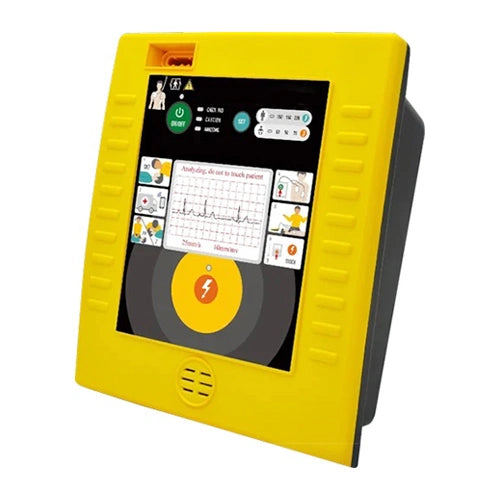
 Automatic External Defibrillator (AED 7000)
“Simple operation, fast shock delivery, and clear instructions. A great investment for saving lives in criti...”
“This AED is lightweight, user-friendly, and highly effective. The automated analysis ensures quick response...”
 AED View Automatic External Defibrilator
“With simple operation, smart analysis, and fast shock delivery, this AED is a critical tool for saving live...”
“This AED is lightweight, fast, and highly effective. The real-time guidance ensures proper CPR and defibril...”
AED defibrillator: how it works, who can use it and where to place it
AED defibrillator use can feel scary for a family. Yet the device is made to guide ordinary people with voice prompts. This guide explains what an AED does, where to keep it at home, and how to keep it ready. For medical use, follow advice from a doctor or trained professional.
What is an AED defibrillator and what does it do?
An AED defibrillator is a portable device for sudden heart emergencies. AED means automated external defibrillator. Some people say automatic external defibrillator, but automated external defibrillator is the common name.

The AED checks a person’s heart rhythm through sticky pads. It then decides if a shock is needed. If a shock is not needed, the defibrillator will not give one.
A defibrillator gives clear voice prompts. Many AED models also show pictures or text. This helps a family member stay guided during a stressful moment.
The defibrillator is not a replacement for emergency services. In India, call 112 for emergency help as general safety advice. Then follow the AED voice prompts and local emergency guidance.
The American Heart Association describes an AED as a light, portable device. It can detect certain dangerous heart rhythms and deliver a shock when needed. The FDA also explains that semi-automated AEDs analyze the rhythm and prompt shock delivery when needed. (heart.org)
Why an AED defibrillator matters for Indian families
Many Indian families live across mixed age groups. A home may include parents, grandparents, children, and visiting relatives. A medical emergency can happen at home, in a building lobby, or near a community hall.

A defibrillator can give guided help before expert help reaches the person. It speaks step by step. It checks the rhythm itself, so the user does not choose a shock.
For a family, the main value is readiness. You know where the defibrillator is. You know who will call 112. You know who will bring the AED machine.
This guide keeps the language simple for phone reading. Save it, share it in your family group, and discuss it with your doctor.
The AED defibrillator in simple words
Think of an AED as a small talking defibrillator machine. It has pads, a battery, and a computer inside. It listens to the heart rhythm through the pads.
The defibrillator does not ask you to judge the rhythm. It does the checking itself. The user only follows the voice prompts.
Most AED units guide you with clear commands. They may say when to place pads. They may say when not to touch the person.
You should still learn from a trained professional if possible. Training can build calm and confidence. But the defibrillator is made for guided public use.
What is the difference between an AED and a defibrillator?
An AED is one type of defibrillator made for guided use by the public. The word defibrillator can describe different devices, but this guide covers only AED use for families. For home users, the important point is simple: an AED analyzes the rhythm and decides whether shock advice appears.
A family does not need to understand every type of defibrillator machine. You need to know how your AED opens, speaks, and shows pad placement. Read the AED label and user guide kept with the device.
The defibrillator should be easy to find. It should be easy to open. It should be close to the people who may need it.
If you hear the word defibrillator in this article, read it as AED defibrillator. We are not discussing other medical devices here. The family focus stays on the AED.
How an AED defibrillator works inside the box
An AED defibrillator works through four simple parts. It has the main AED unit, the battery, the pads, and the prompt system. These parts work together when the AED turns on.

The battery powers the defibrillator. The pads connect the person to the defibrillator. The prompt system tells the user what to do.
Once pads touch bare skin, the AED reads the heart rhythm. The defibrillator then decides if shock advice is needed. The user should not guess this decision.
Some AED models ask the user to press a shock button. Some models may deliver the shock after warning prompts. In both cases, the AED decides whether a shock is advised.
What happens when you open the AED case
When you open many AED cases, the device starts speaking. Some devices need a power button. The voice prompts then guide the user.
The defibrillator may tell you to attach pads. It may show pictures on the pad packet. Follow the exact pictures on that AED.
The defibrillator checks pad contact after placement. If pads are loose, it may ask you to press them firmly. If the battery is weak, it may show or speak a warning.
Keep the family calm by giving one person the defibrillator. Another person can call 112. Others should give space and follow emergency help instructions.
AED defibrillator pads and battery basics
The pads and battery make the defibrillator useful. Without working pads and a working battery, the defibrillator may not be ready. Every family should know where these parts are.
AED pads are sticky. They usually come sealed in a packet. Do not open the packet for checking unless the user guide says so.
Pads have expiry details. The battery also has replacement details. Check these details before a problem appears.
The FDA notes that AEDs need key accessories, including batteries and pad electrodes. These accessories are part of AED readiness. (fda.gov)
What accessories come with an AED defibrillator?
Common AED accessories may include pad packets, a battery, a carry case, simple instructions, and safety items. Some AED packs may include child pads or a child setting. The exact accessories depend on the AED model, so check the contents list.
A family should keep all AED items together. Do not keep the battery in one cupboard and pads in another. During stress, people forget separate locations.
Useful AED accessories can include:
|
AED item |
What it helps with |
Family check |
|---|---|---|
|
Adult pads |
Connect the AED to an adult chest |
Check seal and expiry detail |
|
Child pads or child key |
Helps AED use for a child when supplied |
Keep with the AED |
|
Battery |
Powers the AED machine |
Check status indicator |
|
Carry case |
Keeps the AED and items together |
Keep easy to open |
|
Quick guide |
Shows basic AED use steps |
Keep visible |
|
Small safety kit |
Helps prepare skin if supplied |
Keep sealed and clean |
Do not add random items inside the AED case. Extra items can create confusion. Keep only useful and approved items with the AED.
AED defibrillator placement at home
Home placement decides whether people can find the defibrillator quickly. A locked cupboard can waste precious attention. A hidden bedroom drawer can confuse visitors.
Place the defibrillator where the family gathers often. Good examples include the main living room, entrance area, or a clearly marked common passage. Choose a dry and visible spot.
Avoid kitchens, bathrooms, and damp balconies. Avoid places with direct heat or water risk. Keep the AED away from small children, but not out of sight.
In an apartment, discuss AED placement with family and neighbours if shared. If your housing society has an AED, learn its exact location. Save the location in your phone notes.
Where should an AED defibrillator be kept?
An AED defibrillator should be kept in a visible, reachable, dry, and known place. The best place is where family members can reach it without searching. It should not sit behind locked doors or under heavy items.

For many Indian homes, the entrance wall works well. A labelled shelf near the main door may also work. The device should not block walking space.
If you keep it in a wall cabinet, make the label clear. Use simple words like “AED” and “Emergency.” Family members should know how to open the cabinet.
For a shared building, keep the defibrillator in a common area. The place should be easy for residents to describe on the phone. Do not depend on one person having the only key.
Can an AED defibrillator be kept at home?
Yes, an AED defibrillator can be kept at home when a doctor or trained professional guides the family. It may be considered for homes with higher concern about sudden heart emergencies. The family should learn how to store, check, and reach it.
A home defibrillator should not become a showpiece. It should stay ready, charged, and visible. Everyone in the house should know its place.
Ask your doctor who in the family should know about it. Ask where to keep it for your home layout. Also ask how to handle children, older adults, and visitors safely.
Home use does not remove the need for emergency help. Call 112 during an emergency as general safety advice. Follow the AED voice prompts while help is being arranged.
AED defibrillator use by a person with no training
An AED is designed to guide a user with voice prompts. A person with no training may still be able to follow those prompts. The AED checks the rhythm and decides shock advice itself.
Training is still helpful. It can make people calmer and faster. It also helps families understand safe AED storage and basic emergency roles.
Do not wait for perfect confidence. If an AED is present during an emergency, open it and follow its voice prompts. The defibrillator will guide the next action.
The American Heart Association says AEDs include pads and diagrams showing where to place them. It also describes AEDs as devices that detect certain life-threatening rhythms. (heart.org)
Can a person with no training use an AED defibrillator?
Yes, a person with no training can use an AED defibrillator by following its voice prompts. The defibrillator gives instructions and checks the heart rhythm itself. It will not advise a shock unless its system detects a rhythm needing one.
Still, a family should not treat the AED as a training replacement. A short demo from a trained professional can reduce fear. It can also show where pads go.
In a family, decide simple roles early. One person brings the defibrillator. One person calls 112. One person keeps space around the person.

Do not argue over who is “qualified” during an emergency. Open the defibrillator and listen. The device speaks so ordinary people can act safely.
AED defibrillator use on children
Many families worry about children. AEDs can be used for children when the device and pads suit the child. Follow the AED label and the doctor’s advice.
Some AEDs include child pads. Some include a child key or child mode. These features help adjust the AED for children when supplied.
If child pads are present, keep them with the AED. Do not store them separately. Parents and grandparents should know which packet is for children.
The American Heart Association says infants and children should have an AED attached as soon as possible, using pediatric pads if available. The Red Cross also advises pediatric AED pads and AED-specific pad instructions when possible. (cpr.heart.org)
Does an AED defibrillator work on children?
Yes, an AED defibrillator can work on children when used according to the device instructions. Use child pads or child mode if the AED provides them. If you are unsure, follow the AED voice prompts and emergency guidance.
Do not cut adult pads to make them smaller. Do not let them touch each other. Follow the pictures shown on the AED pads.
For very small children, follow the pictures on the pads and the voice prompts. Follow the exact picture supplied with that AED.
Ask a doctor or trained professional to explain your specific AED model. This matters if your home has children. It also matters when grandparents care for children.
AED defibrillator pad placement in plain language
AED pads must touch bare skin. Clothes, wet skin, or loose contact can stop proper reading. The AED may warn you if pads are not attached well.
Follow the pictures on the pads and the voice prompts. Follow the picture on your AED pad packet.
Do not place pads over jewellery, thick hair, or medicine patches. Remove only what blocks contact. Keep the focus on the AED instructions.
Pad placement matters because the defibrillator reads through the pads. The American Heart Association notes that pad placement is important. (cpr.heart.org)
When should an AED defibrillator not be used?
Do not use an AED defibrillator on a person who is awake, responsive, and breathing normally. Do not use it when water, unsafe surroundings, or poor pad contact creates risk. Move away from visible danger if it is safe to do so.
The defibrillator itself helps prevent wrong shock use. It analyzes the rhythm before shock advice. If no shock is advised, it will say so.
Do not place AED pads on wet skin. Dry the chest area if needed. Do not place pads over metal jewellery or medicine patches.
Do not use damaged, expired, or already opened pads unless emergency guidance says otherwise. A damaged AED should be replaced or serviced as per the maker’s instructions. Ask a trained professional if you find any fault.
AED defibrillator safety points for Indian homes
Indian homes can be busy and crowded. During an emergency, people may gather fast. Too many voices can confuse the AED user.
Choose one person to listen to the defibrillator. Ask others to step back. Keep children away from the area.
Use your phone wisely. Put emergency calling on speaker if needed. Avoid filming or crowding the person.
Call 112 for emergency assistance in India as general safety advice. The Government of India describes 112 as a pan-India emergency response number for citizens in emergencies. (mha.gov.in)
What should be checked to keep an AED defibrillator ready for use?
Check that the AED defibrillator is visible, clean, powered, and showing a ready status. Also check pad expiry details, battery status, and case contents. Write down concerns and ask a trained professional for support.
Most AED units show a status light, tick, or symbol. Learn what the ready symbol means on your model. Keep the user guide near the defibrillator.

Do not ignore warning sounds or red warning marks. These may mean the AED needs attention. Arrange service as directed by the maker’s instructions.
Keep emergency roles simple. Every adult in the home should know the AED location. They should also know where the pad packet sits.
How can you tell when AED pads and batteries need replacing?
You can tell by checking expiry details, battery status indicators, warning sounds, and AED self-check messages. Some AEDs show a red mark or warning symbol. Some make a sound when attention is needed.
Pads usually come sealed and dated. Replace them when the expiry detail says so. Replace them after use, because used ones may not stick properly again.
Batteries also need replacement as directed by the AED maker. Do not wait for a full failure. A weak battery can stop the defibrillator from being ready.
Keep a simple note near the defibrillator. Mention pad expiry, battery replacement detail, and last family check. Avoid relying only on memory.
Plain AED defibrillator home checklist
Use this checklist for family readiness. Keep it simple and visible.
-
The defibrillator is in a known place.
-
The defibrillator is not locked away.
-
The AED ready symbol looks normal.
-
Adult pads are sealed and not expired.
-
Child pads or child mode are known, if supplied.
-
The battery status looks normal.
-
The quick guide is inside the case.
-
The AED case opens easily.
-
Family members know to call 112.
-
Family members know to follow voice prompts.
-
A doctor or trained professional has guided the family.
-
No one stores random items inside the AED case.
Review this checklist whenever the family discusses safety. Keep the talk short and practical. A simple habit is easier to remember.
AED defibrillator table for quick family decisions
This table helps families think clearly. It does not replace medical advice. Use it only for home planning.
|
Family question |
Simple AED answer |
What to do at home |
|---|---|---|
|
Who can open the AED? |
Any calm adult can follow prompts |
Show everyone the case |
|
Where should it stay? |
Visible and reachable place |
Keep near entrance or living area |
|
Who decides shock? |
The AED decides |
Do not guess or override prompts |
|
Are child items needed? |
Helpful when children live nearby |
Keep child pads with AED if supplied |
|
What if warning light appears? |
AED may need attention |
Follow maker guidance |
|
Is 112 still needed? |
Yes, emergency help matters |
Call 112 as safety advice |
A table helps families avoid long debates. Keep the focus on access, prompts, and readiness. These are the parts a home can control.
What is the difference between biphasic and monophasic defibrillators?
Biphasic and monophasic describe how shock energy moves in a defibrillator. For a family AED user, this technical difference should not guide use. The AED maker has already designed the device to analyze rhythm and advise shock when needed.
Do not choose an AED only because of these terms. Do not compare technical energy terms without a trained professional. Home users should focus on the AED’s voice prompts, pads, battery, and readiness.
If your doctor or trained professional discusses these words, ask for a simple explanation. Ask what it means for your specific AED. Do not rely on online guesswork for medical choices.
For this family guide, the safe message is clear. Use the defibrillator as labelled. Follow the voice prompts. Keep the AED ready.
AED defibrillator buying thoughts without brand ranking
This guide does not rank brands. Families should not choose an AED through ads alone. Ask a doctor or trained professional what suits your home.
Think about simple use. Can older adults read the labels? Can family members understand the voice prompts? Can the AED be checked easily?
Look for clear pad pictures and simple ready indicators. Ask whether child pads or child mode are available if children live at home. Ask how the battery and pads are checked.
Do not focus on price here. Medical readiness should be discussed with qualified guidance. Keep the decision practical and family-centred.
AED machine words your family may hear
Families may hear several names. People may say AED, AED machine, AED defibrillator, or defibrillator machine. For this guide, they all point to the same home safety device.


The full name is automated external defibrillator. The word automated means the AED checks the rhythm itself. The word external means pads go outside the body.
Use one family word to avoid confusion. You can say “AED” at home. Label the storage place with the same word.
When speaking to emergency help, describe the device clearly. Say, “We have an AED here.” Then follow the advice and the AED prompts.
AED defibrillator myths Indian families should avoid
A common myth says only experts can touch an AED. This can create fear. The AED is made to guide users with voice prompts.
Another myth says the defibrillator always gives a shock. This is wrong. The defibrillator analyzes the heart rhythm first and decides whether shock advice is needed.
Some people think an AED replaces emergency help. It does not. Call 112 as general emergency safety advice.
Some families hide the defibrillator to protect it. This can make it hard to find. The AED should be protected, but still visible and reachable.
AED defibrillator storage in apartments and joint families
Indian homes often have shared responsibility. In a joint family, one person may buy the AED, but many people may need it. Everyone should know the location.
Put a simple note near the main switchboard or fridge. Mention the AED location. Mention that the AED gives voice prompts.
In apartment buildings, avoid vague locations. “Near the lobby lift” is clearer than “downstairs.” A clear location saves confusion.
If the AED belongs to your home, tell regular caregivers where it stays. This may include domestic help or a driver if your family chooses. Keep the explanation short and respectful.
AED defibrillator readiness during travel within India
Some families travel with older adults. If you carry an AED, keep it secure and easy to reach. Do not bury it under luggage.
Protect the defibrillator from heat, water, and rough handling. Keep pads sealed. Keep the battery installed as the maker directs.
Before travel, check the ready indicator. Check that the pad packet is sealed. Keep the quick guide with the device.
At the destination, place the AED in a known spot. Tell family members where it is. Do not leave it in a car in harsh conditions.
AED defibrillator care without overthinking
AED care should be simple. Families do not need technical repair skills. They need to watch the ready symbol and keep parts in place.
Do not open the AED body. Do not try to repair wires. Do not use local fixes on pads or batteries.
If the AED shows a fault, follow the maker’s guidance. Contact trained support as advised in the user guide. Keep a note of the fault message.
Keep dust away from the case. Keep water away from the device. Keep the defibrillator in its chosen place after every check.
AED defibrillator communication plan for the family
A small family plan can reduce panic. The plan should fit on one phone screen. Use simple words.
Write the defibrillator location first. Then write who usually calls 112. Then write who brings the AED.
Do not make the plan too long. Long plans fail under stress. The AED itself gives the action prompts.
Share the plan in the family WhatsApp group. Pin it if your family uses that feature. Update it if the AED location changes.
AED defibrillator guidance from a doctor or trained professional
A doctor or trained professional should guide medical use. They can explain whether a home AED makes sense for your family. They can also explain child use and storage.
Ask them to show the defibrillator parts. Ask them to explain ready indicators. Ask what warning signs need service attention.
Do not depend only on a video. Videos may not match your AED model. Your own AED label and guide matter most.
Take notes in simple language. Use the language your family speaks at home. The best plan is the one people remember.
Final takeaway for Indian families
An AED defibrillator can help a family respond with more order during a heart emergency. It speaks, checks the rhythm, and decides shock advice itself. The family’s job is to keep it ready and follow prompts.
Keep the defibrillator visible, dry, and reachable. Keep pads sealed and battery status normal. Call 112 for emergency help as general safety advice.
Most of all, do not treat the defibrillator as a magic box. Treat it as a guided safety device. Use it with medical guidance and family readiness.
Explore Medical Collections
All Categories
Abdominal Belt: Support After Surgery, in Pregnancy and After Delivery

Accessories
Accu-Chek Instant Strips: Use, Compatibility, Price & Blood Sugar Testing Guide
Accu-Chek Instant Strips: Uses, Features & Complete Guide

accupuncture

Acupuncture Needles & Supplies

Advanced Physiotherapy Machines & Lumbar Physiotherapy
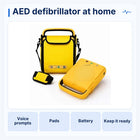
AED Defibrillator: How It Works, Who Can Use It and Where to Place It

Airways
Alcohol Swab: Uses, Safe Use and Disposal Guide
Ambu Bag Full Form: Is There an Official Meaning?
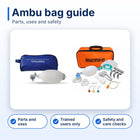
Ambu Bag: Parts, Uses and Safety Guide
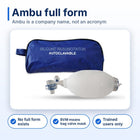
Ambu Full Form: What the Name Means and BVM Basics

Ambulance

Anatomy Models
You may also need
FOR YOURecommended for you
Save 20%
Save 26%