


Featured ChoiceSave 13%
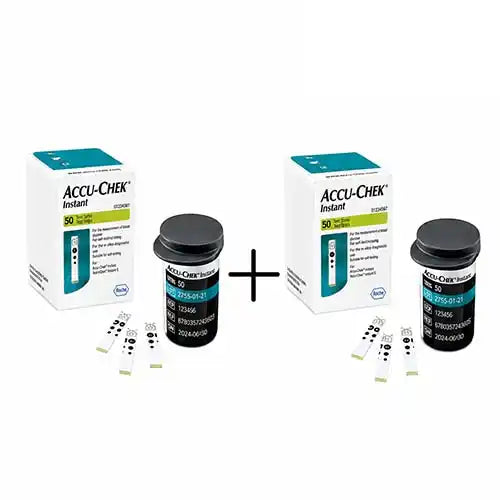
Save 8%

Save 8%

Save 9%

Save 56%


Save 58%

Save 45%

Save 35%

Sold out
Glucometer for Home Use: Meters, Strips & Lancets
Comparing glucometers: Which One is Best?
Glucometer for home use is a practical point-of-care device used to check blood glucose from a small blood sample, usually from the fingertip. For Indian home users, the best choice is not always the most advertised glucose meter. It is the one that balances accuracy, strip availability, ease of use, after-sales support, and total running cost. This glucometer comparison explains how to evaluate popular options in India, including Accu-Chek, Sensa Core, Control D, and AccuSure. It does not treat any single device as universally best for every person or home setting.
Consult your doctor before changing medicine or insulin doses based on a glucometer reading.
What is a glucometer used for?
A glucometer measures blood sugar at a specific point in time. It helps people with diabetes and healthcare teams understand whether glucose is within a planned target range. It is not meant to replace a laboratory diagnosis, but it supports daily monitoring, therapy review, diet decisions, hypoglycaemia checks, and follow-up care. Public health guidance describes a blood sugar meter, also called a glucometer. It measures sugar in a small blood sample, usually from the fingertip.

In everyday Indian healthcare language, people may call the same glucometer a blood sugar monitor, sugar level checker, or blood glucose tracker. They may also say glucose meter or diabetes testing machine. For a home buyer, that naming variation matters because shop listings may use different product descriptions even when the use is similar. For any seller, it matters because patient-facing positioning must be clear. The glucometer helps monitor glucose trends, but interpretation and treatment changes should remain under medical advice.
A glucometer becomes especially valuable when you use it consistently and correctly. A single reading is only a snapshot. Fasting, pre-meal, post-meal, bedtime, or symptom-based readings together provide more useful information for clinicians and patients.
The best glucometer depends on use case
The question “Which glucometer is best?” has no single answer because users have different priorities. A home user may want low strip cost and a large display. Diabetologists may prefer strong accuracy documentation and easy data review. A family caregiver may prioritise supply continuity, training support, warranty terms, and compatibility with the home routine.

For the Indian market, you can evaluate the best glucometer in India through five practical lenses:
- Accuracy and standards: Look for clear conformity with recognised blood glucose monitoring standards, especially ISO 15197:2013 where applicable.
- Strip ecosystem: A low-cost glucometer can become expensive if strips are costly, unavailable, short-dated, or difficult to source in bulk.
- Ease of operation: No-coding systems, clear displays, quick results, small sample requirements, and strip ejectors reduce user error.
- Data handling: Memory, averages, Bluetooth, app syncing, and downloadable data can improve follow-up and patient counselling.
- Service support: Indian buyers should check warranty process, authorised sellers, customer support, replacement policy, and local distributor reliability.
For home users, the “best” glucometer is usually the one that reduces testing friction while maintaining dependable quality. A codefree glucometer can be attractive in busy homes because it removes the older step of matching a code chip or entering a strip code. However, “codefree” should not be the only selection criterion; strip quality, quality-control process, and user training are equally important.
Accuracy is the first filter, not the final decision
Treat accuracy as the first screening requirement in any glucometer comparison. ISO notes that the ISO 15197:2013 standard improved accuracy expectations for self-testing blood glucose systems compared with the earlier 2003 version. In India, CDSCO lists in-vitro diagnostic guidance and includes materials related to blood glucose monitors and glucometer test strips. This is relevant for buyers reviewing regulatory documentation.

When buyers ask, “Which glucometer is most accurate?”, the most responsible answer is to choose a glucometer with transparent accuracy claims, recognised standard conformity, authorised distribution, fresh strips, and proper user technique. Even a strong glucometer can mislead if you use expired strips, skip handwashing, or contaminate the blood sample.
Accuracy also has a workflow dimension. In a shared household, repeated use by multiple family members increases the need for training, control solution checks where recommended, documented cleaning procedures, and clear device ownership. In home care, the risk often shifts toward improper strip storage, irregular testing, and confusion about what the numbers mean.
Key features to compare before buying
A systematic feature review helps prevent buying decisions based only on brand familiarity or initial glucometer price. The following checklist is useful for informed home buyers.

Practical comparison checklist
| Evaluation area | What to check | Why it matters |
|---|---|---|
| Accuracy documentation | ISO conformity, manufacturer claims, instructions for use | Helps screen devices before purchase |
| Test strip availability | Pack sizes, expiry, authorised supply, local stock | Reduces stock-outs and emergency substitutions |
| Sample size | Smaller blood volume requirements where available | Improves comfort, especially for frequent users |
| Test time | Commonly a few seconds depending on model | Supports faster daily testing at home |
| Coding | No-coding or codefree operation | Reduces setup errors and training burden |
| Memory and averages | Stored readings, date/time, 7/14/30/90-day averages | Helps identify patterns rather than isolated readings |
| Connectivity | Bluetooth, app sync, USB, or manual log | Supports digital follow-up and teleconsultation |
| Display and usability | Large numbers, backlight, simple buttons | Useful for patients and busy homes |
| Warranty and service | Replacement terms, local support, authorised sellers | Protects the value of your purchase |
| Total cost | Meter price plus recurring strip and lancet cost | Gives a more realistic budget picture |
For home buyers, you can turn this table into a scoring matrix. Assign weightage based on your own setting. For example, one household may weight accuracy documentation and supply continuity more heavily, while another may weight affordability, brand recognition, and strip availability.

Popular glucometer options in India
The Indian market includes multinational brands, domestic manufacturers, pharmacy-led options, and marketplace-focused devices. The following discussion is not a universal ranking. It is a practical overview of commonly searched product lines and the positioning factors that buyers often consider.
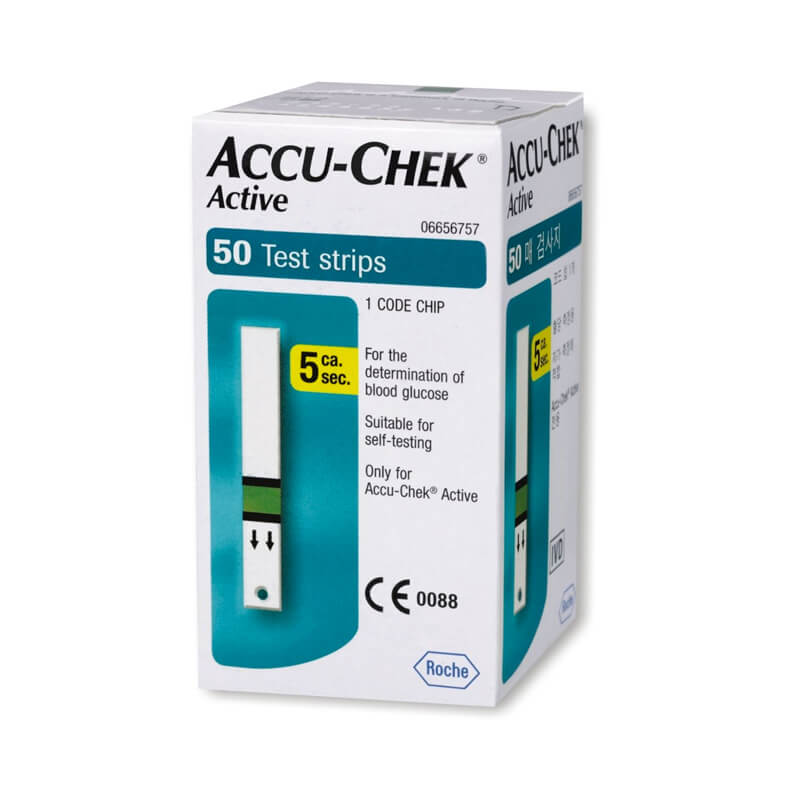
Accu-Chek Active glucometer
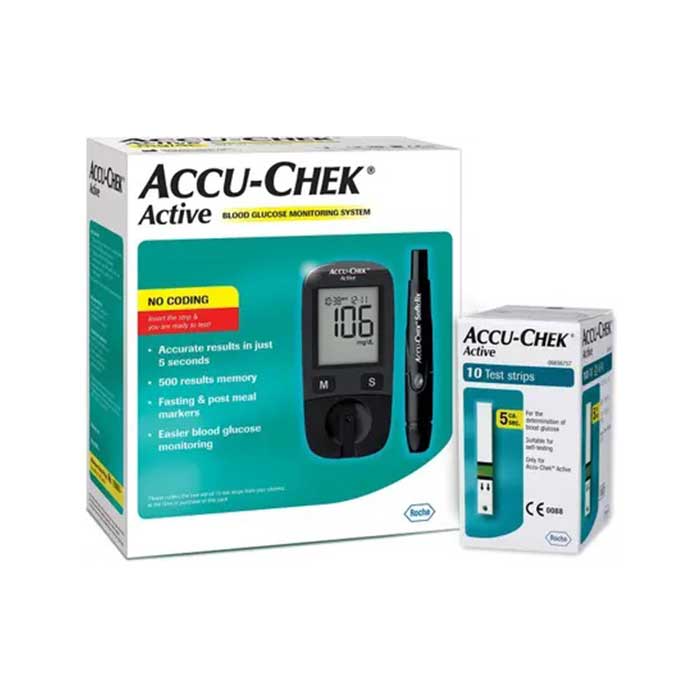
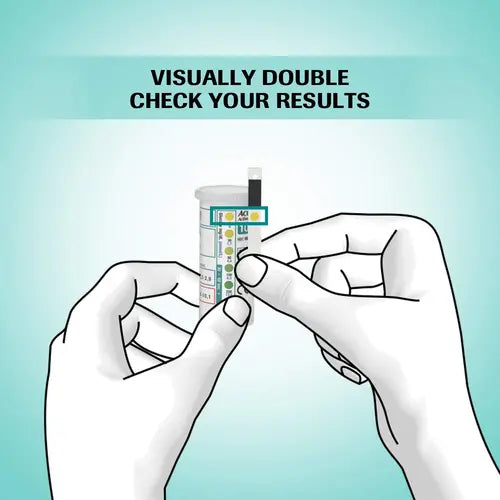
Buyers in India widely recognise the Accu-Chek Active glucometer. Many who value brand familiarity and straightforward use consider it. Accu-Chek India describes the Active meter as offering no coding, easy handling with two buttons, underdose detection. It also lists a visual double check, a 10-second re-dose option, meal markers, post-meal reminders, and test averages up to 90 days.

For home users, the appeal lies in its established ecosystem and user familiarity. In many buying decisions, user familiarity reduces training time because patients and family members may already know the brand. The practical caution is to verify the exact model version, strip compatibility, strip expiry, and whether the supply is from an authorised channel.
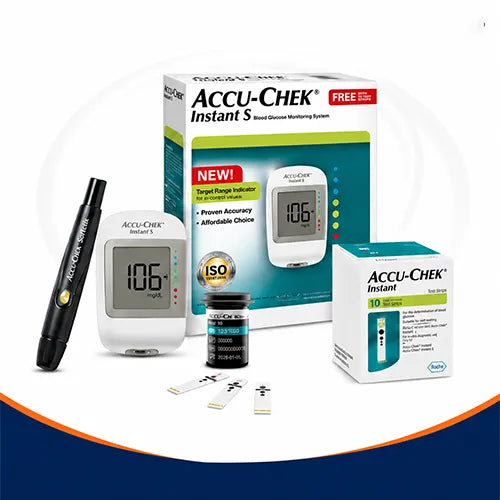
Accu-Chek Instant glucometer
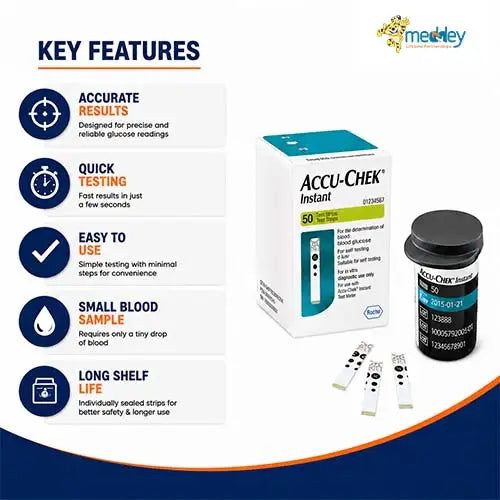
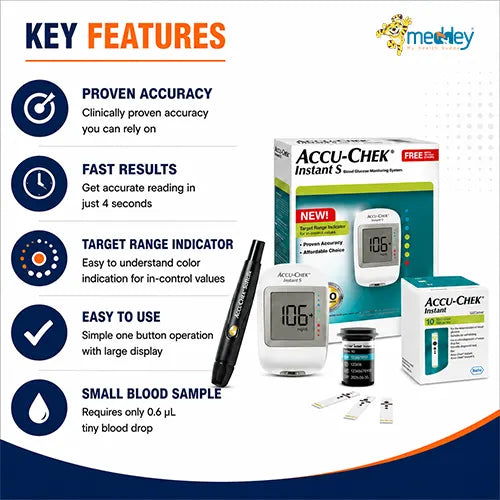
The Accu-Chek Instant glucometer aims at simpler testing and digital convenience. Accu-Chek India states that the Instant meter has Bluetooth synchronisation with the mySugr app and a target range indicator. It also has a large backlit display, visible 7/30/90-day averages, and memory for 720 blood glucose results. The official India microsite also states that Accu-Chek Instant fulfils ISO 15197:2013/EN ISO 15197:2015 and provides tighter “10/10” accuracy as described by the manufacturer.
This model suits buyers who value digital logging. For anyone planning diabetes follow-up, app-linked data can support review conversations, though it still depends on patient smartphone access and digital comfort. Some users search for this product with spelling variations such as “accu cheik instant glucometer,” so buyers should expect common misspellings in search and catalogue listings.

Accu-Chek Performa glucometer
The Accu-Chek Performa glucometer has been a known product line internationally, though buyers in India should confirm current availability, authorised channels, and strip supply before selecting it. Older regulatory and product documents identify Accu-Chek Performa as a blood glucose monitoring system used with Accu-Chek Performa test strips.
For buyers, the key issue is not only whether the glucometer exists in the market but whether its consumables are easy to obtain over the expected usage period. A buyer should avoid standardising on any meter if strips may become difficult to source. If you already use a Performa meter, transition planning should include your doctor and compatibility checks.
Sensa Core glucometer
The Sensa Core glucometer portfolio is relevant for buyers looking at Indian point-of-care and IVD manufacturers. Sensa Core lists glucose meter products such as Gluco Spark, Gluco Score, Gluco Stick, Gluco Tag, and SafeSense. The SafeSense page describes a 0.5 microlitre sample requirement, 5-second result time, no coding, 500 previous readings with date and time, and optional data transfer features.
For buyers, Sensa Core may emphasise local manufacturing presence, affordability, and point-of-care product breadth. For home buyers, the review should still include accuracy documentation, strip supply, warranty process, training material, and after-sales responsiveness in your region.
Control D glucometer
Many sellers position the Control D glucometer as an affordable option for routine home monitoring. Control D states that its glucose monitor uses advanced amperometric biosensors, requires a low volume of blood, and gives results in 5 seconds.
In price-sensitive segments, affordability can expand access. However, budget positioning should not lead buyers to ignore strip quality, expiry management, customer service, and user training. For home buyers, Control D may fit value-oriented customers, while every buyer should request product documentation and evaluate performance expectations before purchase.
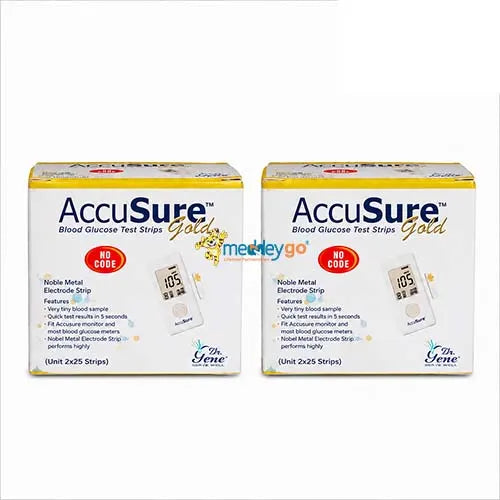
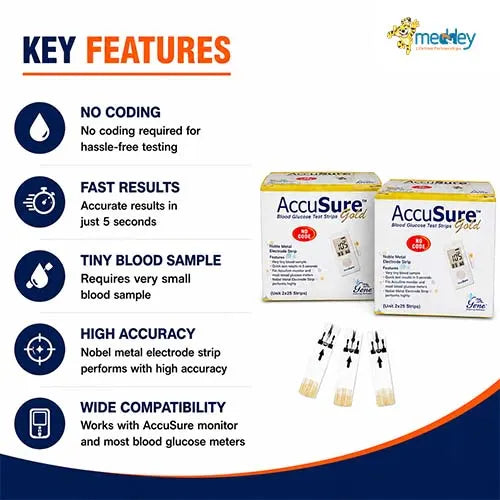
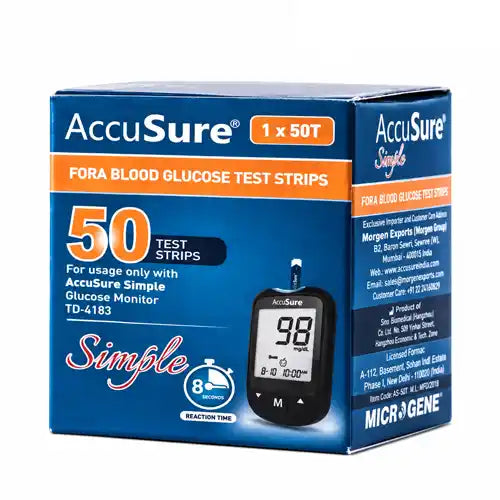
AccuSure glucometer
The AccuSure glucometer range includes multiple models with different memory, sample size, reaction time, and warranty claims. AccuSure India lists models such as AccuSure Life, Simple, Blue, and Sensor. Features include no coding in selected models, memory capacity, small sample requirements, reaction times, averaging functions, and warranty terms. AccuSure also identifies Microgene Diagnostic Systems Pvt. Ltd. as the company behind AccuSure and states that Microgene is ISO 9001:2015 certified.
For Indian buyers, AccuSure’s multi-model portfolio can be useful if a buyer wants different price bands. The main buying step is to compare model by model rather than assuming all AccuSure devices have the same specifications.
Which glucometer is best for different buyers?
The best glucometer is the one that fits the home setting, user skill level, strip supply chain, and budget over time. A technology-led buyer may prefer Bluetooth and app integration. Busy households may prioritise no-coding use, durable supply, simple training, and affordable consumables. A home user may need a readable display, easy lancet handling, and strips available at the nearest pharmacy.

For family caregivers
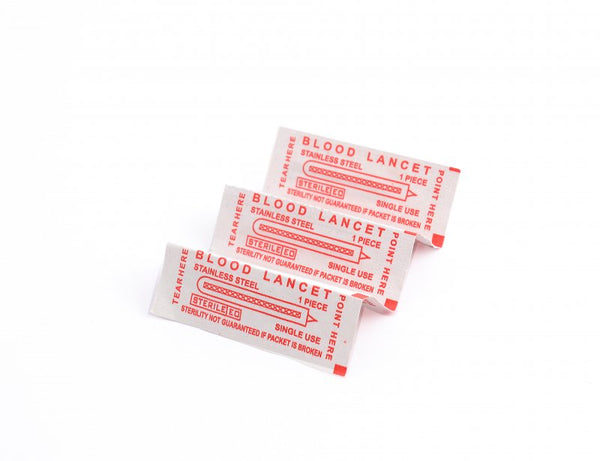
Family caregivers should look beyond the device price. The recurring cost of strips and lancets usually determines long-term spend. Buyers should also assess whether they can clean the glucometer properly and whether every family member can use it consistently. They should confirm that control checks are simple and that replacement devices arrive quickly.


A sound buying process should include:
- Define the use setting: daily home checks, travel use, shared family use, or patient education.
- Set minimum technical requirements: Accuracy standard, no-coding preference, memory, sample size, result time, and display clarity.
- Evaluate consumables: Strip price, shelf life, pack size, storage requirements, and supplier reliability.
- Check documentation: IFU, warranty, regulatory declarations, service process, and batch traceability.
- Pilot before standardisation: Test usability with family members before placing a larger order.
- Train and audit: Build a simple routine covering handwashing, strip storage, sample application, and recording.
This structured approach reduces hidden costs and prevents frequent brand switching, which can confuse family members and patients.
For home buyers comparing options
Buyers should segment their needs instead of treating every glucose meter in the same way. A premium connected glucometer suits tech-comfortable urban users. A codefree glucometer with affordable strips suits routine household monitoring. Buyers who value service access and consistent supply may prefer a locally supported glucometer.

Search behaviour also matters. Customers may search for “blood sugar monitor,” “sugar level checker,” “glucometer,” “blood glucose tracker.” They may also search for specific products such as “accu chek active glucometer,” “sensa core glucometer,” “control d glucometer,” and “accusure glucometer.” Product listings should use these terms naturally, but the content must remain medically responsible.
For app and data users
Buyers should treat glucometer selection as a small but important part of digital diabetes care. A connected meter may support remote review, but only if the patient can use the app. The clinician must also access the data, and the care pathway must define what happens when readings are high or low. Without workflow integration, Bluetooth becomes a feature rather than a care improvement.
A good recommendation should therefore include device selection, patient education, data capture, escalation rules, and periodic review. This is especially important for telemedicine and home care plans.
Timing and technique affect every reading
A good glucometer can still produce poor decisions if you test at the wrong time or with poor technique. The best time to test depends on the clinical question. Fasting readings show overnight and early morning control, post-meal readings show meal response, and symptom-based checks help confirm suspected low or high sugar. ADA guidance for many nonpregnant adults with diabetes includes fasting or pre-meal targets and postprandial targets, but a clinician should set personal targets.
When people ask, “What is the best time to check blood sugar?”, the practical answer is to test at the times your doctor recommends. These commonly include fasting, before meals, after meals, at bedtime, when symptoms occur, during illness, and around medication or insulin changes. ICMR guidance for type 1 diabetes advises checking glucose when you suspect hypoglycaemia. It also advises checking in situations such as illness, travel, exercise, and critical tasks like driving.
Common testing times and what they show
- Fasting: Usually taken after overnight fasting; helps assess baseline morning glucose.
- Before meals: Helps clinicians understand pre-meal control and medication effect.
- After meals: Helps assess the glucose rise after food.
- At bedtime: Useful for people at risk of night-time lows or highs.
- When symptoms occur: Important during sweating, shakiness, confusion, unusual thirst, or frequent urination.
- During illness or travel: Useful because routine, food, hydration, and medication timing may change.
Can we use glucometer daily? Yes, many people use a glucometer daily when advised by their clinician, especially those using insulin or medicines that can cause low blood sugar. Match daily use to a monitoring plan so that readings lead to useful action rather than anxiety.
Finger selection and sample handling matter
Which finger is best for glucometer? In most routine self-monitoring, you can use any clean fingertip. Many educators recommend using the side of the fingertip rather than the centre because it can be less painful and helps preserve sensitive finger pads. CDC educational material advises pricking the side of the fingertip by the fingernail rather than the centre to avoid sore spots on the area used most often.

Users should rotate fingers to reduce soreness. The middle and ring fingers are commonly convenient, but there is no universal “best” finger for everyone. What matters more is that the finger is clean, dry, warm enough for blood flow, and not contaminated with food, sugar, lotion, or sanitiser residue.
Good technique for a cleaner reading
- Wash hands with soap and water, then dry completely.
- Insert the correct strip into the meter.
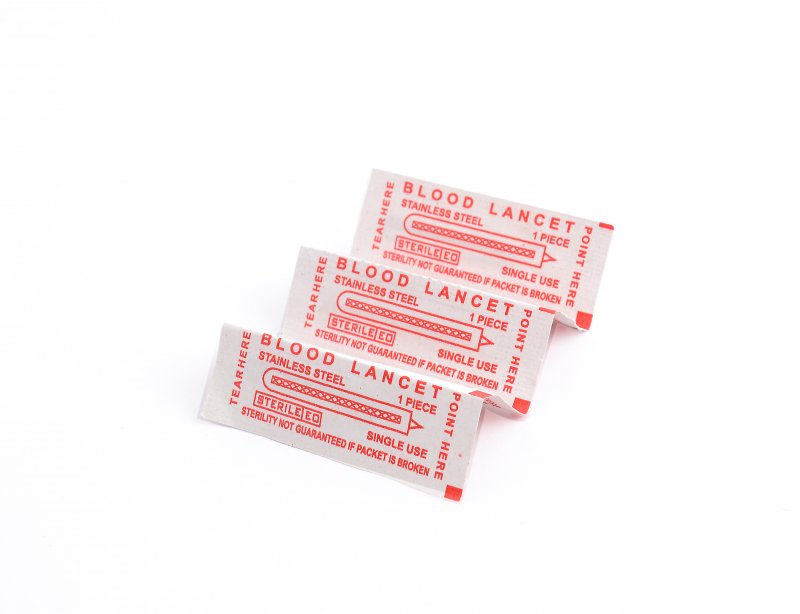
- Use a fresh lancet where possible.
- Prick the side of the fingertip.
- Apply the blood as instructed by the strip design.
- Record the reading with time, meal context, medicine, and symptoms.
- Dispose of lancets and strips safely.
In busy homes, a written routine helps formalise these steps. In home care, caregivers should teach them in simple language and demonstrate them at least once.
Typical readings need clinical context
What is a typical blood sugar level on a glucometer? For a person without diabetes, doctors often discuss fasting blood glucose around the typical laboratory range. Home glucometer readings are not the same as a diagnosis. For many nonpregnant adults with diabetes, ADA lists common pre-meal and post-meal glucose targets, while also noting that targets vary by person.
Indian clinicians may individualise targets for age, pregnancy, kidney disease, cardiovascular risk, hypoglycaemia history, insulin use, and duration of diabetes. A frail person, a pregnant woman, a young adult with type 1 diabetes, and a newly diagnosed person with type 2 diabetes may all have different goals. Therefore, patients should not change medicine or insulin doses only because one home reading looks high or low, unless their doctor has already given a clear action plan.
For everyone involved, this is also a communication responsibility. Product packaging, training videos, and sales conversations should avoid promising “control” from the device alone. The glucometer measures; the care team interprets.
Common mistakes reduce reliability
What are common mistakes when using a glucometer? The most common errors include using expired strips, storing strips in heat or humidity, and testing with unwashed hands. Others include squeezing the finger too hard, using too little blood, applying blood incorrectly, using the wrong strip for the meter, or ignoring quality-control instructions. ICMR guidance lists expired strips, improper strip storage, unwashed hands, hematocrit variation, and hypotension among causes of inaccurate glucometer readings.

These errors have business and clinical consequences. At home, a misleading reading can trigger unnecessary repeat testing or clinical concern. In shared use, repeated user errors can create false product complaints. Also in home use, inconsistent technique can make patients lose trust in monitoring.
Mistakes to prevent when buying and training
- Buying strips from unreliable sources: This raises the risk of short-dated, poorly stored, or incompatible stock.
- Ignoring storage conditions: Indian heat and humidity can affect consumables if storage instructions are not followed.
- Mixing meter and strip types: Even within one brand, strips are model-specific.
- Skipping hand hygiene: Fruit residue, sweets, or sanitiser can distort readings.
- Not checking expiry: Never use expired strips.
- Failing to train caregivers: Patients often depend on family members or attendants.
- Recording only the number: Meal timing, symptoms, and medication context make the reading more useful.
A strong buying plan includes user education material in simple language. For sellers, after-sales education can become a differentiator in a crowded market.
Codefree and connected meters serve different needs
A codefree glucometer reduces manual steps because the user does not need to enter or match a strip code. This is useful in Indian homes where users may vary in education level or where multiple family members use the device. Accu-Chek India notes that the Active system moved toward no-coding through a black activation chip process for older generations, while newer no-coding versions simplify handling.
Connected meters, on the other hand, support digital records. Accu-Chek Instant’s Bluetooth syncing with the mySugr app is one example of this category. Sensa Core also lists smartphone-linked glucose meter products in its portfolio.
For a buyer, the decision is not “codefree versus connected” as if only one matters. The better question is whether the intended users need simplicity, digital tracking, or both. A digitally connected glucometer may sit unused if the patient does not use a smartphone. A very simple device may be ideal for a rural home if strip access and training are strong.
A practical glucometer comparison framework
For a considered purchase, create a weighted score instead of relying on informal preference. A sample framework may look like this:
- Accuracy and documentation: 25%
- Strip cost and availability: 20%
- Ease of use and training burden: 15%
- Service support and warranty: 15%
- Data features and connectivity: 10%
- Patient comfort and sample size: 10%
- Brand familiarity and acceptance: 5%
You can adapt this framework. A data-focused user may increase the weight for data features. Budget-focused buyers may increase the weight for consumable cost and logistics. A buyer in a new region may increase the weight for serviceability and stock rotation.
For home buyers, you can simplify the same logic into four questions:
- Are strips easily available near me or through a trusted online pharmacy?
- Can I use the glucometer correctly without confusion?
- Does the glucometer store readings or connect to an app if I need tracking?
- Is the long-term strip cost manageable?
Final takeaway
A glucometer is a small device, but the decision around it is larger than the glucometer itself. The right blood sugar monitor must combine reliable performance, compatible strips, simple operation, clear documentation, and practical affordability for Indian users. Accu-Chek Active, Accu-Chek Instant, Accu-Chek Performa, Sensa Core, Control D, and AccuSure all serve different segments. The best choice depends on the buyer’s setting and the user’s monitoring plan.
For home buyers, the priority should be standardisation, training, supply continuity, and total cost of ownership. And for sellers, the opportunity is to position products clearly by user need instead of competing only on price. For caregivers, the strongest recommendation is one that connects the glucose meter to a complete care workflow. In that workflow, every reading can support better decisions and safer diabetes management.
Explore Medical Collections
All Categories
Abdominal & Maternity Support

Accessories

Accu-Chek Instant Strips: Use, Compatibility, Price & Blood Sugar Testing Guide
Accu-Chek Instant Strips: Uses, Features & Complete Guide

accupuncture

Acupuncture Needles & Supplies

Advanced Physiotherapy Machines & Lumbar Physiotherapy

Airways

Ambulance

Anatomy Models
Anesthesia Machine

Anesthesia Products

Ankle Support for Home Use: Braces, Sleeves & Walker Boots

Ankle Weights & Exercise Weights for Home & Rehab

Anti-Bedsore Air Mattresses
You may also need
FOR YOURecommended for you
Save 13%
Save 8%
Save 8%
Save 9%
Save 56%
Save 58%
Save 45%
Save 35%