


Featured ChoiceSave 39%


infusion pumps: types, uses, benefits and safety
Understanding the Basics of Infusion Pumps
Infusion pumps are medical devices used to deliver fluids, medications, nutrients, or blood products into a patient’s body in a controlled way. This guide explains infusion pumps basics in plain language, including common infusion pump types, infusion pump uses, core components, safety considerations, and practical questions people often ask when comparing devices or looking at infusion pumps for sale. Disclaimer: This content is for general education only and is not medical advice. Infusion pumps should be selected, programmed, maintained, and used only under the direction of qualified healthcare professionals and according to the device manufacturer’s instructions, facility policy, and the patient’s care plan.
How does an infusion pump work?
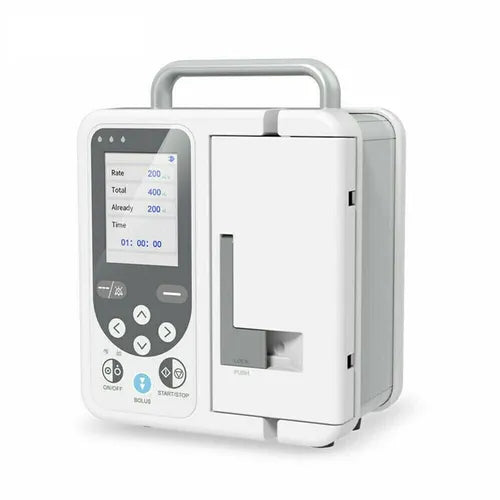
An infusion pump works by moving a measured amount of fluid from a container, syringe, cassette, or reservoir through tubing and into a patient through an appropriate access route. Its main purpose is controlled delivery: the infusion system helps maintain a prescribed flow rate, volume, timing pattern, or dose limit more consistently than manual methods can in many clinical situations. The FDA describes infusion pumps as devices used to deliver fluids into a patient’s body in a controlled manner, and many models include alarms or alerts intended to notify users when a problem may occur. At a high level, the infusion system combines three functions. First, it holds or connects to a fluid source. Second, it uses a drive mechanism to move fluid through an administration set or syringe. Third, it monitors selected conditions, such as programmed settings, remaining volume, battery status, pressure changes, or alarm states, depending on the model. This overview is intentionally broad; it is not a substitute for device-specific training or operating instructions. When people ask, “What is the main function of a pump?” the simplest answer is that it moves fluid from one place to another. In healthcare, the meaning becomes more precise: an infusion pump is designed to move therapy-related fluid into the patient at a controlled rate, often over minutes, hours, or days. That control is the core distinction between an infusion pump and a basic container of fluid relying only on gravity.

What is the infusion pump used for?
An infusion pump is used when a therapy needs controlled delivery into the body and when timing, volume, concentration, or route matters. Common infusion pump uses include administration of IV fluids, medications, parenteral nutrition, pain therapy, certain antibiotics, chemotherapy, insulin therapy, and other treatments that cannot be taken by mouth or require precise dosing. The FDA notes that catheter- and port-based infusion therapy may be used when treatment cannot be given orally because the therapy may not work as well after passing through the digestive system, or because the digestive system is not available due to a medical or surgical issue. In hospitals, iv infusion pumps are often used in emergency departments, operating rooms, intensive care units, oncology areas, labor and delivery, and general medical units. Outside the hospital, some patients use portable infusion pumps under clinical supervision for home infusion therapy, diabetes care, pain management, or other prescribed treatments. The setting changes the workflow, but the purpose remains the same: controlled delivery according to a plan established by healthcare professionals. Infusion pumps are also used when the therapy is especially sensitive to changes in flow. Some medications require careful titration, and some fluids need to be delivered slowly to reduce the risk of complications. In these cases, the infusion pump benefits are not simply convenience; they relate to consistency, documentation, alerts, and the ability to support complex therapy plans.
The major infusion pump types
Infusion pump types vary by use environment, delivery method, volume, and clinical purpose. No single infusion device is ideal for every therapy, which is why device selection should be based on the patient’s treatment plan, required route, medication characteristics, care setting, and the experience of the healthcare team. The FDA has noted that performance problems have been reported across external infusion pump types and use environments, which is one reason facilities rely on policies, training, and maintenance programs rather than assuming any device is risk-free.
Large-volume pumps
Large-volume infusion pumps are commonly associated with IV fluids and medications delivered from bags or bottles through tubing. These devices are often seen in hospitals and infusion centers because they can support many routine therapies. They may be used for hydration, antibiotics, medications, or other fluids that require controlled delivery over time. Their main strength is flexibility. Large-volume infusion equipment can often support a range of flow rates and delivery durations, depending on the model and therapy. However, that flexibility also means users must understand the device interface, tubing requirements, alarm behavior, and medication order clearly.
Syringe pumps
Syringe pumps move the plunger of a syringe in a controlled manner. They are often used when smaller volumes or lower flow rates are needed, although use varies by institution and clinical specialty. Because the syringe itself is part of the delivery system, compatibility between syringe size, tubing, medication, and device settings matters. Syringe pumps are often discussed in relation to precision, but “precision” should not be interpreted as automatic safety. Low-flow delivery can be affected by factors such as tubing characteristics, syringe mechanics, pressure changes, and setup variables. That is why syringe pump use should remain within trained clinical practice and manufacturer specifications.
Related infusion pumps available at Meddey
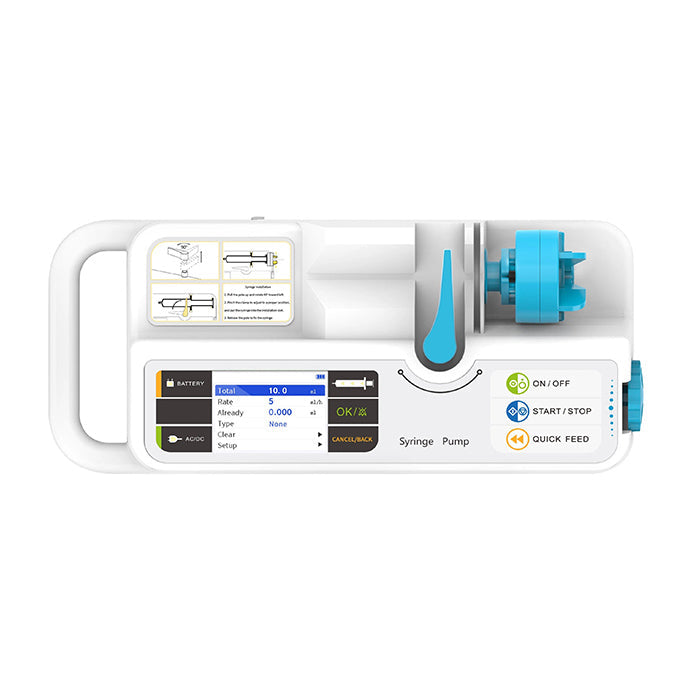
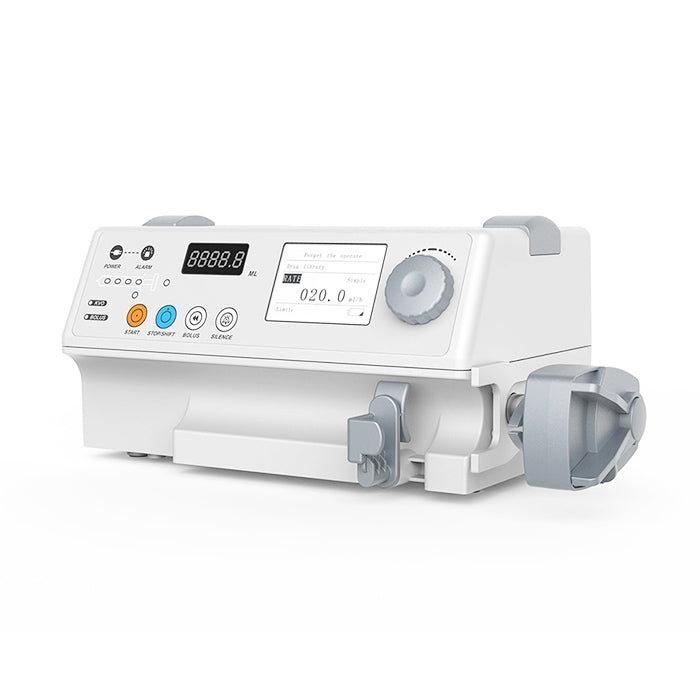
For more infusion equipment, view the Meddey infusion collection.
Ambulatory and portable infusion pumps
Portable infusion pumps are designed to support mobility, home-based therapy, or outpatient treatment when clinically appropriate. Some are worn or carried, while others are compact devices used for a limited therapy period. Their value is that they may allow treatment to continue outside a traditional inpatient setting, but this convenience must be balanced with training, monitoring, and clear instructions from the care team. Home use creates different safety demands from hospital use. Patients or caregivers may need to recognize alarms, protect the device from damage, and know when to contact a clinician. The FDA’s home-use tips emphasize understanding alarms and error messages, confirming medication labels against the prescription, and discussing situations that could make infusion treatment unsafe.
Insulin pumps
Insulin pumps are specialized infusion devices used in diabetes management. MedlinePlus describes insulin pumps as devices that deliver insulin for people with diabetes, and notes that patients should work with their healthcare provider to determine which pump is right for them. These insulin delivery systems differ from many hospital IV infusion devices because they are typically part of ongoing daily diabetes care rather than short-term inpatient infusion. They may connect with other diabetes management tools, depending on the system. Even so, the same broad principle applies: the device delivers a prescribed therapy through a controlled mechanism and requires training, supplies, monitoring, and backup planning.
Enteral and specialty pumps
Some specialized devices are used for nutrition delivery or other therapies. Enteral feeding pumps deliver nutrition through feeding tubes into the gastrointestinal tract, while parenteral nutrition pumps support IV nutrition when prescribed. Specialty pumps may be designed for pain therapy, oncology, or other care pathways. The important point is that “infusion pumps” is a broad category. Two devices may both be called infusion pumps while serving very different clinical purposes. That is why infusion equipment should be matched to route, therapy, patient condition, and care environment rather than chosen only by appearance or portability.
Main components and features
A useful way to understand infusion pump features is to separate the fluid pathway, the control system, the power system, and the user interface. When readers ask, “What are the main components of an infusion pump?” the answer depends on the model, but most systems include a device housing, a display or control interface, a fluid container or syringe connection, tubing or an administration set, a drive mechanism, sensors, alarms, and a power source. FDA materials describe common features such as alarms, volume delivered, remaining reservoir volume, and patient interaction as part of infusion pump system considerations. Key components often include:
- Pump housing: The physical device that contains electronics, controls, drive components, and attachment points.
- User interface: The screen, buttons, touchscreen, or menu system that allows trained users to view and confirm settings.
- Fluid source: A bag, bottle, syringe, cassette, cartridge, or reservoir that holds the therapy fluid.
- Administration set or tubing: The pathway that connects the fluid source to the patient access device.
- Drive mechanism: The internal mechanism that moves fluid through the system.
- Sensors and detectors: Components that may monitor pressure, air-in-line conditions, door status, cassette placement, battery status, or other parameters, depending on the infusion system.
- Alarm system: Audible, visual, or message-based alerts designed to call attention to potential problems.
- Power supply: Battery, wall power, or both, with charging and backup behavior that varies by device.
- Software and dose support: In smart infusion systems, software may support drug libraries, dose limits, alerts, and data capture.
These components work together, but they do not remove the need for human judgment. An infusion device can alert a user to certain issues, yet alarms are not a complete safety system. Clinicians still need to verify therapy orders, assess the patient, inspect the fluid pathway, and follow institutional safeguards.
Smart pump capabilities
Smart pumps are infusion pumps with software designed to support safer medication delivery. Many include drug libraries, dosing limits, warning prompts, and event records. The FDA notes that some newer “smart pumps” are designed to alert users when there may be a risk of an adverse drug interaction or when settings fall outside specified safety limits. The benefit is decision support, not independent decision-making. This infusion technology may warn a user, but it does not understand the complete clinical context in the same way a care team does. Drug libraries must be maintained, alerts must be interpreted correctly, and workflows must be designed to reduce bypasses or workarounds.
Alarm and alert features
Infusion pump safety depends heavily on clear alarm design and appropriate response. Alarms may relate to occlusion, low battery, air detection, empty container, door position, completion of infusion, device malfunction, or other conditions. FDA guidance for infusion pump design discusses feedback mechanisms such as auditory alarms, visual alarms, indicators, and user messages. Alarm systems can also create challenges. False alarms can contribute to alarm fatigue, while missed or delayed alarms can create risk. For this reason, healthcare organizations usually treat alarm management as a system issue involving device configuration, staff training, maintenance, and policies.
Infusion pump benefits and practical limits
The central infusion pump benefits are control, repeatability, monitoring support, and adaptability across care settings. Infusion devices can support therapies that require a defined flow rate, a controlled total volume, a scheduled pattern, or a safety limit. They can also help standardize certain aspects of infusion practice across a hospital unit or home care program. However, benefits should be described realistically. An infusion pump does not make a medication safe by itself. It does not verify every clinical decision, detect every setup problem, or eliminate the possibility of programming, tubing, medication, or maintenance errors. The safest use of infusion pumps comes from combining appropriate technology with clear prescribing, trained users, compatible supplies, patient monitoring, and a culture of reporting concerns. A balanced view of benefits includes:
- Controlled delivery: Infusion devices support a defined delivery pattern instead of relying only on manual regulation.
- Versatility: Different infusion pump types can support hospital care, outpatient care, home therapy, nutrition, pain management, diabetes care, and other applications.
- Mobility when appropriate: Portable infusion pumps may allow some patients to receive therapy while maintaining more normal movement or receiving care outside the hospital.
- Decision support: Smart pump libraries and alerts can help reinforce medication safety boundaries.
- Documentation support: Some systems can record events or integrate with clinical workflows, depending on configuration.
- Alarm visibility: Infusion system alerts can help users identify certain delivery interruptions or device conditions.
The practical limits are just as important:
- Device complexity: More features can mean more training requirements.
- Workflow dependence: Safety features work best when staff use them consistently.
- Maintenance needs: Infusion equipment requires cleaning, inspection, battery management, and service according to policy and manufacturer requirements.
- Compatibility concerns: Tubing, syringes, cassettes, medications, and accessories must match device requirements.
- Human factors: Screen layout, alert wording, and menu design can affect how users interpret and respond to information.
Safety deserves more attention than specifications
Infusion pump safety is not a single feature on a product sheet. It is a combination of design, procurement, training, maintenance, medication governance, clinical assessment, patient education, and incident reporting. FDA information notes that reported infusion pump problems have not been isolated to one manufacturer, infusion device category, or use environment, and have included software defects, user interface issues, and mechanical or electrical failures. This matters because buyers and users sometimes focus on visible specifications: screen size, battery life, flow range, portability, or connectivity. Those details matter, but they should be evaluated alongside risk controls. A device that looks advanced can still create workflow problems if the interface is confusing, the alarm behavior is poorly understood, or the organization does not maintain the drug library.
Common safety considerations
A safety-focused review should consider the entire use cycle. That includes how infusion equipment is selected, how staff are trained, how therapy is prescribed, how medications are prepared, how settings are checked, how alarms are handled, how devices are cleaned, and how problems are reported. FDA risk-reduction guidance for clinicians recommends using safe medication administration practices and removing from use any infusion device that shows damage, unexplained alarms, or unexpected function. Important safety considerations include:
- Appropriate clinical selection: The infusion device type should match the therapy, route, patient population, and environment.
- Medication verification: The medication, concentration, route, dose, and timing must align with the care plan.
- User training: Clinicians, patients, and caregivers need training appropriate to their role and setting.
- Alarm response: Users should know what types of alarms may occur and when to seek help.
- Inspection before use: Damaged, cracked, malfunctioning, or unexpected devices should be removed from service according to policy.
- Maintenance and cleaning: Infusion equipment should be maintained, tested, and cleaned according to manufacturer instructions and institutional protocols.
- Incident reporting: Infusion device problems should be reported through facility processes, and serious device problems may be reportable through regulatory channels.
Home-use safety
Home infusion adds an important layer of responsibility because the patient or caregiver may be the first person to notice a problem. The FDA advises home users to understand alarms and error messages, confirm that the medication label matches the prescription, and contact a healthcare provider if unexplained rate changes or other concerns occur. This does not mean patients should troubleshoot complex medical equipment on their own. A good home infusion plan should include clear contact information, plain-language warning signs, backup instructions from the clinical team, and a plan for what to do if the device stops working or the patient’s condition changes. The goal is not to turn patients into biomedical technicians; it is to make sure they know when to pause, protect themselves, and call for help.

What is the cost of an infusion pump?
There is no single answer to “What is the cost of an infusion pump?” because pricing depends on the infusion device category, manufacturer, software configuration, accessories, service agreement, consumables, warranty status, regulatory market, and whether the device is new, refurbished, rented, or part of a health-system purchasing contract. A hospital-grade smart IV pump, a syringe pump, an ambulatory pump, and an insulin pump are not interchangeable products, so their costs should not be compared as if they were the same device. For individual patients, cost may also depend on insurance coverage, prescription requirements, pharmacy arrangements, infusion provider contracts, and whether supplies are billed separately. For healthcare organizations, total cost includes far more than the purchase price. Training time, drug library management, maintenance, biomedical engineering support, cybersecurity review, integration work, cleaning processes, replacement parts, tubing, and consumables can all affect the true budget. When evaluating infusion pumps for sale, it is usually more useful to ask a set of structured questions than to search for the lowest visible price:
- What therapy and patient population is the infusion device intended to support? A device should be chosen for clinical fit, not just price.
- Is the device cleared or approved for the intended market and use? Regulatory status matters, especially for clinical deployment.
- What supplies are required? Tubing, syringes, cassettes, reservoirs, batteries, chargers, and carrying cases may add recurring cost.
- What service history is available? Refurbished or used equipment should be evaluated for maintenance records, recalls, software version, and compatibility.
- Who will train users? A lower purchase price can become costly if implementation is poor.
- How will safety settings be managed? Smart pump libraries and updates require ownership, governance, and review.
- What happens if the infusion system fails? Backup devices, service agreements, and escalation plans should be part of procurement.
This is especially important in online purchasing environments. Infusion pumps are medical devices, not ordinary consumer electronics. Anyone considering a purchase should work through qualified clinical, biomedical, procurement, and regulatory channels rather than relying on a product listing alone.
Comparing hospital, outpatient, and home pump needs
The best infusion device for one setting may be unsuitable for another. Hospitals often prioritize interoperability, fleet management, standardization, drug library control, infection prevention workflows, and biomedical service capacity. Outpatient clinics may focus on throughput, therapy-specific protocols, portability between treatment chairs, and ease of cleaning. Home care may emphasize portability, battery performance, simple instructions, clear alarms, and reliable support. This difference explains why infusion pump features should be interpreted in context. A large display may be valuable in a hospital unit but less important than weight and battery life for an ambulatory patient. Advanced connectivity may support health-system documentation, but it may also require cybersecurity assessment and network planning. A compact infusion device may be convenient, but it must still support the prescribed therapy safely. A practical comparison looks like this:
Setting
Practical comparison by care setting
Hospital
Typical priorities
Standardization, smart pump libraries, alarm management, maintenance, integration
Practical implication
Selection often involves clinical leadership, pharmacy, biomedical engineering, IT, and risk management.
Infusion clinic
Typical priorities
Workflow efficiency, therapy protocols, cleaning, patient turnover, staff familiarity
Practical implication
Devices should support repeated use in a structured outpatient environment.
Home care
Typical priorities
Portability, training, battery use, support access, patient comprehension
Practical implication
The care plan should include clear escalation steps and caregiver education.
Specialty therapy
Typical priorities
Dose precision, medication compatibility, route-specific requirements
Practical implication
Infusion equipment selection should be therapy-specific and guided by clinical expertise.
Infusion equipment selection should be therapy-specific and guided by clinical expertise. This table is not a purchasing recommendation. It simply shows why infusion pump selection is more than a device comparison. The same specification can have different value depending on how, where, and by whom the infusion system will be used.
How to think about infusion pump features
Feature lists can be difficult to interpret because they often mix safety, usability, connectivity, and convenience. A more useful approach is to group features by the problem they solve. Does the feature help deliver therapy accurately? Does it reduce the chance of a preventable mistake? Does it make alarms easier to interpret? Does it support maintenance, cleaning, or documentation? If a feature does not clearly support a workflow or safety need, it may be less important than it appears. Common infusion pump features include programmable delivery modes, flow-rate controls, bolus support, dose limits, drug libraries, occlusion detection, air-in-line detection, battery operation, lockout functions, event logs, wireless connectivity, and visual or audible alarms. The presence and sophistication of these features vary by device. FDA guidance for modern infusion device design emphasizes risk controls, alarm behavior, usability, and safety-related documentation, reflecting that software and interface design are central to pump performance. When comparing features, avoid assuming that more options automatically mean safer care. Too many menu choices can increase complexity if training and workflows are not aligned. Conversely, a simpler infusion device may be appropriate for a narrow use case but inadequate for more complex therapies. The right feature set is the one that supports the intended clinical use with the least unnecessary confusion.
Questions to ask before selecting a pump
A high-level selection checklist can help teams and individuals organize their thinking without turning this into operating guidance:
- Clinical fit: Does the infusion device support the therapy route, fluid type, volume, rate range, and patient population?
- Regulatory fit: Is the infusion device appropriate for the country, care setting, and intended use?
- Supply compatibility: Are the required tubing, syringes, cassettes, or reservoirs available and approved for the system?
- Usability: Can trained users understand the display, alarms, labels, and confirmation screens?
- Safety support: Does the infusion system provide relevant alerts, dose safeguards, and lockout options?
- Maintenance plan: Who will inspect, clean, calibrate, repair, and document the device’s service status?
- Training plan: Who needs training, and how will competency be maintained?
- Data and connectivity: If the infusion device connects to other systems, who will manage cybersecurity, updates, and integration?
- Home support: For home use, is there a clear plan for questions, alarms, supply issues, and emergencies?
This checklist is not meant to replace clinical, technical, or regulatory evaluation. It is a framework for asking better questions early, before cost or convenience dominates the decision.
Buying and ownership considerations
The phrase “infusion pumps for sale” can lead to a wide range of listings: new devices, refurbished units, used hospital equipment, accessories, parts, and consumer-facing diabetes devices. The risk is that a listing may make an infusion device look like a stand-alone product when, in reality, it is part of a larger clinical system. An infusion device without the right supplies, service support, software configuration, or training may be unusable or unsafe. Healthcare organizations generally need formal procurement processes. These may involve clinical evaluation, biomedical engineering review, pharmacy input, infection prevention review, information security assessment, and legal or regulatory checks. Home users should not independently purchase or substitute infusion devices outside their prescribed care plan. Even if an infusion device appears similar to one used in a clinic, differences in software, accessories, calibration, or condition can matter. Ownership also includes lifecycle management. Batteries age, software may need updates, components wear, accessories change, and recalls or safety notices can affect use. The FDA has an infusion pump improvement and safety focus because device problems have historically included software, user interface, and mechanical or electrical issues across multiple contexts. For used or refurbished equipment, careful evaluation is essential. Buyers should verify maintenance records, cleaning status, recall history, software version, accessory compatibility, and service support. A device may have a low upfront price but become costly if compatible tubing is unavailable, the manufacturer no longer supports it, or the organization cannot maintain it safely.
The role of training and human factors
Infusion pump safety is strongly influenced by human factors: how people read screens, respond to alarms, navigate menus, interpret labels, and work under time pressure. An infusion device can have excellent technical specifications but still be difficult to use if the interface is confusing or if different units use inconsistent workflows. This is why training and standardization matter. Training should be role-specific. A clinician programming hospital iv infusion pumps needs different preparation from a caregiver observing a portable infusion device at home. A biomedical technician needs a different knowledge base from a pharmacist maintaining drug libraries. The goal is not to make every user an expert in every function, but to ensure each person understands their responsibilities, limits, and escalation path. Human factors also affect purchasing decisions. A device that reduces unnecessary steps, presents critical information clearly, and supports consistent checking may be more valuable than a device with a longer list of rarely used features. During evaluation, teams should observe how real users interact with infusion equipment in realistic scenarios, not only how the device performs during a sales demonstration.
Maintenance, reporting, and quality improvement
Infusion pumps should be treated as lifecycle devices, not one-time purchases. Maintenance may include inspection, cleaning, battery checks, performance testing, software management, and repair. The specific requirements depend on the manufacturer, care setting, regulatory environment, and institutional policy. Reporting is also part of safety. If an infusion device has unexplained alarms, visible damage, unexpected behavior, or suspected delivery problems, it should be handled through appropriate clinical and biomedical channels. FDA clinician guidance encourages removing problematic infusion devices from use and filing voluntary reports for infusion equipment problems that may occur. Quality improvement turns individual events into system learning. If multiple users struggle with the same screen, alarm, tubing setup, or medication library alert, the solution may require training updates, workflow redesign, device configuration changes, or procurement review. A strong safety culture encourages reporting near misses as well as adverse events because near misses often reveal weak points before harm occurs.
Key takeaways
Infusion pumps are essential medical devices because they support controlled delivery of fluids, medications, nutrients, or other therapies. The basic concept is simple—move a defined amount of fluid into the patient—but the real-world system around infusion delivery is complex. Safe and effective use depends on the right device, the right therapy, the right supplies, trained users, clear policies, and ongoing maintenance. The most important points to remember are:
- Infusion pumps are used for controlled delivery, not casual or unsupervised fluid administration.
- Infusion pump types include large-volume pumps, syringe pumps, portable infusion pumps, insulin pumps, and specialty pumps.
- Infusion pump benefits include controlled delivery, mobility in selected cases, decision support, and alarm visibility.
- Infusion pump safety requires more than built-in features; it depends on training, policies, maintenance, and response to problems.
- The cost of an infusion pump varies widely, and total cost includes supplies, service, training, software, and support.
- Anyone evaluating infusion pumps for sale should involve qualified healthcare, technical, and regulatory professionals.
A clear understanding of infusion pumps basics helps patients, caregivers, students, and healthcare stakeholders ask better questions. It does not replace professional judgment or device-specific training, but it can make conversations about infusion equipment selection, device features, safety expectations, and care planning more informed and productive.
Explore Medical Collections
All Categories
Abdominal & Maternity Support

Accessories

Accu-Chek Instant Strips: Use, Compatibility, Price & Blood Sugar Testing Guide
Accu-Chek Instant Strips: Uses, Features & Complete Guide

accupuncture

Acupuncture Needles & Supplies

Advanced Physiotherapy Machines & Lumbar Physiotherapy

Airways

Ambulance

Anatomy Models
Anesthesia Machine

Anesthesia Products

Ankle Support for Home Use: Braces, Sleeves & Walker Boots

Ankle Weights & Exercise Weights for Home & Rehab

Anti-Bedsore Air Mattresses
You may also need
FOR YOURecommended for you
Save 39%