


Featured ChoiceSave 17%


Save 7%
Manual BP machine: types, use and buying guide
Manual BP machines help trained home users measure blood pressure with a cuff, gauge, bulb, and stethoscope. A doctor or trained professional should guide medical use, read the results, and decide what action matters.
This guide explains manual blood pressure equipment for Indian families. It covers aneroid and mercury sphygmomanometer choices, safe use, correct fit, care, and common measurement doubts.
What is a manual BP machine and how does it work?
A manual bp machine is a hand-operated device for checking blood pressure. It uses a cuff to press the upper arm, then releases air slowly.
The user listens through a stethoscope while watching the gauge. These sounds guide the measurement, so the manual method needs training.
A manual bp machine does not decide treatment. A doctor reads and acts on the results.
The measurement method is called the auscultatory method. It uses Korotkoff sounds heard through the stethoscope. Major guidance describes cuff size, arm position, and trained technique as key parts of good measurement.
Manual BP machine basics for Indian home users
Many families keep a manual bp machine at home for shared tracking. It may help during doctor-guided care, especially when a family member needs regular records.
Still, a manual bp machine needs careful handling. The person taking measurements must know cuff placement, bulb control, listening, and gauge scale use.
Do not treat the number as a final medical answer. Share the numbers with a doctor, especially when they look unusual.
A manual bp machine suits homes where someone can learn the method. It also suits homes that prefer a simple mechanical device.
Manual BP machine types: aneroid and mercury
Two manual bp machine types are covered in this guide. They are aneroid sphygmomanometer and mercury sphygmomanometer.
Both use a cuff, bulb, and stethoscope. Both need correct technique and trained use.
Type |
Main display |
Home-use note |
|---|---|---|
Aneroid sphygmomanometer |
Dial gauge |
Needs calibration checks and careful storage |
Mercury sphygmomanometer |
Mercury column |
Needs strict maker handling rules |
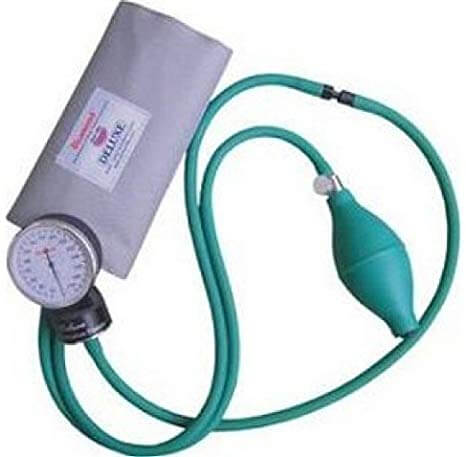
An aneroid manual bp machine is often known as a dial type. The user watches a pointer on a round gauge.
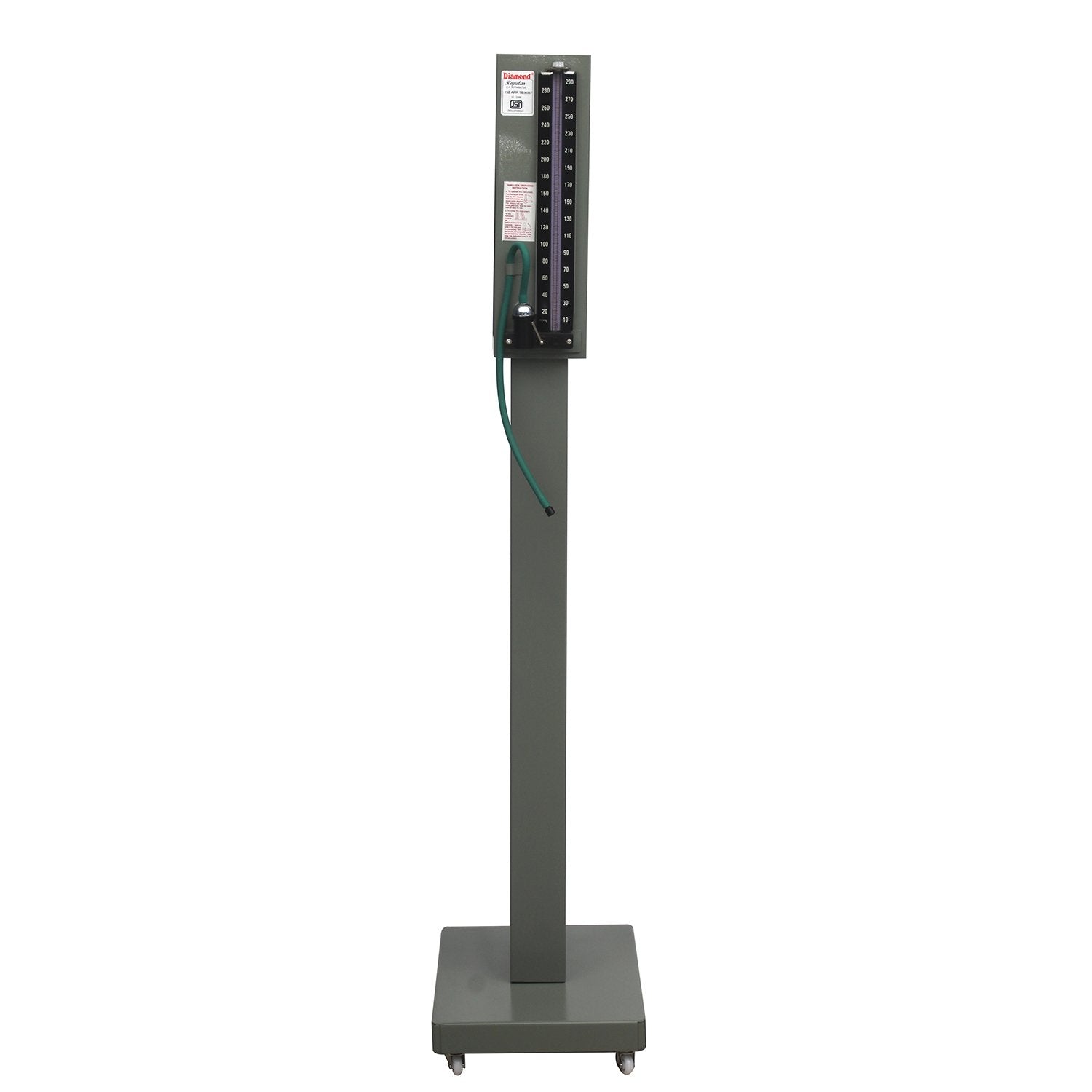
A mercury manual bp machine uses a column display. Follow the maker's handling rules for mercury models, including storage and spill safety.


WHO material notes that manual auscultation uses the manometer to show pressure while sounds guide the measurement. It also notes calibration concerns with aneroid devices and environmental concerns around mercury.
Manual BP machine components in a sphygmomanometer set
What components come with a manual sphygmomanometer? A usual set includes a cuff, bladder, bulb, valve, gauge, tubes, and stethoscope.
Each part affects the result. A loose tube, stiff valve, or wrong cuff can make the measurement unreliable.
Component |
What it does |
What to check at home |
|---|---|---|
Cuff |
Wraps around upper arm |
Fits arm as marked |
Bladder |
Inflates inside cuff |
Lies flat without folds |
Bulb |
Pumps air into the bladder |
Feels firm and responsive |
Valve |
Releases air |
Opens smoothly |
Gauge |
Shows pressure |
Needle or column moves clearly |
Tubes |
Carry air |
No cracks or loose ends |
Stethoscope |
Helps hear sounds |
Ear tips and chest piece stay clean |
A manual bp machine works only when these parts work together. Keep the full manual bp set in one place.

Do not mix parts casually. If a part breaks, follow the maker's instructions or ask a trained person.
Why is correct cuff size essential for blood-pressure measurement?
Correct cuff size matters because the artery must be pressed properly. A cuff that does not fit can give a misleading result.
The cuff should match the upper arm. Do not guess by age, body size, or family habit.
Look for the size markings. Most cuffs show where the edge should fall when wrapped.

The American Heart Association highlights correct cuff size as a key part of home measurement instructions. Its scientific statement also explains that the size should match arm circumference markings.
A manual bp machine with the wrong size can confuse families. They may worry over a number that came from poor fit.
Ask a doctor or trained professional to show the right size. Then use the same correct size each time.
Manual BP machine cuff placement and body position
Place the cuff on the bare upper arm. Keep the lower edge above the elbow bend.
Support the arm on a table. Keep the cuff at heart level.
Sit calmly before the measurement. Keep feet flat and avoid crossing legs.
Do not wrap over thick clothing. Cloth can change pressure and sound quality.
Use the same arm your doctor recommends. If your doctor checks both arms, follow that advice later.
Step |
What to do |
Why it helps |
|---|---|---|
Bare arm |
Wrap directly on skin |
Improves pressure transfer |
Arm support |
Rest arm at heart level |
Reduces position error |
Quiet posture |
Sit still and avoid talking |
Reduces movement noise |
Cuff alignment |
Place tube and cuff correctly |
Helps sound detection |
These steps look simple, but they need practice. A trained person should watch your manual method first.

Manual BP machine skills every user needs
What skills are needed to take a manual bp reading? The user needs cuff fitting, pulse finding, bulb control, sound listening, and gauge reading.
The user must also release air steadily. A rushed release can miss the sound change.
Good hearing helps. A noisy room makes the auscultatory method harder.
The stethoscope must sit over the artery near the elbow bend. Press it gently, not too hard.
The eyes must stay level with the gauge display. This helps avoid misreading the dial or column.
A family member should not learn the manual method only from written steps. Training from a doctor or trained professional matters.
Manual technique can improve with practice. But practice should follow proper guidance, not guesswork.
Manual BP machine and the auscultatory method
How does the auscultatory method compare with oscillometric bp monitoring? Auscultatory measurement uses listening and a gauge, while oscillometric monitoring estimates pressure from cuff pulse waves.
This guide focuses on the manual bp machine method. It does not recommend other monitoring products.
With a manual bp machine, the user listens for sound changes. Those sound changes appear while the pressure falls.
The manual method needs hand, ear, and eye coordination. The user must control the valve while watching the gauge.
Oscillometric bp monitoring does not depend on stethoscope listening. It uses pressure changes in the cuff.
Many people ask, “How do manual and digital blood-pressure machines differ?” The simple difference is the way the measurement is detected.
Manual measurement depends on trained listening. Electronic systems depend on internal sensing and calculation.
A manual bp machine gives no value if the user cannot hear or judge sounds well. Ask a trained person to confirm technique.
Manual BP machine use at home under doctor guidance
Who should monitor blood pressure at home? People should do it only when their doctor asks or guides them.
Home monitoring with a manual bp machine can support follow-up conversations. It does not replace medical review.
A doctor can explain when to measure, how to record, and which numbers need attention. Do not change medicines based on home results.
A family member may help an older adult take measurements. That helper also needs training.
Keep a simple written record if your doctor wants it. Write the measurement, arm used, and any note your doctor requests.
Do not panic over one result. Poor posture, a wrong fit, talking, or tension can affect it.
Contact your doctor when you feel unsure. A doctor reads and acts on the results.
Manual BP machine step-by-step use guide
Use this guide only after training. Ask a doctor or trained professional to watch your first measurements.
Choose the correct size for the upper arm.
Sit with the back supported and arm resting.
Wrap the cuff firmly on the bare upper arm.
Place the stethoscope over the artery near the elbow.
Close the valve and pump the bulb.
Release air slowly and steadily.
Listen for the first clear sound.
Continue listening until the sounds change and disappear.
Note the result as your doctor has taught.
Share the results with your doctor when advised.
Do not squeeze the bulb again during the same measurement. Start fresh if you lose control of the valve.

Do not talk while taking the measurement. Do not let the person move the arm.
If you cannot hear the sounds clearly, stop. Ask a trained person to check your stethoscope position and method.
Manual BP machine right arm and left arm readings
Can readings differ between the right and left arm? Yes, readings can differ between arms for some people.
A doctor may check both arms and guide which arm to use later. Use that arm for regular home records.
Do not keep switching arms without a reason. Switching can make records harder to compare.
AHA guidance says initial measurement can include both arms, with later readings often using the arm with the higher measurement. Follow your doctor’s specific advice for home use.
If one arm gives a very different reading from the other, do not guess why. Share the pattern with your doctor.
Manual BP machine errors families should avoid
A manual bp machine can give poor readings when the method is poor. Most errors come from fit, posture, speed, and sound.
Common mistakes include wrapping over clothing. Another mistake is letting the arm hang unsupported.
Some users release the valve too fast. Others press the stethoscope too hard.
A noisy room can hide Korotkoff sounds. A weak stethoscope seal can also cause missed sounds.
Mistake |
What may happen |
Better habit |
|---|---|---|
Wrong cuff size |
Result may mislead |
Match size to arm markings |
Loose wrap |
Poor pressure transfer |
Wrap snugly, not painfully |
Talking |
Movement and tension affect reading |
Stay quiet |
Arm unsupported |
Position affects reading |
Rest arm at heart level |
Fast release |
Sounds may be missed |
Release steadily |
Dirty ear tips |
Poor sound and hygiene issue |
Clean after use |
Treat a strange reading as a reason to review technique. Do not use it as a reason to adjust medicines.

Manual BP machine aneroid gauge care
What happens if an aneroid bp gauge is out of calibration? The dial may show pressure wrongly, so results may mislead.
An aneroid manual bp machine has moving parts. A fall or rough storage can affect the gauge.
Look at the pointer before use. If it does not rest where the maker says, ask for a check.
Do not open the gauge at home. Use the maker’s service advice or a trained service person.
Regular inspection matters for blood pressure devices. JNC guidance notes that devices should be inspected and checked for accuracy.
Keep the aneroid gauge in its case. Do not keep heavy items on top of it.
If the dial glass cracks, stop using it. Get it checked before another measurement.
Manual BP machine mercury model care
A mercury manual bp machine needs extra care. Mercury needs safe handling, storage, and disposal.

Follow the maker’s handling rules for mercury models. Do not tilt, shake, or move the manual bp machine carelessly.
Keep it on a stable surface while using it. Store it upright as the maker explains.
Do not try to repair a mercury model at home. Do not touch spilled mercury.
If damage happens, follow the maker’s emergency instructions. Ask a trained professional for help.
WHO material notes environmental and health concerns linked with mercury devices. This makes maker handling rules very important.
Which manual BP devices need maintenance and why?
Both aneroid and mercury manual bp machine types need care. Aneroid gauges need calibration checks, while mercury models need safe handling checks.
Tubes, cuffs, bulbs, and valves also need inspection. Air leaks can spoil the measuring process.
A cuff can lose shape with rough use. Tubes can crack when bent often.
The bulb can become hard or weak. The valve can stick or release air unevenly.
Do not wait until the numbers look odd. Check visible parts before use.
If any part looks damaged, pause use. Ask a trained person before taking another measurement.
Manual BP machine buying guide for families
Buying a manual bp machine needs more than choosing a dial or column. Think about who will use it and who will take the measurements.
Choose only if someone can learn the manual technique. A manual device without skill can create confusion.
Check cuff fit first. The size must suit the upper arm of the person using it.
Look for clear size markings. Choose a gauge display that the trained user can see easily.
For an aneroid sphygmomanometer, ask how calibration checks should happen. For a mercury sphygmomanometer, study handling rules before use.
Do not buy a manual bp machine based on claims alone. Ask your doctor which type suits your family’s needs.
Aneroid and mercury selection table
This table keeps the choice simple for Indian homes. It does not rank brands or call any product the best.
Home need |
Aneroid sphygmomanometer |
Mercury sphygmomanometer |
|---|---|---|
Compact storage |
Often easier to store |
Needs stable upright storage |
Display type |
Dial pointer |
Mercury column |
Care focus |
Calibration and shock protection |
Mercury handling and safe storage |
Skill needed |
Trained listening and dial reading |
Trained listening and column reading |
Before purchase |
Check cuff fit and gauge readability |
Check handling comfort and safety rules |
Both manual bp options need training. Both need doctor guidance for medical use.
Choose the manual type your family can handle safely. Do not choose a mercury model if safe handling feels difficult.
Manual BP machine record habits
A record helps your doctor see patterns. It also helps you avoid relying on memory.
Write only what your doctor asks you to write. Keep the note simple and clear.
Use the same arm, cuff, and method when advised. This makes records easier to compare.
Do not add your own medical meaning beside each result. Let the doctor review and act on the results.
If you feel unwell, seek medical advice. Do not depend only on a home result.
Hygiene at home
A manual bp machine touches skin and ears. Keep it clean with gentle care.
Wipe the cuff as the maker allows. Do not soak parts unless the maker says so.
Clean stethoscope ear tips after use. Store the stethoscope away from dust.
Keep all parts dry. Moisture can affect fabric, bladder, and tubes.
Do not share ear tips without cleaning. Families should treat the manual bp set as health equipment.
Storage and handling of the set
Store the manual bp machine in its pouch or case. Keep the gauge away from knocks.
Do not fold tubes sharply. Do not crush the cuff under heavy items.
Keep the manual bp set away from heat, dust, and damp places. Simple storage can protect moving parts.
For mercury models, follow the maker's handling rules. Keep the manual bp machine in the safe position described by the maker.
For aneroid models, protect the dial. A fall can affect calibration.
Manual BP machine troubleshooting at home
Small problems can spoil results. Stop and check the manual bp set when something feels wrong.
If the cuff does not inflate, check tube connections. Also check whether the valve stays closed.
If air leaks quickly, inspect the cuff, bladder, bulb, and valve. Do not tape damaged parts casually.
If sounds seem unclear, check stethoscope placement. Also reduce room noise.
If the gauge needle jumps oddly, stop use. Ask for a calibration check.
If a mercury column does not move properly, stop use. Follow the maker’s instructions.
Manual BP machine safety reminders
A manual bp machine can support doctor-guided care. It cannot diagnose by itself.
Do not use results to change medicines. Do not start, stop, or adjust any treatment on your own.
Call your doctor when the numbers worry you. Tell the doctor about symptoms, technique, arm used, and cuff size.
Do not use a damaged manual bp machine. A cracked gauge, leaking cuff, or faulty valve can mislead.
Keep the manual bp machine away from children. It has tubes, small parts, and pressure parts.
Manual BP machine checklist for daily care and use
Use the manual bp machine only after proper training.
Follow doctor guidance for when and how to measure.
Let a doctor read and act on the results.
Use the correct cuff size for the upper arm.
Wrap the cuff on bare skin, not over clothing.
Keep the arm supported at heart level.
Stay quiet and still during the measurement.
Release air slowly and steadily.
Stop if you cannot hear sounds clearly.
Protect an aneroid gauge from falls and shocks.
Follow maker handling rules for mercury models.
Check tubes, bulb, valve, cuff, and gauge before use.
Store the manual bp set clean, dry, and safely packed.
Do not use damaged parts.
Do not change medicines based on home measurements.
Final takeaway for Indian families
A manual bp machine can be useful at home when a trained person uses it correctly. It needs the right cuff, steady hands, clear hearing, and careful storage.
Choose between aneroid and mercury sphygmomanometer models based on safe handling and doctor guidance. Keep the focus on correct manual technique, not guesswork.
For Indian families, the safest habit is simple. Learn from a trained professional, record results as advised, and let the doctor decide the next action.
Sources
World Health Organization: technical guidance on blood pressure measuring devices.
American Heart Association: blood pressure measurement and home measurement guidance.
NCBI Bookshelf: calibration, maintenance, and use of blood pressure devices.
Explore more blood pressure equipment
Sphygmomanometer
Explore Medical Collections
All Categories
Abdominal & Maternity Support

Accessories

Accu-Chek Instant Strips: Use, Compatibility, Price & Blood Sugar Testing Guide
Accu-Chek Instant Strips: Uses, Features & Complete Guide

accupuncture

Acupuncture Needles & Supplies

Advanced Physiotherapy Machines & Lumbar Physiotherapy

Airways

Alcohol Swab: Uses, Safe Use and Disposal Guide

Ambu Bag Full Form: Is There an Official Meaning?

Ambu Bag: Parts, Uses and Safety Guide

Ambu Full Form: What the Name Means and BVM Basics

Ambulance

Anatomy Models
Anesthesia Machine
You may also need
FOR YOURecommended for you
Save 17%
Save 7%