


Featured ChoiceSave 43%

Save 8%

Save 62%

Save 18%

Save 50%


Save 52%
Save 5%


Save 21%



Save 9%
Save 57%
Save 25%

Save 23%
Save 29%
Save 12%



Save 47%


Save 10%


Save 50%

Save 50%


Save 58%

Save 52%


Save 52%

Save 19%

Save 27%
Save 17%



Save 23%

Save 25%
Sold out

Sold out


Sold out


Sold out

Sold out
What customers say
★★★★★ 5.0 · 15 reviews
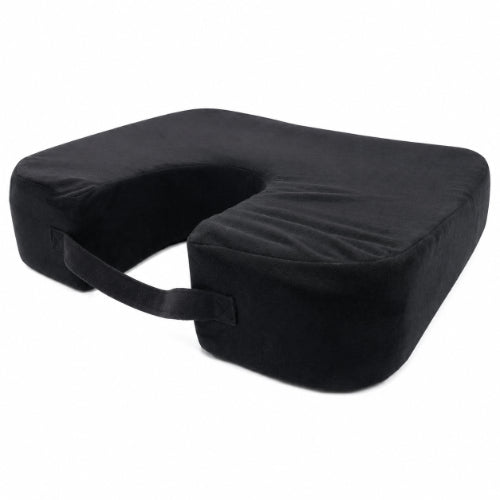
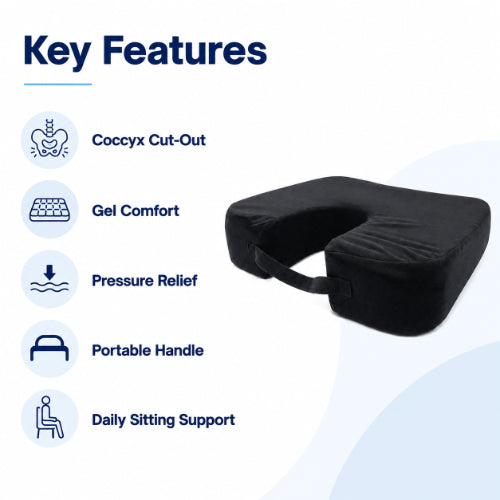
 Coccyx Seat Cushion With Memory Foam For Sciatica Tailbone Back Pain Relief
“Incredibly comfortable and provides great relief from tailbone pain. The memory foam offers perfect support...”
“This is a lifesaver for my tailbone and back pain! It provides excellent support and comfort, especially du...”
 Neck Support Cervical Memory Foam Pillow - 23x13x3.5 Inch
“Perfect for neck pain relief and better sleep”
“Comfortable and supportive!”
 Coccyx Gel Cushion for Coccydania Tail Bone Sciatica Back Pain Releif by Viaggi
“Provides great support and comfort!”
“This Coccyx Gel Cushion has been a lifesaver for my sciatica and tailbone pain. I’ve tried several cushions...”
 Meddey Gel Wheelchair Cushion for Pressure Relief & Bed Sore Prevention Support
“Perfect for pressure relief!”
 Coccyx Seat Cushion
“This is incredibly comfortable and has been a huge relief for my tailbone pain.”
 Coccyx Seat Cushion Orthopaedic Memory Foam - Viaggi
“Perfect for long sitting!”
“it’s been a fantastic investment! The memory foam is just the right density – firm yet comfortable. It has ...”
 Donut Tailbone Pillow Hemorrhoid Cushion
“Comfortable and soothing!”
 Health and Yoga Seating Air Cushion
“Reduces strain on the lower back and improves comfort.”
“Great for posture support!”
Stethoscope for Home Use: Types, Uses & Buying Guide
Stethoscope for Home Use: Types, Uses & Buying Guide
Stethoscope for home use is a simple listening tool that can help families and caregivers hear body sounds such as heartbeat, breathing, and pulse sounds during a blood pressure check. For home users in India, it can be useful when caring for children, older family members, or anyone who needs regular basic monitoring at home. It is important to remember that a stethoscope is only for listening; it cannot confirm a health problem, and it should never replace a check-up with a doctor.
This guide explains the main parts of a stethoscope, the common types available for home use, how to choose a good one, and how to clean and store it safely. It also explains digital stethoscope features in simple language, without brand names, rankings, or exact prices.
What is a stethoscope used for?
A stethoscope is used for listening to sounds inside the body, mainly the heartbeat, breathing sounds, and pulse sounds while checking blood pressure manually. At home, it may be used by families and caregivers as a basic listening aid, especially when they are already familiar with safe home monitoring routines. It is not a disease-checking tool, and any concern about unusual sounds, discomfort, fever, breathing trouble, chest pain, dizziness, or weakness should be discussed with a doctor.
Many people think a stethoscope is complicated, but the basic idea is simple. One end is placed gently on the body, and the sound travels through the tube to the ears. The person using it must stay calm, listen in a quiet room, and avoid guessing what the sounds mean.
For home users, common stethoscope use includes:
- Listening to heartbeat sounds during routine family care or while learning basic home monitoring.
- Helping with manual blood pressure checks when used with a manual blood pressure cuff.
- Listening to breathing sounds only as a basic observation, not as a diagnosis.
- Checking pulse sounds at certain points during a manual BP reading.
- Supporting caregiver awareness when looking after children, older parents, or family members who need regular observation.

A stethoscope can help you listen, but it cannot tell you the reason behind a sound. If anything feels unusual or worrying, the safer step is to contact a doctor rather than trying to interpret it at home.
The basic parts of a stethoscope
A stethoscope has a few main parts, and each part has a simple job. Understanding these parts makes it easier to choose, use, clean, and store the device properly.

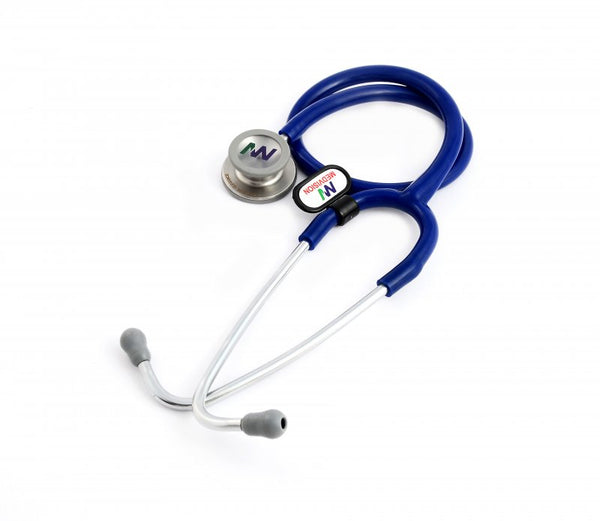
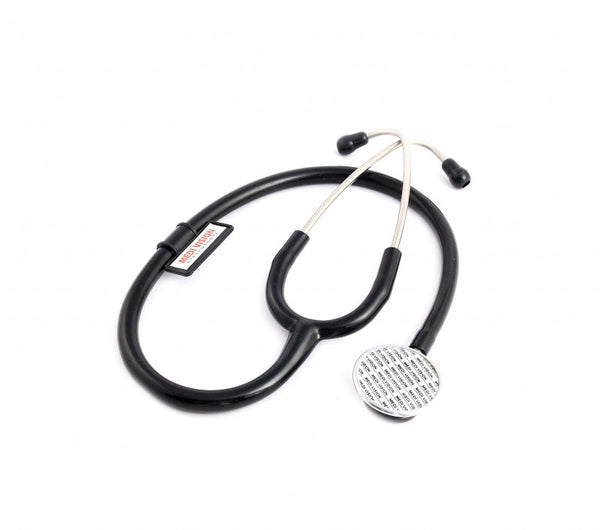
Chest piece
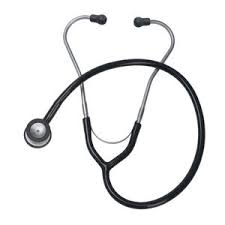
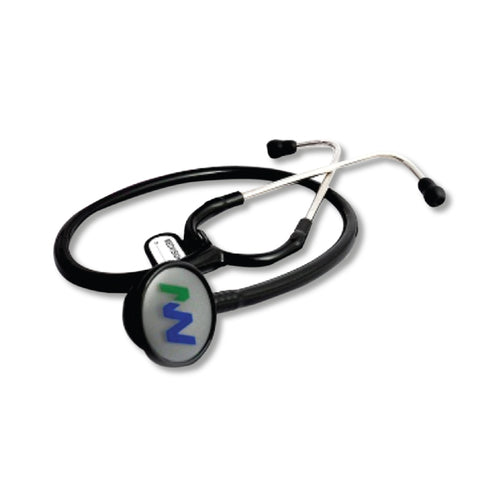
The chest piece is the round metal part that touches the body. It collects sound from the chest, back, or arm, depending on what you are listening to. For home use, the chest piece should feel solid, smooth, and easy to place flat on the skin or over thin clothing if needed.
A heavier chest piece is not always necessary for home use. What matters more is that it sits properly and does not feel loose. If the chest piece keeps slipping or does not make proper contact, the sound may be unclear.
Diaphragm
The diaphragm is the flat, circular side of the chest piece. It is the part most home users will use most often. It is helpful for listening to general body sounds such as heartbeat, breathing, and pulse sounds during a manual blood pressure check.
When using the diaphragm, place it gently and fully against the body. Pressing too hard is usually not needed and can make the person uncomfortable. A clean and undamaged diaphragm helps give clearer sound.
Bell
The bell is the smaller, cup-like side found on many dual-head stethoscopes. It is used for listening to softer body sounds. Home users may not need the bell often, but it is useful to know what it is if yours has two sides.

Some simple stethoscopes may not have a separate bell. That is okay for many home users. If you are mainly using it with a blood pressure cuff or for general listening, a basic model may be enough.
Tubing
The tubing carries sound from the chest piece to the ear tips. Good tubing should be flexible but not too soft, cracked, or sticky. If the tube is damaged, twisted, or too loose, sound quality may be poor.
For home use in India, choose tubing that feels easy to handle and long enough to use comfortably. Very long tubing can sometimes reduce clarity, while very short tubing may force you to bend awkwardly. A comfortable middle length is usually easier for family care.
Ear tips
The ear tips are the soft pieces that sit in your ears. They should fit comfortably and block outside noise as much as possible. If the ear tips are too hard, loose, or painful, using the device becomes difficult.
Many stethoscopes come with soft ear tips, and some include extra sizes. For home users, comfort matters because discomfort can distract you from listening properly. Clean ear tips are also important because they touch the ears directly.
Main types of stethoscope for home users
There are different types of stethoscope, and each one suits a different kind of home user. The best stethoscope for your home is not always the most expensive or most advanced one. It should match your purpose, comfort, and ability to use it safely.

Acoustic or single-head stethoscope
An acoustic or single-head stethoscope is a simple type with one listening side on the chest piece. It does not need batteries, charging, apps, or settings. Sound travels naturally from the chest piece through the tubing to the ear tips.

This type can suit families who want a basic stethoscope for simple home observation or for use with a manual blood pressure cuff. It is usually easy to handle and less confusing for beginners. If you want something simple for occasional use, this may be enough.
A single-head model may not offer the same listening options as a dual-head or digital model, but that is not always a problem. For many homes, simple and comfortable is better than feature-heavy and confusing.
Dual-head stethoscope
A dual-head stethoscope has two sides on the chest piece: a diaphragm and a bell. The diaphragm is the flat side, while the bell is the smaller cup-like side. You can usually rotate the chest piece to choose which side is active.

This type can suit home users who want more flexibility. For example, a caregiver may prefer a dual-head model if they are helping with different family members, including adults and children. It may also be useful for people who want to learn basic listening more carefully, while still remembering that it is not for self-diagnosis.
When buying a dual-head stethoscope, check that the rotating part feels smooth and not loose. If the chest piece is not set correctly, you may hear very little sound and think the device is faulty.
Pediatric stethoscope
A pediatric stethoscope is smaller and designed for children’s bodies. The chest piece is usually smaller, making it easier to place correctly on a child’s chest or back. This can be helpful for parents or caregivers who regularly look after young children at home.

For Indian families with children, size is the main reason to consider a pediatric stethoscope. A large adult chest piece may be harder to position properly on a small child, especially if the child is moving or upset. A smaller chest piece may feel easier and more comfortable.
However, using a pediatric stethoscope at home still requires care. Children may cry, move, or breathe quickly, which can make listening difficult. If a child appears unwell, has breathing difficulty, high fever, poor feeding, unusual sleepiness, or any worrying symptom, contact a doctor instead of relying on home listening.
Digital or electronic stethoscope
A digital stethoscope, also called an electronic stethoscope, uses electronic features to support listening. Depending on the model, it may amplify sound, record sounds, reduce some background noise, or connect to another device. These features can make listening easier for some users, especially if they struggle to hear clearly with a basic acoustic model.
The main use of a digital stethoscope at home is convenience and sound support. For example, amplification may make sounds louder, and recording may help a caregiver keep a listening note for personal reference. Connectivity may allow sound to be heard through compatible devices, depending on the design.
A digital model does not turn home listening into a medical check-up. It should not be used to decide whether a person has a health condition. If you record a sound and feel concerned, speak with a doctor and follow proper medical guidance.
Is the digital stethoscope worth it?
A digital stethoscope may be worth it for some home users if they need louder sound, recording features, or connectivity, but it is not necessary for every family. If your main need is simple home listening or manual blood pressure support, a basic acoustic or dual-head stethoscope may be enough. The choice depends on comfort, budget, ease of use, and whether the extra features will actually be used.
Digital models can feel attractive because they offer modern features. Sound amplification can help when body sounds are faint or when the user has difficulty hearing through a basic model. Recording can be useful if the device allows it and if the user understands that recordings are only listening notes, not medical results.
Before choosing a digital or electronic stethoscope, ask yourself:
- Will I use the extra features? If you only need one occasionally, a simple model may be more practical.
- Am I comfortable charging or maintaining it? Digital models may need batteries, charging, or careful handling.
- Do I need sound amplification? If typical acoustic sound is too soft for you, amplification may help.
- Will apps or connectivity confuse me? A device should make home care easier, not more stressful.
- Is the cost justified for my home use? Higher price is not always needed for simple family monitoring.
The best choice is the one you can use correctly and safely. A costly device that stays in a drawer is less useful than a simple model that your family can handle with confidence.
How to choose a good stethoscope for home use in India
Choosing a good stethoscope does not mean buying the most expensive one. For home users in India, the right one should be clear enough, comfortable enough, and suitable for the person you are caring for. It should also be easy to clean, store, and use without confusion.

Sound clarity
Sound clarity is one of the most important points. A stethoscope should allow you to hear basic body sounds without too much disturbance. If the sound is very weak, muffled, or unclear even in a quiet room, it may not be suitable.
For home use, test it in a quiet space if possible. Make sure the ear tips are placed correctly and the chest piece is fully touching the body. Sometimes poor sound is caused by incorrect use, not by the device itself.
Comfort
Comfort matters for both the user and the person being checked. The headset should not press painfully into your ears. The chest piece should feel smooth and not too cold or sharp on the skin.
If it is uncomfortable, you may avoid using it or may rush through the process. For older caregivers or family members who use it often, a comfortable headset and soft ear tips can make a big difference.
Ear tips
Ear tips should fit well and sit gently in the ears. Soft ear tips are usually more comfortable for home use. They also help reduce outside noise so you can focus better.
Check whether the ear tips are secure. Loose ear tips may fall off or let in too much outside sound. If more than one family member uses it, clean the ear tips before and after use.
Tubing length and quality
Tubing should be long enough for easy movement but not so long that it becomes difficult to manage. For checking blood pressure at home, the tube should allow you to sit comfortably near the person without bending too much. Tubing should also feel strong and flexible.
Avoid tubing that looks cracked, flattened, or sticky. Heat and sunlight can damage tubing over time, especially in Indian homes where devices may be stored near windows or in warm cupboards. Proper storage helps the tubing last longer.
Adult or child size
Think about who will use it and who it will be used on. For adults and older family members, a standard adult-size stethoscope is usually easier. For young children, a pediatric stethoscope may be more suitable because the chest piece is smaller.

If one device will be used for the whole family, a dual-head model may offer more flexibility. Still, a very small child may be easier to check with a pediatric size. Comfort and correct placement matter more than having many features.
Ease of use
A home stethoscope should not be confusing. If there are too many settings, parts, or digital controls, some users may avoid using it. Choose a model that matches your comfort level.
For many families, a simple stethoscope is easier to learn. If you choose a digital model, make sure you understand how to turn it on, adjust sound, charge it, clean it, and store it safely.
Build and cleaning
It should feel sturdy enough for regular home care. The chest piece should not feel loose, and the tubing should be properly attached. It should also be easy to wipe clean after use.
At home, hygiene is important because it may touch skin, clothing, and ears. A design with smooth surfaces and easy-to-clean parts is more practical than one with difficult corners or delicate parts.
A simple buying checklist
Use this checklist before buying a stethoscope for home use. It keeps the decision practical and prevents you from paying for features you may not need.
- Purpose: Are you using it for general listening, manual blood pressure checks, child care, or caregiver support?
- Type: Do you need a single-head, dual-head, pediatric, or digital stethoscope?
- Sound: Can you hear clearly in a quiet room?
- Comfort: Do the ear tips feel soft and secure?
- Size: Is the chest piece suitable for adults, children, or both?
- Tubing: Is the tube flexible, strong, and comfortable in length?
- Cleaning: Can you wipe the chest piece, tubing, and ear tips easily?
- Storage: Does it come with or fit into a clean pouch or box?
- Maintenance: If it is digital, can you manage charging, batteries, or settings?
- Budget: Does the stethoscope price match your real home use needs?
This checklist is especially useful when shopping online, where product photos may look similar. Read the details carefully and focus on type, size, materials, and ease of use rather than only appearance.
Understanding stethoscope price without exact numbers
Stethoscope price can vary widely based on type, material, sound quality, finish, and extra features. A basic acoustic model is usually different in price from a digital stethoscope because digital models may include sound amplification, recording, connectivity, batteries, or charging parts. However, a higher price is not always needed for home use.

If you search for terms like original stethoscope price, remember that “original” should mean genuine, safe, and properly made, not simply expensive. Look for clear product details, return options, and seller information. Avoid buying only because a listing looks premium or uses confusing claims.
Many home users ask, “What is the cost of a good stethoscope?” The honest answer is that it depends on what you need. A good stethoscope for a family may be a simple one with clear sound and comfortable ear tips, while another family may prefer an electronic stethoscope because they want sound amplification.
When comparing price, think about value in a practical way:
- Basic home use: A simple acoustic or single-head stethoscope may be enough.
- More flexibility: A dual-head stethoscope may suit families with different age groups.
- Child care: A pediatric stethoscope may be useful if you mainly care for young children.
- Sound support: A digital or electronic stethoscope may help if you need amplification or recording.
- Long-term use: Better comfort and stronger tubing may matter more than extra features.
Do not choose only by the lowest or highest price. Choose by fit, clarity, comfort, and whether it suits your household.
How to use a stethoscope correctly at home
Using a stethoscope correctly is mostly about quiet surroundings, proper placement, clean parts, and patience. You do not need to press hard or make quick judgments. Listen calmly, and remember that home listening is not a medical examination.

Follow these simple steps:
- Choose a quiet room. Turn off loud fans, TV, music, or nearby phone sounds. Less background noise makes listening easier.
- Wash or clean your hands. This is a basic hygiene step before touching the device or helping a family member.
- Clean the chest piece and ear tips. Wipe them before use, especially if it is shared.
- Place the ear tips correctly. The ear tips usually point slightly forward into the ears. If they point the wrong way, sound may be weak.
- Check which side is active. If using a dual-head stethoscope, make sure the diaphragm or bell side is open. Tap very lightly on the chosen side to confirm sound, but do not tap loudly while wearing the ear tips.
- Place the chest piece gently. Put the diaphragm flat against the body area you want to listen to. Do not press too hard.
- Ask the person to stay still. Movement, talking, or clothing noise can disturb the sound.
- Listen for a few moments. Focus on the rhythm and loudness of the sound, not on guessing a medical meaning.
- Use with a manual BP cuff only if trained. If you are checking blood pressure manually, learn the correct method from a reliable source or a doctor’s guidance.
- Stop if there is discomfort. If the person feels pain, breathlessness, dizziness, or distress, stop and seek medical help if needed.
- Clean the stethoscope after use. Wipe the parts that touched skin or ears.
- Store it safely. Keep it in a clean, dry place away from heat and dust.
For children, keep the process gentle and short. A child may become restless if the chest piece feels cold, so warm it slightly in your hand before placing it on the skin. Never force a child to stay still if they are upset or struggling to breathe; contact a doctor if you are worried.
Safe stethoscope use at home
A stethoscope is safe when used gently, cleanly, and with realistic expectations. The biggest mistake is not physical use, but overconfidence. Hearing something at home does not mean you know what it means medically.

Keep these safety points in mind:
- Do not use it to diagnose. A stethoscope is for listening to body sounds only.
- Do not delay medical care. If someone has worrying symptoms, contact a doctor.
- Do not press hard. Gentle contact is enough for home listening.
- Do not use damaged parts. Cracked tubing, sharp edges, or loose ear tips can make use uncomfortable or unclear.
- Do not share without cleaning. Ear tips and the chest piece should be cleaned before and after use.
- Do not rely on recordings alone. Digital recordings are not a replacement for a doctor’s check-up.
- Do not use it on broken or infected skin. Avoid placing the chest piece on wounds, rashes, or irritated skin.
- Do not let children play with it. Small parts and tubing can be unsafe if misused.
If you are unsure whether a sound is typical, do not keep listening again and again in worry. Make a note of what you observed and speak with a doctor. Peace of mind should come from proper care, not guesswork.
Cleaning and storing your stethoscope
Cleaning your stethoscope is simple but important. Since it touches ears, skin, and clothing, it can collect sweat, dust, and germs. Regular cleaning keeps it more hygienic and helps protect the material.
How to clean it
Use a soft cloth slightly dampened with a suitable mild cleaning solution as mentioned in the product instructions. Wipe the chest piece, diaphragm rim, tubing, and ear tips. Do not soak it in water, and do not pour liquid directly into any part.
If the ear tips are removable, clean them carefully and fix them back properly once dry. Make sure no moisture remains trapped. For a digital stethoscope, follow the device instructions because electronic parts need extra care.
A simple cleaning routine:
- Wipe the chest piece before and after use.
- Clean the diaphragm because it touches the body most often.
- Wipe the bell if your stethoscope has one.
- Clean the ear tips because they touch the ears.
- Wipe the tubing to remove dust and sweat.
- Let it dry fully before storing.
How to store it
Store it in a clean pouch, box, or drawer. Keep it away from direct sunlight, high heat, moisture, and dust. Do not fold the tubing tightly or place heavy objects on it.
Avoid leaving it in a hot car, near a kitchen stove, near bathroom moisture, or on a window ledge. Heat can make tubing stiff or sticky over time. A cool, dry cupboard is usually better for Indian homes.
If you use a digital or electronic stethoscope, remove or charge batteries according to the product instructions. Keep charging cables, extra ear tips, and instructions together so they do not get lost.
Common mistakes to avoid
Home users often make small mistakes that affect sound clarity and comfort. These mistakes are easy to fix once you know them.
One common mistake is wearing the ear tips backward. Most ear tubes are angled slightly forward, and they should follow the direction of the ear canal. If the sound is weak, adjust the ear tips before assuming it is poor quality.
Another mistake is using it in a noisy room. Fans, traffic, pressure cooker whistles, television, and talking can all disturb listening. Choose the quietest time and place available.
Other mistakes include:
- Pressing the chest piece too hard.
- Listening over thick clothing.
- Forgetting to clean shared ear tips.
- Using an adult chest piece on a small child when it does not sit properly.
- Not checking the active side on a dual-head stethoscope.
- Buying advanced features that the family does not know how to use.
- Making health decisions based only on what is heard at home.
The goal is not to become an expert. The goal is to use it safely as a simple listening tool while leaving health decisions to a doctor.
Matching the stethoscope to your household
Different Indian households have different needs. A family caring for older parents may need one that is comfortable for regular use. Parents of young children may care more about size and gentle placement. Someone checking manual blood pressure at home may need clear sound and easy handling.
For a household with mostly adults, a standard acoustic or dual-head stethoscope may work well. For a household with small children, a pediatric stethoscope can be easier to position. For someone who has difficulty hearing soft sounds, a digital stethoscope may be considered if the features are easy to manage.
Think about the person who will use it most often. If that person is not comfortable with digital settings, a simpler design may be better. If several family members will share it, cleaning, strong tubing, and soft ear tips become more important.
A practical home-use choice usually balances five things:
- Simple use so the family can handle it confidently.
- Clear sound for basic listening.
- Comfortable fit for the ears and the person being checked.
- Right size for adults or children.
- Easy cleaning and storage for regular home care.
What is the use of a digital stethoscope?
The use of a digital stethoscope is to support listening with features such as sound amplification, possible recording, and connectivity to compatible devices. These features can make sounds easier to hear or save a listening sample, depending on the model. It still remains a listening tool and does not provide a medical result by itself.
For home users, the most useful digital feature is often amplification. If a basic model feels too soft, amplification may make listening easier. Some electronic stethoscope models may also allow volume adjustment, which can be helpful in a quiet home setting.
Recording is another feature found in some digital models. A recording can help you remember what you heard, but it should not be treated as a diagnosis. If you are worried about a sound or a person’s symptoms, speak to a doctor.
Connectivity may allow it to work with another device, depending on the design. This can be useful for saving or hearing sounds in a different way. However, connectivity also means you may need to manage charging, pairing, apps, or storage settings, so it should be chosen only if you are comfortable with it.
Final takeaway
A stethoscope for home use can be a helpful listening tool for families and caregivers in India, especially for basic observation and manual blood pressure support. The right choice depends on your household, the age of the person being checked, sound clarity, comfort, tubing quality, ear tip fit, and ease of cleaning.
A good stethoscope does not have to be the most expensive one. Single-head, dual-head, pediatric, and digital options all have their place, but the best stethoscope for your home is the one you can use safely, clean properly, and understand clearly. Most importantly, remember that home listening does not replace a doctor’s check-up, and any health concern should be checked by a qualified doctor.
Frequently Asked Questions
What is a stethoscope used for?
A stethoscope is used to listen to body sounds such as heartbeat, breathing sounds, and pulse sounds during a manual blood pressure check. It is only a listening tool and does not diagnose any health condition.
What is the cost of a good stethoscope?
The cost of a good stethoscope varies by type, material, sound quality, comfort, and features. For home use, a higher price is not always needed; choose one that is clear, comfortable, and suitable for your family.
How much does a digital stethoscope cost?
A digital stethoscope usually costs more than a basic acoustic type because it may include amplification, recording, and connectivity features. Exact prices vary, so compare features and choose only what you really need for home use.
Is the digital stethoscope worth it?
A digital stethoscope can be worth it if you need louder sound, recording, or device connectivity. If you only need simple stethoscope use at home, a basic acoustic or dual-head type may be enough.
What is the use of a digital stethoscope?
A digital stethoscope helps make sounds louder and may allow recording or connection with compatible devices. It does not give a medical result and should not replace advice from a doctor.
Which is the best stethoscope for home use?
The best stethoscope for home use is one that gives clear sound, fits comfortably, is easy to clean, and suits the age of the person being checked. Families may choose a simple acoustic, dual-head, pediatric, or digital model depending on their needs.
What are the main types of stethoscope?
The main types include acoustic or single-head, dual-head, pediatric, and digital or electronic stethoscope models. Each type has a different purpose, so choose based on who will use it and how it will be used at home.
Can I use a pediatric stethoscope for adults?
A pediatric stethoscope is made with a smaller chest piece for children. For adults, a standard adult-size stethoscope is usually easier and more suitable.
Can a stethoscope diagnose a health problem at home?
No. A stethoscope can only help you listen to body sounds. If you have any concern about health, symptoms, or unusual sounds, consult a doctor.
How should I clean a stethoscope at home?
Wipe the chest piece, diaphragm, bell, tubing, and ear tips with a soft cloth and a suitable mild cleaning method as mentioned in the product instructions. Do not soak it in water, and let it dry before storing.
Explore Medical Collections
All Categories
Abdominal & Maternity Support

Accessories

Accu-Chek Instant Strips: Use, Compatibility, Price & Blood Sugar Testing Guide
Accu-Chek Instant Strips: Uses, Features & Complete Guide

accupuncture

Acupuncture Needles & Supplies

Advanced Physiotherapy Machines & Lumbar Physiotherapy

Airways

Ambulance

Anatomy Models
Anesthesia Machine

Anesthesia Products

Ankle Support for Home Use: Braces, Sleeves & Walker Boots

Ankle Weights & Exercise Weights for Home & Rehab

Anti-Bedsore Air Mattresses
You may also need
FOR YOURecommended for you
Save 43%
Save 8%
Save 62%
Save 18%
Save 50%
Save 52%
Save 5%
Save 21%
Save 9%
Save 57%
Save 25%
Save 23%
Save 29%
Save 12%
Save 47%
Save 10%
Save 50%
Save 50%