


Featured ChoiceSave 53%
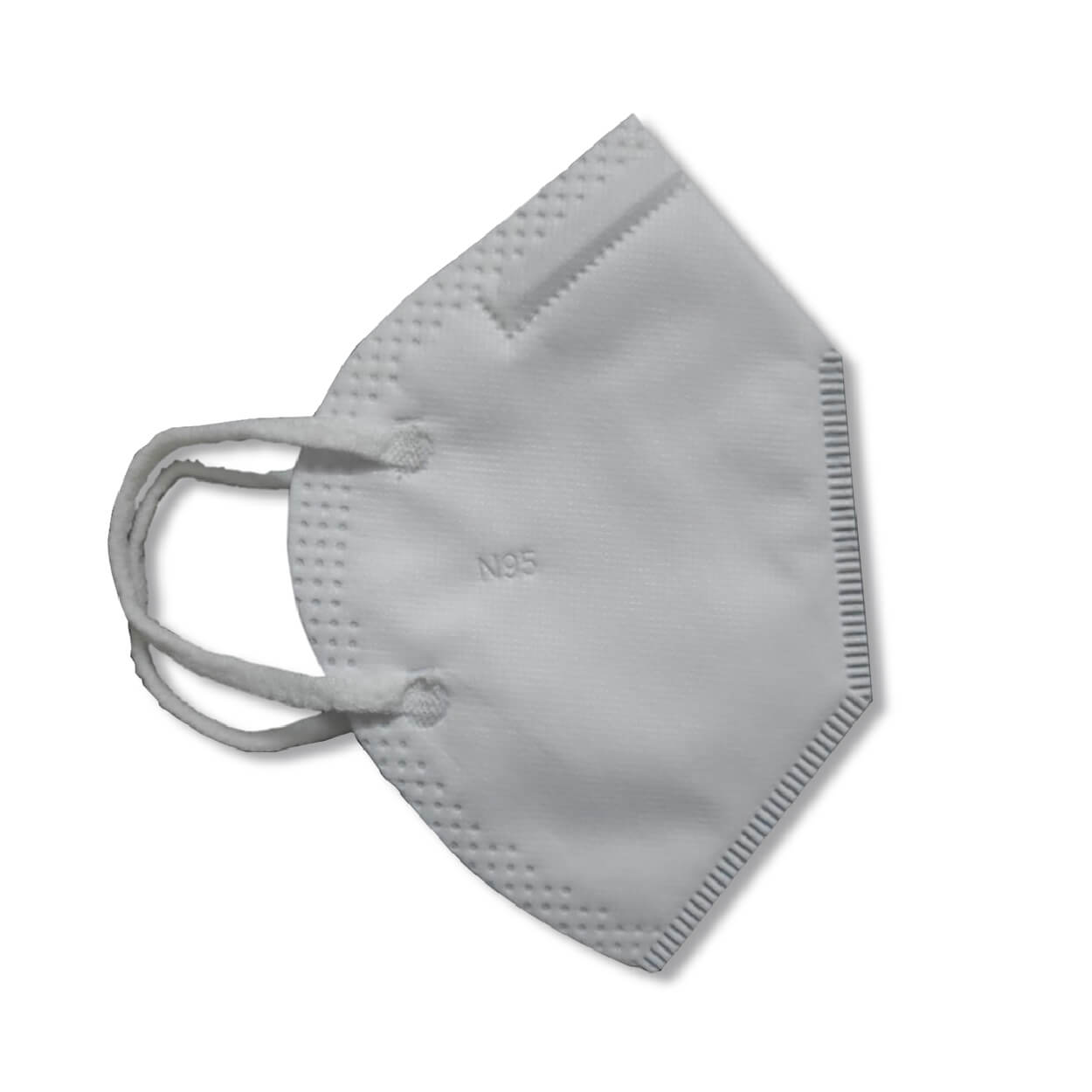
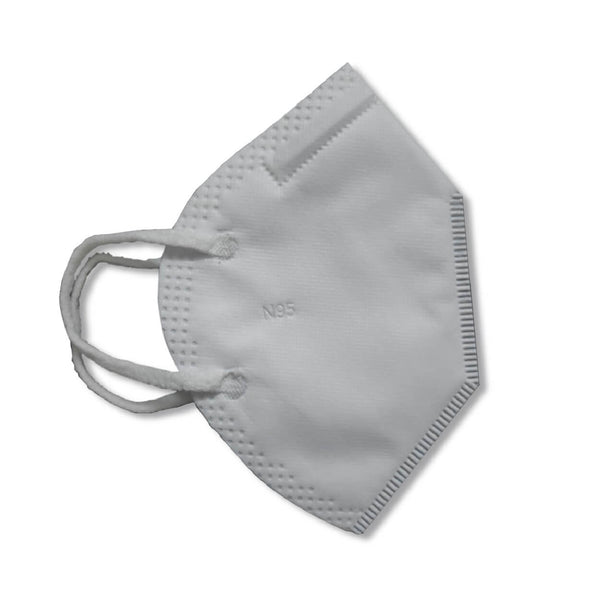
N95 Mask: How to Get a Good Fit and What the Standards Mean
N95 mask: Fit, seal checks and certification explained

N95 mask fit depends on a snug seal around your nose and mouth, without gaps along your cheeks or chin. N95 means a NIOSH-approved filter captures at least 95% of test particles under specified laboratory conditions. This guide explains fit checks, standards, and safe handling for Indian home users. Doctors or trained professionals should guide medical use.
How do I know if my N95 mask seals properly?
Your N95 mask should touch your face continuously around its edges, without noticeable outward air leaks during the instructed seal check. Follow the manufacturer's method whenever you put it on. A home seal check helps identify obvious leaks, but cannot replace professional fit testing.
Start with the position, not the tightness. The upper edge should sit securely across your nose. The lower edge should reach under your chin. Your mouth must remain covered when you speak normally.
Check these points before leaving a cleaner space:
-
Cover your nose, mouth, and chin completely.
-
Position both straps according to the supplied instructions.
-
Shape the nosepiece using both hands, if your model has one.
-
Keep hair, jewellery, and clothing away from the sealing edge.
-
Perform the manufacturer's user seal check.
-
Adjust any obvious leak, then check again.
-
Try another size or model if leakage continues.
Do not hold the N95 mask against your face to make it pass. Your hands can temporarily close gaps that return after release. The N95 mask must maintain its position without that support.
For example, notice whether you keep pushing the lower edge upwards during conversation. Treat that movement as a fitting problem. Recheck the position and consider another model, rather than accepting constant slipping.

What does the N95 rating mean?
An N95 respirator belongs to a defined particle-filtering class. The letter N means the filter is not resistant to oil. The number 95 describes minimum filtration performance under the relevant laboratory test.
That rating describes the filter, not a personal protection percentage. It does not mean your exposure always falls by exactly 95%. Air leaking around the edges can bypass the filter material.
Keep three separate questions in mind:
-
Approval: Does the exact product have the claimed approval?
-
Fit: Does that model seal against your particular face?
-
Use: Do you wear and handle it according to its instructions?
These checks work together. An authentic product can still fit badly. A comfortable shape cannot make an unsupported approval claim reliable. Correct markings also cannot compensate for a damaged facepiece.
Avoid interpreting the rating as a promise against every airborne hazard. N95 filtering facepieces target particles, not gases or vapours. They also do not supply oxygen.
For home users, the practical lesson is simple. Choose a verified product for an appropriate particle exposure, then focus on the seal. Do not stop checking once you recognise the N95 label.

How to check an N95 mask's NIOSH approval
NIOSH stands for the National Institute for Occupational Safety and Health in the United States. It tests and approves respirators against defined performance and quality requirements. An N95 claim should connect to a specific approved product.
Look beyond a large N95 label on the outer box. Check the N95 mask itself and the approval information inside its packaging. Required identification includes the approval holder, model identification, NIOSH marking, filter class, and approval number.
The approval number commonly follows the format TC-84A-XXXX. Here, XXXX represents the N95 mask's actual identifying digits. Do not treat that example as a real approval number.
Use the NIOSH Certified Equipment List to check the exact details. Match the listed model and approval holder with your product. A valid number belonging to another model does not verify yours.
A useful buying question is: “Can the seller identify this exact approved model?” Ask for readable product photographs and the manufacturer's instructions. You need information you can verify, rather than reassurance alone.
Also separate manufacturing location from approval. A product's country of manufacture does not establish NIOSH approval. The matching approval record matters.
Do not interpret “tested,” “registered,” and “approved” as identical claims. Ask what each claim refers to before relying on it. A laboratory report alone does not establish NIOSH approval.

How to verify an ISI mark and BIS licence in India
Which Indian standard marks should I look for on a respirator mask? For products claiming Indian certification, look for the BIS Standard Mark, commonly called the ISI mark. Check the associated standard and licence details too.
BIS lists IS 9473:2002 for filtering half masks that protect against particles. Its scope includes requirements and testing for these respiratory protective devices. Do not mistake this Indian standard for NIOSH approval.
An ISI symbol is not enough by itself. Use the stated CM/L licence number to verify the claim through BIS. The BIS Care app provides a licence verification feature.
When checking a claimed Indian certification, compare:
-
The licence number shown with the mark.
-
The manufacturer named in the official record.
-
The Indian standard covered by that licence.
-
The product description and varieties within its scope.
-
The licence status shown by BIS.
Keep the two approval systems separate in your notes. One column can record the NIOSH model and approval number. Another can record any claimed BIS licence and standard.
Do not assume every genuine N95 must also carry an ISI mark. Verify each certification claim on its own terms. Likewise, an Indian standards claim does not automatically establish N95 approval.
If details conflict, ask the manufacturer before buying. Avoid guessing what a blurred mark or incomplete licence number means.

Is a KN95 mask the same as an N95 mask?
No. A KN95 mask follows Chinese standards, while an N95 follows the NIOSH approval system. KN95 certification alone does not establish NIOSH approval, and the labels are not interchangeable.
Both labels concern particle-filtering respirators, but their approval frameworks differ. Similar appearance cannot establish equivalent approval or equivalent fit. You still need to check the exact product and its instructions.
Use this table to separate the claims:
Product claim |
Relevant framework |
What you should verify |
|---|---|---|
N95 |
NIOSH approval system |
Exact model, approval holder, and TC approval number |
KN95 |
Chinese particle-respirator standard |
Stated standard, manufacturer, model, and supporting documentation |
ISI-marked filtering half mask |
BIS certification against the stated Indian standard |
CM/L licence, manufacturer, standard, and covered product |
These descriptions identify different verification routes, not automatic substitutes. A product claiming multiple approvals needs evidence for every claim. Do not infer one approval from another.
For example, a seller might describe a product as “KN95, therefore NIOSH approved.” That reasoning is incorrect. NIOSH specifically warns against representing international-standard certification as its own approval.
Ask the seller which product you will actually receive. Listings sometimes use several terms in one description. Your decision should follow the N95 mask's verified identity, not whichever label sounds more familiar.

N95 mask vs surgical mask: Fit and particle protection
What is the difference between an N95 mask and a surgical mask? An N95 respirator uses a close facial seal and tested particle filtration. A surgical mask generally fits loosely and serves a different purpose.
Does a surgical mask block very small airborne particles? It does not provide reliable respiratory protection against these particles because air can leak around its edges. Some filter material may capture particles, but loose fit limits overall protection.
This distinction matters more than a product's colour or apparent thickness. A loose covering does not become a sealed respirator because it looks substantial. Conversely, you cannot judge a verified filter's performance by appearance alone.
In the United States, NIOSH approves N95 respirators, while FDA regulates surgical masks as medical devices. Some medical-use N95 products involve additional FDA requirements. Avoid treating this simplified distinction as a universal rule for every product.
For an Indian home user, first identify the actual need. Are you choosing particle filtration, or following instructions for a medical procedure? Let doctors or trained professionals guide medical selection.
Keep the comparison practical. If your concern requires a tight-fitting respirator, check approval and fit directly. Do not substitute another product solely because its packaging uses medical language.
What an N95 mask can and cannot filter
Is a cloth mask enough against dust and pollution? Do not assume it provides reliable protection against fine airborne particles. Cloth coverings vary, and they do not offer the same verified filtration-and-seal combination as an approved N95.
Pollution is not one substance. It can include particles, gases, and vapours. An N95 particle filter does not address every component.
This matters when judging performance by smell. Smelling an odour does not measure the particle filter's efficiency. Likewise, losing an odour does not establish that the air is safe.
Think about these home situations before relying on an N95 mask:
-
Visible household dust: Identify the source and reduce disturbance where possible.
-
Nearby renovation: Ask about dust control and avoid unnecessary exposure.
-
Outdoor pollution: Remember that particle filtration does not remove pollution gases.
-
Unknown fumes: Do not assume an N95 makes the exposure suitable.
These are prompts for planning, not promises that one product suits every task. Unknown materials and heavy dust may need professional assessment. A home fitting guide cannot determine the hazard for you.
Treat the N95 mask as one part of exposure control. Reducing or avoiding the source remains important. Do not deliberately approach smoke, fumes, or dense dust to test your purchase.

How to choose an N95 mask shape and size
Different faces need different N95 respirator shapes. One model may seal well for someone else but leak on you. Size labels also do not guarantee the same fit across models.
Compare the fit across your nose, cheeks, and chin. The facepiece should remain stable without painful tightening. A model that repeatedly shifts deserves another fitting attempt or a different choice.
Before buying a larger supply, ask whether you can assess an individual example. Read the fitting instructions before opening it. Check whether the available size suits your nose-to-chin distance.
Use these practical selection questions:
-
Can you place the lower edge under your chin?
-
Does the nose area follow your face without obvious channels?
-
Do both straps sit where the manufacturer directs?
-
Can you perform the instructed seal check successfully?
-
Does normal speech repeatedly move the facepiece?
Do not choose solely by a familiar shape. Fold-flat and cup-shaped products still require individual fitting. A different outline may suit your face better, but appearance cannot prove that.
Keep a simple personal note after assessing fit. Record the exact model and size, plus any problem you noticed. For example, write “leak near right cheek,” rather than “uncomfortable.”
Specific notes make your next conversation more useful. They help a trained professional understand what you already tried. They also discourage buying another unsuitable model merely because its packaging looks different.
How to put on an N95 mask and check for gaps
Begin with clean, dry hands and an undamaged N95 respirator. Read the instructions for that model before fitting it. Do not assume every strap arrangement works the same way.
For a typical two-headband design, use this sequence:
-
Inspect the facepiece, nosepiece, and strap attachments.
-
Open or shape the facepiece as instructed.
-
Hold it over your nose and under your chin.
-
Position the lower strap below your ears, following the instructions.
-
Position the upper strap around the upper back of your head.
-
Shape any nosepiece with fingertips from both hands.
-
Release your hands and check that the position remains stable.
-
Perform the manufacturer's user seal check.

Keep the straps flat rather than twisted. Do not cross them unless the instructions specifically require that arrangement. Follow the manufacturer's method rather than copying an unrelated demonstration.
Avoid pinching the nosepiece sharply with one hand. Use both hands to shape it across your nose and cheeks. This helps you follow the intended contour rather than creating an uneven bend.
If you wear glasses, check their position after fitting. Their frame should not lift the N95 mask's sealing edge. Recheck the seal if moving your glasses disturbs the facepiece.
Give yourself room to inspect the result. A mirror can help you notice misplaced straps or an uncovered chin. However, a neat appearance cannot replace the seal check.
User seal check vs professional fit test: What is the difference?
A user seal check and a fit test answer different questions. The seal check looks for problems after you put the N95 mask on. A fit test assesses whether a particular model fits your face adequately.
Professional fit testing uses a defined procedure. Qualitative testing relies on detecting a test agent. Quantitative testing uses equipment to measure leakage or fit.
Do not recreate these tests with perfume, smoke, sprays, or household chemicals. Those experiments do not follow a recognised fit-testing procedure. They can also introduce an unnecessary exposure.
A mirror inspection has a narrower role. It can reveal an exposed nose, twisted strap, or folded edge. It cannot measure leakage that you cannot see.
Think of the checks as complementary:
-
Product approval establishes specified performance requirements.
-
Professional fit testing assesses the selected model on the wearer.
-
A user seal check checks the current placement before use.
-
Inspection identifies damage that may make the N95 mask unsuitable.
For medical use, ask the responsible professional about fitting arrangements. Do not assume your home check meets a clinic's requirements. Follow that setting's training and product instructions.
If you repeatedly fail the seal check, stop repeating the same adjustment. Explain exactly where you notice leakage. Ask for another size, another model, or trained fitting help.

What to do if your N95 mask leaks or slips
A leak needs a specific response, not simply tighter straps. First identify where air escapes or where the facepiece moves. Then follow the manufacturer's adjustment instructions and repeat the seal check.
Use this troubleshooting table as a starting point:
What you notice |
What to check |
Sensible next step |
|---|---|---|
Air near the nose |
Nosepiece shape and upper-edge position |
Reshape as instructed and check again |
Gaps along a cheek |
Folded edge, facial hair, or unsuitable size |
Clear obstructions or try another model |
Lower edge slips upwards |
Chin coverage and overall size |
Reposition, then reassess model suitability |
Loose straps |
Damage, stretching, or incorrect placement |
Follow instructions; replace damaged products |
Glasses interfere |
Frame position against the sealing edge |
Reposition glasses without lifting the edge |
These checks address common fitting problems, but do not prove an adequate seal. Use the N95 mask's seal-check procedure after adjusting it. Seek trained help when the problem continues.
Do not repair a loose fit by cutting straps or adding holes. Do not glue extra material onto the facepiece. Unapproved changes can affect the approved configuration and expected performance.
Avoid judging fit only from glasses fogging. Fogging can alert you to a possible leak, but clear glasses do not certify fit. Keep using the instructed check rather than a single visual clue.

How do I choose an N95 mask that is easy to breathe in?
Choose an approved model that seals correctly and feels manageable during normal use. Compare suitable shapes instead of loosening the edges. If you have heart or lung problems, speak with your doctor first.
Comfort involves more than airflow. Pressure across the nose, strap placement, and facepiece movement also matter. A respirator that needs constant correction may not suit your face.
When considering a model, distinguish three experiences:
-
Expected resistance: Breathing through filter material can feel different from breathing without it.
-
Poor fit or pressure: The shape or strap arrangement may need reassessment.
-
Breathing difficulty or illness: Stop and seek appropriate medical guidance rather than forcing continued use.
Never create a breathing gap by lifting an edge. Do not wear the N95 mask below your nose. Those changes bypass the intended filter-and-seal arrangement.
Some N95 models have exhalation valves that can ease breathing out. A valve does not replace correct fit or establish suitability for medical settings. Follow professional guidance where medical use requires additional features.
Avoid assuming that thicker-looking products must work better. Compare verified approval, instructions, and your actual fit instead. If a suitable model still feels difficult, discuss the problem with a doctor or trained professional.
Describe what happens clearly. “Pressure at my nose” and “I cannot catch my breath” describe different concerns. That detail helps the professional guide your next step.
Can an N95 mask seal properly over a beard?
Can I wear an N95 mask if I have a beard? You should not rely on a tight seal where beard hair crosses the sealing edge. N95 respirators are not designed to seal through facial hair.
The key issue is hair between the N95 mask and your skin. Beards, sideburns, and some moustaches can interfere with that contact. Even short stubble can affect the seal.
A larger facepiece does not solve this problem automatically. Nor does stronger strap pressure turn hair into a sealing surface. Avoid treating apparent tightness as evidence that leakage has stopped.
If shaving conflicts with religious, cultural, medical, or personal needs, explain that to a trained professional. Ask for an appropriate protection plan. Do not feel pressured into an unverified home workaround.
Avoid relying on these improvised fixes:
-
Wrapping beard hair beneath the sealing edge.
-
Adding fabric between the N95 mask and skin.
-
Using a beard band without an approved, professionally assessed arrangement.
-
Pulling straps harder until the facepiece feels compressed.
NIOSH has investigated beard-related approaches, but does not endorse improvised beard bands as a general solution. Research interest does not establish approval for a home technique. Follow current professional advice rather than demonstrations alone.
The practical decision concerns reliable sealing, not appearance. Tell the professional where hair meets the edge. That makes the limitation easier to assess respectfully and accurately.

Are N95 masks suitable for children?
Is an N95 mask suitable for children? Standard N95 filtering facepieces generally target adult users and are not designed for children. An adult product may leave gaps on a smaller face.
A small size label does not establish suitability for a child. Neither does a photograph showing a child wearing the N95 mask. Ask a paediatrician for guidance rather than adapting an adult N95 respirator yourself.
Children may also struggle to explain breathing discomfort or follow handling instructions. This makes adult supervision and medical advice important. Do not treat a quiet child as proof of comfort.
Before discussing respiratory protection with a paediatrician, prepare useful information:
-
The child's age and relevant health conditions.
-
The exposure you want to address.
-
The exact product you are considering.
-
Any difficulty with fit, breathing, communication, or removal.
These details support a focused conversation. They do not establish that an N95 is appropriate. Let the clinician assess the situation rather than assuming adult instructions transfer directly.
Avoid shortening straps, folding the sealing edge, or layering products to force a fit. Such changes do not provide evidence of child suitability. They can also depart from the N95 mask's approved configuration.
Be cautious about claims of “NIOSH-approved for children.” NIOSH identifies child-approval claims as a warning sign when checking respirator authenticity. Verify the exact claim rather than accepting packaging language.
Who should ask a doctor before wearing an N95 mask?
Who should check with a doctor before wearing an N95 mask? People with chronic breathing conditions, heart conditions, or other conditions affecting breathing should seek advice first. Wearing an N95 mask can increase breathing effort.
Explain the intended situation, not just the N95 mask name. Tell your doctor whether you expect ordinary household activity or another task. Mention symptoms you already experience without an N95 mask.
Bring the model details if possible. Its instructions may include warnings about materials, use, or suitability. Some straps contain latex, which matters for people with latex allergies.

Useful questions for your appointment include:
-
Does my health condition affect whether I should use this product?
-
What symptoms should make me stop?
-
Does my intended activity need a different exposure-control plan?
-
Should a trained professional help assess my fit?
Do not continue through dizziness, marked breathing difficulty, or feeling unwell. Move away from the exposure, remove the N95 mask safely, and seek medical help as appropriate. Severe symptoms need urgent assessment.
Do not assume every uncomfortable sensation means the same thing. Equally, do not dismiss symptoms because someone else finds the model comfortable. Your health and fit need individual attention.
For clinic or other medical use, follow doctors and trained staff. A general article cannot select respiratory protection for a particular medical situation. It also cannot provide medical clearance.
Why you should avoid repeatedly touching or adjusting your mask
Why should I avoid adjusting my mask again and again? Repeated handling can disturb the seal and transfer material between your hands and the facepiece. Constant adjustment also signals that you should reassess fit.
Complete fitting before entering the exposure area. Arrange glasses, clothing, and straps beforehand. Keep the N95 mask over your nose and mouth while you need it.
Avoid pulling it under your chin during conversation. Do not hang it from one strap while moving through dust. These habits interrupt the intended wearing position.
If an adjustment becomes necessary, move to a cleaner place where possible. Clean your hands before handling it. Follow the fitting instructions, then repeat the user seal check.
For a practical home routine, place a mirror near your preparation area. Keep the manufacturer's instructions available there. This gives you a clear place to resolve fitting problems before leaving.
Notice patterns rather than accepting repeated corrections. Perhaps your glasses lift the edge, or your chin loses coverage during speech. Identify that specific problem when asking for fitting help.
Never share a used N95 respirator with another person. Their face may fit differently, and sharing introduces handling concerns. Keep unused supplies separate from products already handled or worn.
The goal is not to avoid every necessary touch at any cost. It is to minimise unnecessary handling and correct problems safely.
N95 mask reuse, single-use instructions and when to replace it
Can an N95 mask be reused? Disposable N95 filtering facepieces are not washable household items; follow their single-use labelling and manufacturer instructions. Do not invent a personal reuse schedule from appearance alone.
Single-use instructions do not support repeated washing, spraying, or home sterilisation. Do not put the N95 mask in an oven or microwave. Do not assume a cleaning method leaves filtration and fit unchanged.
Replace a product when it becomes wet, dirty, damaged, or unable to fit snugly. Stretched straps also matter. Increased difficulty breathing through it is another reason to stop and replace it.
Inspect both the filter body and its supporting parts. Look for tears, crushed areas, detached straps, and a damaged nosepiece. A clean-looking front does not cancel a broken attachment.
Do not rely on these assumptions:
-
“It still looks white, so it must be suitable.”
-
“I cannot smell dust, so filtration must remain unchanged.”
-
“A tighter knot will repair the stretched strap.”
-
“Spraying disinfectant makes a disposable product reusable.”
These statements do not establish continued suitability. Follow the actual instructions instead of creating a home approval test. Ask the manufacturer if the labelling is unclear.
Specialised institutional procedures require professional oversight. They are not instructions for household reuse. For ordinary home decisions, stay with the N95 mask's supplied directions rather than borrowing an exceptional protocol.

How to remove an N95 mask and store unused masks
Remove the N95 mask by its straps, following the manufacturer's instructions. Avoid touching the front surface unnecessarily. Clean your hands after handling the used product.
Move away from the exposure before removal when possible. Do not remove it while standing in a visible dust cloud. Plan where you can handle it without spreading dust onto clean items.
For disposal, follow the N95 mask instructions and applicable local waste guidance. Keep used products away from food preparation surfaces and unused supplies. Do not leave them where someone could mistake them for clean stock.
Store unused N95 respirators as the manufacturer directs. Keep their shape intact and protect them from dirt and moisture. Retain the instructions and identifying packaging until you no longer need them.
A simple home arrangement can help:
-
Keep unopened supplies in a clean, designated place.
-
Leave identification and instructions with the relevant product.
-
Avoid crushing facepieces beneath other household items.
-
Separate disposal arrangements from clean storage.
-
Inspect a fresh product before putting it on.
If packaging includes storage limits or expiry information, follow those details. Do not invent a general storage period for every model. Contact the manufacturer if the label is missing or unreadable.
Also check spare supplies before you need them. Finding damaged straps during preparation is easier to manage than discovering them during exposure.

N95 mask checklist: Approval, fit and correct use
Bring the checks together before choosing a product. First identify the exposure and any medical concerns. Then verify the exact approval claim and assess the model's fit.
For example, imagine choosing protection before nearby home renovation. Start by asking how the contractor will control dust. Do not begin by assuming an N95 mask alone makes every renovation task suitable.
Next, collect the model details from the seller. Verify any NIOSH claim against the official listing. Check any separate ISI claim through BIS licence information.
After selecting a suitable product, read its instructions and inspect it. Put it on in a cleaner area. Complete the user seal check before approaching the exposure.
Use this final plain checklist:
-
I understand what exposure I am addressing.
-
I have checked relevant medical concerns with a doctor.
-
I can identify the exact manufacturer and model.
-
I have verified the approval claims I rely on.
-
I have read the fitting and single-use instructions.
-
The N95 mask covers my nose, mouth, and chin.
-
Facial hair and other items do not cross the sealing edge.
-
I can complete the instructed seal check.
-
I know when to stop, replace, and seek help.
Good selection combines a verified standard, individual fit, and careful use. No label removes the need for those checks. If the N95 mask will not seal, change the model or seek trained help.
Explore Medical Collections
All Categories
Abdominal & Maternity Support

Accessories

Accu-Chek Instant Strips: Use, Compatibility, Price & Blood Sugar Testing Guide
Accu-Chek Instant Strips: Uses, Features & Complete Guide

accupuncture

Acupuncture Needles & Supplies

Advanced Physiotherapy Machines & Lumbar Physiotherapy

Airways
Alcohol Swab: Uses, Safe Use and Disposal Guide
Ambu Bag Full Form: Is There an Official Meaning?
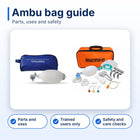
Ambu Bag: Parts, Uses and Safety Guide
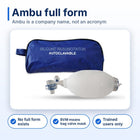
Ambu Full Form: What the Name Means and BVM Basics

Ambulance

Anatomy Models
Anesthesia Machine
You may also need
FOR YOURecommended for you
Save 53%