


Featured ChoiceSave 55%

Save 50%
Save 49%

Save 36%



Save 44%

Save 50%


Save 36%


Save 50%

Physiotherapy Equipment: Machines, Prices, Hand Exercise Tools & Professional Buying Guide
Physiotherapy Equipment: Machines, Prices, Hand Exercise Tools & Professional Buying Guide
Learn about physiotherapy machines, electrotherapy equipment, hand exercise tools, clinic setup needs, home rehabilitation products and physiotherapy machine prices.
Physiotherapy equipment includes machines, exercise tools, treatment furniture and rehabilitation products used to support movement, strength and physical recovery. In practice, physiotherapists use different types of equipment according to the patient’s condition and treatment goal.
However, machines are only one part of physiotherapy. Exercise, movement training, education and hands-on treatment are also important. Therefore, equipment should support the rehabilitation plan rather than replace active therapy.
For example, a clinic may use TENS, IFT, EMS and ultrasound machines. Meanwhile, a home programme may require only resistance bands, a hand exerciser or a pedal exerciser.
In addition, hand rehabilitation often uses simple tools such as grip trainers, finger exercisers and therapy putty. As a result, not every patient needs an advanced machine.
This guide explains the main types of physiotherapy equipment, common physiotherapy machines, hand exercise tools, electrotherapy systems and buying factors. Moreover, it explains how to compare physiotherapy machine price and choose suitable equipment for professional or home use.
Doctors, physiotherapists, clinics and hospitals can also browse physiotherapy equipment on Meddey.
What Is Physiotherapy Equipment?
Physiotherapy equipment refers to tools and machines used during physical rehabilitation. In general, these products help improve movement, mobility, strength and daily function.
Depending on the treatment plan, equipment may support:
- Pain management
- Muscle activation
- Strength training
- Joint movement
- Hand rehabilitation
- Balance training
- Walking practice
- Post-operative recovery
- Sports rehabilitation
- Functional training
Therefore, equipment physiotherapy can include both simple exercise products and advanced medical machines.
Exercise Tools Resistance bands, exercise balls, hand exercisers, balance boards and pedal exercisers.
Clinical Machines TENS, IFT, EMS, ultrasound, traction and combination therapy systems.
For instance, resistance bands may help with strengthening, while an electrotherapy system serves a different purpose. Similarly, balance equipment may be useful during mobility training.
What Equipment Is Used in Physiotherapy?
The exact tools depend on the clinic and patient group. For example, a sports clinic may focus more on exercise equipment, while a rehabilitation centre may use more mobility and balance products.
Likewise, a pain clinic may use electrotherapy machines more often. In contrast, a hand therapy unit may rely heavily on grip and finger exercise tools.
| Category | Examples | Main Use |
|---|---|---|
| Electrotherapy | TENS, IFT, EMS, muscle stimulators | Pain support and muscle stimulation |
| Ultrasound Therapy | 1 MHz and 3 MHz ultrasound machines | Selected therapeutic applications |
| Exercise Equipment | Resistance bands, weights, exercise balls | Strength and mobility training |
| Hand Therapy | Finger exercisers, grip trainers, Theraputty | Grip strength and hand movement |
| Balance Training | Balance boards, wobble boards, foam pads | Balance and coordination work |
| Gait Training | Parallel bars and gait devices | Walking practice |
As a result, a complete physiotherapy setup usually combines both active exercise tools and selected machines.
Which Machine Is Best for Physiotherapy?
There is no single physiotherapy machine that is best for every condition. Instead, the correct machine depends on the treatment goal.
For example, TENS may be selected for pain support. On the other hand, EMS may be used when controlled muscle activation is needed.
Similarly, IFT is commonly used in clinic-based electrotherapy. Meanwhile, therapeutic ultrasound offers a different type of treatment.
Consequently, combination therapy systems may be useful when a clinic genuinely requires more than one mode.
Buying principle: first identify the therapy requirement. Afterwards, compare the machine features, controls, accessories, warranty and service support.
What Is an Electrotherapy Machine?
An electrotherapy machine sends controlled electrical stimulation through electrodes placed on the skin. Different modes are designed for different therapy goals.
For instance, TENS and EMS both use electrical output. However, they are not used in exactly the same way.
| Modality | Main Purpose | Common Setting |
|---|---|---|
| TENS | Pain support | Home or clinic |
| IFT | Selected pain and rehabilitation use | Mainly clinic |
| EMS | Muscle stimulation | Home or clinic |
| Combination Unit | Multiple therapy modes | Clinic or rehabilitation centre |
In addition, some machines provide multiple channels, treatment timers and adjustable settings. Therefore, users should compare the actual functions before purchasing.
Browse Electrotherapy MachinesTENS Machine
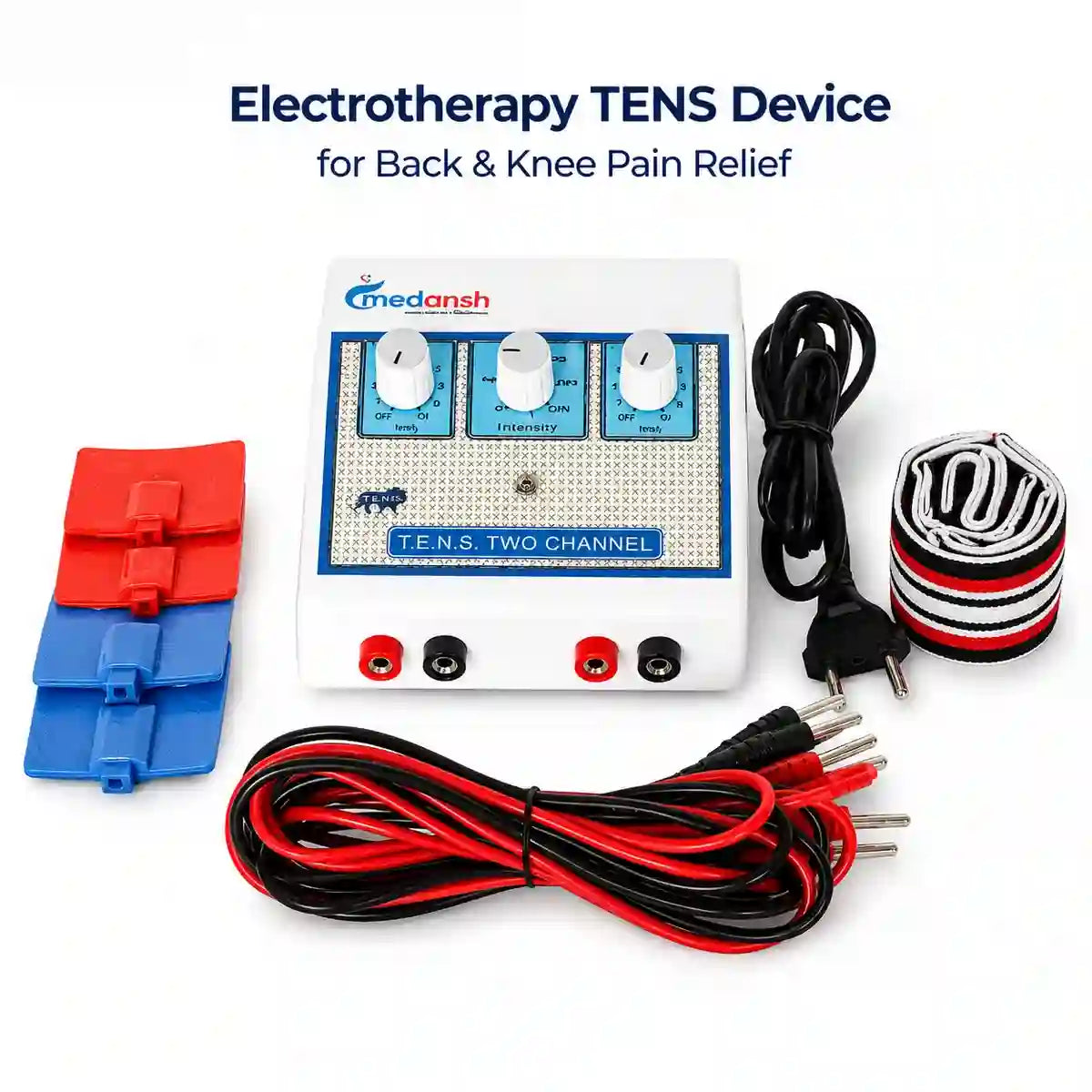
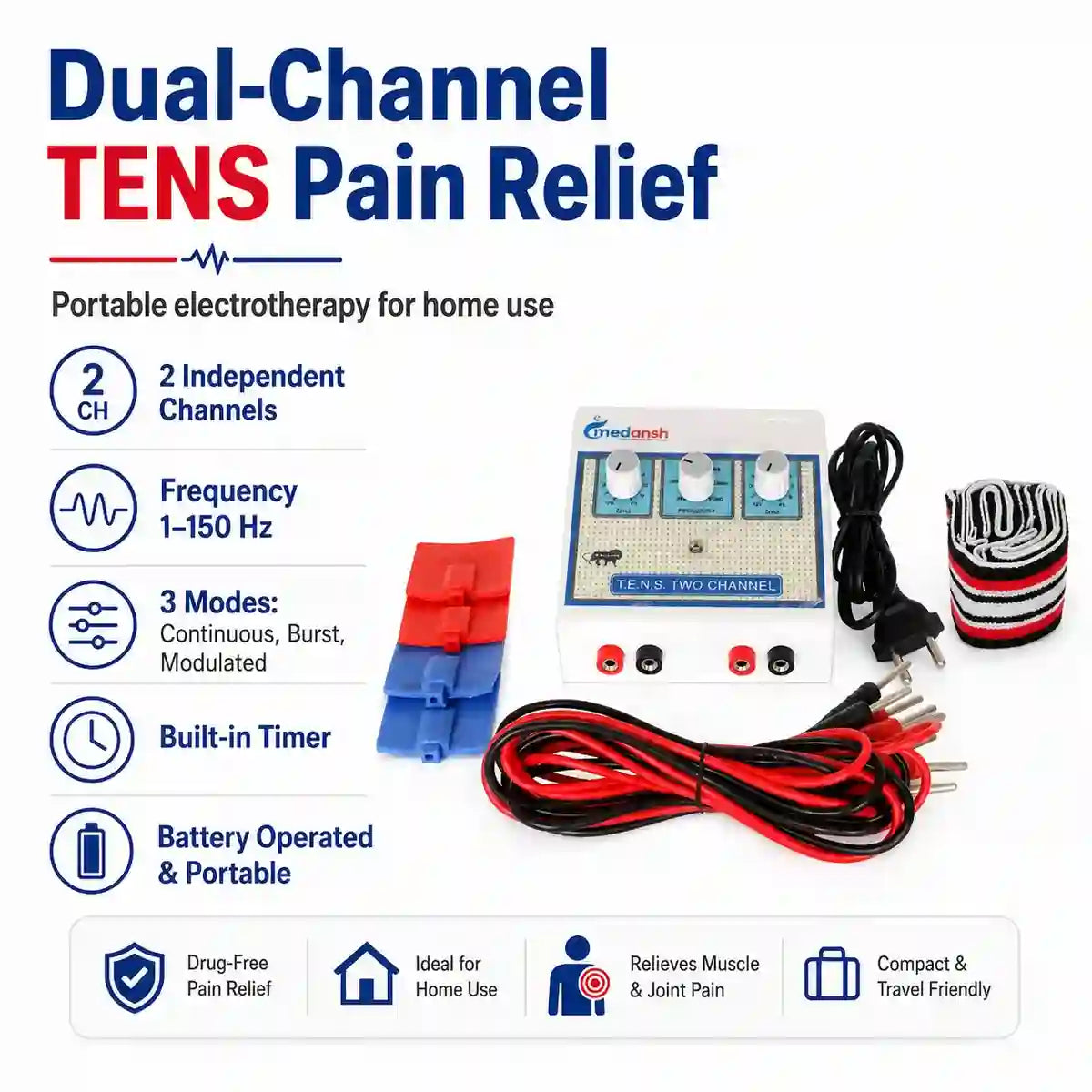
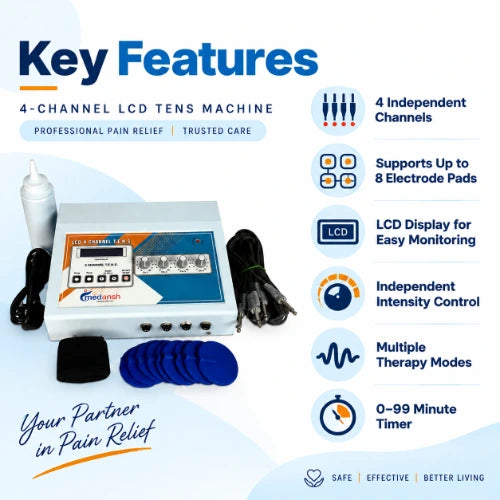
TENS stands for Transcutaneous Electrical Nerve Stimulation. It sends mild electrical pulses through electrode pads placed on the skin.
Because many TENS machines are compact, they may be useful in clinics as well as guided home programmes. Moreover, portable models are often simple to carry and store.
Typical features include:
- Adjustable intensity
- One or more channels
- Electrode pads
- Preset modes
- Portable design
However, TENS may not be suitable for every patient. Therefore, users should follow professional advice and product instructions.
IFT Machine
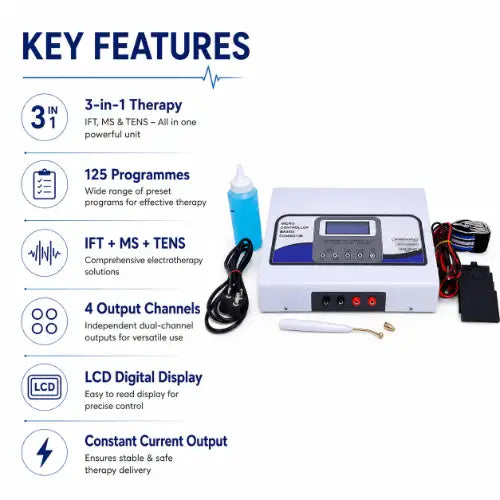
IFT stands for interferential therapy. It uses medium-frequency electrical currents and is commonly found in physiotherapy clinics.
In addition, many IFT machines offer digital controls, treatment timers and different therapy modes. As a result, they may provide more flexibility in clinic use.
Nevertheless, the machine should match the actual services offered by the clinic. Otherwise, extra features may add cost without adding practical value.
EMS and Muscle Stimulator Machines
EMS stands for electrical muscle stimulation. This type of machine is designed to create controlled muscle contractions.
For example, a therapist may use EMS in selected muscle activation programmes. Similarly, it may be considered when muscle re-education forms part of rehabilitation.
However, correct electrode placement and intensity are important. Therefore, professional guidance may be needed.
Therapeutic Ultrasound Machine
Therapeutic ultrasound uses high-frequency sound waves delivered through a treatment probe. Usually, ultrasound gel is placed between the probe and the skin.
Common frequencies include 1 MHz and 3 MHz. In general, the therapist chooses the setting according to treatment depth and clinical need.
1 MHz Ultrasound Often selected when deeper tissue treatment is required.
3 MHz Ultrasound Usually selected for more superficial areas.
Importantly, therapeutic ultrasound is different from diagnostic ultrasound imaging. Therefore, buyers should check that they are purchasing the correct type of machine.
Combination Physiotherapy Machines
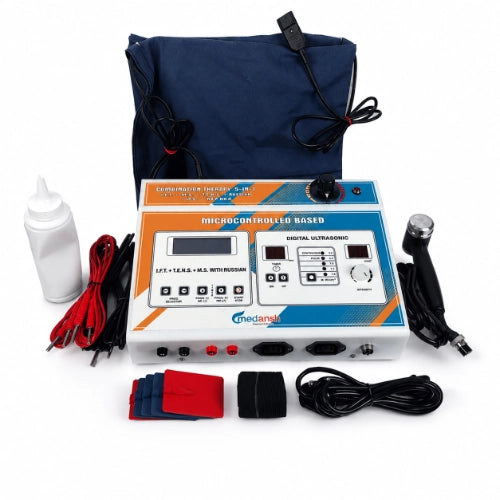
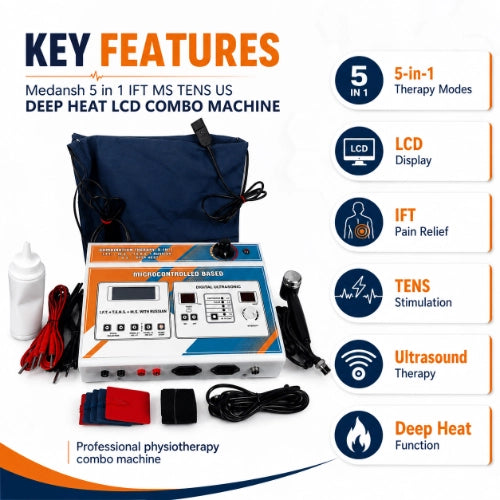
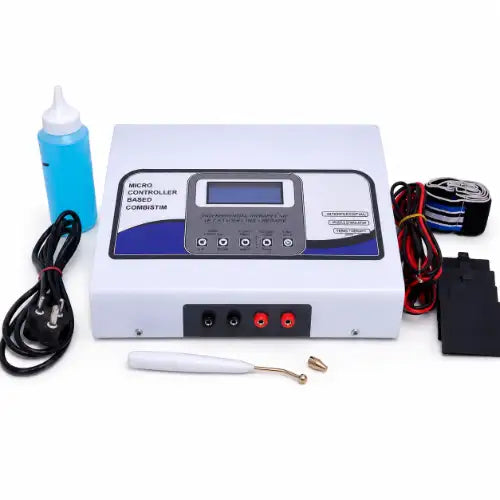
A combination physiotherapy machine includes more than one therapy mode in a single unit. Therefore, it may help save space in a small clinic.
Common combinations include:
- TENS + EMS
- IFT + TENS
- IFT + EMS + TENS
- Ultrasound + TENS
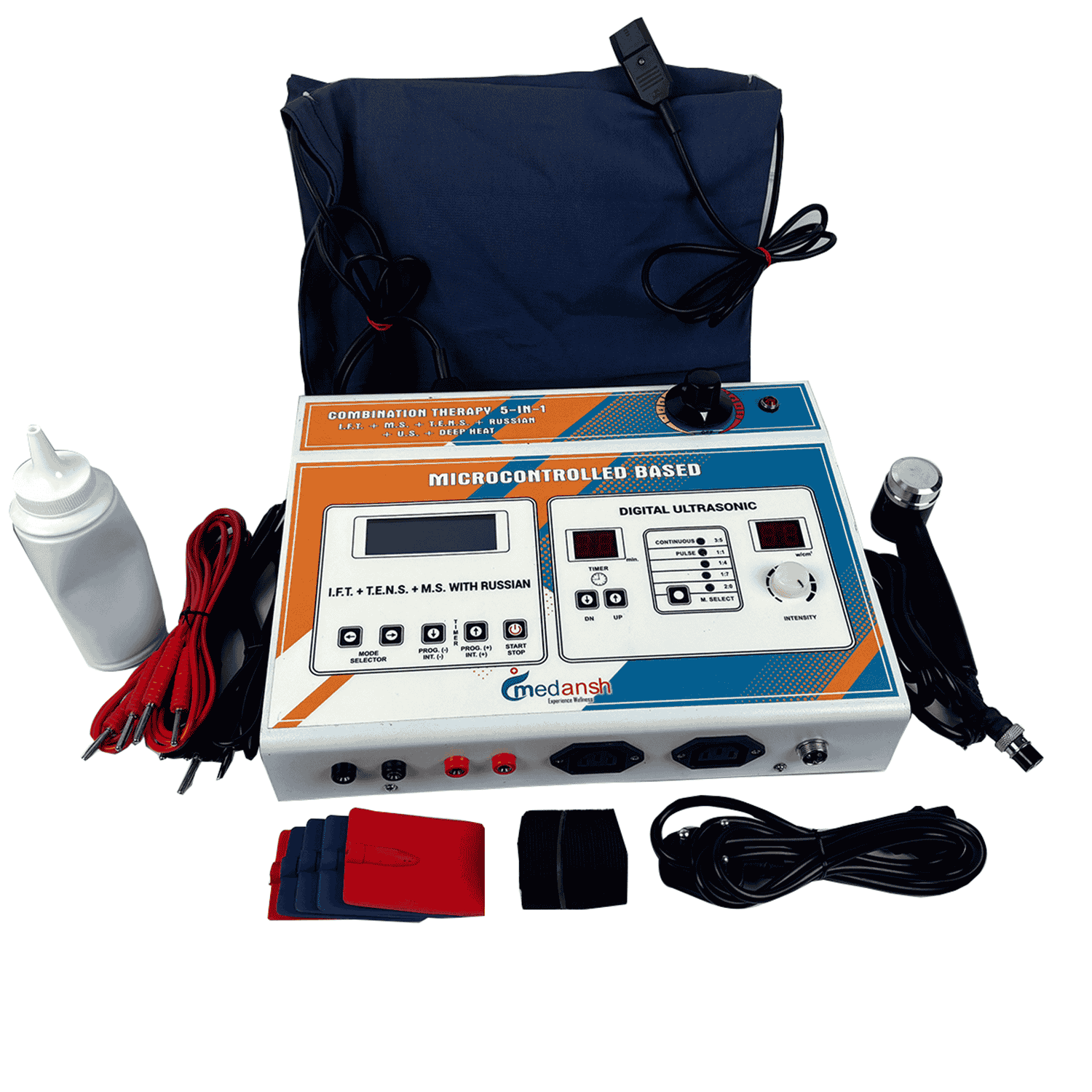
- Ultrasound + multiple electrotherapy modes
However, more functions do not always mean better value. For example, a clinic that mainly uses TENS may not need a 5-in-1 machine.
Consequently, buyers should select a combination unit only when several therapy modes are actually required.
What Equipment Is Used for Hand Exercises?
Hand physiotherapy often uses smaller tools designed for grip, finger movement and hand strength. In many cases, simple hand tools allow repeated active exercise.
Finger Exerciser Useful for finger resistance and repeated strengthening.
Hand Grip Trainer Supports grip-strength exercises.
Theraputty Allows squeezing, pinching and rolling exercises.
Power Web Supports hand, wrist and finger resistance exercises.
Hand Gym Board Combines several hand activities in one setup.
Fine Motor Tools Useful for finger control and hand coordination.
Moreover, resistance can often be increased as the patient improves. As a result, these tools may support progressive rehabilitation.
View Hand & Rehabilitation ToolsWhat Is the Best Hand Exercise Equipment?
The best hand exercise tool depends on the goal. Therefore, there is no single product that is best for every patient.
| Exercise Goal | Equipment to Consider |
|---|---|
| Grip strength | Hand grip trainer |
| Finger strength | Finger exerciser |
| Graded resistance | Theraputty |
| Wrist and hand work | Power Web |
| Multiple tasks | Hand Gym Board |
| Fine motor control | Dexterity tools |
For example, a grip strengthener may be useful for grip work. In contrast, therapy putty allows a wider range of finger movements.
Therefore, the therapist should choose the equipment according to the target movement.
Basic Physiotherapy Exercise Equipment
Simple exercise equipment remains important in physiotherapy. In fact, many rehabilitation programmes depend more on active movement than on machines.
Common items include:
- Resistance bands
- Exercise tubes
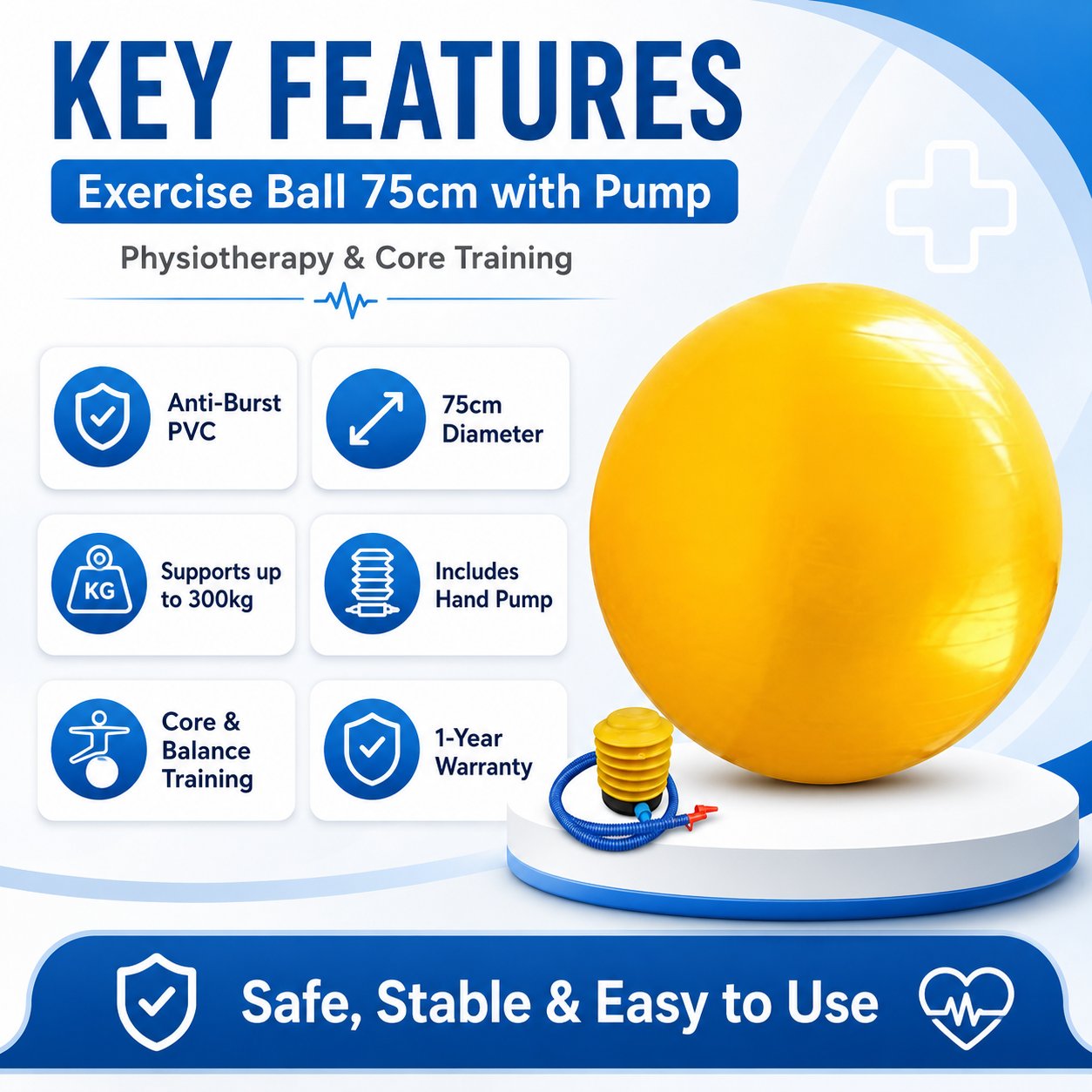
- Exercise balls
- Balance boards
- Pedal exercisers
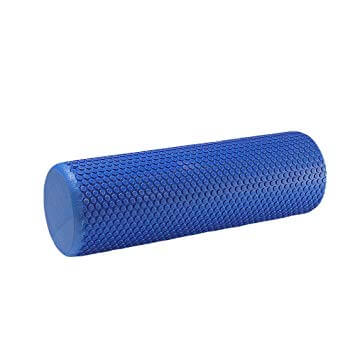
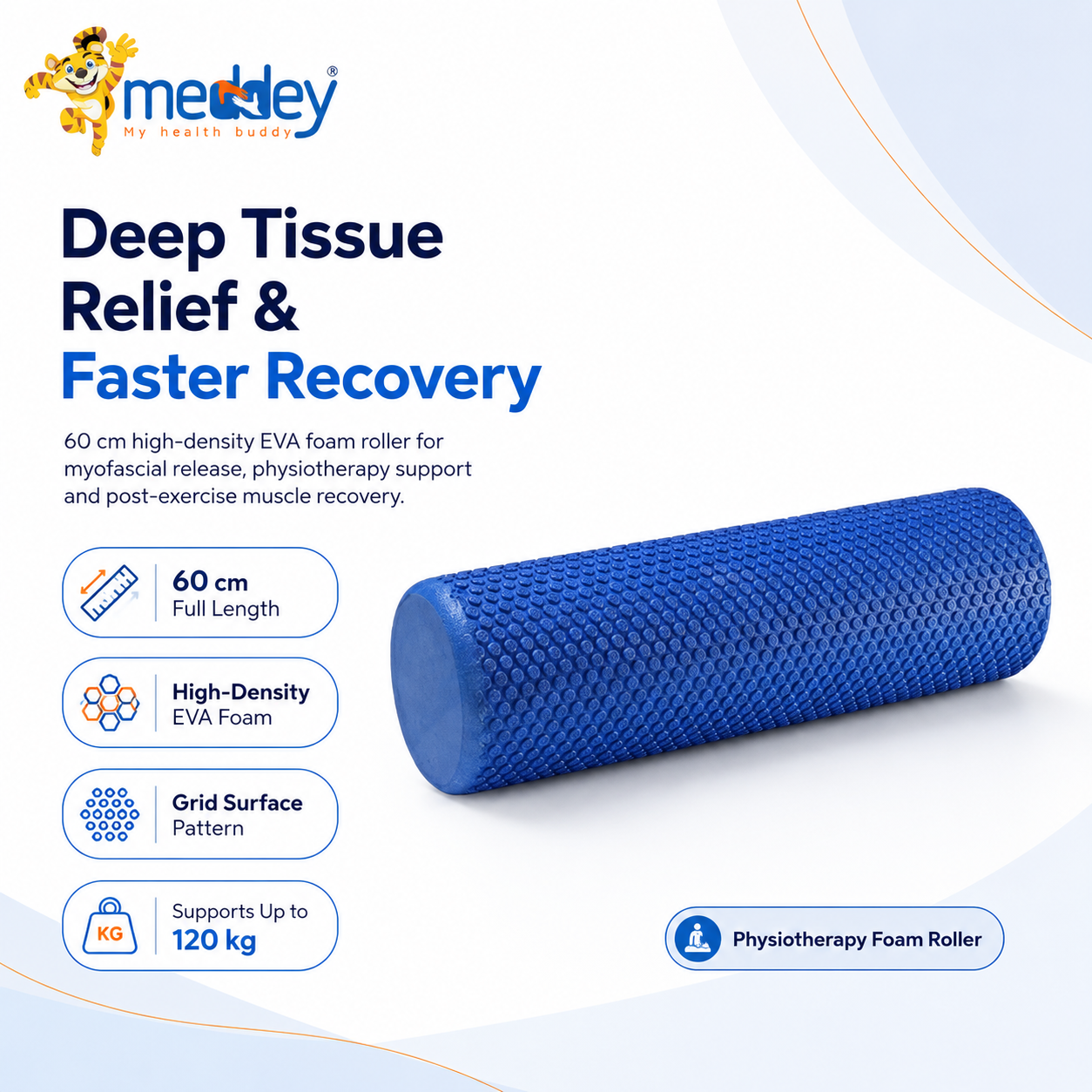
- Foam rollers
- Ankle weights
- Shoulder pulleys
Furthermore, these products are often easy to use in both clinic and home settings. Consequently, they can form an important part of a complete rehabilitation programme.
What Is the Cost of a Physiotherapy Machine?
The cost of a physiotherapy machine depends on the therapy type and product design. Therefore, there is no single price for every machine.
In general, portable TENS and EMS units cost less than large clinic systems. Meanwhile, advanced IFT, ultrasound and combination machines may cost more.
Price can depend on:
- Number of channels
- Therapy modes
- Digital controls
- Preset programmes
- Included accessories
- Build quality
- Warranty
- Brand
- Service support
As a result, buyers should compare the full specification rather than only the initial price.
Physiotherapy Machine Price: What Should You Compare?
When comparing physiotherapy machine price, several factors should be reviewed. First, check the machine type. Next, compare channels, settings and included accessories.
After that, review the build quality and warranty. In addition, consider replacement leads, electrodes or probes.
Finally, check service support. Consequently, buyers get a better understanding of long-term cost.
Important: the lowest price is not always the lowest total cost. Likewise, the most expensive machine is not automatically the best option.
Physiotherapy Equipment for Clinic Setup
A professional clinic usually needs a mix of machines and exercise tools. However, the final setup should match the clinic’s patient group.
Treatment Furniture Treatment couch, therapist stool and mats.
Assessment Tools Goniometer, measuring tape and basic examination tools.
Electrotherapy TENS, IFT, EMS or combination machines.
Exercise Equipment Resistance bands, balls and weights.
Hand Therapy Grip tools, finger exercisers and putty.
Mobility & Balance Parallel bars and balance equipment.
Therefore, a new clinic does not need to buy every machine immediately. Instead, equipment can be added as patient demand grows.
Physiotherapy Equipment for Home Use
Some physiotherapy equipment can also be used at home. However, the home programme should be simple and based on professional guidance.
Common home products include:
- Resistance bands
- Exercise mats
- Pedal exercisers
- Exercise balls
- Hand grip tools
- Theraputty
- Portable TENS devices
On the other hand, large clinic machines may not be suitable for unsupervised home use. Therefore, users should always check the intended use of the product.
How to Choose Physiotherapy Equipment
1. Identify the Treatment Goal
First, decide what the equipment is needed for. For example, pain support and hand strengthening require different tools.
2. Check the Intended Use
Next, confirm whether the machine is designed for home or clinic use.
3. Review Features
Then, compare channels, controls and treatment modes. Moreover, check whether all required accessories are included.
4. Compare Build Quality
Afterwards, review the construction and expected workload. A busy clinic usually needs equipment designed for repeated use.
5. Check Warranty
In addition, review warranty coverage and replacement-part availability.
6. Review Service Support
Finally, check whether technical service is available. As a result, future maintenance becomes easier.
Where Can I Buy Physiotherapy Equipment?
Physiotherapy equipment can be purchased from medical equipment suppliers and healthcare eCommerce platforms. However, buyers should choose a seller that provides clear specifications and support.
Before ordering, check:
- Product specifications
- Warranty details
- Accessories
- Service support
- Return or replacement terms
- Current price
For example, Meddey provides physiotherapy machines, electrotherapy equipment and exercise rehabilitation products for professional and home use.
Browse Physiotherapy Machines Compare Electrotherapy Equipment View Rehabilitation Tools Visit MeddeyFrequently Asked Questions
Where can I buy physiotherapy equipment?
You can buy physiotherapy equipment from medical equipment sellers and specialist healthcare eCommerce stores. Meddey also provides physiotherapy machines and rehabilitation tools online.
What is the cost of a physiotherapy machine?
The price depends on the machine type and features. Portable machines usually cost less, while advanced clinic systems generally cost more.
What equipment is used in physiotherapy?
Common products include TENS, IFT, EMS, ultrasound machines, exercise bands, balance tools, hand exercisers and pedal exercisers.
What equipment is used for hand exercises?
Finger exercisers, grip trainers, Theraputty, Power Web tools and hand exercise boards are commonly used.
Which machine is best for physiotherapy?
No single machine is best for all cases. Therefore, the machine should be chosen according to the treatment goal.
What is the best hand exercise equipment?
The best tool depends on the target movement. For example, grip trainers are useful for grip work, while putty can support several finger exercises.
Can physiotherapy machines be used at home?
Some portable devices can be used at home. However, professional machines may require trained operation.
Is TENS the same as EMS?
No. TENS is mainly used for pain support, while EMS is used for controlled muscle stimulation.
Is ultrasound used in physiotherapy?
Yes. Therapeutic ultrasound is used in selected physiotherapy treatments. However, it is different from diagnostic ultrasound imaging.
Does a higher price mean better quality?
Not always. Therefore, buyers should compare features, build quality, warranty and actual clinical need.
Professional Buying Checklist
- Define the clinical purpose.
- Confirm home or professional use.
- Review therapy type.
- Check channels and controls.
- Compare included accessories.
- Review build quality.
- Check warranty coverage.
- Confirm service support.
- Review replacement costs.
- Compare total value.
In short, equipment should be selected according to need, safety and long-term value.
Conclusion
Physiotherapy equipment includes simple exercise products as well as advanced therapy machines. Therefore, the correct choice depends on the treatment goal and patient needs.
For pain support, TENS or IFT may be considered. Meanwhile, EMS can support selected muscle activation programmes. Similarly, hand therapy may use grip tools, finger exercisers and putty.
In addition, exercise equipment remains important because rehabilitation often depends on active movement. As a result, machines should support exercise rather than replace it.
The physiotherapy machine price varies according to features, construction and intended use. Consequently, buyers should compare warranty, accessories and service support before making a decision.
Ultimately, good physiotherapy equipment should be safe, practical and suitable for the actual rehabilitation goal.
Doctors, physiotherapists, hospitals and rehabilitation centres can compare current physiotherapy equipment on Meddey.
Medical Disclaimer
This article is intended for professional education and general information only. It does not replace an individual medical or physiotherapy assessment. Therefore, physiotherapy machines should be used according to professional guidance and manufacturer instructions.
Explore Medical Collections
All Categories
Abdominal & Maternity Support

Accessories

Accu-Chek Instant Strips: Use, Compatibility, Price & Blood Sugar Testing Guide
Accu-Chek Instant Strips: Uses, Features & Complete Guide

accupuncture

Acupuncture Needles & Supplies

Advanced Physiotherapy Machines & Lumbar Physiotherapy

Airways

Ambulance

Anatomy Models
Anesthesia Machine

Anesthesia Products
Ankle Support for Home Use: Braces, Sleeves & Walker Boots
Ankle Weights & Exercise Weights for Home & Rehab

Anti-Bedsore Air Mattresses
You may also need
FOR YOURecommended for you
Save 55%
Save 50%
Save 49%
Save 36%
Save 44%
Save 50%
Save 36%
Save 50%