


Featured ChoiceSave 47%


Save 48%
Save 30%


Save 39%

Save 46%
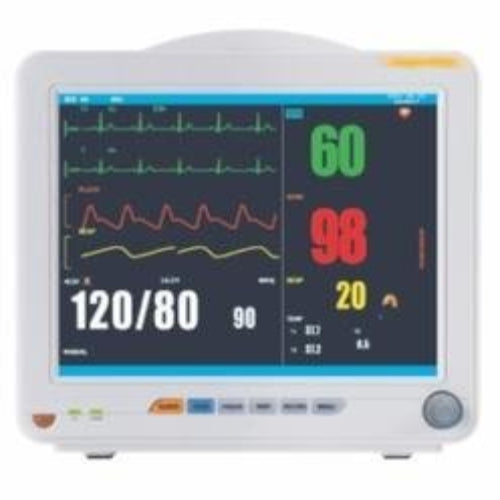

Save 22%
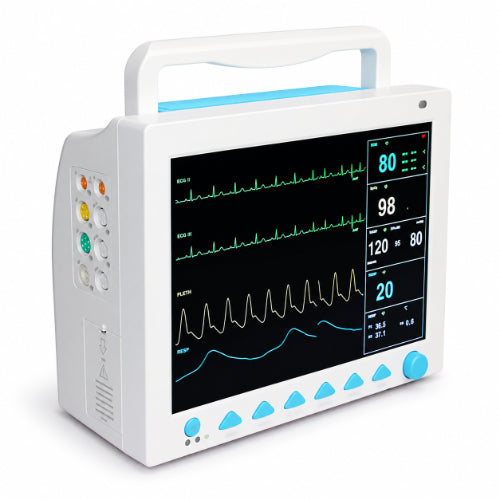
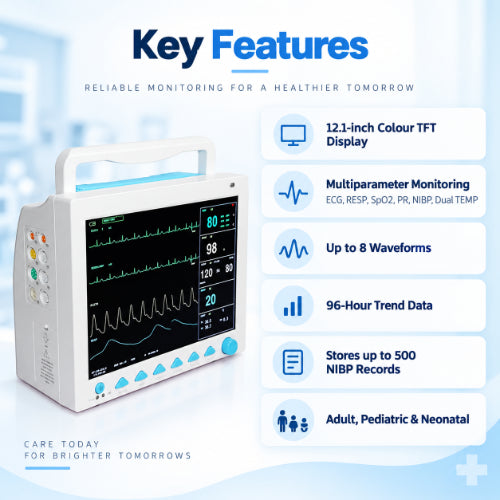


Save 14%
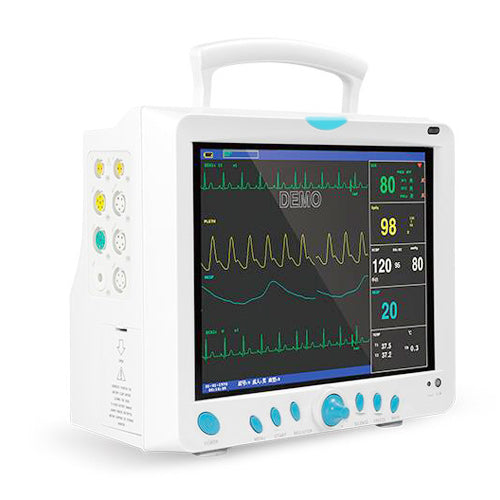

Save 14%

Save 26%

Sold out
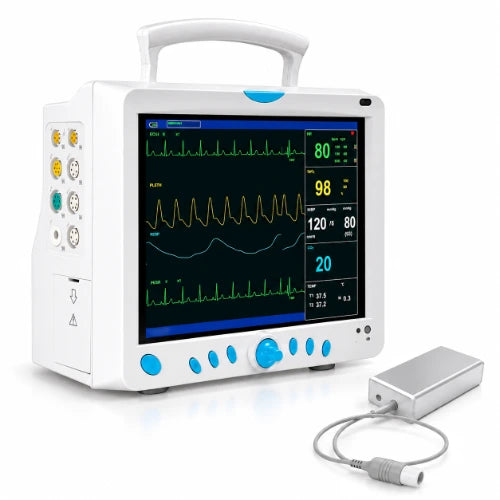
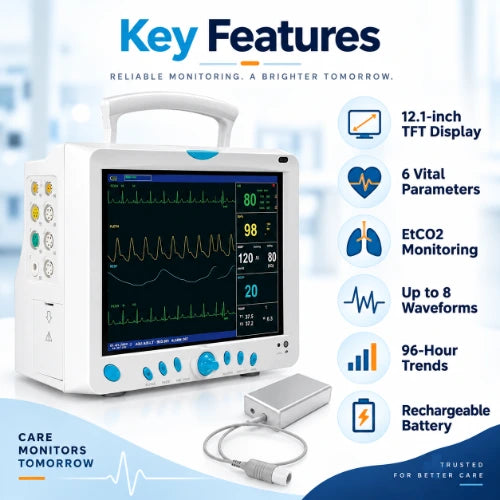


Patient Monitor for Home Use: Types & Parameters
Patient monitor for home use: Types, Parameters & Buying Guide
Patient monitor selection for home care can feel confusing because the same words describe simple vital signs devices, bedside patient monitor units, cardiac monitor systems, and more advanced multiparameter patient monitor models. A patient monitor for home use is meant to help caregivers, home nursing teams, and families keep prescribed vital information visible. It can serve during recovery, chronic illness support, palliative care, or long-term home care. This guide explains the common types, features, parameters, and buying considerations without replacing clinical advice or teaching you to diagnose from readings.
A patient monitor does not replace a doctor or a nurse. Consult your doctor.
Can you use a patient monitor at home?
Yes, you can use a patient monitor at home when it suits the patient’s condition, prescribed care plan, caregiver ability, and follow-up support. In home nursing and long-term care, the goal is not to recreate an ICU environment. The goal is to give caregivers a structured way to observe vital signs that a clinician has decided are useful to track. The right choice depends on what the patient care team needs to track, how often, and who will operate the device. It also depends on whether the patient can tolerate sensors, cuffs, and leads for the required time.

Home use is most practical when the observation need is clear. For example, a patient recovering at home may need periodic blood pressure and oxygen saturation checks. A bedbound patient with complex care needs may require a bedside patient monitor that displays several parameters together. A family caregiver should not buy the most advanced device simply because it looks more “medical.” A simpler vital signs monitor may be easier to use correctly, clean properly, and maintain consistently.
Before choosing a patient monitor for home, confirm the intended use with the treating doctor, nurse, or home care provider. They can tell you which parameters matter, whether continuous observation is necessary, and what symptoms or situations should trigger a call for help. The device is a support tool; the patient care plan is still the foundation.
Why a patient monitor matters in long-term home care
A patient monitor helps bring order to daily observation. In long-term home care, many tasks repeat: medication timing, repositioning, nutrition, hydration, wound care, therapy exercises, and vital sign checks. When the patient has ongoing cardiac, respiratory, neurological, or mobility issues, visible tracking can help the care team notice changes worth documenting and sharing with clinicians.
The value is especially practical for families coordinating with visiting nurses. Instead of depending only on memory, caregivers can keep written logs from scheduled checks and share them during reviews. This can make conversations more specific: when the caregiver took the reading, what the patient was doing, whether they were resting, and whether symptoms were present. The patient monitor does not provide the full clinical story, but it can support better communication.
There is also a reassurance factor. Many families feel more confident when they can see that a device is tracking the parameters recommended by a clinician. That said, reassurance should not become overdependence. A patient may look unwell even if a number seems acceptable, and a patient may have a temporary reading that needs context. The safest approach is to follow the patient care plan, keep emergency contacts visible, and use the device as one part of observation.
What is a multiparameter monitor?
A multiparameter monitor is a patient monitor designed to display more than one vital parameter on the same screen. Examples include ECG, SpO2, NIBP, pulse rate, temperature, and sometimes respiration or EtCO2 depending on the model. In home care, a multiparameter patient monitor usually fits when the patient has several observation needs at once. Caregivers need a single bedside patient monitor instead of separate devices. It can reduce clutter, make scheduled checks more organized, and support long-term documentation.

The word “multiparameter” does not mean every model measures the same things. A 3 para patient monitor, 5 para patient monitor, and advanced unit with capnography can all count as multiparameter in everyday language, but their capabilities differ. Always confirm the exact included parameters and accessories before buying.

A typical home care discussion may include these categories:
- ECG or cardiac monitoring: Used when the care plan includes heart rhythm observation through electrodes and leads.
- SpO2 monitoring: Used to display oxygen saturation and pulse-related information through a finger or reusable sensor.
- NIBP monitoring: Used for non-invasive blood pressure checks with a cuff.
- Temperature monitoring: Used when temperature tracking is part of the patient care routine.
- Respiration-related monitoring: Available on some models, with EtCO2 included only on specific models designed for that function.
If a clinician only asks for occasional blood pressure checks, a full multiparameter monitor may be more than necessary. If the patient needs several measurements at the bedside, a combined patient monitor for home may be more convenient than juggling separate units.
Common patient monitor types for home use
Patient monitor options for home care range from compact vital signs devices to larger bedside monitor systems. The right type depends on the patient’s needs, not on the most impressive screen or the longest feature list. Families should think in terms of daily workflow: where the unit will sit and who will attach the sensors. Also consider how the team will record readings and how often checks will disturb the patient.
Vital signs monitor
Caregivers often use a vital signs monitor for routine checks such as blood pressure, pulse, oxygen saturation, and temperature depending on the model. It is useful for home nursing visits, chronic care routines, and situations where intermittent checks are enough. It may be more approachable for caregivers who do not need ECG leads or continuous display.

This category works well when the patient care plan is simple and scheduled. For example, a caregiver may check vitals in the morning, before medication, after exertion, or as directed by a nurse. The benefit is simplicity: fewer accessories, faster setup, and less visual complexity.
Bedside monitor
A bedside patient monitor sits near the patient and displays selected parameters on a screen. In home care, it may suit a patient who spends a lot of time in bed, needs closer observation, or has the support of trained caregivers. A bedside patient monitor can reduce the need to move multiple devices around the room.

For long-term home care, pay attention to comfort and cable management. Leads, cuffs, and sensors should not interfere with repositioning, sleep, hygiene care, or safe transfers. The patient monitor should be easy to view without creating a tripping hazard or cluttering the bedside area.
ECG monitor and cardiac monitor
An ECG monitor or cardiac monitor focuses on electrical activity of the heart through leads and electrodes. In a home setting, use it only when the patient care plan supports it and caregivers understand the practical responsibilities. Examples include placing electrodes as a clinician instructs, skin care, and device maintenance. The screen can display heart-related information, but it is not a substitute for professional review.

Families often ask for ECG features because the word feels reassuring. The better question is whether ECG tracking is actually needed at home and whether someone is available to manage it properly. If not, a simpler device may be safer and more realistic.
NIBP monitor
A NIBP monitor measures non-invasive blood pressure using a cuff. In home care, NIBP may be part of a vital signs device or included in a multiparameter patient monitor. This function is common because blood pressure tracking is part of many care plans.

The practical details matter. Cuff size, patient arm condition, movement, posture, and timing can all affect whether a measurement is usable for recordkeeping. Caregivers should follow the clinician’s instructions and the device manual rather than improvising.
SpO2 monitor as part of a patient monitor
A patient monitor often includes SpO2 monitoring through a sensor on a finger or another approved site. It can be helpful when oxygen saturation is part of the patient’s care plan, especially in respiratory conditions or recovery periods. In this article, SpO2 appears as a parameter within a broader patient monitor, not as a separate product focus.

Comfort and sensor fit are important for longer home care routines. Poor placement, cold hands, movement, or weak perfusion can make readings less reliable. If a caregiver notices repeated difficulty getting stable information, raise it with the patient care team.
ICU monitor as background only
An ICU monitor suits intensive hospital environments, where trained staff continuously observe patients and respond to alarms. Home care usually has a different goal: practical support for prescribed observation in a non-hospital setting. Some home bedside patient monitors may resemble hospital equipment, but the staffing, response process, and clinical context are very different.
For that reason, families should avoid choosing a home device simply because the label says ICU-style or hospital-grade. What matters is whether it matches the patient’s home care plan, caregiver skill level, and daily living environment.
3 para monitor and 5 para monitor basics
The phrase “para” commonly works as shorthand for the number of parameters or tracked functions linked to a patient monitor configuration. In home care shopping, you may see terms like 3 para monitor, 5 para patient monitor, or 5-parameter monitor. These labels are helpful, but they are not always enough on their own because manufacturers and sellers may bundle parameters differently.
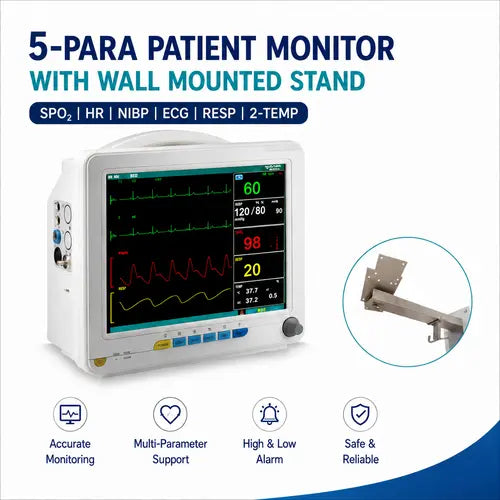
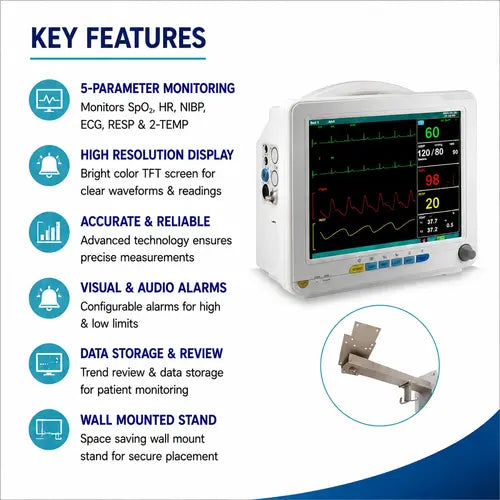
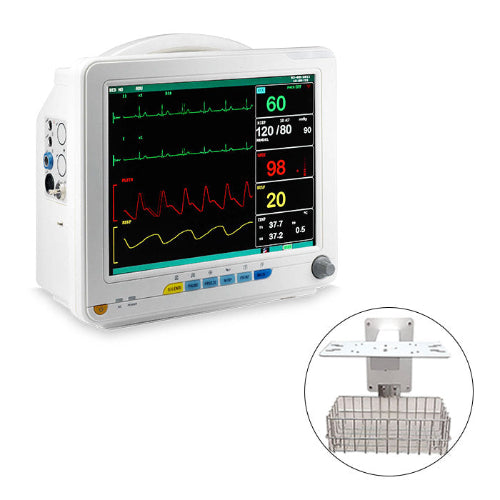
A 3 Para Bedside patient monitor may be suitable for basic bedside observation when you need only a smaller set of core parameters. A 5 para patient monitor or CMS6000 5-parameter style device may fit when the care plan calls for more combined observation. The key is not the number in the name; it is the exact measurements the unit supports and whether the package includes the accessories.
Practical comparison for home caregivers
| Monitor type | Typical home care fit | What to check before buying |
|---|---|---|
| 3 para monitor | Basic bedside observation when limited parameters are needed | Which three parameters are included, sensor types, screen readability, and caregiver training needs |
| 5 para monitor | Broader monitoring for patients with multiple prescribed observation needs | Included parameters, lead configuration, NIBP cuff sizes, SpO2 sensor, temperature support, and recordkeeping workflow |
| Multiparameter monitor with EtCO2 | More specialized use when respiration-related monitoring is specifically required | Whether EtCO2 is prescribed, accessory compatibility, caregiver capability, and clinical follow-up plan |
| Simple home BP and ECG option | Intermittent home checks for selected patients | Whether it meets the doctor’s purpose, ease of use, data sharing, and limitations compared with a bedside monitor |
This table is only a buying orientation, not a clinical recommendation. A monitor with more parameters is not automatically better. More sensors also mean more setup, more maintenance, more chances for discomfort, and more data that needs clinical context.


What is the difference between a 3 para and a 5 para monitor?
The difference between a 3 para and a 5 para monitor is usually the number and range of parameters the unit can display. A 5 para patient monitor generally supports broader observation than a 3 para patient monitor. For home care, base the decision on the patient’s prescribed observation needs and the caregiver’s ability to use the equipment consistently. If the patient care plan only calls for a few routine measurements, a 3 para monitor may be enough. If several vital signs need to appear together, a 5 para patient monitor may be more suitable.
A 3 para patient monitor may be easier to manage in a quieter home environment. It can reduce accessory clutter and may be less intimidating for a family caregiver. However, it can also be limiting if the patient later needs additional tracking.

A 5 para monitor can bring more information together on one bedside patient monitor. That can be helpful for home nursing, long-term bed care, and patients with complex observation needs. The tradeoff is that it may require more setup time, more accessories, and clearer instructions for cleaning, storage, and documentation.
When comparing models, avoid relying only on the phrase “3 para” or “5 para.” Ask what each parameter is, what comes in the box, what consumables you may need, and whether the device suits the room.
What does a patient monitor show?
A patient monitor shows selected vital signs and physiological measurements that the specific device supports. Examples include heart-related information, oxygen saturation, pulse rate, non-invasive blood pressure, temperature, and respiration-related values on certain models. The display is meant to support observation and documentation, not to replace a trained clinician’s assessment. For home caregivers, the safest role of the screen is to show the parameters the patient’s doctor has requested and to support timely communication when something changes.
Many people also ask, “what do the numbers on a patient monitor mean?” The broad answer is that the numbers correspond to the parameters the device tracks. Their significance depends on the patient, medical condition, medication, activity level, and clinical instructions. This guide does not provide interpretation instructions because home caregivers should not diagnose or adjust care based only on a screen.
Similarly, “how do you read a patient monitor?” is a question best answered by the care team for the specific patient and device. A nurse or clinician can explain which displayed items to record, how often, and when to call for help. Families should keep the patient monitor manual and the patient care plan together so everyone follows the same process.
Key parameters and what they are used for in home care
Understanding the names of parameters can make shopping easier, even if interpretation remains a clinical task. When reviewing a patient monitor for home use, look for the parameters your care plan actually mentions. Do not assume that every patient monitor includes every feature or that every accessory comes as standard.
ECG
ECG tracks the heart’s electrical activity through leads and electrodes. In a home care setting, ECG tracking may help when a doctor or nurse has a specific reason to include it. The practical caregiver responsibilities can include placing electrodes as instructed, checking skin condition, and making sure wires do not interfere with movement or sleep.
An ecg feature can be useful, but it adds complexity. Electrodes can loosen, skin can become irritated, and cables can pull loose during repositioning. Discuss long-term use with the patient care team so the setup remains safe and comfortable.
NIBP
NIBP stands for non-invasive blood pressure. It uses a cuff to measure blood pressure without an arterial line, which is why it is common in home and bedside monitor equipment. Many families search “what is NIBP?” because the abbreviation appears on device screens and product descriptions.

For buying purposes, check cuff sizes, replacement cuff availability, and whether the device supports the patient’s arm size and care situation. If the patient has fragile skin, swelling, restricted limbs, or medical devices in place, ask a clinician which arm or site to use.
SpO2
SpO2 refers to oxygen saturation tracking through a sensor. In a multiparameter patient monitor, it often appears alongside pulse information. It is a common parameter in home care when respiratory status is part of the observation plan.
The sensor should fit comfortably and be suitable for the patient’s condition. If a patient has tremors, cold fingers, poor circulation, or frequent movement, discuss sensor options with a professional. A patient monitor is only useful when it can collect information reliably enough for the intended care routine.
Temperature
Some patient monitor systems include temperature tracking. It can be helpful in recovery care, infection observation, and long-term nursing routines where temperature is part of daily records. Confirm whether the unit includes temperature capability and whether the probe type fits the intended use.

Temperature may seem simple, but consistency matters. Caregivers should use the method recommended by the care team and document readings in the same way each time. Switching between different devices and methods can make records harder to compare.
Respiration and EtCO2
Some patient monitor models include respiration tracking, and certain devices add EtCO2 capability. EtCO2 is a more specialized feature, so do not buy it casually for home use unless professional guidance specifically requires it. A model such as Flight 9000 with EtCO2 may be relevant when that function is part of the prescribed observation plan.
Because EtCO2 involves additional accessories and clinical context, caregivers should confirm how they will use, maintain, and review it. If no clinician has requested it, a simpler multiparameter monitor may be more appropriate.
Patient monitor products commonly considered for home care
Several patient monitor models may appear during home care research. Product names can help narrow the search, but always verify specifications, included accessories, warranty terms, and availability before purchase. The following examples appear as options to discuss with a supplier or care professional, not as automatic recommendations.
Buyers looking for a bedside-style patient monitor with multiparameter capability often consider the Contec CMS8000. For home nursing, the main questions are whether the included functions match the care plan and whether the screen, alarms, accessories, and documentation process are manageable in the home.
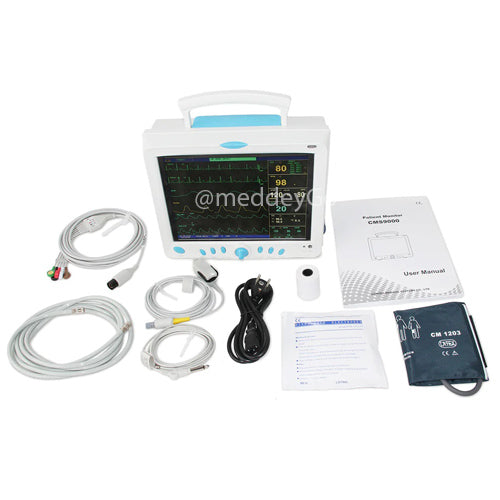
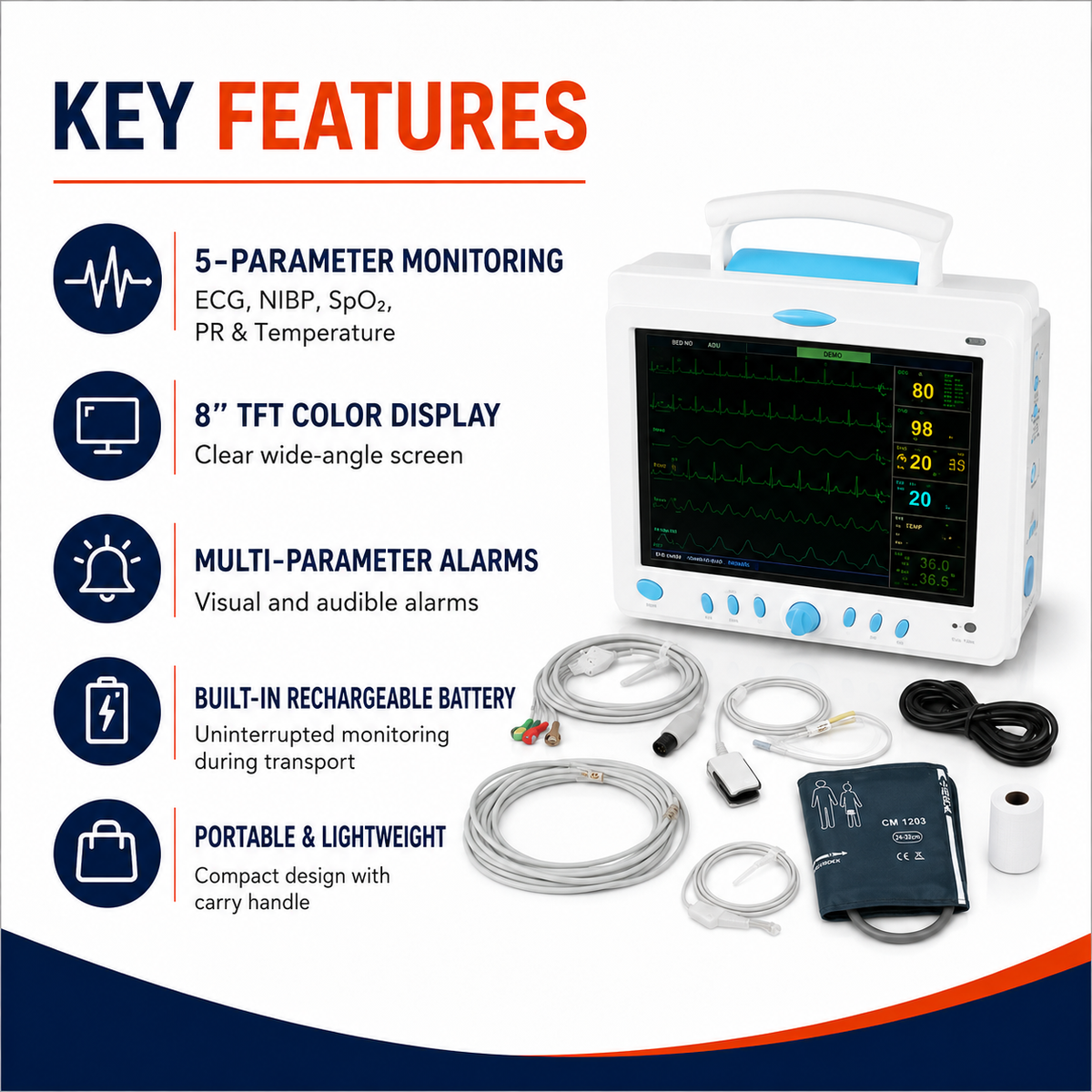
Families looking specifically for a 5 para patient monitor setup may review the CMS9000 5 para. Before choosing it, confirm the exact parameters, included leads, cuff sizes, sensor accessories, and replacement part availability. A 5 para label is useful, but the actual package contents matter more.
The CMS6000 5-parameter monitor is another model name that may come up when comparing multiparameter patient monitor options. It may appeal to caregivers who want several core measurements in one unit. As with any home device, check usability, cleaning requirements, and support options before deciding.
Specialized patient monitor options
The Flight 9000 with EtCO2 may be relevant for specialized tracking needs when a clinician specifically requests EtCO2. Treat it as a more advanced option rather than a default home purchase. Caregivers should make sure they understand the accessory requirements and follow professional guidance.
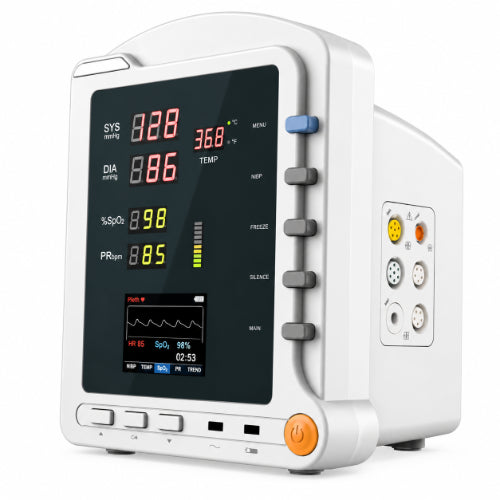
The 3 Para Bedside patient monitor may fit situations where a simpler bedside patient monitor is enough. It can be a practical choice when the patient care plan does not require a wider parameter set. Confirm what the three parameters are and whether they align with the patient’s needs.
For a more compact home option, the Omron HEM-7530T BP monitor with ECG may fit when the patient care plan supports intermittent home blood pressure and ECG-related checks. It fits these checks rather than continuous bedside observation. It is not the same category as a full multiparameter bedside patient monitor, so compare it based on the intended use.
Contec and Bistos fetal monitors may exist as separate product categories, but they are outside the main focus of this home patient monitor buying guide.
Patient monitor buying checklist for home nursing
A good purchase begins with the patient’s care plan, not the product catalog. Home caregivers often feel pressured to buy quickly after a discharge or change in condition, but a short checklist can prevent a mismatch. Use the following points to organize the conversation with the doctor, nurse, supplier, or home care agency.

- Required parameters: List exactly what the patient care team needs to track, such as NIBP, SpO2, ECG, temperature, or another prescribed parameter.
- Monitoring pattern: Confirm whether the patient needs continuous display, scheduled checks, or occasional spot checks.
- Caregiver skill level: Be honest about who will use the device, especially overnight, during bathing routines, or when the patient is restless.
- Patient comfort: Consider skin sensitivity, mobility, sleep, anxiety, arm size, finger circulation, and tolerance for sensors.
- Display readability: Choose a screen the caregiver can read clearly from the usual position without crowding the bedside.
- Power needs: Check battery support, charging routine, plug location, and what happens during a power interruption.
- Accessories: Confirm cuffs, sensors, ECG leads, temperature probes, cables, and replacement parts.
- Cleaning and infection control: Make sure you can clean surfaces and reusable accessories according to instructions.
- Data and records: Decide whether caregivers will write readings manually, use device memory, or share records through another method.
- Support and servicing: Ask about warranty, calibration or servicing needs, technical support, and return conditions.
This checklist is especially important for long-term home care because small annoyances become major problems over time. A cuff that is hard to apply, a screen that is difficult to read, or cables that tangle with bed rails can reduce consistency. The best patient monitor for home is the one that fits the patient care routine safely and reliably.
Patient monitor price and value considerations
Patient monitor price can vary widely because devices differ in parameters, screen size, accessories, build, data features, support, and specialization. A basic vital signs unit usually serves a different purpose than a 5 para patient monitor or a multiparameter monitor with EtCO2. Comparing only the headline price can lead to buying a unit that lacks needed accessories or includes features the home caregiver will never use.
Think in terms of total ownership rather than purchase price alone. Replacement cuffs, sensors, leads, electrodes, probes, batteries, and service needs may affect long-term cost. If you use a patient monitor daily, accessory availability and support can matter as much as the device itself.
Also consider the cost of confusion. A complex unit that no one feels comfortable using may produce inconsistent records and unnecessary stress. In many homes, a simpler device that matches the care plan is a better value than a more advanced unit that is difficult to manage.
When comparing patient monitor price, ask suppliers clear questions:
- What parameters does this configuration include?
- Which accessories come with the unit?
- Which accessories are reusable and which need replacement?
- Are different cuff sizes available?
- Is technical support available for home users?
- Are manuals and setup guidance included?
- What warranty or service process applies?
- Can you return the device if it is unsuitable or incomplete?
These questions help you compare real value instead of guessing from product names. If the patient has a home nursing provider, ask whether they are familiar with the model you are considering.
Comfort, safety, and daily use at home
Home care is different from a clinical ward because the patient is living in the space, not just receiving procedures there. A patient monitor must fit around sleep, meals, personal care, visitors, therapy, and family routines. The device should support care without making the room feel unsafe or overwhelming.
Place the patient monitor where it is visible but protected from spills, pulling, and falls. Keep cables routed away from walking paths, wheelchair movement, commodes, and transfer areas. If the patient uses a hospital-style bed at home, make sure cords do not catch during height adjustments or side rail movement.

Skin care is another practical issue. ECG electrodes, cuffs, and sensors can irritate fragile skin if used often or incorrectly. Caregivers should follow professional instructions for placement, rotation, cleaning, and when to report redness or discomfort.
Noise and light also matter. Some devices have bright displays or audible alerts that may disturb rest. Do not change alarm behavior without professional guidance; instead, discuss concerns with the care team and choose a patient monitor suited to the home environment from the start.
How long can a patient monitor stay connected?
How long a patient monitor can stay connected depends on the patient care plan, device design, sensor type, patient comfort, skin condition, and whether a doctor has prescribed continuous observation. Some patients may only need short scheduled checks, while others may have a bedside patient monitor connected for longer periods under caregiver supervision. The safe duration should come from the clinician’s instructions and the device manual, not from a general rule.
For long-term home care, the issue is not only whether the device can remain connected technically. It is also whether the patient’s skin tolerates electrodes or sensors, and whether caregivers use cuffs appropriately. Safety also depends on whether cables create hazards and whether caregivers are available to respond according to the patient care plan. Review comfort and safety regularly.
If the patient becomes agitated, develops skin irritation, or repeatedly pulls at sensors, the setup may need adjustment. Ask the patient’s nurse or doctor whether a different sensor type, schedule, or tracking approach would be more suitable. Continuous display only helps if you can maintain it safely.
Documentation makes monitoring more useful
A patient monitor becomes more valuable when caregivers record the information in a consistent way. Home caregivers should ask the patient care team what to record, how often, and in what format. A simple notebook, printed chart, or approved digital log may be enough if everyone uses it consistently.
Good documentation includes context. Note the time, patient position if requested, activity before the check, symptoms, medication timing if relevant, and any difficulty using the sensor or cuff. This context helps clinicians understand whether the caregiver took a reading during rest, after movement, during discomfort, or during routine care.
Avoid turning logs into a source of anxiety. The purpose is to support communication, not to make family members feel they must make clinical judgments alone. If something worries you, contact the care team using the instructions they provided.
Simple home monitoring log structure
- Date and time: Keep entries in order.
- Reason for check: Routine, after activity, before medication, or as directed.
- Displayed parameters: Record only what the patient care team requested.
- Patient condition: Resting, sleeping, short of breath, in pain, dizzy, alert, or other relevant observation.
- Caregiver note: Include sensor issues, movement, coughing, poor cuff fit, or anything that may affect the usefulness of the entry.
- Action taken: Called nurse, repeated as instructed, continued observation, or followed the care plan.
This structure keeps records practical. It also helps different caregivers follow the same process during shift changes or family handoffs.
Common mistakes when choosing a patient monitor for home
Many home setup problems begin before the device arrives. Families may buy too much equipment, choose a unit based on a hospital experience, or assume that all models with similar names have the same functions. Taking time to avoid common mistakes can save money and reduce stress.

One common mistake is buying a device without confirming the required parameters. A caregiver may purchase a cardiac unit when the patient care plan only asks for periodic vital signs checks. Another caregiver may buy a simple device when the patient actually needs a broader bedside monitor. Always start with the clinical purpose.
Another mistake is overlooking accessories. A patient monitor may appear affordable, but if it lacks the correct cuff size, ECG leads, SpO2 sensor, temperature probe, or replacement parts, it may not be ready for use. Ask exactly what the package includes.
A third mistake is ignoring the home environment. A unit that works well in a clinic may be awkward in a crowded bedroom, near pets, around children, or beside a patient who needs frequent transfers. The device should fit the room and the caregiving routine.
Finally, some caregivers expect the device to answer clinical questions on its own. It cannot. The safest plan is to use the patient monitor as directed, document observations, and contact professionals when the patient care plan says to do so.
Choosing between simple and advanced monitoring
The best patient monitor for home is not always the most advanced one. Home care success depends on consistency, comfort, and clear communication. A simple vital signs unit may be enough for a stable patient with scheduled checks. A multiparameter patient monitor may be better for a patient with complex needs and trained support.
Use this decision path as a starting point:
- Confirm the patient care goal. Ask what the patient monitor is supposed to support: routine checks, post-discharge observation, long-term nursing, cardiac monitoring, or more specialized tracking.
- List required parameters. Match the device to the care plan instead of choosing by product name alone.
- Decide on checking frequency. Continuous observation, scheduled checks, and occasional spot checks lead to different equipment choices.
- Assess caregiver capacity. Choose a device that the actual caregiver can use correctly at 2 p.m. and at 2 a.m.
- Review patient tolerance. Consider skin, anxiety, movement, sleep, and comfort.
- Compare support and accessories. A patient monitor is only practical if parts and help are available.
- Plan documentation. Decide how you will record and share information before the device becomes part of daily care.
If the answers are unclear, pause before buying. A brief conversation with the doctor, nurse, or home care agency can prevent an expensive mismatch.
Final takeaway on patient monitor selection for home care
A patient monitor for home use can be a helpful part of long-term care when it matches a real clinical need, fits the room, and caregivers can use it consistently. Whether you are comparing a 3 para patient monitor, 5 para monitor, multiparameter monitor, ecg monitor, nibp monitor, vital signs monitor, cardiac monitor, or bedside patient monitor, the best choice is the one that supports the prescribed care plan without adding unnecessary complexity.
Focus on required parameters, patient comfort, caregiver confidence, accessory availability, and long-term support. Ask clear questions about patient monitor price, included parts, and daily workflow before purchasing. Most importantly, keep the patient monitor in its proper role: a useful home care tool that supports observation, documentation, and communication with the professionals guiding the patient’s care.
Explore Medical Collections
All Categories
Abdominal & Maternity Support

Accessories

Accu-Chek Instant Strips: Use, Compatibility, Price & Blood Sugar Testing Guide
Accu-Chek Instant Strips: Uses, Features & Complete Guide

accupuncture

Acupuncture Needles & Supplies

Advanced Physiotherapy Machines & Lumbar Physiotherapy

Airways

Ambulance

Anatomy Models
Anesthesia Machine

Anesthesia Products

Ankle Support for Home Use: Braces, Sleeves & Walker Boots

Ankle Weights & Exercise Weights for Home & Rehab

Anti-Bedsore Air Mattresses
You may also need
FOR YOURecommended for you
Save 47%
Save 48%
Save 30%
Save 26%
Save 39%
Save 46%
Save 22%
Save 14%
Save 14%