


Featured ChoiceSave 50%

Save 50%
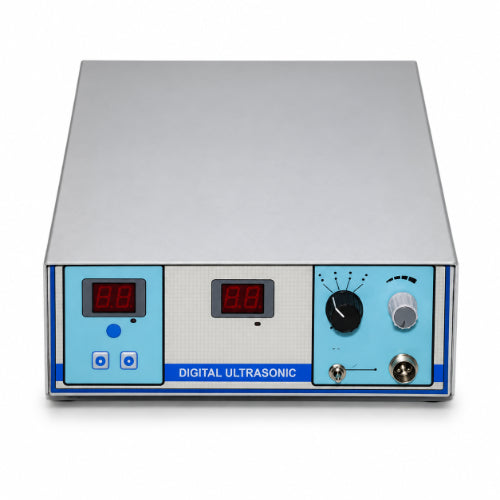

Save 53%
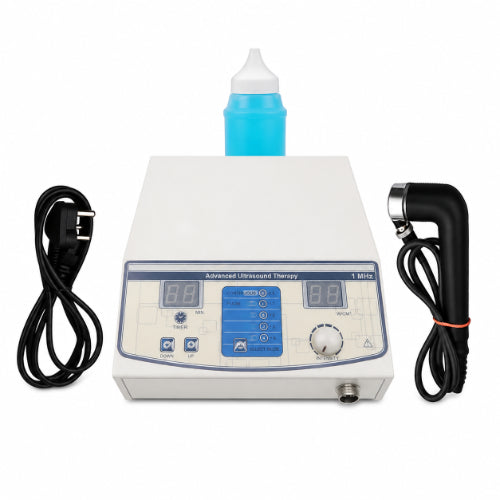
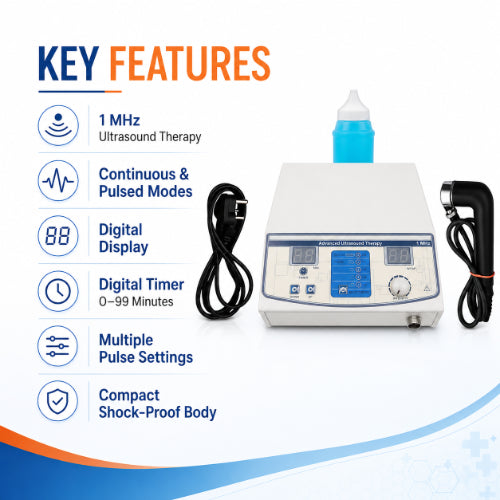

Save 20%

Save 46%

Save 57%

What customers say
★★★★★ 5.0 · 4 reviews
 Ultrasound Gel, 250 ml (Pack of 10)
“Very nice and on time delivered”
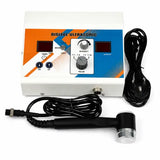 Medansh Portable Digital Ultrasonic Therapy Machine with 1 Year Warranty
“Portable, powerful, great for pain relief!”
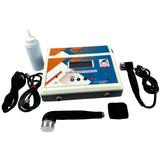 Medansh Ultrasonic LCD 27 Program 1MHz and 3MHz with 1year warranty
“Versatile, effective, great for recovery!”
“This is an incredible device for pain relief and muscle therapy. The variety of programs is great for custo...”
Ultrasonic machine: physiotherapy use, types and safety
Ultrasonic machine use in physiotherapy means applying controlled sound energy through a handheld applicator as part of a treatment plan made by a doctor or physiotherapist. For a family in India, the most important point is simple: it is a medical therapy aid, not a self-use shortcut, and its settings, area of use, and session plan should be decided by a trained professional. This guide explains what it is, how it is used, what the common therapy settings mean, and what safety checks matter before use.
What is an ultrasonic machine in physiotherapy?
An ultrasonic machine in physiotherapy is a therapeutic ultrasound machine used by trained healthcare professionals to deliver high-frequency sound energy into body tissues. The purpose is not to make images or diagnose a disease; it is used as a therapy modality within a wider physiotherapy plan that may also include exercise, posture correction, activity changes, and follow-up assessment.
In simple words, the device produces ultrasonic waves that pass from the applicator into the selected body area with the help of a coupling gel. A physiotherapist or doctor decides whether it is suitable, where it should be applied, and what settings should be used. The same ultrasonic device should not be used casually at home without instructions because the wrong area, wrong duration, or wrong intensity can be unsafe.

Portable digital therapeutic ultrasonic machines are common in physiotherapy because they are compact, easy to set, and suitable for professional clinic-style use when operated correctly. Even with a digital model, the person using it must understand clinical precautions, patient history, and correct technique.

Ultrasonic machine basics for Indian families
For many families, the term may sound technical, but the basic idea is easy to understand. An ultrasonic machine uses sound energy at a frequency higher than normal human hearing. These ultrasonic waves are delivered through an applicator that is moved gently on the skin over the area selected by the physiotherapist.
The machine is not meant to replace medical examination. If someone has swelling, pain, stiffness, a sports injury, or long-term discomfort, the first step is proper assessment. A physiotherapist or doctor checks the condition, asks about other health issues, and then decides whether this modality is appropriate.
In Indian homes, it is common for one family member to suggest a device after seeing it in a clinic. That is understandable, but medical devices need more care than normal wellness items. The setting that suits one person may not suit another, even if the pain feels similar.
Ultrasonic machine and how ultrasonic waves work
An ultrasonic machine creates mechanical sound waves, not electric shocks. These ultrasonic waves travel through the gel and skin into deeper tissues, depending on the frequency and settings selected. In therapy practice, the aim is controlled application under professional supervision, not maximum power.

The applicator is usually kept moving slowly over the treatment area. This movement helps avoid concentrated energy in one small spot. A trained physiotherapist also checks skin condition, patient comfort, medical history, and response during the session.
Therapeutic ultrasound is often discussed as having thermal and non-thermal effects. In continuous settings, tissue warming may be more relevant. In pulsed settings, the delivery is intermittent, and the professional may select it when less heating is desired. These choices are clinical decisions, not family guesses.
Ultrasonic use in a physiotherapy plan
An ultrasonic machine is generally used as one part of physiotherapy, not as the whole treatment. A professional may consider it along with stretching, strengthening, mobility work, manual therapy, ergonomic advice, or gradual return to activity. The value of the session depends on the full plan, not only on the ultrasonic device.
The therapist may choose this modality for selected soft-tissue or musculoskeletal situations after checking whether it is suitable. Research and clinical resources describe therapeutic ultrasound as a modality used in rehabilitation settings, but safety and appropriateness depend on the patient and the application site. It should never be treated as a guaranteed solution or a cure.
For a family, the best way to think about it is like this: the machine may support the therapist’s treatment approach when chosen correctly. It does not remove the need for diagnosis, exercise, lifestyle changes, or follow-up. If pain or swelling is increasing, or if symptoms are new and unexplained, medical advice should come first.
Ultrasonic machine types in physiotherapy settings
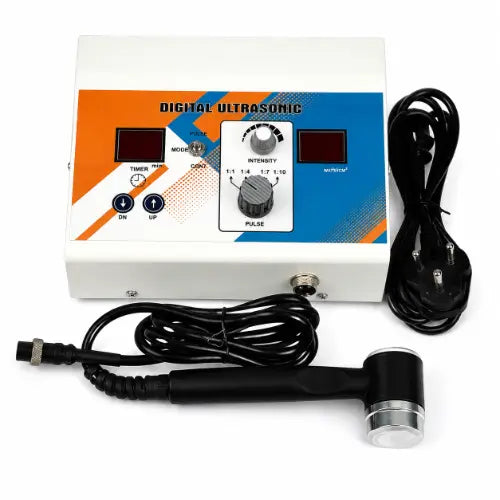
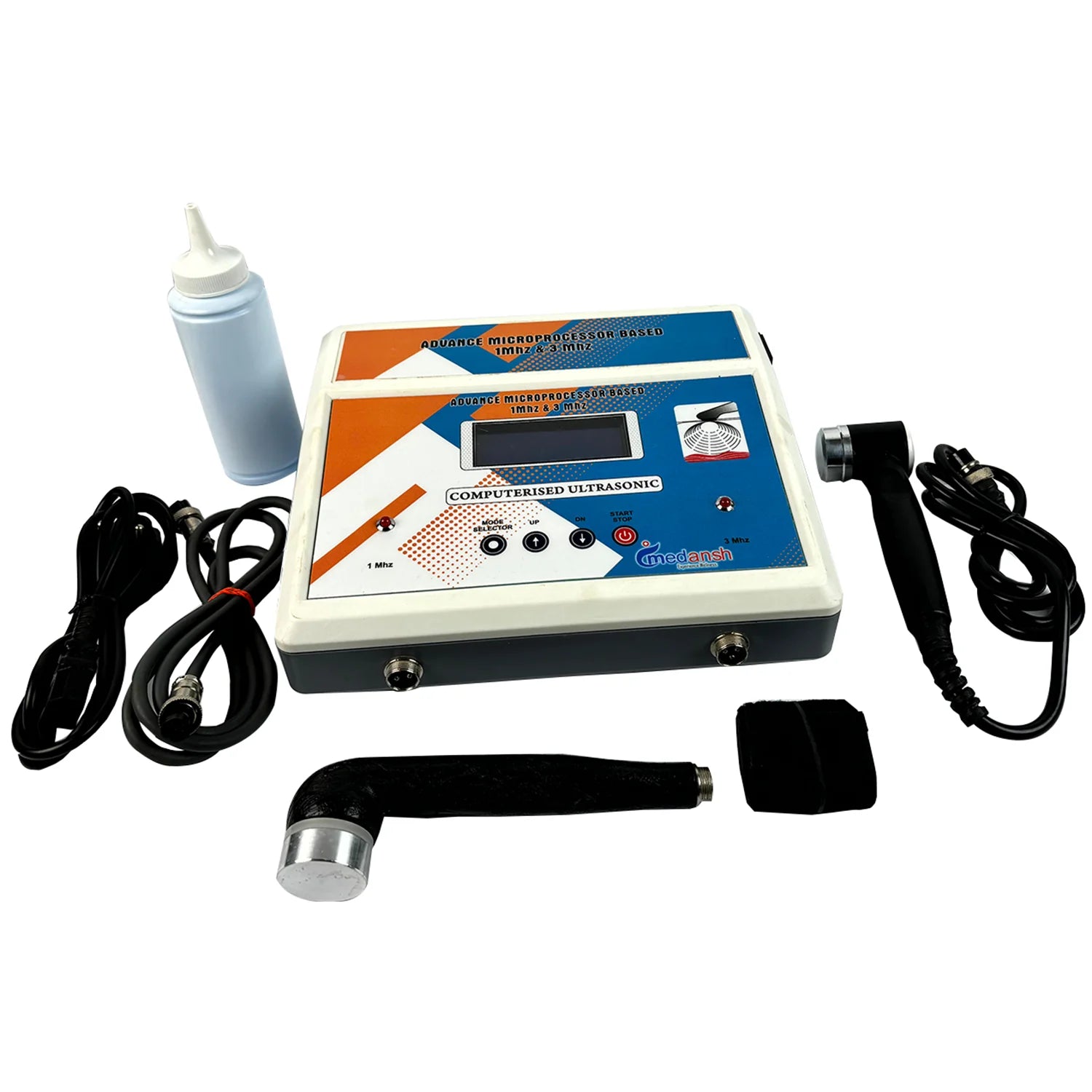
When families ask about “types,” it is better to understand types of therapeutic settings rather than unrelated devices. Here, the focus remains only on a portable digital therapeutic ultrasonic machine for physiotherapy. A digital model may allow a trained user to choose options such as frequency, mode, intensity, time, and applicator movement according to the patient’s need.

The table below gives a simple view of common setting terms. These are not instructions for self-treatment. They are meant to help you understand the words a physiotherapist may use.
Setting term |
What it generally means |
Why professional guidance matters |
|---|---|---|
Continuous mode |
Energy is delivered without planned breaks during the selected time |
It may create more warming, so the area and patient condition must be suitable |
Pulsed mode |
Energy is delivered with short breaks |
A professional decides if intermittent delivery is more appropriate |
Frequency |
The sound wave rate selected by the device |
Selection depends on the target tissue depth and clinical judgement |
Intensity |
The level of energy applied |
Too much energy or wrong use may increase risk of discomfort or tissue irritation |
Treatment time |
The duration for which the applicator is used |
Time depends on the area size, condition, and therapy plan |
Applicator movement |
The way the head is moved on the skin with gel |
Poor technique can concentrate energy in one spot |
A portable digital therapeutic ultrasonic machine can make settings easier to view and adjust, but the display itself does not make the use automatically safe. Safety comes from correct assessment and trained handling. The professional must know when to use it, when to avoid it, and when to stop.
Ultrasonic modes: continuous and pulsed
Continuous and pulsed modes are among the most common terms families hear in physiotherapy. Continuous mode means the energy delivery continues during the chosen session time. Pulsed mode means the delivery happens in intervals, so the total energy pattern is different.

The choice is not about which mode is “better” for everyone. The physiotherapist considers the body area, stage of the condition, sensitivity, skin status, and treatment goal. In some cases, heating may not be desired; in other cases, a therapist may consider a different approach.
Patients should not ask for a stronger setting just because they feel less sensation. Therapeutic ultrasound may not always feel dramatic on the skin. A safe session is based on clinical parameters, not on the idea that more feeling means more benefit.
Ultrasonic machine frequency and intensity explained
Frequency and intensity can sound confusing, but they are simply settings that control how therapy energy is delivered. Frequency relates to how the ultrasonic waves behave in tissue. Intensity relates to the level of energy delivered through the applicator.

A trained physiotherapist does not select these randomly. They consider the area being treated, the depth of tissue, the patient’s age and health condition, skin sensation, and any reasons to avoid the modality. This is why copying settings from another patient, a video, or an old prescription is not safe.
Digital controls may make the ultrasonic machine look simple, but setting selection is still a medical decision. If your family owns or is considering a portable digital model, ask the treating physiotherapist to explain whether use at home is appropriate, who will operate it, and what warning signs should stop the session.
Ultrasonic machine safety starts before the session
Safety begins before the ultrasonic device is switched on. A physiotherapist or doctor should ask about medical history, current diagnosis, medications, implants, pregnancy status where relevant, skin condition, and the exact location of symptoms. The therapy area should be checked for cuts, rash, infection, reduced sensation, active bleeding, or unusual swelling.
The applicator should be used with proper gel because air between the head and skin can interfere with energy transfer. The head should normally be moved continuously and gently over the selected area. The patient should be able to report discomfort, heat, burning, dizziness, or any unusual feeling immediately.

Therapeutic ultrasound can cause harm if used incorrectly, including tissue heating concerns in unsuitable areas or patients. Authoritative medical resources list contraindications and precautions for therapeutic ultrasound/diathermy, which is why professional screening is essential before use.
Ultrasonic machine precautions for home and clinic use
A family may feel comfortable using many health devices at home, but an ultrasonic machine needs a higher level of caution. It should be used only when a doctor or physiotherapist has advised it for therapeutic physiotherapy use. If the professional has not explained the settings, area, time, and stopping signs, the ultrasonic device should not be used.
Children, older adults, and people with reduced skin sensation need extra care. So do people with major medical conditions, implanted devices, circulation problems, or unexplained pain. A family member should not decide treatment based only on pain location.
Plain safety checklist:
Use only for therapeutic physiotherapy purposes under doctor or physiotherapist guidance.
Do not use on an undiagnosed problem or a new injury without assessment.
Do not use over broken, infected, bleeding, or highly irritated skin.
Tell the physiotherapist about implants, major illness, pregnancy, cancer history, circulation issues, or reduced sensation.
Make sure the applicator is used with proper gel and is kept moving as advised.
Stop and inform the professional if there is burning, sharp pain, dizziness, numbness, or unusual discomfort.
Do not copy settings from another person.
Do not increase intensity to “make it work faster.”
Keep the ultrasonic device away from children when not in use.
Follow cleaning and maintenance steps given by the manufacturer and professional.
This checklist is not a replacement for medical training. It is a family-friendly reminder of the main points to discuss before use.

Areas where ultrasonic use needs caution
Some body areas and health situations need special caution or may be avoided depending on clinical judgement. Professional references commonly warn against using therapeutic ultrasound diathermy over certain areas or conditions, such as the eyes, some spinal areas, active infection, malignancy, ischemic tissues, and some fracture situations. A trained professional must make the final decision.
People with implanted neurostimulation systems or other implanted electronic medical devices should be especially careful. FDA material warns that diathermy, including therapeutic ultrasound diathermy, should not be used on patients with certain implanted neurostimulation systems because of risks involving the implanted system and patient harm. This is a strong reason to share full medical history before any session.
The practical family rule is simple: never hide health details from the physiotherapist. Even if a detail seems unrelated, mention it. A safe treatment plan depends on full information.
Ultrasonic machine session: what a patient may expect
Before the session, the physiotherapist usually checks the area and confirms the plan. The patient may be asked to sit or lie in a comfortable position so the treatment area is easy to reach. The skin should be clean, and jewellery or clothing around the area may need to be moved aside.
During use, gel is applied, and the applicator is moved over the selected area. The patient may feel mild warmth in some settings, while in other settings the sensation may be minimal. Lack of strong sensation does not mean the session is useless, and strong discomfort is not a sign of better therapy.

After the session, the physiotherapist may continue with exercises or advice. This is important because many musculoskeletal problems need active rehabilitation. The ultrasonic machine may be one part of care, but long-term management often depends on strength, flexibility, posture, work habits, and safe activity progression.

Ultrasonic benefits and realistic expectations
Families often ask what benefits they can expect. The honest answer is that therapeutic ultrasound is used by physiotherapists as a supportive modality in selected cases, but response varies. It should not be presented as a cure or a guaranteed result.
A responsible physiotherapist will connect device use to a broader plan. For example, if someone has shoulder stiffness, the session may be combined with guided movement and home exercises. If someone has a sports-related soft-tissue complaint, the plan may also include load control, strengthening, and return-to-activity steps.
Realistic expectations protect the patient. If a person expects the machine alone to solve every issue, they may ignore important exercise, rest, medical review, or lifestyle changes. Good care is balanced, monitored, and adjusted over time.
Ultrasonic machine for pain, stiffness, and soft-tissue care
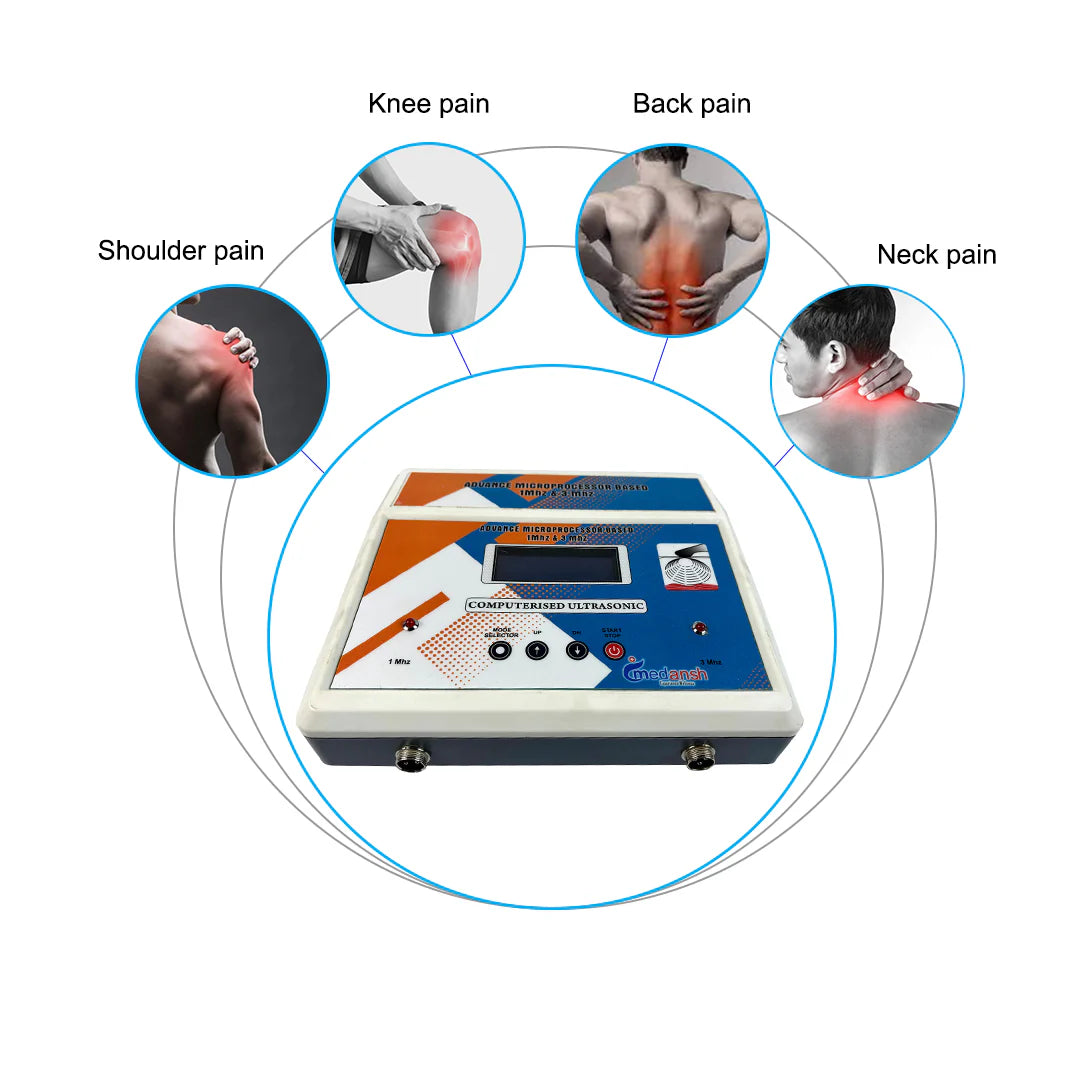
An ultrasonic machine may be considered by a physiotherapist for certain pain, stiffness, or soft-tissue-related treatment plans. The decision depends on diagnosis and suitability. It should not be used simply because pain exists.
Pain can come from many causes, including muscle strain, joint irritation, nerve involvement, inflammation, posture, overuse, or medical conditions. Some causes need medical tests or urgent care. That is why proper assessment matters before selecting any physiotherapy modality.
If symptoms include severe swelling, fever, unexplained weight loss, night pain, sudden weakness, loss of bladder or bowel control, or pain after a major fall or accident, families should seek medical attention promptly. These warning signs need professional evaluation and should not be managed at home with a device.
Ultrasonic therapy and exercise-based rehabilitation
Physiotherapy is strongest when passive modalities and active rehabilitation are used wisely. A machine-based session may help the therapist prepare the area or support the treatment plan, but exercises often build the real day-to-day capacity. The patient’s own participation matters.
A physiotherapist may prescribe simple home exercises, but these should be done exactly as advised. Too little may not help, and too much may irritate symptoms. Family members can support by reminding the patient, arranging a safe space, and avoiding pressure to “push through” pain.
The ultrasonic machine should never become an excuse to skip movement advice. If the therapist has asked for strengthening, stretching, walking, posture correction, or workplace changes, those steps remain important. Recovery planning is usually a combination of professional treatment and daily habits.
Ultrasonic machine buying considerations for families
If a family is considering a portable digital therapeutic ultrasonic machine for physiotherapy, the first question should not be price or appearance. The first question should be whether a doctor or physiotherapist has advised it and whether someone trained will guide its use. An ultrasonic device bought without a plan may sit unused or be used unsafely.
Look for clear controls, readable display, proper accessories, user manual, and after-sales support. A portable digital model may be easier to carry and use in a clinic, home-visit, or supervised home-care context. However, the most important feature is not portability; it is safe, correct, professional use.

Ask the treating physiotherapist these questions before buying:
Is this modality suitable for this patient’s condition?
Who should operate the ultrasonic device?
Which body area should be treated, and which areas should be avoided?
What settings, time, and frequency of sessions are recommended?
What symptoms mean the session should stop?
How will progress be reviewed?
What exercises or precautions should continue along with it?
A good answer should be specific to the patient. If the answer is vague, wait and get proper guidance.
Maintenance and hygiene
A therapeutic device used on skin must be kept clean and handled carefully. The applicator surface should be cleaned as advised by the manufacturer and clinic protocol. Gel residue should not be allowed to dry and build up on the applicator or cable.
The cable, plug, and applicator should be checked for visible damage. If anything looks cracked, loose, or unsafe, the machine should not be used until it is inspected. Electrical safety is part of medical device safety, especially in busy homes or clinics where devices may be moved often.
Store the ultrasonic device in a dry, safe place away from children. Do not place heavy items on the cable. Do not use the machine near water spills, and do not attempt repairs at home.
Ultrasonic machine mistakes families should avoid
The most common mistake is thinking that a familiar-looking device is safe for everyone. Another mistake is using it on the same painful spot again and again without diagnosis. Pain is a signal, not a complete diagnosis.
Some people may try to increase intensity or time because they believe stronger treatment gives faster results. This is unsafe thinking. A trained professional chooses parameters based on the patient, not on guesswork.
Avoid these habits:
Using the ultrasonic device without a physiotherapist or doctor’s advice.
Treating a new injury without assessment.
Using it over areas with poor sensation.
Applying it when the patient cannot clearly report discomfort.
Keeping the applicator still in one place.
Sharing one person’s settings with another person.
Ignoring worsening symptoms after sessions.
Treating medical warning signs as ordinary muscle pain.
Families can play a positive role by asking questions, keeping records, and making sure instructions are followed.
Ultrasonic machine compared by setting choices
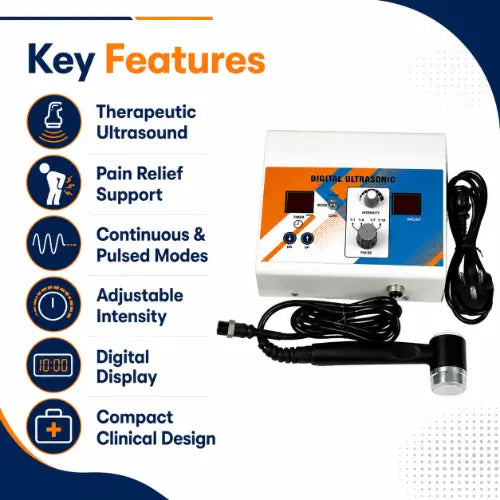
A portable digital therapeutic ultrasonic machine may offer different setting choices. These choices should be understood as clinical controls, not as separate products. The table below explains the practical meaning in simple language.
Choice on device |
Simple meaning |
Family-friendly reminder |
|---|---|---|
Mode selection |
Changes how energy is delivered over time |
Do not change mode without professional advice |
Timer |
Controls session duration |
Longer is not automatically better |
Intensity control |
Adjusts energy level |
Higher settings may increase risk if unsuitable |
Frequency option |
Relates to how energy is directed in tissue |
Selection depends on the treatment area and clinical judgement |
Digital display |
Shows selected settings |
A clear display helps, but it does not replace training |
Portable body |
Easier to move and store |
Portability does not mean casual self-use |
This comparison helps families understand why a physiotherapist asks specific questions before treatment. Every setting affects how energy is delivered. That is why the safest approach is guided, documented, and reviewed use.
Comfort during ultrasonic treatment
A patient should feel comfortable enough to speak during the session. If there is sharp pain, burning, sudden heat, dizziness, tingling beyond what was expected, or anxiety, the session should be stopped and reviewed. The patient should not stay silent out of respect or fear.
In many Indian families, older patients may not complain quickly because they do not want to trouble others. Family members should gently encourage them to report any discomfort. Clear communication is part of safe therapy.
The physiotherapist may ask about sensation during and after the session. These questions are not formalities. They help the professional decide whether to continue, modify, or stop the modality.
Ultrasonic use should be reviewed regularly
A treatment plan should not continue endlessly without review. The physiotherapist should check whether the patient’s movement, comfort, function, and daily activity are changing in a useful way. If there is no meaningful progress, or if symptoms worsen, the plan may need adjustment.
Review does not always mean more machine sessions. Sometimes the focus may shift to exercise, posture, activity modification, medical referral, or a different physiotherapy approach. Good care changes with the patient’s condition.
Families can help by noting simple details: when pain increases, what activity triggers it, whether sleep is affected, and whether exercises are being done. This information helps the professional make better decisions.
Questions families should ask the physiotherapist
Before starting, ask direct and simple questions. A good physiotherapist will not mind explaining why the modality is being used and what precautions apply. Clear answers build trust and reduce unsafe home use.
Helpful questions include:
Why is this modality being considered for this patient?
Are there any reasons to avoid it in this case?
Which exact area will be treated?
What should the patient feel during the session?
What should the patient report immediately?
How many sessions will be reviewed before changing the plan?
What exercises or daily precautions should be followed?
Can this be used at home, or only under direct supervision?
If the patient has multiple health issues, carry medical documents to the appointment. This includes surgery history, implant details, prescriptions, and reports. Better information supports safer treatment decisions.
Ultrasonic machine and common confusion about names
People may use different words while searching online. Some may type ultrasonic machine, therapeutic ultrasound, or physiotherapy ultrasound therapy. In this guide, the meaning is limited to a portable digital therapeutic ultrasonic machine for physiotherapy.
This guide is not about imaging, beauty procedures, kitchen devices, or industrial equipment. It is also not about ultrasonic cleaning, even though that phrase may appear in general searches for similar words. The focus here is only therapeutic physiotherapy use under doctor or physiotherapist guidance.
This difference matters because similar words can describe very different tools. A family should always check the intended medical use, professional advice, and safety instructions before assuming an ultrasonic device is suitable.
Ultrasonic machine quick family checklist
Use this checklist before any planned use. It is not a prescription, but it can help families stay alert and ask the right questions.
The patient has been assessed by a doctor or physiotherapist.
The professional has confirmed that therapeutic physiotherapy use is suitable.
The exact body area has been identified.
The settings have been explained by a trained professional.
The patient understands what discomfort to report.
Skin has been checked before use.
Gel is available and used properly.
The applicator and cable are clean and undamaged.
The patient is not left alone if they need help communicating discomfort.
The session is stopped if unusual symptoms occur.
Follow-up review is planned.
Exercises and daily advice are followed along with the session plan.
This simple list can be kept in mind by caregivers, especially when supporting older parents or family members who depend on others for treatment visits.
Ultrasonic machine FAQ
Can an ultrasonic machine be used at home?
It should be used at home only if a doctor or physiotherapist has advised it and explained the correct method. The settings, area, and session time should not be guessed by family members.
Is an ultrasonic machine painful?
A session should not cause sharp pain or burning. If the patient feels unusual discomfort, the session should be stopped and the physiotherapist should review it.
Who should decide whether an ultrasonic machine is needed?
A physiotherapist or doctor should decide after assessing the patient. The decision depends on the condition, treatment area, medical history, and safety precautions.
Is a portable digital ultrasonic machine easier to use?
A portable digital model may be easier to carry, read, and set. But ease of handling does not replace professional training or medical judgement.
Can the same ultrasonic machine settings be used for everyone?
No, settings should not be copied from another person. A trained professional chooses settings based on the individual patient and treatment plan.
What should be done if symptoms increase after a session?
Stop further use and speak to the physiotherapist or doctor. Worsening pain, swelling, burning, numbness, or unusual symptoms should be reviewed before continuing.
Ultrasonic machine final takeaway
An ultrasonic machine for physiotherapy is a therapeutic device that should be used with care, knowledge, and professional guidance. It can be part of a physiotherapy plan, but it is not a stand-alone answer for every pain or stiffness problem. The safest use is patient-specific, guided by a physiotherapist or doctor, and reviewed regularly.
For Indian families, the practical message is simple: choose a portable digital therapeutic ultrasonic machine only when it fits a professional treatment plan. Ask questions, share medical history, follow the advised settings, and never treat stronger or longer as better. Safe physiotherapy is not only about the ultrasonic device; it is about the right decision, the right technique, and the right follow-up.
Sources:
NCBI Bookshelf - StatPearls: Ultrasound Therapy
FDA - Policy Clarification and Premarket Notification 510(k) Submissions for Ultrasonic Diathermy Devices
Electrophysical Agents: Contraindications and Precautions, Physical Therapy evidence-based guidance
Explore Medical Collections
All Categories
Abdominal & Maternity Support

Accessories

Accu-Chek Instant Strips: Use, Compatibility, Price & Blood Sugar Testing Guide
Accu-Chek Instant Strips: Uses, Features & Complete Guide

accupuncture

Acupuncture Needles & Supplies

Advanced Physiotherapy Machines & Lumbar Physiotherapy

Airways

Alcohol Swab: Uses, Safe Use and Disposal Guide
Ambu Bag Full Form: Is There an Official Meaning?
Ambu Bag: Parts, Uses and Safety Guide
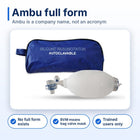
Ambu Full Form: What the Name Means and BVM Basics

Ambulance

Anatomy Models
Anesthesia Machine
You may also need
FOR YOURecommended for you
Save 50%
Save 50%
Save 53%
Save 20%
Save 46%
Save 57%