


Featured ChoiceSave 57%
Save 53%

Save 46%

Save 33%
Save 39%
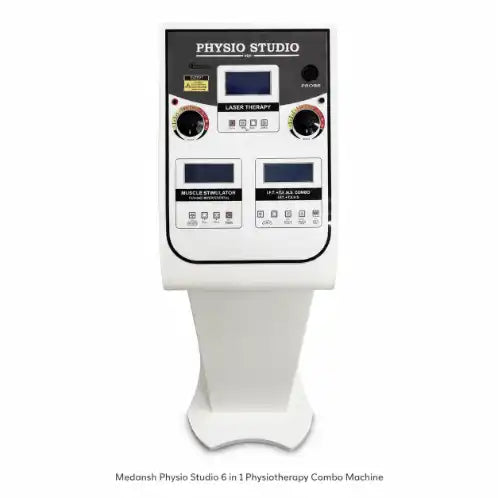
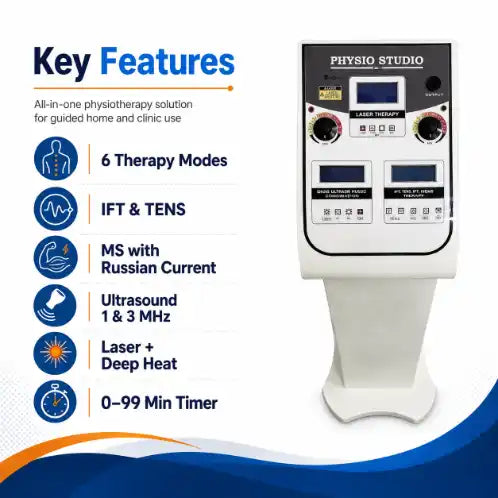

Save 50%
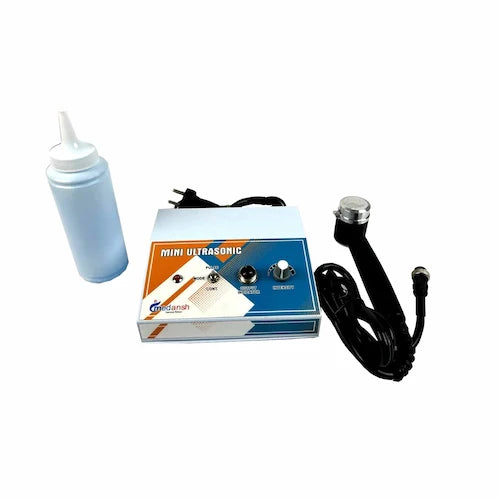
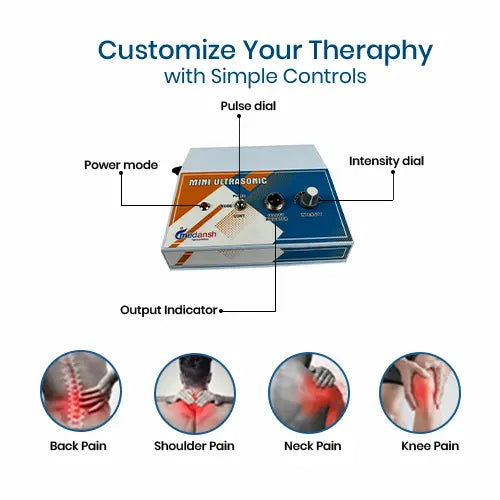


Save 44%

Save 27%

Save 46%

Save 50%
Save 57%

Save 43%

Save 44%
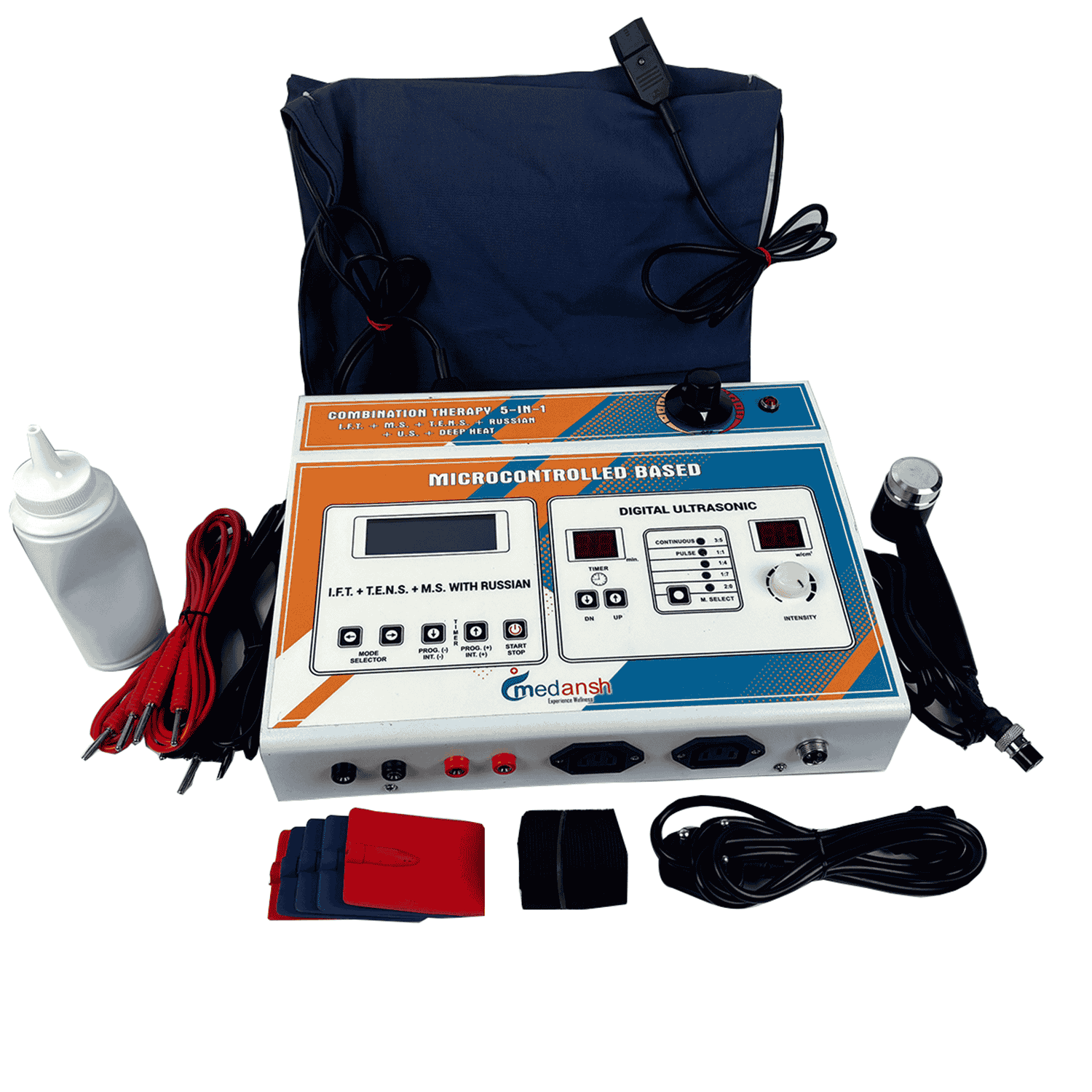

Save 46%
What customers say
★★★★★ 5.0 · 8 reviews
 Medansh Portable Digital Ultrasonic Therapy Machine with 1 Year Warranty
“Portable, powerful, great for pain relief!”
 Medansh Mini Digital Ultrasonic Machine With 1 Year Warranty
“This device is fantastic for pain management. I travel a lot for work, and its portability is a big plus. I...”
“I purchased this for my mother who has knee pain due to arthritis. She finds it simple to operate and it ha...”
 Medansh Ultrasonic LCD 27 Program 1MHz and 3MHz with 1year warranty
“Versatile, effective, great for recovery!”
“This is an incredible device for pain relief and muscle therapy. The variety of programs is great for custo...”
Ultrasound Therapy Machine for Home Use
Ultrasound Therapy for Home Use: Machines, Benefits & Buying Guide
Ultrasound therapy for home use can be a helpful way to support sore muscles, stiff joints, and some common aches. Use it carefully and with the right guidance. This guide explains what ultrasound therapy is and how ultrasound therapy works. It also covers what to look for in a home ultrasound therapy device and when you should avoid using one. We wrote it for everyday home users. The goal is simple: understand the basics, ask better questions, and use any ultrasound therapy machine more safely.
Consult your doctor or physiotherapist before using ultrasound therapy.
Before starting, remember that ultrasound therapy is not a complete solution and should not replace medical care. Speak with a qualified healthcare professional before using an ultrasound therapy machine. This applies if you have new or severe pain, swelling after an injury, numbness, or unexplained weakness. Do the same if you are unsure about a health condition.
What is ultrasound therapy?
Ultrasound therapy is a treatment method that uses sound waves at a frequency higher than people can hear. These sound waves travel from a treatment head into the soft tissues under the skin. In a physiotherapy setting, this method is often called therapeutic ultrasound or ultrasound physiotherapy.

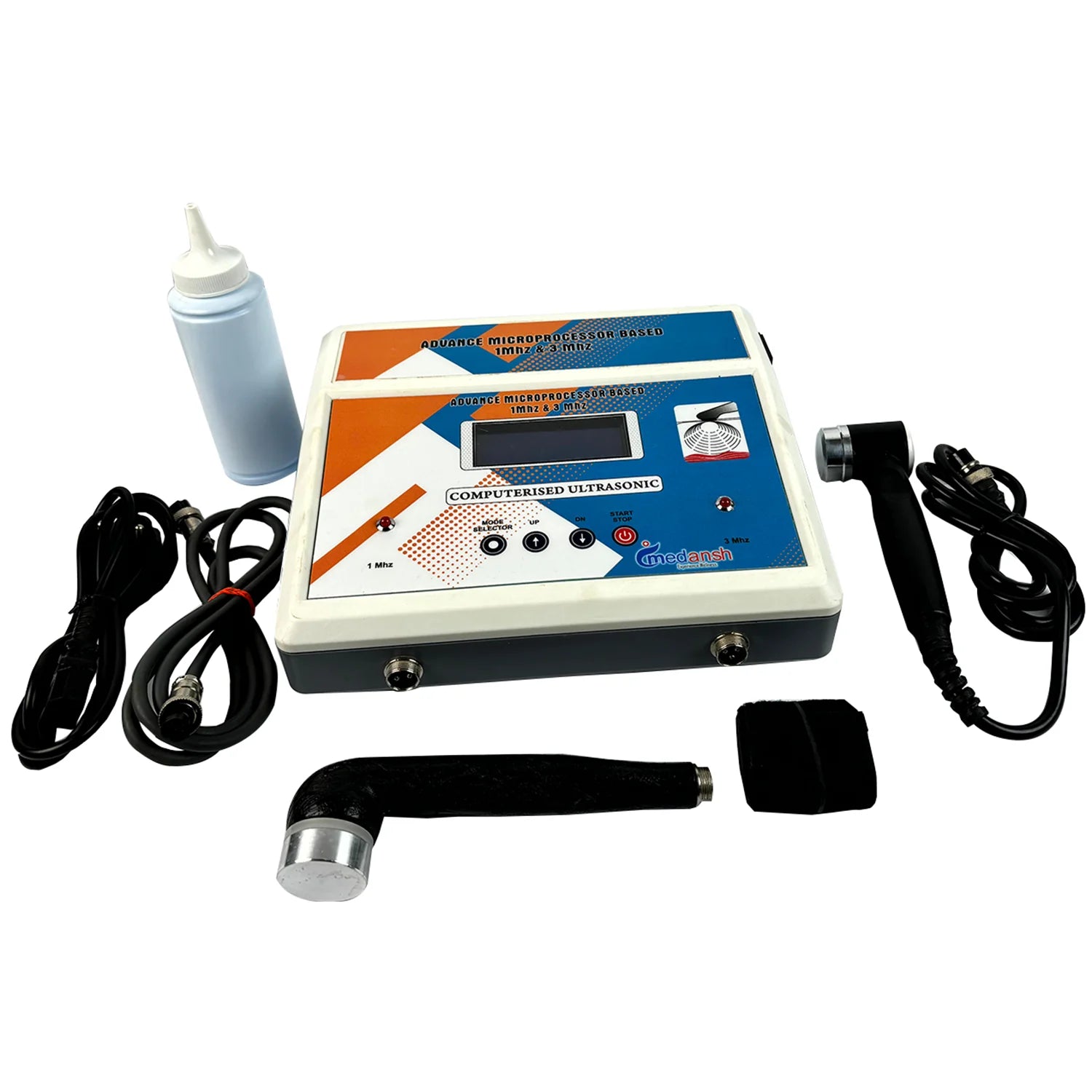
A home ultrasound machine is a smaller device made for personal use. It usually has a handheld treatment head and basic controls. A gel helps the sound waves move from the device into the body. The gel matters because ultrasound waves do not travel well through air. So you should not use the therapy device dry on the skin.
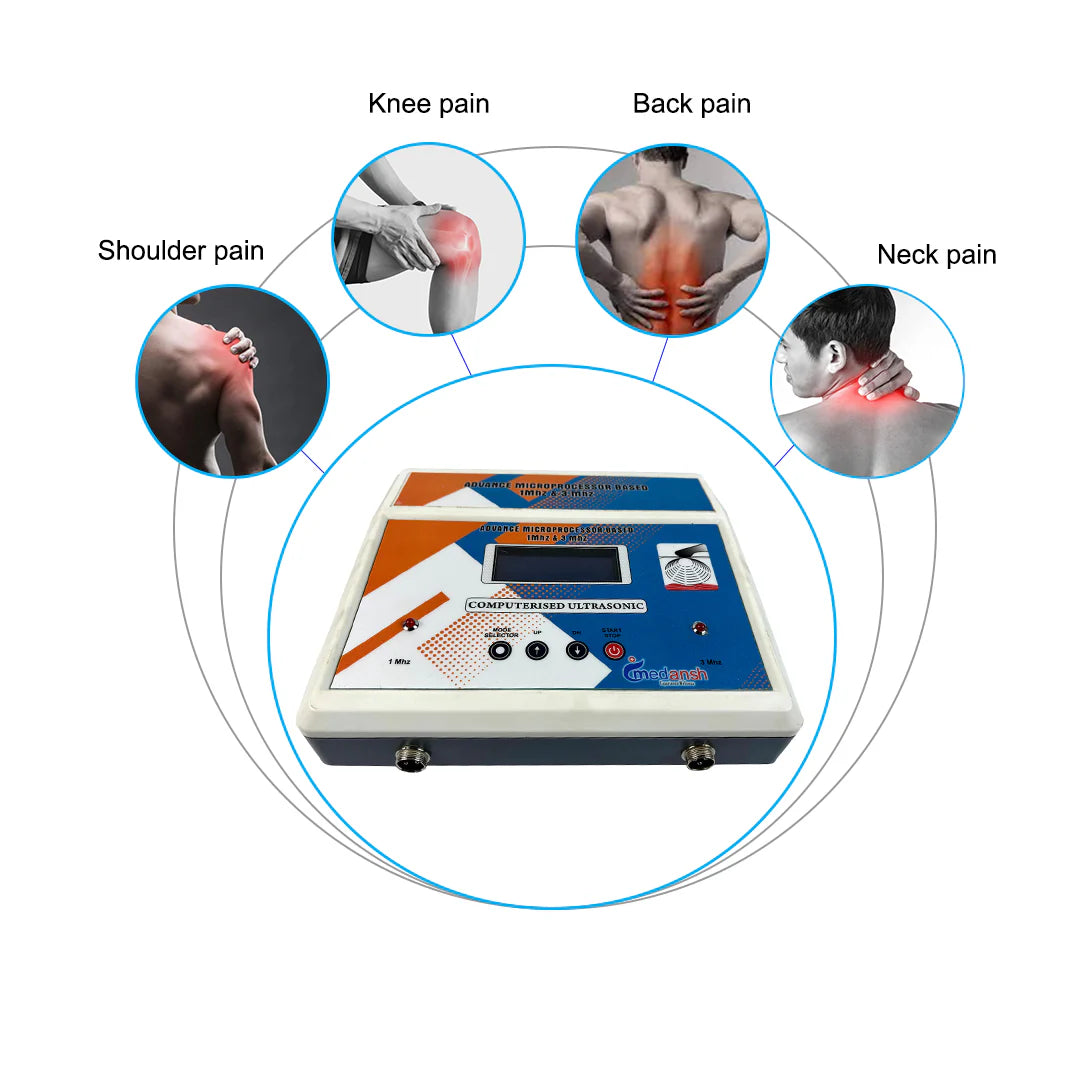
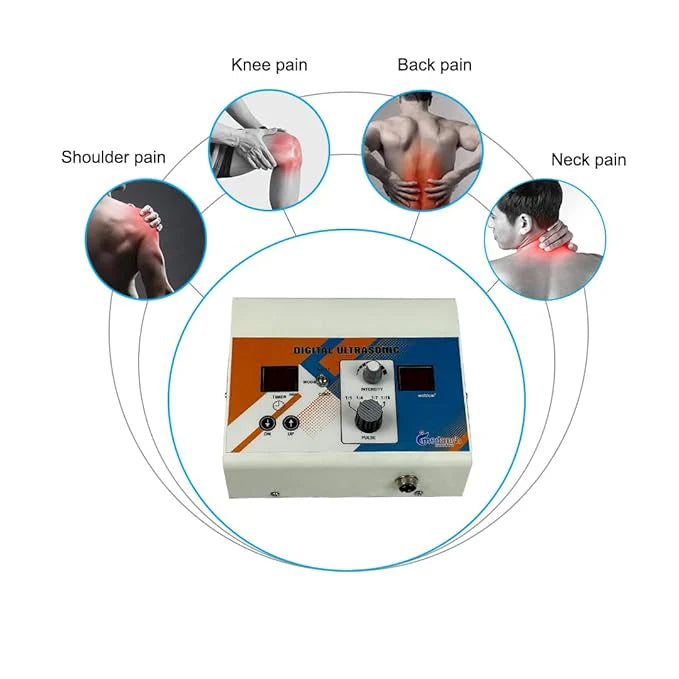
People often look into ultrasound therapy for knee pain, shoulder tightness, or mild tendon discomfort. Others try ultrasound therapy for muscle soreness or back pain. The treatment generally targets soft tissues such as muscles, tendons, and ligaments. It cannot diagnose a condition or fix a serious injury. Do not use it over every painful area without checking whether that area is safe.
It also helps to separate ultrasound therapy from imaging ultrasound. Imaging ultrasound creates pictures inside the body. Ultrasound therapy aims to create effects in tissue, such as gentle warming or tissue movement. The effect depends on the settings and the device. The FDA describes ultrasonic diathermy devices as products that use ultrasound energy for therapeutic heating. Guidance for these devices lists several important areas where use may be unsafe.
How does ultrasound therapy work?
Ultrasound therapy works by sending sound waves through the skin into nearby tissue. Depending on the setting, treatment may create gentle warmth, small tissue movement, or both. In plain language, the therapy device is not “massaging” the area like a hand would. Instead, it sends energy into the tissue in a controlled way.


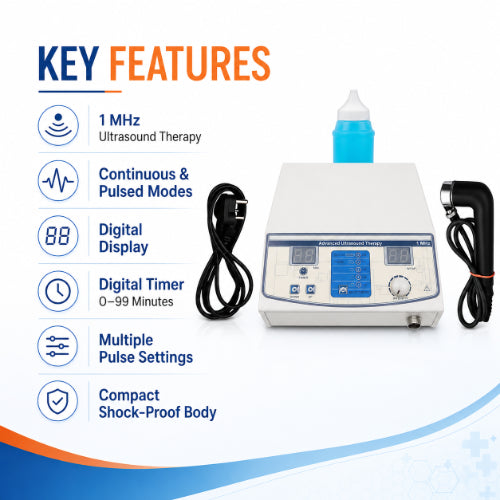
Most home devices use a treatment head that you move slowly over the skin. The sound waves pass through the gel and into the area beneath. If you set the therapy unit to a continuous mode, it may produce more warming. If you set it to a pulsed mode, the energy comes in short bursts. This may reduce heat buildup.
A common way to explain how ultrasound therapy works is to think of it as deep, focused sound energy. The sound waves can create tiny vibrations in tissue. With some settings, this may help warm tight tissue and support comfort. With other settings, the aim may be to provide a non-heating effect. However, research results vary by condition, device, dose, and treatment plan.
Because settings matter, use a home ultrasound machine with care. More power, more time, or more pressure is not automatically better. Too much energy in the wrong place can irritate tissue or cause harm, especially over sensitive areas.
The main settings in simple terms
Labels on an ultrasound therapy machine confuse many home users. These are the basic terms you may see:

- Frequency: Often listed in MHz. Lower frequencies usually suit deeper areas, while higher frequencies generally suit areas closer to the surface.
- Intensity: The strength of the ultrasound energy. A higher setting is not always the right choice.
- Mode: Continuous mode delivers steady energy, while pulsed mode delivers energy in breaks.
- Time: The length of each session. Home use should stay within the machine instructions and any advice from a professional.
- Treatment area: The part of the body you treat. Small areas are more suitable than large, vague zones.
Never guess these settings. This matters most if you have a medical condition, an implanted device, or pain you do not understand. When in doubt, get professional advice before starting.
Ultrasound therapy benefits for home users
Ultrasound therapy benefits may include temporary pain relief and less muscle tightness. They may also include improved comfort before stretching and support for certain soft-tissue problems. Some people use it as part of a broader home care routine. This routine may also include rest, gentle movement, heat or cold, stretching, strengthening, and advice from a healthcare professional.

It is best to think of ultrasound therapy as one tool, not the whole plan. An ultrasound therapy machine may help an area feel more comfortable. However, long-term improvement often depends on the cause of the pain. For example, knee discomfort linked to weak surrounding muscles may need a movement plan. Back pain linked to posture, lifting habits, or long sitting may need activity changes as well as symptom relief.
Research on ultrasound therapy shows mixed results. Some reviews suggest that results depend heavily on the condition and on how you use the therapy device. StatPearls notes that therapeutic ultrasound may create thermal effects in deeper tissues and that evidence varies across uses.
Common reasons people consider ultrasound therapy
Home users often explore an ultrasound machine for pain when they want a non-drug option for everyday aches. Common goals include:

- Easing muscle tightness: Gentle warming may help some tight muscles feel more relaxed.
- Supporting joint comfort: Some people use ultrasound therapy for knee pain when stiffness or soft-tissue irritation is part of the problem.
- Helping with tendon or ligament discomfort: A professional may suggest therapeutic ultrasound as one part of care for certain soft-tissue concerns.
- Preparing for movement: Some users apply it before stretching or light exercise to make the area feel less guarded.
- Managing recurring soreness: People with repeated mild soreness may use it as part of a planned home routine.
These benefits are not certain. If pain gets worse, spreads, or keeps returning, get a proper diagnosis. Repeated home treatment is not the answer.
Ultrasound therapy for knee pain
Ultrasound therapy for knee pain is often used around soft tissues near the knee. It is not a direct fix for every knee problem. The knee is a complex joint. Pain can come from tendons, ligaments, cartilage, swelling, arthritis, muscle weakness, or referred pain from another area. That is why it is important to know what you are treating before using a machine.

For mild, familiar knee soreness, you may use a home ultrasound machine. It can support comfort around the muscles and tendons near the joint. People may use it before gentle stretching or movement. However, do not use it over areas with active infection, unexplained swelling, or a known tumor. Do not use it over growing bones in children unless a healthcare professional has clearly advised it.
Practical knee safety tips
If a healthcare professional has told you that home ultrasound therapy is suitable for your knee, keep the routine simple:
- Identify the exact area. Do not treat the whole knee randomly. Focus only on the area your professional called appropriate.
- Use enough gel. The treatment head should glide smoothly without dragging.
- Keep the head moving. Slow, steady movement helps avoid too much energy in one spot.
- Stay within the time limit. Longer sessions do not mean better results.
- Stop if pain increases. Some settings may give mild warmth, but sharp pain, burning, or strong discomfort is a warning sign.
Do not rely on home ultrasound therapy if your knee is hot, very swollen, unstable, or locked. The same goes for pain after a fall or twist. Get medical advice first.
Ultrasound therapy for back pain
Approach ultrasound therapy for back pain with extra caution. The back includes the spine, nerves, and many sensitive structures. Some muscle-related back soreness may feel better with guided care. Not all back pain is a simple muscle issue. Some symptoms need urgent medical attention. These include pain that travels down the leg, numbness, pain after an accident, or changes in bladder or bowel control.
When a professional suggests ultrasound therapy for back pain, they usually give a clear treatment area and settings. Home users should not apply an ultrasound therapy machine directly over the spine. They should also avoid recent surgical areas and areas near implanted devices, unless a professional has told them it is safe. FDA guidance for ultrasonic diathermy lists areas near the spine and certain surgical sites as unsafe. The reason is heating risk.
A safer home plan for back discomfort often combines several gentle steps. These include short walks and avoiding long still positions. They also include light stretching if it does not worsen symptoms, and careful use of any device. Ultrasound therapy may support comfort. However, it should not hide warning signs or encourage you to keep doing movements that caused the pain.
Who can use ultrasound therapy at home?
Ultrasound therapy for home use may suit adults who have a clear, mild soft-tissue concern. It suits them when their professional says that ultrasound therapy is appropriate for their situation. It may also suit people who have used ultrasound physiotherapy before and know where and how to apply it. The safest users usually understand the cause of their pain, follow instructions closely, and have no major risk factors.
Good candidates are not defined only by the painful body part. They are also defined by whether the skin is healthy and whether the area is safe to treat. Other factors include whether the person can feel heat and discomfort clearly. They also include whether the person can follow timing and setting instructions. If you cannot clearly feel the area you treat, you may not notice early warning signs.
Home users who may be suitable
People who meet the points below may consider a home ultrasound machine:

- Have mild, familiar muscle or tendon discomfort.
- Have advice from a healthcare professional to use therapeutic ultrasound.
- Can understand and follow the machine manual.
- Have typical skin feeling in the treatment area.
- Can keep track of session length and body response.
- Are using the machine as part of a balanced plan, not as the only step.
Even for suitable users, it is wise to start conservatively. Use the lowest useful settings recommended for your situation. Pay attention to how the area feels later that day and the next day.
Who should avoid ultrasound therapy?
Some people should avoid ultrasound therapy unless a qualified healthcare professional has reviewed their situation and clearly approved it. This includes people who are pregnant and considering use near the low back, abdomen, or pelvic area. It also includes people with certain implanted medical devices, known cancer in the area, or infection in the treatment area. Safety rules matter because ultrasound energy can heat tissue. Some body areas are more sensitive than others.

The FDA’s ultrasonic diathermy guidance lists several contraindications. These include use over or near certain implanted devices and reproductive organs. They also include bone growth centers, known malignancy, and areas with infectious disease. The American Institute of Ultrasound in Medicine also stresses that people using therapeutic ultrasound need training and awareness of possible unwanted effects and contraindications.
Avoid using a home ultrasound therapy device in these situations
Do not use a home ultrasound therapy device without medical approval if any of the following apply:
- You are pregnant or may be pregnant, especially near the abdomen, low back, or pelvis.
- You have a pacemaker, implanted stimulator, or other implanted electronic device.
- The area you want to treat has cancer or a suspicious lump.
- The area has infection, open wounds, or broken skin.
- Poor feeling, numbness, or nerve damage affects the area.
- A blood clot, or symptoms that could suggest one, such as sudden swelling, warmth, and calf pain.
- You want to treat directly over the eyes, head, throat, chest, reproductive organs, or spine.
- You want to treat a child’s growing bones unless a professional has directed it.
- Recent surgery in the area, without clearance for this treatment.
- The pain is severe, unexplained, spreading, or linked to fever, weakness, or major swelling.
This list is not complete. Check with your doctor before using an ultrasound therapy machine if you have a pacemaker or epilepsy. Check too if you are pregnant, have skin problems, or have open wounds. If your situation feels unusual or you are unsure, pause and ask a professional before using the machine.
Ultrasound therapy side effects and warning signs
Ultrasound therapy side effects usually come from a few causes. These are wrong settings, treating unsafe areas, using the machine too long, or keeping the treatment head still. Possible problems include skin irritation, discomfort, a burning feeling, increased pain, or tissue overheating. Ultrasound therapy can cause burns if used incorrectly or with too much energy.
A home ultrasound therapy device should feel controlled and comfortable. Depending on the mode, you may feel mild warmth, or you may feel very little. Strong heat is not the goal. If the treatment becomes painful, hot, sharp, or uncomfortable, stop the session.
Stop and seek advice if you notice:
- Pain that is worse after treatment and does not settle.
- Redness, swelling, blistering, or a burn-like feeling.
- Numbness, tingling, or weakness.
- Dizziness, nausea, or unusual symptoms during use.
- New swelling, heat, or color change in the limb.
- Pain that keeps returning despite repeated sessions.
Side effects are more likely when people treat the wrong area or try to “push through” discomfort. Ultrasound therapy should never feel like a test of pain tolerance.
Types of home ultrasound machine options
Home ultrasound machine options vary in size, controls, and intended use. Some are simple handheld devices with a few preset modes. Others offer more adjustable settings similar to what you may see on a physiotherapy ultrasound machine. The best choice depends on your needs, comfort level, and whether you have professional guidance.


A basic ultrasound therapy machine may be easier for beginners. It limits the number of decisions you have to make. A more adjustable unit may be useful for someone who has clear instructions from a professional. However, it can also be easier to misuse. More controls are only helpful if you know what they mean.
Handheld home devices
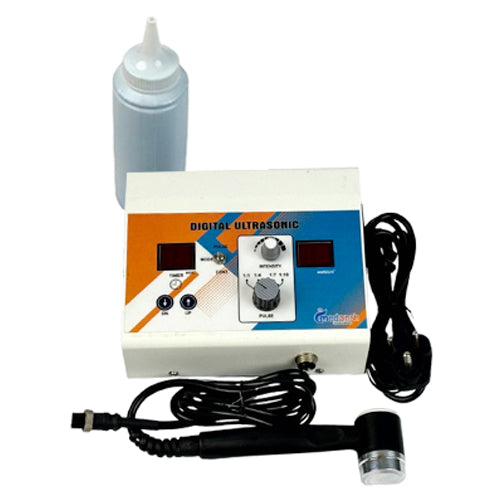
Handheld devices are common for personal use. They are usually compact, simple to hold, and made for treating small areas. Many home users prefer them. They do not take up much space, and you can use them while sitting comfortably.


The main advantage is simplicity. The downside is that smaller machines may have limited settings or smaller treatment heads. If the painful area is large or hard to reach, a handheld machine may be awkward to use safely.
Tabletop ultrasound therapy machine options
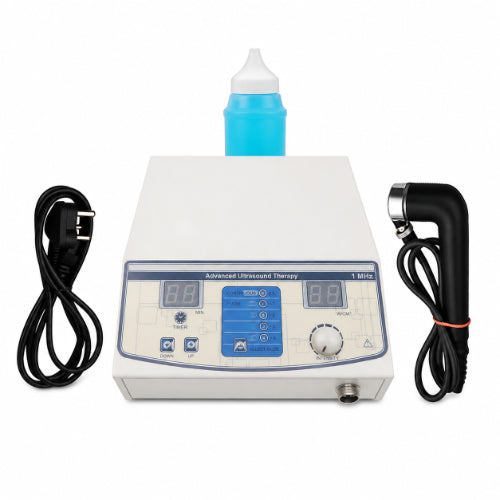
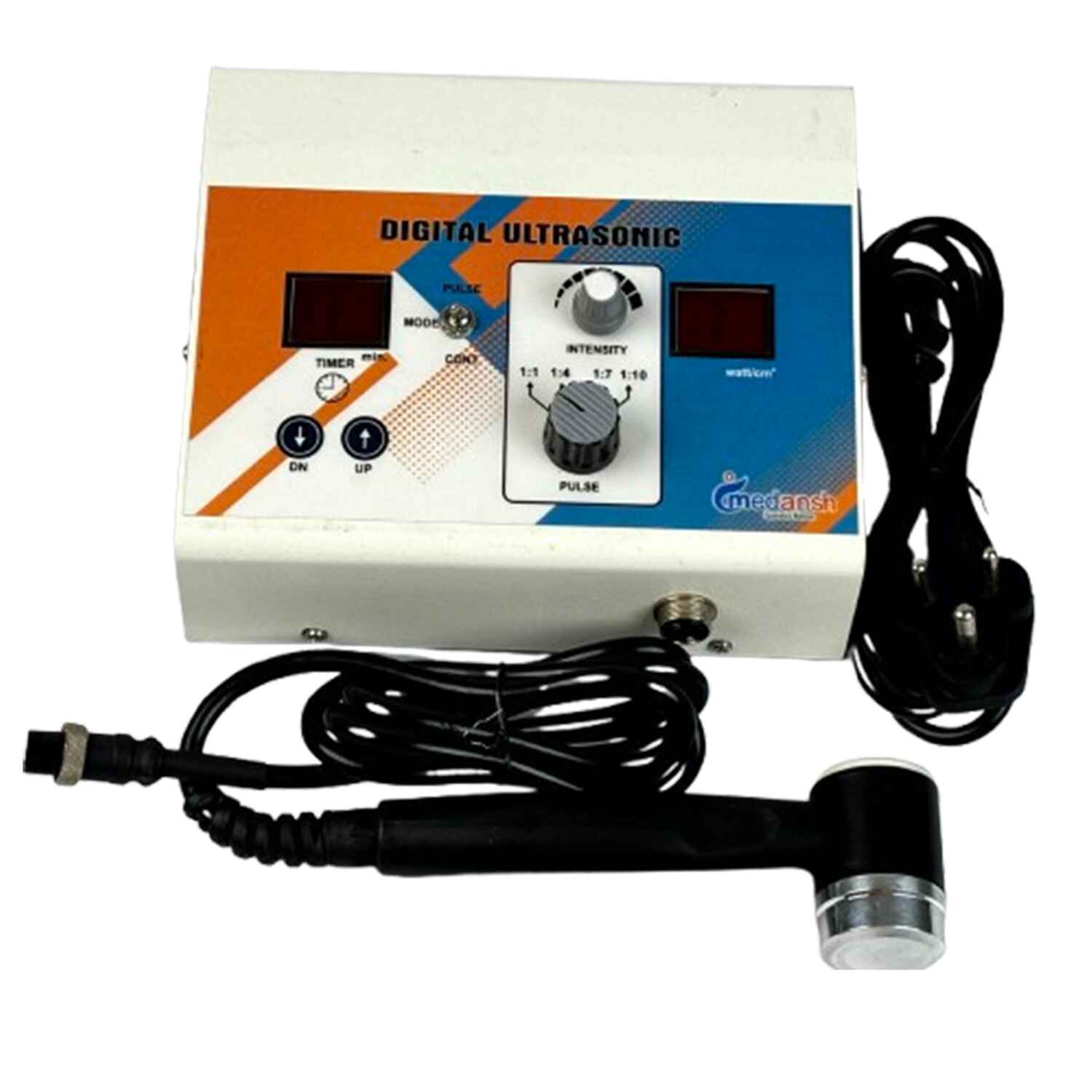
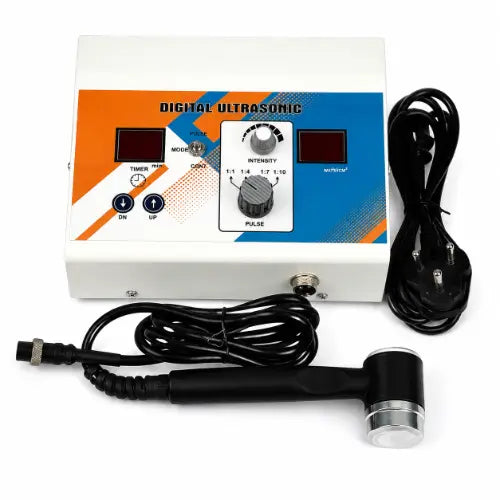
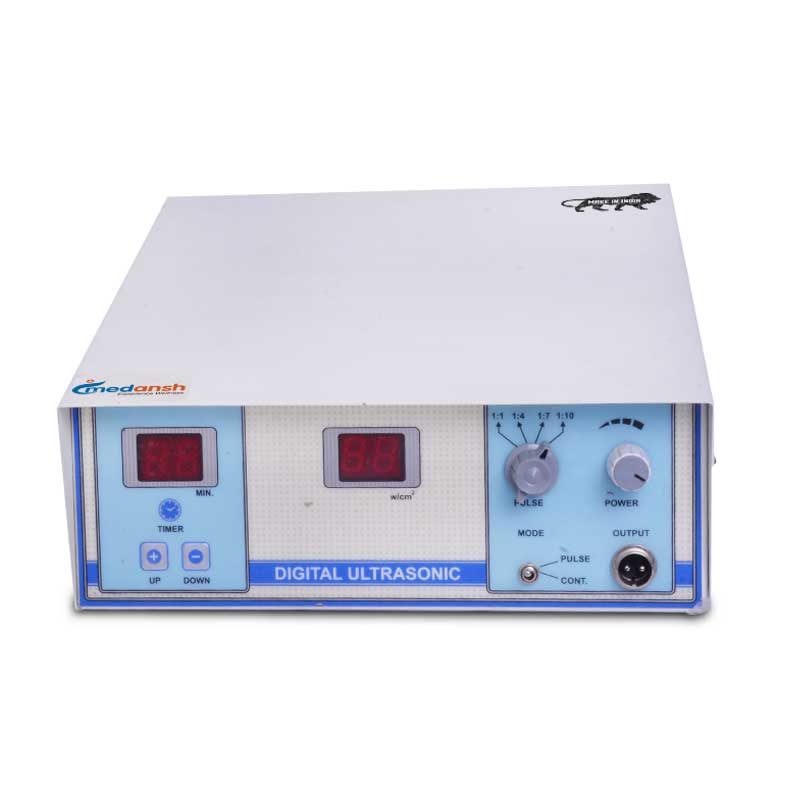
Some ultrasound therapy machine options use a tabletop control unit with a separate treatment head. These may offer more setting choices, clearer displays, and longer session controls. They may be more familiar to people who have received ultrasound physiotherapy before.


The extra control can be helpful, but it also adds responsibility. Choose an ultrasound therapy machine with simpler guidance if you do not understand frequency, intensity, mode, and time. You can also ask a professional to help you set it up.
Combination devices
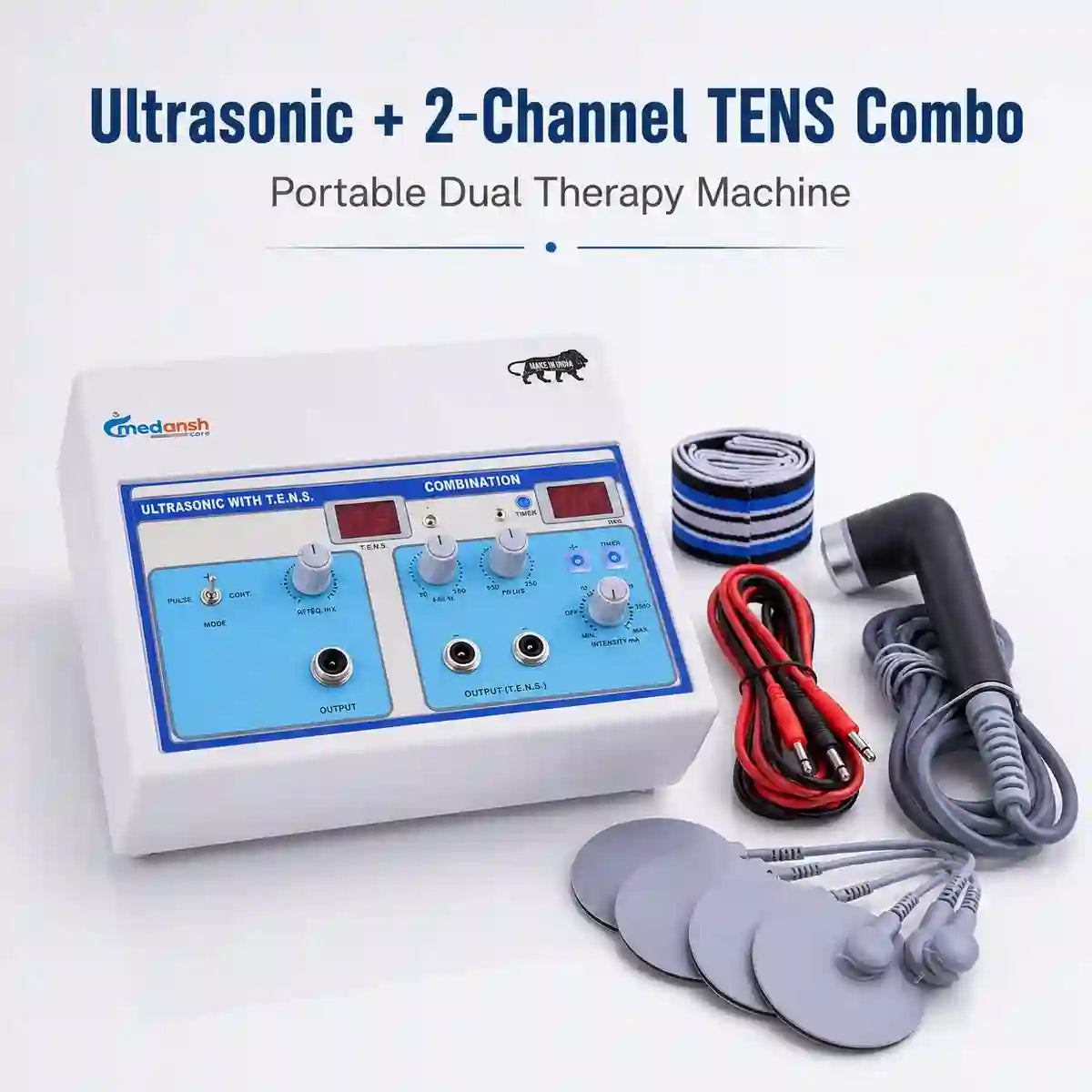
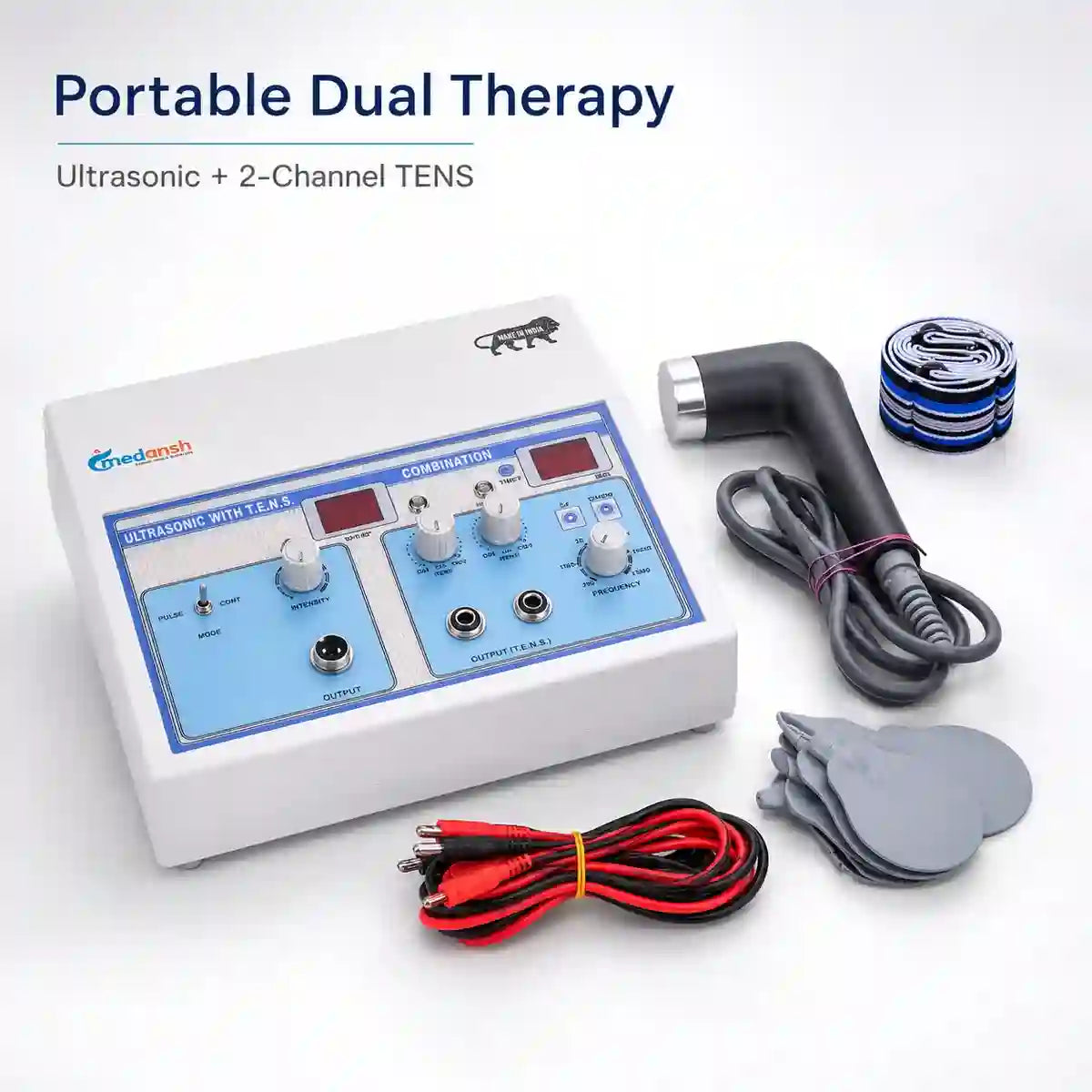
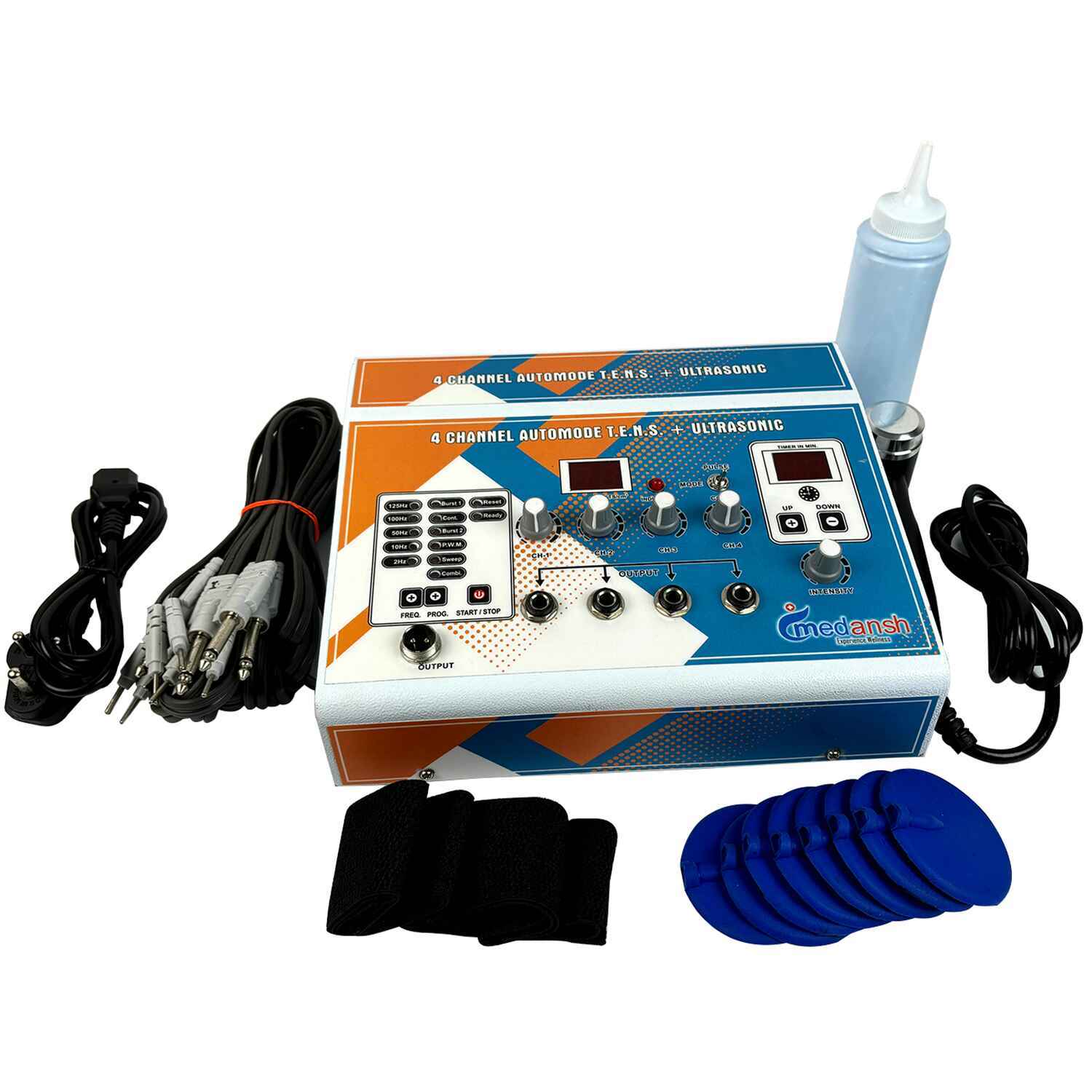
Some devices combine therapeutic ultrasound with other comfort methods, such as electrical stimulation. These products can be useful for some people, but they also add more safety questions. Electrical stimulation has its own precautions, especially for people with implanted devices, heart conditions, pregnancy, or reduced sensation.


If you choose a combination device, treat each feature as separate. Make sure you understand when each feature is safe and when it is not. Check whether to use them together.
How to choose a home ultrasound therapy device
Base your choice of a home ultrasound machine on safety and ease of use. Look for clear instructions and suitability for your body area. Do not choose a therapy device only because it has many settings or strong output. A simpler machine that you can use correctly is usually better. A complex machine you do not fully understand is not.
Look for an ultrasound therapy machine intended for therapeutic ultrasound and personal care. Read the manual before use, not after something feels wrong. If the instructions are unclear, that is a sign to slow down and get help.
Features that matter
When comparing options, consider:

- Clear instructions: The manual should explain where not to use the machine. It should also say how long to use it and what settings mean.
- Adjustable or preset modes: Presets can help beginners, while adjustable settings may suit users with professional guidance.
- Comfortable treatment head: It should be easy to hold and move smoothly.
- Session timer: A timer helps prevent overuse.
- Intensity control: You should be able to start low and adjust only when appropriate.
- Gel compatibility: Use the machine with proper ultrasound gel as directed.
- Safety information: Contraindications and warnings should be easy to find.
- Simple display: A clear display reduces mistakes.
Questions to ask before buying
Use this checklist before choosing a physiotherapy ultrasound machine for home use:

- Do I know what condition I am treating? If not, get medical advice first.
- Has a professional told me ultrasound therapy is suitable? This is especially important for back, neck, joint, or nerve-related pain.
- Can I safely reach the treatment area? If you have to twist or strain, use may be unsafe or ineffective.
- Do I understand the settings? If not, choose a simpler model or ask for help.
- Does the manual clearly list who should avoid it? If safety information is vague, be cautious.
- Will I track my response? A simple note about pain level and symptoms can help you decide whether it is helping.
A home ultrasound therapy device should fit into your routine without encouraging overuse. Do you find yourself treating the same pain again and again without improvement? The answer may not be a stronger machine. The answer may be a better diagnosis and a broader care plan.
How to use ultrasound therapy safely at home
Safe home use starts with reading the machine manual. Next, check that the treatment area is appropriate. Use gel and move the treatment head slowly. Stop if anything feels wrong. Ultrasound therapy for home use is not something to apply casually over any sore spot. The area, settings, and timing all matter.

If a professional has given you instructions, follow those first. If the manual and professional advice differ, ask for clarification before using the machine. Never increase settings beyond what you understand.
A simple step-by-step home routine
Use this general routine only if a professional has cleared ultrasound therapy as suitable for you:

- Check the area. Make sure the skin is clean, closed, and free from rash, infection, or open cuts.
- Review the settings. Confirm the mode, intensity, and time recommended for your situation.
- Apply ultrasound gel. Use enough gel so the treatment head glides smoothly.
- Place the treatment head flat on the skin. Good contact helps the sound waves enter the tissue.
- Move slowly in small circles or lines. Do not hold the head still in one spot.
- Stay within the time limit. Use a timer if the machine does not have one.
- Wipe off gel after the session. Follow the machine manual for care of the unit.
- Notice how you feel. Track pain, stiffness, and any unusual reaction over the next day.
The most important rule is simple: do not chase a stronger feeling. Ultrasound therapy does not need to feel intense to be doing something. In some modes, you may feel very little during the session.
Common mistakes to avoid
Many problems with a home ultrasound therapy device come from small mistakes repeated over time. Avoid these habits:
- Treating without gel.
- Pressing too hard with the treatment head.
- Holding the head still.
- Using the machine over numb skin.
- Treating for longer than directed.
- Using high intensity because pain is strong.
- Treating over unsafe body areas.
- Using the machine daily for ongoing pain without checking why the pain remains.
If you are not sure whether you are using it correctly, stop and ask. Guessing with an ultrasound therapy machine is not worth the risk.
Building ultrasound therapy into a home care plan
Ultrasound therapy often works best when it supports a bigger plan. For many common aches, comfort is only one part of the picture. The body may also need better movement, or gradual strengthening. It may need posture changes, rest from irritating activity, or a different way to do daily tasks.
For example, ultrasound therapy for knee pain may feel helpful before gentle leg exercises. However, the knee may still need stronger hips and thighs for better support. Ultrasound therapy for back pain may ease muscle tightness. However, the back may also need regular movement breaks, better lifting habits, and a calmer return to activity.
A balanced home plan may include:
- Symptom tracking: Note what improves or worsens pain.
- Gentle movement: Avoid long periods of complete rest unless advised.
- Stretching: Use only stretches that feel safe and do not increase symptoms.
- Strength work: Build support around the sore area when appropriate.
- Activity changes: Reduce repeated movements that keep irritating the area.
- Recovery time: Give tissue time to settle between sessions.
- Professional review: Get help if symptoms do not improve.
The goal is not to depend on a therapy device forever. The goal is to use ultrasound therapy wisely while addressing the reason the discomfort keeps showing up.
When to ask a professional before using ultrasound therapy
Ask a professional before using ultrasound therapy if the pain is new, severe, unexplained, or linked to an injury. Ask too if it is near a sensitive area or if you are pregnant. Also ask if you have a health condition, an implanted device, or reduced skin feeling. Mention cancer history in the area or circulation problems as well. A short conversation can prevent unsafe use.
Professional guidance is especially useful if you are choosing settings. A physiotherapist or other qualified provider can help decide whether ultrasound physiotherapy makes sense. They can also advise where to apply it and what else to include in your plan. They may also tell you that ultrasound therapy is not the right tool for your problem. This can save time and reduce risk.
Do not ignore red flags. Get urgent care for chest pain, sudden weakness, or loss of bladder or bowel control. Do the same for major swelling after injury, signs of infection, or severe pain that does not match the situation.
Ultrasound therapy FAQs
Can I use ultrasound therapy every day?
Some care plans may include frequent use for a short period. However, daily use is not automatically safe or helpful. Follow the machine manual and any professional instructions. If you feel you need it every day, ask a professional to review the cause of your pain.
Does ultrasound therapy hurt?
Ultrasound therapy should not hurt. Depending on the setting, you may feel mild warmth or almost nothing at all. Stop if you feel burning, sharp pain, strong heat, or unusual symptoms.
Can I use ultrasound therapy for pain anywhere on the body?
No. Do not use ultrasound therapy for pain over unsafe areas. These include the eyes, head, throat, chest, reproductive organs, spine, infected areas, known cancer sites, and areas with poor feeling. Only a qualified professional can clear use in these areas. Some implanted devices also make use unsafe in certain areas.
Is ultrasound therapy for knee pain safe at home?
It may be safe for some adults. You need to know the cause of pain, and the treatment area must be appropriate. It is not a good idea if the knee is very swollen, hot, unstable, or locked. Avoid it after a serious injury too. In those cases, get medical advice before using a machine.
Is ultrasound therapy for back pain a good idea?
It depends on the cause of the pain. Some care plans may treat mild muscle-related soreness. However, back pain can also involve nerves, discs, joints, or other concerns. Do not use an ultrasound therapy machine directly over the spine. Do not use it for pain with numbness, weakness, or leg symptoms. The same goes for fever or bladder or bowel changes, unless a professional has assessed you.
What gel should I use with a home ultrasound therapy device?
Use ultrasound gel recommended by the machine instructions. Do not use the machine dry. The gel helps the sound waves pass into the skin. It also lets the treatment head move smoothly.

How long does it take to notice ultrasound therapy benefits?
Some people notice short-term comfort after a session, while others notice little change. Results vary based on the condition, settings, and what else you do to support healing. Stop and reassess if symptoms worsen. Do the same if there is no improvement after a reasonable trial recommended by a professional.
Can I use ultrasound therapy with heat or ice?
Ask a professional before combining treatments. Heat, ice, exercise, and ultrasound therapy can all affect how tissue feels. Combining too many methods at once makes it harder to know what helped. It also hides what caused irritation.
Can older adults use a home ultrasound therapy device?
Some older adults may be able to use one safely. They need extra care if they have thin skin, poor circulation, or reduced sensation. The same goes for implanted devices, joint replacements, or multiple health conditions. A professional check is wise before starting.
Is a more powerful ultrasound therapy machine better?
Not necessarily. The best ultrasound therapy machine is one that suits the treatment goal and you can use safely. Stronger settings or more features do not ensure better results. They may increase risk if used incorrectly.

Key takeaways for safer home use
Ultrasound therapy for home use can be useful for some people, but safety comes first. Choose a home ultrasound therapy device carefully. Use it only on appropriate areas and treat it as part of a broader care plan. It is not a shortcut around diagnosis, medical advice, or proper movement habits.
Keep these points in mind:
- Ultrasound therapy uses high-frequency sound waves, not ordinary vibration.
- Use the ultrasound therapy machine with gel and keep it moving.
- Mild warmth may happen with some settings, but pain or burning is not expected.
- Ultrasound therapy side effects are more likely when settings are too strong or sessions are too long. They are also more likely when you treat unsafe areas.
- Ultrasound therapy for knee pain and back pain needs a clear cause. It also needs a safe treatment plan.
- Avoid use if you have pregnancy concerns, implanted devices, or cancer in the area. Avoid it too with infection, poor sensation, or unexplained symptoms, unless a professional clears you.
- More features do not matter if you do not understand how to use them.
Conclusion
Ultrasound therapy can be a practical home care tool. Use it for the right reason, on the right area, and with the right settings. It may help some users manage muscle tightness, soft-tissue discomfort, and everyday soreness. However, it is not suitable for everyone and you should not use it carelessly.
If you are considering a home ultrasound machine, start with safety. Know what you are treating and read the instructions. Use gel, keep the treatment head moving, and stop if symptoms worsen. When pain is unclear, severe, or linked to a health condition, get professional advice before using any ultrasound therapy machine.
Explore more electrotherapy options
Physiotherapy equipmentElectrotherapy & TENS devicesIFT machinesPain relief products
Explore Medical Collections
All Categories
Abdominal & Maternity Support

Accessories

Accu-Chek Instant Strips: Use, Compatibility, Price & Blood Sugar Testing Guide
Accu-Chek Instant Strips: Uses, Features & Complete Guide

accupuncture

Acupuncture Needles & Supplies

Advanced Physiotherapy Machines & Lumbar Physiotherapy

Airways

Ambulance

Anatomy Models
Anesthesia Machine

Anesthesia Products

Ankle Support for Home Use: Braces, Sleeves & Walker Boots

Ankle Weights & Exercise Weights for Home & Rehab

Anti-Bedsore Air Mattresses
You may also need
FOR YOURecommended for you
Save 57%
Save 53%
Save 46%
Save 44%
Save 33%
Save 39%
Save 46%
Save 50%
Save 27%
Save 50%
Save 57%
Save 43%
Save 44%
Save 46%