


Featured ChoiceSave 19%
Save 17%
Save 20%

Save 25%

Save 25%

Save 26%

Save 16%

Save 26%

Sold out

Sold out

Sold out

Sold out
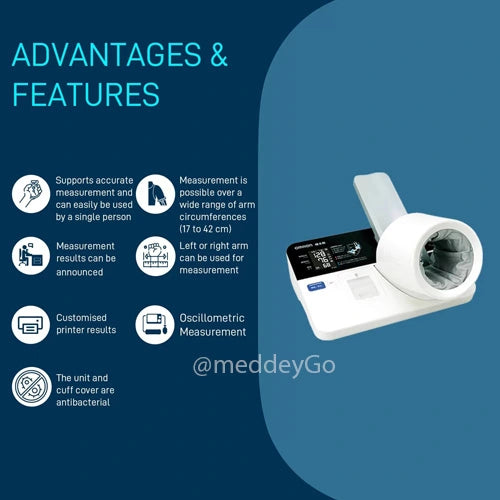

About this collection
A digital blood pressure instrument is an electronic medical device used to measure systolic blood pressure, diastolic blood pressure and usually pulse rate. Digital BP monitors are widely used for home blood pressure monitoring and are also available in professional versions for clinics, hospitals, screening centres and other healthcare facilities.
Unlike a traditional manual sphygmomanometer, a digital BP instrument generally does not require the user to listen to Korotkoff sounds through a stethoscope. The cuff inflates automatically or semi-automatically, electronic sensors detect arterial pressure oscillations, and the device calculates and displays the blood pressure reading.
However, buying the most expensive or technologically advanced blood pressure measuring device does not automatically guarantee the most reliable measurement. Clinical validation of the exact model, correct cuff size, appropriate patient preparation and standardized measurement technique are all important.
For routine home blood pressure monitoring, current professional guidance generally favours a validated automatic upper-arm cuff monitor when an appropriately sized cuff can be used. This guide explains digital BP instruments, their accuracy, different types, current buying considerations, price factors, Omron versus Dr. Morepen, appropriate home use and professional selection.
Healthcare professionals and home users can also explore digital BP machines available on Meddey.
What Is a Digital Blood Pressure Instrument?
A digital blood pressure instrument is an electronic device designed to measure arterial blood pressure automatically. It typically displays the result in millimetres of mercury, abbreviated as mmHg.
Three commonly displayed parameters are:
- Systolic blood pressure: Arterial pressure when the heart contracts.
- Diastolic blood pressure: Arterial pressure while the heart relaxes between contractions.
- Pulse rate: Number of heartbeats detected per minute during the measurement.
Depending on the model, a digital monitor may also offer memory, multiple-user profiles, measurement averaging, cuff-placement indicators, body-movement detection, irregular-heartbeat alerts, Bluetooth connectivity or smartphone synchronization.
What Is a Blood Pressure Measuring Device Called?
The traditional medical name for a blood pressure measuring instrument is a sphygmomanometer. Several other terms are commonly used depending on the technology and clinical setting.
| Term | Meaning |
|---|---|
| Digital Blood Pressure Instrument | Electronic automatic or semi-automatic BP measuring device |
| Digital BP Instrument | Common shortened term for a digital blood pressure monitor |
| BP Instrument | General term for equipment used to measure blood pressure |
| Blood Pressure Monitor | Common term for home or professional BP monitoring equipment |
| Sphygmomanometer | Traditional medical term for a BP measuring instrument |
| NIBP Monitor | Non-invasive blood pressure monitor used in clinical terminology |
How Does a Digital BP Instrument Work?
Most automatic digital blood pressure instruments use the oscillometric method. Instead of directly listening for Korotkoff sounds, the monitor detects changes in cuff pressure produced by arterial pulsations.
A typical measurement involves:
- The cuff is placed around the upper arm.
- The monitor inflates the cuff.
- The underlying artery is temporarily compressed.
- Cuff pressure gradually changes.
- Electronic sensors detect pressure oscillations.
- An internal algorithm analyses those oscillations.
- Systolic and diastolic values are calculated.
- The final BP reading and pulse rate appear on the screen.
This automated process makes blood pressure measurement practical for home users because a stethoscope and manual pressure-reading skills are generally not required.
Types of Digital Blood Pressure Instruments
1. Automatic Upper-Arm BP Monitor
An automatic upper-arm monitor is the most commonly recommended format for routine home BP monitoring. The cuff is positioned around the upper arm, and the machine automatically performs the measurement.
Typical advantages include:
- One-touch measurement
- Easy digital display
- Automatic cuff inflation
- Pulse measurement
- Memory on many models
- Reduced observer-dependent measurement steps
- Suitable for repeated home monitoring
The cuff must be appropriate for the user's arm circumference. An incorrectly sized cuff can affect measurement reliability.
2. Wrist Digital BP Monitor
A wrist monitor is smaller and more portable than many upper-arm monitors. It may be considered when upper-arm measurement is difficult for an individual.
However, wrist readings are particularly sensitive to positioning. The wrist must be correctly positioned relative to heart level during measurement.
For most adults who can use an appropriate upper-arm cuff, a validated upper-arm monitor is generally preferred.
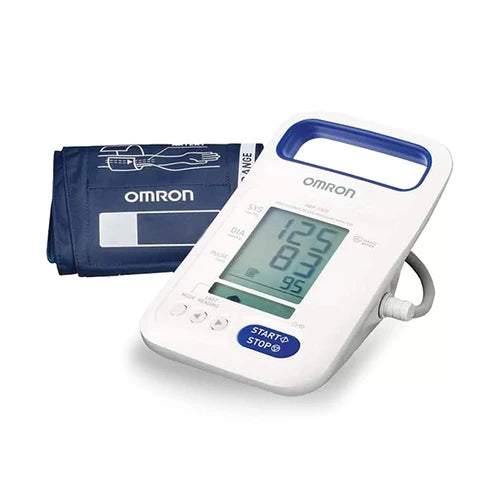
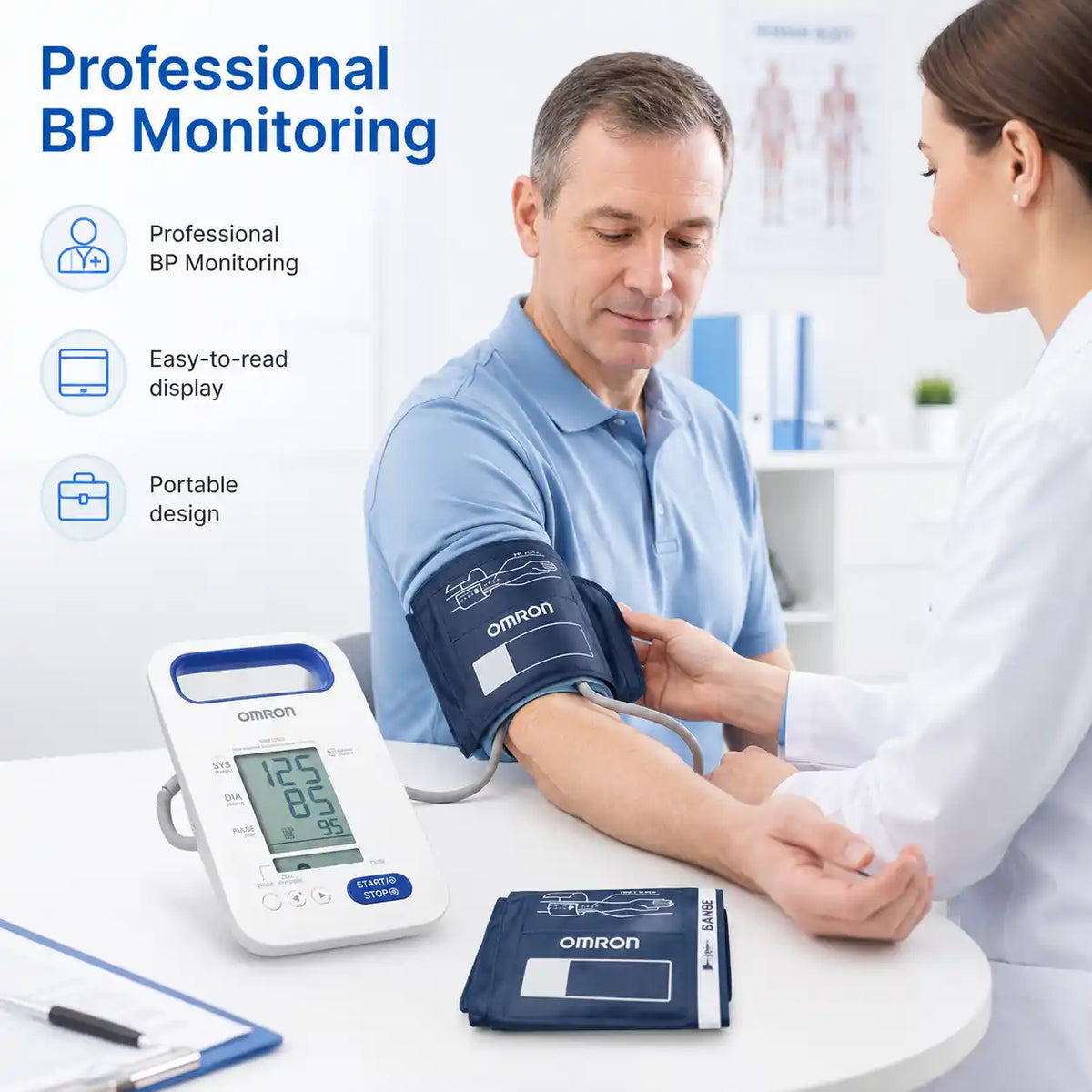
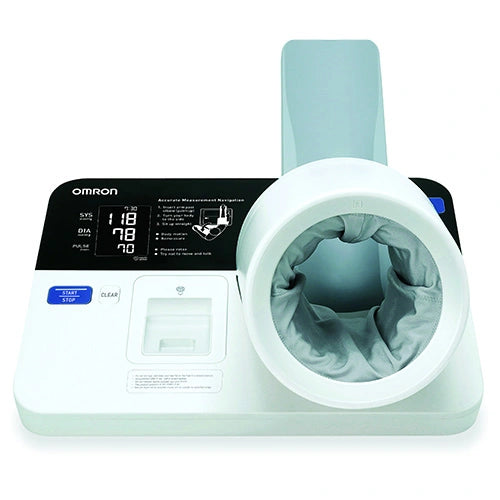
3. Professional Digital BP Instrument
Professional digital BP systems are designed for higher-frequency clinical use. Depending on the model, they may provide:
- Multiple compatible cuff sizes
- Durable construction
- Automated repeated measurements
- Professional operating modes
- Large displays
- Clinical data-management functions
- Enhanced connectivity
Healthcare facilities should confirm that a device is suitable for professional rather than household use before procurement.
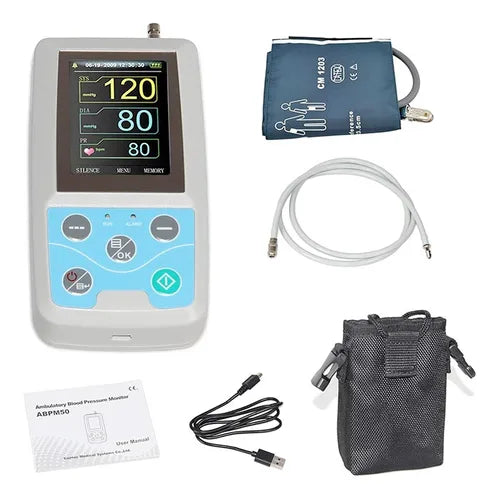
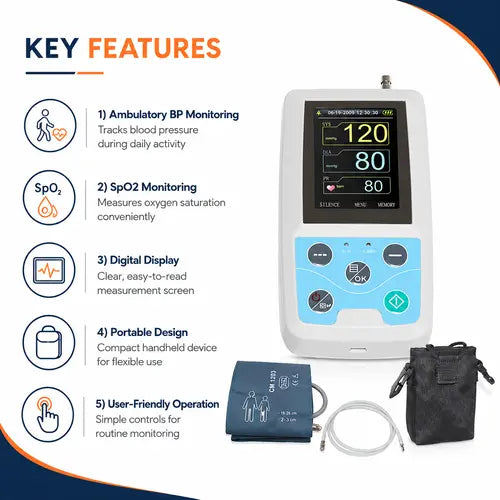
4. Ambulatory Blood Pressure Monitor
Ambulatory blood pressure monitoring, commonly called ABPM, uses a portable monitor that records blood pressure automatically at programmed intervals over an extended period.
It can provide information about BP patterns during normal daytime activity and sleep and has a different clinical role from ordinary home monitoring.
Digital BP Instrument vs Manual BP Instrument
| Feature | Digital BP Instrument | Manual BP Instrument |
|---|---|---|
| Operation | Automatic or semi-automatic | Manual |
| Typical method | Oscillometric | Auscultatory |
| Stethoscope required | No | Usually yes |
| Training | Relatively simple for home monitoring | Requires trained technique |
| Memory | Available on many models | No electronic memory |
| Home use | Highly convenient | Less practical without training |
Is a Digital Blood Pressure Device Accurate?
A properly validated digital blood pressure instrument can provide clinically useful measurements when used correctly. Being electronic, however, does not automatically establish that a monitor is accurate.
Measurement quality depends on several factors:
- Validation of the exact model
- Appropriate cuff size
- Correct cuff placement
- Patient preparation
- Correct sitting posture
- Arm position
- Rest before measurement
- Avoiding movement
- Avoiding talking during measurement
- Condition of the monitor and cuff
Healthcare professionals should therefore evaluate a digital device by its exact model and available validation evidence rather than assuming that every product from a particular brand has identical measurement performance.
What Is a Validated Blood Pressure Monitor?
A validated blood pressure monitor has undergone formal performance assessment under an accepted validation protocol.
Validation is especially important because blood pressure monitors depend on proprietary algorithms to estimate systolic and diastolic pressure from detected oscillations.
Resources such as STRIDE BP maintain lists of devices that have undergone recognized validation processes.
For home monitoring, preferred-device criteria generally favour upper-arm cuff devices that have undergone an approved recent validation study and provide measurement storage or data-transfer functionality.
Which Digital BP Instrument Is Best?
No single digital BP instrument is the best option for every patient.
For most adults requiring routine home monitoring, look for:
- A validated automatic device
- Upper-arm measurement
- Correct cuff-size range
- Readable display
- Simple controls
- Useful memory capacity
- Warranty and service support
Additional features should be selected according to actual requirements rather than assumed to be necessary for everyone.
Which Digital BP Machine Has the Highest Accuracy?
There is no scientifically responsible way to describe one commercially available digital BP machine as universally having the highest accuracy for every user.
Accuracy should instead be judged using:
- Model-specific validation evidence
- Validation protocol
- Population in which the device was evaluated
- Cuff suitability
- Correct measurement technique
A monitor with Bluetooth, premium design or a higher retail price does not automatically provide more accurate measurements than a simpler validated model.
Which Blood Pressure Device Is Most Accurate?
The most reliable device for a particular user is an appropriately validated monitor that is suitable for the intended patient population and is used correctly.
For routine home measurement, validated automatic upper-arm monitors are generally preferred.
For hospitals or specialist applications, a professional automated monitor, manual device or ambulatory system may be more appropriate depending on the clinical requirement.
Which BP Machine Is Best for Home Use?
For most adults, a validated automatic upper-arm blood pressure measuring device with the correct cuff size is generally the preferred home option.
Useful features include:
One-Touch Operation
Simple automatic measurement makes the device easier to use consistently.
Clear Display
Systolic, diastolic and pulse values should be clearly visible.
Memory Storage
Stored readings allow the user and healthcare professional to review BP patterns over time.
Multiple User Profiles
This is useful when two or more household members use the same monitor.
Average Reading Function
Some instruments automatically calculate an average of recent measurements.
Cuff-Wrapping or Movement Indicators
These features may help identify certain measurement errors.
Connectivity
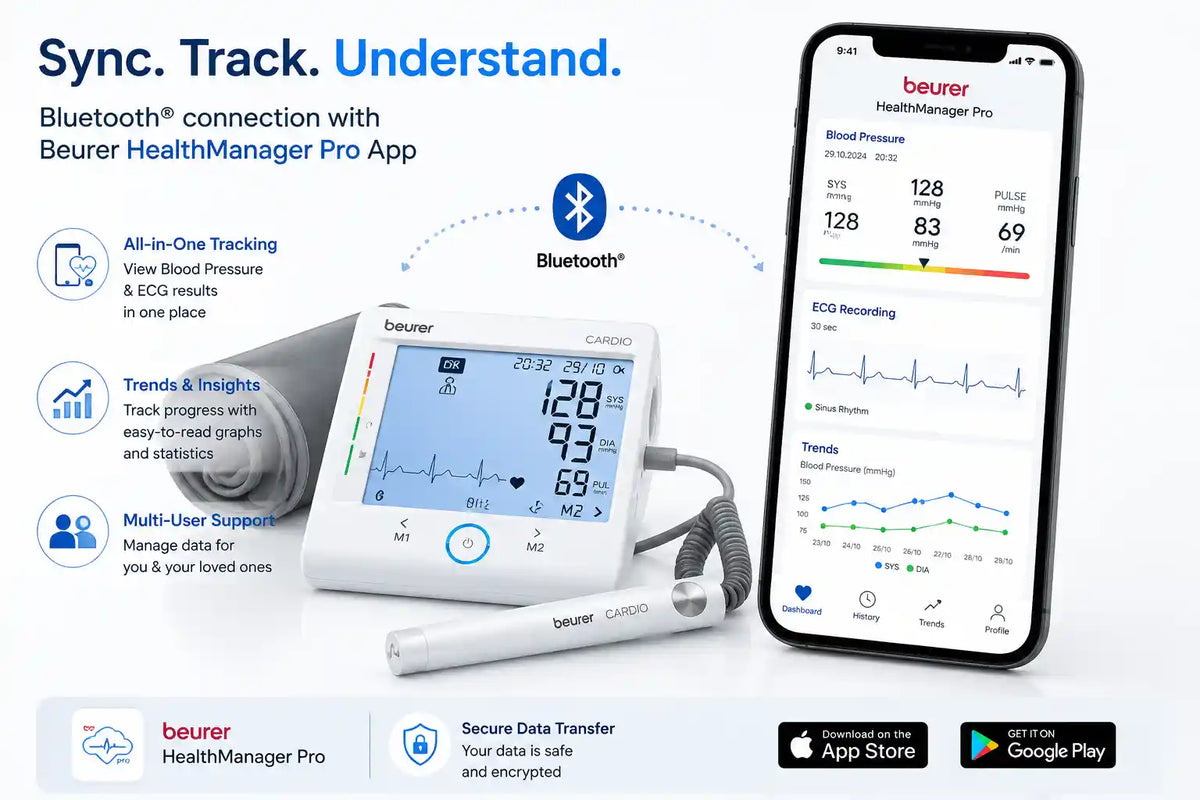
Bluetooth or application connectivity can simplify digital record keeping, although it is not essential for every user.
Which Brand of Blood Pressure Machine Is Good?
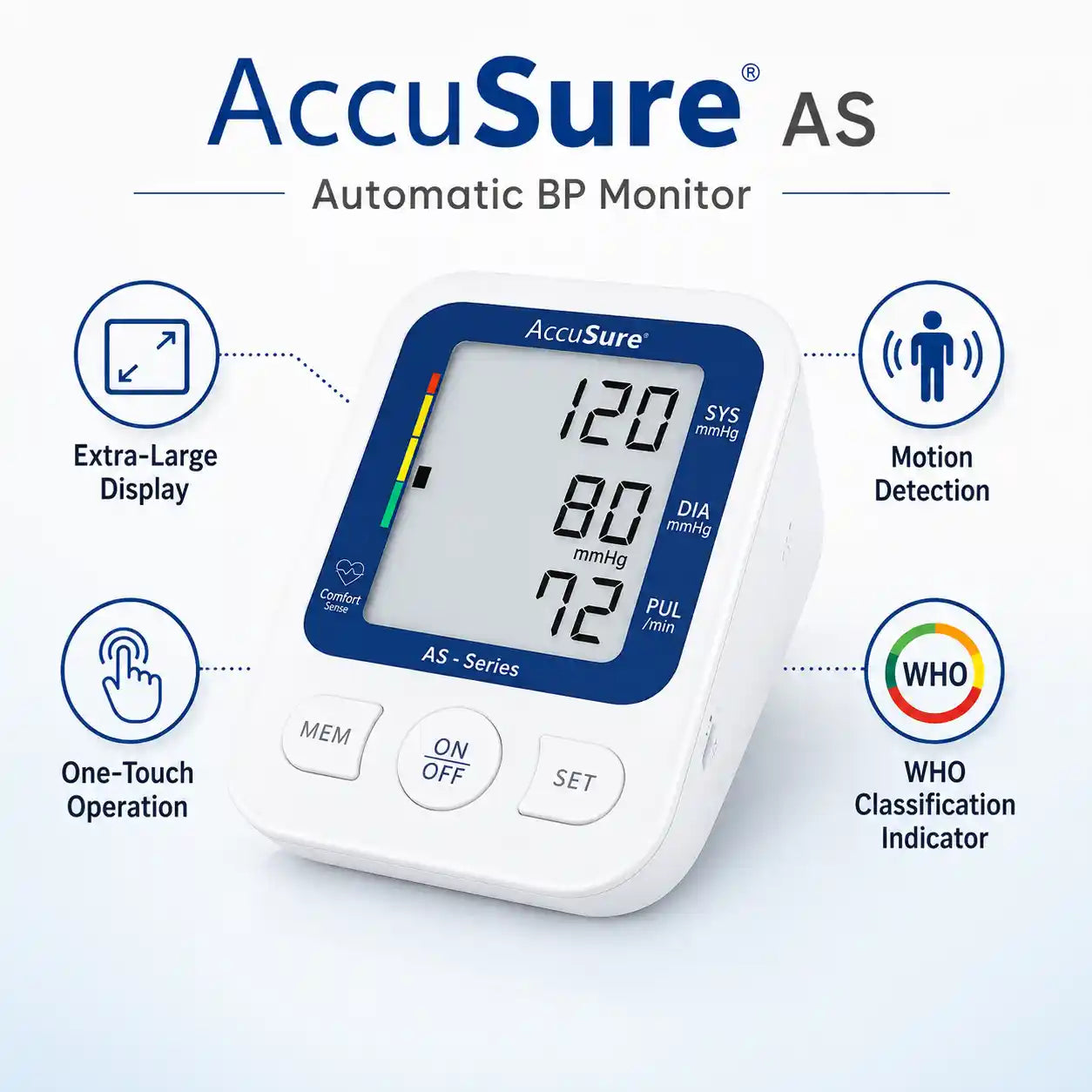
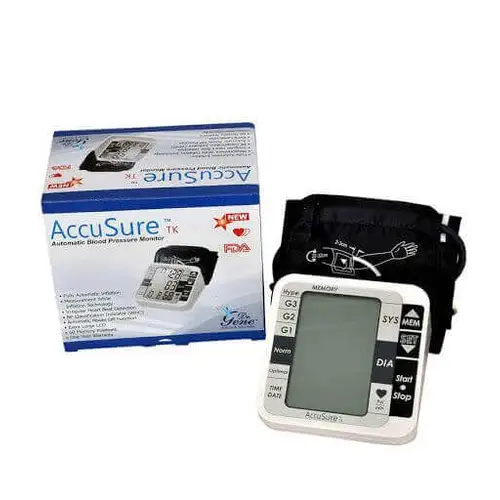
Several established manufacturers offer digital BP instruments, including Omron, Dr. Morepen, Yuwell, Beurer, AccuSure and others.
Rather than judging a device only by brand, compare:
- Exact model validation
- Cuff-size compatibility
- Measurement features
- Memory
- User profiles
- Warranty
- Replacement cuff availability
- After-sales service
- Current price
A well-known brand may provide practical advantages such as broader service availability, but brand reputation does not replace model-specific validation.
Dr. Morepen vs Omron: Which BP Machine Is Better?
Both Dr. Morepen and Omron offer automatic blood pressure monitors in India. A meaningful comparison should be performed between specific models rather than entire brands.
| Factor | What to Check |
|---|---|
| Validation | Independent evidence for the exact model |
| Cuff | Supported arm circumference and design |
| Memory | Stored readings and user profiles |
| Display | Visibility and ease of reading |
| Connectivity | Bluetooth or app functionality if required |
| Warranty | Duration and support conditions |
| Price | Current cost relative to required features |
It would therefore be inappropriate to claim that every Omron monitor is better than every Dr. Morepen monitor or vice versa.
Digital BP Instruments Available on Meddey
Meddey currently provides multiple digital, manual and professional blood pressure monitoring options for home users, clinics and hospitals.
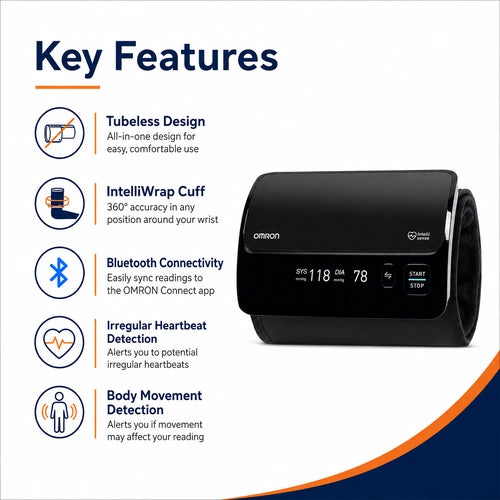
Omron HEM-7156 BP Monitor
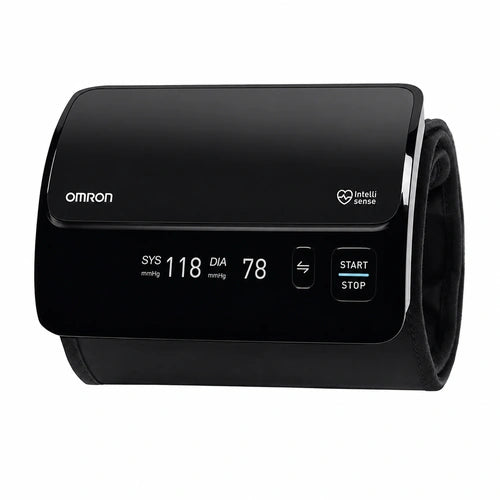
The Omron HEM-7156 is an automatic upper-arm monitor listed with an IntelliWrap cuff. It is designed to make cuff application more convenient for routine BP monitoring.
View Omron HEM-7156 BP Monitor
Omron HEM-7121J BP Monitor
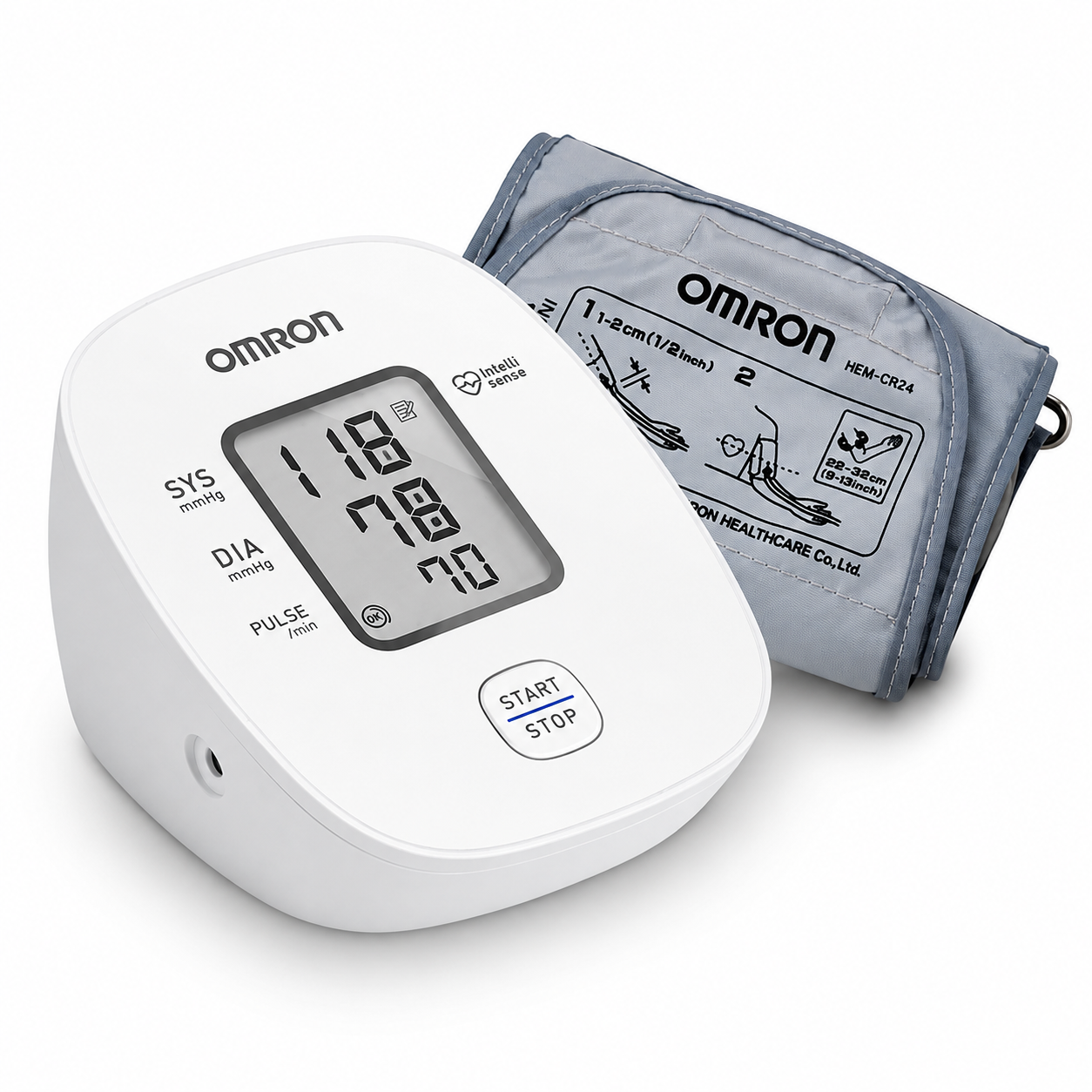
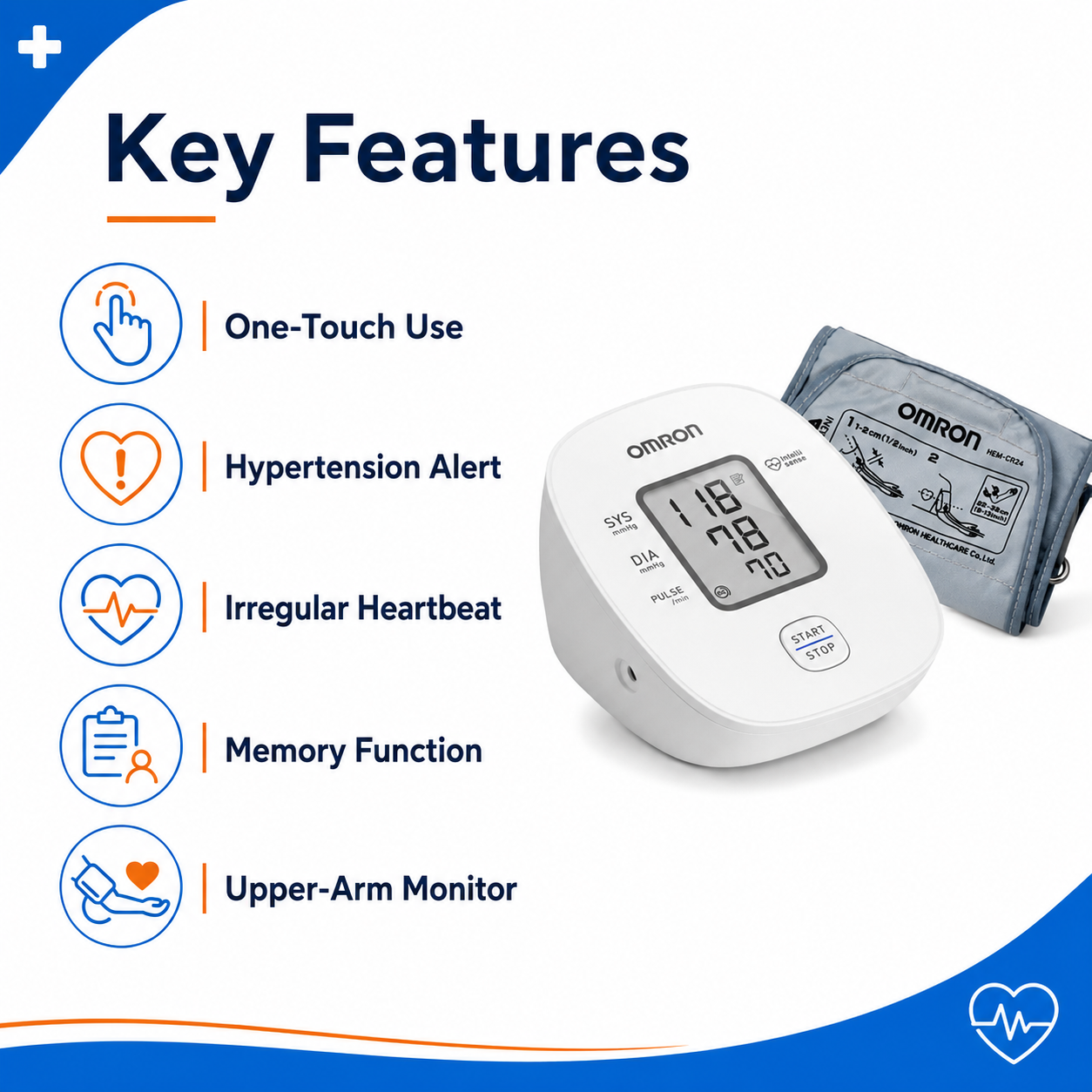
The Omron HEM-7121J is a compact automatic upper-arm monitor with one-touch operation, hypertension indication and irregular-heartbeat detection listed among its features.
View Omron HEM-7121J BP Monitor
Yuwell YE660F Digital BP Monitor
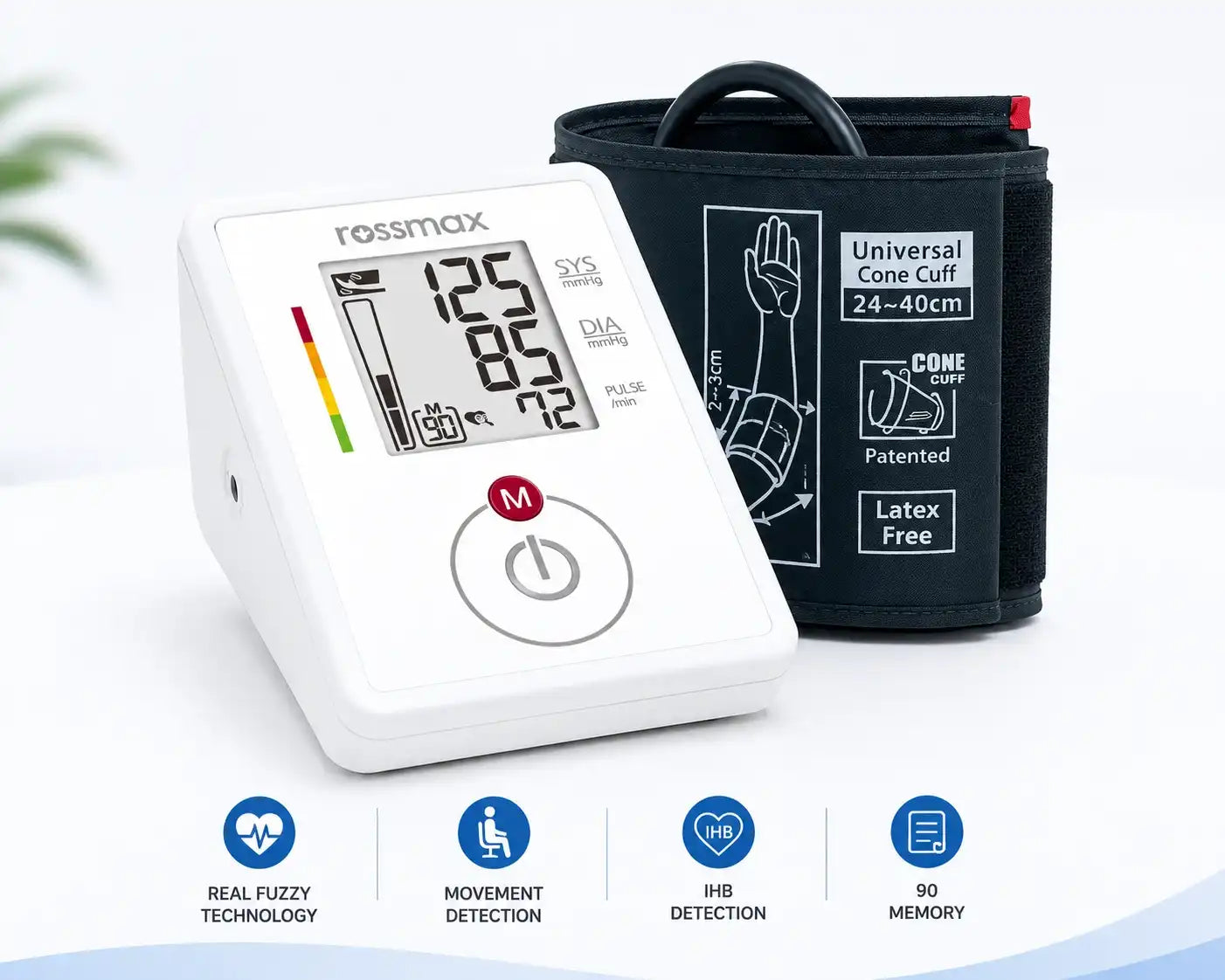
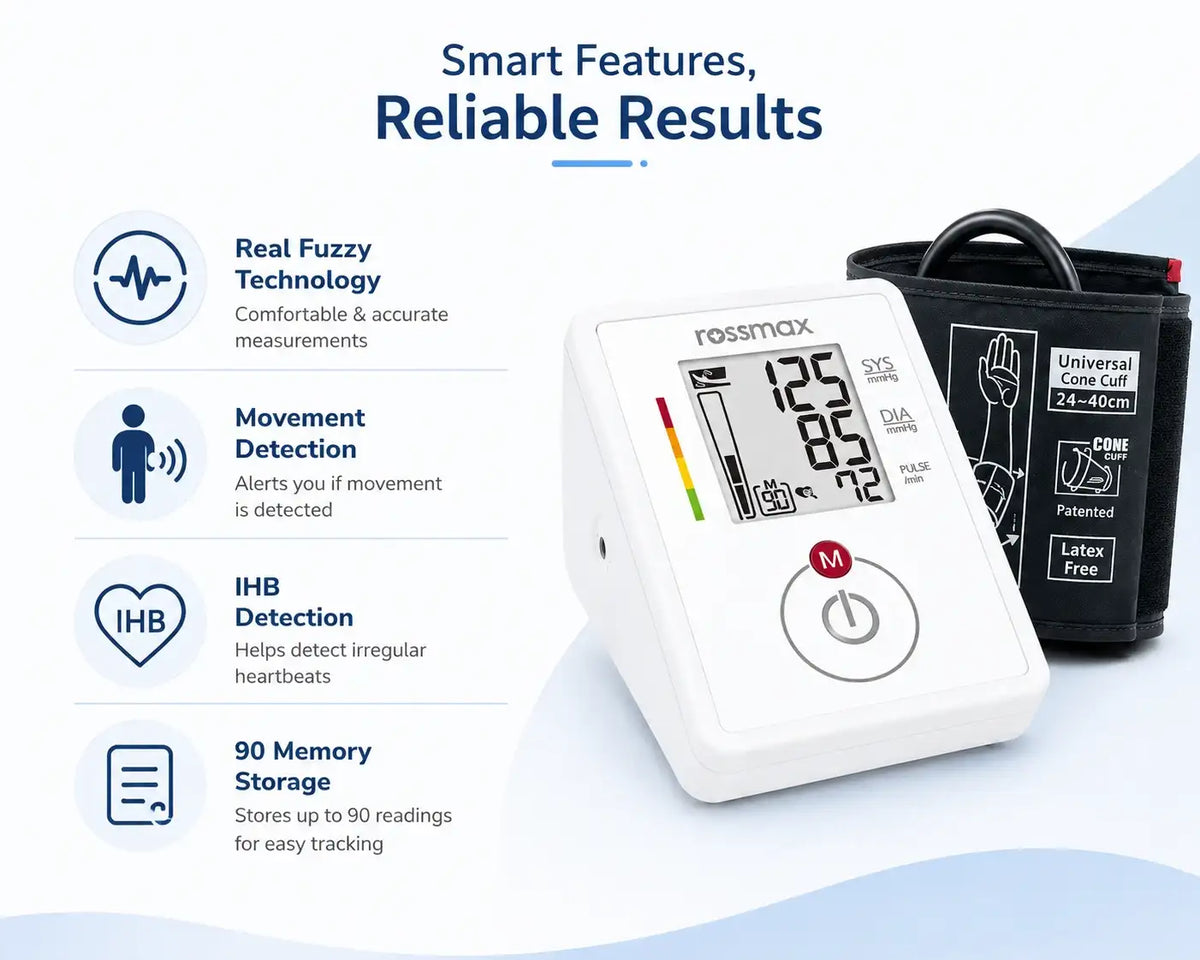
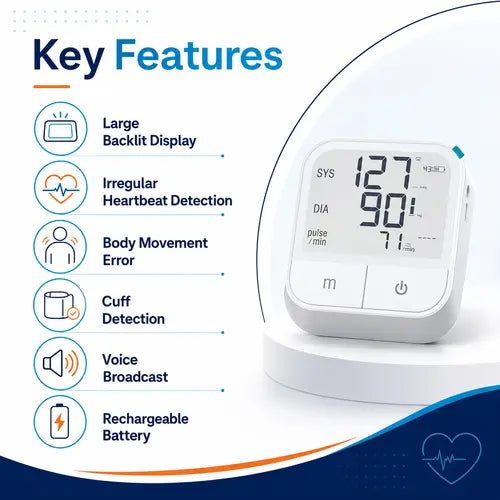
The Yuwell YE660F is an upper-arm digital monitor listed with a large backlit display, 90-reading memory, irregular-heartbeat detection, cuff-wrapping detection and voice functionality.
View Yuwell YE660F Digital BP Monitor
Yuwell YE670AR Digital BP Machine
The Yuwell YE670AR is another upper-arm automatic option with a large display and stored measurement functionality.
View Yuwell YE670AR Digital BP Machine
Digital BP Instrument Price in India
The digital BP instrument price varies according to brand, model, cuff design, memory, connectivity, additional functions and intended use.
Current Meddey listings illustrate the variation in price. At the time this guide was prepared, examples included the Omron HEM-7121J at approximately ₹2,000, the Omron HEM-7156 at approximately ₹2,749, Yuwell YE660F at approximately ₹2,749 and Yuwell YE670AR at approximately ₹3,499.
These prices are examples only and may change because of stock status, promotions and seller updates.
When comparing blood pressure instrument price or blood pressure measure machine price, consider:
- Clinical validation
- Supported cuff range
- Memory capacity
- Number of users
- Warranty
- Connectivity
- Replacement cuff availability
- Power options
- Service support
Check current BP instrument prices on Meddey.
Prices and availability can change. Always check the live product page before purchase.
Does a Higher BP Instrument Price Mean Better Accuracy?
No. A higher digital BP instrument price does not automatically mean greater measurement accuracy.
More expensive models may include:
- Bluetooth connectivity
- Additional memory
- Premium cuff designs
- Multiple-user profiles
- Rechargeable or alternative power options
- Advanced applications
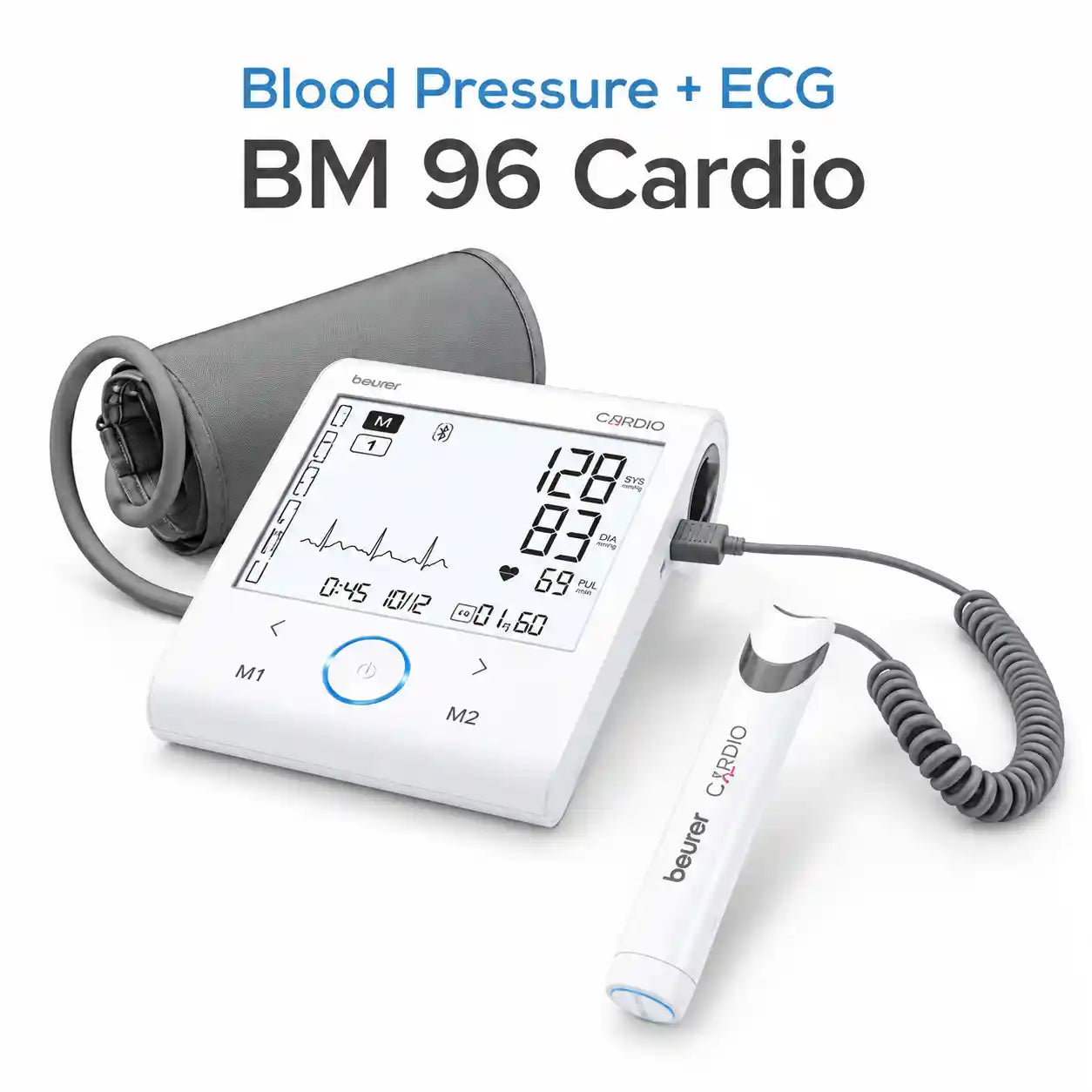
- ECG functionality on selected systems
These features may improve convenience, but validation and correct measurement technique remain more important for evaluating BP measurement performance.
How to Measure Blood Pressure Correctly
Correct technique is essential even when using a high-quality automatic instrument.
Before Measurement
- Follow the manufacturer's operating instructions.
- Use an appropriately sized cuff.
- Avoid strenuous activity immediately beforehand.
- Avoid factors that may temporarily alter resting BP where possible.
- Empty the bladder if required.
- Sit quietly before taking the measurement.
Correct Position
- Sit with the back supported.
- Keep the feet supported on the floor where possible.
- Avoid crossing the legs.
- Place the cuff on the bare upper arm.
- Support the measurement arm.
- Keep the cuffed arm approximately at heart level.
- Remain still.
- Avoid talking during measurement.
Why Correct Cuff Size Matters
A digital monitor can only perform appropriately when the cuff is suitable for the user's arm.
Before purchasing:
- Measure upper-arm circumference.
- Check the cuff-size range specified by the manufacturer.
- Confirm that the user's arm falls within the supported range.
- Select another compatible cuff or device where necessary.
Clinics and hospitals should maintain suitable cuff options for the patient population they serve.
Common Causes of Incorrect Digital BP Readings
- Incorrect cuff size
- Poor cuff placement
- Cuff placed over clothing
- Unsupported arm
- Incorrect arm height
- Unsupported back
- Crossed legs
- Talking during measurement
- Body movement
- Insufficient rest
- Recent strenuous exercise
- Device or cuff damage
If a result appears unusual, review the measurement conditions before assuming that the value represents a true sudden change in blood pressure.
How Many BP Readings Should Be Taken?
A single BP reading may not represent a person's usual blood pressure.
When home monitoring has been recommended, repeated measurements obtained under standardized conditions generally provide more meaningful information than isolated readings.
The exact schedule should be determined according to the treating healthcare professional's recommendations.
Can a Digital BP Machine Diagnose Hypertension?
A digital blood pressure instrument measures blood pressure but does not independently establish a complete medical diagnosis.
Diagnosis of hypertension can involve:
- Repeated standardized measurements
- Office BP assessment
- Home BP monitoring
- Ambulatory blood pressure monitoring where appropriate
- Clinical history
- Cardiovascular risk assessment
Patients should not independently change prescribed medicines solely because of one home reading.
Digital BP Instrument for Clinics and Hospitals
Healthcare procurement has additional requirements beyond ordinary home monitoring.
Clinics and hospitals should evaluate:
- Professional intended use
- Clinical validation
- Compatible cuff sizes
- High-volume durability
- Cleaning and disinfection requirements
- Service and maintenance support
- Replacement parts
- Data integration where required
A home monitor should not automatically be assumed to be suitable for high-volume hospital use.
Frequently Asked Questions About Digital BP Instruments
1. Which digital BP instrument is best?
For most home users, a validated automatic upper-arm monitor with an appropriately sized cuff is generally a strong choice. Select the exact model according to cuff range, validation, usability and required features.
2. Is a digital blood pressure device accurate?
An appropriately validated digital device can provide clinically useful measurements when used correctly. Cuff size, positioning and patient preparation also affect reliability.
3. Which BP machine is better, Dr. Morepen or Omron?
Neither brand is universally better. Compare exact models according to validation evidence, cuff compatibility, memory, warranty, service support and price.
4. Which blood pressure device is most accurate?
No single device can be described as universally most accurate. A validated device suitable for the intended population and used with correct technique provides the strongest basis for reliable measurement.
5. Which BP machine is best for home use?
A validated automatic upper-arm cuff monitor is generally preferred for most adults who can use an appropriately sized cuff.
6. Which brand of blood pressure machine is good?
Established manufacturers include Omron, Dr. Morepen, Yuwell, Beurer, AccuSure and others. Evaluate the specific model rather than selecting only by brand.
7. Which digital BP machine has the highest accuracy?
There is no universal ranking based solely on marketing specifications. Check independent model-specific validation and use the correct cuff and measurement technique.
8. Are wrist BP monitors accurate?
Some wrist devices may be validated, but they are especially sensitive to positioning. Upper-arm monitors are generally preferred for routine home monitoring.
9. Is a costly BP machine more accurate?
Not necessarily. Higher cost often reflects additional features rather than superior clinical accuracy.
10. Can several people use one digital BP instrument?
Yes, when permitted by the manufacturer and when the cuff fits each person correctly. Separate user profiles can help keep readings organized.
11. Does an irregular-heartbeat indicator diagnose arrhythmia?
No. It may identify irregular pulse intervals during measurement, but it does not replace an ECG or professional cardiac evaluation.
12. Is one BP measurement sufficient?
A single measurement may not represent usual blood pressure. Repeated standardized measurements are often more useful for clinical interpretation.
Professional Checklist Before Buying a Digital BP Instrument
- Confirm whether the device is for home or professional use.
- Check validation of the exact model.
- Prefer an upper-arm monitor for routine home use where appropriate.
- Measure the user's arm circumference.
- Verify the supported cuff range.
- Check display readability.
- Review memory capacity.
- Consider multiple-user profiles.
- Decide whether Bluetooth is actually needed.
- Check warranty coverage.
- Confirm replacement cuff availability.
- Review after-sales support.
- Compare current price with required features.
Where to Buy a Digital Blood Pressure Instrument Online in India?
When purchasing a digital BP monitor online, buyers should compare the exact device specifications rather than choosing only according to discount percentage or price.
Meddey provides digital, manual and professional blood pressure monitoring products for home users, doctors, clinics and hospitals.
Explore BP Machines:
https://meddey.com/collections/bp-machines
Browse Blood Pressure Monitors:
https://meddey.com/collections/blood-pressure-monitors
Visit Meddey:
https://meddey.com/
A digital blood pressure instrument provides a convenient way to measure systolic pressure, diastolic pressure and pulse rate without requiring manual auscultation. Automatic upper-arm monitors have become particularly useful for home blood pressure monitoring because they provide simple operation and can store repeated readings.
However, the quality of a digital BP instrument should not be judged only by price, brand or additional technology. Model-specific clinical validation, correct cuff size and standardized measurement technique remain fundamental.
For most adults requiring routine home monitoring, a validated automatic upper-arm blood pressure measuring device with an appropriately sized cuff is generally the preferred approach.
When comparing Omron, Dr. Morepen, Yuwell, Beurer, AccuSure or other manufacturers, buyers should compare exact models for validation, cuff compatibility, memory, warranty and service support rather than assuming that one entire brand is always more accurate.
The digital BP instrument price can also vary considerably. Entry-level automatic home monitors may provide all the functions many users need, whereas Bluetooth connectivity, advanced memory, professional durability and additional diagnostic functions may increase cost.
Doctors, clinics and hospitals should additionally assess professional intended use, cleaning requirements, high-volume durability, multiple cuff sizes and service infrastructure before purchasing equipment for clinical environments.
Healthcare professionals and home users can compare available digital blood pressure instruments on Meddey according to their monitoring requirements.
Medical Disclaimer
- This article is intended for educational and general informational purposes only. It does not replace individualized diagnosis, medical advice or treatment from a qualified healthcare professional. Blood pressure readings should be interpreted using repeated standardized measurements, patient history and applicable clinical guidance. Patients should not independently start, stop or alter prescribed blood pressure medication solely on the basis of a home BP measurement.
Professional References
- American Heart Association – Home Blood Pressure Monitoring
Home Blood Pressure Monitoring Guidance - STRIDE BP – Validated Blood Pressure Monitors
Validated BP Monitor Resources - Meddey – Blood Pressure Machines
Blood Pressure Machine Collection
Explore Medical Collections
All Categories
Abdominal & Maternity Support

Accessories

Accu-Chek Instant Strips: Use, Compatibility, Price & Blood Sugar Testing Guide
Accu-Chek Instant Strips: Uses, Features & Complete Guide

Accupressure Products for Pressure Point Therapy, Pain Relief & Wellness

accupuncture

Acupuncture Needles & Supplies

Advanced Physiotherapy Machines & Lumbar Physiotherapy

Airways

Ambulance

Anatomy Models
Anesthesia Machine

Anesthesia Products
Ankle Support, Braces & Walker Boots for Recovery
Ankle Weights & Exercise Weights for Home & Rehab
You may also need
FOR YOURecommended for you
Save 19%
Save 17%
Save 20%
Save 25%
Save 25%
Save 26%
Save 16%
Save 26%